The fastest microscope in the world freezes time in one quintillionth of a second

The subatomic world is difficult to grasp, not only because it is incredibly tiny, but also because it is super fast. Now, physicists from the University of Arizona have developed the fastest electron microscope in the world, capable of capturing phenomena that last only a quintillionth of a second.

Microsoft 365 DOWNLOAD

A good camera, with a shutter speed measured in milliseconds, could take a sharp photo of a person running. But the fastest cameras in the world, transmission electron microscopes, can capture events on an attosecond scale, such as photos of electrons running.

By the way, an attosecond is one quintillionth of a second, which makes a millisecond (one thousandth of a second) seem like an eternity.

A milestone in physics that could contribute to quantum physics, chemistry, and biology

If we scale up, there are as many attoseconds in a second as there are seconds in 31.7 billion years, which is more than twice the amount of time the universe has existed. These are truly unfathomable numbers.

In any case, as we read in New Atlas, previous efforts to capture events on that kind of timescale have reached up to 43 attoseconds, which researchers at the time described as ‘the shortest controlled event ever created by humanity.’ Now, the team from the University of Arizona has further reduced the time, freezing it in a single attosecond.

The new work is based on the research of Pierre Agostini, Ferenc Krausz, and Anne L’Huilliere, who generated the first pulses of light short enough to be measured in attoseconds. This earned them the Nobel Prize in Physics in 2023.

For the new study, researchers developed what they call an ‘attomicroscope.’ First, an ultraviolet light pulse is fired at a photocathode, which releases ultrafast electrons inside the attomicroscope.

Next, a laser pulse is divided into two beams, which are sent to the electrons moving through the microscope. One of these beams is polarized and arrives at slightly different times, generating a ‘gated’ electron pulse that allows obtaining images of a sample, in this case, of graphene.

Microsoft 365 DOWNLOAD

Thanks to this technique, the team was able to generate electron pulses of only one attosecond in duration, which allowed them to observe ultrafast electron movements that are normally invisible. The researchers claim that this breakthrough could have applications in quantum physics, chemistry, and biology.

WhatsApp usernames will include a (very) useful feature

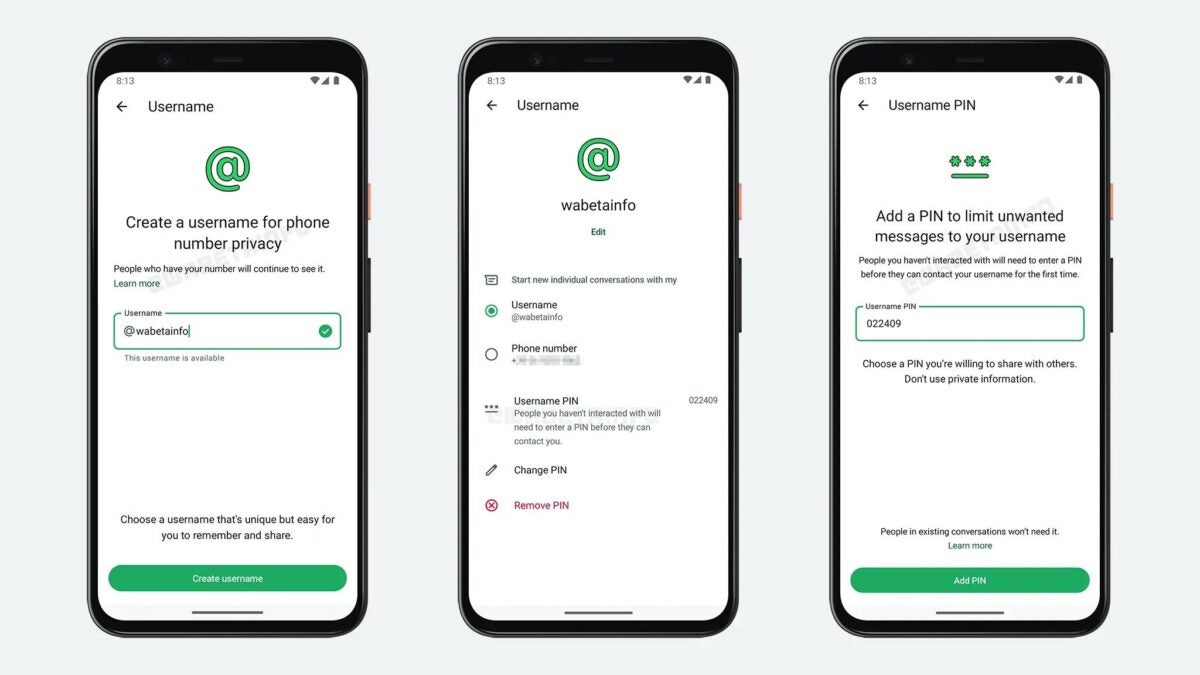
WhatsApp is working on a new feature that promises to significantly improve the privacy and security of its users. According to WABetaInfo, after analyzing the beta version of the app for Android (2.24.18.2), the new username system that WhatsApp intends to implement will come with a PIN security feature, designed to combat spam, a problem that has affected the platform for a long time.

WhatsApp DOWNLOAD

This new feature allows WhatsApp users to set a PIN of at least four digits, which will act as an additional layer of security, greatly reducing the spam received. Thanks to this novelty, those who have not previously interacted with a user will not be able to send them messages just by knowing their username.

The PIN system will not affect conversations with contacts you have already interacted with, allowing current chats to continue unchanged. However, the feature is still in beta testing and there is no confirmed date for its official release yet. It is expected to be available to all users before the end of the year.

WhatsApp DOWNLOAD

The latest beta of iOS 18 is almost finalized

There is less and less time left for the global release of iOS 18. If you can’t wait, luckily for you, you have the public betas at your disposal. The latest one to be released, iOS 18 beta 7, is shaping up to be an almost finalized version of what we will soon see on our iPhones.

Apple Support DOWNLOAD

Although it doesn’t bring many new features, some are already pointing out that we could be facing the last beta before the final release. The major changes in these betas have occurred in their early stages. Now, we will have to wait for its official release.

Specifically, it has been Mark Gurman who has stated that this latest beta version would be the ‘final’ one. Therefore, from now on, the only thing we will see are performance improvements and bug fixes.

Gurman’s words are clear and suggest that the next version we will have will be known as RC. These are the initials for Release Candidate, which translates as candidate for release. Essentially, it is a version that is almost identical to the final one.

This will not prevent Apple from continuing to work on other features that are exclusive to the iPhone 16, for example. In fact, we will probably see clues in the beta code that indicate what is to come.

Apple Intelligence, the latest to arrive in Europe

To see the next big feature of iOS 18, we will have to wait until October, when Apple Intelligence will arrive. Unfortunately, European users will not be able to try it, at least until 2024. The same would happen with iPhone Mirroring and SharePlay Screen Sharing.

According to Euronews, one of the main requirements of the Digital Markets Act is interoperability. According to Apple, this would conflict with their stance on user privacy and security. With this law, Europe wants to limit the power of big tech companies like Amazon, Meta, or Apple itself.

Apple Support DOWNLOAD