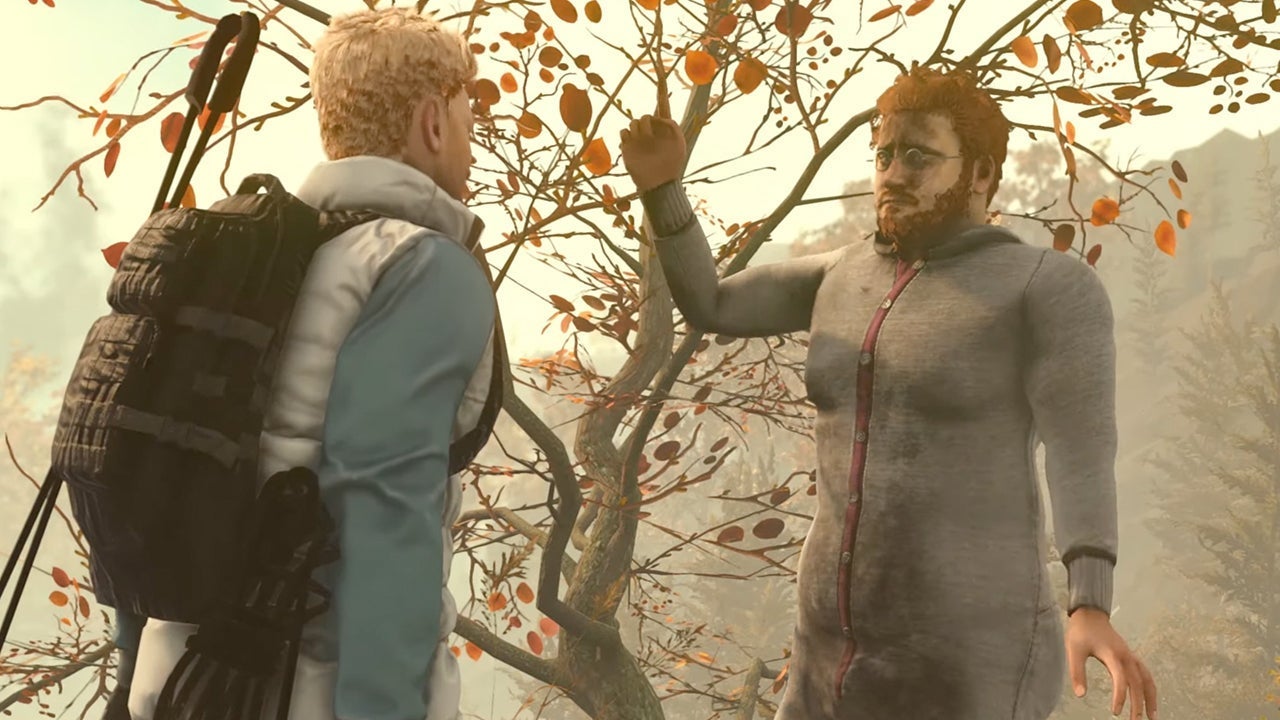
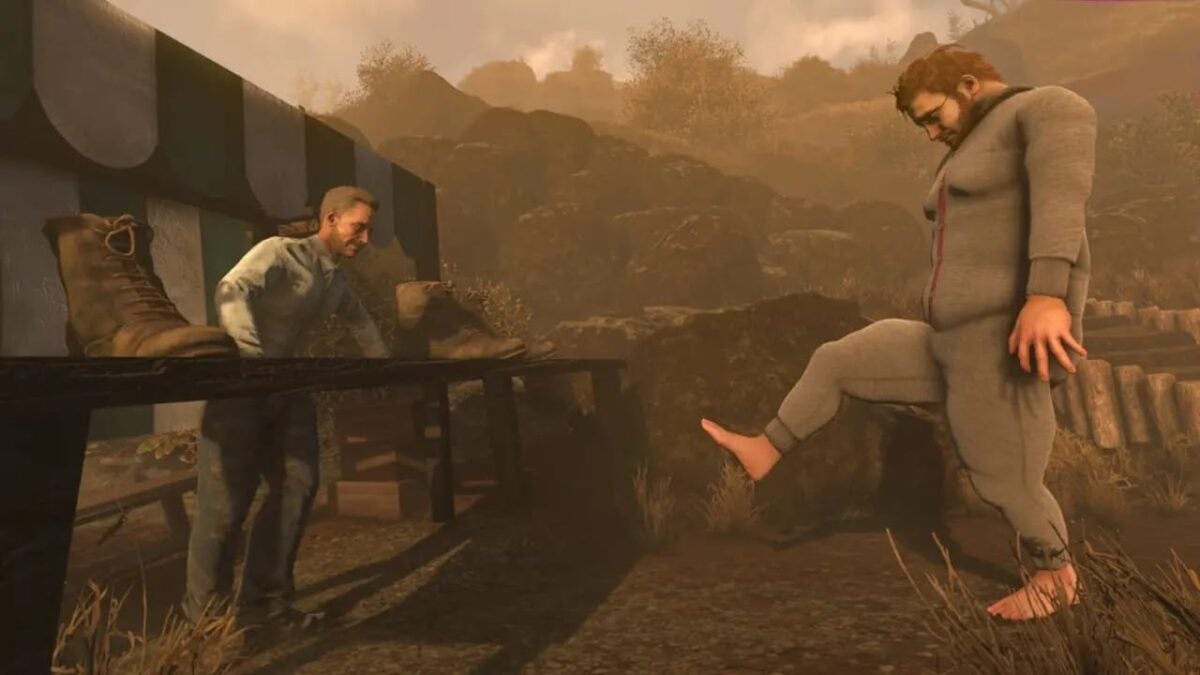
The level design of Baby Steps is inspired by a unique combination of elements, highlighting a custom map from the game Mirror’s Edge and a video of the Japanese skater Gou Miyagi. During a talk at the Game Developers Conference (GDC), developer Gabe Cuzzillo explained that the gameplay experience focuses on allowing players to progress at their own pace, promoting exploration instead of following predefined paths. This philosophy allows players to find their own way in challenging environments, making each adventure an exercise in discovery. The influence can come from many […]
The level design of Baby Steps is inspired by a unique combination of elements, highlighting a custom map from the game Mirror’s Edge and a video of the Japanese skater Gou Miyagi. During a talk at the Game Developers Conference (GDC), developer Gabe Cuzzillo explained that the gameplay experience focuses on allowing players to progress at their own pace, promoting exploration instead of following predefined paths. This philosophy allows players to find their own way in challenging environments, making each adventure an exercise in discovery.
Influence can come in many forms
Cuzzillo mentioned that the Sparrow Cumulus map, which challenges players to find their own path, was fundamental in the conception of Baby Steps. He stated: “When I played, I felt like I suddenly woke up, I found myself on paths filled with jumps and interruptions that resulted in dead ends, which led me to observe the space in a new way“. This design approach favors an experience where the player is not simply guided, but becomes the active explorer of their own experience.
Moreover, Gou Miyagi’s influence is reflected in the way Baby Steps allows players to freely explore and face obstacles that lead them to rethink how to approach each level. Cuzzillo revealed that the development process involved constant collaboration within the team, where testing was conducted and unexplored areas of the game were sought, driving curiosity and the desire for innovation. The result is an experience where learning occurs through trial and error, encouraging players to find a path that feels authentic and satisfying.
So, as they venture into the world of Baby Steps, players can expect a design that challenges expectations and fosters creativity at every step.
Many times it seems like everything has already been invented. How is it possible to innovate when we already live in the future? This seems especially true in video games, a medium where it feels like everything has already been done. All mechanics are standardized, conforming to genres and control mappings that are familiar to any player who has spent a little time with them. But even so, when we delve into the realm of indie games, there is always something that surprises us. For example, a game that Sony has dedicated a lot of love to in its events for a couple of […]
Many times it seems like everything has already been invented. How is it possible to innovate when we already live in the future? This seems especially true in video games, a medium where it feels like everything has already been done. All mechanics are standardized, conforming to genres and control mappings that are familiar to any player who has spent a little time with them. But even so, when we delve into the indie scene, there is always something that surprises us. For example, a game that Sony has dedicated a lot of love to in its events for the past couple of years.
Baby Steps was released discreetly last week, but not without making some noise. Having appeared in several PlayStation State of Play events, it caught attention for the uniqueness of its premise: we embody a man who, after spending hours watching One Piece lying on the sofa in his parents’ basement, finds himself teleported to the universe of a video game. But after so many hours lying down, he doesn’t even know how to walk. And he is too proud to admit it.
Walking is more mechanically complex than it seems
With that premise, Bennett Foddy, Gabe Cuzzillo, and Maxi Boch, creators of the little boy, make a brilliant game of exploration and self-discovery based on a single premise: what if walking were extremely complicated? And not in a Death Stranding way, which was hard but satisfying. Really complicated.
To make our protagonist, Nate, walk, we have to press the triggers and tilt the left stick of our controller. Each trigger controls one of the legs, and the stick controls the rest of the body. This means that if we press the left trigger, the left leg will lift. If, in addition to pressing the left trigger, we move the left stick, it will move the left leg forward, backward, or sideways. In this way, we will have to try to control Nate’s movements, from his clumsy trot to more precise movements, to achieve his goal. First, to find a bathroom to take a leak, and then, a more ambitious one: to reach the top of the mountain in front of him.
Of course, the game doesn’t make it easy for us. Although at first it’s normal to fall, we quickly get used to walking with a certain fluidity. But what would be trivial in any other game is a real challenge in Baby Steps. Going up a slope, not to mention climbing stairs, crossing a plank, or passing through a particularly narrow path is a particularly difficult challenge. If there is any kind of obstacle or we have to do something more complex, like climbing a wall, it can become almost impossible.
To improve in life, you have to take one step at a time
But that is part of the charm. Baby Steps is aware at all times of the challenge it poses and never punishes us, or not without offering us a bit of comedy in what it does. In that sense, it reminds us of the most hilarious moments of Dark Souls: it may throw a giant stone ball at our face, but isn’t there something comical about it, as if it came straight out of Humor Amarillo? And Baby Steps does the same.
Sometimes we fall off a cliff, or we step wrong and get swept downriver, losing all the progress we had made, but it never feels entirely frustrating. Partly because it’s comical how Nate moves and seems unfazed by all his misfortunes. Partly because of its open-world design. Whenever we fail, we arrive at a new place, an area we hadn’t seen before, or a new way to advance to where we had been before, showing us that failure as such does not exist in Baby Steps: only the possibility of discovering something new and, perhaps, even the opportunity for an even greater triumph.
This relates to the themes developed in the game. Nate is a person with ambitions and desires, but too scared to pursue them, who opens up frustratingly slowly throughout the game. And all the game mechanics relate to that narrative. How, in order to advance in life, it is necessary to take risks and make mistakes. That there is never anything from which we cannot return, because we are never going to do anything that is not a path that someone has walked before.
Baby Steps is, in many ways, the first true walking simulator. Because it truly focuses all its purpose on walking. And if you are interested in what we have shared about it, you can find it available for PC as well as for PlayStation 5.
Sony made a lackluster PlayStation Direct today that is saved thanks to a great announcement by Square Enix and a very good start.
Sony is not known for conferences that stand out in terms of pace or quality, except for honorable exceptions. Unfortunately, this PlayStation Direct has not been one of those exceptions. While there was a big surprise at the end and a good start, the conference got lost among half-baked announcements and dedicating too much time to things that didn’t need it. But that won’t stop us from summarizing everything that has happened so that you know all that they have announced. And even more importantly, so that you can assess everything properly.
The PlayStation Direct began with Baby Steps, and it was quite an intense way to start. Developed by Maxi Boch, Gabe Cuzzillo, and Bennett Foddy, the latter two have previously worked together on APE OUT, and Bennett Foddy is especially known for the successful game among streamers, Getting Over It with Bennett Foddy. Here, they continue with their same sense of humor, combining player frustration with pushing the boundaries of game design to find what makes an experience memorable. However, we’ll have to wait until summer 2024 for its release.
Next came a small VR segment. They showed a Ghostbusters game titled Ghostbusters: Rise of the Ghostlord, set to be released on October 26, and the VR mode for Resident Evil 4 Remake, scheduled for winter. They also announced the Resident Evil 4 Separate’s Ways DLC, which allows us to experience the adventure from Ada’s perspective and will be released on September 21, along with an update to the Mercenaries mode.
Outside of this block, there have been three games that have stood out especially. The arrival of Roblox on PlayStation 4 and PlayStation 5 on October 10, the release of Avatar: Frontiers of Pandora on December 7 and some technical aspects of Marvel’s Spider-Man 2, which will be released on October 20. Three advertisements that we already knew and that, despite having shown more about the games, have not shown much more that we did not know.
In addition to those, they have shown a quick preview of another game series. They have shown Ghostrunner II, an interesting platform hack’n’slash that will be released on October 26 and has a demo now available. They have shown Helldivers II, which will be released for both Steam and PlayStation 5, and have dated its release for February 8, 2024. They have announced a DLC for Tales of Arise, called Beyond the Dawn, for next November 9, without giving more information. They have tiptoed around the launch of Honkai: Star Rail on PlayStation 5 on October 11. And they have spent more time than the two previous announcements combined talking about Foamstars, a Splatoon clone that will have an open beta between September 29 and October 1.
Nevertheless, the big highlight came at the end. That’s when they announced that Final Fantasy VII Rebirth will be released on February 29, 2024. This closed a conference that lacked much excitement and could have been more interesting with a bit more effort from Sony.
Bennett Foddy has announced a new game, Baby Steps, which seems to follow closely what made Getting Over It successful among streamers.
Bennett Foddy has announced a new game at the Devolver Digital conference called Baby Steps. The developer, best known for the game “Getting Over It” – the game where players had to climb a haphazard pile of debris with a bald man inside a cauldron using only a hammer and notoriously difficult controls – has revealed a trailer that promises an equally surreal and frustrating experience as their previous game. It is expected that Baby Steps will appeal to streamers and YouTubers, much like “Getting Over It” did.
Baby Steps has been announced for a 2024 release on PlayStation 5 and PC. Expect nothing but frustration, hair-pulling moments, and absurd comedy derived from impossible controls, a trademark of Bennett Foddy’s career.