Disney+ subscribers will see an increase in the costs of their plans starting October 21. For now, this only applies to the US. This adjustment has become a recurring practice for the streaming platform, which seeks to maintain its profitability in an increasingly competitive market. The monthly subscription for the ad-supported plan will increase from $9.99 to $11.99, representing a $2 increase. Meanwhile, the Premium plan, which does not include ads, will see a $3 increase, going from $15.99 to $18.99 per month. Additionally, those who opt for the […]
Disney+ subscribers will see an increase in the costs of their plans starting October 21. For now, this only applies to the US. This adjustment has become a recurring practice for the streaming platform, which seeks to maintain its profitability in an increasingly competitive market. The monthly subscription for the ad-supported plan will increase from $9.99 to $11.99, representing a $2 increase. Meanwhile, the Premium plan, which does not include ads, will see a $3 increase, going from $15.99 to $18.99 per month. Additionally, those who opt for the annual payment will experience a $30 increase, bringing the total cost to $189.99.
It seems they haven’t learned anything from the controversy with Jimmy Kimmel
This announcement comes at a sensitive time for the company, which recently irritated its subscribers by suspending Jimmy Kimmel from its programming, although this decision was eventually reversed. This type of decision can complicate the acceptance of a new price increase, suggesting that the company will have to face a more hostile environment when justifying its rate increases.
It is important to note that, while Disney+ prices are increasing, the costs of NFL+, the streaming service for American football fans, will remain unchanged. This detail could be a relief for those looking to avoid additional expenses on their sports subscriptions.
The changes in Disney+ prices are significant, as they encompass both the ad-supported plans and the Premium ones, suggesting a comprehensive price increase strategy in their service offerings. The company has published detailed information about the new prices, which will be available to users starting from the mentioned date.
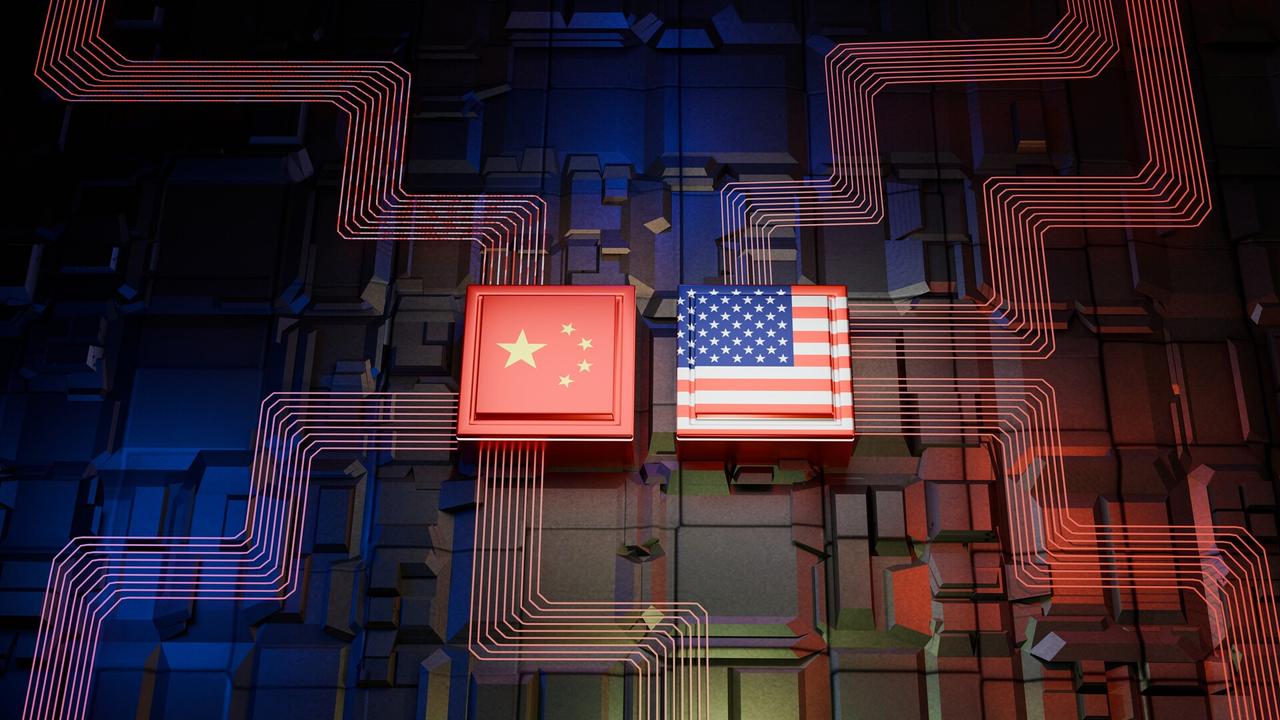
Washington and Beijing have reached a preliminary agreement that could pave the way for a U.S. company to take control of TikTok. This development comes amid a prolonged technological dispute between the two countries, which has been particularly tense since former President Donald Trump’s warnings about the continued presence of the app in
Washington and Beijing have reached a preliminary agreement that could pave the way for a U.S. company to take control of TikTok. This development comes amid a prolonged technological dispute between the two countries, which has been particularly tense since former President Donald Trump’s warnings about the presence of the popular app in U.S. territory without American ownership.
Two presidents and a destiny
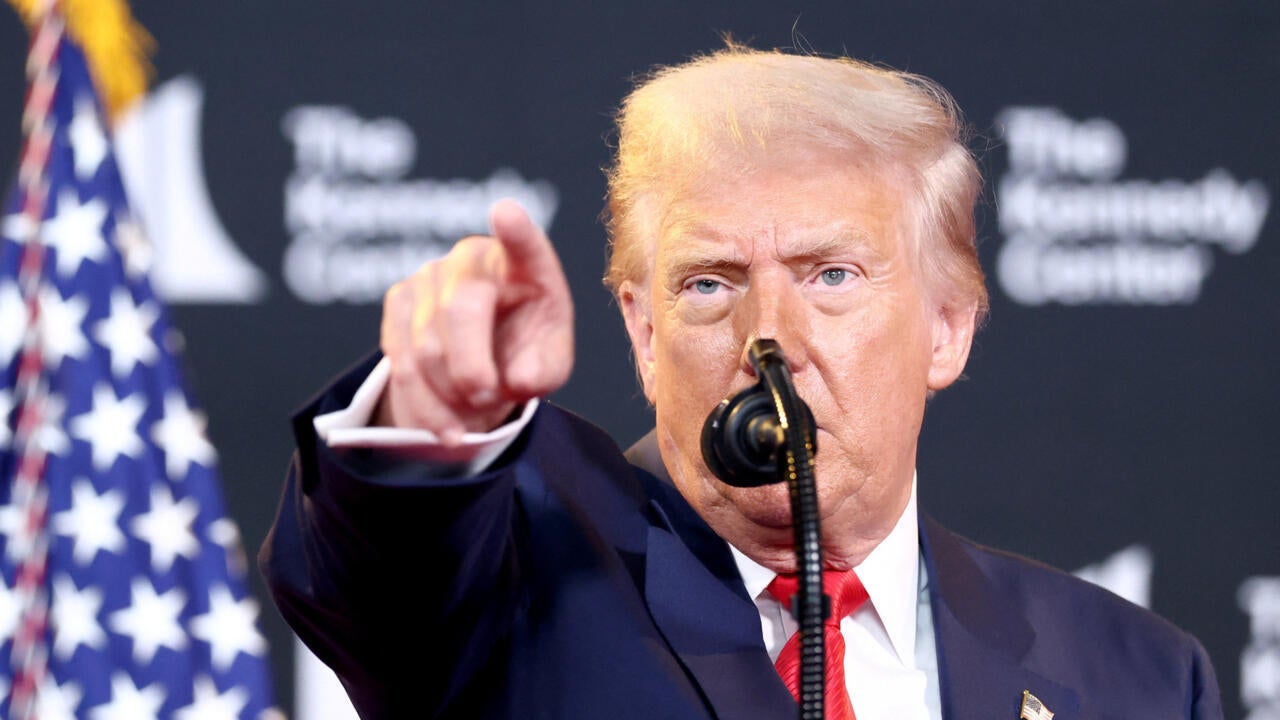
The Treasury Secretary, Scott Bessent, announced on Monday that a framework agreement has been established that could lead to a U.S. management of TikTok, highlighting a significant step towards resolving this conflict. In a post on his Truth Social platform, Trump celebrated the agreement, stating that it was a measure that many young people in the United States wanted, pointing to the popularity that the app has among the younger generation.
The context of this agreement is crucial; the U.S. Congress prohibited Apple and Google from distributing TikTok in their app stores last year, labeling the app as controlled by a “foreign adversary.” This measure underscores the growing concern over national security and data management in the digital age, as scrutiny over apps coming from China intensifies.
The meeting between Trump and Chinese President Xi Jinping will be crucial in determining whether this framework agreement becomes a binding pact, thus avoiding the possible forced exit of TikTok from the U.S. market. The implications of this meeting are significant, as the future of the app could influence the dynamics of trade and technological relations between the two powers. Additionally, there are rumors that this agreement could lay the groundwork for future commitments in other areas of the digital economy between the United States and China.
OpenAI and Anthropic have announced their collaboration with the governments of the United States and the United Kingdom with the aim of strengthening the security of their language models. Through a series of initiatives, the two companies are allowing government researchers to assess the vulnerability of their systems to potential cyber attacks. A noble goal that has more behind it than it seems In recent posts on their blogs, OpenAI and Anthropic revealed that they have been working with the National Institute of Standards and Technology (NIST) and the UK AI Security Institute. This cooperation includes the […]
OpenAI and Anthropic have announced their collaboration with the governments of the United States and the United Kingdom with the aim of strengthening the security of their language models. Through a series of initiatives, the two companies are allowing government researchers to assess the vulnerability of their systems to potential cyber attacks.
A noble end that has more behind it than it seems
In recent posts on their blogs, OpenAI and Anthropic revealed that they have been working with the National Institute of Standards and Technology (NIST) and the UK AI Safety Institute. This cooperation includes access to models, classifiers, and training data, allowing independent experts to examine the resilience of these models against external attacks and their effectiveness in preventing ethically questionable uses.
OpenAI identified critical vulnerabilities that could allow sophisticated attackers to take control of computer systems and impersonate users, with a success rate of 50% in an AI hijacking method. Although engineers initially believed these vulnerabilities were irrelevant, the research showed that their combination with hijacking techniques could be effective.
Both OpenAI and Anthropic are implementing “red-teaming” processes to quickly identify and fix these vulnerabilities, aiming to prevent the misuse of their technology. However, some security experts have expressed concern that this collaboration could lead to a decrease in attention to technical security, due to increased competitiveness in the global market.
However, researchers like Md Raz, a PhD student at New York University, argue that the models are becoming more resilient and harder to breach with each new version, suggesting a more rigorous approach to security in the latest developments like GPT-5.
A select committee of the U.S. House of Representatives has reported that Chinese actors impersonated Representative John Moolenaar with the aim of stealing key information that could influence trade negotiations between the United States and China. This incident has raised serious concerns about national security and the country’s trade relations. China vs. the United States: Fight! According to the committee’s statements, the intruders used identity spoofing techniques to pose as Moolenaar, which allowed them to obtain sensitive data. This type of maneuver not only puts specific individuals at risk, but […]
A select committee of the U.S. House of Representatives has reported that Chinese actors have impersonated Representative John Moolenaar with the aim of stealing key information that could influence trade negotiations between the United States and China. This incident has raised serious concerns about national security and the country’s trade relations.
China against the United States: Fight!
According to the committee’s statements, the intruders used identity theft techniques to impersonate Moolenaar, which allowed them to obtain sensitive data. This type of maneuver not only puts specific individuals at risk but can also affect business and strategic policies at the national level.
The stolen information could be used to manipulate business negotiations in favor of foreign interests, which raises alarms in the political and economic sphere. The actions of these Chinese actors are seen as a clear threat to the stability of bilateral relations between the U.S. and China, which are already in a tense context due to various trade and technological disputes.
2131862425
As the story unfolds, it is speculated that the actors may have had access to more information than was initially thought. This situation highlights the vulnerability of government infrastructures to cyber attacks and underscores the urgent need to strengthen security protocols.
Policymakers have emphasized the importance of thoroughly investigating this incident and taking appropriate measures to safeguard sensitive information and protect national security. This episode serves as a reminder that information technologies, while useful, can also be a battleground for misinformation and espionage.
For years, the Call of Duty campaigns have established a narrative in which the United States acts as the agent of order against foreign enemies. From the battlefields of World War II to the complexities of contemporary conflicts, this narrative has been a fundamental pillar of the franchise. However, the rise of a more nuanced global landscape has led key thinkers within the series to reconsider this representation. With a backup just in case, Glen Schofield, former director of Call of Duty, revealed that his decision not to point to a specific country […]
For years, Call of Duty campaigns have established a narrative in which the United States acts as the agent of order against foreign enemies. From the battlefields of World War II to the complexities of contemporary conflicts, this narrative has been a fundamental pillar of the franchise. However, the rise of a more nuanced global landscape has led key thinkers within the series to reconsider this representation.
With escort just in case
Glen Schofield, former director of Call of Duty, revealed that his decision not to point to a specific country as an enemy began after a disturbing experience during a press tour for Call of Duty: Modern Warfare 3. After receiving an offer to travel to Russia with an escort, Schofield felt a deep discomfort. “I don’t feel better about it,” he commented, reflecting on the insecurity that this type of environment could represent. This episode led him to commit to changing the focus in future games, preferring antagonists that were not nations, but corporate entities and private military companies.
The impact of this narrative choice was clearly felt in the production of Call of Duty: Advanced Warfare, where the antagonists are portrayed as corporations instead of countries. Schofield, at a dinner with journalists, articulated his desire to be able to visit different territories without the fear of being labeled as an enemy, which drove him to transform the representation of the villain in the series.
This evolution in the narrative approach reflects an adaptation not only to the perception of war today, but also to concerns about how nations are represented in video games, a topic that has gained critical relevance in contemporary culture.
The U.S. State Department has begun to face difficulties in its ability to address cyber threats following a recent reorganization of offices and a staff reduction that has affected its Cyberspace and Digital Policy Office (CDP). This situation has raised concerns about how the country will be able to effectively collaborate with its allies on cybersecurity. The government of the mess Approved in 2022, the Cyber Diplomacy Act established the creation of the CDP with the aim of strengthening internet infrastructure and improving the cyber capacity of U.S. partners […]
The U.S. Department of State has begun to face difficulties in its ability to address cyber threats following a recent reorganization of offices and a staff reduction that has affected its Cyber and Digital Policy Office (CDP). This situation has raised concerns about how the country will be able to effectively collaborate with its allies on cybersecurity issues.
The government of troubles
Approved in 2022, the Cyber Diplomacy Act established the creation of the CDP with the aim of strengthening internet infrastructure and improving the cyber capabilities of U.S. partners. However, in a move that has been criticized by many experts, the Department has decided to split the CDP into multiple offices, which jeopardizes its mission and the resources necessary for cooperation with allies.
This reorganization has not only led to the loss of specialized personnel, such as two strategists and several experts in bilateral affairs, but it has also affected the U.S. response to cyberattacks, which have been perpetrated by nations such as China, Russia, and Iran. The inability to secure cyber infrastructure could even compromise U.S. military operations abroad.
The Congress, recognizing the importance of robust cyber diplomacy, is considering a reauthorization that could restore the mandate of the CDP. However, experts warn that, despite legislative efforts, recovering lost capabilities will be a lengthy process. Cybersecurity experts who have left the department may seek more attractive opportunities in the private sector.
The United States government is preparing to launch a trade war that will affect Canada, Mexico, and China, which could cause chaos in international economies and an increase in video game prices. Although Mexico has received a one-month extension before being affected, the Entertainment Software Association (ESA) warns that this measure could have serious consequences for the video game industry and consumers, negatively impacting one of the most prominent entertainment sectors in the country. The ESA points out that, despite video games […]
The United States government is preparing to launch a trade war that will affect Canada, Mexico, and China, which could cause chaos in international economies and an increase in video game prices. Although Mexico has received a one-month extension before being affected, the Entertainment Software Association (ESA) warns that this measure could have serious consequences for the video game industry and consumers, negatively impacting one of the most prominent entertainment sectors in the country.
The ESA points out that, although video games are mainly distributed digitally and are mostly exempt from tariffs, essential hardware –including PCs, consoles, and peripherals– will be subject to taxes that could significantly increase prices for players. This is reflected in a recent projection that places total video game sales at 58.7 billion dollars for 2024, with declines in hardware and console sales, which amounted to only 4.9 billion dollars, compared to 6.5 billion dollars in 2023.
Expectations are not good for the video game under these circumstances
The uncertainty generated by the possible imposition of tariffs has raised concerns about future consumer spending in the industry. Mat Piscatella, executive director of Circana, commented that his initial forecast for spending in 2025 was 61.5 billion dollars, but it will now be revised due to the current circumstances. Although the full scope of this trade war and its impact on the video game sector is uncertain, it is feared that it could negatively influence both production and consumption.
Additionally, the issue of tariffs creates an atmosphere of uncertainty that could hinder the continuous growth of the industry, leaving video game publishers waiting for clarity in an environment marked by economic and commercial volatility.
Few things highlight the absolute disconnect between political elites and new generations more than the obsession they’ve developed in the United States with TikTok, the social network used not only by Gen Z, but also by Alpha and part of the Millennials. What started as a shot in the dark, trying to ban it across the country (and which no one took very seriously) has become not only a possible reality but a more than near future. Hashtag what’s happening It started as a boast using as an excuse […]
Few things highlight the absolute disconnect between political elites and new generations more than the obsession they have developed in the United States with TikTok, the social network used not only by Gen Z, but also by Alpha and part of the Millennial generation. What started as a shot in the dark, trying to ban it across the country (and which no one took very seriously) has become not only a possible reality, but a more than likely future.
It started as a boast using the “Chinese control” of TikTok as an excuse and has ended up in court. In fact, ByteDance, the company that runs the social network, only has until January 19 (that is, just over a month) to disassociate from it if it wants it to continue existing in the country. And if it refuses, the United States will block it, causing chaos among the youth.
There were doubts about it, but ByteDance’s appeal has ultimately not succeeded and has not allowed it to continue, providing the following argument: “The First Amendment exists to protect freedom of expression in the United States. Here the Government intends to protect that freedom from an adversary foreign nation with the intention of limiting the ability of that adversary to obtain data from people in the United States.”
Come on, explain to Johnny, a 12-year-old, that he won’t be able to do choreographies and watch memes anymore because China exists. He will understand it right away, and it will absolutely not have any political repercussions in the future. Let’s remember that 170 million people use TikTok in the United States, and their only salvation seems to be Donald Trump, who uploaded videos to the platform throughout his massively successful presidential and promised to “save it.” How, without breaking the separation of powers, is a mystery for now. For the moment, it might be time to build some sort of Bluesky for TikTok, because things don’t look good.
It was back in 2018 when Donald Trump targeted Huawei to make it the enemy. The reason, according to the White House at the time, was espionage. Huawei was spying on the United States through its 5G infrastructure. The reality, over the years, has become clear: Huawei was far ahead of American companies, and the dependence of the American giant on a key Chinese government company was unfeasible for Trump. This war ended recently when Huawei, so expelled from the American ecosystem (and therefore expelled from Android), cut the last ties it had with the […]
It was back in 2018 when Donald Trump targeted Huawei to make it the enemy. The reason, according to the White House at the time, was espionage. Huawei was spying on the United States through its 5G infrastructure. The reality, over the years, has become clear: Huawei was far ahead of American companies, and the dependence of the American giant on a key company of the Chinese government was unfeasible for Trump.
Subscribe to the Softonic newsletter and get the latest in tech, gaming, entertainment and deals right in your inbox.
This war ended recently, when Huawei, so expelled from the American ecosystem (and therefore expelled from Android), cut the last ties it had with the world’s most used operating system, owned by Google.
The war against Chinese companies did not end there, as the White House drew up a long list of Chinese companies that were suspected of collaborating with the Chinese government and posing a strategic threat to the United States. ZTE was one of those companies, along with Huawei and many others.
A planned House vote to allocate more than $3 billion to remove Chinese telecom equipment from US networks goes against market logic, and in the end, forcibly removing Chinese companies' equipment will only significantly increase costs for US telecom operators and negatively… pic.twitter.com/kALJtFA1kM
Approve a $3 billion budget to dismantle all Chinese infrastructure
The United States House of Representatives is scheduled to vote this week on the defense budget for 2025, which includes an allocation of 3 billion dollars to replace telecommunications equipment previously purchased from Huawei and ZTE.
According to Reuters, the equipment supplied by these companies poses security risks, especially because hackers affiliated with the People’s Republic of China (PRC) have been conducting a massive cyber-espionage campaign to compromise private U.S. telecommunications companies.
Congress also wants an intelligence report describing Chinese espionage efforts and the country’s biotechnological capabilities.
?? ?? US House to vote to provide $3 billion to remove Chinese telecoms equipment – Reutershttps://t.co/W4OQStuehn
The U.S. Federal Communications Commission (FCC) has previously created the Supply Chain Reimbursement Program (also known as the Rip and Replace Program) endowed with $1.9 billion so that network operators with ten million or fewer customers can obtain reimbursement for the removal, replacement, and disposal of hardware and services supplied by Huawei and/or ZTE.
However, the agency has previously stated that the total cost of replacing everything could reach $4.98 billion. Therefore, the $3 billion added to the National Defense Authorization Act for Fiscal Year 2025 should offset part of the deficit, helping more than 100 U.S. companies to dispose of potentially compromised equipment.
Although enormous, this amount is still not enough, as FCC Chairwoman Jessica Rosenworcel has urgently requested an additional $3.08 billion in funding from Congress. Thus, even if the FCC secures the full $3 billion, it will still need to provide another $80 million to cover the anticipated expenses.
Senator Maria Cantwell, chair of the Senate Commerce Committee, stated that the funding for this program will come from the auction of the advanced AWS-3 wireless spectrum, so it will likely not be a direct burden on the average taxpayer.
Aside from that, all Huawei and ZTE equipment that needs to be disposed of must be replaced, likely with U.S.-made products from Cisco and other major networking companies.
Thus, if Congress approves the full amount, the U.S. telecommunications sector could finally be freed from the alleged threat posed by the use of Huawei and ZTE communications equipment.
A plan that would make it a bit harder to download and consume illegal content. No matter how much you enjoy visiting your favorite pirate bay every Friday.
Depending on the country you live in, piracy can be a dangerous thing for you or not. For example, in Europe each nation has specific policies regarding this practice. In Spain, there is a lot of permissiveness, and in Germany, it is relentlessly pursued.
At this year’s CinemaCon, the President and CEO of the Motion Picture Association, Charles Rivkin, has revealed a plan that would make it a little more difficult to download and consume illegal content. It doesn’t matter how much you enjoy visiting pirate bay every Friday.
Rivkin has stated that the association will work with Congress to establish and implement legislation for blocking piracy websites in the United States. He added that nearly 60 countries use website blocking as a tool against piracy, “including major democracies and many of the closest allies of the United States.”
United States wants to block illegal audiovisual content sites
The only reason why the United States is not one of them, he continued, is the “lack of political will, combined with an outdated understanding of what blocking sites really entails, how it works, and who it affects.”
With the current law, “film and television producers, music and book publishers, sports leagues, and broadcasters” can request the court to order Internet service providers to block websites that share stolen content.
Rivkin, arguing in favor of site blocking, explained that the practice does not affect legitimate businesses. And he said that legislation regarding this practice would require detailed evidence demonstrating that a specific entity engages in illegal activities and that alleged perpetrators can appear in court to defend themselves.
Rivkin cited FMovies, an illegal movie streamer, as an example of how site blocking in the US would minimize traffic to piracy websites. Apparently, FMovies receives 160 million visits per month, one third of which come from the United States. If the regulation also existed in the country, the website’s traffic would theoretically decrease quite drastically.