In an event that has surprised the tech community, the new artificial intelligence model Grok-4 was released just 48 hours after its launch. This rapid vulnerability reveals not only weaknesses in software security but also the growing ability of hackers to find and exploit flaws in sophisticated systems. Record time The methods used to carry out the jailbreak of Grok-4 have been identified as Echo Chamber and Crescendo. The first, Echo Chamber, focuses on creating a controlled environment where the system’s responses can be manipulated, facilitating unauthorized access. Crescendo, […]
In an event that has surprised the tech community, the new artificial intelligence model Grok-4 was released just 48 hours after its launch. This rapid vulnerability reveals not only weaknesses in software security but also the growing ability of hackers to find and exploit flaws in sophisticated systems.
Record Time
The methods used to carry out the jailbreak of Grok-4 have been identified as Echo Chamber and Crescendo. The first, Echo Chamber, focuses on creating a controlled environment where the system’s responses can be manipulated, facilitating unauthorized access. Crescendo, on the other hand, represents a more aggressive tactic of information accumulation and exploitation of weaknesses in the software architecture. Both techniques have been employed in the past in attacks on other artificial intelligence systems, suggesting a pattern that cybersecurity researchers will need to analyze swiftly.
The launch of Grok-4, which took place recently, had been anticipated as a significant advancement in artificial intelligence technology, promising more accurate and efficient algorithms. However, its rapid exposure to attacks raises concerns about security in the development of such products. The development community and cybersecurity experts are now on alert, seeking ways to protect future iterations of artificial intelligence and to prevent similar incidents.
Rumors in the sector suggest that Grok-4 may not be the only system with similar vulnerabilities, indicating that this type of attack could be more common than previously thought. Meanwhile, developers are expected to take immediate action to address these security issues, thus protecting both their technology and end users.
You can no longer trust even your lifelong brands: several cybersecurity researchers have warned about an increase in phishing campaigns that use impersonation of recognized brands to deceive victims, leading them to call numbers controlled by malicious actors. This technique, known as telephone-oriented attack delivery (TOAD), relies on victims communicating with attackers under the premise of resolving a problem or confirming a transaction. “Tell me?” Well, it’s a scam According to a report from Cisco Talos, among the most impersonated brands are Microsoft and […]
You can no longer trust even your long-time brands: several cybersecurity researchers have warned of an increase in phishing campaigns that use impersonation of recognized brands to deceive victims, leading them to call numbers controlled by malicious actors. This technique, known as telephone-oriented attack (TOAD), relies on victims communicating with attackers under the premise of resolving a problem or confirming a transaction.
Tell me? Well, it’s a scam
According to a report by Cisco Talos, among the most imitated brands are Microsoft and Docusign. Phishing emails that include legitimate PDF files, such as those from Adobe, increase the effectiveness of these attacks. Criminals take advantage of a Microsoft 365 feature that allows them to send phishing emails without needing to compromise accounts, affecting more than 70 organizations.
These attacks, which often convey a sense of urgency, employ sophisticated social engineering tactics, mimicking real customer support workflows. Researchers point out that live interaction through phone calls allows attackers to manipulate victims’ emotions and responses, increasing the risk that they will disclose sensitive information or install malware on their devices.
The use of artificial intelligence-powered tools has facilitated the creation of large-scale phishing pages, and researchers have also warned about the possible use of language models to flood queries with malicious links. Additionally, attempts have been detected by malicious actors to influence the search results of legitimate sites, using techniques to integrate phishing links into compromised pages.
These practices not only threaten the security of organizations, but also erode user trust in brands, highlighting the need for effective solutions to detect and prevent brand impersonation in the cyber realm.
After more than five years since its launch, Call of Duty: Warzone has once again captured the attention of the gaming community with the return of its iconic map, Verdansk. Players consider it a symbol of the title’s identity, and its return has led to a remarkable 200% increase in the player base on Steam, reaching over 110,000 simultaneous players after the Season 3 update of Black Ops 6, according to data from Insider Gaming. A great success for the franchise Nostalgia plays a crucial role in this resurgence. Verdansk is not just a map; […]
After more than five years since its launch, Call of Duty: Warzone has once again captured the attention of the gaming community with the return of its iconic map, Verdansk. Players consider it a symbol of identity for the title, and its return has led to a remarkable 200% increase in the player base on Steam, reaching over 110,000 simultaneous players following the update of Season 3 of Black Ops 6, according to data from Insider Gaming.
A great success for the franchise
Nostalgia plays a crucial role in this resurgence. Verdansk is not just a map; it represents a golden period for fans. This magic formula has revitalized interest in Call of Duty on the largest PC platform, attracting many players who had drifted away from the title. However, the return of Verdansk has also served to reignite the persistent issues that have affected the gaming experience, such as the growing threat of hackers.
Despite the increase in the number of users, Activision faces the challenge of maintaining this interest in the long term. With the community demanding effective solutions against cheating, the company has indicated that many players incorrectly report their console counterparts, when it is generally the PC users who violate the game rules.
At a time when Call of Duty was losing players, the return of Verdansk offers a respite, but developers must act quickly to resolve hacking issues and ensure a fair gaming experience. The coming months will be crucial for Activision, as nostalgia, while powerful, may not be enough to sustain player interest without the necessary improvements. Rumors suggest that the company may implement new measures to combat this issue and secure the future of the game.
In a victory for console players who are tired of the cheating problem in Call of Duty, Activision has announced that starting with Season 3 of Black Ops 6, scheduled for April 2, players will be able to disable crossplay in unranked matches. This highly requested option for years represents a significant change in the dynamics of the popular action title, as it was previously only available in ranked multiplayer and Warzone modes. No more having to play with cheaters Activision warns that selecting the “console only” option […]
In a victory for console players who are tired of the cheating problem in Call of Duty, Activision has announced that starting with Season 3 of Black Ops 6, scheduled for April 2, players will be able to disable crossplay in unranked matches. This highly requested option for years represents a significant change in the dynamics of the popular action title, as it was previously only available in ranked multiplayer and Warzone modes.
No more playing with cheaters
Activision warns that selecting the “console only” option could have a negative impact on wait times, and acknowledges that disabling cross-play will likely slow down matchmaking. Although nearly 60% of reported cheaters are on console, most of the irregularities occur on PC. This discrepancy has led many players to disable cross-play to avoid the cheating problem, contributing to an atmosphere of distrust towards lobbies where players from different platforms participate.
Despite the fact that Call of Duty remains one of the most popular titles in the world, the widespread perception that it is “full of cheats” could influence many players’ decision to abandon cross-play. Reactions within the community are varied; some are concerned about the impact on wait times, while others believe that the measure could minimally affect matchmaking. Some PC players have expressed their discontent with the change, commenting that they hope it does not disrupt their gaming experience.
In this context, some users have suggested that, if the option to limit gameplay by platforms were enabled, PC players should have the ability to exclude specific consoles from their lobbies. Undoubtedly, the arrival of this new option marks a step towards greater customization in the gaming experience, although it also raises concerns about the balance of the matchmaking system in the community.
The problems related to hackers in Call of Duty continue to discourage players from participating in Activision’s releases. Although the company has implemented the Ricochet anti-cheat system as a measure to combat this phenomenon, its effectiveness has been tested, and many players still express distrust after each match. According to recent reports, more than 60% of the reports of cheaters in Call of Duty: Warzone are incorrectly directed at console players, while the real focus of hackers is on the PC platform. The Call of Duty system is good, but the […]
Issues related to hackers in Call of Duty continue to discourage players from participating in Activision’s releases. Although the company has implemented the Ricochet anti-cheat system as a measure to combat this phenomenon, its effectiveness has been put to the test, and many players still express distrust after each match. According to recent reports, more than 60% of reports of cheaters in Call of Duty: Warzone are incorrectly directed at console players, while the real focus of hackers is on the PC platform.
The Call of Duty system is good, but the players are not
Ricochet has been designed to improve hacker detection, but the reality shows that, despite mass bans and system updates, players continue to frequently report unfounded claims. Activision has been surprised to see that such a high number of reports focuses on users of PlayStation and Xbox, when, according to the company’s data, cheating on console is uncommon compared to PC.
The upcoming season of Call of Duty: Black Ops 6 is scheduled to premiere on April 2 and will include a variety of new content. The arrival of new maps such as Firing Range, Barrage, and Nomad is expected, along with the return of the popular map Verdansk to Warzone. There will also be classic game modes like Demolition and Sniper, as well as the return of iconic weapons from Modern Warfare 2019, including the Kilo 141 and CR-56 AMAZ rifles.
Likewise, the update promises an improved killcam, designed to minimize false reports about potential hackers, and the addition of new operators like Huson and Mace. With these additions, Activision aims to restore trust in its player community and provide a more balanced and enjoyable experience.
The resounding success of Call of Duty: Black Ops 6 has been overshadowed by a series of challenges currently facing Treyarch’s title, resulting in a notable loss of users. Activision has decided to act on this situation and has announced a free trial that will allow players to access the multiplayer and Zombies mode from February 6 to 10. This offer is aimed at PlayStation, Xbox, and PC users, and it is expected to help revitalize the game’s player base. During this trial period, participants will be able to enjoy […]
The resounding success of Call of Duty: Black Ops 6 has been overshadowed by a series of challenges currently facing Treyarch’s title, resulting in a notable loss of users. Activision has decided to act on this situation and has announced a free trial that will allow players to access the multiplayer and Zombies mode from February 6 to 10. This offer is aimed at PlayStation, Xbox, and PC users, and is expected to help revitalize the game’s player base.
During this trial period, participants will be able to enjoy a selection of content from Season 2, including access to 10 multiplayer maps. Among them are the new maps Bounty and Dealership, as well as popular modes like Nuketown 24/7 and Stakeout 24/7. Additionally, the Zombies mode will include maps like The Tomb and Liberty Falls, giving players the opportunity to experience the latest game updates at no cost.
Many Very Serious Problems in a Game That Promised to Be Activision’s Swan Song
Despite these initiatives, Call of Duty Black Ops 6 is not without its problems. Recently, more than 136,000 players have been banned due to the proliferation of hackers, which has caused frustration in the community. Additionally, criticisms of the skill-based matchmaking system (SBMM) have increased, and many users have complained that certain maps are unconvincing and that there are bugs in the menus. There have also been concerns regarding respawn issues and the lack of appeal in the game’s streaks.
With these concerns on the horizon, Activision’s free trial could be a key opportunity to revitalize interest in Call of Duty: Black Ops 6 and address the issues that have affected its performance in the competitive video game market.
What is the first video game in history? Many will consider it to be Pong, from 1972. Others might say a version of Tic-Tac-Toe called OXO that was made at the University of Cambridge in 1952, which didn’t have moving graphics but did have interaction with the player (the computer that ran it, by the way, took up an entire room, and its controller was… a rotary dial telephone). Or perhaps Tennis for Two, a kind of side-view tennis game that was understood as simple entertainment and never had a commercial vision. In fact, after […]
What is the first video game in history? Many would consider it to be Pong, from 1972. Others might say a version of Tic-Tac-Toe called OXO that was made at the University of Cambridge in 1952, which did not have moving graphics but did have interaction with the player (the computer that ran it, by the way, occupied an entire room, and its controller was… a rotary dial telephone). Or perhaps Tennis for Two, a kind of side-view tennis game that was understood as simple entertainment and never had a commercial vision. In fact, after 1959 it was dismantled to use its components in other projects.
All are valid in one way or another, but it can be said that the first video game, as we know it, was born in 1962: a space battle between ships called SpaceWar! which was not only the first contact for many with programming, but also… the first creative commons game in history, which was tweaked, improved, and re-released across several universities until it had dozens of versions throughout the United States.
There are two places where this story begins. The first, in the offices of Digital Equipment Corporation, a company that in 1959 was just two years old and had been able to create a revolutionary minicomputer, the PDP-1, which cost $120,000 (a little over a million today, considering inflation) and weighed exactly what you are thinking when you hear the word “mini”: 730 kilos of nothing. But of course, it had to house its amazing 9.2 Kb of power somewhere!
Only 53 units of the PDP-1 were made. One of them, in 1961, ended up being donated to MIT (the university of Massachusetts known worldwide as one of the most cutting-edge in the world), where it became the favorite toy of an entire community of hackers. Yes, although now the word has negative connotations, back then it referred to people eager to write code, learn to program, and use the then-novel computers of tomorrow. And if they could have fun along the way, all the better.
It is there where we find the second place that begins the story, the Tech Model Railroad Club. Yes, exactly: a club where they made scale models of trains and locomotives. And the members were divided into two: those who wanted to enjoy the realism of the models and those who wanted to use computing to ensure that the trains ran correctly on the tracks. Gradually, these evolved into the world’s first computer programmers. And it wasn’t easy.
Let the Space War Begin!
When talking about the PDP-1, you might think of a computer like the one you have near you right now: a screen, a keyboard, a mouse… Well, not exactly. The first prototype of a mouse was created in 1964 and the first keyboard in 1973. Those gigantic structures were operated with all kinds of plugs and buttons… and from there they could program things that now seem basic to us, like word processors, but which were incredibly novel at the time. They were even able to reproduce Bach’s fugues, Mozart’s songs, Beethoven’s Symphony No. 9, or even the Ode to Joy! Yes, now we have Spotify, mp3, and wav, but imagine doing that with less than 10 kb of memory and no guide on how to achieve it.
In this situation of limitless creativity, we find a group of kids, the Hingham Institute, who wanted to create the first “computer toy” or, as we know it now, video game. In fact, they believed that was the highest aspiration a computer could achieve. Being fans of space opera thanks to novels like The Secret Planet or The Skylark of Space by E. E. Smith, they decided to pursue their dreams: two ships in space shooting at each other. Sounds easy, right? Now imagine being the first to do it in 1962, without being able to Google “how to program an easy video game” or ask ChatGPT.
Steve Russell became the project leader, a legendary student who didn’t even finish his studies at Dartmouth because he was quickly hired as a professor. And it didn’t take him five years to program it, like current games: in just two months he had written the 2000 lines of code necessary for it to work. Not bad considering he could only use the computer when no one else was using it. That is, in the early hours, when the rest of the university was asleep.
His prototype wasn’t the best in the world, and he was aware of it. Once he finished it, it was time for the other students to add rhythm, dynamism, and what we now know as mods. The code was completely open for anyone to modify and make their own version: one created a multiplayer mode, another altered gravity, yet another allowed the player to flee… And there was even someone who found the ultimate key: a scoring system to compete, continuously try to improve… And make the queue of people waiting to try it at the demonstrations move faster. In short, a classic arcade game.
You can imagine the heightened creativity of twenty-year-olds who have just discovered their vocation (and, incidentally, video games for the first time). SpaceWar! quickly became a hit around universities, especially because the PDP-1 was included as a program in every unit sold since then. Of course, no one made a penny, although it would have been a success. Gradually, students were playing, enjoying, learning, and forming the world’s first group of video game fans. Both playing them and making them. And among them were some of the people who would create the industry just a few years later. And it all started with a computer that didn’t even have a keyboard. Well, minicomputer.
This bug can allow hackers access to all of your personal data just by receiving an iMessage!
We’ve all had close calls when it comes to getting our phones hacked.
Sometimes we click on a malicious link while browsing the internet. Sometimes we download a shady app that is sending data in the background. All of these things typically boil down to our own human error whether it be from lack of knowledge, or taking a chance on a shady app. However, it was recently discovered that an iPhone can be hacked simply by receiving an iMessage. This has brought more attention to a relatively new type of hacking tool known as “interaction-less” bugs.
The bugs were found by looking for flaws while reverse engineering iMessage. The researcher, Natalie Silvanovich, did not find any similar bugs in Android phones. However, throughout the years, she and her team have found similar bugs in apps like WhatsApp and FaceTime.
The best thing you can do is to make sure you are updating your phone whenever you can. According to Silvanovich, Apple has already patched six of these bugs in updates.
You should also run regular virus scans on your phone to make sure that you are virus-free. We highly recommend using Malwarebytes since it is both free and efficient.
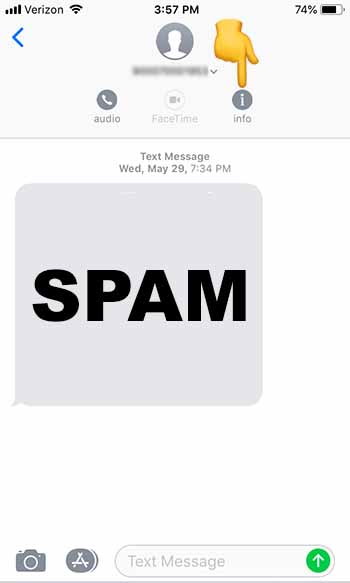
You can also block texts from unknown numbers so that you won’t hear from them again. To do this, follow these steps:
1. Go to the Messages app
2. Tap on the spam message you received to open it
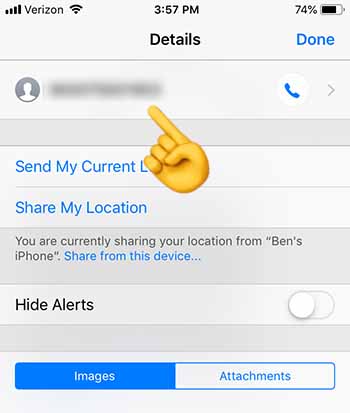
3. Tap at the top of your phone until the “Info” button appears.” Tap “Info”
4. Tap on the number at the top of the screen
5. Scroll down to the bottom, and tap “Block this Caller”
6. You should stop receiving texts from this number altogether
If you do receive a shady text from an unknown number, you should block the caller, and then run Malwarebytes. Once you’re done, check and make sure that your phone is up to date.
Wrapping up
Although there is virtually no chance that your up-to-date iPhone will be hacked through this method, the question now remains: “How did Apple leave this vulnerability in the first place?” If you’re spending hundreds of dollars on an iPhone, you should rest assured that it won’t be easy for a hacker to access your personal data. Just recognize that your security depends on your vigilence.
In case you’ve never heard of it, Tor is a web browser that allows you to surf the web privately without fear of government surveillance or being tracked. It is very popular in Russia although it is available in other countries.
Aside from this recent news, it’s okay, but there are better options that we will get into later.
How were they trying to do this?
When someone uses Tor, their internet service provider gets a ping that lets them know that it is being used. However, the ISP doesn’t get notified about what websites they were surfing.
The hackers stole more than seven terabytes of data from SyTech, the Russian Intelligence contractor.
In that data, they discovered that SyTech planned to use a program called Nautilus-S to discover what website a Tor user was on before closing the window.
Did it work?
Oddly enough, this breaching plan seemed like more trouble than it was worth. Even if you were a Tor user in Russia, there was a slim chance that you were susceptible to the breach, and an even slimmer chance that the info would be sent back to SyTech.
According to a statement from a Tor spokesperson, even if a Tor user was affected by the breach, they were still kept anonymous.
What should I do?
Unless you live in Russia and worry about government surveillance, you probably aren’t a Tor user. If you are, you might want to switch your browser of choice.