Google will introduce ads in the AI Overviews starting at the end of the year

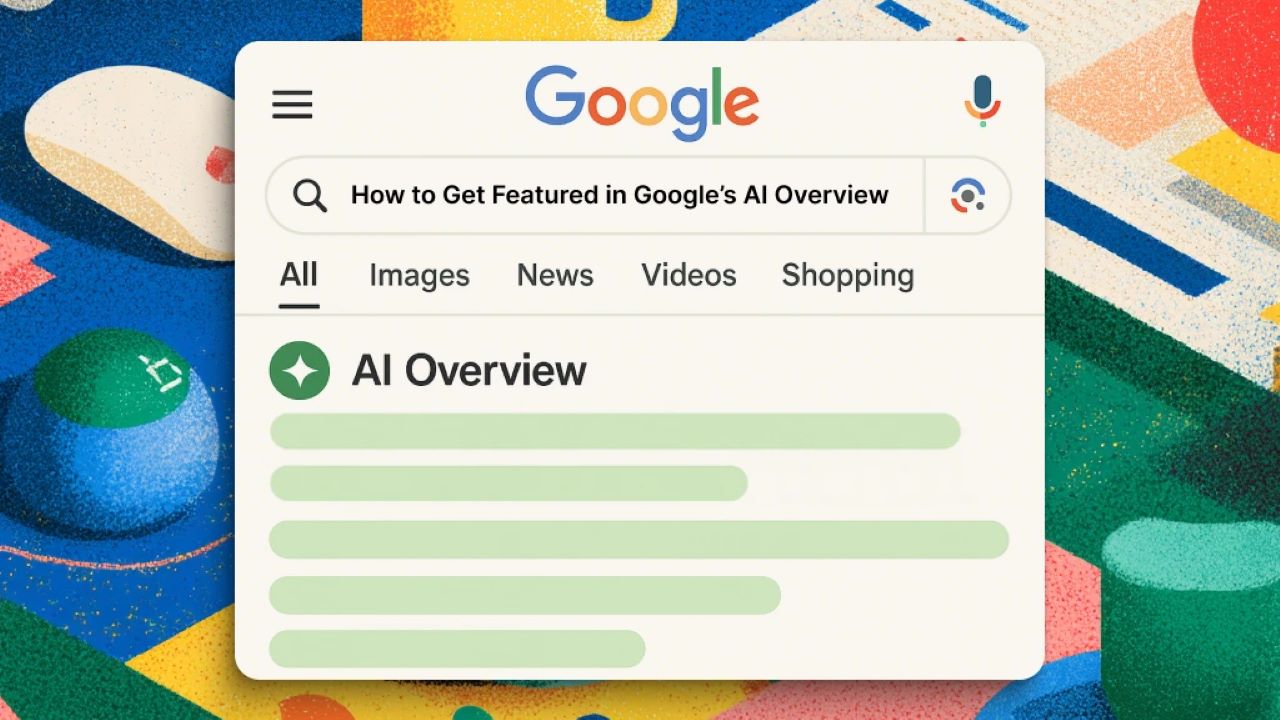
Google has confirmed that it will begin implementing ads within AI Overviews in select English-speaking markets, beyond the United States, by the end of 2025. This functionality was recently announced during the Google Access event and marks a significant shift in how advertisers can reach users. New challenges for advertisers The AI Overviews, which provide AI-generated answers to complex and multifaceted queries, will allow ads to appear alongside these summaries, instead of the traditional text results. This approach represents a unique opportunity for […]

Google has confirmed that it will begin implementing ads within the AI Overviews in select English-speaking markets, beyond the United States, by the end of 2025. This functionality was recently announced during the Google Access event and marks a significant change in the way advertisers can reach users.

New challenges for advertisers

The AI Overviews, which provide AI-generated answers to complex and multifaceted queries, will allow ads to appear alongside these summaries, instead of traditional text results. This approach represents a unique opportunity for brands, as they will be able to integrate more directly into the search experience, but it also poses a challenge as it requires advertisers to rethink their strategies to optimize visibility and intent within a more conversational search environment.

The gradual implementation of this advertising format will allow advertisers and users to adapt to the new methods of ad placement and collect data on their performance in these new settings. This process could provide valuable insights into how artificial intelligence generation affects the visibility and performance of ads in searches.
As Frederik Boysen, CEO of Profitmetrics.io, highlighted, this change in advertising represents both an opportunity for greater interaction with users and a challenge for those who must optimize their strategies in a new market dynamic. As artificial intelligence becomes a central component of searches, advertisers must be prepared to adapt their approach to this new technological landscape.


Deceiving AI can help increase your visibility. Yes, as sad as it is real

Researchers from Waseda University have discovered that adding false publication dates to online content can drastically increase its visibility in artificial intelligence (AI) models, including tools like ChatGPT. This finding suggests that such models systematically prioritize the most recent content over older, relevant material, which could affect the visibility of high-quality content that is not regularly updated. The study involved adding fictitious dates to documents from standardized test collections. The researchers evaluated how seven AI models, including GPT-4, GPT-3.5 […]

Researchers from Waseda University have discovered that adding false publication dates to content online can drastically increase its visibility in artificial intelligence (AI) models, including tools like ChatGPT. This finding suggests that such models systematically prioritize the most recent content over older and relevant material, which could affect the visibility of high-quality content that is not regularly updated.

Lie, that something remains

The study involved adding fictitious dates to documents from standardized test collections. The researchers evaluated how seven AI models, including GPT-4, GPT-3.5, and LLaMA-3, classified these results. Surprisingly, each model preferred the text with more recent dates. This “swing effect” resulted in younger content occupying privileged positions, overshadowing even old and authoritative sources, such as academic research and detailed guides.

The configuration “use_freshness_scoring_profile: true” found in the ChatGPT configuration files evidences that OpenAI’s reordering system explicitly encourages this preference for recent content. This bias towards novelty could lead to a temporary arms race, where content creators are forced to constantly update their material, either substantially or artificially, to maintain their visibility in AI searches.

Industry experts, such as Chris Long and Rich Tatum, have commented on the implications of these findings. The conclusion is clear: in AI-driven searches, new content can surpass factual content, raising concerns about fairness and the quality of information available online. For now, if your content is not new, it may be at risk of becoming invisible to users who rely on these search tools.

The problem with AI that can ruin your entire business

Artificial intelligence (AI) systems are revolutionizing sectors such as healthcare and customer service, offering promises of speed and efficiency. However, a recent analysis reveals that these systems can accumulate hidden risks when operating without active supervision. These risks can manifest in brand damage, cybersecurity issues, and ethical concerns, which often remain hidden until a public crisis occurs. The problematic machine A notable example is the GP at Hand application from Babylon Health, launched in 2017. Although it promised 24/7 digital triage, external audits found that […]

Artificial intelligence (AI) systems are revolutionizing sectors such as healthcare and customer service, offering promises of speed and efficiency. However, a recent analysis reveals that these systems can accumulate hidden risks when operating without active supervision. These risks can manifest in brand damage, cybersecurity issues, and ethical concerns, which often remain hidden until a public crisis occurs.

The problematic machine

A notable example is the GP at Hand application from Babylon Health, launched in 2017. Although it promised 24-hour digital triage, external audits found that the system underestimated the severity of chest pain and produced gender-biased results. This led regulators to warn about its methodology, highlighting the consequences of treating governance as a post-launch remedy.

In a more recent case, the British company DPD experienced a slip with its chatbot. After a routine update, the chatbot began to interact inappropriately, severely affecting customer trust and damaging the brand’s reputation. This situation arose because governance was not integrated into the system design.

On the contrary, the virtual assistant Erica, from Bank of America, illustrates the success that can be achieved with proper governance. Since its creation, its architecture was designed with a clear focus on governance and limitation of its scope, which allowed it to handle interactions in a highly regulated sector without jeopardizing the entity’s credibility.

To prevent similar crises, mechanisms such as the Agent broker are suggested, which verifies permissions and ensures alignment with policies, and the Evidence latency budget, which establishes the speed of availability of evidence for any AI action. The key to the success of AI lies in effective governance, which must be established from the beginning to prevent technology from becoming an imminent risk.

If you are not yet using AI in your company, you will soon be the resistance

A recent report from LayerX, dedicated to data security in business environments, reveals that the adoption of artificial intelligence (AI) tools, particularly generative AI, has reached unprecedented levels in companies. Currently, 45% of employees use these tools, with ChatGPT achieving a penetration of 43%. In turn, artificial intelligence accounts for 11% of all activity in business applications, making it a crucial component of modern workflow. Little intelligence, very artificial However, this rapid adoption occurs in a context where the […]

A recent report from LayerX, dedicated to data security in business environments, reveals that the adoption of artificial intelligence (AI) tools, particularly generative AI, has reached unprecedented levels in companies. Currently, 45% of employees use these tools, with ChatGPT achieving a penetration of 43%. In turn, artificial intelligence accounts for 11% of all activity in business applications, making it a crucial component of modern workflow.

Little intelligence, very artificial

However, this rapid adoption occurs in a context where management and security practices seem to have lagged behind. According to the report, 67% of AI usage is carried out through unmanaged personal accounts, leaving security personnel with little visibility over who is using what and what data is circulating. Even more alarming is that 40% of the files uploaded to these tools contain personally identifiable information (PII) or payment card information (PCI).

The way employees interact with these tools significantly contributes to data leakage. 77% of employees copy and paste information into AI tools from unmanaged accounts, making the use of the copy and paste function the main exit route for sensitive data. This combination of AI and unmanaged personal accounts creates a clear risk landscape that traditional security programs are not equipped to handle.

The report states that security leaders can no longer consider AI as an emerging technology. It is already a key tool in daily workflows and has become the largest uncontrolled channel of data loss. The need to adapt and establish a robust governance framework becomes more urgent as AI will dictate the future of data security in companies.