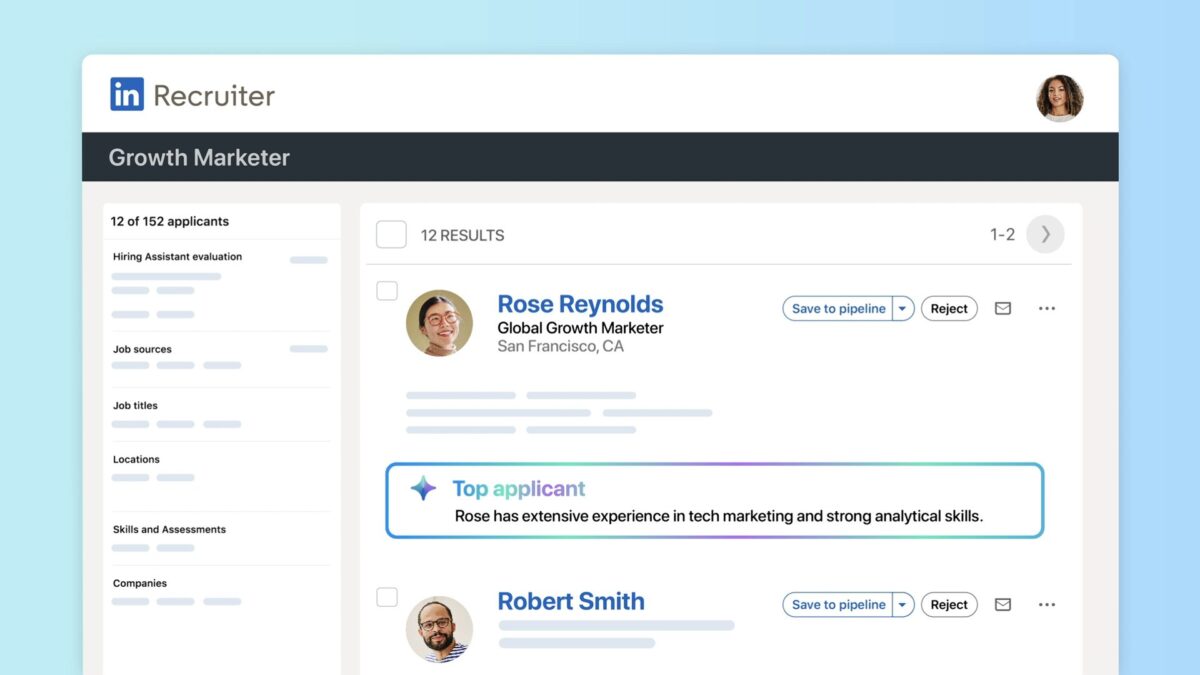
LinkedIn, Microsoft’s professional social network, has announced the launch of “Hiring Assistant,” its new artificial intelligence tool aimed at recruiters. The platform has focused this project on simplifying hiring tasks, from writing job descriptions to searching for and communicating with potential candidates. LinkedIn describes this tool as a crucial advancement, highlighting it as its first AI agent and emphasizing its potential in the recruitment sector. The platform has launched Hiring Assistant for a select group of clients, including large companies like AMD, Canva, Siemens, and […]
LinkedIn, the professional social network of Microsoft, has announced the launch of “Hiring Assistant,” its new artificial intelligence tool aimed at recruiters. The platform has focused this project on simplifying hiring tasks, from writing job descriptions to searching for and communicating with potential candidates. LinkedIn describes this tool as a crucial advancement, highlighting it as its first AI agent and emphasizing its potential in the recruitment sector.
Subscribe to the Softonic newsletter and get the latest in tech, gaming, entertainment and deals right in your inbox.
The platform has launched Hiring Assistantfor a select group of clients, including large companies like AMD, Canva, Siemens, and Zurich Insurance, and plans to expand its availability in the coming months. LinkedIn has been a pioneer in integrating AI into its internal operations, using algorithms that generate accurate connection recommendations.
However, the popularity of generative AI in recent years has prompted the company to update its interface and leverage its relationship with OpenAI, through which it has launched tools such as learning trainers and assistants for marketing and personnel selection.
Hiring Assistant stands out for automating manual tasks, allowing recruiters to focus on more strategic aspects of their work. Since launching assistants to classify candidates in Recruiter 2024 a year ago, LinkedIn has expanded AI functions for the hiring sector.
Now, with Hiring Assistant, the company seeks to delegate repetitive processes to AI, as explained to TechCrunch by Hari Srinivasan, LinkedIn’s Vice President of Product, who commented that the tool allows uploading or creating customized job descriptions based on desired models and qualifications, to then automatically generate a list of potential candidates.
In addition to having AI algorithms that filter candidates based on skills, Hiring Assistant integrates with external applicant tracking systems, using LinkedIn data as a base, which covers over one billion users, 68 million companies, and 41,000 skills. This helps recruiters find candidate matches without relying on traditional factors such as location or education.
LinkedIn also plans to add new features soon, such as automatic messaging, interview scheduling, and support to address candidates’ questions before and after meetings, making Hiring Assistant a comprehensive tool for recruitment.
Google has launched several artificial intelligence features in the web version of Gmail, allowing users to draft and polish emails with the help of Gemini. This update comes months after similar features were introduced on mobile devices. With this expansion, users can now benefit from the “Help Me Write” feature on both mobile and web, a writing assistant that allows creating emails from scratch with just simple instructions. In addition to “Help Me Write,” Google has included a new feature called “Polish” on both web and mobile, replacing the […]
Google has launched several artificial intelligence features in the web version of Gmail, allowing users to draft and polish emails with the help of Gemini. This update comes months after similar features were introduced on mobile devices.
With this expansion, users can now benefit both on mobile and web from the “Help Me Write” feature, a writing assistant that allows you to create emails from scratch by simply giving it simple instructions.
In addition to “Help Me Write,” Google has included a new feature called “Polish” both on the web and mobile, replacing the old “Refine My Draft.” Although its functionality remains the same, the “Polish” option is automatically activated when a draft of more than 12 words is detected, helping to improve style and clarity easily. With this change, Google aims to streamline the process and facilitate more effective writing in daily life.
The “Polish” function uses Gemini’s AI, refining email drafts and allowing them to be evaluated before inserting them directly into the body of the message. Once the improvement is finished, the user can choose the “Replace” option to easily and quickly include the polished text in their email.
In the mobile version, shortcuts for these functions have been enabled, so that “Help Me Write” appears in empty drafts, while “Polish” is suggested for longer texts. Previously, “Refine My Draft” offered specific options like Polish, Formalize, Elaborate, Shorten, and Write a draft. Now, Google has integrated the “Polish” option into the writing process to simplify the workflow.
The rollout of this update has already begun for Google Workspace users with Gemini Business, Enterprise, and Education accounts, or Google One AI Premium subscribers, and will be completed within these two weeks.
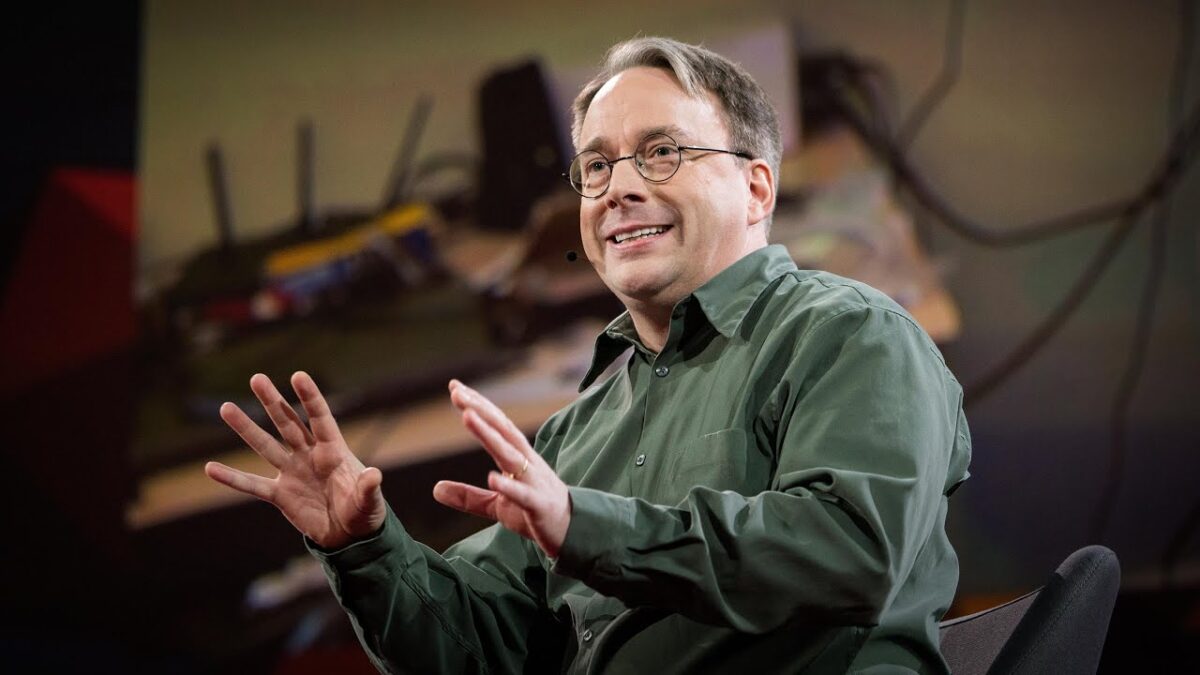
Linus Torvalds, creator of the third most used PC operating system in the world, recently participated in an event focused on open source, where he had a few things to say about AI technology and the future of the sector. Torvalds stated that the current state of AI is 90 percent marketing and 10 percent reality. The developer, awarded the Millennium Technology Prize of Finland for creating the Linux kernel, was interviewed during the Open Source Summit held in Vienna, where he had the opportunity to talk about both the world of […]
Linus Torvalds, creator of the third most used operating system in the PC world, recently participated in an event focused on open source, where he had a few things to say about AI technology and the future of the industry.
Torvalds stated that the current state of AI is 90 percent marketing and 10 percent reality. The developer, awarded the Millennium Technology Prize of Finland for creating the Linux kernel, was interviewed during the Open Source Summit held in Vienna, where he had the opportunity to talk about both the open source world and the latest technological trends.
The technologist stated that modern generative AI services represent an interesting advancement in machine learning technology, and that they will eventually change the world. At the same time, he expressed his discontent with the hype that is fueling too many AI-related initiatives and contributing to the impossibly high market valuations of Nvidia.
A promising technology, but full of smoke and exploiters
Nowadays, everyone and their dog are talking about AI, or setting up some cloud-based AI service, or funding a multi-million dollar AI-focused startup somewhere in the world.
Torvalds hates the hype cycle so much that he doesn’t even want to get involved in it. The developer is essentially ignoring everything related to AI, although things are likely to change drastically in a few years.
According to Torvalds, in five years, generative algorithms and machine learning technology will be much more useful and interesting. At that time, everyone will be able to understand how AI can really be used and what types of everyday workloads it can accelerate.
The creator of Linux is not the only one who distrusts the modern capabilities of AI, as the CEO of Baidu recently stated that 99% of current “AI companies” will soon follow the path of the (digital) dodo.
Torvalds admitted that ChatGPT and other similar services are magnificent as a pure technological demonstration and that, obviously, they are already used in many fields and for different workloads. “But I hate the hype cycle,” and we couldn’t agree more with the genius.
“En las dos últimas décadas, ninguna tecnología ha impulsado tanto la necesidad de acelerar el desarrollo de infraestructuras energéticas en Europa como la IA”, escriben los analistas en un informe de McKinsey publicado el jueves.
Al ritmo actual de adopción, la consultora calcula que el consumo energético de los centros de datos europeos alcanzará los 150 teravatios hora (TWh) en 2030, frente a los 62 TWh actuales. Si esto se cumple, los graneros de bits podrían absorber hasta el 5% del suministro de energía eléctrica del continente.
Los grandes retos de la inteligencia artificial y la energía que precisa
McKinsey calcula que las empresas de servicios públicos europeas necesitarán añadir aproximadamente 25 gigavatios de capacidad de generación para alimentar todas las nuevas GPU que se pondrán al servicio del entrenamiento y la ejecución de modelos y servicios de IA generativa, y la mayor parte tendrá que ser provenientes de renovables.
Este último detalle, señalan los analistas de McKinsey, es un problema. “El sector de los centros de datos se enfrenta a un gran reto para descarbonizar su huella y alcanzar los objetivos de cero emisiones netas en un plazo de 2030 a 2040”.
European datacenter energy consumption set to triple by end of decade https://t.co/5NwWcPvy3T
Algunos, como el ex CEO de Google Eric Schmidt, han argumentado que ni siquiera deberíamos preocuparnos por el apetito energético de la IA porque la propia tecnología es nuestra mejor baza para hacer frente a la creciente prevalencia de gases de efecto invernadero.
Una forma de reducir el impacto de la IA es situar los centros de datos cerca de lugares que produzcan energía limpia. Este enfoque puede funcionar mejor cuando estas instalaciones albergan hardware utilizado para entrenar modelos, un proceso que requiere enormes cantidades de potencia computacional, pero que no necesita estar físicamente cerca de núcleos de población.
Artificial intelligence may seem to generate content from the cloud, but its vast energy use brings it back down to earth. According to the International Energy Agency, data centers could be using as much energy as Japan by 2026. Industry experts explain AI's energy problem pic.twitter.com/8zcOgcPWBP
Sin embargo, a medida que la combinación de cargas de trabajo de IA se desplace hacia la inferencia -la ejecución real de los modelos-, esto cambiará y los requisitos de latencia exigirán que las instalaciones se construyan cerca de las ciudades.
Según McKinsey, el aumento de la población y de los beneficios interiores brutos impulsará el consumo de energía en todo el continente en más de un 7% de aquí a 2030.
A pesar de estas tendencias, los analistas observan que la demanda se ha ralentizado, en gran parte debido al aumento de la eficiencia energética, el cambio a una economía orientada a los servicios, los inviernos más suaves y los elevados costes de la energía, que han impulsado una tendencia a la desindustrialización.
President Joe Biden released the first national security memorandum on artificial intelligence on Thursday, detailing the objectives of how the government should work with cutting-edge AI technologies while advancing international consensus around this controversial technology. Since OpenAI launched its artificial intelligence chatbot ChatGPT in 2022, AI has been a hot topic, with people both for and against it. Unfortunately, its dangers outweigh its capabilities to do good. So it is not surprising that the American government is trying […]
President Joe Biden released the first national security memorandum on artificial intelligence on Thursday, which details the objectives of how the government should work with cutting-edge AI technologies, while advancing international consensus around this controversial technology.
Since OpenAI launched its artificial intelligence chatbot ChatGPT in 2022, AI has been a hot topic, with people both for and against it. Unfortunately, its dangers outweigh its capabilities to do good.
So it is not surprising that the American government is trying to establish a rulebook for the use of the powerful new technology to better serve national interests while putting critical barriers in place.
New: Biden has issued a National Security Memorandum to guide natsec agencies' use of AI, shape global AI standards, & win the AI competition with China: https://t.co/I05uf9Rrgw
Highlights include prioritizing intel collection on foreign govt efforts to undermine U.S. AI firms. pic.twitter.com/t9TiWmQ6xZ
Does this effort make sense right before the elections?
The document contains about 38 pages unclassified, with a classified appendix, according to The New York Times. Some of its statements are obvious, notes The Times. For example, it states that AI systems should never be able to make decisions about the use of nuclear weapons.
Of course, Biden is not running for re-election, and his term ends in January. It is not clear how or if the new president will follow the same policy outlined in the document.
The document warns that the U.S., which has been a global leader in artificial intelligence, cannot take its advantage for granted.
“We are all familiar with past cases where we saw critical technologies and supply chains that were developed and commercialized here in the U.S. migrate overseas due to a lack of critical support from the public sector,” the document partly states. “That’s why we are focused on maintaining the strongest AI ecosystem in the world here in the United States.”
The memorandum tasks the National Economic Council with “coordinating an economic assessment of the relative competitive advantage of the U.S. private sector AI ecosystem.” It also notes that the country will need to maintain its advantage by investing in semiconductors, infrastructure, and clean energy.
The memorandum states that U.S. efforts in AI must be guided by the “critical guardrails” established in 2023 by Biden’s executive order on safe, secure, and trustworthy artificial intelligence.
We have all heard songs and music created with artificial intelligence this past year. Apps like Suno have changed the musical landscape, and millions of artists fear for their future. From this environment, an initiative has emerged that is poisoning the music repositories that AI steals from to create artificial music. As you well know, artificial intelligence systems need to be fed large amounts of data, which often include copyrighted materials. Musicians now have a way to defend themselves with HarmonyCloak, a system that introduces data into songs that the human ear […]
We have all heard songs and music created with artificial intelligence this past year. Apps like Suno have changed the musical landscape and millions of artists fear for their future. From this medium, an initiative has emerged that is poisoning the music repositories that AI steals from to create artificial music.
As you well know, artificial intelligence systems need to be fed with large amounts of data, which often include materials protected by copyright.
Musicians now have a way to defend themselves with HarmonyCloak, a system that embeds data into songs that the human ear cannot detect, but will corrupt any AI that tries to reproduce them.
A tool designed to defend artists
Researchers from the University of Tennessee, in Knoxville, and Lehigh University have developed a new tool that could help musicians protect their work from being fed into the machine
It’s called HarmonyCloak, and it works by incorporating a new layer of noise into the music that human ears cannot detect, but AI ears cannot ignore.
This additional noise is dynamically created to blend with the specific features of any musical piece, remaining below the human auditory threshold. But the wandering AI models that listen to the music don’t know which parts to ignore, so they poison the well and ruin their recreation attempts.
The idea is that creators can use the tool to add a layer of protection to their music before uploading it to websites or streaming services, where it could get caught in the AI’s nets. Something that is already used in image art, paintings, and pictures.
HarmonyCloak can be used in two different configurations. It can be adjusted to apply noise targeted at a specific AI model, with better results that continue to apply even after processing the track, such as compression to MP3.
Or it can generate noise that affects a series of models, so that the original creation is protected against any AI that tries to replicate it, including those that have not yet been developed.
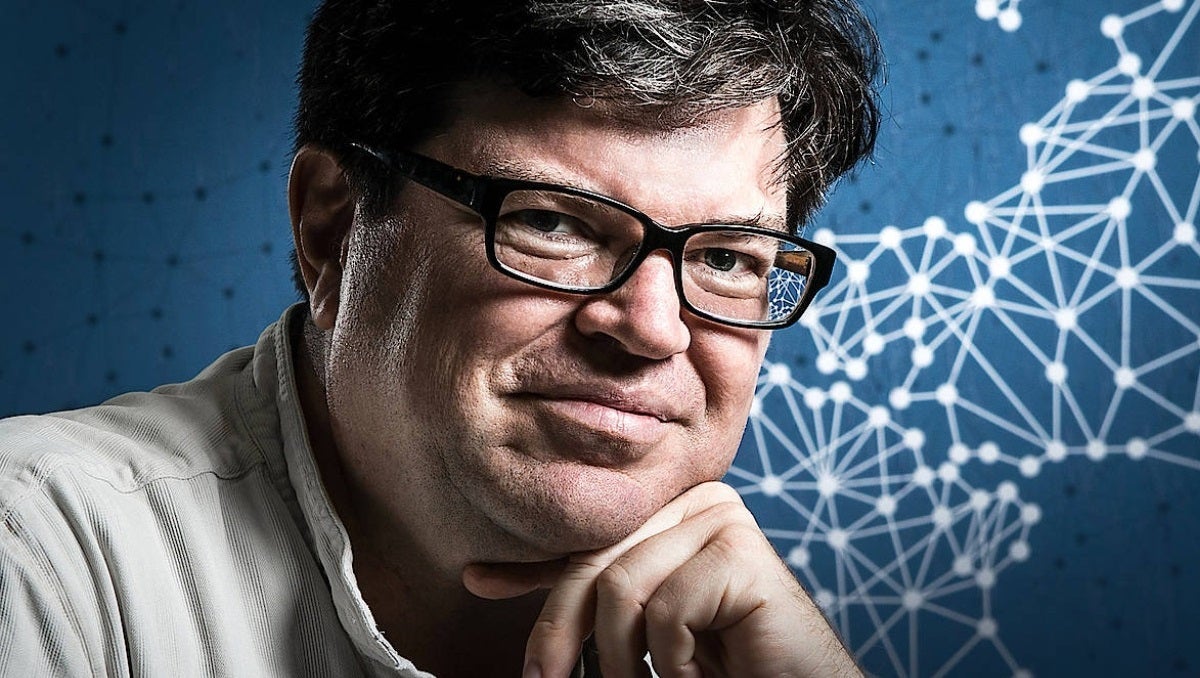
We have all read that Artificial Intelligence will reach a point where it will get rid of us, as it will realize that humans are a danger to the Earth and the future of our planet. Deep down, it wouldn’t be entirely wrong. However, Yann LeCun, chief researcher at Meta and one of the so-called Godfathers of AI, believes such claims are “complete nonsense.” LeCun is one of the industry experts who thinks that the catastrophic rumors about AI are exaggerated. Last year, he described them as “ridiculous” […]
We have all read that Artificial Intelligence will reach a point where it will get rid of us, as it will realize that humans are a danger to Earth and the future of our planet. Deep down, it wouldn’t be entirely wrong.
However, Yann LeCun, chief researcher at Meta and one of the so-called Godfathers of AI, believes that such claims are “complete nonsense.”
LeCun is one of the industry experts who believes that the catastrophic rumors about AI are exaggerated. Last year, he described warnings that the technology was a threat to humanity as “ridiculous,” and he reiterated his words to the Wall Street Journal last week.
“You’ll have to excuse me, but that’s complete nonsense,” he stated to the newspaper, when asked if AI would become intelligent enough to pose a threat to humanity.
Cats “have a mental model of the physical world, persistent memory, some reasoning ability and a capacity for planning. None of these qualities are present in today’s ‘frontier’ AIs.”—@ylecun “This AI Pioneer Thinks AI Is Dumber Than a Cat” @WSJ https://t.co/1xdbtVKDAu
AI is dumber than a cat and this is how Yann LeCun explains it
Unlike those in the sector who believe that General Artificial Intelligence (AGI) will be the next step in the generative AI revolution, LeCun asserts that current LLMs will not lead to a system that matches or surpasses human capabilities in a wide range of cognitive tasks.
The New York University professor claims that LLMs like ChatGPT and Grok lack persistent memory, reasoning, planning, and understanding of the physical world. He added that LLMs demonstrate that “language can be manipulated without being intelligent,” and that they will never lead to true AGI.
Yann LeCun tells PhD students there is no point working on LLMs because they are only an off-ramp on the highway to ultimate intelligence pic.twitter.com/01BUWb1p3T
LeCun explained to the newspaper that LLMs are not as smart as a domestic cat, but they are very good at predicting the next word in the text they generate, which is what leads people to think they are really “smart” or even intelligent.
LeCun is not entirely against the idea of an AGI, he just believes it will not come through more advanced LLMs, but from a different AI.
LeCun, Dr. Geoffrey Hinton, and Yoshua Bengio earned the nickname Godfathers of AI in 2019 after winning the Turing Award. Hinton left his job at Google in 2023, warning that as companies exploit more powerful AI systems, they become increasingly dangerous.
Artificial intelligence is revolutionizing an astonishing number of fields, from medicine to entertainment, offering new solutions and expanding creative possibilities. Nowadays, AI not only performs mechanical or analytical tasks but also actively participates in the creation of artistic content, providing endless opportunities for anyone interested. In this context, the world of art and music has greatly benefited, as AI is now capable of generating melodies, complete songs, and instrumental pieces with levels of sophistication that a few years ago seemed […]
Artificial intelligence is revolutionizing an astonishing number of fields, from medicine to entertainment, offering new solutions and expanding creative possibilities. Nowadays, AI not only performs mechanical or analytical tasks but also actively participates in the creation of artistic content, providing endless opportunities for anyone interested.
In this context, the world of art and music has greatly benefited, as AI is now capable of generating melodies, complete songs, and instrumental pieces with levels of sophistication that seemed impossible a few years ago. These tools not only allow musicians to explore new ideas, but also open the door to those who have no musical training.
Subscribe to the Softonic newsletter and get the latest in tech, gaming, entertainment and deals right in your inbox.
This technology allows anyone, from beginners to experienced composers, to create unique pieces in a matter of minutes. Below, we will explore four of the most prominent AIs in music generation. Each offers something different, and their impact on the music industry is already beginning to be felt.
OpenAI Jukebox
OpenAI Jukebox is an impressive tool developed by the OpenAI team, the creators of the popular ChatGPT. This AI has the ability to generate music in various genres, and it can even create complete songs with vocals. The most interesting aspect of Jukebox is its ability to generate not only melodies but also lyrics; you can give it a basic description, such as “an 80s rock ballad,” and Jukebox will create a song in that style, adding vocals that sound human.
The content provided is an embedded YouTube video link. There is no text in Spanish to translate into English. If you have any text that needs translation, please provide it, and I will be happy to assist.
Jukebox uses deep neural networks trained with a massive amount of musical data. This model generates songs in a process that can be quite slow, but offers great results due to its ability to create coherent and stylistically accurate music. Additionally, Jukebox allows for experimentation with cross-genres and styles that might not have been explored otherwise. However, although the results may sound authentic, the audio quality remains below what you would expect from a professional recording, as the focus of this AI is more oriented towards the creation of musical ideas than the final production.
AIVA (Artificial Intelligence Virtual Artist)
AIVA is one of the most well-known AIs in the field of classical music composition and soundtracks. Created in 2016, AIVA was designed with the purpose of composing music that sounds as human as possible, and over time it has managed to carve out a niche in the creation of music for films, video games, and other audiovisual media. AIVA has been trained with works by great composers, allowing it to generate pieces reminiscent of the creations of classical composers like Beethoven or Mozart.
AIVA stands out for its ability to generate orchestral pieces that can be used in real productions. In fact, some of its compositions have already been used in short films and indie video games, demonstrating the potential of this AI in music creation. Additionally, users can interact with the AI, giving it guidelines on the style or tone of the piece they desire, allowing them to influence the final result and tailor the music to their needs.
Magenta is an open-source project by Google aimed at exploring how machine learning can assist in the creation of art and music. Although Magenta encompasses multiple art forms, its focus on music is particularly innovative. Magenta has developed several tools, such as NSynth, which allows for the synthesis of new sounds, or MusicVAE, which uses generative networks to create melodies from note sequences.
The most interesting aspect of Magenta is its focus on collaboration between humans and machines. Unlike other AIs that generate music autonomously, Magenta is more of a tool to inspire musicians to experiment with new ideas and sounds. Users can provide a melody or sequence of notes, and Magenta takes care of generating variations and exploring different ways to continue the piece. In this way, musicians maintain creative control while leveraging the AI’s ability to generate new and fresh ideas.
Soundraw
Soundraw is an AI specifically designed to generate music instantly, allowing users to create original compositions quickly and easily. What sets Soundraw apart from other platforms is its focus on customization: users can choose the genre, duration, mood, and intensity of the music they want to create. This makes it an ideal option for content creators who need personalized music for videos, presentations, or podcasts without having to rely on pre-recorded libraries.
One of the most striking features of Soundraw is its ability to generate music that is not only royalty-free but also can adapt to changes in real-time. Thanks to this, you can adjust aspects such as the rhythm or instruments after the piece has been created, giving you full control over the final result. All of this, combined with a simple and intuitive interface, makes Soundraw a powerful tool for those who want to generate professional-quality music without having extensive musical knowledge.
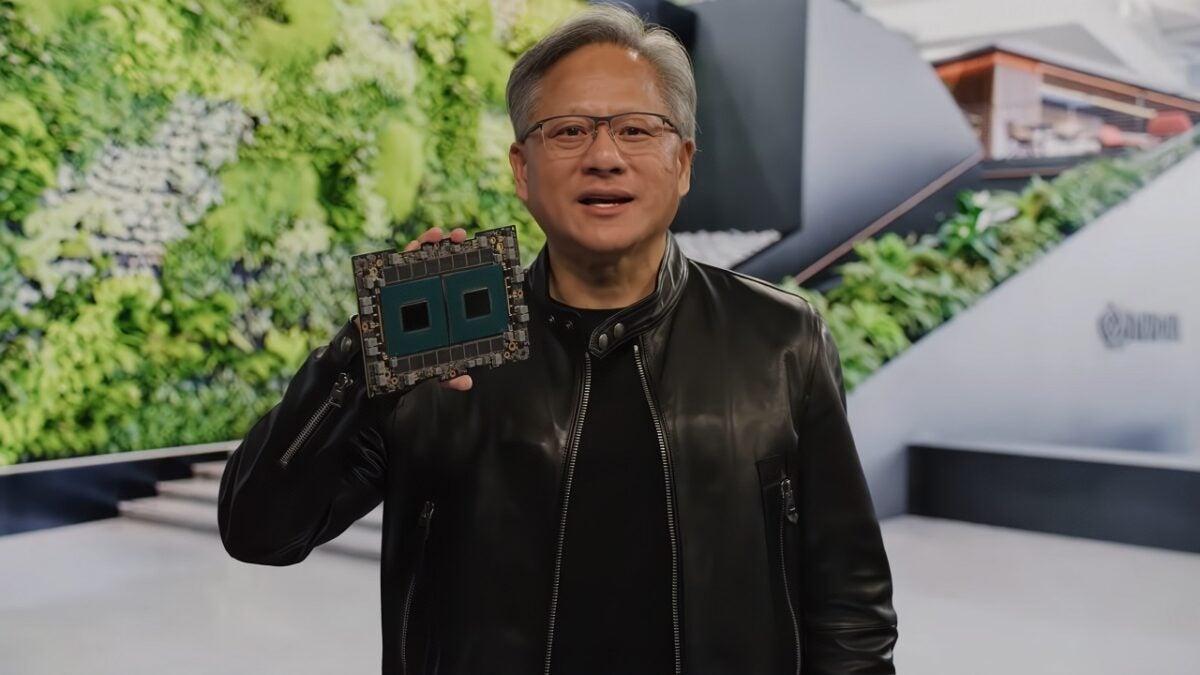
Microsoft has introduced today its new NVIDIA Blackwell GB200 server for the Azure AI cloud computing platform. If this sounds strange to you, we’ll explain it. The official Microsoft Azure website has announced that it is the first cloud system featuring AI servers with GB200 technology… Continue reading “”
Microsoft has showcased today its new Blackwell GB200 server from NVIDIA for the Azure AI cloud computing platform. And if this sounds strange to you, we’ll explain it.
The official Microsoft Azure management has announced that it is the first cloud system to feature AI servers with GB200 technology to scale advanced AI models.
Microsoft Azure offers its customers services such as virtual machines, AI processing, etc. to manage applications. This allows users to scale and update their applications without the need to own the hardware. With the use of the latest NVIDIA Blackwell B200 GPUs, Azure is enhancing the user experience by providing more performance than ever before.
Microsoft Azure is the 1st cloud running @nvidia's Blackwell system with GB200-powered AI servers. We're optimizing at every layer to power the world's most advanced AI models, leveraging Infiniband networking and innovative closed loop liquid cooling. Learn more at MS Ignite. pic.twitter.com/K1dKbwS2Ew
The AI servers powered by GB200 will use the B200 GPUs, the flagship of the data center, which utilize the GB200 array and offer 192 GB of HBM3e memory.
The GPU is a high-performance chip designed for advanced and heavy workloads, such as deep learning, training large AI models, and processing large datasets, being more efficient than its predecessors.
Thanks to the use of B200 GPUs, AI models can be trained faster on Azure, ensuring their leading performance among all other cloud computing platforms. As seen in the tweet image, the company has a server rack with several B200 GPUs. We do not know how many B200 GPUs are used in this server nor how many of them the company has already deployed.
The server is being cooled by liquid cooling solutions to maintain lower temperatures, which appears to be the initial testing phase for Microsoft to see how to implement liquid cooling in commercial servers.
It should be noted that the server shown is not the GB200 NVL72, which NVIDIA has prepared to leverage the power of 36 Grace CPUs and 72 B200 GPUs. That rack is incredibly powerful for building a robust platform that can produce up to 3240 TFLOPS of FP64 Tensor Core performance and will be used in Taiwan’s fastest supercomputer by Foxconn.
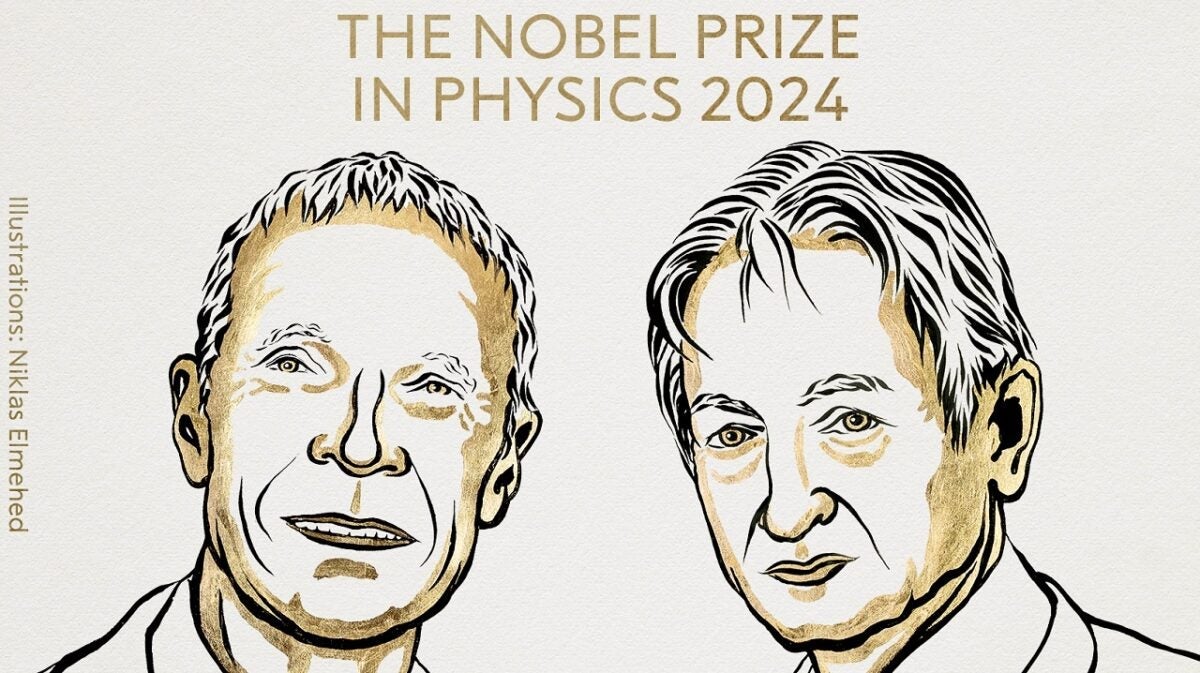
The Nobel Prize in Physics has been awarded to two scientists, Geoffrey Hinton and John Hopfield, for their work on machine learning. The announcement was made by the Royal Swedish Academy of Sciences at a press conference in Stockholm, Sweden. Interestingly, the British-Canadian professor Geoffrey Hinton, known as the Godfather of Artificial Intelligence, was surprised, as he resigned from Google in 2023 and has since warned about the dangers of machines that could be more intelligent than humans. Meanwhile, the American professor John Hopfield is a professor at Princeton University […]
The Nobel Prize in Physics has been awarded to two scientists, Geoffrey Hinton and John Hopfield, for their work on machine learning. The announcement was made by the Royal Swedish Academy of Sciences at a press conference in Stockholm, Sweden.
Subscribe to the Softonic newsletter and get the latest in tech, gaming, entertainment and deals right in your inbox.
Curiously, the British-Canadian professor Geoffrey Hinton, known as the Godfather of Artificial Intelligence, was surprised, as he resigned from Google in 2023 and has since warned about the dangers of machines that could be more intelligent than humans.
For his part, the American professor John Hopfield is a professor at Princeton University (USA) and the British-Canadian Geoffrey Hinton is a professor at the University of Toronto (Canada).
BREAKING NEWS The Royal Swedish Academy of Sciences has decided to award the 2024 #NobelPrize in Physics to John J. Hopfield and Geoffrey E. Hinton “for foundational discoveries and inventions that enable machine learning with artificial neural networks.” pic.twitter.com/94LT8opG79
Hinton’s contribution to developing machine learning
Machine learning is key to artificial intelligence, as it develops how a computer can be trained to generate information. This is the engine behind a wide range of technologies we use today, from how we search the Internet to how we edit photos on our phones.
The Academy listed some of the crucial applications of the work of both scientists, such as the improvement of climate modeling, the development of solar cells, and the analysis of medical images.
Professor Hinton’s groundbreaking research on neural networks paved the way for current AI systems like ChatGPT. In artificial intelligence, neural networks are systems similar to the human brain in their way of learning and processing information. They allow AI to learn from experience, just as a person would. This is known as deep learning.
Professor Hinton said that his work on artificial neural networks was revolutionary. But he also expressed concern about the future and stated that he would do the same work again, “but I worry that the overall consequences of this could be systems more intelligent than us that end up taking control.”
As Nobel Prize winners, the two professors share a monetary award of 11 million Swedish kronor (equivalent to 1 million dollars).