The CEO of Spotify, surprised to see that his app is doing worse after firing 1500 people.
The truth is that it is unheard of: Isn’t it true that if you fire the people who have built your company, then that company doesn’t work as well? Just like Elon Musk was amazed one day at the Twitter bot festival (with “Tits in bio” in the spotlight), now it’s Daniel Ek, CEO of Spotify, who has shown his astonishment to see that his app doesn’t work the same with 1500 fewer people. Unprecedented, Daniel.
What is good for the company? That, even by laying off so many people, Spotify has had record profits of 168 million euros in the first quarter of the year, so investors (those people who don’t care about art as long as their pockets are full) will be happy. What is bad? The number of users is decreasing.
After eliminating 17% of jobs, Daniel Ek has stated that “it disrupted our day-to-day operations more than we anticipated”. I wonder why. In their pursuit of constant profits, Spotify has also decided to raise prices once again, surprisingly with very few users jumping ship.
Another one of the novelties that, frankly, have significantly worsened the user experience, is to leave aside the hand-made lists by music fans to focus on a DJ that creates them through artificial intelligence. If that doesn’t attract people, what will. The Spotify empire is starting to crack, and Daniel Ek, its CEO, seems to not know the reason.
Who knows, maybe if they had 1500 more people on their team, investors would be a little sadder, but users wouldn’t go to greener pastures. Just a crazy idea.
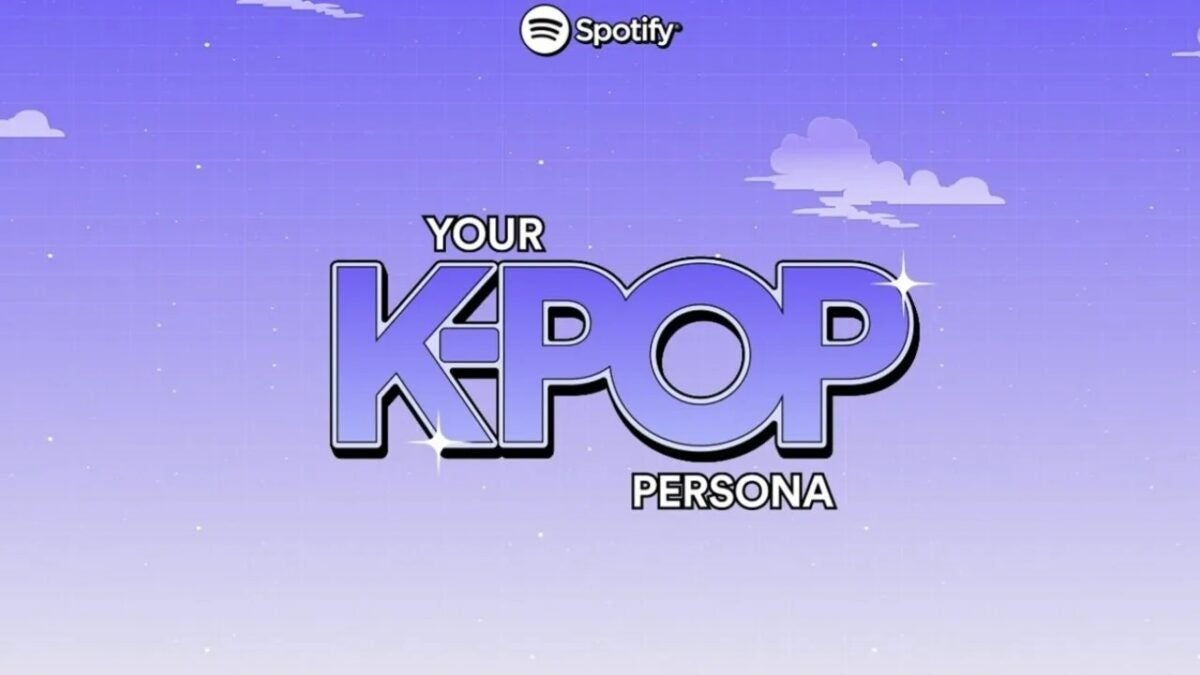
For those who are not familiar with the term K-pop or its Jungian roots, a “persona” refers to the distinctive and public-facing role of each member of a band. The concept is based on the fact that K-pop is one of the main areas of growth in the global music industry, which Spotify has wanted to take advantage of.
The five-question questionnaire, which fans can take within the Spotify app, will identify if you are a: Main Visual, Main Vocal, Main Rapper, Main Dancer, or Trainee.
What role would you have in a K-pop band, a perfect appeal for millions of users
In a nod to K-pop fan culture, the quiz will also generate a photo card (similar to specific trading cards for each group) with your results, which you can share on social media. This feature will be available on Spotify until May 10th.
The rise of K-pop as a global music phenomenon in the last decade is well-documented, and the genre has not lost momentum in the United States. Last year, K-pop became the third most consumed music genre in the United States. And the United States is also the second largest importer of K-pop music in the world, just behind Japan.
Just like Spotify caters to Swifties and other fans with interactive features and special playlists, the streaming service has not forgotten about BTS or NewJeans devotees.
Although the 10 most listened songs and albums last year on Spotify came mostly from the United States, international genres such as K-pop, Mexican music, afrobeats, and classical Indian instrumental music, among others, accumulate millions of plays worldwide.
The streaming service noted that K-pop streams have increased over 180% in the United States and over 360% worldwide since 2018. Similarly, English-speaking artists like The Weeknd or Miley Cyrus resonate in Asia and South America.
The fine is nearly four times higher than expected, in an attempt by the European Commission to demonstrate that it will act forcefully against technology companies that abuse their dominant position in the online services market.
The European Commissioner for Competition, Margrethe Vestager, said that a smaller fine would not have served much purpose and that the 1.8 billion euros are designed to act as a deterrent against the repetition of such practices by Apple or others.
As a result of Apple’s anti-competitive practices, customers have been paying more than they should for streaming music, explains the commissioner. Hence the hefty fine.
“Apple’s rules ended up harming consumers. Essential information was hidden so that consumers could not use it effectively or make informed decisions. Some consumers may have paid more because they were not aware that they could pay less if they subscribe outside the app,” said Vestager.
“Apple’s conduct, which lasted almost 10 years, may have led many iOS users to pay significantly higher prices for music streaming subscriptions,” the European Commission said in a statement.
Vestager said that consumers may have paid two or three euros more per month for music streaming due to lack of open competition. However, she admitted that the fine would not be distributed among the supposedly exploited customers, but among the different member states.
The fine represents 0.5% of Apple’s global revenue
According to the Commission, the technology company harmed users by preventing application developers from openly promoting cheaper music subscription services available outside of Apple’s “ecosystem”.
“Streaming music developers were not allowed to inform users within their own applications about cheaper prices for the same internet subscription,” in an “anti-steering” practice, he said.
“They were also not allowed to change the links of their applications so that consumers could access their websites and pay lower prices there,” he said at a press conference in Brussels.
Apple on Monday was fined 1.8 billion euros by EU regulators for thwarting competition among music streaming apps. Regulators said Apple illegally used its App Store dominance to box out rivals like Spotify. https://t.co/jiFZ4nGmz5
Under the Digital Markets Act (DMA), technology companies were given six months starting from August of last year to comply with the new rules that will require them to allow fair competition from their rivals.
It is expected that the Thursday deadline to comply with the regulations will result in immediate changes in iOS and Android app stores.
Spotify, the world’s largest music streaming service, has argued that the restrictions benefit Apple’s rival music streaming service, Apple Music.
Spotify and other app providers have long criticized Apple’s App Store, which they claim stifles competition by charging a 30% fee for apps and in-app purchases.
In response to the fine, Apple stated: “The decision has been made despite the Commission not finding any credible evidence of harm to consumers, and it ignores the reality of a thriving, competitive, and rapidly growing market.”
Spotify seems determined to join the Artificial Intelligence fever that the entire technology sector is currently immersed in. And it is that, as recently leaked, Spotify’s work focused on Artificial Intelligence would mean a notable improvement in the services that the user receives through the application, being able to further increase their satisfaction with the overall product that Spotify offers.
Spotify, for many years, has been one of the major references on the Internet as a streaming music service. However, with the recent advancements in Artificial Intelligence being made in the world, the application tried to find a way to integrate it into its service and found the solution: personalized playlists.
This AI, which will respond to user feedback, will be responsible for offering the user a playlist, not based on their preferences, but taking into account the music they usually listen to and like the most, it will also make recommendations based on what the user asks the AI for. In this case, being a personalized service, each user will receive playlists according to what the AI considers most appropriate.
After the leak, Spotify admitted that what was shown was true and that they were conducting tests with selected users to test the usefulness, acceptance, and quality of the service offered by Artificial Intelligence to make recommendations to users who have been chosen to carry out this experiment. Therefore, if the test is successful, this feature will be fully available in the future.
Spotify is one of the most popular applications nowadays for listening to music
The Rise of AI on the Web
Artificial Intelligence is one of the key points of this 2023 for multiple brands. Spotify is just one of the many that is looking to enhance the quality of its service through an AI that is capable of offering personalized elements to each user. An example of this, for instance, is the great investment of Microsoft in Copilot, or Google in its powerful AIs, Bard and Gemini.
However, one of the biggest triggers of the current boom in Artificial Intelligence advancements must also be taken into account: Open AI and its golden goose, ChatGPT, which has made a big impact and is changing the functioning of the technology world in many aspects. It remains to be seen how it can offer more focused services, but as a foundation, the current GPT-4 model is generating significant changes in the technology world.
The company is currently testing a new add-on that would allow playlists to be created from a description or prompt.
Spotifyhas been experimenting with AI to create new features for some time now. This is how they announced the launch of your own personal DJ powered by artificial intelligence (and with OpenAI technology). Continuing with this trend, the company is testing a new addition that would allow creating playlists based on a description or prompt.
According to Engadget, a TikTok user posted a captioned short video on the social media platform with the title “Did I randomly discover Spotify’s ChatGPT?“. It seems that randomly, some lucky users have been able to test this new feature on Spotify, hidden within Your Library. To find out if you also have it available, try creating a new playlist and check it out for yourself.
In the aforementioned TikTok video, you can see what this option would be like: “turn your ideas into a playlist using AI”. To start, we would have a text box where we would enter the descriptions to create the lists. If we are not particularly creative, Spotify itself suggests some prompts. Some examples it shows are “focus on work with electronic instrumental music” or “fill the silence with background music from a café”.
Spotify itself has confirmed that they are indeed testing these AI-generated playlists. However, they still don’t know when or how this functionality will be publicly released. This is also not a strange move for Spotify: the service announced the arrival of high-fidelity audio almost three years ago and we still don’t know anything about it.
For a day, it’s all recommendations, lists, podcasts and groups to discover. Well, that and jointly celebrating something very beautiful: our questionable taste.
We can use all the app names we want and praise the qualities of Tidal or Apple Music, but what the general public will keep using is Spotify. At least until it becomes completely paid. It’s easy to use, has an infinite catalog, it’s eye-catching, and moreover, it offers something that everyone has copied afterward, from Filmin to Letterboxd: the Wrapped.
It was in 2016 when Spotify came up with the idea of summarizing your musical year. At first, it was just a curiosity, but nowadays, it’s the reason we keep breathing on the internet, at least for a day. And believe me, in this world, we increasingly need more reasons to stay here. For a day, it’s all about recommendations, playlists, podcasts, and groups to discover. Well, that and collectively celebrating something quite beautiful: our questionable taste.
We can’t be listening all day to The Beatles, Elvis Presley, Beethoven, and Bing Crosby. Sometimes, frankly, the body demands you to play Los Gandules and Zapato Veloz. And in a year like this, “sometimes” can become “every day,” to the extent that it becomes the star of your Wrapped. Oops.
The Wrapped offers something that few things achieve in such a loaded and overwhelming online landscape as today: FOMO. That’s the fear of missing out, being that one person who doesn’t share their list and gets exposed as yet another Taylor Swift fan. When not even Marvel movies manage to create anticipation (or success), Spotify, with a bit of design, creates a personalized experience, keeping users loyal and sparking the interest of those who listen to music on other platforms. To paraphrase Bender, “I wanna be popular too!”
And ultimately, what does this explosion of individuality demonstrate? Well, that in modern times, nobody is truly different. You might listen to The Eels and I might listen to a Finnish flamenco group, but our recommendations and year-end tops will get lost in the sea of individuality until they become a collective taste. It doesn’t matter what you listen to because it doesn’t matter what others listen to: you just want your opinion, even if for a minute and on your phone, to shine on its own.
While it may seem that the AI phenomenon has slowed down in recent months, major companies continue to prioritize artificial intelligence, and Spotify is no exception. The music streaming company might be working on a new implementation of this technology on its renowned platform.
With this supposed new feature, we could witness a significant change in how we interact with Spotify, specifically with our playlists. According to Chris Messina, a product designer and the inventor of the hashtag, references to an unknown feature called “AI Playlist” have been discovered in the application’s source code. It appears that users might be able to generate playlists based on text commands.
Spotify aims to further utilize artificial intelligence
Messina shared this discovery through a post on Threads, Meta’s new social network. In the post, screenshots of Spotify’s source code were shown. In fact, the code suggests that this new, yet unannounced feature, might be part of Spotify Blend,an existing feature where two people can merge their musical preferences into a playlist generated algorithmically.
Currently, the company has not made an official statement. However, a Spotify spokesperson did say the following: “At Spotify, we constantly iterate and brainstorm to improve our product offerings and provide value to users. But we do not comment on speculation about possible new features and have nothing new to share at this time.”
As mentioned, this would be further evidence of the platform’s keen interest in AI, which is also evident in its AI-powered DJ. Additionally, the new feature shared in this post is somewhat similar to Niche Mixes, a function that allows creating playlists based on descriptions, although this does not employ AI but relies on the company’s own customization algorithm.
We’ll see if this new AI-powered feature capable of generating playlists through text commands ends up coming to Spotify, although all signs point to it happening.
Before, a house could be surrounded by books, records, DVDs, comics and video games. Now four devices are enough to have the walls of our home much cleaner… Or not?
“Let’s see when it comes out on Netflix“; “The new releases are already on Spotify”; “I’ll download it on my Kindle”; “It’s available on Game Pass”… One would think that modernity has brought not only great advancements in the art we enjoy but also differences in how we consume it. In the past, a house could be surrounded by books, records, DVDs, comics, and video games. Now, we onlyneed a few devices to keep the walls of our home much cleaner… Or do we?
Surely you have heard (or said) at some point the phrase “I’ll download it, and if I like it, I’ll buy it.” For example, you download the latest book by Laura Gallego, and after reading twenty pages, you’ve already decided that it deserves a place on your physical bookshelf. Being able to touch things used to be the only way to enjoy them fully, but now it’s a privilege reserved for the best of the best.
And brands know this. Perhaps that’s why they dare to release special editions with more tangible items (figurines, coins, unique booklets). Not everyone wants to fill their home with things, but those who do know how to make the most of it. Maybe you wouldn’t buy ‘The Lord of the Rings’ in a pocket-sized edition, but what about a luxury edition with gold-edged pages and giant size? Physical format serves not only as a means of consumption but also as decoration and status symbol.
You may never actually play ‘Casablanca’ or ‘The Bridge on the River Kwai’ on your Blu-Ray player when you have them available for streaming, but owning their collector’s editions is a way to acknowledge their value, showcase your taste to visitors in your home, and hey, if the often-predicted online apocalypse ever happens, you’ll have a plan B. Despite claims that empty spaces and minimalism are trending, if you have a couple of hobbies, those empty spaces will soon be filled.
Back and forth
Indeed, it’s much easier to share a song with someone by simply sharing a link instead of taking the CD (or vinyl), going to their house, and leaving it there. But there’s a reason why we continue to collect vinyl records beyond their musical quality: it’s the feeling of owning something. Even if we purchase the album digitally and it comes with loaded extras, we will always feel a stronger connection to something we can manipulate, touch, and lend. It’s not just nostalgia; it’s being human.
There will be those who say, “Well, what about newspapers and magazines? They are in a crisis in their physical format.” That’s true. They lack the magic of collectability and have always been seen more as disposable content: the transition to digital is easier, especially because what we seek – current news – will always be more up-to-date on the internet than in print a day later. Magazines follow a similar path; it’s the next logical step: we don’t feel the urge to collect them, they are not fetish objects.
Despite the naysayers trying to kill off the physical format, the truth is that every year there are more and more comics and manga published, more and more vinyl records finding their place, more and more video games of all kinds and colors. Even indie games that were initially released exclusively in digital format have ended up being released in physical form due to this trend of wanting to have the good stuff encapsulated in our hands. If I have it, it means I am acknowledging it. It says something about me.
The film problem
In this new quest to see what survives in physical format, there is one format that has been fatally wounded (at least in Spain): the Blu-Ray. While in the UK and the United States it is still enjoying a sweet moment, partly thanks to collections like Criterion or Arrow, in our country, which has always been more prone to piracy, the arrival of streaming has definitively condemned movie (and series) discs to oblivion.
This is the exception: although it may seem that Spotify has killed CDs to create, in return, a revenue stream through more concerts, the truth is that vinyl records have a thriving community that has taken everyone by surprise. The same goes for books: despite Amazon’s efforts, many of us prefer to have them in our hands and be able to take them on a journey without worrying about battery life, even if it costs a little more.
Usually, we shouldn’t pay attention to those who announce “the future,” whether it comes in the form of NFTs, cryptocurrency, or digital formats, because Nostradamus 2.0 doesn’t exist. The revolution of physical space should not only be aesthetically pleasing but also fill us internally with a single glance. And that’s something a Kindle, no matter how hard it tries, will never achieve.
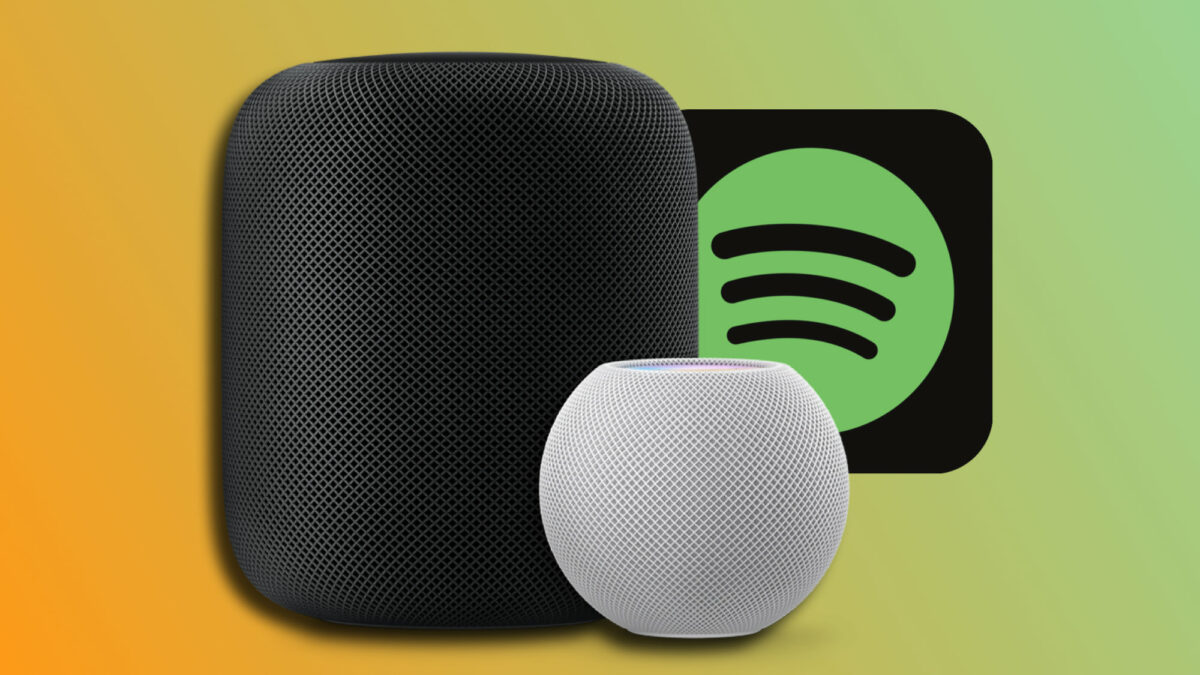
While Spotify decides if it wants what it asked for in its day, to support the HomePod, there is an alternative solution: use AirPlay.
Spotify is one of the most widely used music streaming platforms worldwide, with millions of subscribed users. However, there is one device on which Spotify does not work natively: Apple’s HomePod. It is striking that a music service is not present on one of the most popular speakers on the market.
It is true that we have resources to continue using Spotify on the HomePod, but they are nowhere near as convenient as being able to ask Siri to play music from the service directly. So let’s talk about why Spotify doesn’t work on the HomePod and what we can do about it.
Why doesn’t Spotify work on the HomePod?
In 2020, Apple opened its smart speakers, the HomePod and HomePod mini, to third-party music streaming services. This means that apps like Spotify can run natively on these devices. However, as of today, Spotify still does not offer support of any kind for the HomePod.
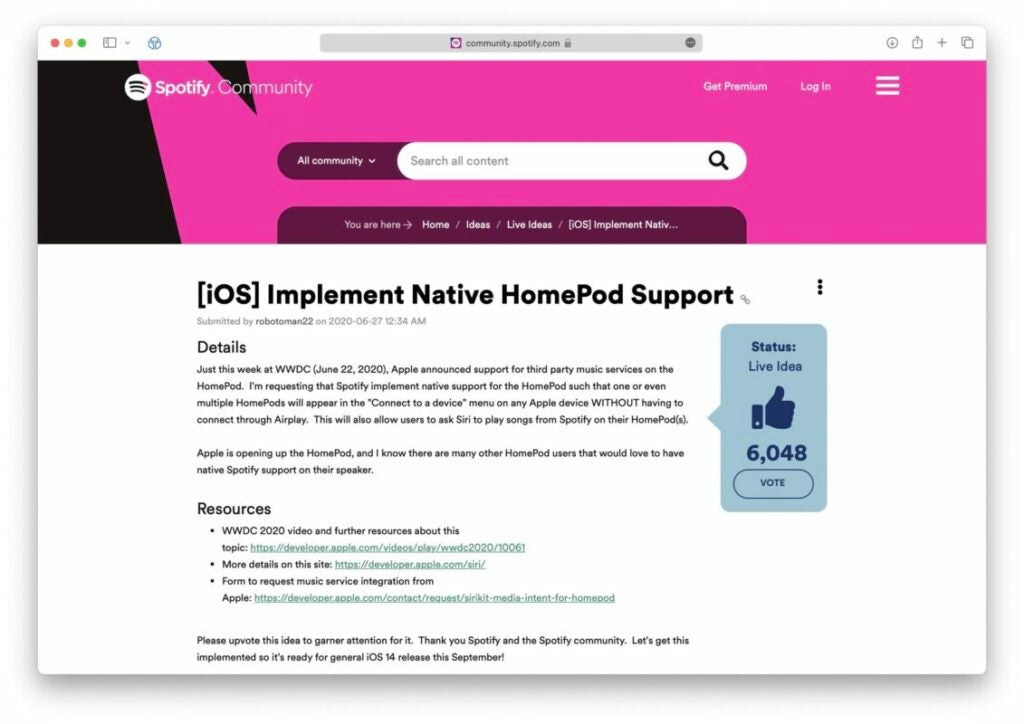
According to Bloomberg’s Mark Gurman, Spotify claims there has not been “a significant volume” of complaints from users regarding the lack of HomePod support. However, a post on Spotify’s community page advocating for native HomePod support has received more than 6,048 upvotes since it was posted in 2020. Although Apple has made the necessary APIs available to Spotify, the company seems unsure if it wants to take the plunge.
What’s curious about the whole thing is how, in the past, Spotify has accused Apple of anti-competitive behavior, filing a complaint in 2019. Along with the complaint, Spotify launched a website called “Time to Play Fair” that lists examples of Apple’s alleged practices. The list includes an entire section explaining that Spotify couldn’t offer native support for the HomePod, even if it wanted to. Now that it can, as of 2020, it doesn’t seem to want to.
What can we do about it?
While Spotify decides if it wants what it asked for at the time, to support the HomePod, there is an alternative solution: using AirPlay. Apple’s wireless streaming technology that allows us to stream audio, video, photos and even the entire screen from an Apple device to a compatible speaker or TV. While not the same as Spotify’s native support for the HomePod, AirPlay is still a good option for Spotify users who want to listen to their music on the HomePod.
To use AirPlay with the HomePod, you need to have an Apple device with the Spotify app installed. Once the application is open and playing, simply click on the AirPlay icon, which appears at the bottom of the screen. All that remains is to select the HomePod and the music will start playing.
For the system to work, we must keep the playback running on the device in question, from where we will control it. The only thing we can use Siri on the HomePod is to regulate the volume, everything else has to be from the Spotify app.
Undoubtedly, using AirPlay is not as convenient as Spotify’s native support for the HomePod, as you can’t control the app’s functions with your voice via Siri to pause playback or skip to the next song, for example. However, it is still a valid option for users who want to listen to their Spotify music on the HomePod.
While waiting for Spotify to take into account the more than 6000 votes in favor of the service to work on the HomePod, and seeing that it closes Spotify Live, we have some recourse. Apart from considering using another streaming service like Apple Music or even Apple Music Classical, AirPlay allows us to keep the music playing.
Some of the links added in the article are part of affiliate campaigns and may represent benefits for Softonic.
It is that time of the year: full of Awards and Wrap-ups. Apple and Spotify shows the new ones
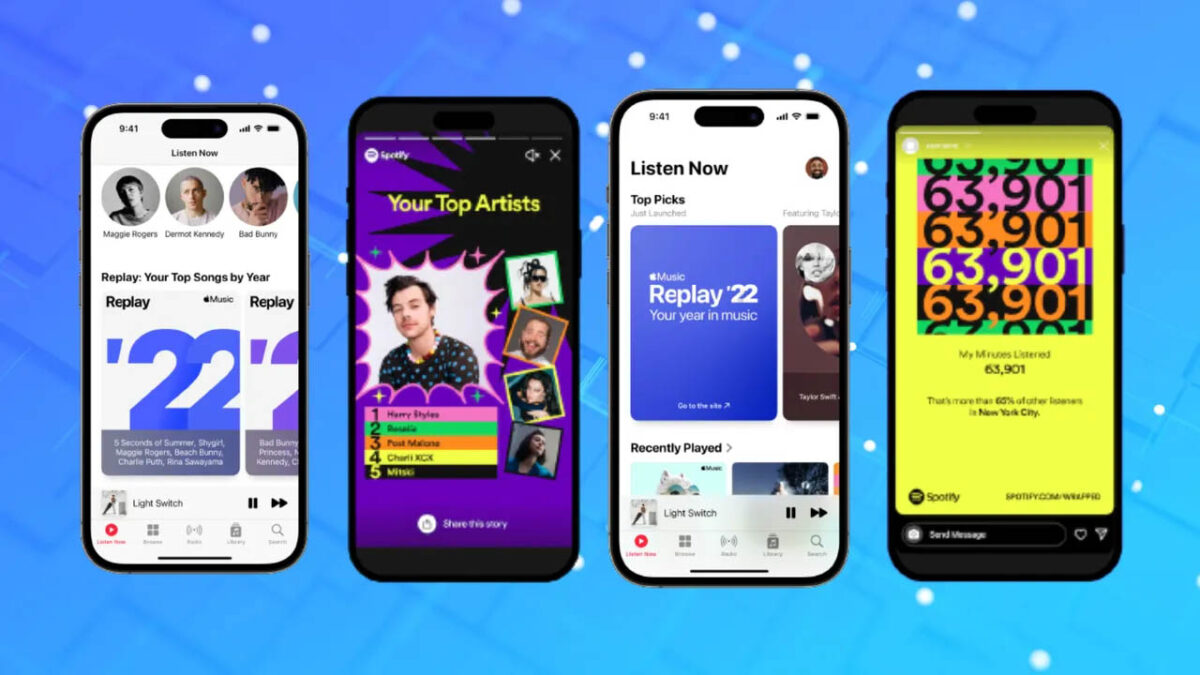
What do you think your music choices say about you? Spotify and Apple are at it again, showcasing your music stats for 2022 to see what you enjoyed the most. You can also see how much time you spent listening to songs and specific genres. This year, these two platforms have new upgraded features, presenting a new way to enjoy the data.
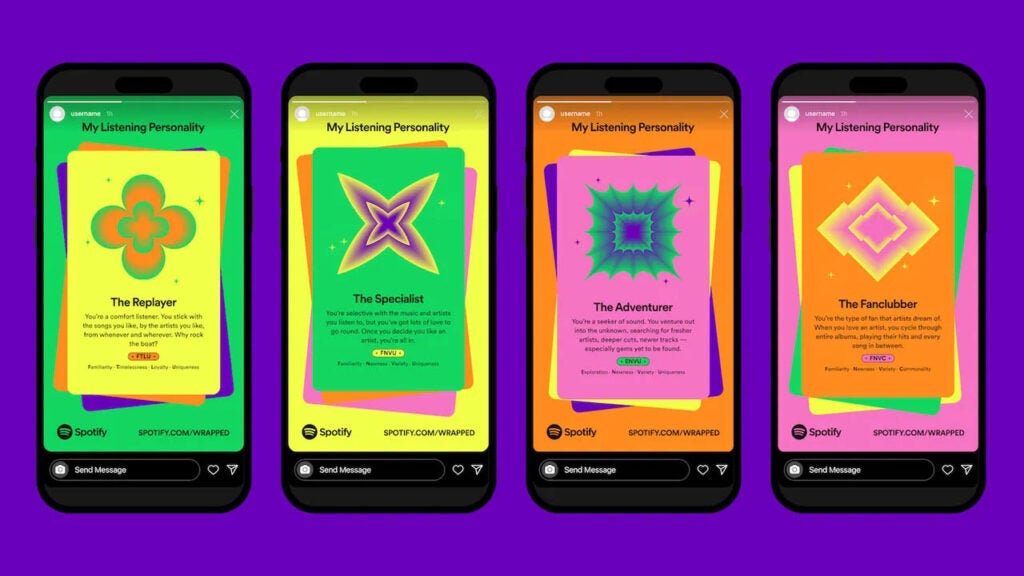
Spotify went all out by introducing 16 new personalitiesbased on your music choices, genres, and your loyalty to specific artists or bands. It presents a card with detailed information on what type of music person you are, which you can share on social media. Every year will be different as your tastes change. You can check out your personality type by logging into your Spotify account.
Apply came into the annual wrap-up late in the game. With Spotify starting the trend in 2016, Apple only joined in 2019. It has a more basic interface and not as many features as its competitor. However, the Apple Replay design has drastically changed to look more like Spotify, minus the new personality feature. You can head here to see your year’s music stats.
It will be fascinating to see who else will be joining this trending bandwagon this year. I listen to YouTube Music on my PC while I’m working and writing, which I’m doing right now. It would be nice to see what my stats look like for the year too. Do I really have to sign up for Apple or Softonic to have that experience? For now, you can head to social platforms like Instagram and Facebook to see your friends’ stats. It’s easy to share by tapping on the share icon on any of the two apps.