A new indie platformer game, titled Big Hops, has recently debuted, drawing attention for its gameplay style inspired by classics like Super Mario 64. Starring a charming frog that uses its tongue as a hook, the game offers a unique experience in the 3D platforming genre, although it presents some ideas still to be polished. A very likable frog Developed by Luckshot Games, Big Hops stands out by not dividing its content into traditional levels, but into vast open areas where players must find ‘Dark Drips’ to advance the story. This approach allows […]
A new indie platformer game, titled Big Hops, has recently debuted, drawing attention for its gameplay style inspired by classics like Super Mario 64. Starring a charming frog that uses its tongue as a hook, the game offers a unique experience in the 3D platforming genre, although it features some ideas that still need refinement.
A very friendly frog
Developed by Luckshot Games, Big Hops stands out by not dividing its content into traditional levels, but into vast open areas where players must find ‘Dark Drips’ to advance the story. This approach allows players to use objects to create custom routes through the environments, offering more freedom in exploration and in solving platforming challenges.
As players traverse these open spaces, they encounter different movement abilities that they can combine to overcome obstacles. However, some mechanics, such as the use of hooks and tongue aiming, can be frustrating and may hinder the gaming experience. The need to build momentum when using anchors is often problematic, and the aiming system can feel limited in more confined spaces.
While the narrative of Big Hops is considered somewhat superficial, the voice acting is pleasant and the humor is a strong point. Players will find charming characters that add a special touch to the experience, even though the story itself may be seen as mere filler.
Despite its missteps, Big Hops presents itself as a refreshing proposal in the realm of platforms, offering players the opportunity to creatively explore their environment and enjoy the fun that 3D gaming provides. With some aspects that could use more attention, the title invites genre enthusiasts to give it a chance and test their jumping skills.
This year marks the 40th anniversary of Super Mario Bros., a milestone that has left an indelible mark on the history of video games. Among the various installments of the saga, Super Mario 64 stands out for having revolutionized the 3D platforming genre, and its legacy persists in the community, where many players continue to seek secrets and curiosities of the game. Discoveries arise from experimentation Recently, content creator Kaze Emanuar made a fascinating discovery. By leaving the game on for 14 months, he managed to activate a glitch that allows players to hear a hidden sound effect […]
This year marks the 40th anniversary of Super Mario Bros., a milestone that has left an indelible mark on the history of video games. Among the various installments of the saga, Super Mario 64 stands out for having revolutionized the 3D platforming genre, and its legacy persists in the community, where many players continue to seek secrets and curiosities of the game.
Discoveries arise from experimentation
Recently, content creator Kaze Emanuar made a fascinating discovery. By leaving the game on for 14 months, he managed to activate a glitch that allows players to hear a hidden sound effect associated with the shark known as ‘Sushi’, present in the Great Pier level. This sound, which normally repeats at regular intervals, becomes accessible due to a hidden counter in the game’s system, which, when exceeding certain limits, causes unexpected changes in its behavior.
These secret counters, which do not reset after certain events occur, lead to particular situations, such as the case of the ‘Sushi’ sharks that emit a sound every 16 frames, but whose audio files are longer than what the player can hear in a normal game. Due to the bug generated by the prolonged wait, the shark is freed from the repetition of its sound, thus allowing for its complete listening.
It is important to note that the findings of Emanuar and other creators do not criticize Nintendo’s original programming, but rather expand the understanding of a title that continues to enchant new generations. Although this type of experience may seem like a whim, they reveal the rich complexity and mysteries that still surround Super Mario 64. Fans continue to explore every corner of this classic, reaffirming its legendary status in the world of video games.
Completing Super Mario 64 without jumping sounds crazy, but it’s a challenge that many people have been attempting for almost 20 years… and they’ve finally succeeded.
A video game can be as difficult as the player wants it to be. By ignoring some of its mechanics or imposing personal limits, the difficulty is already increased. This is something we have seen with the Souls games and the obsession with not summoning help. Simply put, there are people who enjoy overcoming a challenge that is greater than what the developers can propose if they want to sell well. Something that with Super Mario 64 has materialized in one of the most peculiar feats in the history of video games.
A streamer named Marbler has managed to beat Super Mario 64 without pressing the A button. Why is this considered a feat? Because the A button is the jump button. By exploiting all the glitches and tactics available in the game, he managed to complete the game after obtaining 70 stars without making a single jump.
How long did it take to achieve this feat? Around 86 hours. To put it into context, a normal game of Super Mario 64 can take around 12 hours, while one where we try to get all the stars will take around 20 hours. This is not counting that experts can do it in less than half the time. It shows how not pressing the A button even once requires taking a lot, a lot of time to finish the game.
In addition, this challenge, known as A Button Challenge, comes after many previous attempts. About eight months ago, Marbler managed to complete a game of Super Mario 64 by only pressing the A button once. It took him those eight months to reduce it to its bare minimum: not pressing it at all.
This challenge, however, is not new. The first known attempt to beat Super Mario 64 without pressing the A button dates back to early 2006. Considering that it wasn’t until 2024 when someone finally achieved it, after 86 hours of gameplay, it demonstrates how particularly complex this challenge was. And why it is also so interesting.
Nintendo Switch Online is a must-have app if you want to fully enjoy multiplayer games on Nintendo Switch such as Splatoon 2, Mario Kart 8 Deluxe, ARMS, or Pokkén Tournament DX.
From the streets of Los Santos to the vampires and dragons of Skyrim, these worlds are a home away from home.
From underwater dystopias to snow-covered castles and tropical jungles, video games can take us places beyond our wildest dreams. While interesting characters and an intriguing plot are certainly important, oftentimes a game’s setting is what sticks with players long after they put down the controller. Here, we’re counting down 10 of the most iconic and unforgettable worlds in gaming history.
10 best video game locations
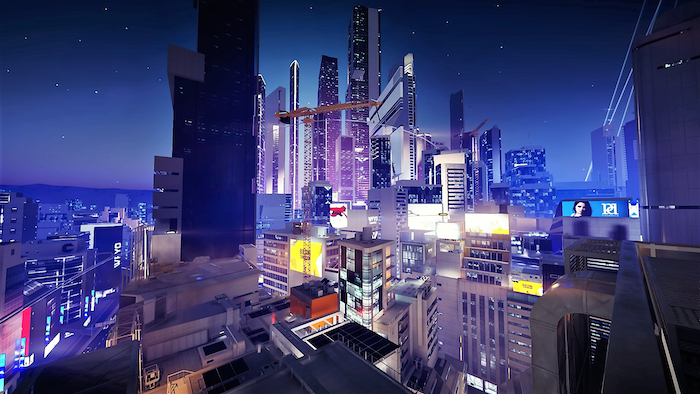
10. The City- “Mirror’s Edge”
Image courtesy EA
This futuristic sci-fi dystopia is a collection of clean lines and polished edges. Despite the City’s clean, shiny exterior it has a seedy underbelly that’s totally at odds with what lies on the surface.
Part of what makes The City such a distinctive location is the contrast of bright primary colors against a white backdrop. This creates some striking and unique visuals while also guiding players in their high-stakes freeruns.
The intricacies and unique visual styles of each district will make players want to return over and over again.
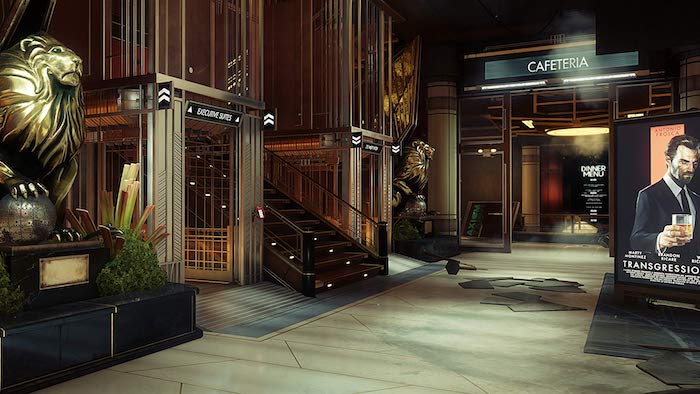
9. Talos Station- “Prey”
Image courtesy Bethesda
Talos Station is the orbital headquarters of the Transtar Corporation, a futuristic conglomerate with their hands in everything from genetic modification to heavy industry and space travel. It stands to reason that their corporate headquarters is a lavish monument to their power.
Combining a distinctly 60s aesthetic with the sci-fi stylings of a space station, walking through the halls of Talos will make players feel like Don Draper in space. That is, of course, if they can stay alive long enough against the extraterrestrial beings that have slaughtered the station’s inhabitants.
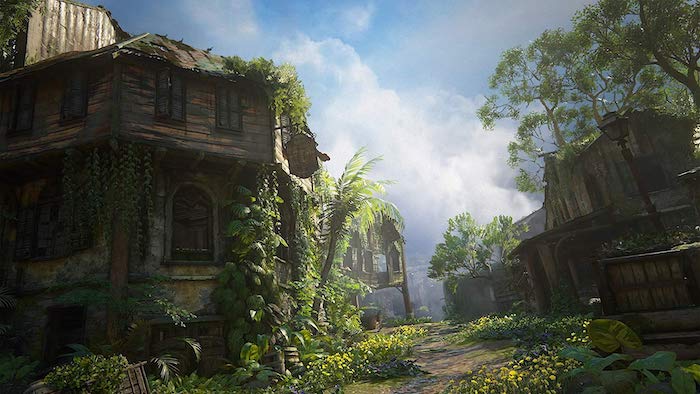
8. Libertalia- “Uncharted 4: A Thief’s End”
Image courtesy Naughty Dog
Much of the fourth Uncharted title is spent pursuing the location of the legendary pirate haven known as Libertalia. When players finally manage to lay eyes on this mythical location, the breathtaking vistas make the hunt more than worthwhile.
There’s something rather poignant about seeing the once vibrant pirate town decaying and empty, slowly being overtaken by jungle plants. The crumbling wooden buildings and decrepit stone mansions of the pirate lords have an almost supernatural effect that will have players yearning for a return to the freedom-filled golden age of swashbucklers and rogues.
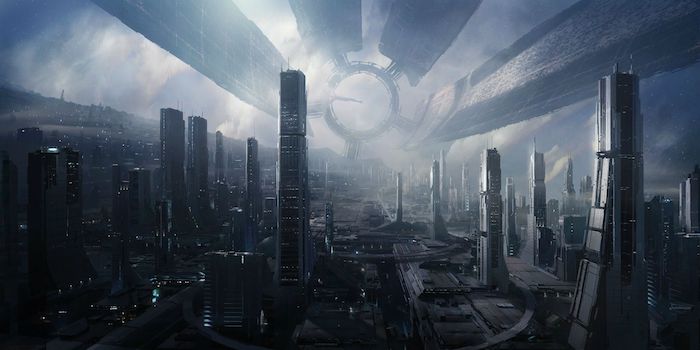
7. Milky Way Galaxy- “Mass Effect Trilogy”
Image courtesy EA
Making an entire galaxy into a memorable setting is no small feat, but Mass Effect does so with ease. With hundreds of planets to explore, each world has its own distinctive feeling and setting. From the seedy underworlds of Omega to the stalwart spires of the Citadel, each world has its own unique flavor that soon makes a massive galaxy feel like home.
With unique alien races and rich lore to provide a backdrop to these sci-fi worlds, players will want to return to the world of Mass Effect over and over again.
Top 5 greatest multiplayer shooter maps in video game history
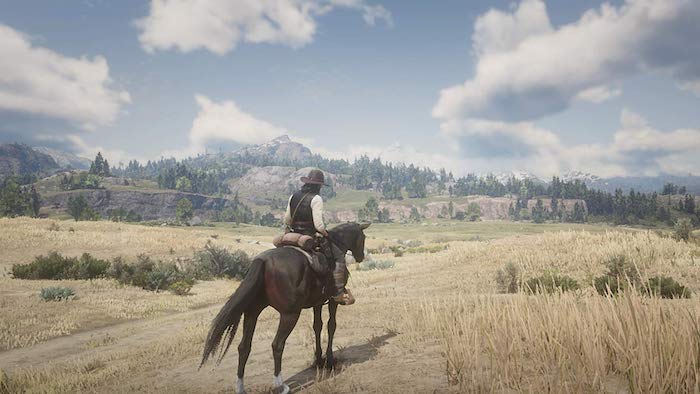
Though the world of the original Red Dead Redemption was groundbreaking in its own right, Red Dead Redemption 2 took that world to the next level. Set in America at the turn of the century, players are able to explore a huge map filled with fictional analogs to real-life locations in the United States. Players can wade through the humid swamps of Lemoyne or brave the howling winds and peaks of the Grizzlies.
They can also head to bustling modern metropolises like Saint Denis or rough and tumble frontier towns like Armadillo. Every corner of the world feels fully realized and full of life. Players could explore for hours and still not come close to experiencing everything the world of Red Dead 2 has to offer.
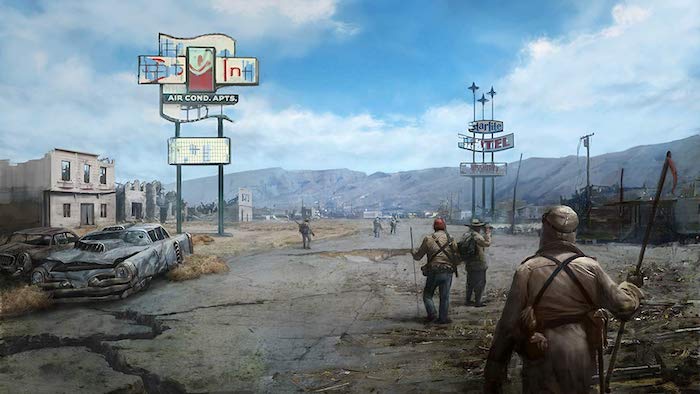
Set in an alternate timeline where the world fell to ruin after a catastrophic nuclear war, the survivors emerged hundreds of years later to rebuild society. Fallout New Vegas is set among the scorching deserts of the American southwest, and particularly the area surrounding the ruins of Las Vegas.
Now called New Vegas, the city is a neon-lit reimagining of a post-apocalyptic gambler’s paradise. The contrast of glitzy casinos and crumbling bombed-out buildings offers a truly unique visual, and the wasteland ruins surrounding New Vegas are filled with secrets and plenty of opportunity for adventure as well.
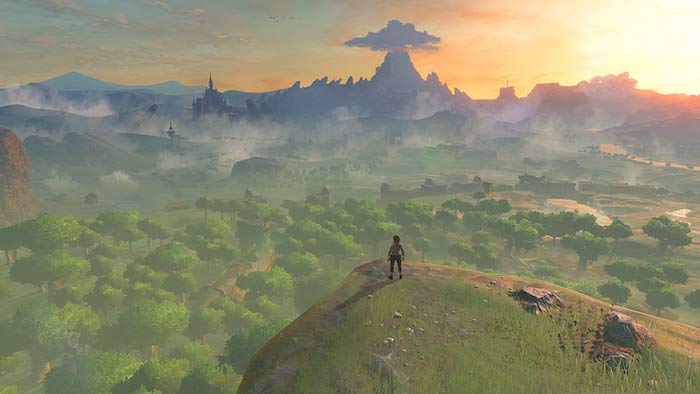
Though gamers have been visiting the mythical kingdom of Hyrule for quite some time now, Breath of the Wild showcased this familiar world in a way that has never been seen before.
The entire kingdom is open for players to explore in any way they so choose. Though the game’s plot is certainly riveting, wandering through the lush forests and verdant fields of the game world is a huge part of what made Breath of the Wild into an instant classic.
The Legend of Zelda: Breath of the Wild gets a sequel
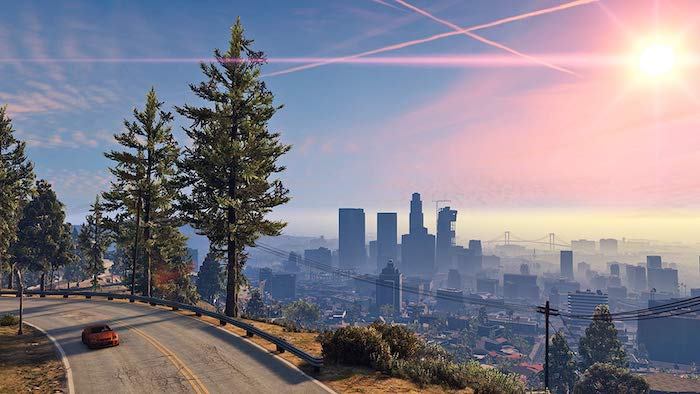
Los Santos is a fictionalized version of the real-life Los Angeles, but as per usual with Rockstar, the fictionalized city is just as full of life as its real-world counterpart. Players can explore the sun-drenched metropolis in the game’s superb campaign or take to the streets in online mode to make a living as the next big criminal kingpin.
Whether it’s bombing down streets in exotic supercars or navigating backcountry roads on a dirtbike, the world of Los Santos offers endless hours of fun and mayhem for any wannabe crime lord. Now if only we knew something about the world in Grand Theft Auto VI.
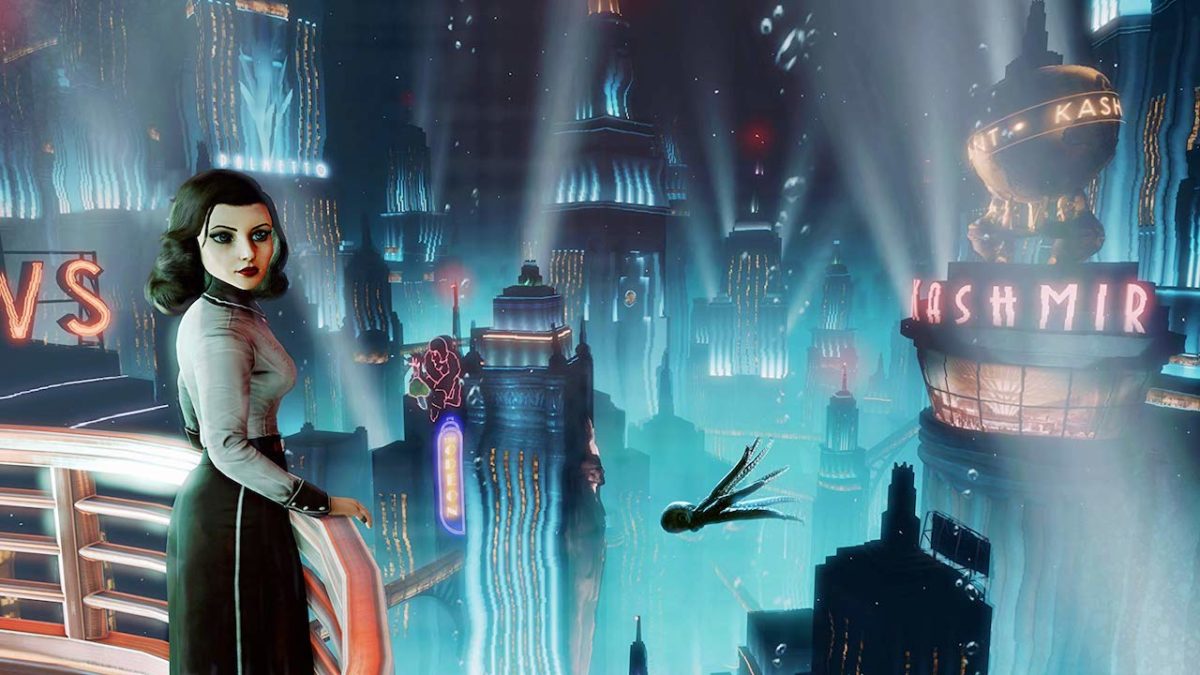
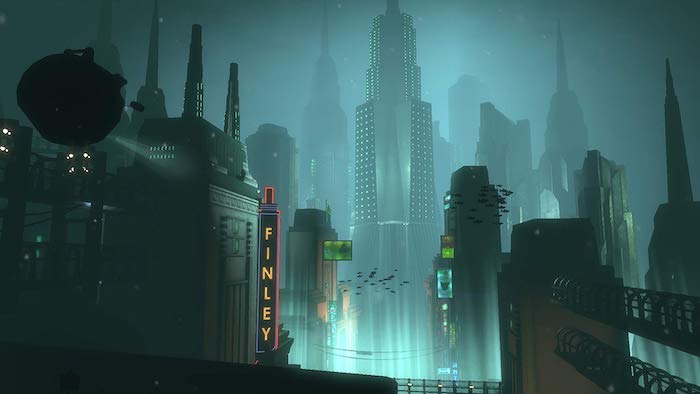
When Rapture was first introduced to the gaming world 12 years ago, it left an instant impression on the mind of every gamer.
This underwater metropolis was the brainchild of unscrupulous industrialist Andrew Ryan. He envisioned a hyper-capitalist society free of the bounds of the surface world and put his vast fortune to use building this art deco city beneath the frigid waters of the North Atlantic.
Unfortunately, this vision of an Ayn Rand inspired paradise soon fell to pieces after Rapture’s inhabitants lost their minds as the result of an experimental genetic modification technology. Exploring the twisted remnants of this blood-spattered, luxurious paradise provided some haunting moments and chilling settings that made an indelible mark on the gaming world.
Experiencing the rich fantasy world of Skyrim is probably as close as most people will come to living out an episode of “Game of Thrones.”
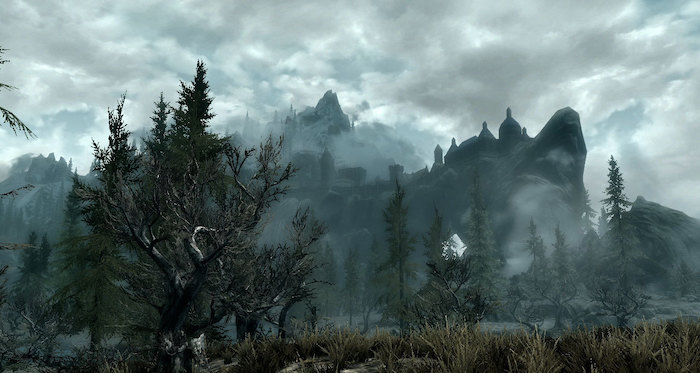
Accompanied by Jeremy Soule’s epic soundtrack, players can fight dragons, wizards, and bandits among the bleak and beautiful snow-covered peaks of Skyrim. Whether saving a town from vampires or honing their magic skills at the College of Winterhold, the province of Skyrim provides almost infinite opportunities for adventure and exploration.
Though the real world might be boring at times, any gamer knows that an instant vacation is only seconds away. By simply picking up a controller and turning on a TV screen, a whole host of fantastic and iconic worlds are available to experience. So, were there any locations we overlooked? Let us know in the comments, and check back with Softonic for all the latest gaming news and other gaming content.
Hook up your old N64 to your HD TV with this adapter!
Soon, we will be flying Arwings and battling the evil Gruntilda on our HD TVs!
If you grew up during the mid-’90s/early 2000s, you know better than anyone how awesome the Nintendo 64 was. Just look at how psyched this kid was when he got one for Christmas!
Sadly, as technology advanced, many of our favorite video game consoles became less and less playable on our new television sets. Gone are the days of having to be on Channel 3, or nearly having an asthma attack as you blow your lungs out into a cartridge. However, fans of the N64 have been working to bring the revolutionary console to the modern age. This hard work has resulted in something truly spectacular, an HDMI adapter.
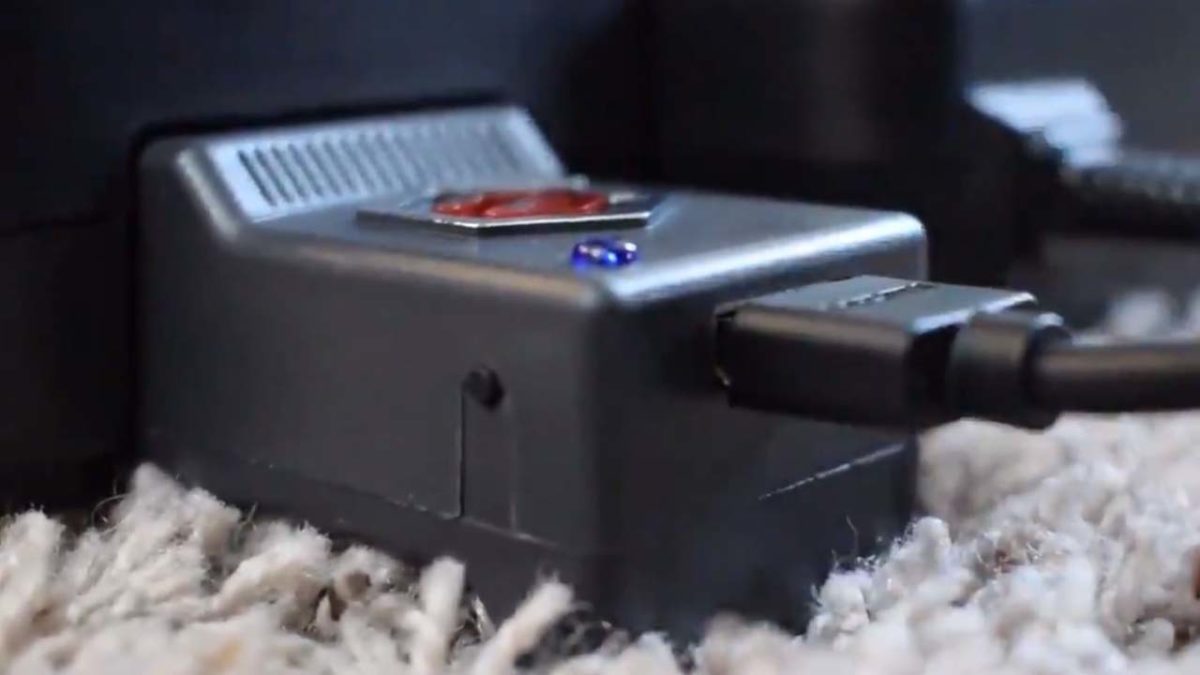
This new adapter from EON Gaming will finally allow us to play the N64 on HD TVs. As you might remember, the N64 had the classic red, white, and yellow RCA chords. Unfortunately, these are not found on most new HD TVs anymore. If you want to play your old N64, you either need to figure out what you need to hook it up, buy the necessary third-party adapters, and pray that they work. This new adapter is tested and true and will work for your system.
As cool as it would be, you will not be playing in HD.
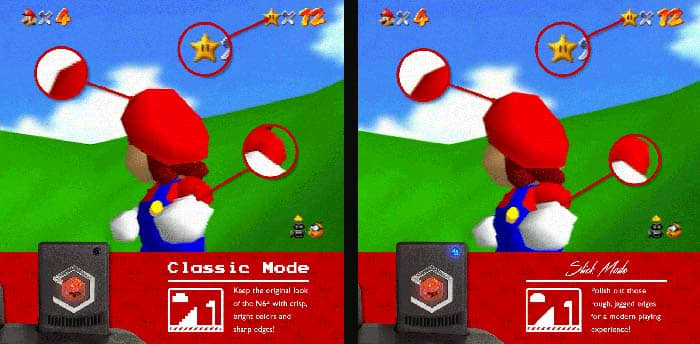
You will be playing in 480p with zero lag. Given that the adapter costs about $150, you might think that this isn’t worth the price. However, the games will look better than they do normally. The adapter has a new feature called “Slick Mode.” In Slick Mode, the adapter will polish the rough, pixelated edges and smooth them out.
Is it worth the price?
If you want to play N64 games on the big screen, there are other options. For example, you can download the Project 64 emulator, and then hook your computer up to your TV so you can play on there.
Even if you don’t have a necessary cable, they are very cheap. The one we just linked to is 15-feet long and costs about $9. That’s a far cry from $150.
That said, your games on Project 64 probably won’t look nearly as good on the big screen as they do through the adapter. Also, you will only be able to use your N64 and N64 controller when playing with the adapter.
If the price tag doesn’t throw you off, then this is a solid option. If $150 is too steep for you, remember that there are other options!
When it comes to the N64, video games don’t get much better. However, which ones are the best?
Man, does this system even need an introduction?
The Nintendo 64 is one of the greatest systems of all time. While so many systems were struggling with the jump to 3D, Nintendo charged to the top creating games that set the industry standards.
Just look at how happy this kid was when he got an N64:
If you don’t feel like digging through boxes of your old Ninja Turtles and Power Rangers in your parent’s basement to find your N64, you can play these on your computer! We’ll tell you more about that later.
With so many amazing titles to choose from, some sadly could not make the list. If your fav didn’t make the cut, let us know in the comments below!
Top 10 Nintendo 64 games
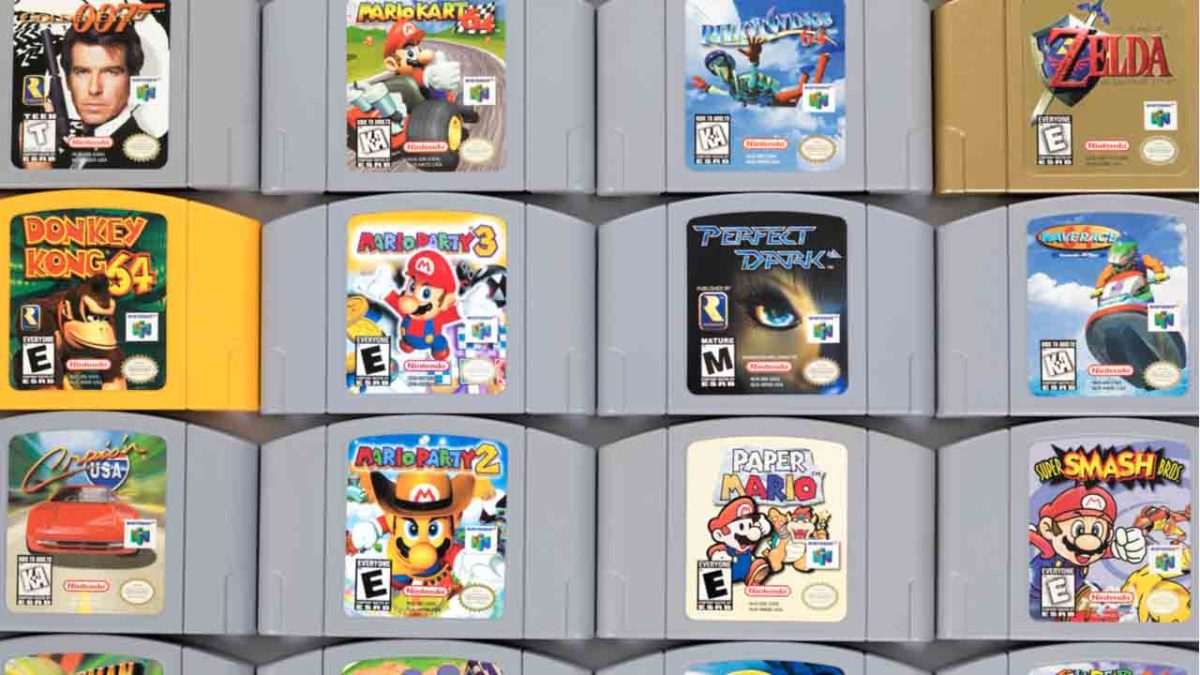
10. Perfect Dark
Oh yeah, you can expect to see a bunch of Rare games on this list.
This game has a guided rocket launcher and a sniper rifle that can shoot through walls. Do we really need to say more?
Coming out three years after Goldeneye, Perfect Dark felt like the successor it deserved. This spy-shooter thriller had the player use futuristic weapons and technology to stop an alien conspiracy being played out by a rival agency.
Your unique arsenal of weapons mixed with the thrilling spy adventure made for a thrilling experience. There is a Perfect Dark game on Steam, so if you’re looking to dive into the franchise, this is a good starting point.
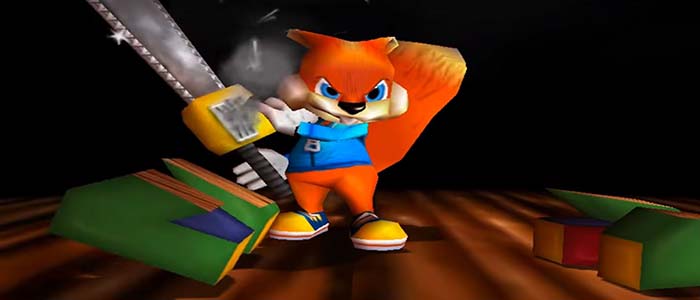
Before kids lied to their parents saying that Grand Theft Auto was a fun racing game, we were telling them that Conker’s Bad Fur Day was a game about an innocent, little squirrel. What we didn’t tell them was that this innocent little squirrel was a drunk, foul-mouthed womanizer who fights a hangover the entire game.
The game was filled to the brim with hilarious pop-culture references as well as a ton of original humor.
And, of course, there was also the Great Mighty Poo:
The game had all of the same great components of other Rare 3D platformers like Donkey Kong 64 and Banjo Kazooie, but it was also so non-Nintendo. Nintendo had a reputation of being very innocent and typically deviated from adult content in games, and they still do. Conker’s Bad Fur Day wasn’t a step out of their comfort zone, it was a flying leap. And honestly, it’s a jump they need to take more often.
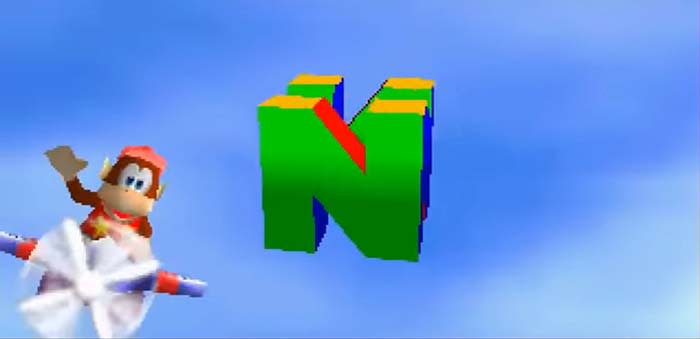
8. Diddy Kong Racing
While making this list, Mario Kart 64 was occupying this spot. However, the more we thought about it, there’s nothing about that game that makes it better than Diddy Kong Racing.
In this game, the levels just feel so much more alive as you maneuver through the jungle and around dinosaurs. You can also take to the skies for the trademark plane races.
In this game, you could also race as some of the characters from other Rare titles including Conker and Banjo.
Sure, Mario Kart 64 is a phenomenal game, but we struggle to find an area where the Italian plumber bests Diddy.
7. Banjo Kazooie
See what we meant? Lots of Rare games.
First off, let’s watch one of the greatest openings in video game history:
It killed us to not put Banjo Kazooie higher on this list. However, there are just too many other great games more worthwhile. That should be a testament to how amazing the N64 was.
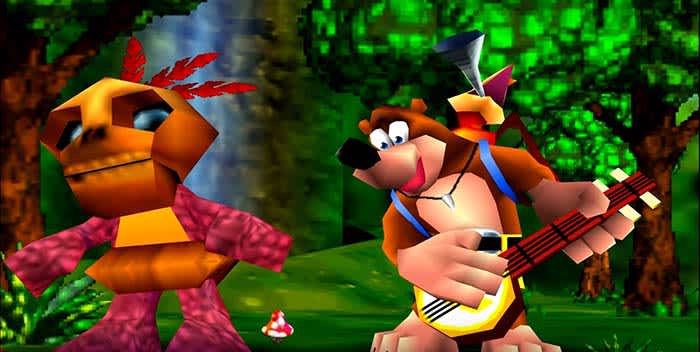
There isn’t another 3D platformer like Banjo Kazooie. You control a bird and bear duo who traverse through different levels collecting jigsaw puzzle pieces until they can finally face down a witch. That might sound weird, but think of it as Super Mario 64 meets a Grimm fairy tale.
The game had so many amazing power-ups. You could use the bird, Kazooie like a Swiss Army knife. She can be used to shoot eggs like a machine gun, acts as your own personal airplane, or use her beak as a battering ram.
Banjo Kazooie was a weird fantasy story mixed in with incredible and unique mechanics. If you’re looking for something that feels totally fresh, you can’t go wrong with the bird and bear.
6. The Legend of Zelda: Majora’s Mask
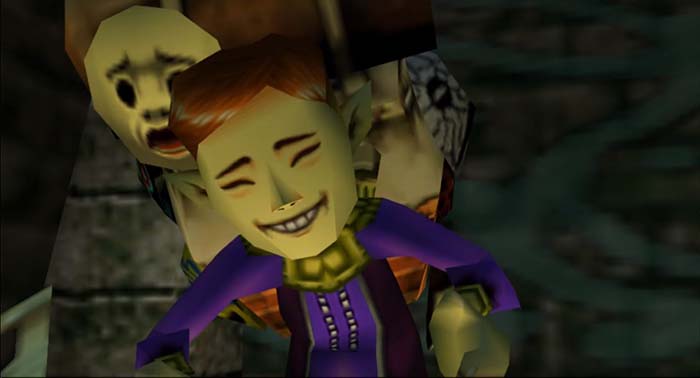
“You’ve met with a terrible fate, haven’t you?”
There’s no game that has the same feel as The Legend of Zelda: Majora’s Mask.
Majora’s Mask follows Link on his quest to stop the moon from falling to the Earth, thus obliterating the world of Termina. However, even with their impending doom, the people of Termina just seem damaged beyond repair.
You come across tragic story after tragic story. When you finally find a moment with even a shred of joy you hold onto it as one of the few things that make Link’s mission worthwhile.
Who didn’t cry at this part?
Majora’s Mask has one of the most unique mechanics in any game. Termina is alive. The people all have schedules that they maintain. You can always expect the Goron with your name to arrive at the hotel at a precise hour. You can expect aliens to invade a farm on a certain day. And you can always expect a beautiful wedding to nearly fall apart just minutes before the moon destroys everything. This feature encourages you to want to save Termina even more. You want the wedding to happen. You want the Zora to get to raise her babies. Finally, you want the Skull Kid to atone, and find a way to live in a world without chaos.
If you can play through Majora’s Mask without feeling some sort of emotion pass over you, check your pulse because you might’ve met with a terrible fate yourself.
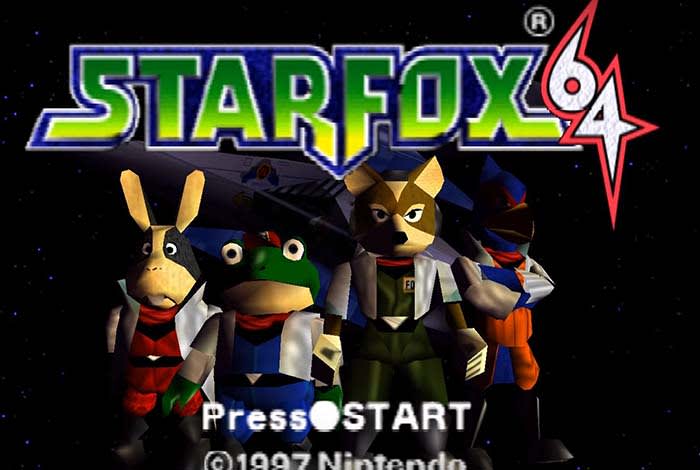
5. Star Fox 64
Back in the days of the NES, space shooters were everywhere and they all felt the same.
It’s not like they weren’t all fun, it’s just that the market was saturated with them, so they just felt like the same. When Star Fox 64 was released, it knocked us all on our butts and completely annihilated the space shooter genre. In certain levels, you can pilot your ship across the entire map, shooting down enemies as you fly like Luke Skywalker on Hoth.
The boss fights?
Phenomenal.
You can beat the game in about an hour, but you’ll need to be an expert of the game to figure out how to play each and every stage so that you can get to the true ending.
You play the game alongside fellow pilots Falco, Peppy, and Slippy. Rather than just hearing the pew-pew-pews of your laser, the game is filled with their banter as well as that of your enemies. Slippy is constantly getting into binds and asks you to save him. Falco is cocky is talks like he’s the best pilot in the galaxy. Peppy is the veteran pilot who is teaching you as your journey continues.
Plug this one in, and go show Andross who’s boss.
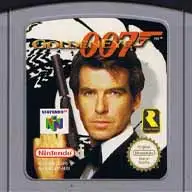
4. Goldeneye
While the Call of Duty franchise is trying to act like the standard for first-person shooters, Goldeneye is just running circles around it.
Nintendo somehow made a 3D first-person shooter where you run and aim all with the same control stick. You know what, it works incredibly well.
Goldeneye was a game that you could break out and play with all of your friends and family. Multiplayer with three other people was a wild time unless some jerk picked Oddjob.
Although we love this game, we have to admit that it plays so much better on mouse and keyboard. If only there was a convenient link you could click on to play this game online…
If you’ve never played it before, it might take a while to get used to the unique control scheme. However, once you do, you’re in for a treat.
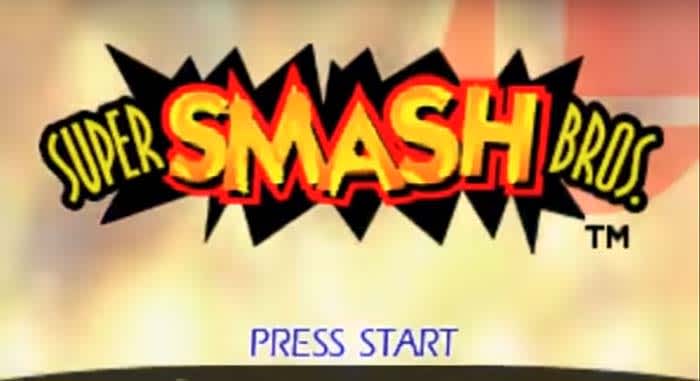
3. Super Smash Bros.
Super Smash Bros. seems like one of the most obvious ideas for a game: take the beloved characters from various titles and put them in a tournament fighter.
Often duplicated, never replicated, Super Smash Bros. was THE staple multiplayer game for the N64. You and your friends could settle debates like, “Who would win in a fight between Mario and Link?”
Also, it had one of the greatest commercials ever made:
Although Smash has gone on to bigger and better things since this title, we can still pick this one up any day of the week.
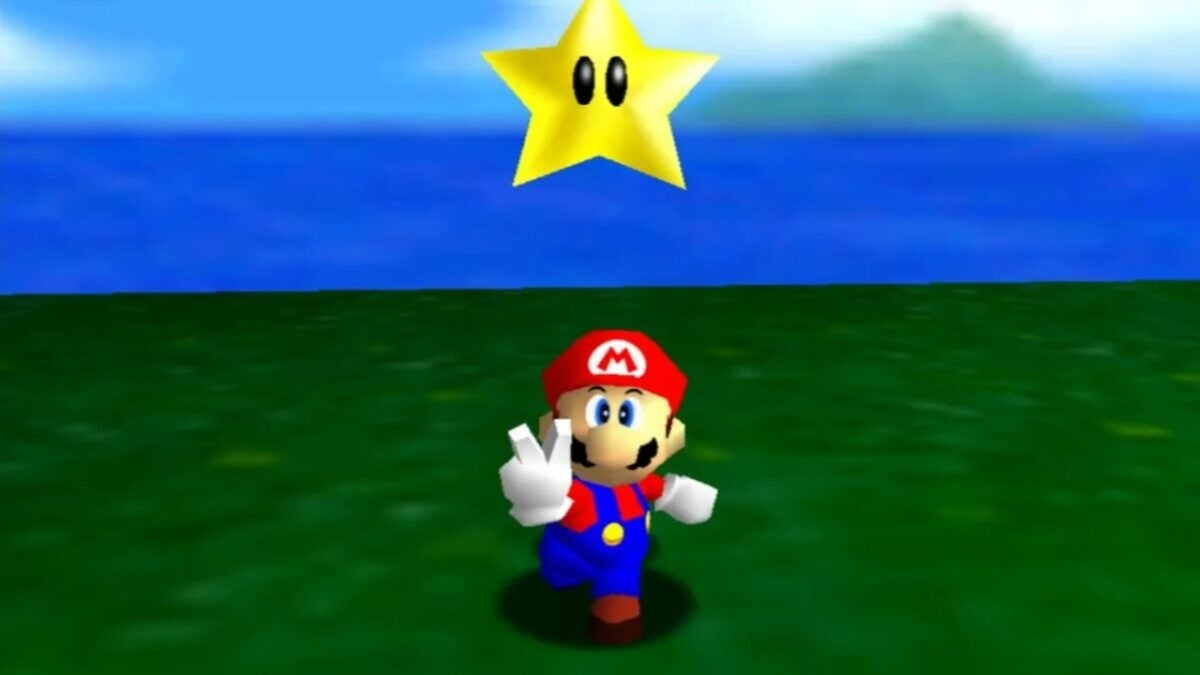
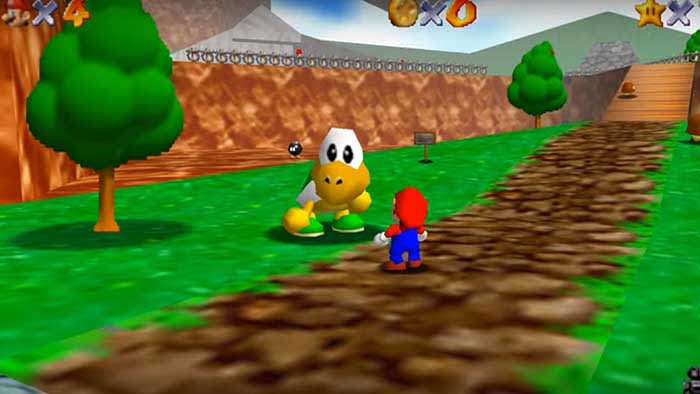
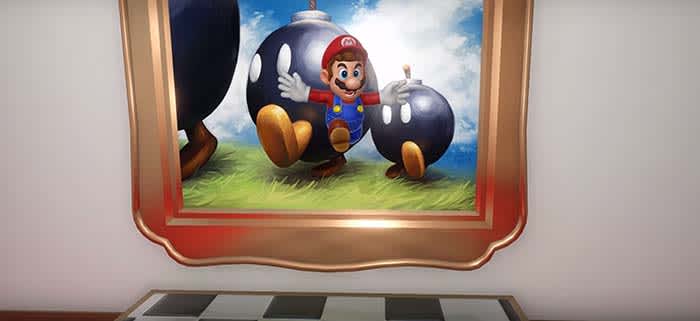
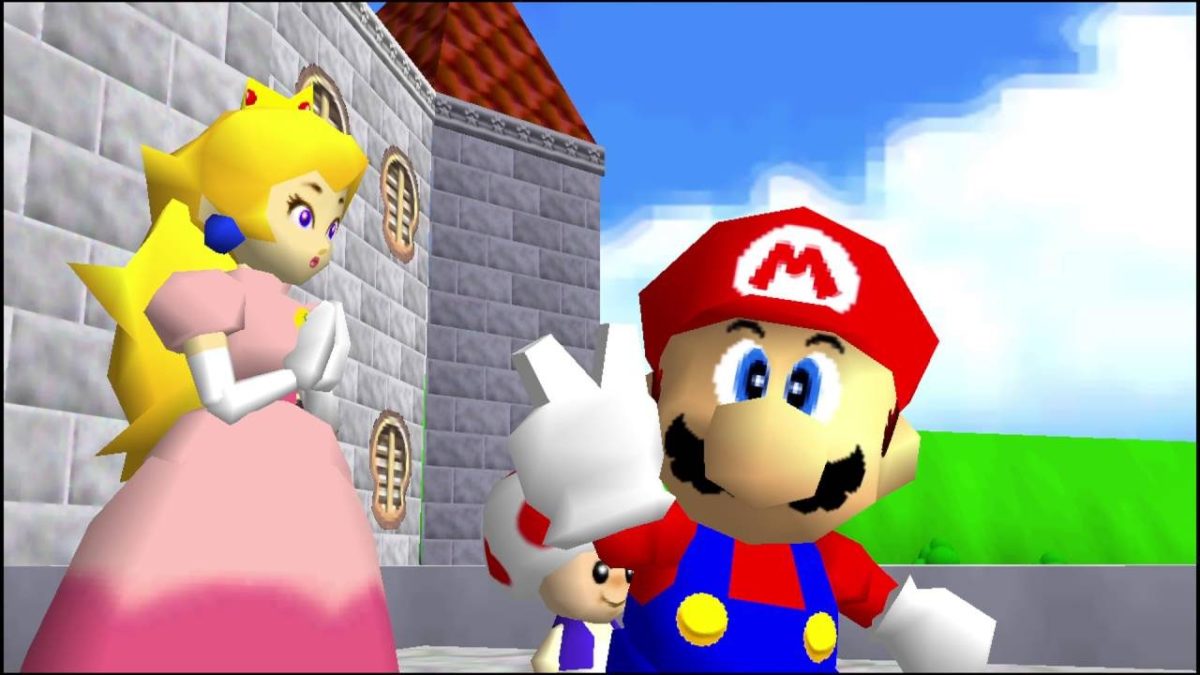
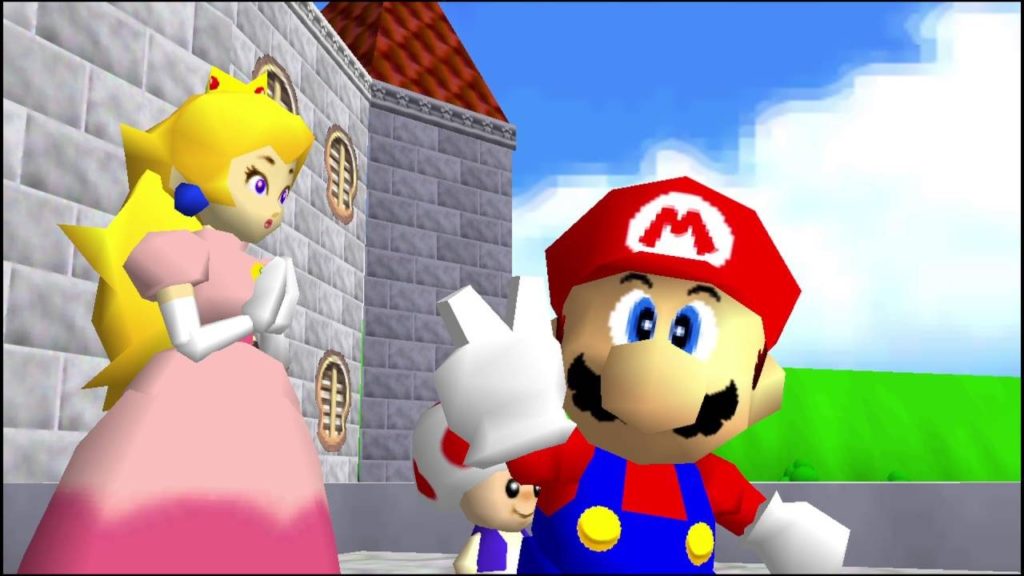
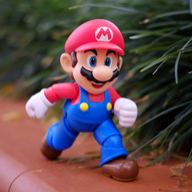
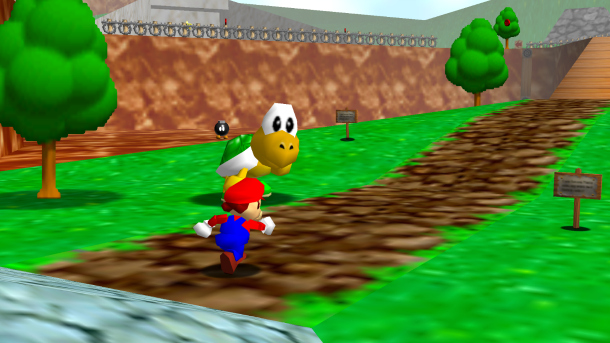
Even at nearly 25 years old, Super Mario 64 is tapdancing around modern platformers. The game is all about control. Mario seems like he can move however you need him too.
Need to get on top of a steep ledge? Mario, can triple-jump into a wall-jump and then dive to make his way up there. The controls are so crisp and clean, that it is one of the most popular games to speedrun out there.
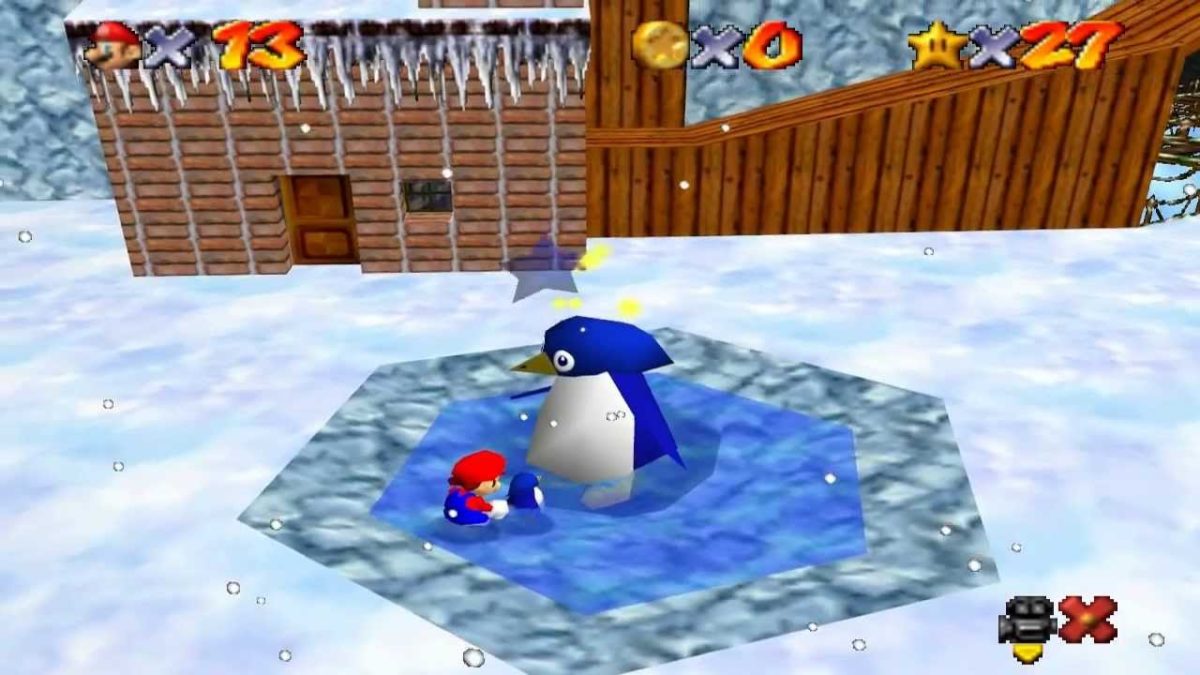
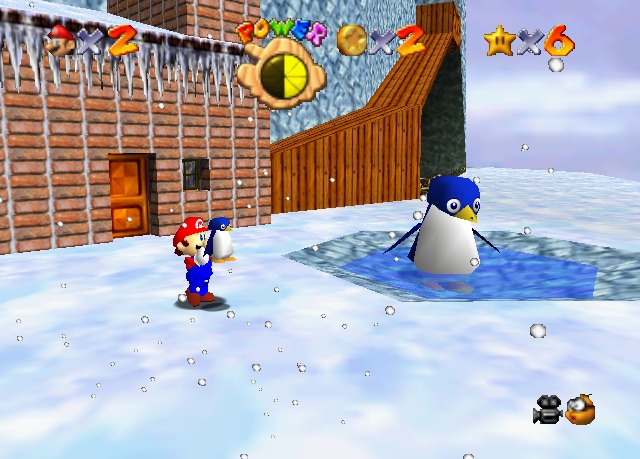
Mario 64 has so many memorable moments. How many of us dropped the baby penguin off the ledge after getting the Star from its mom? Who else, spent hours surfing around levels on a Koopa shell? Who else swore like a trucker at the screen as you failed to catch the bunny after your 20th attempt?
So many video games want you to play the game how the developers made it. They don’t encourage you to play the game like how you want, but how they want you to play it. Mario takes the concept and throws it out the window. You can complete the levels in whatever order you want, and collect Stars in whatever creative ways you can concoct.
Mario 64 is a phenomenal game. However, there is one clear winner that can even surpass this titan.
1. The Legend of Zelda: Ocarina of Time
Look, there are a lot of game reviewers that will tell you that Ocarina of Time is actually overrated and that putting it at the top of the list is a pleb’s point of you.
They’re all wrong.
The Legend of Zelda: Ocarina of Time deserves all the praise it gets. Calling something “the greatest game of all time” seems stupid given the sheer amount of games on the market, and different types of video games out there. However, saying it about Ocarina of Time just makes sense.
It’s one of the most incredible stories in all of video games. It has one of the best adventures in all of gaming, with some of the coolest weapons, and best combat. Even the soundtrack is one of the best in all of video games:
Call us basic or bandwagon for making this our number 1; we’ll wear that badge with honor. There just isn’t another game on the console that even comes close.
The Legend of Zelda: Ocarina of Time turns 20. Here’s how it changed gaming forever
A bunch of games that didn’t make this list that really hurt us to exclude. Donkey Kong 64, Mischief Makers, Wave Race 64, and All-Star Baseball 2001 are just a few of them. However, you can play all of these games and more through Project 64.
Click the link below to download the emulator. Finally, all of your favorite N64 games will be at your fingertips.
The pivot from 2D to 3D gaming was a tricky transition for game companies. Discover how they pulled it off.
By the mid-’90s, the 16-bit era was coming to an end. The advancement in technology brought us some incredible games that looked, sounded, and played better than their 8-bit counterparts. Games like Super Mario World, Super Castlevania IV, and Mega Man X showed that developers had perfected 2D gameplay and level design.
But as gaming technology was advancing, gamers were looking towards the future for the next big thing: 3D. Some 16-bit games, like Star Fox or Pilotwings, simulated 3D gameplay, while others, like Donkey Kong Country and Mortal Kombat, imitated 3D graphics. Though these games were great, the unveiling of the Nintendo 64 and PlayStation truly gave gamers their first look at the potential of 3D video gaming.
The challenge of 3D game design
Creating 3D games brought an entirely new set of challenges for game designers. With only one plane to work with, it’s much easier to design levels and obstacles for 2D sidescrolling games. The ability to move in infinite directions in 3D makes for significantly more complex level design.
Watch: Fastest Super Mario Bros. speedrun in history
Every part of a 3D level is much more spread out than it would be in a 2D level, causing poorly designed 3D worlds to feel empty. Empty levels were hardly ever a problem in 2D games because everything was designed to be tightly packed and compact. With infinite movement, exploration becomes a key part of 3D level design. In 2D levels, everybody knows that you’re supposed to head to the right, but 3D levels, in their resemblance to the real world, naturally encourage players to head off in different directions and explore. This makes designing linear levels a challenge, which could cause some players to get lost. Some 2D games were more natural conversions to 3D than others. It’s significantly easier to imagine a nonlinear game with a top-down perspective like The Legend of Zelda playing in 3D as opposed to a sidescroller like Mario. For games that didn’t transition as easily, the challenge for game designers was to create levels that incorporated elements of 2D games enough to retain fans while taking advantage of the 3D world to keep things fresh.
Nearly every major game franchise at least attempted to make the transition from 2D to 3D during this time. To show you how the transition was made from a game design perspective we’re going to look at two major platforming games and their first 3D entry: Super Mario 64 and Sonic Adventure.
Mario makes the jump to 3D
Nintendo knew right away that creating a 3D Mario game wasn’t as simple as changing the camera perspective. In the 2D Mario games, the objective was the same in every level: get to the end by running to the right. While this linear design was considered early on in Mario 64’s development, Nintendo quickly realized that moving around in 3D was fun enough on its own. 2D Mario basically had four moves: run, jump, crouch, and swim. The fun of 2D Mario games wasn’t in using those moves, but in avoiding obstacles to reach the end of the level.
In Mario 64, Mario’s moveset has been upgraded dramatically to match the more complex level design. Mario could now wall jump, triple jump, long jump, backflip, side jump, and more. This gave players significantly more options in choosing how to navigate a level, adding a high skill cap to the game without making it too complicated for more casual players. This moveset has proven so fun to use that it served as the base for every 3D Mario game since, including 2017’s Super Mario Odyssey.
The level design factored in this movement. It would be a waste to give Mario an expansive, in-depth moveset and have the goal be simply reaching the end of a level. Instead of having dozens of small levels, Mario 64 has 15 huge worlds, each with multiple objectives to complete.
There are two major reasons for this. First, 3D technology was in its early stages and development was expensive, so Nintendo saved time and money by creating 15 large varied levels as opposed to a huge number of small levels. Second, 3D level design is much more conducive to slower-paced, exploration-based worlds than tightly packed platforming challenges. Simply navigating a 3D world with Mario’s new moveset was fun enough, and having varied objectives allowed players to explore more lifelike worlds than were ever possible in 2D. The massive 3D worlds of Mario 64 blew people’s minds back in 1996, and their open-ended structure combined with Mario’s diverse moveset gave them a replay factor that was unmatched by 2D games in the series.
It’s pretty much unanimously agreed upon that Super Mario 64 is the best 2D to 3D transition in video game history. Nintendo made just the right adjustments to the popular Mario formula to help the game feel unique without overwhelming past fans. For being a first generation 3D game, Super Mario 64 holds up remarkably well today and is a shining example of Nintendo’s thoughtful game design.
The story of Sonic Adventure is very different than that of Super Mario 64. For starters, Adventure wasn’t Sega’s first attempt at a 3D Sonic game. Sonic 3D Blast and Sonic R were both early attempts by Sega to make 3D entries in the franchise and unfortunately, both games are awful (despite their wonderful soundtracks).
The Sonic franchise mostly took a backseat during the 64-bit early 3D era as Sega studied its competitors’ attempts at 3D game design. Unlike 2D Mario games, 2D Sonic games had a momentum-based platforming design that allowed skilled players to fly through levels by chaining bounces and jumps. Early Sonic games had much more spectacle than 2D Mario games, as technically impressive segments had Sonic flying through loops and running through pipes. Though these segments took control away from the player, they were impressive enough at the time to make up for it. Because Sonic is a significantly faster-paced platformer than Mario, it was technically unfeasible for Sega to create huge cinematic levels with N64/PSX/Sega Saturn era technology. Sega’s first big attempt at creating a non-spinoff 3D Sonic game came with the Dreamcast, a console with power more comparable to a PS2 than an N64.
While Mario 64 was an attempt by Nintendo to move forward with the Mario series, Sonic Adventure was an attempt by Sega to totally reboot it for the new generation. Sega tried to create a Sonic experience that was only possible on (what were at the time) next-gen consoles, complete with fully-voiced cutscenes, revamped character designs, and a complex story.
This cinematic approach to the game influenced the level design. Sonic Adventure features multiple hub worlds that unite all of the game’s levels. These hubs are massive and filled with secrets and NPC’s, making them seem more like lived-in worlds and less like 3D obstacle courses. These worlds were big enough to actually get lost in, but a helpful hint system mostly alleviates this.
The actual levels of Sonic Adventure resemble 2D Sonic levels in design and structure, as the goal of each Sonic level is to reach the end of the stage. (Note: There are seven playable characters in the game, but for the sake of simplicity we’ll be focusing on Sonic’s gameplay and levels). While Sonic’s moveset didn’t receive the overhaul that Mario got in 64, he received a simple but crucial move: the homing attack. By pressing the jump button in midair, Sonic will home in on enemies, springs, and other interactable objects. This simple addition helped alleviate the depth perception problem that plagued many 3D platformers, though it did arguably take some control away from the player. The only other significant addition to Sonic’s moveset is the ability to spin dash while moving, allowing the player to build up an insane amount of speed.
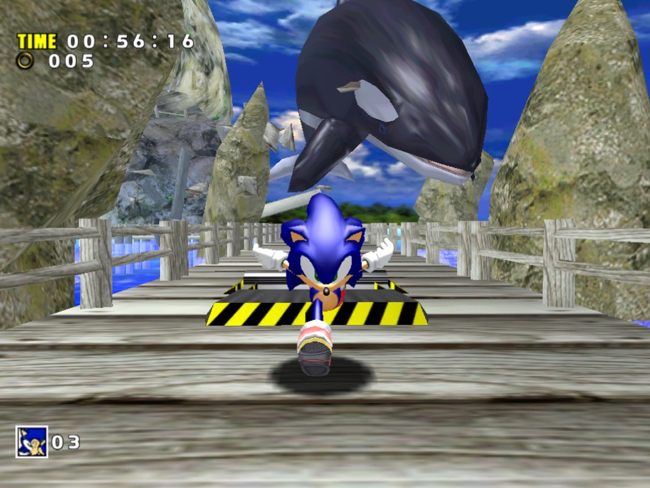
Sonic’s levels are focused on momentum and moving fast just like the 2D games, but they have a much greater focus on spectacle this time around. Moving far beyond simple loop-de-loops, Sonic Adventure had the blue hedgehog flying through a tornado, outrunning a killer whale, snowboarding down a mountain, and speeding down skyscrapers. These segments are flashy and entertaining, but they almost completely strip control away from the player. Attempting to jump or move around during these sections often breaks their scripting, either slowing Sonic to a screeching halt or sending him flying towards his doom. While it feels great to be moving so fast in a 3D space, the lack of direct control can make the game feel too much like a movie rather than a game. Each level is carefully crafted to be beaten in a certain way, and attempting to complete levels in an unorthodox way causes the level design to break down.
While Sonic Adventure succeeds in translating Sonic’s trademark speed to 3D, its focus on tightly scripted cinematic segments, as opposed to freeform gameplay, hurts the game as its flashy sections get less impressive with age.
What early 3D games are your favorite? Do they still hold up? Let us know!
There’s no better way to wrap up the holidays than by revisiting gaming’s best winter levels (there are probably better ways, but let’s forget about those for now). Many games over the years have tried to capture the spirit of the holiday season, but these five games showed the greatest holiday cheer.
5 best winter levels in video game history
5. Cool Cool Mountain – Super Mario 64
So cool, it had to be said twice, Super Mario 64’s Cool Cool Mountain was the first time gamers got to see a well-done winter level in 3-D. This iconic winter romp has Mario fighting snowmen and searching the mountain for lost penguin babies. The challenge that most gamers probably remember is the intense slide race against the giant mama penguin. You can slide into a certain spot on the wall to skip half the course, but the penguin will see through your treacherous ways and scold you for cheating. In retaliation, you can hurl her precious baby off of a cliff.
I’m sorry, little one
You can listen to Cool Cool Mountain’s iconic music below, but it’s not quite the same without the ear-piercing shrieking of the baby penguins.
4. Ice Cap Zone – Sonic the Hedgehog 3
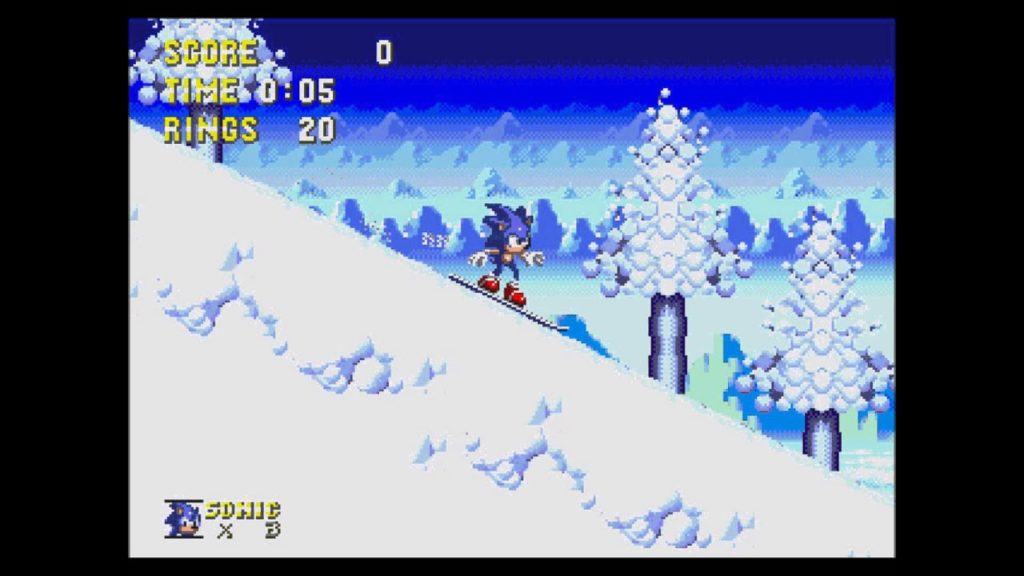
Many fans consider Sonic 3 to be the best in the trilogy (yes, trilogy. There never was a Sonic 4). The game expands upon the fast-paced, momentum-based platforming of previous entries by adding plenty of power-ups and more complex, explorable levels. Ice Cap Zone is a particular standout. The level ramps up the attitude right away by putting Sonic on a snowboard.
Back in the ’90s, Sonic’s cocky attitude let him stand out against other video game mascots and putting him on something as tubular as a snowboard solidified him as the coolest of the cool. Sure you’re forced to crash the snowboard pretty quickly, but it’s still pretty awesome. Oh, and we need to discuss the music:
The game’s soundtrack had input from none other than Michael Jackson. For the Ice Cap Zone, in particular, Jackson brought in Brad Buxer, keyboardist of The Jetzons. While some have said that Ice Cap Zone contains interpolations/samples of MJ’s Smooth Criminal, there is no doubt that the song is a repackaging of The Jetzons song “Hard Times”.
“Hard Times” didn’t actually get a formal release until 2008 as part of a Jetzons compilation record. Both versions of the song sound amazing, and Sonic’s connection to Michael Jackson is definitely one of the more mysterious pieces of gaming trivia.
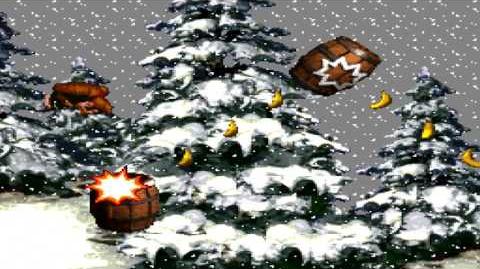
This list entry is a little bit different, as I don’t actually like this level at all. In fact, I despise Snow Barrel Blast with every fiber of my being, and now I finally have a chance to talk about it. The slippery ground and the barely-controllable barrel cannons were the bane of my existence when I was 8 years old, and it still took me like 20 tries to beat this level as a grown-ass man.
The Donkey Kong Country games are amazing, but they are filled with absolutely brutal levels. Even among all the other BS levels, Snow Barrel Blast stands out as a Herculean test of patience and rage control. There is nothing more soul-crushing than seeing your helpless Kong fly into the freezing abyss because you missed one barrel cannon shot out of 25109837. I wish I could meet the designer of this level so I could rip their cold, black heart out of their chest with my bare hands.
Music’s pretty great though.
2. Your Town – Animal Crossing
This entry may not technically be an actual level, but the Animal Crossing games handle winter so well there’s no way I could leave them off the list. The Animal Crossing games run in real time, so the in-game seasons reflect the real-life ones. Various festive items pop up around your town in winter. Pine trees suddenly become covered in Christmas lights. Snowmen heads appear, requiring you to roll them an appropriate body. Villagers build igloos where they host cozy minigames and cook delicious chowder.
The whole winter season culminates in Toy Day, a non-denominational winter celebration that features a reindeer named Jingle dressed as Santa. In New Leaf, Jingle lets the player dress as Santa and deliver the presents directly to their neighbors, giving them the perfect way to spread holiday cheer.
The chowder song soothes my soul and it’ll probably soothe yours too.
The Legend of Zelda: Ocarina of Time turns 20. Here’s how it changed gaming forever
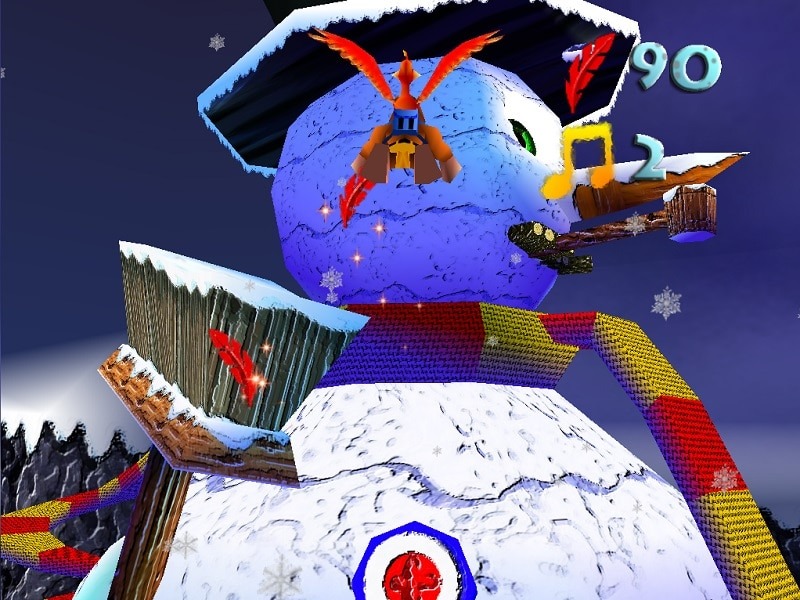
The best winter level of the 64-bit era, Freezeezy Peak is a masterpiece of theming and level design. The level features a friendly giant snowman that you can climb and slide down, in addition to several very unfriendly snowmen who chuck snowballs at you with unflinching accuracy. Seriously, those snowy bastards could hit a gnat’s eye three miles away while blindfolded, and it doesn’t help that you constantly hear their evil laughter echoing throughout the level.
In addition to snowmen, the level also features defenseless talking Christmas lights, sliding walruses, and sledding polar bears. The level absolutely nails the Christmas atmosphere, which is really impressive considering the limitations of early 3-D game design. As with most levels in Banjo-Kazooie, the level feels more like a lived-in world than a 3-D playground, giving the game plenty of character. Freezeezy Peak is gaming’s standout winter level even with all of those hellish snowmen.
Plus, the music sounds like something out of a stop-motion Christmas classic.














 Even at nearly 25 years old, Super Mario 64 is tapdancing around modern platformers. The game is all about control. Mario seems like he can move however you need him too.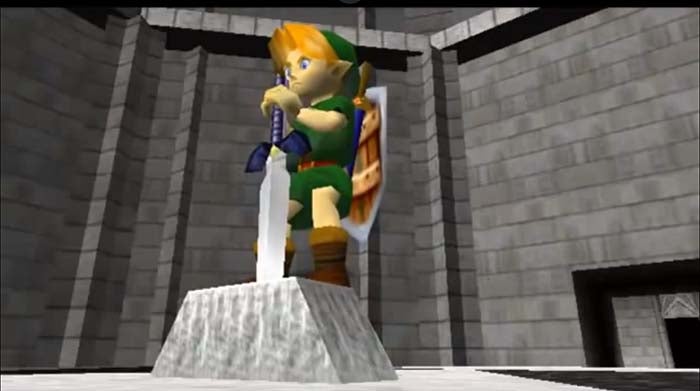


 This list entry is a little bit different, as I don’t actually like this level at all. In fact, I despise Snow Barrel Blast with every fiber of my being, and now I finally have a chance to talk about it. The slippery ground and the barely-controllable barrel cannons were the bane of my existence when I was 8 years old, and it still took me like 20 tries to beat this level as a grown-ass man.