Viber Out reminds us that the world is far from being online

Viber ​Out lets you call any phone number, whether mobile or stationary. A bit retro? Not really. The newest addition to Viber‘s services show that we aren’t even close to global connectivity.

There are currently about 1.4 billion smartphones worldwide. It’s a massive number, but compared to the more than 7 billion people out there in the world, it pales in significance. In India, for example, over 80% of mobile phones are similar to the Nokia models that Westerners were using ten years ago, mobile phones without Internet access or apps. The battle between Android and iOS hasn’t even reached them yet.
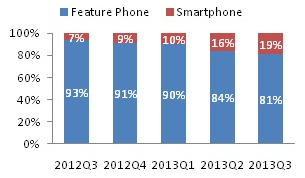
Proportion of smartphones to normal mobiles in India

Proportion of smartphones to normal mobiles in India (source)

In short, the vast majority of the world’s population doesn’t know about WhatsApp. SMS usage is heavy, and call traffic is far from being wiped out. Maybe Californians no longer call each other on the phone, but all you have to do is visit an African capital to realize that people are still connecting to each other from internet cafes and constantly sending texts, even if they do have smartphones with internet capabilities.

Percentage of smartphones as a proportion of the total population in four sub-Saharan countries

Percentage of smartphones as a proportion of the total population in four sub-Saharan countries (source)

Viber Out is both an intelligent and a humble app

Viber launched Out a month earlier than planned to support those affected by Typhoon Haiyan. In the Philippines, a nation of nearly one hundred million people, only 33% have access to the Internet, and the majority still use a residential connection. Where mobile networks fail or just haven’t been put in place, landlines are still the most reliable form of communication. Even in the best connected areas of the world, mobile networks can fail in an emergency.

In an area devastated by disaster, there are many problems facing a fixed telephone network

In an area devastated by disaster, there are many problems facing a fixed telephone network

So, while launching a seemingly “retro” feature like SMS support for Google Hangouts, or the ability to make a call to any phone with Viber Out, may seem like a step back, it actually proves to be more of an act of humility. It means recognizing that the world is not confined to the fortunate few who can connect to the Internet from anywhere. At least, not until Google manages to connect the entire population in 2014 by using hot air balloons.

What do you think about the ability to call regular phones from Viber?

DOWNLOAD:

University paper predicts an 80% decline for Facebook by 2017

A computer science paper from the Department of Mechanical and Aerospace Engineering, Princeton University, has predicted a drastic decline for Facebook over the next few years, based on mathematical models of the spread of epidemics and the decline of MySpace.

The report concludes that Facebook will lose 20% of its maximum user base by December 2014, and 80% by 2015. The authors claim that Facebook’s growth and the beginnings of its decline fit their mathematical models, so the prediction is fair. However, there are reasons to see Facebook as different to MySpace, and to believe it may have a different future.

While MySpace was the early king of social media, its downfall was brought about by the growth of Facebook, not just natural decline. Facebook is unprecedented in size, and while services like Snapchat are popular with teens, nothing has emerged yet which will make users leave in droves. Facebook has weathered lots of scandals and controversies, arguably because people have nowhere else they want to go. Google+ was arguably a better service when it launched, but it hasn’t precipitated a mass exodus from Facebook, as Facebook did from MySpace.

Discussing the paper on Reddit, many users pointed out that you can’t always compare one service’s history to another, saying ‘Reddit will lose 80% of his users within a few years, according to a new mathematical model based on Digg data,’ and ‘Google will lose 80% of its users within a few years, according to a new mathematical model based on Yahoo! data.’

The researchers analyzed the adoption and abandonment of social networks, and discovered they could be accurately described by applying models for the growth and contraction of medical epidemics. These models have previously been successfully applied to the spread of ideas throughout a population, so using them is not without precedent.

RELATED STORIES

[Source: Reddit, arxiv.org]

Clean up your YouTube interface with Adblock Plus

Following the fury that erupted when YouTube imposed its new comment system on users, Adblock Plus is poised to counterattack: the plugin now allows you to clean up Google’s YouTube interface.

Everyone’s heard the phrase ‘Google ecosystem’, and while the integration may not be ideal for some users, it does sum up well the whole range of products and services that Big G has aggregated and combined over the years.

Some of latest buzz was surrounding the YouTube comment system and the ability to comment on videos only when signed in with a Google+ profile, a flawless example of product integration. Google claims that the reason behind this move is to combat the trolling, offensive, violent and generally inappropriate comments that sometimes occur in an anonymous commenting system.

Many users have taken this news as an act of force on Google’s part. As a result, the developers behind Adblock Plus, a plugin for Chrome, Firefox and most recently Safari, have sprung into action, updating its add-on so that numerous ‘disturbing’ elements, including the now controversial comments field, can be removed from the YouTube interface.

Watch the video below to see how to install Adblock Plus, and check out results.

Default player


brightcove.createExperiences();

RELATED ARTICLES:

Chrome bug could mean malicious websites are listening to you

Developer Tal Ater has discovered a surprising bug in Google Chrome which could allow malicious sites to listen to you through your computer’s microphone. Once your microphone has been activated by a page, the bug means it could stay active even when you close it, as long as Chrome stays open.

Tal Ater reported this bug to Google’s security team in September 2013, but months later a fix is still in discussion, leaving users vulnerable to this microphone exploit.

For the bug to be exploited, a site has to ask you for permission to use your microphone. It could be voice search, or any other legitimate use for a microphone, and voice recognition is becoming more popular as the technolgy has improved.

Tal Ater has discovered that it’s possible for a site that has your permission to use the microphone to open a ‘pop-under’ window that you might not notice, when you close the page. This pop-under window would maintain the microphone permission you gave Chrome, but unlike a tab, you would not see the icon telling you your microphone is active.

Tal Ater uploaded a video to YouTube explaining the bug and how it could be exploited.

RELATED STORIES

[Source: Tal Ater]

Screenshots of upcoming Windows 8.1 2014 update leaked

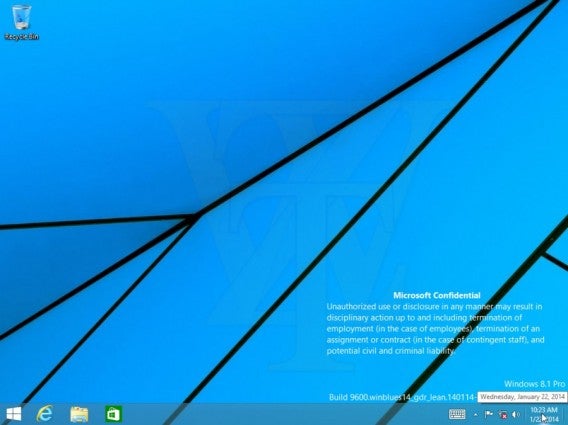
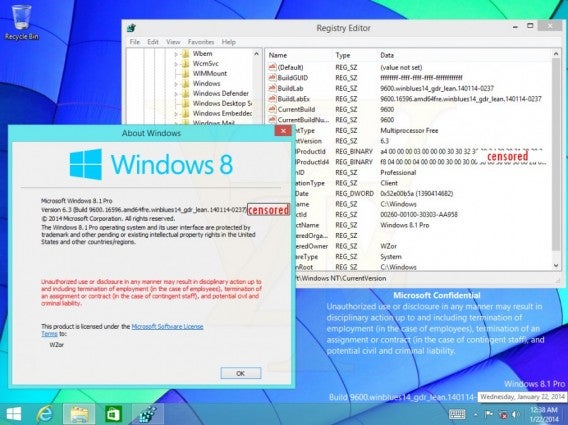
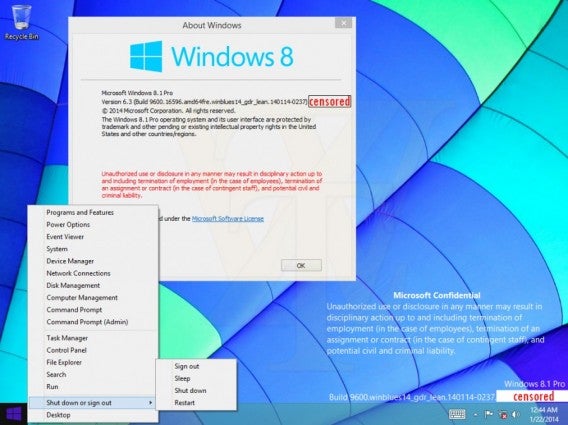
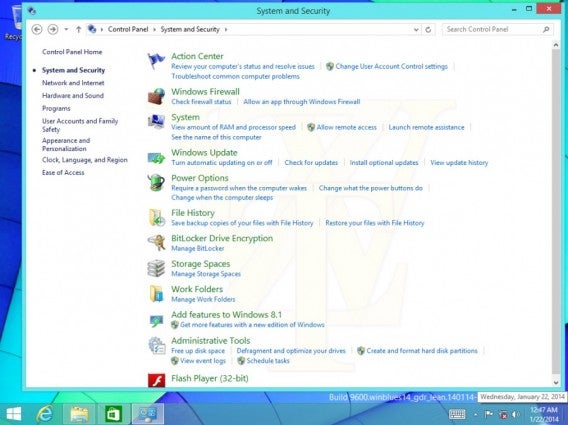
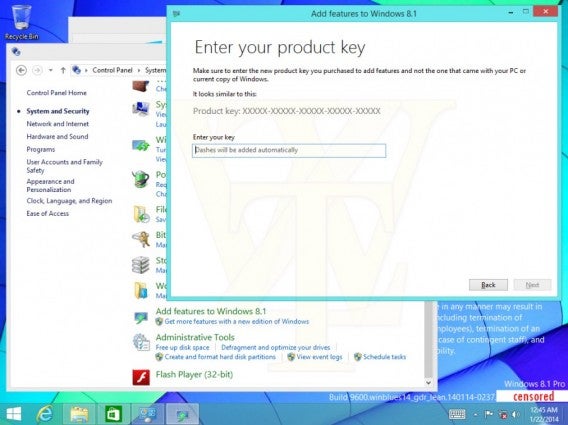
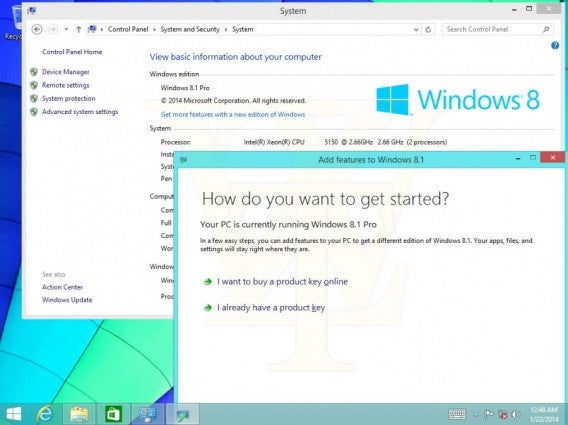
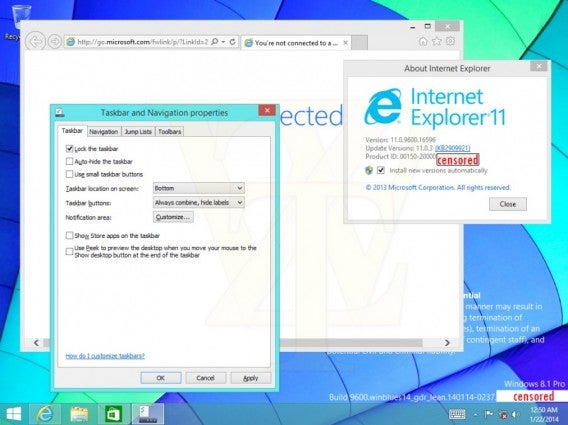
Windows 8.1 is due its first update soon, and a Russian Twitter user @WZorNET has posted screenshots of an early build. The update is expected to be released in April, to coincide with the Microsoft Build Developer Conference, where we also hope to hear some details about Windows 9.

WZor has been behind other credible leaks, and the screenshots look legitimate. This is the second test version of the Windows 8.1 2014 update. However, this update isn’t going to be as major as last year’s Windows 8.1, which made some big changes to the operating system and was in part a response to consumer criticism. The leaked screenshots don’t show any significant changes to Windows 8.1.

Rumors are gathering that Windows 9 could arrive by Spring 2015, or even earlier. The radically different interface has not proven as popular as Microsoft had hoped, and many users are sticking with Windows 7 or using the classic desktop view in Windows 8. One of the biggest user requests – a traditional Start button for Windows – was not reintroduced in Windows 8.1. Many sources suggest this could return in Windows 9, but there’s still a chance it could be included in the Windows 8.1 2014 update.

RELATED STORIES

[Source/images: WZor.net]

Snapped app unofficially brings Snapchat to Mac

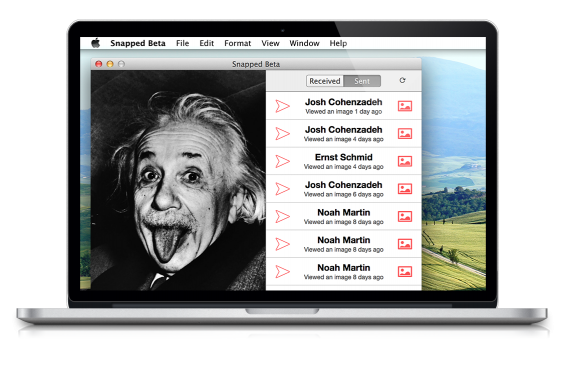
Snapchat has remained a mobile only application until now. Sort of. Developer ThnkDev has created an unofficial Snapchat client for the Mac called “Snapped,” which lets you view your Snapchat photos on your Mac along with other features.

Snapped has the ability to mark your Snaps as “read,” so your friends will be unable to view them. This is handy if you send a snap you instantly regret. Snapped also has the ability to never mark a snap you received as “read,” which allows you to view the snap an indefinite number of times, though the time limit set by your friend still applies. This means snaps within Snapped will continue to be viewable after the time limit runs out.

Snapped beta screen

Traditional features found in the official Snapchat app are still there, like the ability to take and send photos, Users will also be able to set time limits for viewing a snap, just like in the Android and iOS apps. Still, the app is missing a ton of features like annotations, drawing, and other settings.

One feature Snapped gains is the ability to send any photo from your Mac, not just photos you take with the camera, which is a limitation with Snapchat’s mobile apps.

Since the app is currently in beta, there are a ton of missing features and bugs. For example, logging into Snapped will log you out of Snapchat on your mobile devices and vice versa. It’ll be interesting to see how Snapchat responds to Snapped using its API to manipulate features within the service.

Source: Snapped | Via: 9to5Mac

RELATED STORIES

Blizzard’s Hearthstone: Heroes of Warcraft trading card game now in open beta

Blizzard’s trading card game, Hearthstone: Heroes of Warcraft, is now in open beta in North America, though the company promises to bring the open beta to other regions “within the next few days.” The game was first announced at PAX East in March 2012 and entered a closed beta in August. Now anyone can give Hearthstone a try by downloading the game here.

“Please be aware that if smoke starts curling out of our servers due to unexpectedly high demand to play Hearthstone, we may have to temporarily disable open beta account activations for a time until we’re ready to take on more players.”

Blizzard says it’s done wiping the game so players can permanently amass a collection of cards to challenge their friends. The company also notes that if there is too much interest in the open beta and their servers become flooded with new users, it will temporarily suspend open beta invites until the company is ready to receive more players. “Please be aware that if smoke starts curling out of our servers due to unexpectedly high demand to play Hearthstone, we may have to temporarily disable open beta account activations for a time until we’re ready to take on more players,” writes Blizzard in a blog post.

The company has also announced its intention to bring the game to Android and iPhone later this year, which shouldn’t be much of a problem since the game’s system requirements are relatively low for the PC and Mac.

Source: Battle.net

RELATED STORIES

VLC for iOS redesigned, adds Dropbox streaming

VLC for iOS received a huge update, bringing a new iOS 7 look and feel to the app as well as Dropbox streaming. Google Drive has also been integrated into the application so users will be able to download media. Dropbox is currently the only cloud storage service to support both downloading and streaming in VLC for iOS.

In addition to strengthening cloud integration, VLC for iOS has also improved performance and support for universal plug-and-play (UPnP) servers. VLC for iOS can now download from UPnP servers.

Here’s the complete changelog:

  • GDrive integration and Dropbox streaming
  • New multitouch gestures,
  • Improved library for TV Shows and Audio,
  • Better UPnP integration, with downloading support,
  • A startup tutorial,
  • New streaming formats and protocols supported,
  • Rewritten WiFi upload,
  • Improved privacy when using Passcode Lock
  • And so much more!

You can find the update to VLC for iOS in the App Store on your iOS device or you can download the app here.

Source: VLC for iOS (iTunes)

RELATED STORIES

Adblock Plus now available for Safari

Popular adblocking extension, Adblock Plus, is now available for the Safari browser. The extension will work just as it does on in other browsers, giving users the ability to subscribe to adblocking lists and creating whitelists of advertisers that they’d like to support.

“Our goal is to make the Internet better for everyone by empowering people to block obnoxious ads while simultaneously encouraging websites to run user-friendly, responsible advertisements.”

Many websites, including ours, rely on web advertising to make money so Adblock Plus’ “Acceptable Ads” feature is appreciated. The feature displays ads which the company deems “acceptable,” which include ads static ads, text only ads, and clearly labeled ads. “Our goal is to make the Internet better for everyone by empowering people to block obnoxious ads while simultaneously encouraging websites to run user-friendly, responsible advertisements instead of intrusive banners, overlays, and pop-ups,” says Till Faida, co-founder of Adblock Plus.

Adblock Plus is now available in every major web browser including Chrome, Firefox, Internet Explorer, Opera, Safari, and even as an app on Android (but you’ll have to download it outside of Google Play).

Adblock Plus for Safari is backwards compatible with older versions of Safari up to version 6.0, which shipped with OS X Mountain Lion. To download the latest version of Safari, check out the download links below.

Download Safari for Mac and Windows

RELATED STORIES

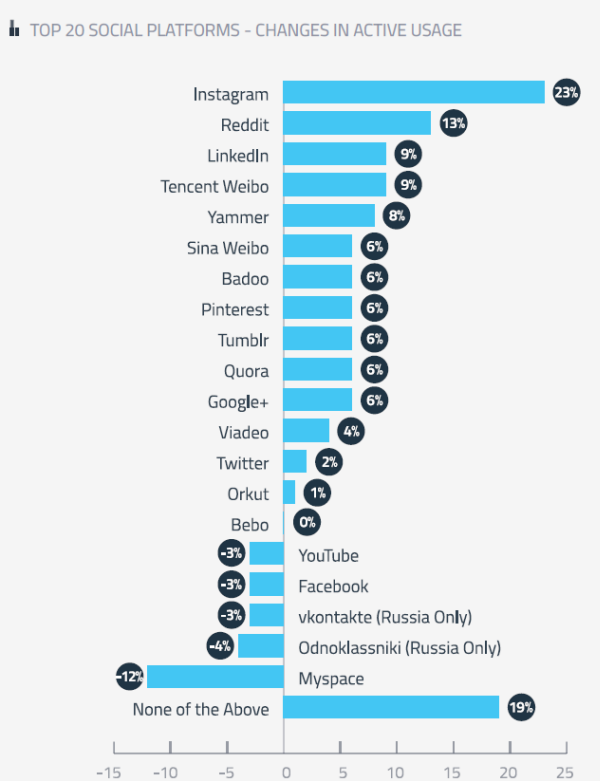
Instagram is the fastest growing social network worldwide

According to a survey of 170,000 people in 32 countries, Instagram was by far the fastest growing social network in 2013, while Facebook and YouTube actually saw a reduction in growth. The most active users on social services access them via mobile devices

Despite losing out in growth, Facebook is still by far the most popular social service, followed by YouTube and Google+. All the services have many more user accounts than active users. Surprisingly, Google+ boasts almost as many active users as YouTube, and more than Twitter.

While desktop users are still the most common, mobile users are more frequent visitors and more active. Unsurprisingly, the 25-34 age range is still the biggest on social networks, although 16-24s are the biggest users of YouTube, Instagram and Tumblr. Survey author Globalwebindex says that the user base of established social sites is aging, as their users stay on, while younger users are joining newer platforms like Instagram.

The survey excluded users in China, and data was gathered by asking users questions like “Please select all of the services on which you have an account and also indicate if you have used or contributed to that service in the past month using any type of device e.g. PC/Laptop, Mobile phone, tablet, etc.”

RELATED STORIES

[Source: Globalwebindex]