AMD could be the big surprise at CES 2025 and Nvidia knows it

AMD could go all out during CES 2025 next January. According to a well-known leaker from the Chiphell forums, AMD is preparing a bunch of consumer products, from more X3D CPUs for desktop computers to chips for portable devices and RDNA 4 graphics cards. This powerful rumor comes from Zhangzhonghao, a leaker known for discussing new releases in advance. Starting with laptops, it is said that AMD will launch the new generation of Kraken APUs along with Ryzen AI Max (or Strix Halo) and, finally, the Fire range CPUs. Everything that […]

AMD could give it all during CES 2025 next January. According to a well-known leaker from the Chiphell forums, AMD is preparing a bunch of consumer products, from more X3D CPUs for desktop computers to chips for portable devices and RDNA 4 graphics cards.

Xbox Game Pass DOWNLOAD

This powerful rumor comes from Zhangzhonghao, a well-known leaker who talks about new releases in advance. Starting with laptops, it is said that AMD will launch the new generation of Kraken APUs along with Ryzen AI Max (or Strix Halo) and, finally, the Fire range CPUs.

Everything AMD could present at CES 2025

There are many different product ranges, so to refresh the memory, Kraken Point is expected to be the successor to the current AMD Ryzen 8040 series. Leakers claim it will come with up to four standard Zen 5 cores and four Zen 5c cores, as well as RDNA 3.5 graphics with up to eight compute units (CU).

The Strix Halo processors are more on the higher end of the scale, and AMD might launch three CPUs for laptops to start with, all under the Ryzen AI Max umbrella: The Ryzen AI Max+ 395 with 16 cores, the Ryzen AI Max 390 with 12 cores, and finally, the Ryzen AI Max 385 with eight cores.

All of them will offer integrated RDNA 3.5 graphics. The Fire range is the successor to the Dragon range and will basically be the laptop version of the desktop Zen 5 CPUs, aimed at high-performance laptops for gamers. Zhangzhonghao also claims that AMD will simultaneously introduce X3D CPUs for laptops.

Those who are on the hunt for the best gaming laptops will be able to rely on a mix of new chips, such as the Ryzen Z2, the Ryzen Z2 Extreme, and the Ryzen Z2G.

Graphics cards are no surprise: AMD is said to launch RDNA 4 GPUs during CES 2025. For some time, it has been said that AMD will let Nvidia dominate the high-end market and will stick to mid-range GPUs with this generation. This could mean a flagship RX 8800 XT, but we will have to wait to see it.

Finally, the Zen 5 X3D CPUs. AMD itself confirmed that it will present a new Ryzen 9000X3D CPU on November 7, but did not specify which model it would be exactly. However, most sources expect it to be the Ryzen 7 9800X3D, and this leak only confirms it. AMD will follow it with the Ryzen 9 9900X3D and the Ryzen 9 9950X3D at CES 2025.

AMD is betting everything in 2025 with its new business line focused on AI and its changes in consumer hardware. We will see what happens.

Microsoft Teams mimics some of Slack’s best features

Microsoft has announced significant changes to Teams that seem to be inspired by its rival Slack, the communication platform for professionals. One of the highlights is the future introduction of threads in conversations, a highly anticipated feature that will allow messages to be organized more clearly and enable direct responses to specific topics within threads. Although this functionality will not arrive until mid-2025, Microsoft has another major change prepared that will soon affect the way chats and channels are viewed on the platform. In November of this year, the company will launch a new […]

Microsoft has announced significant changes in Teams that seem to be inspired by its rival Slack, the communication platform for professionals. One of the highlights is the future introduction of threaded conversations, a highly anticipated feature that will allow messages to be organized more clearly and enable direct responses to specific topics within threads.

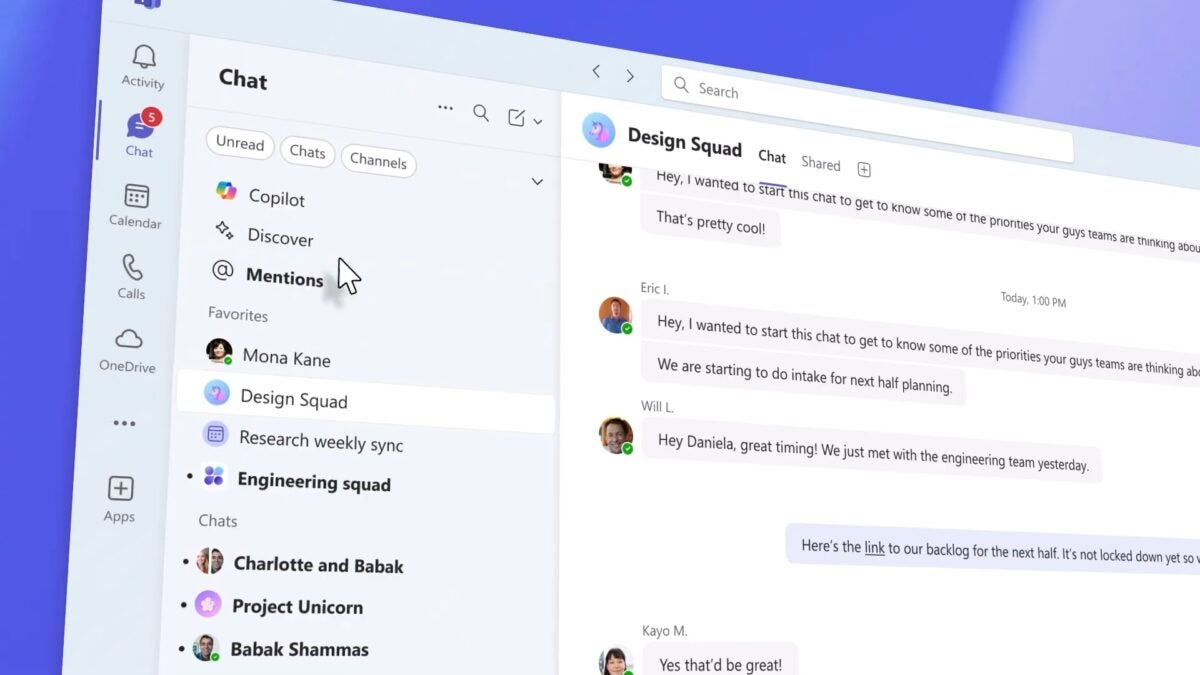
Although this functionality will not arrive until mid-2025, Microsoft has another major change prepared that will soon affect the way of viewing chats and channels on the platform. In November of this year, the company will launch a new unified user interface that brings together both chats and channels in a single view, available in a public preview.

As explained in a blog post by Jeff Teper, President of Collaboration Apps and Platforms at Microsoft, this new user experience “will simplify the digital workspace by bringing together chats, teams, and channels in one place under Chat.” This will allow users to manage their workflows more easily by having quick access to their most important conversations in a more organized manner.

The upcoming update aims to resolve one of the traditional inconveniences of Teams: the separation of chats and channels, which forced users to switch sections to keep up with different conversations. With the new interface, users will be able to choose to keep them separate or integrate them into a combined view. Additionally, Microsoft will add a favorites section where the most relevant chats and channels can be pinned, as well as new controls to customize the experience, such as the option to view message previews and order channels in a single list.

Another notable update is the new view of @mentions, which will specially highlight direct messages or channels where the user has been mentioned. This major update to Microsoft Teams will arrive on both mobile and desktop applications next month, and testing of threads in conversations will begin this quarter, extending until early 2025.

Microsoft Teams DOWNLOAD

Microsoft accuses Google of destroying its Cloud business in Europe from the shadows

Amazon, Google, and Microsoft have a large part of their business in the cloud and server sector. They all strive to improve their customer share year after year, no matter how much AI is the new darling of the tech sector. The cloud business is stronger than ever and generates a lot of money. That’s why it’s not surprising that big companies play all possible cards to get as many customers as possible, even if along the way they have to discredit their rivals, as is the case we are dealing with today. The deputy general counsel […]

Amazon, Google, and Microsoft have a significant portion of their business in the cloud and server sector. They all strive to improve their customer share year after year, even though AI is the new darling of the tech sector. The cloud business is more powerful than ever and generates a lot of money.

That is why it is not surprising that large companies play all their cards to get as many customers as possible, even if, along the way, they have to discredit their rivals, as is the case today.

Microsoft’s Deputy General Counsel, Rima Alaily, has criticized Google’s efforts to influence European regulators with the launch of the Open Cloud Coalition, a group of 10 cloud companies campaigning for a fairer and more competitive cloud landscape in the UK, Europe, and other countries.

Alaily criticized Google for forming a lobbying group, which she says is part of a broader attempt by the company to undermine its competitors.

Additionally, Alaily stated that Google has organized the group as a front to discredit Microsoft’s business practices in Europe, which antitrust regulators have recently criticized.

Hidden campaigns against Microsoft and its cloud

The deputy general counsel of Microsoft claimed that Google has recruited small European cloud service providers as the public face of the coalition to hide its involvement and divert regulators’ attention from its own business practices, noting that the company has done everything possible to appear as a secondary member of the Coalition.

The group is made up of international companies such as Centerprise International, Civo, and Gigas, and national ones like ControlPlane, DTP Group, Prolinx, Pulsant, Clairo, and Room 101.

Google Cloud may be the only hyperscaler in the group, but this is not uncommon. CISPE, a group of cloud companies operating in Europe, has only one resident hyperscaler: AWS.

The blog post by Alaily also highlights Google’s failed efforts to get CISPE members to maintain their case against Microsoft. Apparently, Google offered 470 million euros in favor, but the group ultimately decided to go with Microsoft’s agreement.