The Avatar saga, directed by James Cameron, has shown that its main appeal does not lie in its plot, but in the impressive action scenes that characterize it. In the latest installment, Avatar: The Way of Water, Jake Sully unites the clans of Pandora to confront the humans who hunt the Tulkun for the Amrita, a liquid coveted for its anti-aging properties. The film’s ending suggests the possibility of future sequels, leaving the stories of characters like Quaritch open, who could return without human support after the devastating loss of the army. It is a […]
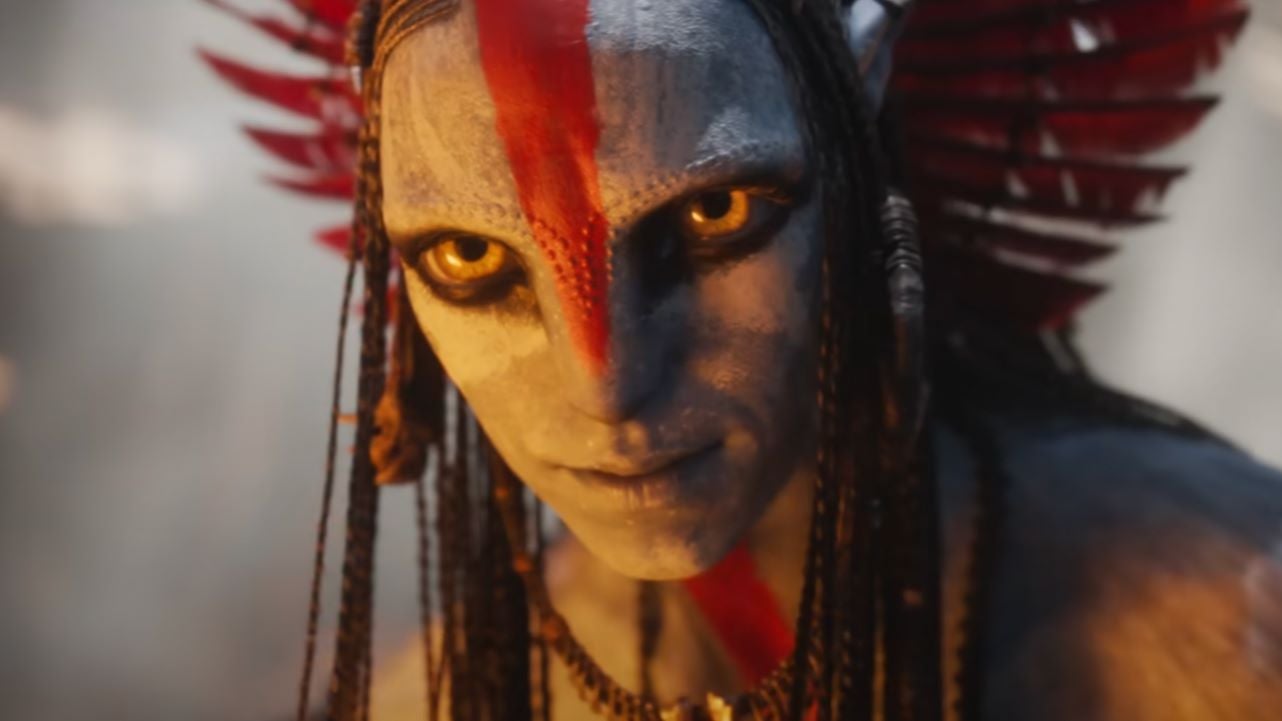
The Avatar saga, directed by James Cameron, has shown that its main appeal does not lie in its plot, but in the impressive action scenes that characterize it. In the latest installment, Avatar: Fire and Ash, Jake Sully unites the clans of Pandora to confront the humans who hunt the Tulkun for the Amrita, a coveted liquid for its anti-aging properties. The film’s conclusion suggests the possibility of future sequels, leaving the stories of characters like Quaritch open, who could return without human support after the devastating loss of the army.
It is a metaphor about our days
James Cameron has emphasized that his vision for the saga goes beyond what is presented on screen. In an effort to align the film’s message with current events and avoid reinforcing patterns of violence and genocide, the director made significant changes in post-production. Originally, the climax involved the clans of Pandora arming themselves with modern technology for a colonial-style battle, a concept that Cameron decided to modify upon realizing its negative historical connotation.
The filmmaker described his creative process as a constant “painting” of the story, where the actors and the crew actively collaborate in the rewriting, resulting in a more reflective and hopeful ending. Sam Worthington, who plays Jake, confirmed how Cameron often reimagines scenes and dialogues, a process that has become customary during the production of the Avatar films.
With the future of the franchise marked by possible sequels and characters with unfinished storylines, fans can expect to return to Pandora in upcoming installments, as Cameron has already mentioned that the story is far from over.
James Cameron’s science fiction film, Avatar: Fire and Ash, has had a strong start at the global box office, grossing $345 million in its opening weekend. However, this figure represents a significant decrease compared to its predecessor, Avatar: The Way of Water, which generated $435 million during the same holiday period in 2022. This contrast raises questions about audience reception and the saturation of the big-budget film market. The Na’vi do not convince Despite its solid debut, Fire and Ash has left many fans of […]
James Cameron’s science fiction film, Avatar: Fire and Ash, has had a strong start at the global box office, grossing $345 million in its opening weekend. However, this figure represents a significant decrease compared to its predecessor, Avatar: The Way of Water, which generated $435 million during the same holiday period in 2022. This contrast raises questions about audience reception and the saturation of the big-budget film market.
The Na’vi Don’t Convince
Despite its strong debut, Fire and Ash has left many franchise followers wondering if the story and the innovative visual effects that characterize these productions still have the same appeal. The drop in revenue can be interpreted as a reflection of the high expectations that the previous sequel managed to establish, after an extensive period of delays before its release.
Industry analysts are already weighing the implications of this lower opening. While $345 million is a considerable figure, the fact that it is lower than the launch of The Way of Water could suggest a weakening in general interest in the Avatar universe, which has managed to maintain public attention since its debut in 2009.
With the end of Fire and Ash on the horizon, the challenge will be to maintain the attraction towards future installments of this successful saga. Comments from critics and the audience’s reaction to this most recent installment could be decisive in the path forward for James Cameron and his cinematic vision. On the other hand, it is rumored that Cameron is already considering new directions for the franchise, which could revitalize interest in upcoming sequels.
James Cameron is once again the center of attention with the premiere of Avatar: Fire and Ash, the third installment of a saga that has been in development for over three decades. Over the years, Cameron has planned five films and created a universe that has redefined the contemporary blockbuster. However, part of the audience wonders if his almost exclusive dedication to Avatar is a demonstration of artistic ambition or a waste of talent. In Pandora, talent is not wasted. During an interview with The Hollywood Reporter, Cameron expressed his satisfaction as an artist and […]
James Cameron is once again the center of attention with the premiere of Avatar: Fire and Ash, the third installment of a saga that has been in development for over three decades. Over the years, Cameron has planned five films and created a universe that has redefined the contemporary blockbuster. However, part of the audience wonders if his almost exclusive dedication to Avatar is a demonstration of artistic ambition or a waste of talent.
No talent is wasted at Pandora
During an interview with The Hollywood Reporter, Cameron expressed his satisfaction as an artist and defended his decision to have spent so many years on this project. “I feel fulfilled. It’s my decision, not yours.”, he stated to his critics, using a personal comparison to illustrate his commitment. With a career dedicated to the franchise, the director emphasized that his loyalty is not a creative surrender, but an authentic way of understanding his professional journey.
However, Cameron has also made it clear that he is ready to begin a new creative phase. “I have other stories to tell, even within Avatar”, he stated, adding that he will not fall into the trap of focusing solely on this saga in the coming years. In this regard, the director plans a different involvement in his future projects and seeks to encourage more collaboration in the creative process while continuing to work on Avatar 4.
Additionally, Cameron has hinted that the third installment could mark the end of his time in the franchise, leaving the door open to write a book about his experience. “If this ends here, great”, he stated, pointing out that he wants to avoid Avatar completely taking over his life. With such revealing comments, James Cameron’s future promises to be as intriguing as his legacy in cinema.
The wait for Avatar: Fire and Ash, the latest installment of the famous franchise, has generated high expectations in the film industry. However, its director, James Cameron, has expressed serious doubts about the project’s profitability, adding a layer of uncertainty to its release. A real risk for Disney The production budget of the film exceeds 400 million dollars, placing it among the most expensive in history. For the film to break even, it is estimated that it needs to gross over 1 billion, which includes a marketing budget that could […]
The wait for Avatar: Fire and Ash, the latest installment of the famous franchise, has generated high expectations in the film industry. However, its director, James Cameron, has expressed serious doubts about the project’s profitability, which adds a layer of uncertainty to its release.
A real risk for Disney
The production budget of the movie exceeds 400 million dollars, placing it among the most expensive in history. For the movie to break even, it is estimated that it needs to gross over 1 billion, which includes a marketing budget that could range between 100 and 175 million. The situation is complex: while Avatar 2 achieved an impressive gross of 2.32 billion, studios only received around 1 billion, due to the revenue sharing with theaters.
This financial dilemma is representative of a broader crisis in Hollywood, where budget inflation has become systemic, affecting major franchise films like Star Wars and Jurassic World. According to recent analyses, the arrival of streaming platforms has raised production costs and distorted salary expectations for stars, contributing to this escalation of expenses.
James Cameron, known for his innovation in cinematic technology, has invested in the development of pioneering techniques such as underwater motion capture, a tool that promises to reduce costs in future productions. However, the rising escalation of budgets raises questions about the financial viability of the franchise, putting the future of sequels at risk under the pressure of box office results.
The current situation raises the question: Can Avatar continue to be a profitable success in a landscape of rising costs and increasingly narrow profit margins?
The imminent release of Avatar: Fire and Ash, scheduled for this Friday the 19th, has revived the debate over the combination of 3D technology and High Frame Rate (HFR), which has faced criticism following the release of The Way of Water. Many viewers expressed visual discomfort during the screenings of the Avatar sequel, which has led James Cameron to defend his technical and artistic approach in numerous interviews. James Cameron doesn’t care if you like his decisions In a recent conversation with DiscussingFilm, Cameron addressed the criticism of his decision to […]
James Cameron doesn’t care if you like his decisions
In a recent conversation with DiscussingFilm, Cameron addressed the criticism of his decision to increase the frame rate from the traditional 24 fps to 48 fps in 3D screenings. The filmmaker, known for his straightforward and often humorous style, provided a scientifically grounded explanation of the benefits of HFR. According to Cameron, this technique smooths the 3D experience and helps the viewer’s visual adaptation to the depth play and enhances the perception of subtitles.
Although many remember the “soap opera” effect experienced in movies like The Hobbit, the director argued that HFR can be a powerful tool if used properly. Cameron was optimistic about how the human mind can more easily adapt to visual depth when this technology is employed, which could enrich the cinematic experience for movie lovers.
As the premiere of Avatar: Fire and Ash approaches, expectations are high among viewers. The discussion about HFR and 3D continues, highlighting the challenge filmmakers face in implementing innovations while considering the audience’s experience. Undoubtedly, the new installment is set to provoke not only visual awe but also debate among critics and film enthusiasts.
After three years of anticipation, Avatar: Fire and Ash, the third installment of James Cameron’s hugely successful saga, finally arrives in theaters. This new film promises to dazzle audiences with cutting-edge special effects and innovative techniques, some of which were already introduced in the second installment. A highlighted element of this new production is the use of high frame rate, which, as Cameron confirms, will be applied in 40% of the film. 48FPS to confuse and dazzle the audience In a recent interview with the American portal DiscussingFilm, the iconic Canadian director […]
After three years of anticipation, Avatar: Fire and Ash, the third installment of James Cameron’s hugely successful saga, finally arrives in theaters. This new film promises to dazzle audiences with cutting-edge special effects and innovative techniques, some of which were already introduced in the second installment. A highlighted element of this new production is the use of high frame rate, which, according to Cameron, will be applied in 40% of the film.
48FPS to confuse and dizzy the audience
In a recent interview with the American portal DiscussingFilm, the iconic Canadian director clarified that the improvement in the fluidity of certain moments of the film will be achieved through execution at 48 frames per second (FPS) in specific sequences. Cameron emphasized that this technique should not be confused with a new format; 3D and 70 mm are precisely that, formats. The high frame rate is presented as a creative tool to enrich the visual experience, especially in scenes where there is a lot of movement or multiple elements on screen.
This innovative approach, which has already been applied in some sequences of Avatar: The Way of Water, aims to allow exceptional clarity in the most dynamic scenes, such as those taking place in aquatic environments. This will not only enhance the visual understanding of the events but also boost the viewer’s immersion in the world of Pandora.
With Avatar: Fire and Ash, James Cameron seeks to continue exploring the possibilities of contemporary cinema, integrating cutting-edge technology into an epic narrative that has captivated millions. The expectations are high and fans are ready to enjoy this new installment, which promises to take science fiction cinema to new horizons.
On February 2, 1979, tragedy struck an apartment on the seventh floor of 445 Fountain Avenue in New York. A 4-year-old boy who had just gone to the movies with his family to see Superman (the version with Christopher Reeve, of course) jumped out of the window believing he had the same powers and could fly. In fact, he had been jumping off tables and chairs trying to do it ever since, until his ambition went much further. Across the country (and, they say, around the world) thousands of children and […]
On February 2, 1979, tragedy struck an apartment on the seventh floor of 445 Fountain Avenue in New York. A 4-year-old boy who had just gone to the movies with his family to see Superman (the version with Christopher Reeve, of course) jumped out of the window believing he had the same powers and could fly. In fact, he had been jumping off tables and chairs trying to do so until his ambition went much further. Across the country (and, they say, around the world), thousands of children and adults believed too much in the idea that a man could fly, and the result was a media campaign against the superhero. Sadly, as we know now, he is not the first nor will he be the last case of people believing everything they see on a screen.
Learning C1 of Na’vi
Recently, we learned that a woman with mental health issues had to be hospitalized after her Internet-connected refrigerator displayed an advertisement for the series Pluribus with the text “We’re sorry to have upset you, Carol”. What was the woman’s name? Of course, it was Carol. Not knowing what was happening, she collapsed, as could be expected. It shouldn’t surprise anyone: it’s not new that cinema and television can exacerbate or even create mental disorders. At this point, it should be taken for granted.
In 1998, the premiere of The Truman Show, in which Jim Carrey was the star of an involuntary reality show, caused hundreds of cases of what has come to be called “the Truman illusion,” a syndrome that makes people believe they are being filmed 24/7, following the reality fever. The level reached was such that one of the patients traveled to New York to verify that 9/11 was real and not just a plot twist in their own reality. As Andrew Niccol, the director of the film, stated, you know you’ve made it when a syndrome is named after you.
The following year, madness broke out with Matrix, the movie in which Neo (Keanu Reeves) had to choose between a world created by machines or reality, fighting against them. The film not only created a multitude of philosophical treaties and theories but also, hundreds of people who firmly believed they were living in Matrix. And, although over the years we may think we are much smarter and believe we have left behind all these syndromes caused by fiction, the reality is quite different.
The last one is perhaps the most striking: people who experience depression after watching Avatar. Seeing the incredible places that James Cameron showcases in his films, the journeys mounted on winged creatures, the love for nature and the love for community, many have wanted to leave everything behind to go to Pandora with the Na’vi, even learning the language to imagine a world beyond. Upon leaving the cinema and comparing the gray reality of the city with the open and free spaces of Pandora, many found solace only by rewatching the movie as many times as they could. Yes, that is happening. Really.
In an episode of the wonderful series How To With John Wilson, the filmmaker approached a group of people who were trying to learn Na’vi and spoke openly about their lives before and after Avatar. And instead of laughing at them, what he does is understand them, give them a shoulder to cry on, show the support network they have built among themselves with James Cameron as an excuse. Because, deep down, don’t we all want to feel a little more connected, even if it’s with a ridiculous hobby as an excuse? In a society that seems to need fiction more than ever, we cannot expect anyone to fall into the idealization of it. It is simply the course of time.
The wait is almost over, as Avatar: Fire and Ash, the third installment of the acclaimed saga directed by James Cameron, will premiere on December 19, 2025. Considered the most important science fiction film in years, Avatar 3 promises a unique experience, although early opinions suggest it could be “more of the same,” satisfying fans without winning over skeptics. It is a long and substantial film. With the promise of being the longest film in the saga, although not exceeding three and a half hours, Avatar 3 positions itself as […]
The wait is almost over, as Avatar: The Way of Water, the third installment of the acclaimed saga directed by James Cameron, will premiere on December 19, 2025. Regarded as the most important science fiction film in years, Avatar 3 promises a unique experience, although early opinions suggest it could be “more of the same”, satisfying fans without winning over skeptics.
It is a long and substantial movie
With the promise of being the longest film in the saga, although not exceeding three and a half hours, Avatar 3 positions itself as a spectacular climax for the story of Jake Sully, played by Sam Worthington. Cameron has commented that this could be the final installment of the saga if it does not turn out to be a success, which has led the director to already shoot some scenes for Avatar 4, scheduled for December 21, 2025.
Despite the fact that the first two installments of the franchise surpassed $2 billion at the box office, projections for Avatar 3 are cautious; however, analysts suggest it would be a big mistake to bet against it. The return of the main cast from Avatar: The Way of Water is confirmed, and one of the most notable new additions is Oona Chaplin, who will portray Varang, a new character expected to bring a dark and challenging side to the plot.
Thus, with the premiere just around the corner, fans can do nothing but wait in eager anticipation for December 19, 2025, when Avatar: Fire and Ash debuts exclusively in theaters, hoping that Cameron can once again raise the bar in science fiction cinema.
James Cameron has reaffirmed his stance against the use of generative artificial intelligence in the creation of his films, particularly in the Avatar saga. During a recent interview, the acclaimed director emphasized that his team does not use this technology in their films and that their focus remains centered on human acting. “We honor and celebrate actors. We do not replace them,” Cameron stated, underscoring that Hollywood will self-regulate in this regard. He already spoke about it in Terminator. However, Cameron also expressed his deep concern about artificial intelligence in a broader context, describing it as a […]
James Cameron has reaffirmed his stance against the use of generative artificial intelligence in the creation of his films, particularly in the Avatar saga. During a recent interview, the acclaimed director emphasized that his team does not use this technology in their films and that their focus remains centered on human performance. “We honor and celebrate actors. We do not replace them,” Cameron stated, underscoring that Hollywood will self-regulate in this regard.
He already talked about it in Terminator
However, Cameron also expressed his deep concern about artificial intelligence in a broader context, describing it as an “existential threat”. This concern dates back to the Terminator franchise, where an AI system known as Skynet takes over the world. Addressing the “Skynet Problem,” Cameron questioned who decides what is ‘good’ for humanity. “We can’t agree on anything,” he said, pointing out the moral and ethical dilemma posed by the advancement of AI.
Despite these concerns, Cameron has noticed that the tech industry is starting to talk about these realities, although this transformation may be happening too quickly. “They are throwing billions at it,” he warned. However, he expressed optimism that the film community will seek ways to coexist with technology without sacrificing the essence of art.
The next installment of the saga, Avatar: Fire and Ash, will premiere on December 19, generating high expectations among fans. As the conversation about AI continues to evolve, followers are wondering how these tensions will influence the future of cinema and human creativity.
The highly anticipated movie Avatar: Fire and Ash, directed by the iconic James Cameron, has been revealed to the press ahead of its scheduled theatrical release this month. This early release has allowed film critics to share their first impressions of the third installment of the saga, which takes place in the spectacular world of Pandora. The press has fallen in love with it. Journalists have described the film as the “ultimate cinematic spectacle,” noting that it not only raises visual standards but also delves deeper into the characters’ emotions. Critic Courtney Howard, in a comment […]
The highly anticipated movie Avatar: Fire and Ash, directed by the iconic James Cameron, has been revealed to the press ahead of its scheduled theatrical release this month. This early release has allowed film critics to share their first impressions of the third installment of the saga, which takes place in the spectacular world of Pandora.
In love with the press
Journalists have described the film as a “definitive cinematic spectacle,” noting that it not only raises visual standards but also delves into the characters’ emotions. Critic Courtney Howard, in a comment on Twitter, highlighted the film, emphasizing its quality and the remarkable work behind the production. Such praise suggests that Avatar: Fire and Ash could set new benchmarks in the film industry.
This installment promises to take viewers on an even deeper journey into the universe of Pandora, enriched by the innovative visual effects technology that has characterized the franchise. Cameron, known for his dedication to technical and narrative perfection, once again ensures that the cinematic experience is both visually stunning and emotionally resonant.
With the pressure of the expectations generated by its predecessors, this film not only seeks to entertain its audience but also to connect on a more personal level, which has been a hallmark of Cameron’s productions. As the release date approaches, many fans are eager to see if Avatar: Fire and Ash will meet these high expectations and how it will position itself within the acclaimed series.