At the beginning of social networks, everything was very simple: people connecting with people. And that’s it. At the time, it was revolutionary, as strange as it may seem to us in the times of TikTok and Bluesky: a tool had been born with which human beings would be connected and grow together. Very nice, yes. Until 2024 arrives, we witness the horror that social networks have become and Meta’s plans come to light. And we don’t know where to hide from the embarrassment. Don’t Get Involved And it turns out that Meta is going to fill its social networks (that is, […]
At the beginning of social networks, everything was very simple: people connecting with people. And that’s it. At the time it was revolutionary, as strange as it may seem to us in times of TikTok and Bluesky: a tool had been born with which human beings would be connected and grow together. Very nice, yes. Until 2024 arrives, we witness the horror that social networks have become and Meta’s plans come to light. And we don’t know where to hide from the embarrassment.
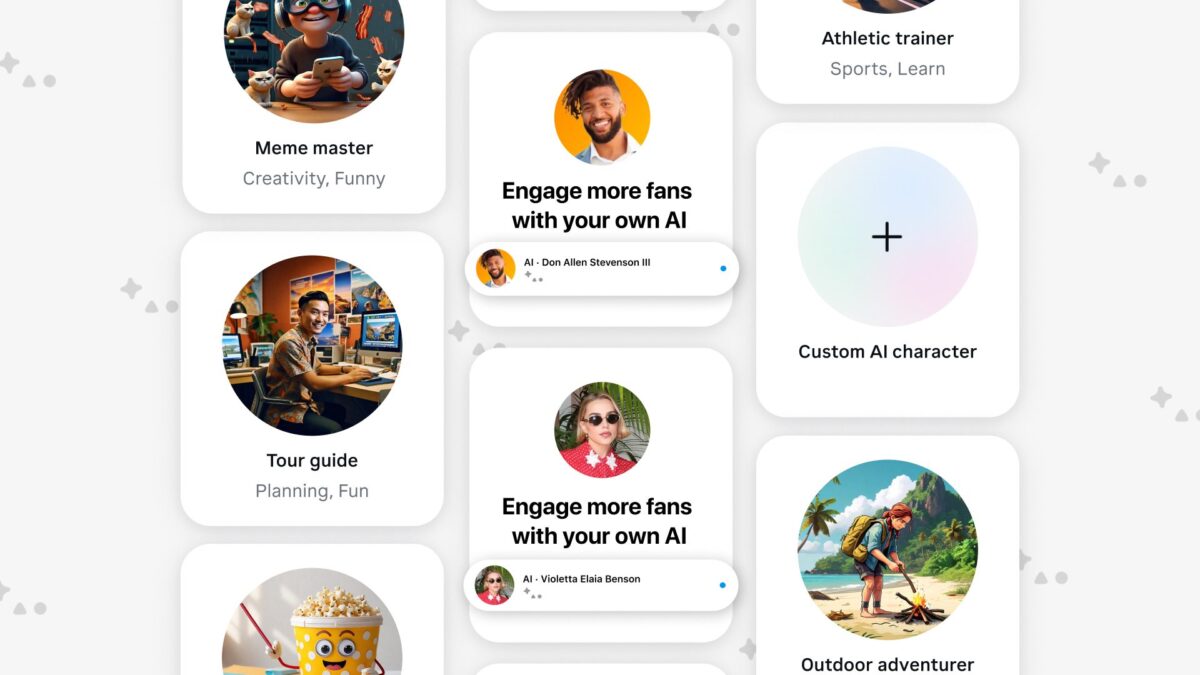
It turns out that Meta is going to fill its social networks (that is, Facebook and Instagram, to be clear) with users created with Artificial Intelligence. Just like that. And what will they be used for? Well, to enhance that excitement you feel when someone shares your content and hits “Like”. Yes, just like that: they will be bots with different biographies and profile pictures of people who do not exist in real life, who will be able to share content. It doesn’t sound dangerous at all, of course not.
Ah, yes! Haven’t I told you the best part? In addition to sharing content, you will also be able to create it! And this is how networks go from being people-to-people to being machine-to-machine (and a few clueless ones). For Meta, apparently, it is an absolute priority that their networks are “more entertaining and more engaging,” and that’s why they believe it’s vital for us to see movement, even if it’s fake, absurd background noise that only adds arguments to the increasingly less conspiratorial and more real “Dead Internet“.
Hundreds of thousands of profiles have already been created with Meta’s AI tool, and for now, the vast majority remain private. And I can’t believe someone reads this and thinks “Oh! How exciting! How the world is advancing!” instead of “What is happening!?”. Terrifying on all levels.
Why do we say this now? Because the European Union has opened a formal investigation against Meta for considering that it is not doing enough to protect the mental and physical health of children who use its social media platforms Facebook and Instagram.
The investigation announced by the European Commission on Thursday will assess whether Meta has violated the rules of the EU Digital Services Act (DSA), pointing out that the user interface and algorithms of Facebook and Instagram can cause “behavioral addictions in children” and create “rabbit hole effects”.
? Today we open formal #DSA investigation against #Meta.
We are not convinced that Meta has done enough to comply with the DSA obligations — to mitigate the risks of negative effects to the physical and mental health of young Europeans on its platforms Facebook and Instagram. pic.twitter.com/WxPwgE5Opc
The EU claims that Meta is not interested in effective age verification
The EU is also concerned that Meta is not doing enough to prevent minors from accessing inappropriate content, and that their age verification tools may not be “reasonable, proportionate, and effective”.
The research will also evaluate whether the content recommendation systems and the default privacy settings of Meta provide sufficient privacy, security, and protection for minors.
The investigation follows Meta’s recent efforts to improve the safety of children on Facebook and Instagram, such as restricting their exposure to harmful content and limiting interaction with “suspicious” adult accounts, in an attempt to rectify their poor reputation in protecting children online.
The next steps of the Commission involve gathering additional evidence. There is no official deadline for the procedure, but the EU is authorized to take precautionary measures against Meta for the duration of the investigation.
If it is discovered that Meta has violated DSA regulations, it could face fines of up to six percent of the company’s global revenue, and EU Commissioner Thierry Breton stated on Twitter that “we spare no effort to protect young people”.
Meta will offer a 50% discount on the service starting in September and has offered to work with customers on the transition to Workvivo, from Zoom.
You probably didn’t know that Meta had an application designed to compete with Microsoft Teams, the most used and largest work environment in the world. And not knowing it is the main reason for its death.
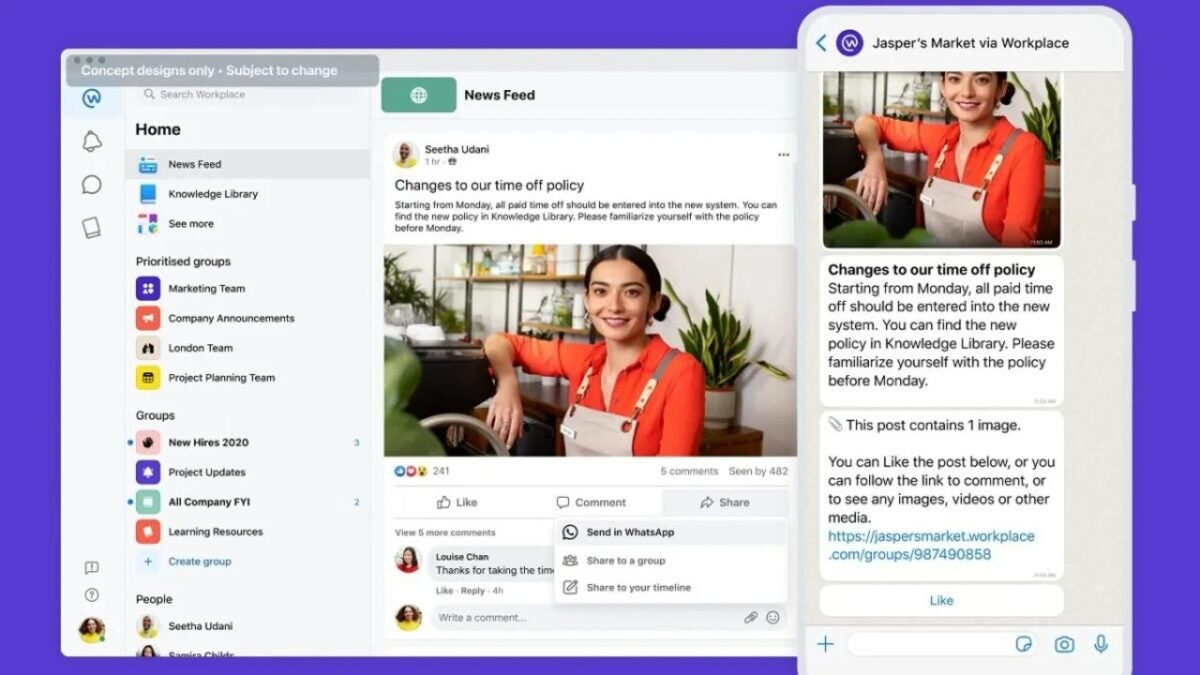
Meta throws in the towel on Workplace, its Facebook-based alternative to office communication platforms like Slack and Microsoft Teams.
Ashley Zandy, spokesperson for Meta, has confirmed to The Verge that it will be available to customers until August 31, 2025. Previously known as Facebook @ Work, it was used internally for two years before its public launch in 2016, and according to Zandy, there will be no changes in its internal use.
What will Meta do now that they are closing their job service
Meta will offer a 50% discount on the service starting in September, and has offered to work with clients in the transition toWorkvivo, owned by Zoom.
After September 1, 2025, Workplace will become read-only and exportable until June 1, 2026, when access will end and data will be deleted.
TechCrunch reports that development slowed down significantly after people returned to offices that had been empty due to the pandemic and following the departure of several key employees.
The change burst the bubble of an increasingly crowded space for remote work tools. The strong competition from Microsoft Teams, Google Workplace, and even new competitors like Zoom Workplace caused Meta to lose its market share after a decade working on this project.
Facebook has been selling its users’ private messages to Netflix, but that’s just the tip of the iceberg of the whole problem.
Monetizing content on the Internet is difficult. We know it well. Google constantly changes the rules, projections are illusory, and where the money is today, next week there may be a terrible sinkhole. Making the Internet a business is tough, it requires a lot of agility, and having a certain foresight for the future. Something that big companies often lack.
The headline is that Facebook has sold the direct messages of millions of platform users to Netflix, but the story goes beyond that. Because to get to that, we first have to talk about the relationships that occur between strangers who are lovers when there is money involved. How business projections can lead to creating new content. And how that can end up sabotaging their own interests.
Because, to begin with, one thing must be pointed out: everyone is trying to make money from streaming, but no one knows yet how. Twitch doesn’t generate profits. Netflix is in deficit. Xbox Game Pass is a money pit. And Facebook, whose business has nothing to do with streaming, decided to join it with Facebook Watch.
Facebook Watch is an on-demand video service launched by Facebook on August 10, 2017 in the United States and on August 30 in the rest of the world. By gamifying the video watching experience, their intention was to make a big investment in this service. Among other products, it debuted with original programs such as Red Table Talk, Sorry for Your Loss, or Steve, as well as content from National Geographic. More entertainment-based content than fiction.
The interesting thing is that between 2016 and 2017, Facebook invested over a billion dollars in Watch. Facebook explicitly stated that they wanted 30-minute series, as well as shorter ones, with episodes ranging from 5 to 10 minutes. The products they used as examples of where their interests were heading were House of Cards or Scandal. Quite different from what the platform would end up offering.
What happened? What happened was Netflix. While the CEO of Netflix at that time, in 2017, claimed that there was no major conflict with Facebook, since they did not compete for the same products. But in 2018, when Facebook Watch wanted to acquire the license for Dawson’s Creek, competing with Netflix, they suddenly faced a budget cut of $750 million out of nowhere. Thus, Netflix ended up acquiring the rights to Dawson’s Creek, and Facebook Watch began its dismantling, culminating in the cancellation of all its programs in 2023.
Why did this happen? Because Facebook wasn’t interested in competing with Netflix. And all these details have come to light because recently the documents used in an ongoing antitrust lawsuit against Meta have been revealed. The parent company of Facebook. Which has shed light on everything that happened.
Facebook, upon noticing a decrease in the growth of ad prices between late 2015 and 2016, decided to develop other business strategies to increase the signals received by the artificial intelligence/machine learning systems that support its advertising business. One of these strategies was the production of television content through Facebook Watch. With this, they aimed to increase the amount of money generated by each ad by displaying more ads to their users.
What happened? When Facebook Watch was able to compete with Netflix, or at least invade its interests, Meta decided it wasn’t convenient. This is because Netflix is one of the companies that invests the most money in advertising on Meta.
In fact, here comes the most concerning part. Facebook has confirmed that it shares information not only with Netflix but with numerous other companies as well. Furthermore, with Netflix in particular, it also shares information from our direct messages, at least those related to its service, under an agreement reached in July 2018. Approximately at the same time that Facebook Watch received a brutal budget cut, preventing it from competing as a full-fledged streaming service.
During 2019, Netflix invested $200 million in Meta’s ads. By February 2015, it was at $40 million annually, and by 2017, it reached $150 million. Considering that Facebook’s ad revenue went from $4.28 billion in 2012 to $69.66 billion in 2019, it’s evident that their interest lay more in keeping advertisers happy on Facebook than in building an audiovisual empire.
Meta has not only settled for selling its users’ private messages to Netflix. They have also allowed, at least, access from Spotify. Given that it is known that they also sold user data to Cambridge Analytica, it is not difficult to infer where Meta’s exponential growth comes from, with Facebook at the helm.
In addition, they not only make money from advertising, but also by selling all the data that their users provide. Why bother generating content when you can simply sell ads using user information to make them invest more in your ads? If you thought this only involved what you were offering publicly, maybe you should think twice.
As The Verge recalls: Wall Street Journal made 10 million a year, New York Times reached 20, and CNN pocketed 3 million every 12 months. This April 2024 it will be gone forever.
Meta says it will “stop using” Facebook News in the US and Australia in April 2024, that it will not subscribe to new commercial agreements for news, and that it will “not offer new Facebook products specifically for news publishers in the future”.
Facebook will remove its News tab, and stop paying publishers for news https://t.co/vyJ7VLGK2X
Goodbye to the press, goodbye to accurate information
This is not the first time that Facebook withdraws from the news world and it was already expected. In 2022, the focus shifted from news to creator economy, and former head of news partnerships Campbell Brown left the company last October.
When Facebook introduced Facebook News in 2019, the company said: “We hope this work helps in our effort to sustain great journalism and strengthen democracy,” and that a survey “found that we were underutilizing many topics that people wanted more of in their News Feeds, especially around categories like entertainment, health, business, and sports.”
Now, Meta has a different message, reiterating the statement that “news represents less than 3% of what people around the world see in their Facebook feed, and it is a small part of the Facebook experience for the vast majority of people.”
Instead of paying publishers, Meta “will have to focus its time and resources on the things people tell us they want to see more on the platform, including short-format video.”
In addition, it encourages publishers to continue posting links on their own pages, using products like Reels and ads to drive people to their own websites, away from Facebook.
The end of Facebook’s licensing agreements is well-known news in the US, where it abandoned them two years ago, but in Australia it eliminates the 70 million dollars annually that it paid to media outlets such as Sky News Australia, News Corp, Seven, Nine, and The Guardian.
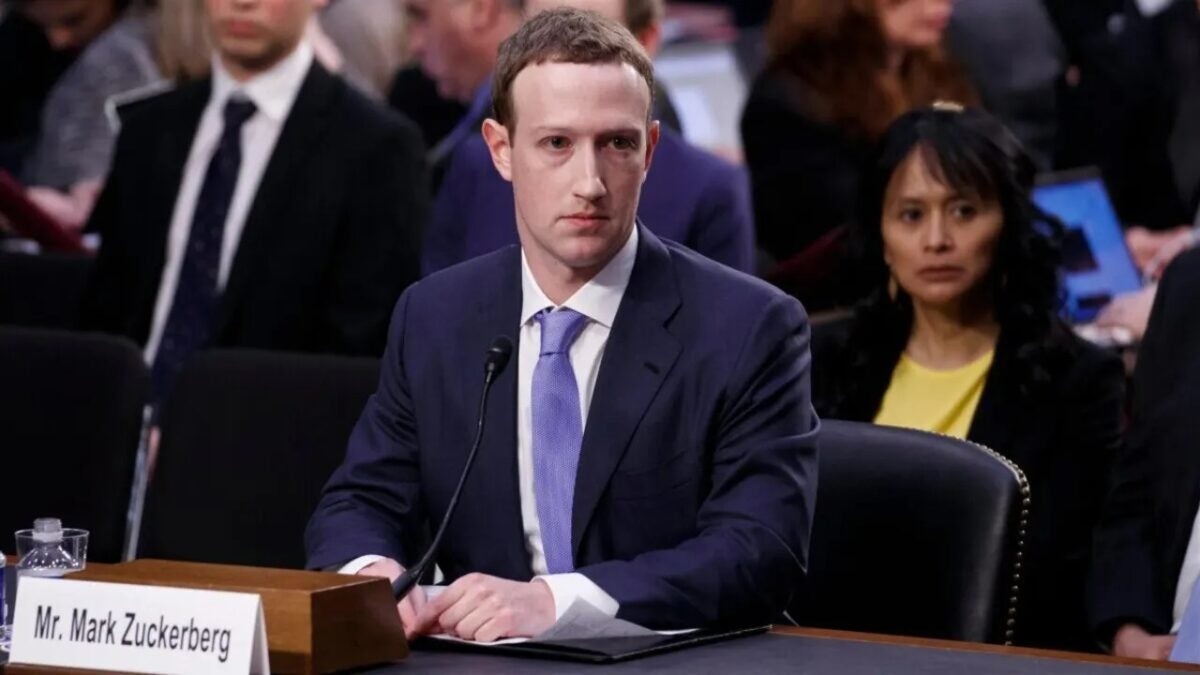
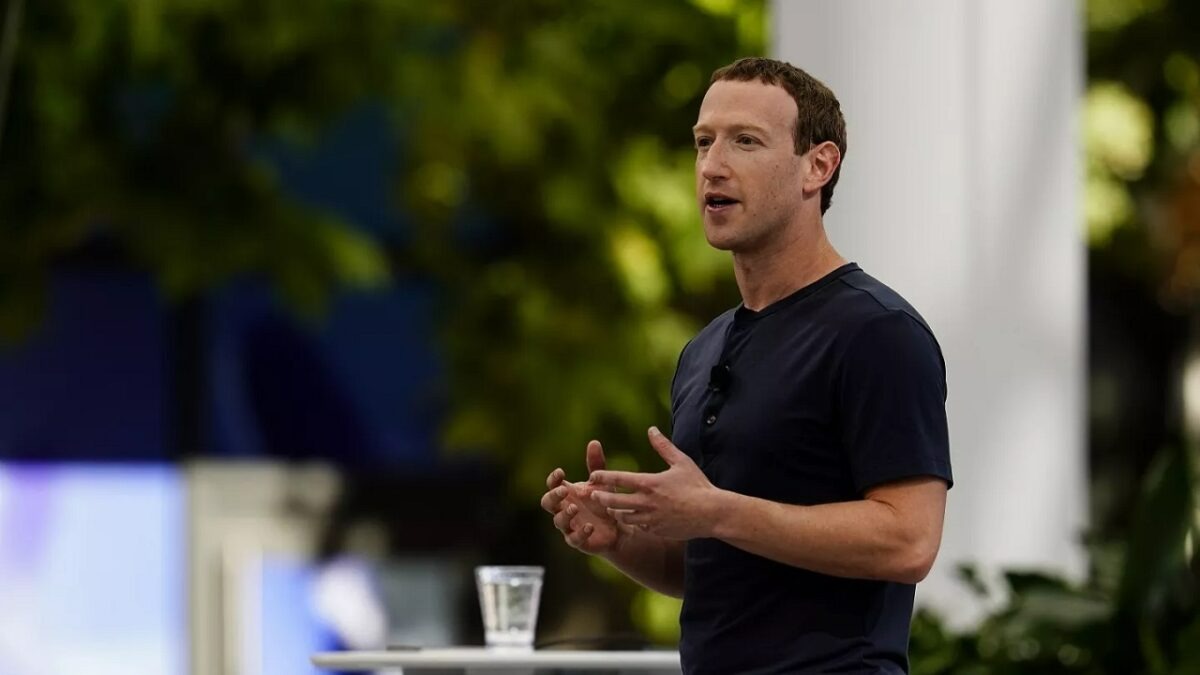
Mark Zuckerberg, the CEO of Meta, has stated in a hearing held in the United States Congress and has once again rejected the idea that social media companies should be responsible for managing parental control systems for the use of apps like Facebook and Instagram by minors. Trying to shift the blame, the executive suggested that the problem should be solved by app store providers, such as Apple and Google.
This is not the first time that Meta raises this idea. As TechCrunch reports, the company presented a proposal last November in which it argued that Apple and Google should do more to strengthen the safety of minors, requiring parental approval when users between the ages of 13 and 15 download certain applications.
At that time, Meta’s global head of safety, Antigone Davis, said that this would be the “best way” to support both parents and children, and that the solution should be applied “across the board”, where “all apps are governed by the same consistent standard”.
In the hearing that took place this week, Zuckerberg suggested that Meta‘s own investigation indicated that parents wanted more control over apps through mobile devices and app stores that families use.
“I don’t think parents should have to upload an identification document to prove that they are the parents of a child in each of the applications their children use,” said the CEO, presenting a proposal that would eliminate the need to upload legal documents, which would be an improvement in user privacy.
“As far as I understand, Apple and Google already require, or at least Apple already requires, parental consent when a child makes a purchase within an app,” Zuckerberg said, referring to Apple’s requirement for apps on its platform to use their own payment methods. “So it should be fairly straightforward to pass a law that requires them to ensure parents have control every time a child downloads an app and gives consent for it.”
The big tech companies have gone from wanting to create the metaverse to betting their entire business plan on artificial intelligence. Meta now wants…
2023 was marked by artificial intelligence. And 2024 is going to be the same or worse. As we saw in the Davos Forum yesterday, AI is what is driving all current conversations.
2024 Meta parece estar dispuesta a pelearle la batalla a OpenAI.
? Punto de mira en la AGI. ? Llama 3 en entrenamiento! ? Potencia equivalente a 600K H100s! ? Shipping opensource y productos pic.twitter.com/wOsuReGiCu
Now, Mark Zuckerberg, CEO of Meta, enters the race. Although he doesn’t know when AGI will be achieved, not even an exact definition, he wants to build it. At the same time, he is shaking things up by moving Meta’s AI research group, FAIR, to the same part of the company as the team creating generative AI products in Meta’s applications.
The goal is for Meta’s advances in AI to reach its billions of users more directly: “We have come to the conclusion that, in order to build the products we want to build, we have to build for general intelligence. I think it’s important to convey this because many of the best researchers want to work on the most ambitious problems,” Mark said.
Here, Zuckerberg is saying the quiet part out loud. The battle for AI talent has never been so fierce, with all companies in the sector competing for an extremely small group of researchers and engineers.
Those who have the necessary knowledge can earn salaries that exceed one million dollars per year. Executive directors like Zuckerberg are forced to try to win over a key recruit or prevent a researcher from going to the competition.
“We are used to very intense talent wars,” he says. “But here there is a different dynamic, with several companies looking for the same profile and many venture capitalists and people investing money in different projects, which makes it easier for people to start different things outside.”
After talent, the scarcest resource in the field of AI is the computing power needed to train and run large models. In this regard, Zuckerberg is willing to show off his muscles. According to The Verge, by the end of this year, Meta will own over 340,000 Nvidia H100 GPUs, the industry’s preferred chip for creating generative AI.
Zuck:
1. LLaMA 3 is training.
2. Will be released open source.
3. Meta is buying 350,000 H100. (Price: ~10.5$ billion)
No one working in AI, including Zuckerberg, seems to have a clear definition of AGI or an idea of when it will arrive.
“I don’t have a concise definition in a single sentence,” he tells me. “It can be argued whether general intelligence is similar to human intelligence, if it is more human or if it is a superintelligence of the distant future. But for me, the important thing is its breadth, that is, that intelligence has all those different capacities that allow you to reason and have intuition.”
Consider that their arrival will be a gradual process, rather than a single moment. “I’m actually not so sure that any specific threshold feels so profound.”
According to Zuckerberg, Meta’s new and broader focus on AGI was influenced bythe release of Llama 2, their latest large language model, last year.
The company did not think that the ability to generate code made sense for how people would use an LLM in Meta’s applications. But it is still an important skill to develop in order to build a smarter AI, so Meta built it anyway.
Meta is already training Llama 3, which will have code generation capabilities, it says. Like Google’s new Gemini model, it also focuses on more advanced reasoning and planning capabilities.
“Llama 2 was not a leading model in the industry, but it was the best open-source model,” he says. “With Llama 3 and beyond, our ambition is to build things that are state-of-the-art and eventually become industry-leading models.”
Meta’s decision last year to open-source Llama 2 drew criticism from some experts: “It’s a bit like giving people a template…
General artificial intelligence will be as smart as a human being and with many more resources and knowledge. This is fascinating and potentially devastating. Mark Zuckerberg wants to make it open source.
The problem? The founder of Facebook has also raised the possibility of making it available to the public for free.
The CEO of Meta has stated that the company will attempt to build a general artificial intelligence (GAI) system and do it open source, which means it will be accessible to developers outside the company. He added that the system should be “as available as we can responsibly make it”.
Zuck:
1. LLaMA 3 is training.
2. Will be released open source.
3. Meta is buying 350,000 H100. (Price: ~10.5$ billion)
Meta is seeking AGI and aims to make it open source
In a Facebook post, Zuckerberg stated that it was clear that the next generation of technological services “requires building a complete general intelligence”.
AGI is not a strictly defined term, but it commonly refers to a theoretical AI system that can perform a range of tasks with a level of intelligence that equals or surpasses that of humans.
The possible emergence of AGI has alarmed experts and politicians worldwide, who fear that such a system, or a combination of multiple AGI systems, could bypass human control and threaten humanity.
Zuckerberg confirmed that Meta would consider the possibility of making its AGI open source, that is, freely available for developers and the public to use and adapt, like the Llama 2 AI model from the company.
“This technology is so important and offers so many opportunities that we should make it open source and make it available to the public in the most responsible way possible, so that everyone can benefit,” he said.
Meta was one of the technology companies that committed last year at a global AI security summit held in the United Kingdom to allow governments to examine artificial intelligence tools before and after their launch.
In an interview given on Thursday to the technology news website The Verge, Zuckerberg stated that he would lean towards open sourcing as long as it made sense and was “the safest and most responsible” option.
The decision by Meta last year to open source Llama 2 code sparked criticism from some experts: “it’s a bit like giving people a template to build a nuclear bomb”.
Just a year and a half ago, Meta launched a free application halfway between the social network, the video game and 'Second life': 'Horizon Worlds', which can only be tested with the Oculus Rift and Meta Quest 2 virtual reality glasses. .
As much as they tried to hammer us with the idea that the future of the Internet was all about putting on virtual reality glasses and shopping in the aisles in 3D worthy of the first PlayStation, the truth is that most of us didn’t buy into the Metaverse. But Mark Zuckerberg did, and how. So much so that he decided to spend a fortune on forming the Metaverse of tomorrow and change the name of his company to Meta. It all went wrong. But hey, at least now his avatar has legs.
Just a year and a half ago Meta launched for free an application halfway between social network, video game and ‘Second life‘: ‘Horizon Worlds’, which can only be tested with the virtual reality glasses Oculus Rift and Meta Quest 2. One might think it has been a failure, but in October 2022 there were 200,000 people gathering there daily. Less than Facebook would like, but more than any of us would have bet on.
However, there was something strange already from the first trailer: for some reason, the avatars lacked legs and simply floated, as if they were Miis come to life. But ten months ago, Zuckerberg already showed that they were working on it: the ‘Horizon’ characters could walk. It only took almost a year, but finally there are legs. The problem is that they are useless.
Want to duck? Feel like running? Bad luck: you can’t do it. Ah, yes, even worse: want to see your own legs? You can’t either: if you look down you’ll see absolutely nothing. You can only see other people’s legs. There’s more: this coveted add-on (which, frankly, should come as standard) is only available to players with access to version 57, and will not appear in ‘Horizon Worlds‘ or other games, only in ‘Horizon Home’, at least for the time being.
So far, Meta has already lost $13 billion just trying to start up their universe, and the numbers keep going down. Now that it has become clear that the Metaverse is neither the future nor the present, is it time to acknowledge that it was a mistake, or have they already spent too much money for that?
While most of us may think that Facebook is past its prime in the realm of the internet and social media, the latest quarterly report from Meta has revealed that it boasts over 3 billion monthly active users, which is a truly remarkable milestone.
We also know that Meta and its investors are more than pleased with that figure, but that’s not the only one. Facebook has an astounding number of daily users as well. To be precise, Mark Zuckerberg’s social network accumulates 2.064 billion daily active users during this last quarter, who primarily engage in viewing memes and suggested videos on the platform.
Facebook is on a roll
These figures represent a notably significant growth for Meta’s social network, which had around 2.037 billion daily active users in the previous quarter. The growth is even more substantial when compared to Facebook’s numbers in previous periods. In any case, it’s evident that the platform is experiencing a very favorable moment, and Zuckerberg seems to have a clear understanding of the reason behind this success.
Reels are highly present on both Instagram and Facebook, and they appear to be one of the main reasons these platforms remain at the top today. This video feature for Meta’s services was created in response to TikTok and, according to Mark Zuckerberg himself, it now accumulates 200 billion daily views, counting both Instagram and Facebook.
Despite the waning interest in the metaverse and the decreasing desire of young people to use Facebook, the results of this last quarter seem more than satisfactory for Meta. They have managed to amass around 3.880 billion monthly active users across all their services. This last figure is truly remarkable as it represents nearly half of the world’s population.
Let’s remember that the company owns Facebook, Instagram, WhatsApp, and the recently launched Threads. Regarding Threads, Mark Zuckerberg said the following: “We saw unprecedented growth from the beginning, and, more importantly, we are seeing more people returning daily than we expected.”