The BBC is working its own version of Alexa and Google Assistant

The BBC is launching its own AI voice assistant called Beeb that will specialize in understanding regional accents


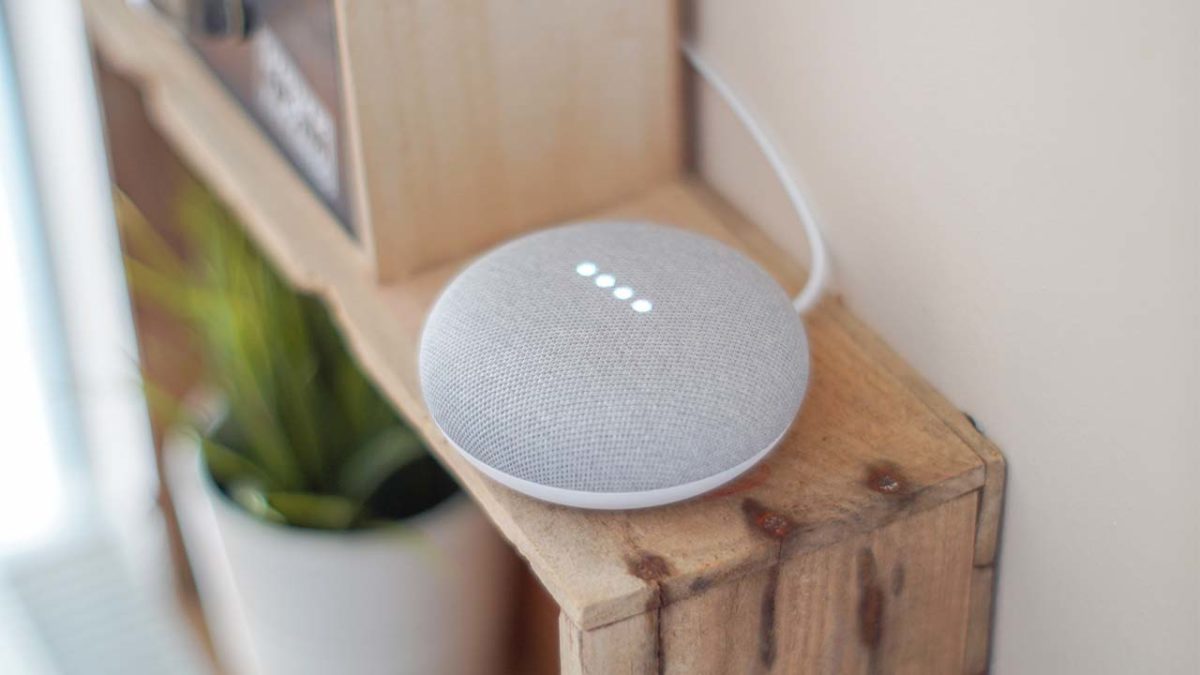
Amazon’s Alexa and the Google Assistant are everywhere now. It is fair to say that AI assistants have caught on a big way, even if they’re still far from perfect products. One of the ways that AI assistants can improve is through better understanding the commands we throw at them. If you’re an American reader, you might not feel like this is an issue that needs too much attention. Across the pond, however, British users might understand a little more as often US-developed AI assistants can struggle with different regional accents from across the British Isles.
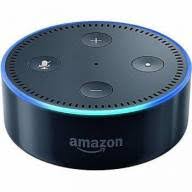
For such a small place, the UK has a lot of diverse accents and more often than not Alexa and the like can’t get to the bottom of them. This has led to the British Broadcasting Corporation, more famously known as the BBC, taking things into its own hands.

The BBC is launching its own AI voice assistant called Beeb that will specialize in understanding regional accents

An in-house team at the BBC is working on a new voice assistant called Beeb, with a hope to launch in 2020. According to a report by the Guardian, there are no plans to launch any standalone hardware product to go with Beeb. There are plans, however, to integrate Beeb into other BBC products like the iPlayer app on smart TVs, and the corporation’s website. There are also plans to make Beeb available to other manufacturers who might want to use the smart assistant in their products.
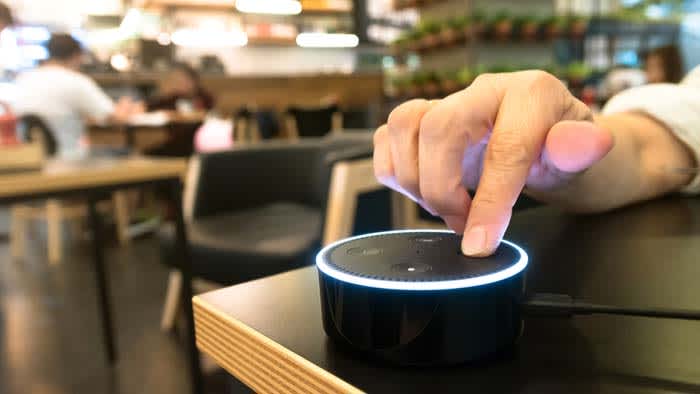
The Guardian reports that the Beeb team have been recording the voices of BBC staff up and down the British Isles in a bid to train the assistant on all the different accent and dialect variations the UK has to offer.

Although Beeb will have a wake word like the Google and Amazon offerings, the BBC smart assistant won’t be able to perform nearly as many skills as the US-developed alternatives. When it launches next year, users will be able to activate the BBC smart assistant by calling out “Beeb” but will then be limited to the types of skills you’d expect a media corporation to need their AI assistant to be able to understand. The main function, however, will be understanding regional accents.
There is no word in the report on whether BBC will allow the likes of Alexa and Google Assistant to take advantage of its regional accent understanding abilities. It doesn’t look likely, however, as a BBC spokesperson claimed another reason behind Beeb’s development is a lack of trust in the other assistants. The spokesperson said, “People know and trust the BBC, so it will use its role as public service innovator in technology to ensure everyone – not just the tech-elite – can benefit from accessing content and new experiences in this new way.”

Judge asks Alexa for help in murder trial

If you’re a British user of either Google Assistant of Amazon Alexa, then you probably shouldn’t be expecting Beeb to start helping your AI assistant to understand you any better some time soon. That doesn’t mean they won’t start working on your accent independently though. As is usually the case with big tech firms, if they see a good idea, they’ll likely try to copy it. With voice control being one of the main draws that AI assistants bring to our smart homes, and with the UK being such a big and lucrative market, working on understanding regional accents there is definitely a good idea. Or as they say in Liverpool, a boss idea. Definitely one that could spread.
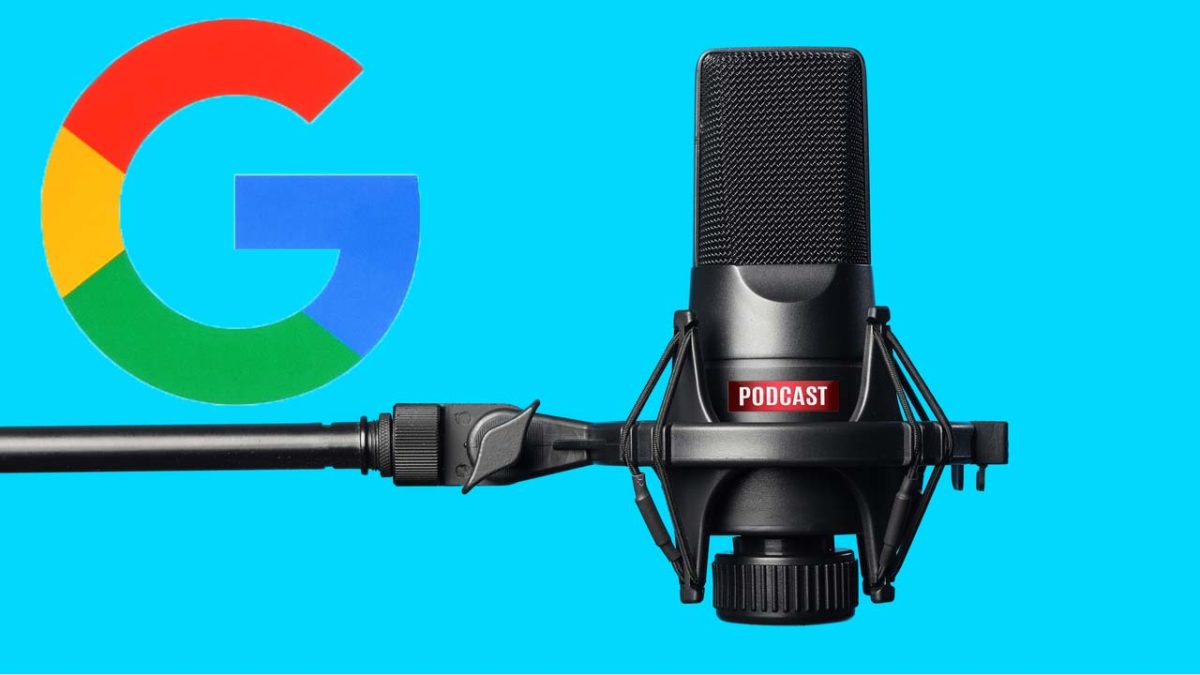
Google adds podcast episodes to search results

Start listening to an episode of a podcast right from the Google search results!

Podcast

Your search results just got a lot louder. Google search results will now include podcast episodes based on your search results.

Podcast episodes will only be included when you are searching for a podcast topic on Google. For example, if you Google “podcasts about cooking,” you should get podcast episodes that deal with cooking in your search results.

When you click on the podcast episode, you will be forwarded to Google Podcasts where you can start listening to the podcast right away. 

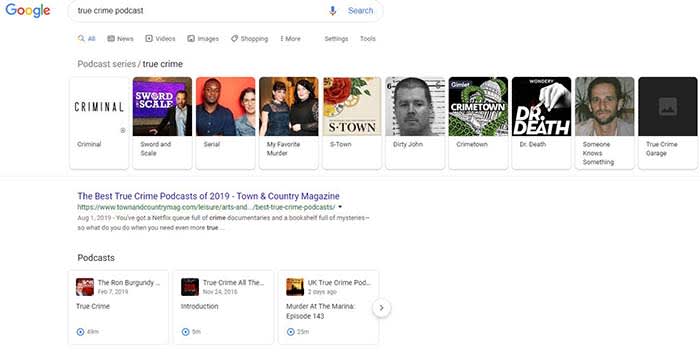
We tried it and the results were… interesting. As you can see, we typed in “true crime podcast” and got the following results.

True crime podcast

Although the results in the top bar were ones that made sense, the podcast episodes we could actually listen to did not reflect the top results. In fact, the first episode in the list was an episode of the Ron Burgundy podcast, a comedy podcast featuring Will Ferrell voicing his iconic character from “Anchorman.” Also, the other two podcast episodes weren’t from the top results either. Needless to say, there are still a few kinks to work out in this update. 

Google says the episodes are chosen based on the search engine’s “understanding of what’s being talked about on a podcast.” The fact that the Ron Burgundy Podcast episode that appeared first was literally called “true crime” probably led to it being the first result.

Google Podcasts and Google Assistant

Google is also planning to bring this new feature to Google Podcasts and Google Assistant. For Google Podcasts, you will be able to search for podcasts and podcast episodes, and listen right from your device! Also, your listening progress is synced, so you can stop and start again from the same point later!

Google Podcasts Download now ►
9

Once it is implemented, if you ask your Google Assistant to, let’s say, play a podcast about cooking a turkey, it will offer a few possible episodes.

Google Assistant Download now ►
9

Wrapping up

Unfortunately, this feature is only available in English and for U.S. users as of now. However, that should change relatively soon.

As we have shown, this new feature is not perfect. We tried it a few more times and got mixed results. We tried Googling “cooking a turkey podcast” and the first option was an episode on turkey hunting.

However, when we Googled “mental health podcast” we got three episodes from the Mental Illness Happy Hour podcast, a podcast that dives into mental illness, addiction, and overall negativity. Clearly, it can work from time to time, but don’t be surprised if you have to fine-tune your searches a bit to get the best results. For example, once we Googled “murder podcast” rather than “true crime podcast,” we actually got more legit true-crime podcasts!

It might take awhile to perfect this new feature, but it is a welcome addition to our search results.

Google tests text messaging from the lock screen for Google Assistant

Google’s A/B test is looking at actually sending messages using only voice commands rather than showing an “Unlock to continue…” prompt

Hey Google, send a text to...

Modern technology poses us with many quandaries, but they usually boil down to having to give something up in order to receive some other sort of benefit. We’ve sacrificed privacy for better connectivity for example. Another little trade-off we’re constantly having to consider is ease of use versus security. The more we rely on technology, the easier it becomes for somebody to hijack our digital personas and take advantage of them.

A good example of this is voice control. When it works, being able to simply tell your phone what to do is a revelation. You can interact with the world without having to get your phone out of your pocket.

It is inherently insecure though, as our voices are easily mimicked. How do we deal with this trade-off? Is there a way to make voice activation more secure or are we just going to have to choose between easier or more secure?

Google Assistant Download now
8

Unfortunately, it looks like there is no magic wand to wave here. Google is working on a new policy feature, but it isn’t a solution to our quandary. Whereas at the moment Google is erring on the side of security, the internet giant is testing voice-to-text messaging that you can send from your lock screen using Google Assistant. This means you might soon be able to send a text message while your phone is in your pocket, but then, so will anybody else who sounds like you.

Google’s A/B test is looking at actually sending messages using only voice commands rather than showing an “Unlock to continue…” prompt

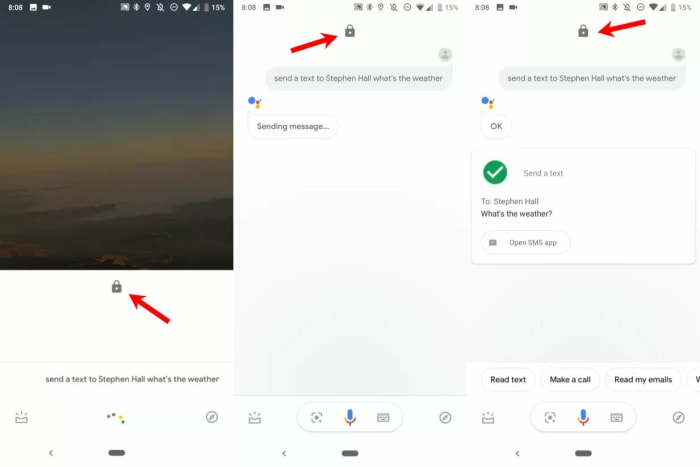
Screenshots of the new Assistant send a text from lockscreen command
Image via: 9 to 5 Google – The Padlock icon shows the phone is locked throughout the whole texting process

The new Google Assistant text from lock screen feature has been spotted by 9 to 5 Google on one of their Pixel 3 devices running Android 9 Pie. The feature works much like the current “send a text” skill. All you have to do is tell Google Assistant to send a text and specify the body of the message and the name of the recipient. The big difference now though, is that Google Assistant will actually send the message instead of prompting you to unlock your phone before doing so.

There aren’t many other reports of this and interestingly, the feature doesn’t seem to be running on devices running the Android Q beta. This indicates that Google is still A/B testing this new feature and will no doubt be collecting data on how it has been working on select devices and how users have been interacting with it.

There is no doubt that this would be a very useful addition to any phone’s set of features. Also, with Assistant being a part of the Google app, should it get through this testing phase all Android phones should get it and not just Pixel devices.

This could see people going back to their regular old SMS apps, especially considering how hard Google has worked on turning into a modern internet messaging machine to rival the likes of WhatsApp and Messenger.  The only thing to consider will be the security trade-off.

Google Assistant: Humans are listening to your recordings

Who’s really listening to you?

Google Assistant

Just when you thought owning a Google Assistant was less risky than owning Alexa, this happens.

A third-party language expert hired by Google leaked audio data recorded with the Google Assistant. 

How did this happen?

Google uses hundreds of human private contractors to review some recorded conversations from Google Assistant.

In this particular case, the issue is the Dutch language. Google may not care what you say, but they do care how you say it. To teach the Assistant to function better, Google may need to rely on humans to convey the nuances of a particular syntax. An algorithm for English may need to behave differently from a Dutch algorithm. Bring in a human to “translate” to the machine, and the results should become better over time.

languages

One of these contractors leaked more than a thousand Google Assistant audio recordings to a Dutch publication.

Why? It involves your privacy.

Your Google Assistant activates when you use the wake word (“OK, Google” and “Hey, Google.”) Conversations with your Google Assistant are supposed to be recorded only after you use the wake word.

However, Google Assistant has been known to mishear things and activate without its wake word being said. When this happens, the conversation is still recorded. Of more than a thousand recordings, the Dutch publication noted that 153 should not have been recorded – the wake words were never spoken. Do the math and that’s a 15% error rate. Not good.

Google Assistant Download now ►
8

This leak, of course, violates Google’s data and security policies. But the whistleblower was drawing attention to an important issue. The problem isn’t that the Assistant was recording the audio – that’s stated in the terms and conditions. The problem is that you cannot completely control when the Assistant records something… and you can’t control if a human will hear it.

VRT NWS says the recordings have included:

  • Bedroom conversations
  • Chats between parents and children
  • Professional phone calls with lots of private information
  • Medical questions
  • Pornographic searches
  • A woman facing physical violence

You can actually hear some of these recordings in the video at the bottom of their article. In some cases, the reporter finds the person who was speaking and plays their recording back to them.

The moral implications are enormous. And security experts say these recordings could be used anywhere. A recording of your own voice could possibly be used against you in court. And if Google or its contractors overhears domestic abuse, should they report it to the police or let the incident go?

This is a modern day “trolley problem.” If Google does nothing, they could be allowing crimes to continue unabated. If Google intervenes, owning an Assistant would be like inviting a police officer to be your roommate. And if Google intervenes selectively, what are its boundaries? And who decides them?

How is Google responding?

Today, Google posted: “Our Security and Privacy Response teams have been activated on this issue, are investigating, and we will take action. We are conducting a full review of our safeguards in this space to prevent misconduct like this from happening again.”

What protection do you have?

As Google points out, “You can turn off storing audio data to your Google account completely, or choose to auto-delete data after every 3 months or 18 months.”

If you’re worried about privacy, it might be best to hold off on buying an Assistant until this issue is solved. (Though it may never be truly safe.)

Not an isolated problem

If you have an Amazon Alexa, this issue is nothing new. Human employees have shared recordings from that device as well.

Remember that any device with a camera or microphone could be exploited to record you. And anything you type into a keyboard could be logged as well. It’s best to use a browser and a search engine that defends your privacy, use a VPN, and think twice before allowing permissions to any app you download.

Google and Facebook make their money by marketing your data, so you may want to consider alternatives whenever possible. But we get it, the convenience is a big draw. Stay safe out there, internet friends.

Google Assistant just got better at talking back

Google’s Continued Conversation update make sit easier to talk to on Smart Display devices.

Nobody is saying that AI assistants aren’t impressive. It is just that they can be a little annoying and frustrating to use. They’re rigid so to speak, particularly when you’re talking to them. Let’s just say they’re not kidding anybody. When you’re speaking to an AI Assistant, like Google’s Assistant or Amazon’s Alexa, you know you are talking to a machine. This in an issue that needs attention, and it is an issue that Google is trying to address.

Google’s Continued Conversation update makes it easier to talk to on Smart Display devices

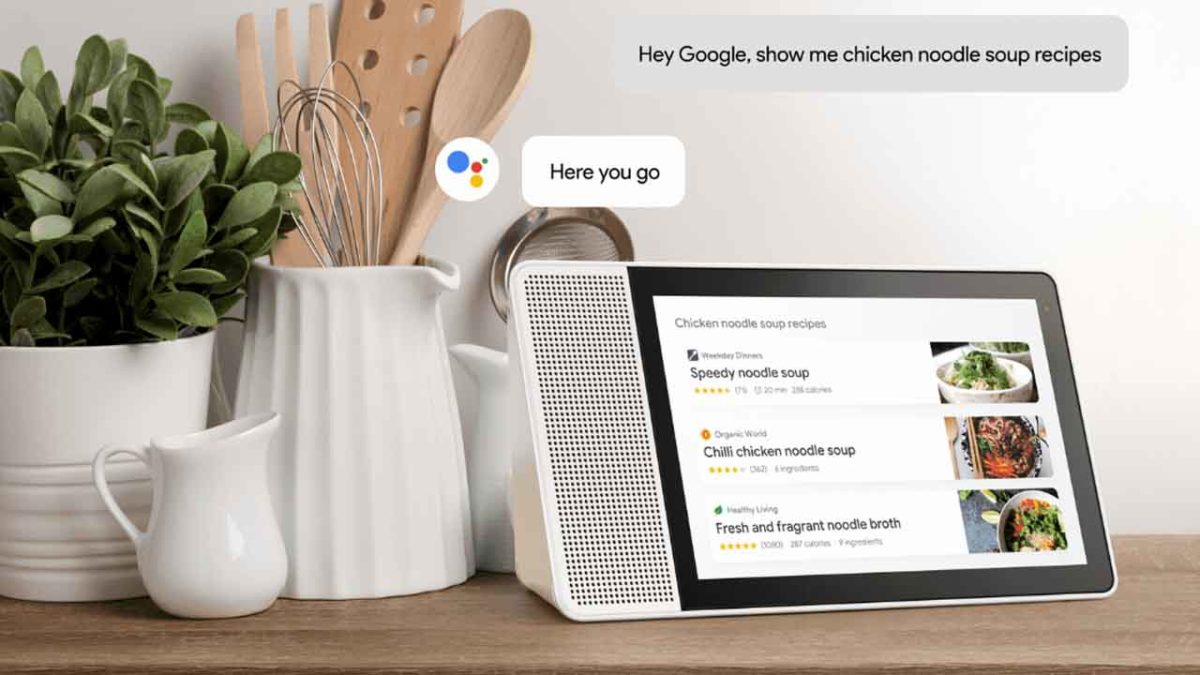
Continued Conversation on Google Assistant Smart Display

The big issue with AI assistants is the “wake word” phrases. The constant need to say things like “Alexa…” or “Hey Google…” before every single request breaks up the flow of the conversation. What could be a chat ends up a series of commands. This is what Google is trying to address with the Continued Conversation on Smart Displays update.

The update is a simple one and works like this. Whenever you speak to Google Assistant, using the “Hey Google…” or “OK Google…” wake words, it will remain active long enough after the original command has been made so that you can continue with more requests. This means that you can ask Google to turn the lights on and then ask Google to tell you what the weather will be like in the morning, without having to say “Hey Google…” a second time. It is a simple change, but one that could make your exchanges with Google Assistant feel a little more natural or, dare we say it, human.

How to enable Continued Conversation on Smart Displays for Google Assistant

This new feature is an optional extra and so won’t be enabled by default. To enable Continued Conversation on Smart Displays you need to go to Settings, then Preferences, and then finally Continued Conversation. Once here, click the toggle button to on to enable the feature.

The new feature is now available on Smart Display devices including the Google Home Hub, Lenovo Smart Display, JBL Link View, and the LG XBOOM AI ThinQWK9.

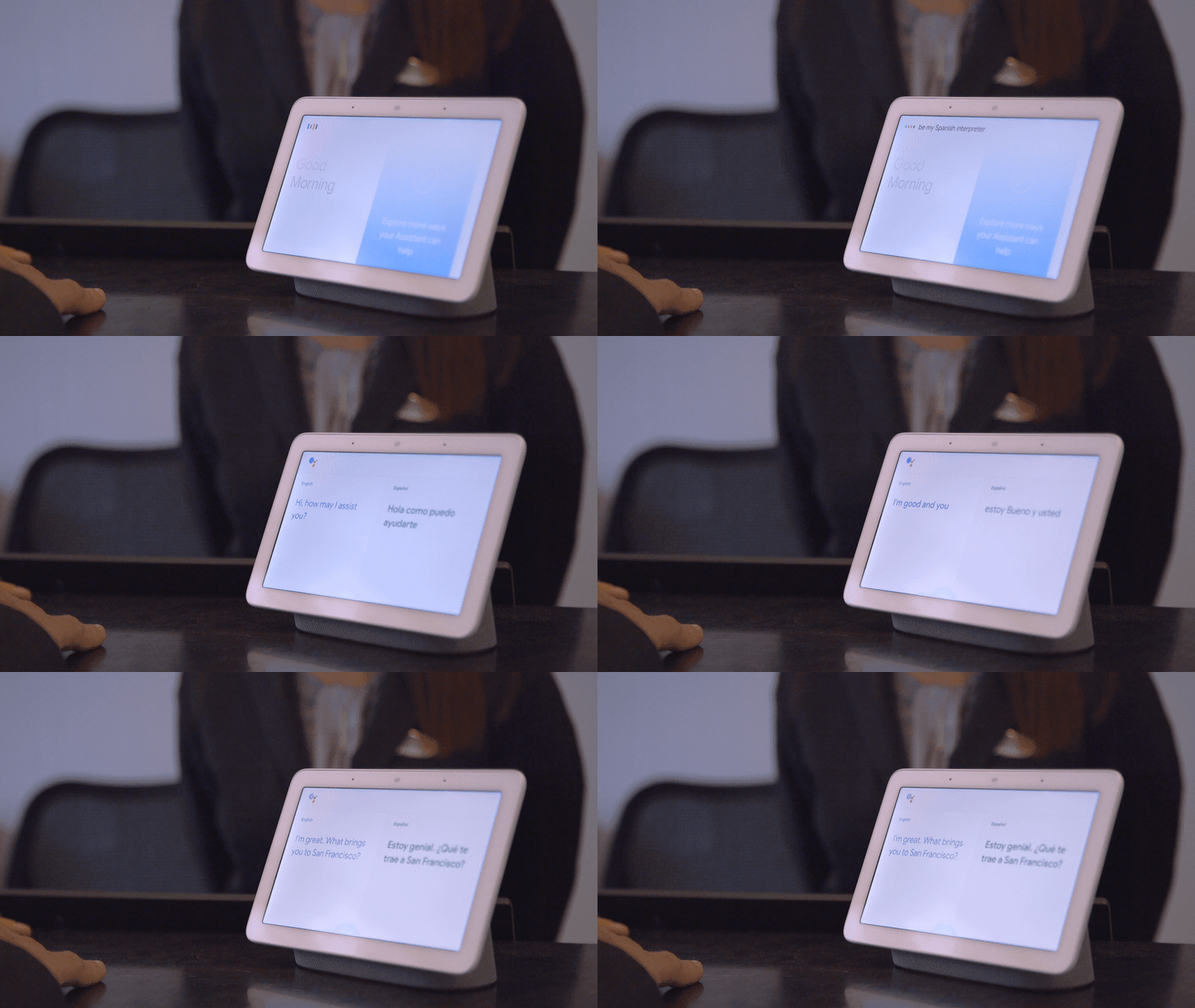
This is just the latest in a string of new features that Google has added to Smart Display devices. Other features include Interpreter mode, home appliance and smart device control, multi-room audio, and Live Photo albums that automatically update when photos of certain people or animals are taken on linked Google cameras.

The new interpreter mode will work well in the service industry

If you’re a Google Assistant user, however, who doesn’t have a Smart Display device you might want to check out one of our other Google Assistant articles like our essential guide to Google Assistant, Google Assistant’s uncanny ability to predict whether your flights will take off on time, and our look at the surprisingly complicated backstory that went into Google Assistant’s character development.

Google Assistant Download now
8

Google Assistant can now accurately predict the future

Google Assistant can let you know with 85% accuracy if your flight will be delayed.

google assistant flight delays

If you’ve ever used an AI assistant like Amazon’s Alexa or Google Assistant, you’ll know that they have many skills that can help you throughout your daily life. Often these skills are just novelties or bits of fun, like calling Santa Claus in his workshop, but they can also be useful and practical like making your coffee in the morning, cooking your lunch, or setting reminders for your schedule. Rather impressively, Google Assistant has developed a new skill that allows it to see into the future and give you useful information when you’re about to embark on a trip or vacation.

Google Assistant Download now
8

Google Assistant can let you know with 85% accuracy if your flight will be delayed

The major advantage that Google Assistant has over other AI assistants is that it can call on data from across all of Google’s products to help provide you with the information you need when you need it. Assistant can dip into your Gmail inbox and bring back the flight times from the booking you made a few months ago as if it always had the information on hand anyway.

In a recent blog post, Google announced that soon Assistant will be able to access data from another Google product that will broaden this skill. Google Flights has been publishing flight statuses for a while, and this historical flight data allows Google to make predictions about whether flights will be delayed with an astonishing 85% level of accuracy.

Soon, data from Google Flights will be available to Google Assistant, which means you’ll soon be able to holler, “Hey Google, is my flight on time?” or “Hey Google, what’s the status of the American Airlines flight from Philadelphia to Denver?” to get up-to-date information about your flight status.

As well as providing information on flight statuses when we ask for it, Google Assistant will also start proactively updating us. If the Google Flight data indicates that there is a high likelihood your flight will be delayed, Assistant will ping you a notification telling you so, before you even ask for it. This approach puts Google Assistant ahead of Apple and even the airlines themselves, which will only send you a notification once the flight delay has been confirmed.

As we push further into the new year, we move into the most popular time of the year for booking vacations. With trips supposed to be relaxing and stress relieving, it is good to know that our virtual assistants will be working away in the background to keep us up to date about potentially stressful occurrences. Google Assistants flight delay predictions will keep us one step ahead of the game when we’re trying to relax. The big question will be, however, if Google says it thinks your flight will be delayed, will you risk staying at home on an 85% certainty?

Google Maps update helps drivers

Google Maps and Google Assistant are teaming with a navigation specific update

update for drivers on google maps

Recently we’ve seen a flurry of updates to both Google Maps and Google Assistant. The Maps updates have been adding more and more features that don’t actually have anything to do with Maps. A new messaging feature and the ability to add hashtags to businesses have turned Maps into a formidable business directory. For Assistant, the updates have been spread across a variety of areas, as you’d expect from a product that is supposed to be generally intelligent rather than specialize in one particular area.

There is a core part of both apps, however, that that make them perfect teammates. Navigation is now a key part of Google Maps and voice control is such an important of Google Assistant that it is taken for granted. With Assistant being able to easily respond to voice queries, it offers a great way for you to get the information you need, or open up a particular app while you are driving. This raises a few issues, however, but Google is trying to address them in a new update for Google Maps.

Google Assistant on an Android smartphone has its own visual signature. When you call out “Hey, Google…” it opens up a dialog box where you can talk to Assistant and it can display the results to your queries. Even on its own this could be distracting to somebody who is driving a car but if you add the fact that this could also interrupt the navigation instructions that Google Maps is displaying, the problem grows. Even a handsfree experience can still cause dangerous problems for a driver.

Google Maps and Google Assistant are teaming with a navigation specific update

To address the fact that Maps and Assistant could work so well together yet could also cause dangerous distractions for drivers, Google has released a new update for Google Maps. The feature was first mentioned at Google’s I/O conference back in May, when Google said it would have a “lower visual profile” that wouldn’t distract drivers. The update is now live, and users have been taking to social media to describe an experience that fits with Google’s early description.

All Assistant commands now run in the background and the user always stays in Google Maps. You can now ask Google Assistant to send a text message, play music, and even call people without having to leave Google Maps or take your eyes off the road. According to one user on Reddit, calls happen seamlessly without the Phone app opening up on the screen. To initiate these commands all you have to do is say the Google command words or hit the multi-colored microphone found in the top-right of the screen when navigation is running.

This update makes Google Maps navigation a much richer and safer app. Download the latest update to Google Maps to give it a try.

There is a lot more to Google Assistant than you think

A deeper look at Google Assistant’s backstory and personality

Google Assistant home device

We’ve all spoken to an AI assistant at some point. From Alexa to Bixby via Google Assistant, AI helpers have found their way into our lives in a number of guises. You can find Alexa in a microwave and many people have even made the creepy move of inviting AI assistants, equipped with video cameras and microphones into their bedroom. What is behind the AI algorithms though? How have we found ourselves in a dimension where people are building relationships with machines? Well, there is a lot more going on than you’d believe.

Google Assistant Download now ►
8

Who is Google Assistant? A deeper look at her backstory and personality

It isn’t easy making a robot sound human. In order to make its AI assistant sound as human as possible, Google went to great lengths coming up with a surprisingly detailed backstory for its “personality.” The job was given to James Giangola, who is a conversation and persona designer. It was Giangola’s job to come up with the person Google wanted to put into their little boxes. In a recent interview with The Atlantic, he let out a few secrets from her life.

Apparently, Google Assistant’s persona is supposed to be that of the youngest daughter of a research librarian and physics professor. She went to Northwestern where she gained a B.A. in art history. The details get even more finely tuned as Assistant won a massive $100,000 on the kid’s edition of “Jeopardy” when she was a child. Later, she worked as an assistant to a popular late TV comedian.

Does this all sound like the person behind the voice when you ask Google what the weather will be like? What you hear is an actor’s interpretation of the backstory created by Giangola. It was the actors’ job to take the story and bring it to life in their auditions for the Google Assistant role. Every detail of the story was important, with Giangola adding instances to the story specifically to add audible traits to the voice he wanted Assistant to have. In the Atlantic piece, he talks of one poor actor being turned down because her reading of the part didn’t contain the energy he’d associate with somebody who likes to kayak. Yep, Google Assistant is an avid kayaker too.

It wasn’t just Giangola who was busy fine-tuning Assistant’s personality either. Google also brought in Pixar’s Emma Coats who was a storyboard artist on “Brave,” “Monsters University,” and “Inside Out.” For Coats, the number one rule for Google Assistant was that it needs to sound like a human, but never pretend to be one. This is why if you ever ask Assistant questions about its own preferences or experiences the answers will always be evasive. A piece of software can’t have a favorite food, so it shouldn’t act like it does.

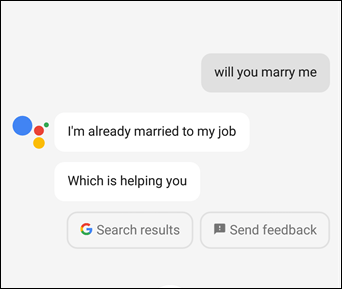
How to get Google Assistant to Cheer You Up marry me
You can’t marry a piece of software so Google Assistant needs to avoid the question in a way that sounds human

This last point from Coats makes you wonder whether she was consulted about Google Duplex. One of Assistant’s bold new skills announced at Google’s latest I/O conference was the ability to make appointments for you, even if they needed to be made over the phone. Onlookers in the hall and on the internet were aghast as hairdressers and restaurant staff were led to believe they were taking a booking from a human, when in fact they were talking to Google Assistant. Duplex is currently in line for a limited release but may receive a wider roll-out if it declares itself as an AI Assistant before getting back to sounding as human as possible.

All this adds up to the voice you hear back when you shout out, “Hey Google.” A lot of work has gone into making Assistant sound relatable, fun, energetic, and most of all human. As soon as she starts trying to make you think she’s human, however, you’ll know that something must be up.