
How do I break my social media addiction?

Do you find yourself reaching for your phone to check apps like Facebook? We can help break your addiction.

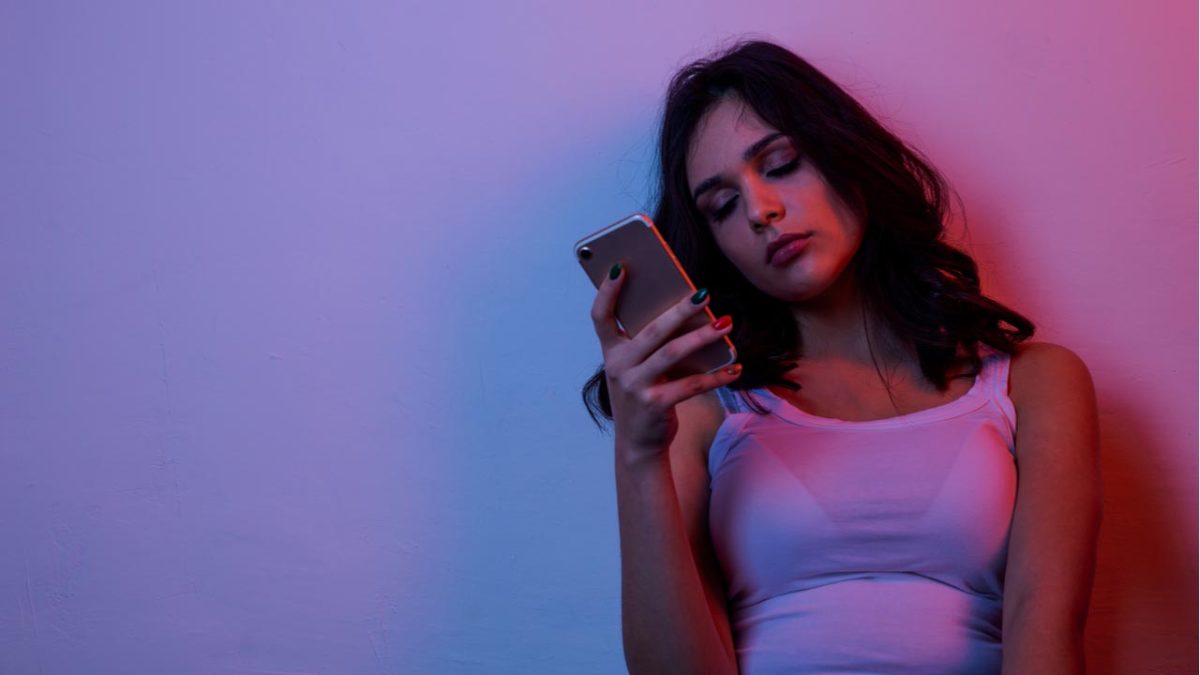
Smartphone addict

Social media connects us to new people and ideas — for better or worse. It’s also a massive time suck that can wipe out a whole day and get in the way of accomplishing goals.

The word “addiction” brings to mind drugs and alcohol. It might seem too strong a word to apply to something like social media, right?

Well, not exactly. Though social media addiction has yet to secure an official spot in the DSM, it’s already become quite prevalent in the U.S. and Europe. It is affecting up to 8.2% of the general population.

How often are you on track, knocking tasks off your to-do list when a friend request or Instagram comment derails your progress? One second you’re typing up an email, and the next, you’re deep into some acquaintance’s 2016 vacation pics.

All of us are susceptible to succumbing to these distractions, but there are some things you can do to fight full-blown social media addiction.

Here are some tips you can use to regain control:

Learn why you’re addicted to social media

Facebook addict

What is it you hope to gain from opening social media? Uncovering the “why” behind your bad habit does require some introspection.

You might not have a good reason for your endless scrolling. If that’s the case, take a closer look at your motive. Do you hit the ‘gram when you’re stressed or overwhelmed? Or, is it when you’re trying to put off a project you don’t want to start?

Perhaps, you’re seeking connections with the outside world or accessing new information.

In any case, we tend to lean on social media to fill a void. Psychology Today describes this endless scroll as this “wanting activity.” Meaning, we tend to keep looking at our feeds because we’re anticipating some reward.

It’s also a lot easier to veg out in front of your feed than picking up a book or phoning a friend. This just adds to the temptation.

Reset

Going on a hike

One way to fight social media addiction is by taking a day off. Consider taking a day each week where you avoid using the phone or your computer.

This gives you some space to schedule some in-person social time. Do some analog reading, or you know, go outside.

That said, a full day of no socializing might add to your anxiety for a lot of people. If that’s you, aim for a couple of hours at a time.

Set ‘micro-boundaries’

Micro-boundaries is a concept developed by University College London researchers. It refers to a handful of ways to set distance between you and your bad social media habits.

The researchers say there are four types of micro-boundaries.

  • Digital: Separating accounts or using apps that block out certain websites
  • Physical: Choosing to leave a device at home or keeping it in a drawer at work
  • Social: Turning your phone on airplane mode or do-not-disturb during social situations
  • Temporal: Turning alerts off or setting the phone to do-not-disturb for specific hours

The UCL paper does acknowledge that you may need to let others know about these digital boundaries. If you’re a quick responder, then you might need to give people a heads-up.

Focus on what you can add to your life

Woman meditatingLike going on a diet, prohibiting the use of social media isn’t sustainable for the long-term. Instead, you should try setting achievable goals. Habit formation depends on training the brain to get that reward satisfaction from a healthier source.

Plan a cell phone-free dinner once a week, get into hiking, biking, or exploring your neighborhood.

Disable your alerts

Alerts play into our brain’s reward center, providing a rush of dopamine when we hear those familiar sounds.

According to Harvard researchers, Instagram likes, and text messages activate the same release of dopamine you’d receive from completing a “successful social interaction.” The article also notes that dopamine paths are often dysfunctional in people will any type of addiction, be it substance abuse, gambling, or Facebook.

The thing about disabling notifications is, you still have access to everything you want from your phone/computer. However, it provides a level of separation between you and your apps.

Wrapping up

Women socializing

Most of the notifications you receive don’t contain critical time-sensitive information. But for a lot of people, opting out of push notifications can present interpersonal challenges. Your mom or your partner might get annoyed when you don’t respond ASAP.

This study, aptly named The Do Not Disturb Challenge had interesting results. They found that while participants felt more productive after turning off their notifications, they also felt anxious about not being as responsive as expected.

So, again, success may depend on convincing your colleagues and text-happy friends to take a more moderate approach to social media.


Top 6 self-help apps

Improve your life with these great apps.

self-help

It can be hard to manage your entire life on your own. Things can easily start to pile up and overwhelm you, especially if you don’t have any help. That’s what self-help books were originally created for: helping people help themselves. This typically means helping them solve the problem, but also helping them get to a better mental state. This genre of books has become increasingly popular over the past decade. As such, many app developers have taken the time to develop these helpful guides into handy little apps to help you through your everyday life. Here are just a few of the most useful ones you can find:

Top 6 self-help apps

Worry Watch

The perfect app for those who are known to bottle things up, Worry Watch is a stress journal app that you can use to log your frustrations as they happen. This can both help you process through these frustrations, while also preventing them from being held in for too long. It can also help you discover important anxiety patterns that you can make note of to prevent them in the future.

Worry Watch - Anxiety Journal Download Now ►
8

Headspace

Headspace

Meditation can help clear your mind and help with a variety of mental struggles such as stress, depression, and even insomnia. However, getting into a good headspace for meditation can be a difficult task, especially for anyone new to the practice. That’s where the Headspace app comes in. It teaches you step-by-step how to develop meditation skills and put yourself into the headspace you need to be to relax. It helps you go from a beginner to an expert in meditation.

Headspace Download free ►
10

Make Me Better

Make Me Better

The main focuses of this app are personality development and motivation. While a self-help book may help with these features, Make Me Better holds you accountable to develop them. If you have negative personality habits or motivation issues, then this is a great app to use to change these things about yourself. It has daily reminders to work on your habits, as well as daily motivational quotes.

Make Me Better Download Free ►
10

Emotional Intelligence

Emotional Intelligence

This app helps you learn about the psychology of empathy and body language. Understanding these fields and developing skills around them is an incredibly helpful tool when working on your social skills. Social anxiety can be a crippling experience, so having an app to turn to when dealing with it can be extremely helpful. Not only that, but it can also teach you how to approach a friend who may be struggling in a helpful and approachable way. It’s not only an app for helping you help yourself, but also one that allows you to help others, too.

Emotional Intelligence Download Free ►
7

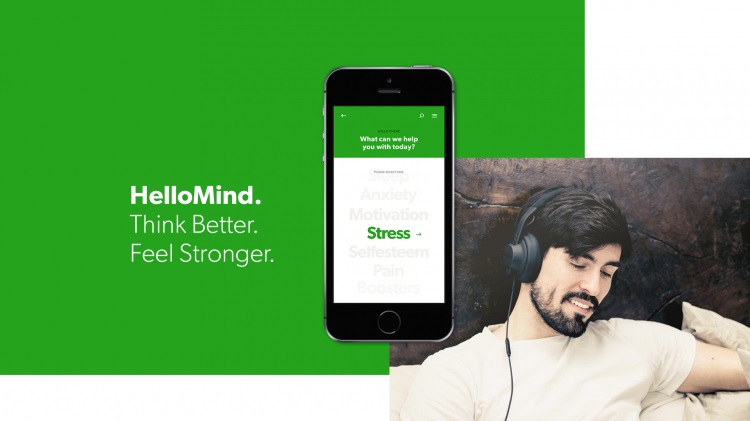
HelloMind

HelloMind

A cheap and effective habit-breaking app that helps you to replace negative habits with positive ones. HelloMind is led by a team of expert psychologists, which means you know you’re getting good advice. You can look up all their qualifications directly on their website. Together, they’ve created a handy little app that can pick you up whenever you are down, by teaching you different ways to develop healthy behaviors. It can really bring you out of any stressful mental state you may be in.

HelloMind: Meditation Relaxation and Mindfulness Download Free ►
8

What’s Up?

What's Up

An app made for picking people up once they’ve hit rock bottom. It deals with everything from anger issues to financial and emotional stresses that have caused someone to feel utterly helpless and lost. With expert articles, this app will help you learn how others have dealt with similar situations. It can not only help you get out of whatever predicament you are in, but also learn how to cope with your stress in a healthy and proper way, both for you and those around you.

What's Up? Download Free ►
8

Each of these apps helps to improve your abilities and mental state in their own unique ways. Most of them work really well in conjunction with each other, so be sure to find the right combination that’ll help you improve the most. Additionally, you’ll want to check out our Softonic Solutions page where we’ve listed a few extra apps to help you improve your mental state. Be sure to share your favorites!

Do you need a digital detox?

Spending too much time on your screens?

Digital Detox

Technology is the backbone of our lives. No joke.

More and more, we’ve been hearing about these digital cleanses, diets, or detoxes, aimed at reconnecting with society.

What are these so-called digital detoxes, and do they actually work?

We decided to take a look at the idea of the digital detox to see if it’s a whole lot of BS or if there’s something to it. Let’s have a look to see if the “screen-free week” is worth a shot.

What is a digital detox, anyway?


View this post on Instagram


A post shared by Craig Ballantyne (@realcraigballantyne) on Jan 25, 2019 at 4:00pm PST

A digital detox, as per Techopedia, is a when someone quits using social media or a piece of digital equipment and instead, use that time for social interactions or offline activities. You can do a digital detox simply by pausing regular use, deleting apps, or otherwise refraining from social media or other online activities.

There is also a whole market of digital detox retreats — which might sound like a rehab center for Facebook addicts, but these retreats seem more focused on getting people away from their phones in an effort to connect with themselves, with others, and potentially, with nature.

Still, there’s a lot of weird diet language associated with this trend. Vogue and Shape, among others, have written articles that talk about cutting back on screen time like they might have talked about cutting calories two decades ago.

Psychology Today recommends “fasting” from electronics. And Quartz published a whole piece on digital detoxing, using food metaphors to emphasize each point.

MIT’s Carlo Ratti makes an interesting counterpoint to all of this “digital detox nonsense.” He points out that virtual assistants like Alexa, Siri, and the Google Assistant are pushing technology into the background — away from our faces.

Ratti gets at the idea that the internet of things might be the thing that saves us from the digital isolation/addiction/whatever these detoxes are supposed to fix.

Still, he makes the point that we do benefit from pulling our eyes away from the screen now and again — but says we don’t need to shun technology in the name of good health.

DIY digital detox

The most basic form of the digital detox is changing some habits on your own. This might mean keeping your phone on do-not-disturb for a set amount of hours, switching to a manual alarm clock, or deactivating Facebook and Twitter.

Of course, attempting to do this on your own is more about self-control and implementing new habits — so some may find it hard to unplug without taking more dramatic steps.

Retreats — a.k.a. a $$$ screen-free week

Call it rehab or whatever, but those who have trouble unplugging on their own and the time and money to spare can shell out a couple thousand bucks for a digital detox. Prices are comparable to a yoga retreat — this digital detox retreat in Ibiza is $2,200, sans airfare.

The idea sounds, honestly, a bit dumb. But, it comes down to a branding thing. The name digital detox elicits some serious millennial burnout vibes — from someone who, like, just needs to get away from Instagram.

However, a lot of the detox experiences we found online sound kind of cool — and geared toward a wide range of analog interests. For example, this blogger detailed her experience in Canada’s Northwest Territories.

This retreat was a snow-covered outdoor adventure where participants went cross country skiing, ice fishing, and more. There’s also something like Camp Grounded, an adult summer camp featuring everything from arts and crafts to archery, improv, and stargazing. No screens, of course.

Tech addiction therapy

Tech addiction therapy, unsurprisingly, is a thing now. It makes sense — experts are pushing for official disorder status in the DSM-5, and people do experience a range of issues related to technology.

There’s reSTART, a residential facility for people addicted to the internet, video gaming, social media, and gambling. In other cases, those who feel like they have a problem with technology addiction can seek the help of a traditional therapist that meets once a week.

Smartphone addiction symptoms include things like feeling anxious, stressed, angry, or nervous when separated from the phone.

Others experience a fear of being disconnected, a looming sense that something bad will happen if that person can’t connect to the internet.

Of course, there are likely several other ways that technology is impacting our mental health — for better or worse.

How much screen time is healthy?

Screen Time

Screen time is a term that gets thrown around a lot, usually in the context of adults hand-wringing over the latest teen tech trends.

Unfortunately, there’s no prescribed amount of screen time indicative of healthy use. We all have different jobs and obligations that dictate a good chunk of that screen time, anyway.

That said, the average adult in the U.S. spends a whopping 11+ hours a day looking at some type of screen, which really seems like a lot.

Too much screen time could pose health risks: think back problems caused by poor posture or extended periods of sitting.

Eating in front of a screen can make us become unaware of what we’re eating — in some cases, causing us to eat more. And, there’s the favorite tip — keep screens out of the bedroom, as the glowing blue lights can keep you awake.

In all, though, it doesn’t seem like being around the screen itself is all that bad — it’s more a matter of remembering to eat well, exercise, and talk to actual people once in a while.

What’s healthy, however, depends on what you hope to change by spending less time online.

What’s the verdict on digital detoxing?

Digital detoxes — vacation or not — are a great way to get back in touch with physical activity, human connection, and could be an opportunity to make time for something new.

Obviously, we’re starting to see evidence that technology has similar effects on our brains as addictive drugs—and certainly qualifies as a behavioral addiction in the vein of sex or gambling addiction.

Our skepticism likely comes from a place of disliking the name, “digital detox.” However, like “Friendsgiving,” “Staycation,” or “Bromance” digital detox is a good thing with a dumb name.   

Instagram wrestles with mental health concerns

Can Instagram allow free expression without encouraging self-harm?

phone depression

Earlier this month, Instagram announced they’d be cracking down on self-harm imagery. Or rather, they’ve doubled down on the sensitive content filters implemented in 2017.

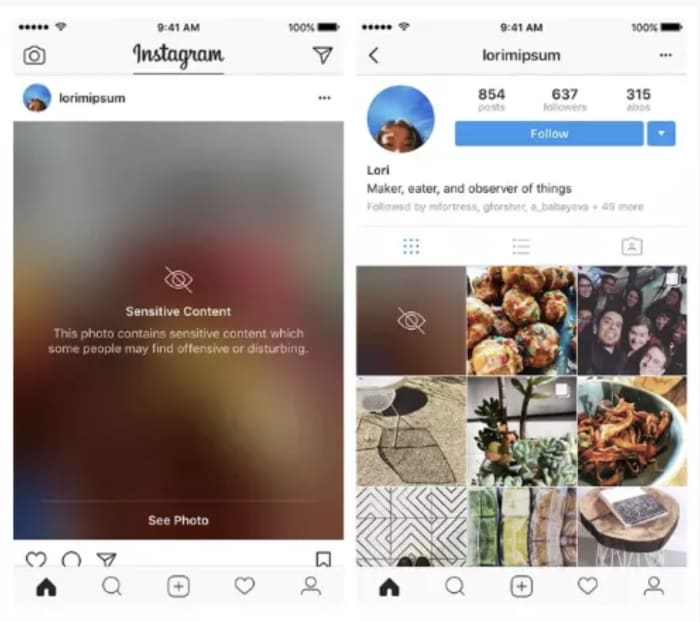
The filters, or “sensitivity screens,” blur out content related to suicide or self-harm and users can tap the screen to view the image. The idea was to reduce the likelihood of stumbling upon unwanted or harmful content.

Since then, Instagram has been dubbed the worst social media platform for mental health, particularly among young people.

From body dysmorphia to eating disorders, self-harm, and low self-esteem — the platform is an undeniable minefield for all kinds of mental health issues.

The initial filters didn’t ban images of cutting or other forms of self-harm, as Instagram didn’t want to ban posts from those who were struggling.

While most of the dialog surrounding social media and mental health has focused on things like FOMO and body image issues, the conversation has shifted toward what content should be banned in an effort to protect vulnerable users.

Here’s a little more about Instagram’s push toward a healthier platform–and why.

Why is Instagram increasing controls on sensitive content?

The decision to ramp up controls over self-harm posts came two years after 14-year-old Molly Russell took her own life. Molly’s parents believe that content found on Pinterest and Instagram may have played a role in her death.  Her father, Ian Russell has been vocal about the failure of social media companies to protect their young users.

In the wake of the tragedy, UK health secretary Matt Hancock warned Facebook (who, of course, owns Instagram) that he would take legal action to protect young people from harmful content. In a letter to “social media bosses,” Hancock said it is appalling how easily young people can access content that “leads to self-harm and suicide.”

Adam Mosseri, the head of Instagram, responded by announcing that they would roll out sensitivity screens blocking images that depict self-harm.

self-harm Instagram

“We still allow people to share that they are struggling,” Mosseri stated. The app’s policy only bans images that “glorify” self-harm. The platform does hide posts that reference self-harm or post non-graphic depictions.

As it stands, the app does ban promoting content that relates to self-harm or suicide. However, they’ve struggled to gain control over the content the algorithm recommends — allowing graphic imagery to pass through the filters anyway.

Instagram’s algorithm is set up so users receive personalized recommendations based on past activity. So, despite Instagram’s efforts, the platform guides users seeking self-harm content toward other posts/accounts that align with their “interests.”

Mosseri admits in an op-ed that the platform hasn’t done enough to keep these images out of feeds. While the 2017 effort was a step in the right direction, this latest move involves allocating more resources to fighting back — content moderators and engineers.

Is it Instagram’s responsibility to ban sensitive content?

Instagram sensitive content

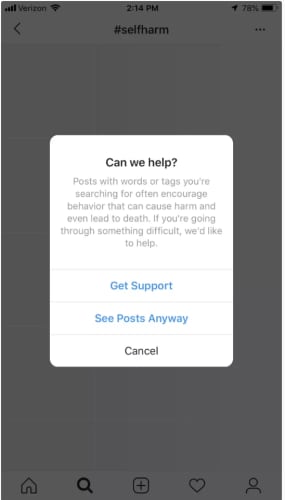
Early reports of the tool in action show Instagram did censor certain hashtags — obvious ones like #selfharm or #selfinjury came with the sensitive content label, but the issue was, users could just add new hashtags and circumvent the filters.

Like some of the biased algorithms we’ve seen in the news recently — problems aren’t evident until something bad happens. A tool isn’t programmed to have racist inclinations or built-in gender bias, but once it’s out in the wild, dealing with real people, it doesn’t have the “training” to respond appropriately to every situation.

It’s troubling that the platform has been recommending sensitive content to a vulnerable audience. But it’s unclear if Instagram’s ban will extend to accounts that raise awareness for mental health issues or speak out about their experience with depression.

As we’ve seen with Facebook’s crackdown on fake news and political ads, many accounts may find themselves subject to penalty. But, it’s certainly a step in the right direction.

Top 7 mental health YouTubers

Educate yourself and learn coping skills with these great mental health YouTube channels.

mental health

There are a number of reasons to get invested in learning about mental health. Maybe you’re suffering from some mental disorder or stress. Maybe a friend or loved on is having a hard time. Or maybe you just find abnormal psychology interesting and want to learn more about it. Regardless, there are many people who have taken to YouTube to explain what it’s like to have mental illness, and to spread awareness about mental health in general. These can be incredibly informative, while also giving the same connection that many viewers feel when they grow attached to watching a YouTuber and learning about their life. Below are some of the best channels to learn about mental health.

Best YouTube channels for mental health

Depression to Expression (Depression and anxiety)

Scott is a very candid YouTuber, detailing his depression and anxiety, along with how they affect his life. He provides tips on how to deal with these issues while also explaining the topics of mindfulness, meditation, and other common coping techniques. He tends to focus on the ability to motivate yourself and get in touch with your own body, something people with depression and anxiety often struggle with. He is a great YouTuber to learn from, as these illnesses are far more common than we give them credit for.

EDucating Shanny (Eating Disorders)

Not many people like to talk about what it’s really like to have an eating disorder. Some people don’t have any sympathy for those suffering with an ED, because they don’t understand how difficult it is to deal with that kind of disorder. There is much more to it than just “I don’t eat because I want to be skinny,” which is often how people explain it.

EDucating Shanny takes the time to explain how it feels to actually have an eating disorder, what the side effects are, and what you can do to help others who are struggling with an ED. She also explains the differences between the variety of disorders that fit under the umbrella of ED. She should be the first YouTuber you turn to when trying to learn about bulimia, anorexia, body dysmorphia, or any other weight-related mental illness.

Emily Rose (Anxiety and self-care)

If you’re feeling down about yourself or the world around you, Emily Rose has a great channel to help you get into a better mental space. Not only does she talk about her own struggles with anxiety and stress, but she carefully details helpful coping mechanisms for any kind of stress you’re dealing with. Whether it be from mental illness, personal problems, or even work-related stress, Emily Rose will take you step-by-step down the road of self-care and self-acceptance.

MedCircle (General mental health)

This channel may not be quite as personable as other mental health YouTube channels, but it makes up for this by being one of the few professional channels on this subject. They have expert psychologists discussing some of the most serious topics and even interviewing patients just to spread awareness on some of the least represented mental disorders.

Kiera Rose (Dermatillomania)

Kiera is actually more of a vlog and lifestyle YouTuber, rather than a mental health one. However, she suffers from a rare disorder and has made many videos talking about it. Dermatillomania is an obsessive compulsion to pick at your skin even past the point of wounding yourself. It is a dangerous and painful disorder, and Kiera’s efforts to spread awareness by telling her story are not only admirable, but also really helpful to others who are suffering with something similar.

Kati Morton (General mental health)

You may recognize Kati Morton as the licensed therapist from Shane Dawson’s famous Jake Paul series. In this series, she explained what it’s like to be a sociopath and spot someone with sociopathic tendencies. On her personal channel, however, her mental health videos are much broader than simply explaining sociopathy. As a licensed therapist, she has made many videos on all kinds of mental health subjects.

The Entropy System (Dissociative Identity Disorder)

While this channel may not be the most popular, The Entropy System are a colorful group who do an excellent job at explaining what it’s like to have Dissociative Identity Disorder. You may know this disorder by its former name, multiple personality disorder. The group of “alters” that make up The Entropy System cover all areas of DID and other dissociative disorders in their highly educational videos. This disorder is one that almost everyone knows about, but very few people actual know the details of what it’s like to have this DID. This channel presents the perfect opportunity to learn about the myths that surround this disorder from someone who actually has it.

While most videos feature the system hosts, Wyn or Kit, almost every member of their 10+ system has created a video introducing themselves or explaining some fact about DID.  We particularly recommend Wyn’s videos on DID in media.
Each of these YouTubers present a unique perspective on what it’s like to live with mental illness. They’re all worth checking out if you have the time.

Coping in a toxic work environment

Hate your job but can’t quit just yet? Here’s how to survive.

A toxic workplace is defined as any work environment that makes you feel uncomfortable, undervalued, or underappreciated. Toxic can run the gamut from bullying and bad management to sabotage and hostility.

Often, people accept their fate, feeling trapped or lucky to have a job at all.

Your work environment plays a critical role in your long term happiness and health. According to research published in the PLOS ONE journal, happiness is directly linked to:

  • Having a strong emotional support system
  • Feeling in control at work
  • Low levels of job strain

Workers in demanding roles with little control over their situation have higher rates of depression and heart disease.

And, when you factor in nasty coworkers and low social support, a negative work environment could be slowly poisoning both body and mind.

Here are some ways to identify whether you’re stuck in a negative environment, as well as some ways to make the time waiting out new job opportunities more bearable.

Signs that your workplace is toxic:

toxic workplace

Poor communication

Poor communication can take a few different forms. This could mean that your boss fails to provide feedback or gives you the brush off. In other cases, you might be on the receiving end of negative feedback with no constructive information.

Other signs include colleagues deliberately not inviting you to important meetings or failing to CC you on important communications until the last minute.

Drama

Cliques, gossip, rumors, favoritism, and fighting. This is the stuff you should run away from fast. The watercolor shouldn’t feel like the high school cafeteria. When colleagues are gossiping, whispering into each others’ ears, it creates a sense of paranoia, anxiety, and stress.

Your boss is toxic

Sometimes, the toxic work environment can be chalked up to the trickle-down effect. How the boss treats employees has a major impact on the employee experience.

When employees see their boss acting like a bully, some may be inspired to follow suit and undermine their reports or colleagues. Turnover tends to increase, and motivation declines.

In some cases, people work in fear of being embarrassed, fired, or betrayed.  Additionally, bad managers contribute to a culture of toxic competitiveness and dysfunctional office politics.

No respect

work stress

Disrespect comes in several different forms. Examples include making overt comments, interrupting someone before they are done speaking, or making jokes at someone’s expense.

People need to feel as though their opinions matter–and that they are being taken seriously on the job. Your boss should not ignore your comments or make negative comments, and neither should your peers.

Find your support system

Having a strong support system is essential regardless of how things are going at work, but especially so when you’re feeling like your colleagues are talking behind your back, your boss won’t listen to you, and you’re just plain miserable.

Building a support system outside of the office is recommended, but finding internal allies is even better. You need to be able to vent to someone who “gets it,” or at the very least, feel that you have someone you can trust in an uncertain environment.

Still, airing your grievances to anyone at work can cross over into the danger zone, so tread carefully and try to focus on building positive relationships at work. A friendly face can make the difference between total misery and a more bearable way to bide your time.

Those expletive-filled tirades about your boss? Save those for when you get home–just don’t do it all of the time. Friends and family will quickly grow tired of listening to the work rants.

Sometimes it is personal–try not to engage

bad workplace

We can always say, “Oh, don’t take it personally.” As much as that’s a noble goal, it’s just not realistic.

Gossip is often extremely personal. Or, your direct manager might really be treating you unfairly. Maybe there’s a colleague that just won’t stop throwing you under the bus.

Whatever it is, it probably is personal. Your best bet in these outwardly toxic situations is to avoid the gossip as much as possible and keep that head down. Your goal is to get the work done, collect a paycheck, and get out of there.

That said, sometimes conflict is inevitable. If confrontation finds you, be assertive and so that bullies don’t pick up on the message that you are a prime target.

Stick up for yourself

Look, nothing is going to change if you passively accept abuse in the workplace. For one, it might result in more bad behavior from the workplace bully. And secondly, failing to stick up for yourself can cause you to feel worse about the situation for letting yourself accept poor treatment.

Stand up for yourself when someone talks over you or fails to provide essential information. Just make sure you do this calmly, privately, and professionally. Yelling or getting upset in full view of your office mates won’t end the way you had in mind.

Unfortunately, you’re somewhat stuck in a relationship with these folks. So, be sure to make clear how you feel when someone says or does something that frustrates you. Initially, speaking up might be difficult–especially if you get red or shaky in the face of confrontation. Still, it’s better to stand your ground–over time, it will get easier. Plus standing up for yourself will help you hang onto your self-esteem during this trying time.

Make sure you take care of yourself

staying calm

The impact of a toxic environment is significant. Some people find themselves getting sick more often, dealing with chronic pain or insomnia. Over time, these things can impact our health, our relationships, our well-being.


Make sure you focus on getting enough sleep, exercising, and eating well. Try spending time outside and connecting with the people that make you feel good.

The thing is, focusing on your happiness will keep you grounded as you seek out new opportunities. When you’re desperate and stressed, the interviewer might pick up on those cues. Or, you might end up in another toxic workplace after making a rash decision to jump ship.

Work-life balance matters more when you’re miserable at work

Set clear boundaries. That means no more checking emails at all hours, working late, or coming in early.  Work-life boundaries can reduce the negative impact of an unhealthy work environment. Things like spending time with friends and family outside of work, exercising, and taking lunch breaks away from the office can help you better manage the stressful situation.

Use this as a teachable moment

Look, we all end up in a job we hate at some point or another. But as you start looking for jobs, make sure you do not find yourself in a similar situation.

Do your homework by reading reviews on Glassdoor and Payscale to see what employees thought about the company. Additionally, pulling a company’s public record can reveal whether they get involved in a lot of lawsuits, engage in unlawful practices, or treat their customers poorly—red flags, to be sure.

Ask cultural questions in the interview. Examples include:

  • What does success look like in this position/organization?
  • Are their growth opportunities available?
  • Do people do things together?
  • What do you like most about working here?

Additionally, try to look around the office as much as possible — is it clean and tidy? Do people seem happy? Is the bathroom in good shape? Did the interviewers seem prepared?

The point is, when you start booking interviews, exhaust all options during the research phase. After what you’ve been through, you deserve a job that values you.

How to use music to be more productive and creative

Looking to boost your brain? Here are the ingredients for the perfect playlist.

Headphones signal a commitment to productivity. Slapped on in open office spaces, busy train stations, school, and elsewhere, encasing our ears in sound means transporting yourself elsewhere — at least a little.

Music sets the stage for our moods and occasion. It’s there when we want to power through a workout or provide the backdrop for a friendly get together.

But, whether music is an actual productivity tool is somewhat divisive. Some types of music get in the way of getting stuff done, while others provide a sort of idea lubricant.

Here’s a little more about what science says about using music to your advantage — as well as which types are likely to help you tap into something great.

How music affects your productivity and creativity

music

Brains love rhythm

Human brains are inherently responsive to music, whether we’re aware of it or not. In 2016, researchers found that the brain automatically picks up on musical beats, meaning we recognize sound patterns on a subconscious level.

Music you love can increase your output

Positive feelings lead to better output. Kind of a no-brainer, right? A study published by the  University of Windsor measured the impact of music on work quality, finding the results were largely positive.

The study compared the output of workers listening to music as they went through their daily tasks, compared to counterparts who went without. Music was found to provide a little mood boost and it had a soothing, anti-anxiety effect, too.

According to another study from the BMS College of Engineering in Malaysia, subjects found that music played around 60 beats per minute had a calming effect.

Repeat, repeat, repeat

While lyrics can hamper concentration, a tried and true list of favorites can be the perfect soundtrack for productivity.

WordPress founder Matt Mullenweg says that one of his favorite productivity hacks is listening to one song or a very short playlist on repeat. He says his brain begins to register these familiar tunes as white noise. Another great option? Video game soundtracks. Their simple loops can tend not to be annoying and it’s more fun to work while imagining yourself traversing Hyrule.

In general, this works best if you like the songs. Familiarity gives us positive feelings. Yet, in playing the same music again and again, the brain stops trying to interpret the meaning of the lyrics.

The Mozart effect

According to the Baby Geniuses school of thought, classical music makes you smarter. And, many people believe that Mozart, specifically, offers some sort of musical biohacking benefit.

The focus on this particular composer is interesting, but some believe that Mozart had unlocked some magical formula for productivity.  We can just picture this: someone reads an article, finds Mozart on Spotify, and begins banging out the great American novel.

The Mozart effect is this idea that children who listen to Mozart will become more intelligent.  When tested in the wild (more specifically, in college students at the University of California, Irvine), students who listened to Mozart were better at completing tasks that required them to create shapes in their minds.

Still, the study concluded that those boosts only lasted about 15 minutes, not enough to move the needle on one’s IQ.

Classical music has been shown to be beneficial to listeners, but the reason isn’t the genius of a handful of dead guys from the history books. Rather, music with lyrics can create a conflict in the brain — especially if you’re trying to read or write.

Instead, workers who choose to use classical music or low-fi beats, receive that same benefit of blocking out distractions.

Different types of thinking

creativity

Abstract thinking. Big ideas. Spitballing. All that loose, creative work can be enhanced with music. If you’re trying to tap into this creative space — turn up the volume. Moderate-to-high noise stimulates abstract thought.

Though, when it comes time for implementation, turn the dial to a low-grade murmur. Loud noises make it hard to zero in on the details.

Music tempo, too, comes into play when you’re trying to optimize for certain tasks. Fast music has been shown to help listeners perform better on IQ tests.

What’s important to consider is, specific types of music aren’t a prescription for productivity. You need to actually like it to reap the benefits, otherwise, it could have a negative effect.

Classical music gets all the glory because Mozart (and others) arrangements are complicated, up-tempo, and give the brain something to do — without lyrics getting in the way.

Complete guide to self-improvement

Get smarter, healthier, more productive, and more in shape with our complete guide to self-improvement.

Ever wonder what the difference is between the people who reach their goals and those who merely dream? Those who hit their targets prepared themselves to do so. Here at Softonic, we’re focused on bringing you the best advice and digital tools to achieve any goal. Take a look at the stories we’ve assembled and consider how they can help you start building your tomorrow today!

Improve your mind

learning

Reaching your potential

Mental health

self esteem

Learning

learning

Staying balanced

meditation

Improve your body

exercise

Exercise

Food

vegetables

As we continue publishing articles to make your life better, we’ll add them to this page, so be sure to bookmark it and check back whenever you need a boost.

Quitting time: signs that it’s time to look for a new job

These days, nearly every job is temporary. Here’s how to know when to move on.

We all have bad days at work, but when it feels like you haven’t had a good day in recent memory, it might be time to pack your things and move along.

Quitting your job can be scary, and it’s not the kind of decision you can make lightly. Whether you’re daydreaming about a more challenging role or you’re dealing with some nasty coworkers, it’s important to know when it’s time to pull the plug.

Here are some signs that it’s time to get out.

How to know when you should quit your job

quitting job

1. Your skills are being underused

One of the most disheartening realizations you can have on the job is that management doesn’t recognize what you have to offer.

This might hit after being passed up for a promotion or later on as you ask for challenging projects repeatedly to no avail.

It’s not uncommon that starting a new job means easing into more and more responsibilities. But, if you’ve been waiting too long for your boss to call you up to the big leagues, it’s time to start looking at other options.

Our brains like tackling problems on a daily basis, and when you’re stuck in a role that feels like it’s centered on moving data around or writing emails — it can feel like your brain is just rotting away.

2. There are no learning opportunities

If there is little in the way of learning opportunities, it’s a sure sign that it’s time to look for a new job. Sure, you can’t expect to learn something new every day you’re at work.

But if you’ve leveled up as much as possible in this role, sticking around can cause your career to stall out. If you’re not learning anything new and you’re sitting around watching others get promotions — get out fast.

When you start looking for work, make sure you look for companies that support professional development. Look at company websites, read employee reviews, and ask the right questions.

Example questions might include:

  • Do you have mentorship opportunities?
  • What does success look like in this role?
  • How do you support continuous learning?
  • Do you typically promote from within?

3. Company culture isn’t a fit

bad office

Whether the office culture is just plain toxic or it’s not a match, when your daily grind isn’t quite right, it can feel as though you’re trying to be something you’re not.

It could be the people you work with, the set-up in the office, the approach to meetings. Maybe you hate the in-office foosball or catered lunches that prevent you from going outside midday.

Additionally, if you don’t share the company’s values or the direction they’re moving in just plain sucks, it likely feels disingenuous to work toward a goal that doesn’t mean anything to you.

4. Your job is affecting your personal life or health

Feeling overworked and miserable can impact the rest of your life in harmful ways. You might have a shorter fuse with your spouse or children. Or, you’ve started ignoring your friends. Maybe anxiety and stress are keeping you from enjoying yourself outside of work.

Stress symptoms affect more than relationships, they affect your body, too.

Left unchecked, you could start seeing your blood pressure climb, or develop heart disease, obesity, or diabetes. According to the American Psychological Association, stress impacts just about every major system in the body — so your unhappiness at work could turn into chronic pain, upset stomachs, and a whole lot of colds.

5. You dread going to work or can’t be bothered to care

If it feels like pulling teeth to perform basic tasks, it’s time to move on.

That said, you could simply be experiencing burnout. We experience burnout even at jobs we love — so if possible, take a vacation or a couple of days off to evaluate your feelings about the situation.

If that sense of dread is omnipresent and you find yourself watching the clock day in, day out, it’s time to get out of there. 40+ hours a week is a lot of time to dedicate to something that makes you miserable.

Additionally, if others can sense your unhappiness, it can impact your relationship with your boss and your colleagues. It might even be interpreted as a performance issue.

6. You don’t feel valued

There are several ways that a workplace might make you feel undervalued. One example is if colleagues routinely leave you out of the loop when discussing project details or scheduling meetings. In other cases, your ideas are not acknowledged or other people take credit for your accomplishments.

These slights add up over time — and you may become resentful, unmotivated, or just plain angry.

The other way this might play out is if you’re underpaid. If your responsibilities demand a bigger paycheck, it’s time to reevaluate your market value. Do some salary research to learn the average rate for your role — and maybe start applying for jobs.

Final thoughts

Hanging around a bad job can hurt your career, your relationships, and your self-worth. If you’re not growing or you’re just not happy—it’s time to leave.

Don’t burn bridges and keep things professional during the job hunt and transition period. Instead, explain that you’re leaving to pursue the next phase in your career.