From Overwatch to the MCU, these staffs put most other weapons to shame!
Oh, yeah. There’s gonna be a lot of Gandalf.
Grab your wizard hat, double-edged straight sword, and haversack of rations, because we’re going on an adventure!
If you were like us as a kid, after reading a good fantasy novel or watching a particularly exciting movie, you went outside and played with sticks. You imagined they had the power to shoot flames, summon shields, or turn people into frogs.
Why? Because magical staffs are awesome! Whether they channel a user’s inherent energy, like Gandalf’s staff, or possess wild magic of their own, like Wabbajack, each of these iconic scepters contain the stuff of dreams, nightmares, and more.
So, let’s talk about the…
Top 10 Magical Staffs in Pop Culture
10. Jafar’s staff
Ew. Creep.
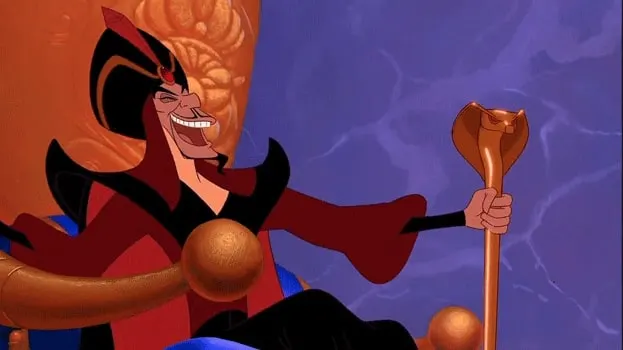
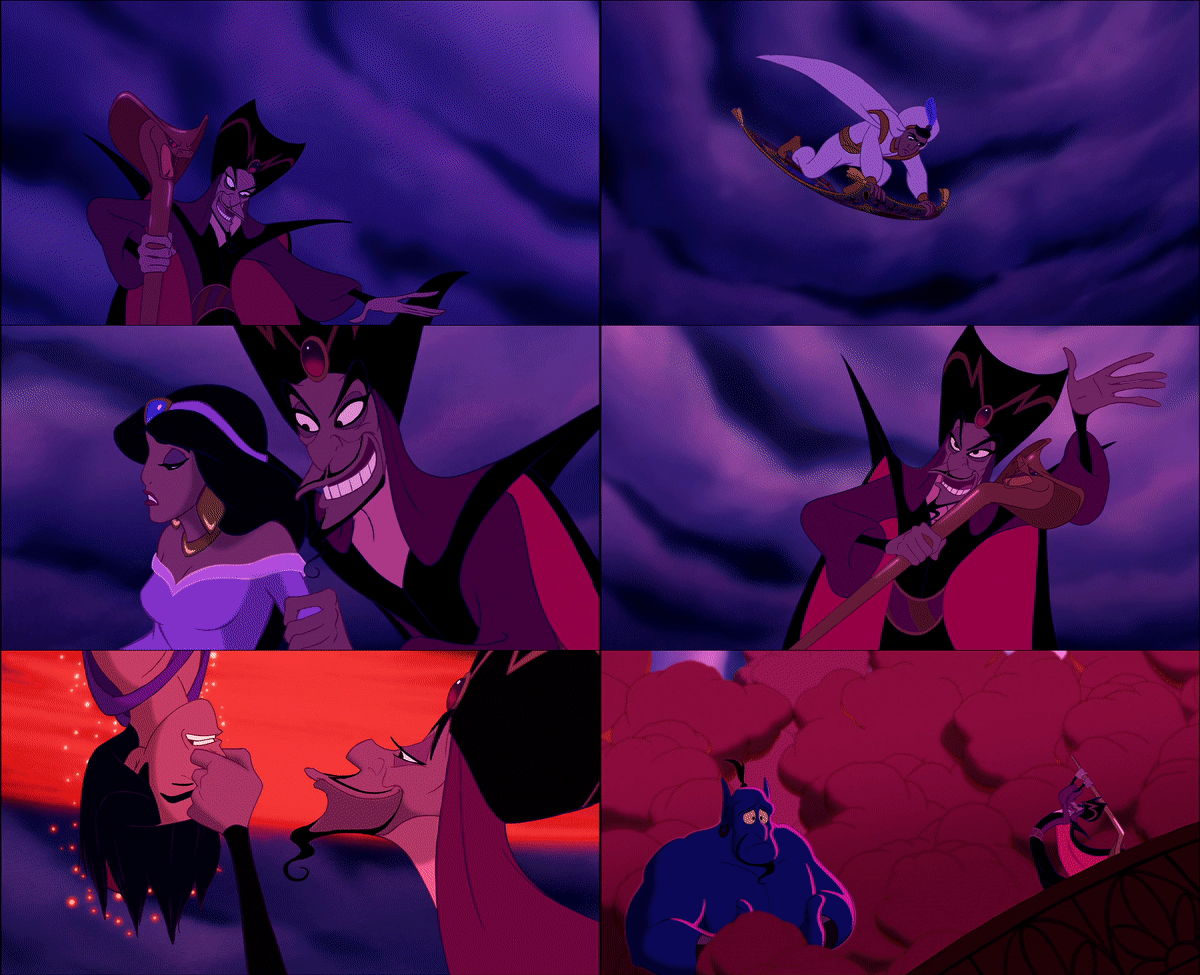
Before Jafar takes over Agrabah, fights Aladdin, and turns into a wildly powerful genie of darkness, his staff is nothing short of memorable. The moment he dials in on Jasmine’s father, the Sultan, with those jeweled snake eyes and turns a once-proud man into his personal flying monkey, there’s no forgetting his staff!
Seriously. If you saw a costume-less person on Halloween holding a snake scepter, we’re willing to bet you’d think: “Huh, where’s the rest of their Jafar getup?” Trust us, it’s true.
But let’s ask the real questions here: does Jafar use his own magic? Does the staff have power itself? Is he a magician because he found the staff, like Aladdin found the lamp? Is Jafar, at heart, just another street rat dreaming of becoming a prince, who took a wrong turn toward the dark side? Is his mother named Martha?
If you haven’t seen “Rise of the Guardians,” we recommend it!
Jack Frost, the main character, teams up with Earth’s guardians, the Avengers! Wait, no, he joins holiday heroes like Santa, the Tooth Fairy, Easter Bunny, and Sandman. Together, they battle Pitch, the veritable lord of nightmares.
But forget all that for now. Look at Jack’s staff!
It is shaped like an avant-garde shepherd’s crook and made of either a gnarled branch or a bunch of brown paper towels wrapped around PVC pipe. This staff creates ice and cold when used by Jack Frost. Generally, he just brings winter to Earth, but when children are in danger of Pitch’s nightmare-scape, he’ll essentially become Frozone from “The Incredibles.”
We’re pretty sure Jack Frost’s staff isn’t the source of his true power, because he became a guardian after saving his brother from ice. THEN he gained frost magic, so it was inside him all along! Isn’t that nice?
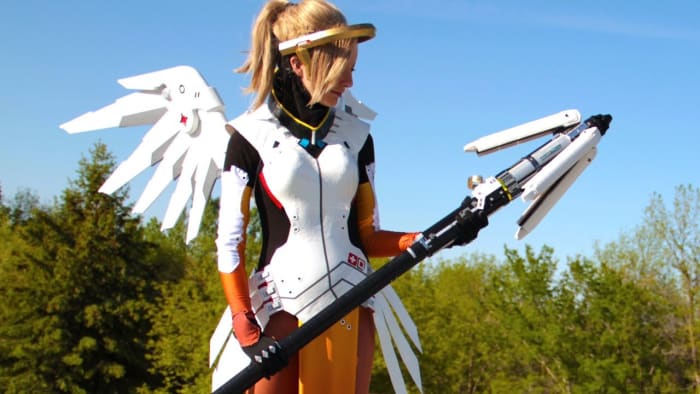
8. Mercy’s Staff (Caduceus)
Source: ZaziNombies Lego Creations
In the picture above, the cosplay staff was made entirely of Legos.
Now, about the staff: anyone who’s played Overwatch knows the importance of healers. No healer is better known than the techno-angelic Mercy, who uses her staff to heal teammates while they fight. We aren’t exaggerating when we say a good medic makes the difference between life and death, victory and defeat.
Wouldn’t it be great if your teammates didn’t also verbally abuse you while playing healer? That would be awesome.
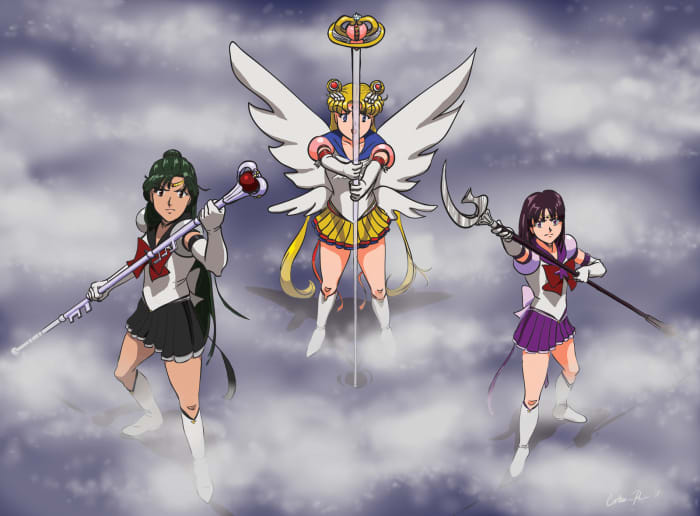
If so, you’ve probably seen the Sailor Moon girls. And if you’ve seen the Sailor Moon girls, you’ve probably seen their awesome staffs!
Each one of the Sailors has their own staff, but Sailor Moon herself wields the Moon Stick. The Moon Stick allows Sailor Moon’s alter ego to transform into Sailor Moon. It also allows her to launch attacks such as the Moon Healing Escalation Attack.
If you haven’t seen “Sailor Moon,” do yourself a favor and check it out on Crunchyroll.
Never forget, in the original animated film, this staff performed some of the most exciting and versatile feats of magical power ever to be seen in a Disney movie.
5. Shazam’s Staff
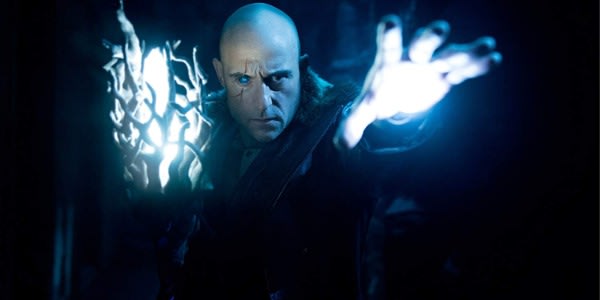
The recent release of Shazam contained what we believe to be a seriously underrated staff! Simply by touching it and saying the wizard “Shazam”s name, orphan Billy Batson turns into a superhero!
While the staff doesn’t actually produce ice, control minds, or open portals like you’d expect from something on this list, it’s still awesome. We believe the ability to turn anyone into a super-strong, lightning-powered hero who can fly gives it a firm bid for Number 5, at least.
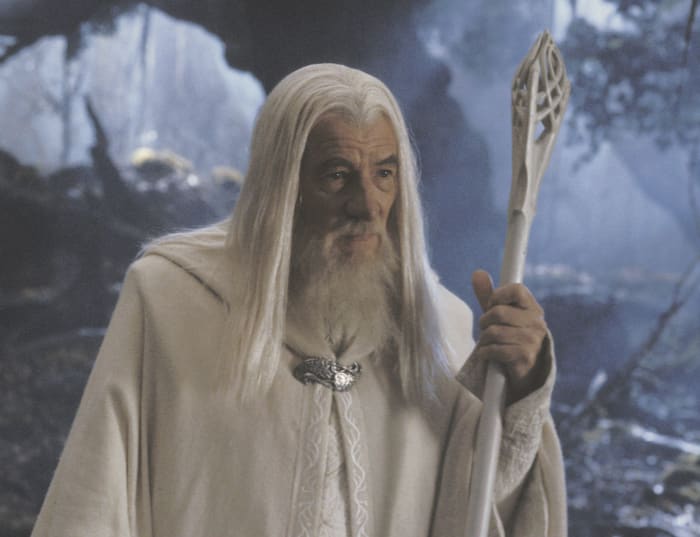
Few character introductions hold a candle to that of Gandalf the White. He appears in a flash of glory and uses pure magical energy to swat aside Legolas’s arrow and Gimli’s ax. When the radiance dies down, you see him fully, in new duds holding a beautiful white staff.
It’s his final form: the original convoluted staff became a shiny, pale piece of artistically intertwined branches. When put to its full use, Gandalf can personally ward off an entire flock of Nazgul.
Even when used without magic, it still can knock orcs over the head with ease. This staff does a whole lot, and looks good doing it! It’s equally as awesome in the old EA “Return of the King” game.
3. Loki’s “Sceptre”
C’mon, people. It’s Marvel.
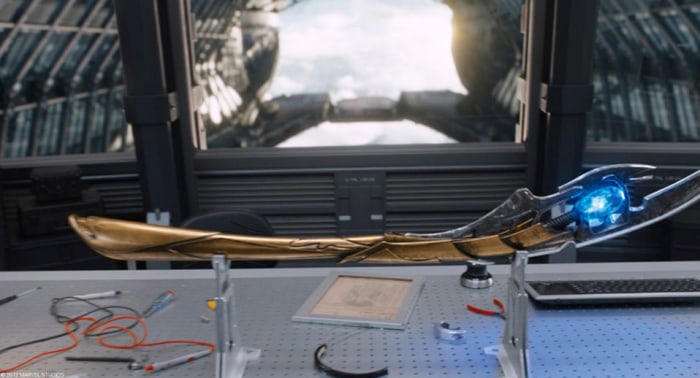
The scepter was first seen in “The Avengers,” and came back in “Avengers: Age of Ultron” where it helped create Vision. It also helped give Scarlet Witch and Quicksilver their powers.
The staff shoots blue bolts of energy. It uses the power of the Mind Stone. It can control people with just a touch. The pointy end can skewer agents named Coulson. The blunt end can briefly bonk Captain America in the head before he shouts “not today” and spin-kicks you in your shiny, helmeted head.
Alright, that got silly but you got the point: it’s awesome!
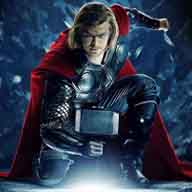
Although you might not be able to wield Thor’s hammer, Loki’s scepter can be just the tool you need to plan your own alien invasion.
There may never be another game like Skyrim. Our fingers are crossed so hard for Elder Scrolls 6, we can’t even tell you.
In Skyrim, there were many staffs. Dragon priest staffs shot elemental energy, Magelight staffs performed great alteration spells. Conjuration staffs like the Sanguine Rose brought Dremoras from the planes of Oblivion. Yet, despite all of that…
No. Other. Staff. Can. Turn. Someone. Into. A. Sweet Roll.
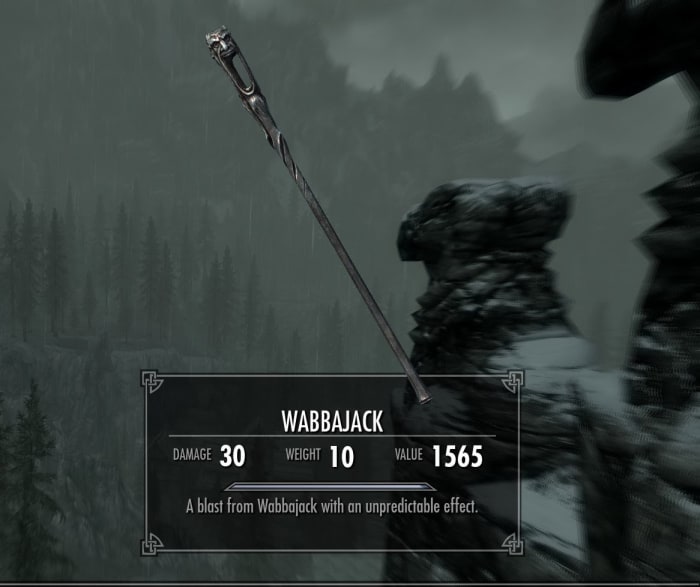
Wabbajack is the Daedric artifact of Sheogorath, the Daedric prince of madness. When using it on an enemy or an NPC or chicken that looked at you funny, it will have a completely random effect on them.
Maybe it will turn them into a bunny who scampers off in fear. Maybe it will make them explode in a blur of lightning. The Wabbajack essentially throws its target into a lottery where anything can happen to it.
It will forever live on in our hearts as one of the most wildly, delightfully unpredictable weapons in video game history.
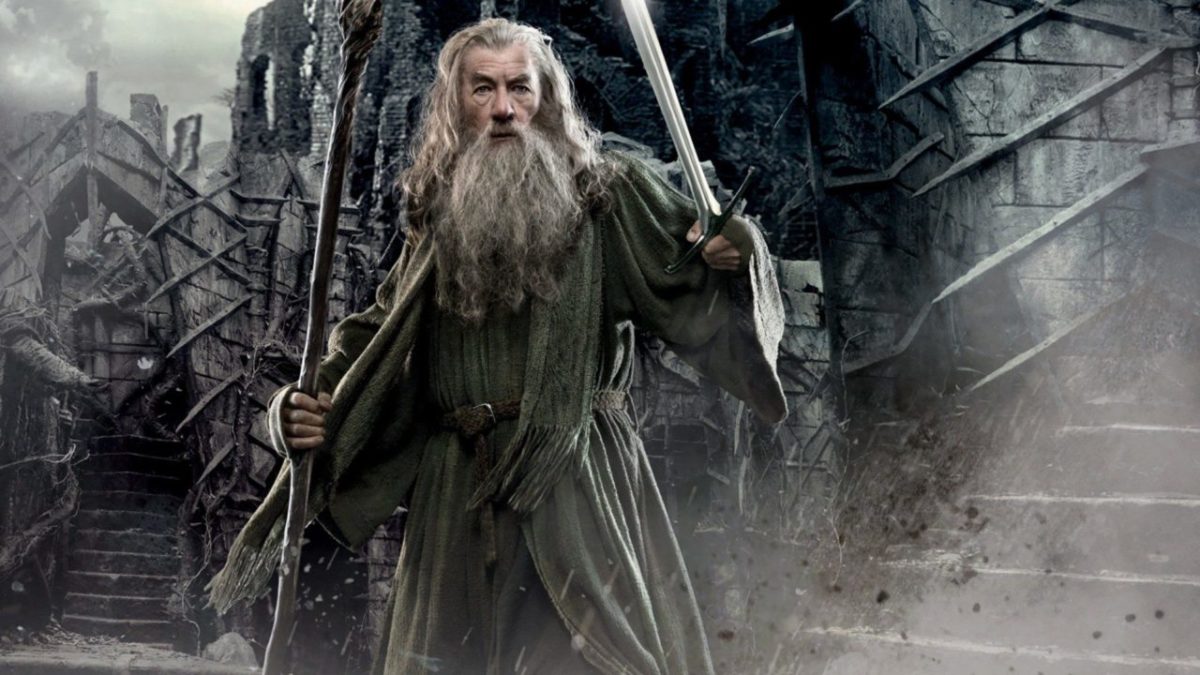
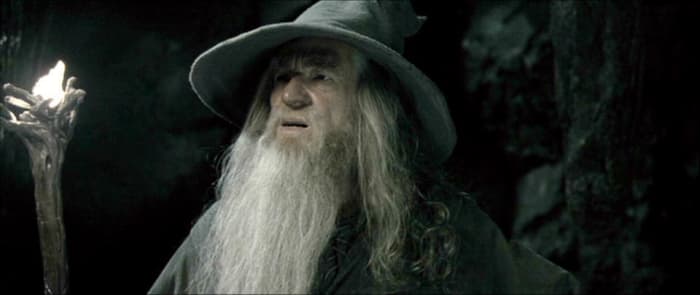
Though frankly, every line that comes out of Gandalf’s mouth sounds a little mystic and exciting, in no small part thanks to the acting prowess of Ian McKellan.
According to the novels, generally, Gandalf uses it to channel his own magic. In the movie, this can be seen when he illuminates the Mines of Moria and fights the Balrog. In the books, we particularly enjoyed when the fellowship was stuck in a tree and Gandalf pretty much burned the forest down to ensure their escape. That was intense!
Aside from Loki’s sceptre, this can be considered the most popular and widely known staff in pop culture. Gandalf the White’s never captured the universal charm and simplistic beauty of this one, with its white crystal held in the twisted branches.
Conclusion
Eat your heart out, swords.
These staffs go to show that your typical weapon might not be the most effective. Though you shouldn’t bring a knife to a gun fight, bringing a staff to a Nazgul fight might be in your best interest.
If we missed anything you wanted to see, let us know about it in the comment section below.
Here’s our wish list for a stellar Elder Scrolls VI.
Released in 2011, The Elder Scrolls V: Skyrim was one of the most iconic and popular games of the last console generation. The game rekindled interest in massive, open world AAA RPGs and was considered one of the most immersive and technically impressive games ever released. After receiving countless “game of the year” awards, millions of sales, ports to every modern system, and thousands of mods, Skyrim has cemented its place in gaming history.
Now, nearly 10 years after Skyrim’s release, Bethesda has revealed that The Elder Scrolls 6 is in development. The game is likely many years from release and the lofty goal of surpassing Skyrim is looming over the developers’ heads. Here are a few ways The Elder Scrolls 6 can improve upon the solid framework laid out by Skyrim.
5 biggest ways Elder Scrolls 6 can improve over Skyrim
5. Have a unique setting
One of the biggest strengths Skyrim had versus other games in the series was its distinct setting. The snowy landscapes of Skyrim and its uniquely Viking architecture helped the game’s setting stand out against the more generic high-fantasy, Tolkien-esque settings of Oblivion and Daggerfall. TES 6 needs to have a similarly distinctive setting.
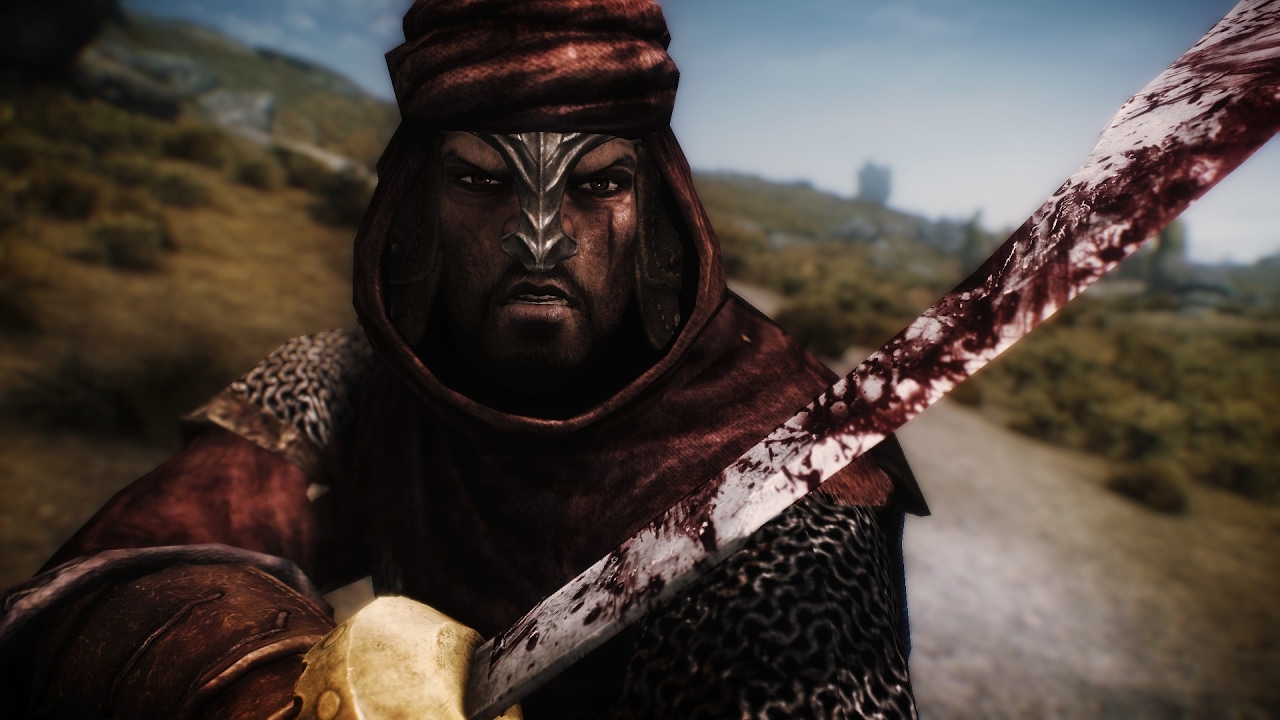
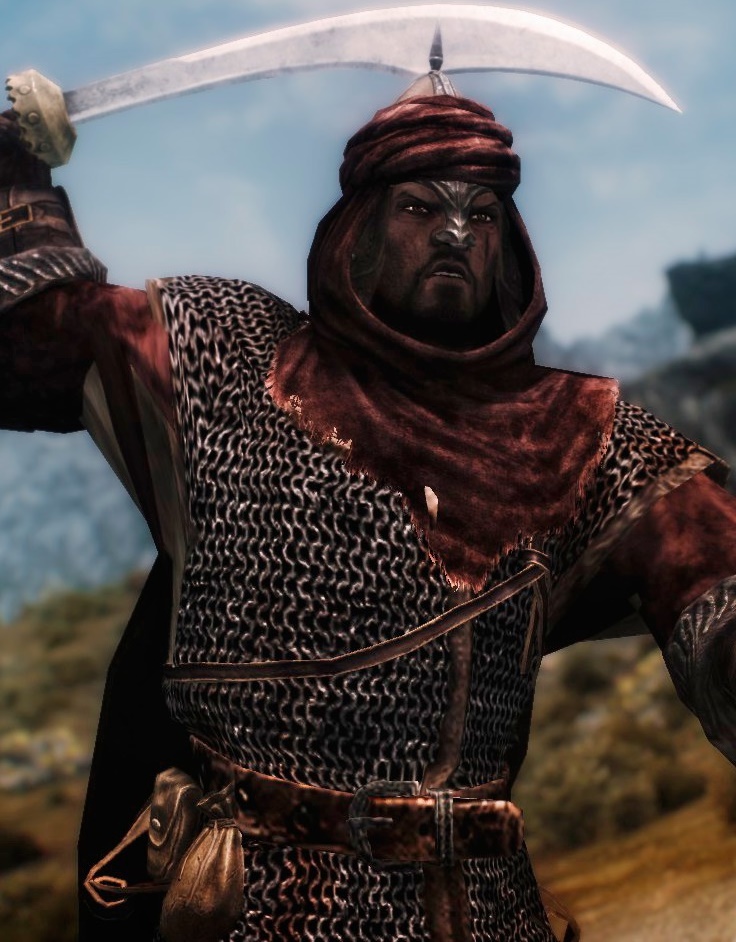
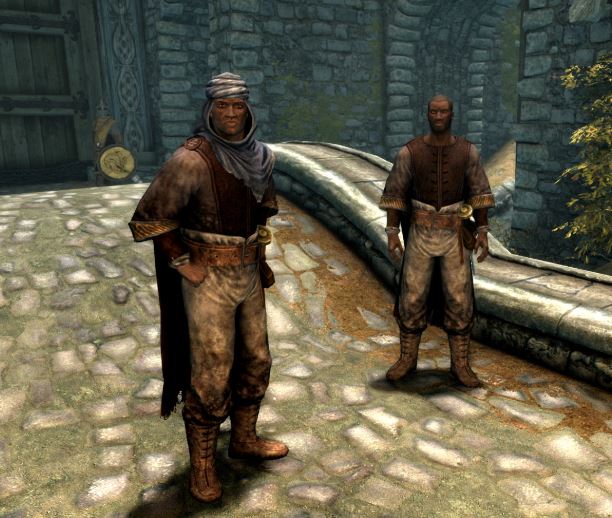
One of the most highly requested settings is Hammerfell, a desert region that borders Skyrim. The area is home to the Redguards, an adventurous and nomadic race of humans who often work as mercenaries, sailors, and adventurers. Hammerfell itself is made up of massive port cities that contradict the deserts that make up most of the region.
The region also features massive abandoned Dwemer cities; advanced mechanical cities filled with gigantic gears and other machinations. The setting’s architecture is based on real-life ancient Arabian and African aesthetics, which would provide a fresh change of scenery for the series.
To stand out, The Elder Scrolls 6 needs to continue to stray from high fantasy and more towards surreal and unique settings not found in any other fantasy game.
One of the most consistent complaints of the Elder Scrolls series is its flimsy combat. Fights often feel like simple button mashing, and when attacks connect there is no sense of power or weight. While Skyrim featured the best combat in the series so far, it was still incredibly simple and repetitive.
The combat system needs a complete rehaul in TES 6. First and foremost, keep the real-combat of Skyrim and Oblivion, and do not include Morrowind’s dice rolls. Visibly hitting an enemy with your sword and then rolling a miss was incredibly frustrating and immersion breaking.
Second, increase the number of available moves in combat. Allow for feints, thrusts, and parries, in addition to the normal and power attacks. A well-timed shield or two-handed weapon block should do more than just prevent you from taking damage, it should open an opportunity for you to strike back.
Third, adding more options on how or if to fight can improve the roleplaying experience. Give players an option to knock enemies out or restrain them instead of killing them. Conversely, giving the ability to enact brutal executions on command can help immerse players in their bloodthirsty character.
Beyond this, improved hit detection, more detailed animations, and more gruesome sound design can all help combat from feeling floaty and week. By featuring an advanced combat system, TES 6 can avoid one of the series’ most common complaints.
In Skyrim, the way that the player interacted with the game’s various guilds was nonsensical. Not only did every guild make the player the leader too easily, but the player could serve as the leader of every single guild in Skyrim at the same time. It was unrealistic (in the context of a fantasy game) that somebody could serve as the brutal warrior leader of the Companions while also serving as the shadowy leader of the Dark Brotherhood and so on. Forcing the player into only joining one or two guilds (with the ability to only become the leader of one) would help force the player into creating a more distinct story for themselves.
It was also far too easy to advance through the ranks of a guild in Skyrim. To become head of the College of Winterhold (Mage’s Guild), the player technically only needs to know a handful of spells. Instead, the player should have to repeatedly demonstrate their magical aptitude with a wide variety of difficult spells. The fact that any old warrior with basic flame and ice spells could become the leader of the most powerful faction of mages in Skyrim was absurd. Rising through the ranks of a guild should be a matter of aptitude, networking, and shrewd inner politics.
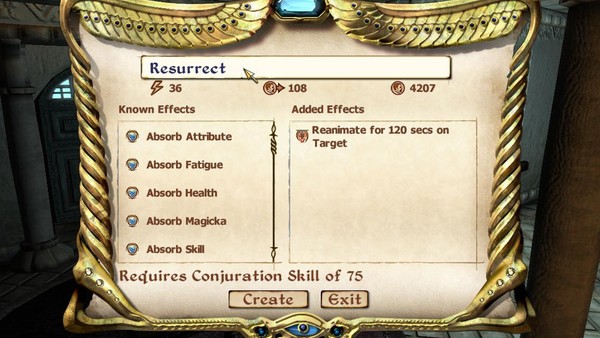
One of the most missed features in Skyrim was the ability to craft your own spells. The spellcrafting system featured in Oblivion gave the players a ton of freedom to be creative, allowing them to assign various properties to their spells like range, self/touch/on target/, area of effect, buffs and debuffs, and various elements. Depending on the player’s magical abilities, these spells would be weaker or stronger or be easier or more difficult to cast.
Players found plenty of interesting ways to craft spells, such as combining invisibility with the Frenzy effect, which would cause enemies to kill each other while the player remains safely hidden. Bringing back this highly requested feature would go a long way in making longtime fans happy.
1. Use a new engine
It’s finally time to address the elephant in the room: Bethesda’s Creation Engine, used in Skyrim, Fallout 4, and Fallout 76, has become outdated. Here are a few ways the Creation Engine limits the game designer’s ability for player interaction with the environment:
3D objects can’t interact well with the environment, which prevents contextual environmental actions like vaulting over a ledge of climbing a ladder.
Physics and game speed are tied to FPS, which could cause the game to become unplayable on certain hardware or settings
Interiors and exteriors are completely separated by loading screens. Other games like Breath of the Wild and The Witcher 3 have already achieved seamless transitions between interiors and exteriors
For as good as the Creation Engine is in creating a world that interacts with itself (with NPC schedules, Radiant Quests, etc), the engine is in dire need of a retooling or an overhaul. Unfortunately, since the code dates back to the ’90s, a retrofitting may be out of the question, and a new engine is needed entirely.
What would you like to see in the next Elder Scrolls? Let us know!
It’s not hard to switch your Skyrim soundtrack. Here’s how!
Jeremy Soule made some of the best music to ever grace an open-world RPG when he composed the soundtrack for Elder Scrolls V: Skyrim. After nine years and hundreds of in-game hours, however, even the greatest soundtrack can get a little stale. Now there’s a way to add your own tracks to the game – tracks that follow the same rules for trigger events as Soule’s original music.
The best thing about it?
The process is very easy and requires zero coding knowledge. In fact, you don’t even need to use the Creation Kit. Here’s how to do it in 5 easy steps:
The Elder Scrolls V: Skyrim Special EditionFree Download
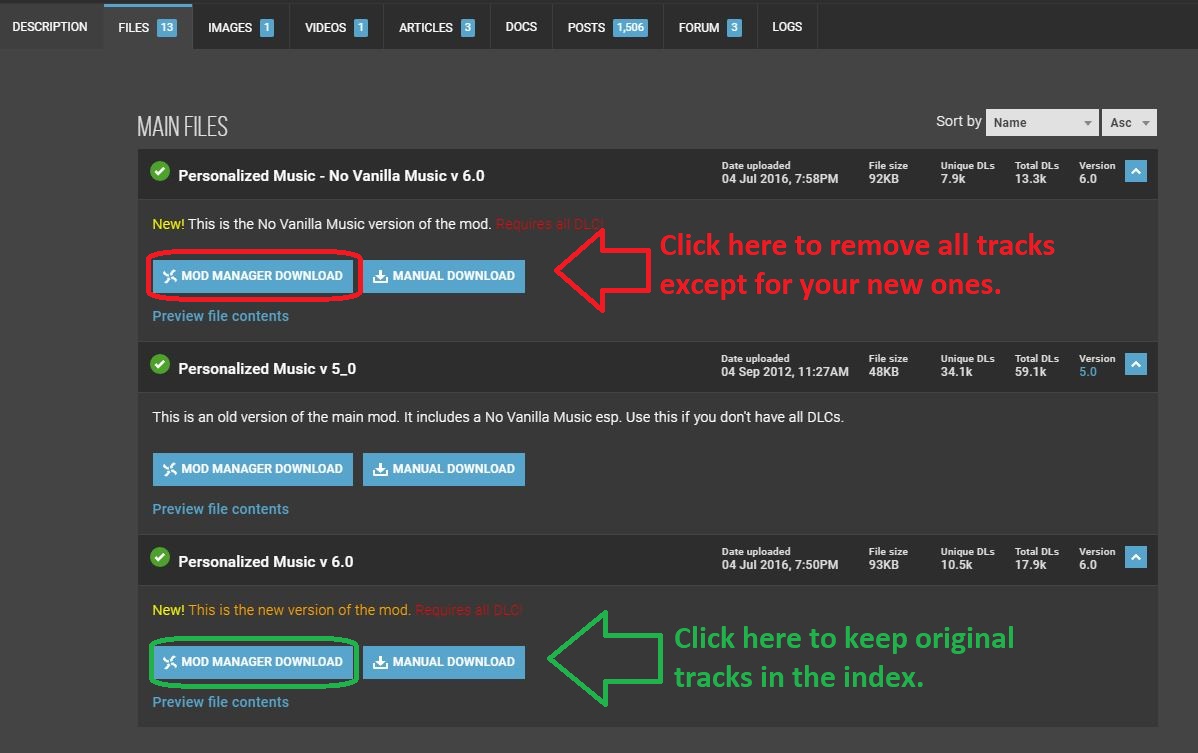
No_Aardvarks_Allowed created this Personalized Music mod for Skyrim back in March 2012 and was still treating it with updates four years later. This top-notch work is available both for the original version of Skyrim and for Skyrim: Special Edition which came out in October 2016.
This mod is the crux of the process, so it’s a good thing that, as with all Skyrim mods, it’s 100% free to download. As such, we encourage you to support and sponsor No_Aardvarks_Allowed for his hard work making Skyrim an even more unique experience for you. We also recommend installing Nexus Mod Manager to make the download process as streamlined as possible.
There’s also an option to download this mod while simultaneously removing all the default music from Skyrim. Click the first file on the page if this is your preference.
Choose whether you want the original Skyrim tracks to remain in rotation.
2. Download this program to convert your music files
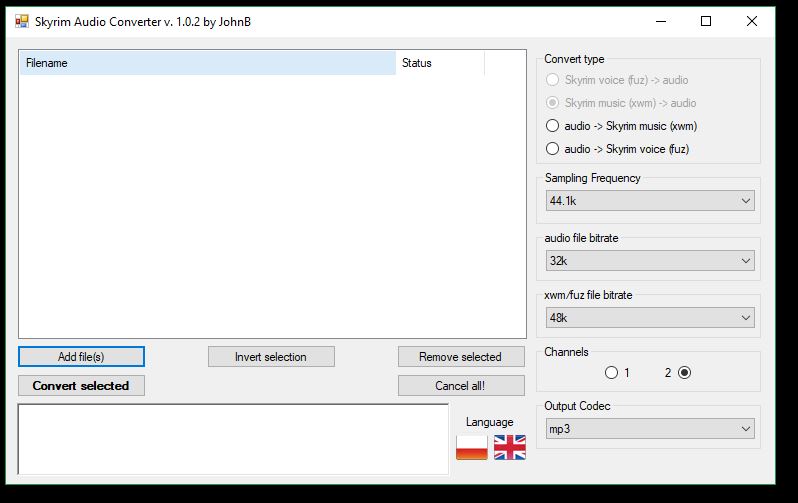
Skyrim only recognizes audio files with a .xwm extension. This handy mod created by JohnBSkyrim is a lightweight package that’s easily installed and easier still to use. Grab it here, unzip the file using your favorite extractor and run the super quick install.
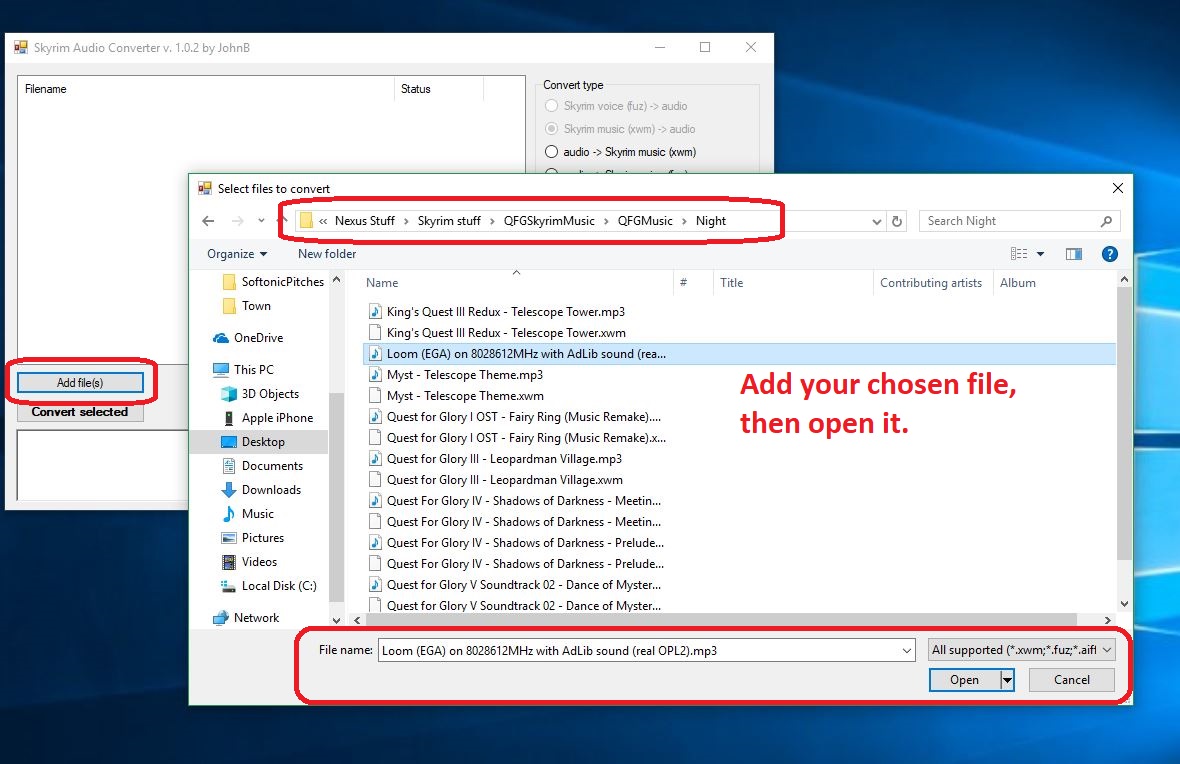
Once you have your audio file (whether it’s .mp3 or .wav doesn’t matter), open the Skyrim Audio Converter program that you just downloaded in the previous step. You might also want to copy the path where your audio track is so that you can easily paste it; Skyrim Audio Converter is going to ask for that path in just a sec. Click ‘Add file‘ and paste in that path. Then select the audio file you want the program to convert.
Click ‘Add file,’ locate it, then open it.
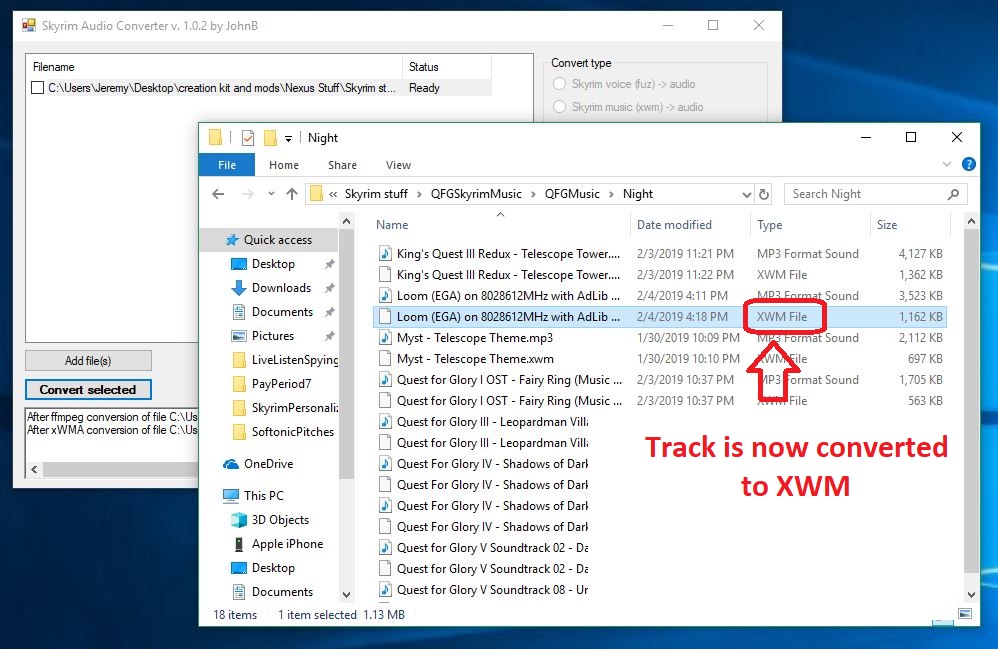
Click ‘Convert selected‘ and the audio file will convert (should take about 2-3 seconds) and magically appear in the same folder where the original audio file, now with a shiny new .xwm extension.
Now the audio file can be recognized by Skyrim’s engine.
4. Place the .xwm file in your chosen folder
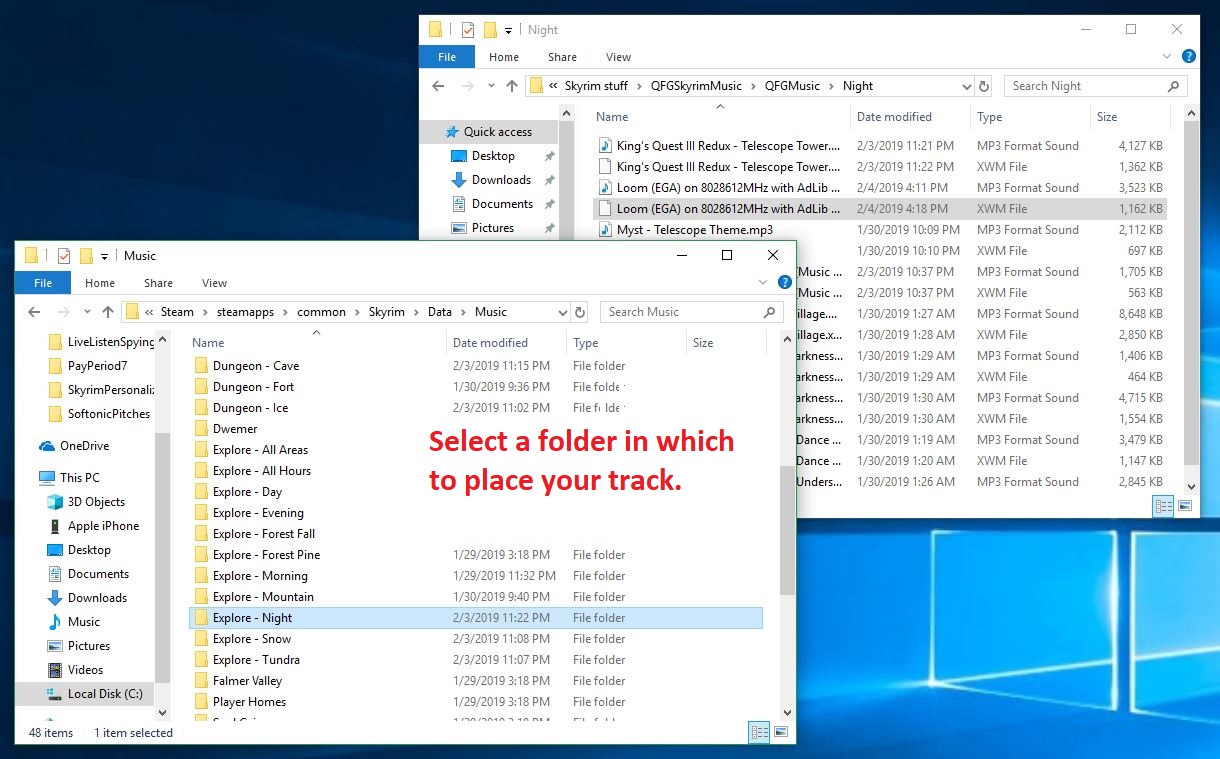
Now all you have to do is put that soundtrack file in the folder of your choice. The options are laid out in front of you right here. Just paste this path into your File Explorer:
C:\Program Files (x86)\Steam\steamapps\common\Skyrim Special Edition\Data\Music
Want it to play during combat? Maybe in an icy cave? In the Soul Cairn? There’s a folder for pretty much every event trigger, so the choice is yours. Check here for a description of when each folder will play. Simply open the folder and paste your newly-converted audio file right inside. Most folders can hold 20+ tracks so there’s tons of space for you to add as many tracks as you like!
Drop the xwm file into whichever folder you like; each folder is a trigger event in-game.
5. Re-name the audio file
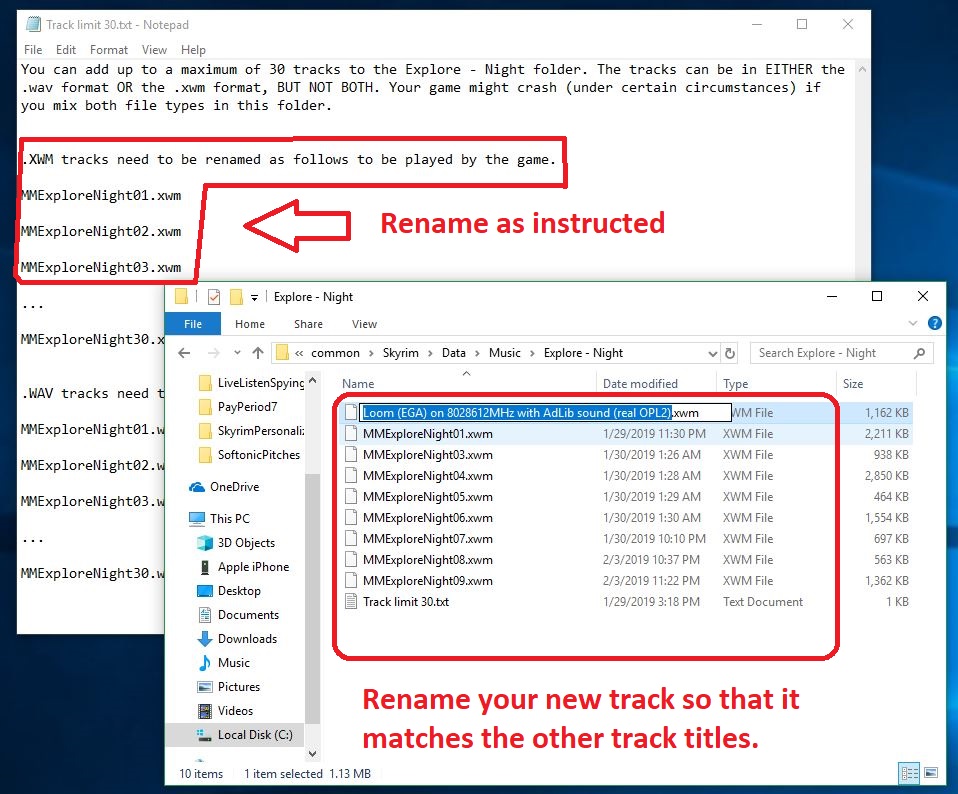
The last step of the process is the easiest. Inside the folder that you chose in the previous step is a .txt file that explains how you need to re-name your new .xwm file so that Skyrim can read it. The names usually start with ‘MM’ and end up being pretty intuitive, such as ‘MMCombatAll03.’
Select the file and press F2 to rename it as the embedded .txt instructs.
After that, boot up the game and test to see if it works! If you’ve followed our above steps carefully, you should now be able to roam the snowy landscape of Skyrim and slay dragons to the beat of your favorite music! Comment below with your favorite choice for custom battle music, and stay tuned for more great Skyrim mods.
What separates a great open world game from a bad one?
Many see open world games as the be-all-end-all genre of gaming, and it’s easy to see why. It seems that gamers and game developers alike consider a massive, immersive open world as the pinnacle of game design. Being able to go anywhere and do anything was a driving promise of the early 3D era, and within the last ten years or so the technology to realize this promise finally became available. Open world games like Grand Theft Auto V, The Legend of Zelda: Breath of the Wild, Minecraft, and Red Dead Redemption 2 are among the best-reviewed games of all time, and the open world genre shows no signs of slowing down.
Where shooters were the prevailing genre of the early-2000’s, open world games are the hottest genre of the current decade. Not every open world game can be a masterpiece, however. For every Skyrim, there are dozens of boring copy-pasted open worlds that impress with their size but let down with their gameplay. To show where these games come short, we came up with some of the most important elements of making a fun and immersive open world.
What separates the best open world games from the competition?
Don’t gate off the world
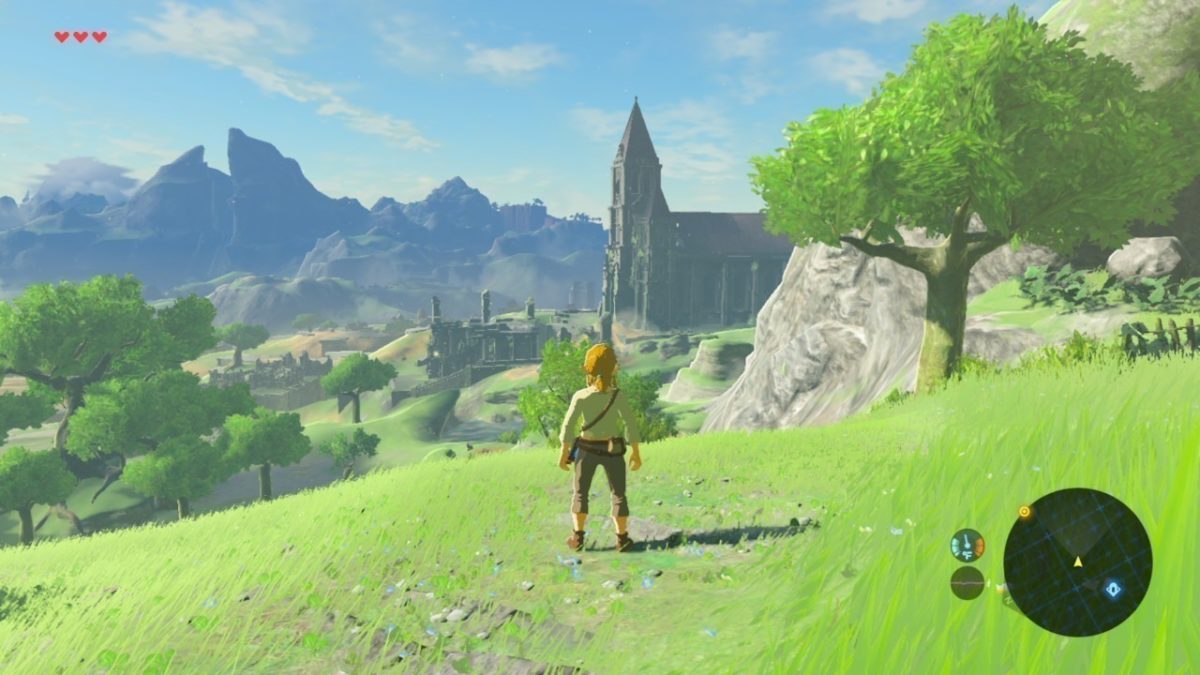
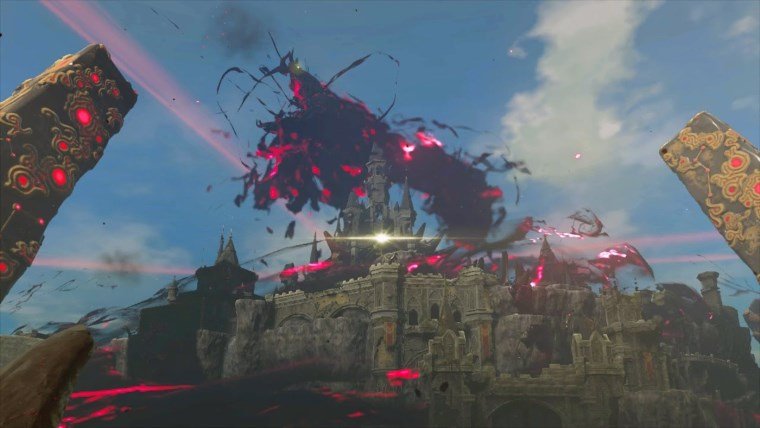
In Breath of the Wild, you can head off to fight the final boss Ganon right away. You’ll get your ass kicked, but the point is you can try.
Let’s start with the basics. The most appealing basic description of an open world game is the ability to go anywhere and do anything. With this in mind, why do so many developers gate off their massive worlds? By not allowing players to enter certain places, game developers are imposing linearity onto them. Linearity is the arch-enemy of open world game design. In well-designed open world games, the entire world should be explorable from the beginning. A perfect example of a freeform open world would be the one featured in The Legend of Zelda: Breath of the Wild.
In Breath of the Wild, the player gets every major tool they need in the very beginning. Armed with their hang glider and Sheikah Slate (which grants access to several world-altering abilities), the player can now freely access any point on the entire map. This is not to say that the map is easy to explore, however. The player must carefully prepare for the various areas of the map, such as wearing warm clothing and cooking hot food before exploring a snowy mountain.
In Breath of the Wild, exploration isn’t limited by having special items or filling out a skill tree, it’s limited by the player’s knowledge of the world and its mechanics. By giving players every major tool they’ll need at the beginning, the game encourages players to get creative within the game’s sandbox in order to explore every inch of the world. A balance must be struck where players are able to access every part of the world, but the difficulty of navigating new areas must depend on the player’s creativity.
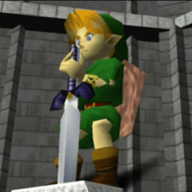
The Legend of Zelda: Ocarina of Time turns 20. Here’s how it changed gaming forever
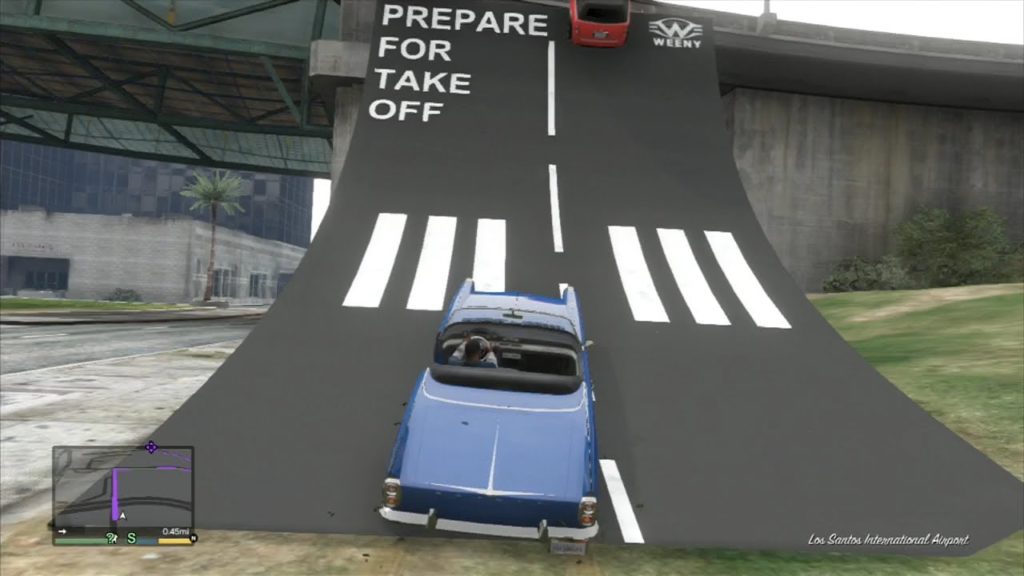
This ramp in GTA V is more fun than some full games
While some use the terms “open world” and “sandbox” interchangeably, they aren’t quite the same thing. Games with sandbox designs have the player creating some of their own fun by experimenting deeply with the world and the systems at play. For example, the chemistry engine of Breath of the Wild allows players to light grass on fire, causing an updraft and allowing players to fly and get to hard to reach areas. Not all successful open world games have sandbox elements (Skyrim notably doesn’t really feature any deep sandbox systems to play around with, and relies more on the strength of its writing and worldbuilding), but sandbox elements can add a much-needed sense of depth and replayability.
Perhaps the best example of sandbox open world design is the Grand Theft Auto series. The highly detailed physics system of modern GTA games makes simple objects like ramps a lot of fun to play around with. You can use ramps to try and get on top of tall buildings, fly as far as you can in a sports car, or do flips and tricks on a motorbike. While these actions don’t grant any sort of reward to the player, the ability to do all kinds of fun things with a simple ramp demonstrates that sandbox systems allow players to personalize their experience and create their own fun.
The best-designed sandbox systems allow the player to create an infinite amount of gameplay scenarios with simple, easy to understand game mechanics and interactions.
Leaked video shows new open world Harry Potter game
Just Cause’s gadgets make navigating the world one of the most fun parts of the game
As technology has improved, open worlds have gotten bigger and bigger. In poorly designed open world games, the world is not filled with enough things to do, making traveling from place to place tedious and uninteresting. To get around this, most open world games incorporate fast travel, allowing the player to instantly teleport to specific locations. The problem with fast travel is that players will miss content by skipping around the world, as a lot of the fun of open world games is encountering small events or quests as you travel from one major location to another.
The solution to both problems is to make traveling the world a fun experience in itself. Several games have engaging movement systems that make traveling fun, including Spider-Man’s web swinging and Breath of the Wild’s hang glider, but the shining example of open world movement is the Just Cause series.
In the Just Cause series, you have two major tools to get around the island: the grappling hook and the wingsuit. The grappling hook allows you to quickly attach to any object, quickly pulling you towards it. You can press the jump button at any time to let go of the hook and fly forward, conserving your momentum and allowing you to quickly and precisely fly through the air. Your wingsuit allows you to take this momentum and use it to fly, allowing the player to soar through the air and make quick evasive maneuvers like barrel rolls. By combining these two actions, players have a huge amount of freedom in how they want to fly through the air towards their next objective.
These movement systems are easy to pick up but difficult to master, allowing skilled players to chain together death-defying stunts. With a movement system like this, you’ll never want to use fast travel, and all open world games should strive towards making their world fun to travel.
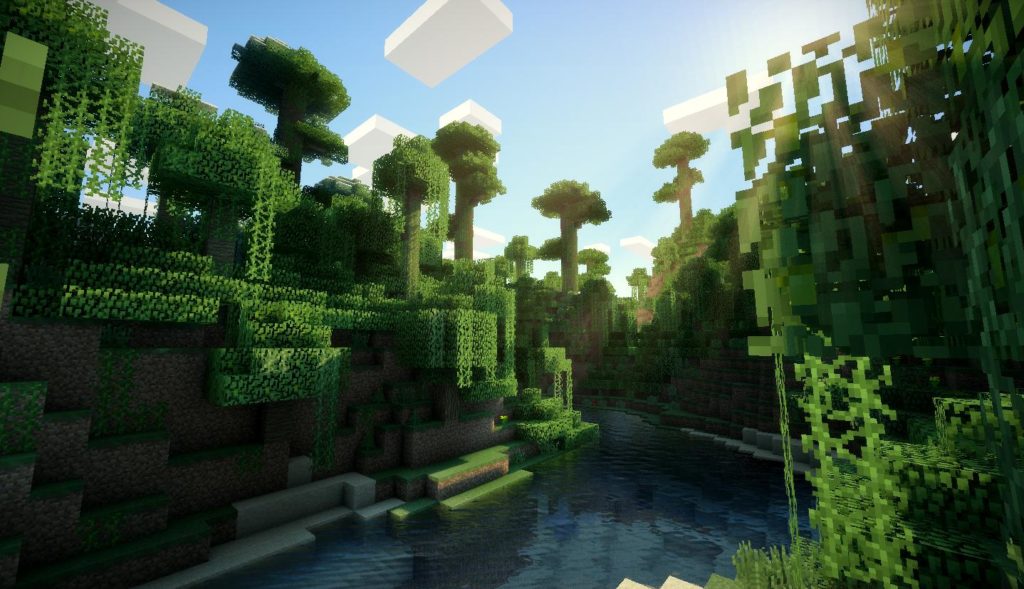
Minecraft does a great job of creating a sense of discovery
In poorly designed open world games, your map is filled with an endless number of icons, missions, and objectives. Giving the player all of these objectives discourages exploration and can make the player feel like they’re playing the game wrong for avoiding them. Waypoints and guidance are fine, but they must be obtained naturally, such as by talking to an NPC or finding a clue. It is fine for the game to have objectives, but the player shouldn’t feel pigeonholed into only completing objectives. Exploration and discovery is the core of the open world genre, and the best open world games encourage players to explore the world how they want.
Minecraft is a unique game in that it does not have any defined objectives. Instead, the player is just dropped into a randomly generated world and it’s up to them to figure out where they want to go and what they want to do. Since the world is randomly generated, there will always be new places to explore no matter how many times you start a new save. As the player gathers tools and resources, they’re able to explore farther and farther from their base. This combination of exploration and progression is a hallmark of the open world genre, and similarly free-flowing games like Breath of the Wild have clearly taken inspiration. The appeal of Minecraft’s survival mode is the ability to tell your own story by adventuring through a world in your own unique way for your own unique reasons. You don’t need a million objectives and scripted moments to make an immersive open world, you need a world that creates a sense of discovery that makes it worth exploring.
What are your favorite open world games? Any other suggestions? Let us know!
Curious which race to play in Skyrim? Follow our complete guide to make your choice.
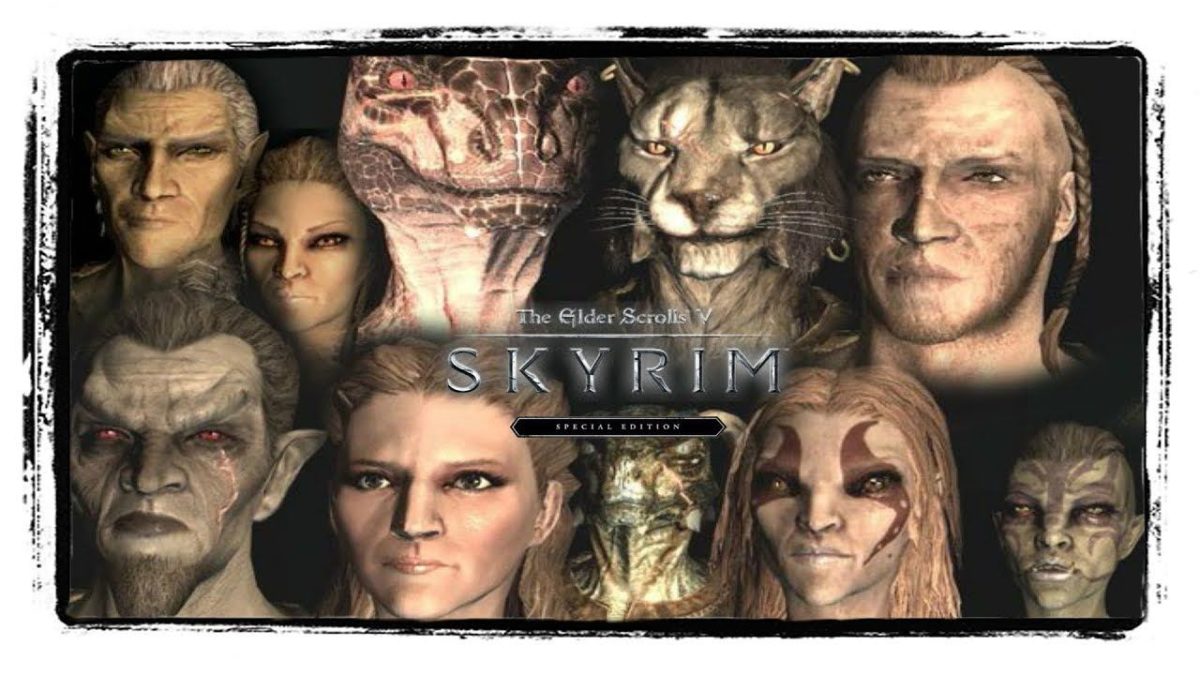
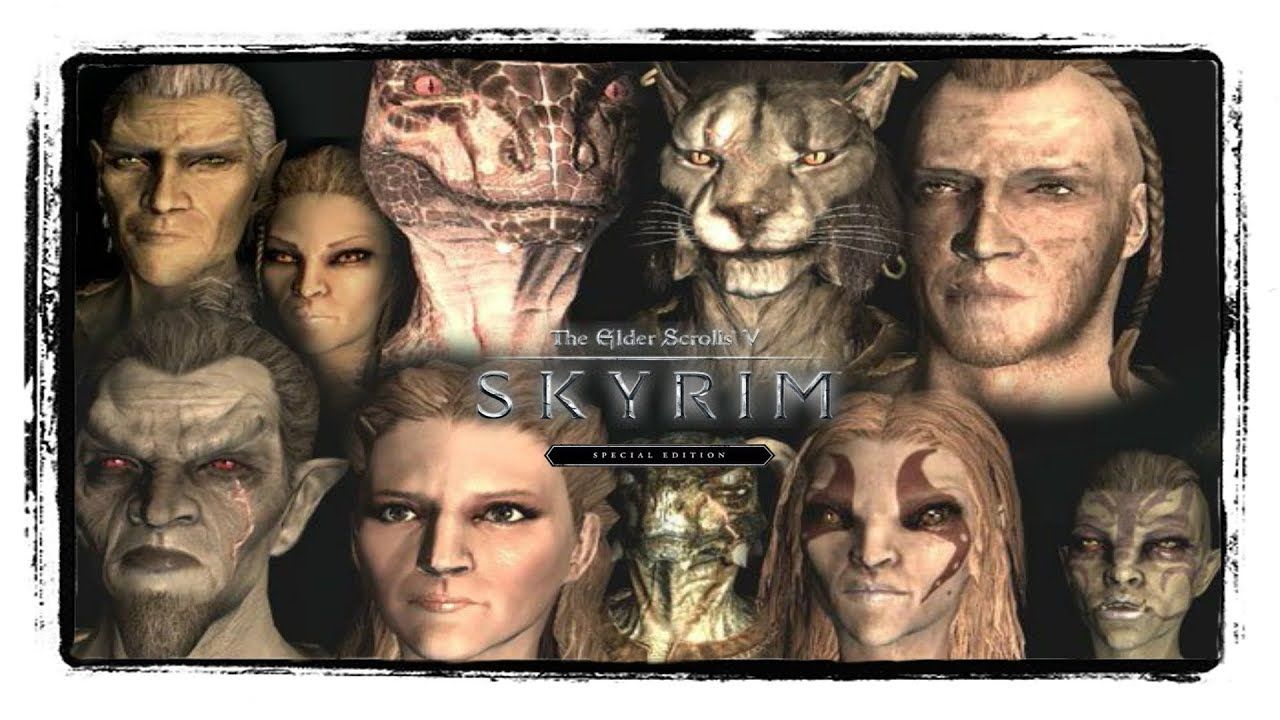
‘Skyrim belongs to the Nords,’ but it’s also home to nine other races, each with their own unique appearance, start-game bonuses, passive abilities, and powers. There are brutal Orcs, silver-tongued Imperials, High Elves brimming with latent magicka talent, and agile khajiit who can see in the dark and slash at opponents with their sharp claws. To add even further to Skyrim’s character set-up, there are also 12 standing stones that instantly offer (provided you can find them) another permanent unique ability: Extra carry weight, faster-leveling thief abilities, unlocking doors instantly, paralyzing your foes, or even resurrecting the dead. Couple these 12 stones with the 10 different races and you’ve already got 120 permutations from basically the start of the game.
If the hardest part of Skyrim for you is that moment at the start of the game where you get to customize your character’s appearance, this guide is most definitely for you.
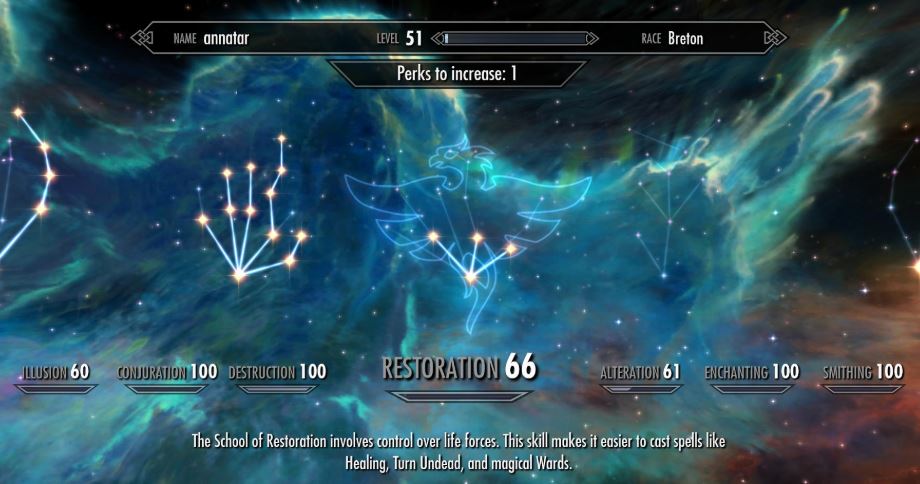
The leveling mechanic for Elder Scrolls V works like this: When you perform a skill, it increases in rank (ie casting Flames will soon level up your Destruction tree. This will not give you any new abilities or perks in Destruction. Instead what happens is that each time a skill goes up, you’ll get a tiny bit closer to another overall level for your character. Each time your character goes up a level, then you’ll get that extra perk point to be spent on whatever tree you like, as well as your choice to boost your character’s overall health, magicka, or stamina.
Having 66 in Restoration doesn’t give you perks. It just means you’re eligible to choose them.
So you could cast Destruction magic all day and get a crazy high score in that tree, but without allocating perk points to Destruction, you’d never see any improvement in the skill. So what’s to stop players from swinging around a sword all day and putting all the perk points from leveling up into a totally different tree like Pickpocketing? The answer is this: Most perks in any given skill tree are locked until you have a sufficiently high level in that specific tree. If you never actually pickpocket you won’t have access to higher-tier pickpocketing skills, no matter how many perk points you have to spend; you’ll only be able to put those perk points into skill trees where you meet the prerequisite.
Why starting boosts can be a bad thing
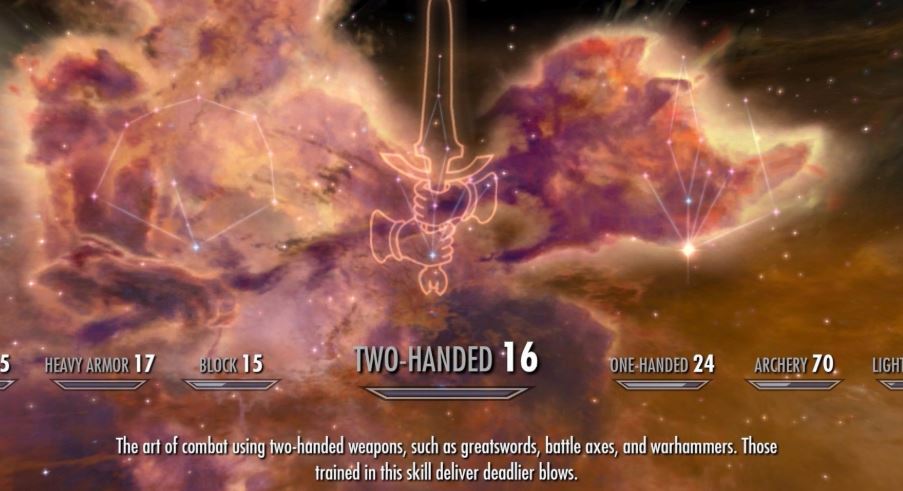
This brings us to the good and the bad of going for those ‘race-based skill boosts’ you receive at the start of the game: On the plus side if you play a Nord and begin the game with a boosted 25 in Two-handed you’ll already have access to the first rank of Barbarian (+20% two-handed damage) and Champion’s Stance (two-handed power attacks cost 25% less stamina) as soon as your character hits level 3 – even if you haven’t even swung a two-handed weapon before. You’ll also be much quicker to access the many skills that require level 30 in the same tree: Limbsplitter, Deep Wounds, and Skull Crusher. In essence ,it’ll take you less commitment to the given tree before you can access the best perks, and you can get the good stuff sooner.
Lower skills level up quicker, but won’t grant access to more powerful perks until you improve.
And now for the bad news: The higher up you get in a skill tree, the harder it gets to level up the skill. Break a few lockpicks with a lockpicking skill 15 and you’ll bump it up to 16. Mix a handful of potions at Alchemy level 20 and you’ll hit 21. But if you’re at level 87 with your Blocking, you’re going to have to block a lot of hits before it jumps up to 88. This means that if you pick a Khajiit as your starting race and have a 25 in Sneak, you’ll still have no perk points to spend at the start of the game, and it’ll actually take you longer to level up the skill than any other class. If you’re roleplaying as that Khajiit thief and all you’re doing is sneaking around a lot, you’ll actually end up being slower to level up than other classes, since your Sneak skill will take longer to level up than your other skills.
The higher your Sneak skill, the slower it levels. Try mixing up your talents to level quicker!
Bottom line: The skill that gets buffed by your racial bonus will have earlier access to stronger perks, but it’ll also level at a comparatively slower rate than your other skills. It’s pretty common for high-level characters with a niche play style to hit a level ceiling; if all you use is magic and your magic trees are capped at 100, those skill trees aren’t going to increase your level anymore.
Why you should make skills legendary
The solution to the above problem? Making skills legendary. As of Skyrim update 1.9, you can now make any perk tree that reaches 100 ‘legendary.’ This will reset the whole skill tree and remove any perks you had allocated to it.
The bad: You’ll lose all the bonuses and perks that you’ve been enjoying.
The good: Since the tree is now leveled down to where it was at the start of your game, you’ll be able to rise up in the ranks far faster, meaning your overall level will start climbing from this skill tree again.
You can’t earn experience from doing skills that are maxed out.
You can make a skill legendary indefinitely, constantly resetting them back to their lowest number once you hit 100 again and again, so 1.9 effectively removes the game’s level cap.
Now that we’re done that business, let’s get into the game’s races:
Nord:
This hammer? A bandit’s one-way ticket to Sovngarde
Led to Skyrim by the great warrior Ysgramor, the Nords are the indigenous peoples of Skyrim. Regardless of your race, you’ll be seeing many of these tall, fair-haired fighters as you travel the frigid north lands of Tamriel – usually as soldiers, mercenaries, blacksmiths, and Stormcloaks. In terms of lore it makes a lot of sense that players would choose a Nord for their Dragonborn; Skyrim is your homeland, and the Civil War quest line will carry extra weight since it’s your own culture and politics at stake. In fact, the default player character is a Nord and that’s the race showcased in the game trailers:
Skill bonuses at the start:
+10 Two-Handed (starts at 25)
+5 Block (starts at 20)
+5 Light Armor (starts at 20)
+5 One-Handed (starts at 20)
+5 Smithing (starts at 20)
+5 Speech (starts at 20)
Passive:
The Nord’s passive ability is one of the best in the game: A permanent 50% resistance to all frost damage. This goes for an enemy’s enchanted weapons, frost spells (of all types!), and most notably dragons that use frost breath (all non-DLC dragons use either fire or frost, so you’ll be able resist many breath attacks simply by virtue of being a Nord).
Power:
The Nord’s Battle Cry forces opponents to flee for 30 seconds – another handy ability, especially at low levels when it’s easy to bite off more than you can chew. Battle Cry can be life-saving if you find yourself flanked by multiple tougher enemies, or caught off-guard by a fast animal early in the game.
Run for the hills!
While this isn’t as strong as the counterparts in the Illusion school (ie Fear or Rout), having this tool at your disposal from the very start of game makes it arguably more useful in the long run.
Summary:
If you’re looking for a classic hack and slash experience in Elder Scrolls V, and like the idea of running around Skyrim swinging a greatsword or an ebony warhammer, the Nord will be able to max out that perk tree sooner. The +5 bonuses to Smithing, One-Handed, Light Armor, and Block also push the Nord into a more martial direction, giving you more versatility with any and all things that involve getting up close and personal with your melee weapon. If you like to dabble in sword-and-board One-Handed and Block tree, but want your primary focus to remain Two-Handed, then the Nord is your best bet. Warhammers boast the strongest base damage of any weapon in the game, so be prepared to pummel your way through many a Draugr crypt or bandit camp.
In terms of stats and bonuses, the Nord is very similar to the Orc and Redguard, but there are a few key differences if you can’t decide which is better for you: All three classes are skilled at Block and One-Handed, and the Nord and Orc both get a bonus for Two-Handed. The Redguard doesn’t get a bonus for Two-Handed at all, and of the three only the Orc gets any bonus towards Heavy Armor at all.
Join the Stormcloaks to keep Skyrim out of the Empire’s hands
The Redguard also dabbles in magic, getting bonuses in Alteration and Destruction. The Nord gets those bonuses in a couple thief trees instead – Light Armor and Speech. It’s all kind of splitting hairs, however; the bigger consideration is their racial abilities (check the Redguard and Orc sections for more specific comparisons). The Orc becomes a melee tank, his Berserker Rage ability granting him both protection and buffed damage for a full minute. The Redguard instead regenerates Stamina quickly and resists poison, making for a pretty versatile combination.
If you can’t decide between the three, your best reason to pick the Nord has to be the 50% frost resistance. Don’t forget that with proper enchantments you can easily make that a 100% frost resistance, and still have enchanting slots to spare.
Nords fear no Frost Dragon
If you want a primarily martial class that best matches the story and location of Skyrim, and who rocks an extremely high resistance to frost magic, go for the Nord.
High Elf:
What’s that? You want to taste arcane lightning?
The leading faction of the powerful Aldmiri Dominion, the High Elves call the Summerset Isles their home. If playing a powerful mage strikes your fancy, look no further than the High Elf. They boast the most bonuses toward magic of any class in the game, and can also call upon their Highborn power to quickly regenerate their magicka – something that gives them an edge no matter how far into the game you are, or how high a difficulty you’re playing at.
Skill bonuses at the start:
+10 Illusion (starts at 25)
+5 Alteration (starts at 20)
+5 Conjuration (starts at 20)
+5 Destruction (starts at 20)
+5 Enchanting (starts at 20)
+5 Restoration (starts at 20)
Extra spell:
High Elves are granted an additional spell at the start of the game: Fury, a low-tier Illusion spell that forces enemies to fight each other. While it may not help against higher-level opponents, dual-casting this (once you’ve unlocked the perk) can be a great way to deal with multiple enemies.
Cast fury. Munch popcorn. Rinse, repeat.
For the High Elf this is particularly useful early in the game when you have less health and no bonuses to martial or thief trees.
Passive:
High Elves begin the game with Fortify Magicka, a 50-point bonus to their magicka reserves. This boost of extra magic may not sound like much, but early in the game that one extra firebolt or chain lightning spell can really make all the difference. Furthermore, if you’re planning to be a vampire and take the Necromage perk in Restoration that 50-point bonus increases to 62. You might not even find a magicka pool bonus that good in enchanted gear, especially not early on in the game.
Power:
The Highborn ability will regenerate magicka 10 times faster than usual, giving you a crazy +1000% magicka regen. If spells are the guns for the High Elf, this power regenerates your magicka so fast that you’re practically firing with a bottomless clip. Note that this does not make your spells stronger, nor does it increase the size of your overall mana pool.
That said, the regen bonus will apply no matter how much magicka you have, which can make for some insanely powerful late-game builds where you can practically sling expert-level spells repeatedly for no cost. And that’s before you get the aforementioned vampirism, Necromage perk, or any gear that increases magicka regen or reduces spell cost.
Summary:
When you think High Elf you probably think crazy Destruction magic, and you should. But don’t forget that the High Elf actually gets a higher starting bonus to Illusion, and are the best early-game illusionists you can play as, with a higher bonus than either the Dark Elf or Breton. While the Illusion tree doesn’t do much in the way of damage, keep in mind that early access to illusion spells means you can cast fear, frenzy, and calming spells much sooner than other races. How useful is that? Remember that both the Nord and the Imperial get daily abilities to frighten or calm (respectively) nearby enemies.
Fire fixes everything
With higher skill in Illusion, an increased mana pool, and the Highborn ability to regenerate magicka, the High Elf can do the same thing, and do it an unlimited number of times per day.
These are the three best mage options in the game, and choosing between them can be difficult. Remember that the Dark Elf resists fire (and this game has lots of dragons …) and the Breton resists 25% of all magic, while the High Elf has no innate resistances to spells or conventional weapons. Considering the High Elf’s passive abilities and power, you might think of them as more the stereotypical ‘glass cannon’ mage, able to dish out more damage with spells more reliably than other races, but unable to really take a hit.
Pick the High Elf if you want to play a mage, and don’t care so much for the other skill trees; they’ve got bonuses in every magic tree, but don’t get them anywhere else.
Argonian:
Thieves and assassins favor the lethal lizard
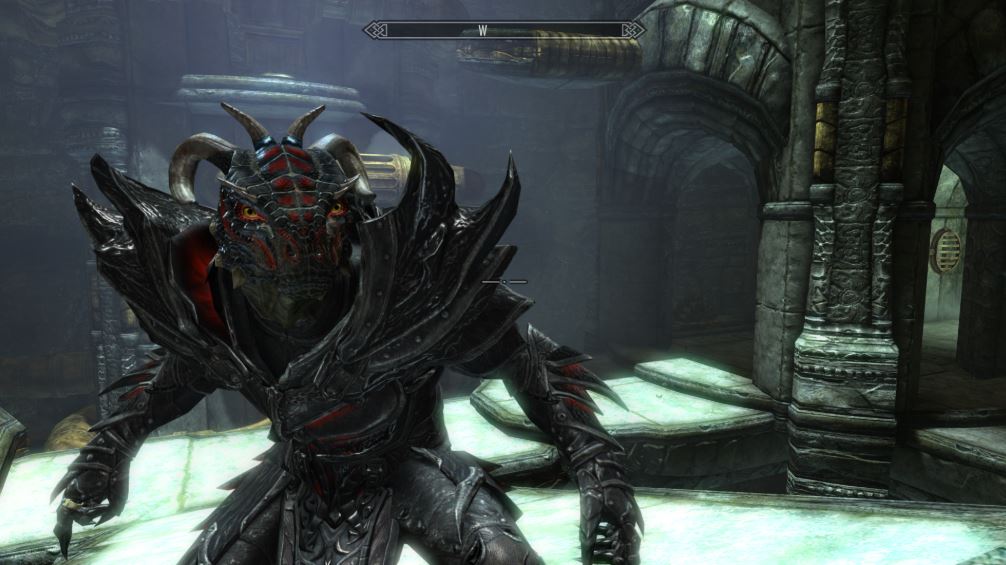
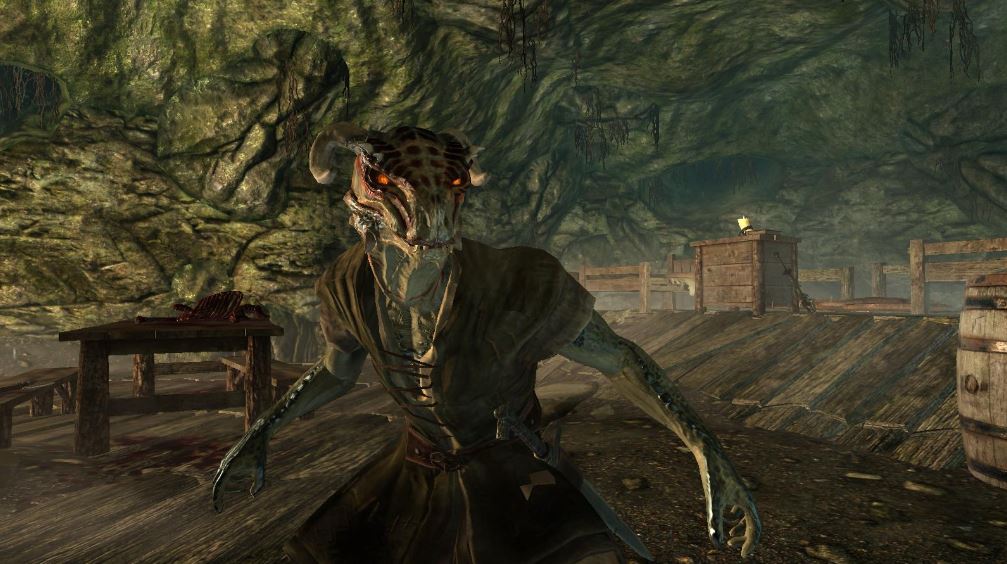
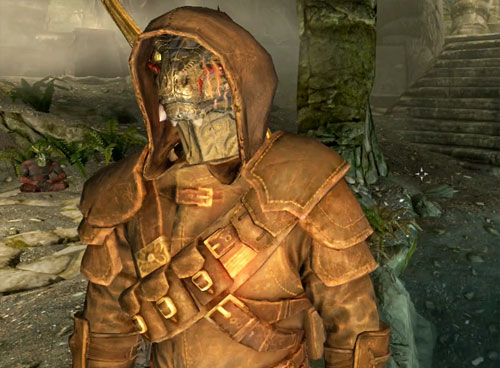
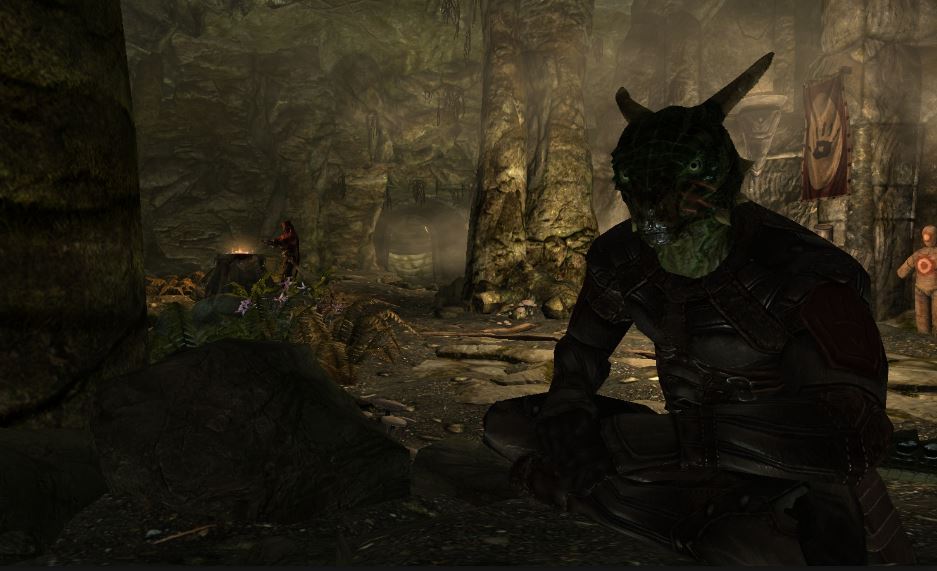
The reptilian Argonians are explorers, thieves, assassins, and can be fairly competent mages as well. Their ability to quickly adapt to varying types of combat and resist disease with their handy histskin ability allow them to shrug off debilitating debuffs that would plague early-game adventurers. Argonians are also able to breathe underwater, making them capable of aquatic escapes, ambushes, and long-term navigation of submerged grottos and caves. All this is really just icing on the assassin cake, however, as Argonians make for an excellent choice for any thief playthrough, with bonuses in practically all rogue trees and the highest starting bonus for lockpicking of any race.
Skill bonuses at the start
+10 Lockpicking (starts at 25)
+5 Light Armor (starts at 20)
+5 Alteration (starts at 20)
+5 Pickpocket (starts at 20)
+5 Restoration (starts at 20)
+5 Sneak (starts at 20)
Passive:
Argonians are unique in that they are the only race with two passive abilities: Resist Disease, and Waterbreathing. Resist Disease offers a 50% resistance to irksome ailments like Ataxia, Rattles, Droops, Rockjoint, or Sanguinare Vampiris. Is this helpful?
A little.
Contracting these diseases is very infrequent, and curing them is as easy as praying at a city shrine, so Resist Disease is not the reason to pick the Argonian. Still, cure disease potions can be pricey for early-game characters, and if you’re out exploring far from a city, suddenly catching Sanguinare Vampiris can turn your dungeon crawl into a race against the clock.
An Argonian vampire still isn’t really a step backwards …
Waterbreathing can be handy for underwater ingredient harvesting, and can even be life-saving during certain quests where rising water levels are a factor, such as The Path of Knowledge (Dragonborn) or the end of Blindsighted. If you’re playing a thief or assassin build (and if you’re an Argonian, we’d suggest you do) the ability to breathe underwater can also open up unique avenues or angles for either ambush or escape, particularly during select Dark Brotherhood quests. Still, Waterbreathing can simply be acquired as an Adept-level Alteration spell or brewed as a potion, making this significantly less useful in the mid-late game.
Power:
If you’re unimpressed with the Argonian’s two passives, you’ll be happy to know Histskin is one of the better unique powers. With Histskin the Argonian can regenerate health 10 times faster than normal for a full minute. The health restored is based on a percentage of your health per second rather than a number of points, meaning that this ability will be helpful to you even if you have a ton of health.
“Histskin saved my life.”
This facet makes it a lifesaver throughout the game. Combine this with equipment or potions that regenerate your health and you’ll be VERY difficult to kill. One neat trick is to activate Histskin while casting Equilibrium (which restores magicka at the cost of health) to restore magicka sans penalty and quickly boost your Alteration skill.
Summary:
Argonians are strong contenders for the best thief builds in the game, with their high Sneak and Pickpocket skills giving them early access to useful perks like Muffled Movement, Backstab, and Light Fingers. Best of all, Argonians are unparalleled at picking locks, able to unlock the Apprentice Locks perk from the start of the game (though you still need to spend two perk points to activate it). Lockpicking is something that every race will wind up doing frequently, so if you want that mini-game to be easier from the get-go choose the Argonian to speed things along.
Though the Argonian lacks any bonuses to combat abilities, a high Sneak skill can still award high damage bonuses to stealth strikes, giving them an advantage when striking from the shadows with a dagger or bow (or striking from the river’s edge). Their Alteration and Restoration bonuses mean Argonians can double as decent ‘spellswords’ as well, getting earlier access to more potent healing spells, wards, and damage-reducing spells such as Oakflesh, Stoneflesh, or Ebonyflesh.
The Khajiit and Wood Elf are the other contenders for the top thief race, and they both have the advantage of Archery bonuses. This gives them an early edge with higher ranged combat damage, but the Argonian is the only race of the three to have any bonuses in magic trees. Couple this higher skill in Restoration and Alteration with their innate Histskin ability and you’ll quickly discover that the Argonian has superior early game combat survivability to either the Khajiit or the Wood Elf.
The Dark Brotherhood is a haven for the wayward Shadowscale
Pick the Argonian if you want to play a ‘Shadowscale’ type build who strikes from the shadows and undersea grottos of Skyrim, picks locks with ease, and can turn into a downright health regen tank when the need arises!
Wood Elf:
What do your elf eyes see?
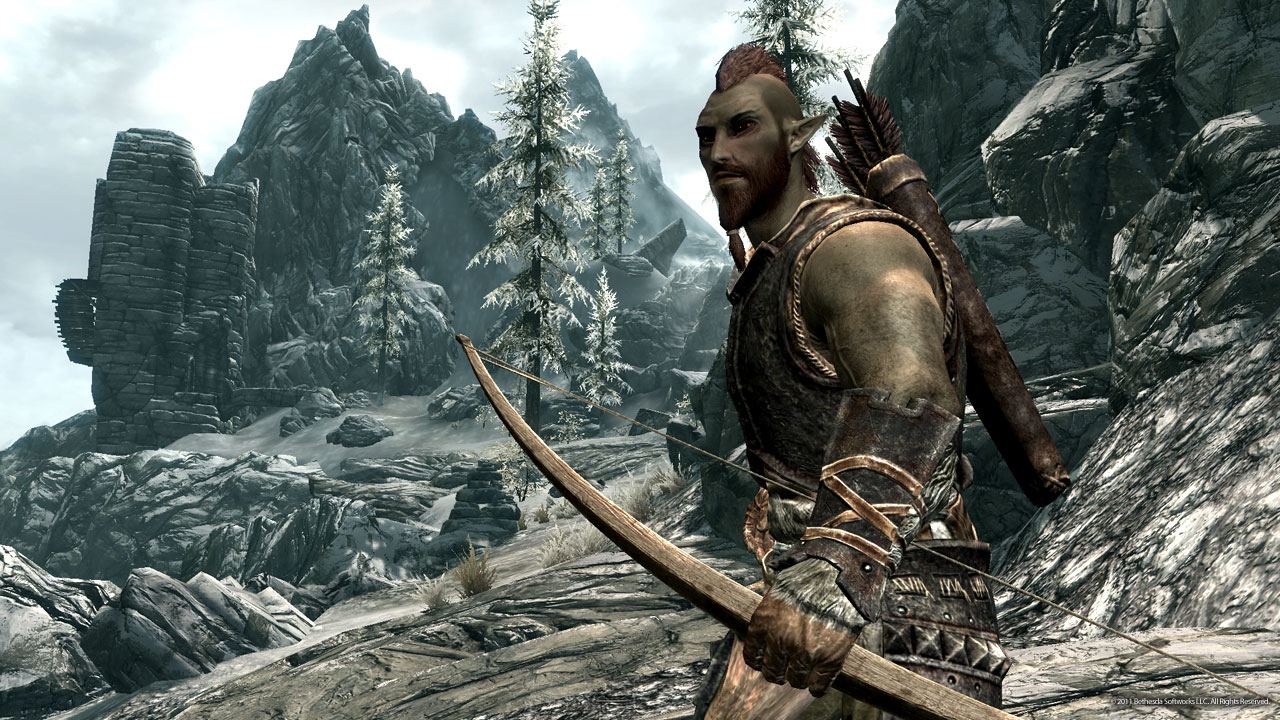
Another excellent contender for the ‘best rogue’ crown, the Wood Elf has the same bonuses to Light Armor, Sneak, and Pickpocket as the Argonian. Where the Wood Elf reigns supreme, however, is from a distance with a bow. If you want to play Legolas in Skyrim, look no further than the Wood Elf. Much like the High Elf excels in all skills pertaining to magic, or the Orc specializes in the martial trees, the Wood Elf has bonuses solely in the thief trees, making him a ‘pure class’ for any rogue build.
Skill bonuses at the start
+10 Archery (starts at 25)
+5 Alchemy (starts at 20)
+5 Light Armor (starts at 20)
+5 Lockpicking (starts at 20)
+5 Pickpocket (starts at 20)
+5 Sneak (starts at 20)
Passive:
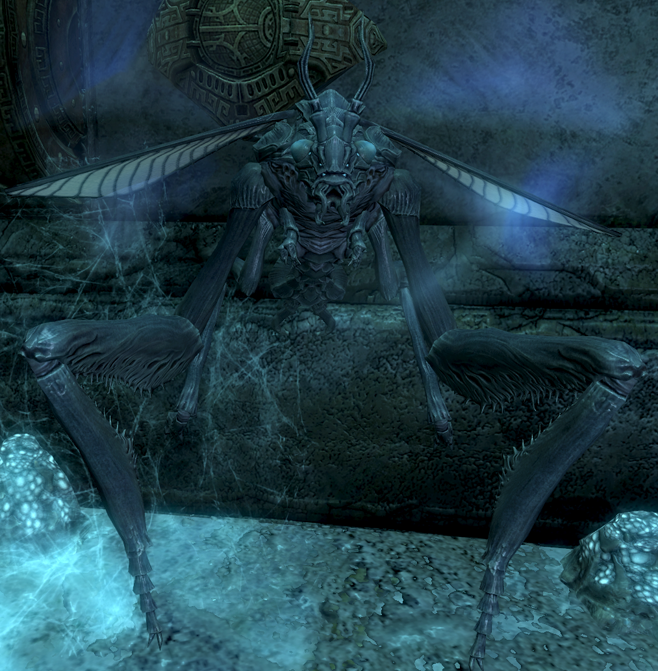
The Wood Elf race gets the same 50% bonus to Resist Disease that the Argonian receives, but is also granted that same 50% resist against poison, a more common threat. That said, poisons typically aren’t too scary in Skyrim (unless you’re dealing with Chaurus or Frostbite Spiders), so this again isn’t the real pull to playing a Wood Elf.
I take it back! I love poison resist!
Power:
Command Animal you’ll likely find more helpful. This ability allows the Wood Elf to make any animal his ally for 60 seconds. That could be something as docile as a rabbit or deer, or something as powerful as a bear, Frost Troll, or even a mammoth.
This can be just as easily accomplished with the Animal Allegiance shout, but again the value is higher when you consider that the Wood Elf can do this from the start of the game. Forcing a mammoth to fight an enraged giant is an easy way to bring down the creature, and a great way to harvest early grand souls to then power your armor and weapons.
Summary:
The Wood Elf is the master of stealth archery, one of the mightiest builds in the game. As such, the Wood Elf will probably wind up solving most of his problems from a far distance. Besides their Resist Disease and Poison passives, the Wood Elf has little in the way of protection, however, so it’s wise to take full advantage of your Sneak and Light Armor bonuses to keep mobile and out of view.
Don’t forget to use your thief skills in tandem, either; pickpocketing and lockpicking mean that you’ll have easier access to more powerful weapons early on, even if your wallet doesn’t allow it. You will probably want to invest extra time and perks into your lacking Smithing and Enchanting, however, as both will help to increase your damage and survivability.
NOTE: In case you’re wondering, yes Archery benefits from the Thief Stone, not the Warrior Stone, even though it’s listed as a fighter ability.
Wood Elf or Khajiit or Argonian
Of the three rogue races, the Wood Elf is the most pure, meaning that his bonuses are solely focused on the thief trees (except for Speechcraft). Argonians and Khajiit are both more competent when going toe to toe with warriors, but this by no means implies that the Wood Elf cannot survive cannot survive. Be sure to stay on the move and hidden, or encased in upgraded light armor and you should be more than fine. Also, don’t forget that a stealth arrow hits harder than practically all other attacks. Here’s how:
Aim for the knee
The stealth archer is one of the strongest builds in the game
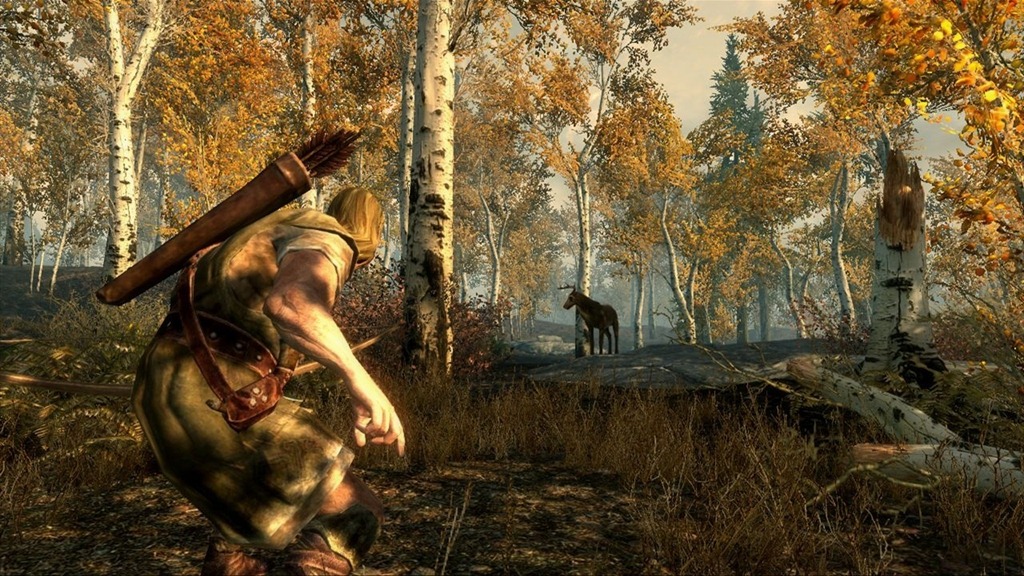
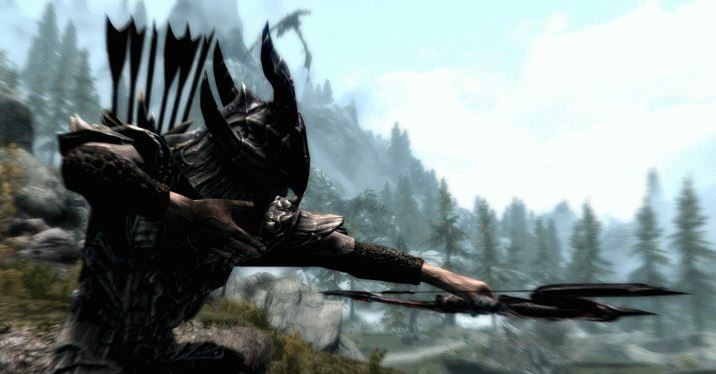
The stealth archer might be the most powerful build in Skyrim, and the Wood Elf is built to reach that pinnacle faster than any other. How is this the strongest build? A legendary-smithed dragonbone bow does 147 damage, which you can then enchant (or dual enchant) to do extra magic damage. Then you can increase your overall damage with all bows by enchanting your armor. After that, you can use dragonbone arrows to maximize the damage of the arrow itself. The Sneak perk Deadly Aim will triple your damage when firing from a hidden spot, and the Archery perksOverdraw and Critical Shot cause over twice that damage. Slap on some deadly poison with your Alchemy skill (to which the Wood Elf gets a +5 starting bonus as well), and you’ll be able to one-shot pretty much any enemy in the game.
If you want to play a thief build but still have the potential to deal massive amounts of damage when you get the drop on enemies, the Wood Elf can’t be beat. Make your first shot count! Then duck back into the shadows while your opponents search fruitlessly for you.
Breton:
The Breton is master of might and magic
The blood Men and Mer flows through the veins of the Breton, making them a ‘mixed race,’ a cross between human and elf. The result is that the Breton is heavily steeped in magic, though in different ways than the Dark Elf of High Elf – a mage class with a twist. Though the Breton receives no bonus towards any martial skills, their passive talent often makes them suitable for the role of a ‘battlemage’ or summoner.
Skill bonuses at the start
+10 Conjuration (starts at 25)
+5 Alchemy (starts at 20)
+5 Alteration (starts at 20)
+5 Illusion (starts at 20)
+5 Restoration (starts at 20)
+5 Speech (starts at 20)
Extra Spell:
Bretons also begin the game with the Conjure Familiar spell to emphasize their familiarity with the Conjuration tree. The spell summons a spectral wolf to follow the Breton for 60 seconds, and attacks any hostile targets with you. Useful? Not very. But it can provide a decent distraction, give you a good opportunity for a sneak attack, and doesn’t require a corpse to cast.
Passive:
Magic Resistance is one of the better passives in the game, granting all Bretons a 25% resistance to any and all magic. This offers them protection against enemy spellcasters, but also any instances of fire or frost (remember this game has dragons?). They block frost half as well as a Nord, but also block fire half as well as a Dark Elf. Neither of those other races can block lightning at all.
The Breton can.
Enchanting gear to block fire or frost will further this buff, and it’s quite possible to achieve a complete immunity to both fire and frost with the Breton, making him invulnerable to nearly all dragon breath attacks in the game.
Power:
If their innate 25% resistance to magic wasn’t enough, Dragonskin is the Breton’s active ability that allows him to additionally absorb 50% of all magicka that hits him. Even a low-level Breton with no gear to resist magicka can then negate 75% of harmful spell effects, making you much more capable of fighting enemy mages, staff-wielders, or even give you an edge against dragons. This power does not simply protect you against magic; you’re actively absorbing that magicka into your own pool!
Summary:
The Breton’s outrageous magic defense makes him a great candidate for either a mage play style or a mage-killing warrior who laughs in the face of spells. Use conjuration early on to draw melee attackers away from you, and hit them with your spells from further away. Sew chaos by adding a well-timed illusion spell to the mix and sit back and watch as a crowd of frenzied bandits go at each others’ throats while your summoned storm atronachs take pot shots at them.
The High Elf is the pure mage of the bunch, and the Dark Elf is the master of Destruction magic while still boasting more versatility than the High Elf. So why would you choose the Breton? In this case, it’s not the bonuses that make the call; it’s the racial abilities. The Breton’s magic resistance coupled with Dragonskin mean he’ll be able to take hit after hit from enemy mages. From there he can choose to retaliate with his own spells, or go at them with a sword. Of the three, the Breton is the one that most screams ‘battlemage.’
Absorb enemy spells like Bishop from Marvel
While any class is able to do this, Dragonskin and the innate Resist Magic make the Breton a prime candidate for one of Skyrim’s coolest builds. There’s a perk under Alteration called Magic Resistancce that will eventually allow you to block 30% of a spell’s effect (though you’ll only need 20% since Magic Resistance caps at 85%). At 100 Alteration, you have access to another perk: Atronach. This grants 30% spell absorption.
Your magic is delicious.
Together that’s an 85% resistance against literally all magic, and some of that overflow is being absorbed into your own mana pool. Stack on the Agent of Mara effect and either the Lord Stone or Atronach Stone and soon you’ll be trying to catch enemy fireballs with your face; they won’t hurt you and will simply grant you more magicka.
Play the Breton if you want a versatile mage build who isn’t as much of a ‘glass cannon’ as the other mage races.
Dark Elf:
“You don’t need fire in Skyrim.” – No One Ever
If the Breton is the ‘battlemage’ then the Dark Elf is the ‘shadowspell’ or ‘spellsneak.’ You guessed it: They’re a combination of mage and thief. Offering a solid balance of stealth and magical talent, the Dark Elf is an excellent ‘trickster’ class, weaving illusions from the shadows or darting in and out of combat with light armor and a poisoned blade. But when the gloves come off the Dark Elf boasts the highest starting bonus to Destruction magic of any race in the game, and blocks flame attacks as well as any Nord blocks frost.
Skill bonuses at the start
+10 Destruction (starts at 25)
+5 Alchemy (starts at 20)
+5 Alteration (starts at 20)
+5 Illusion (starts at 20)
+5 Light Armor (starts at 20)
+5 Sneak (starts at 20)
Extra Spell:
The Dunmer also receives Sparks at the start, giving them an alternative close-quarters magic attack to Flames which all classes start with. As with all lightning spells, Sparks deals damage to both an opponent’s health and their magicka reserves. Casting this on enemy mages will stunt their ability to retaliate with spells, highlighting the Dark Elf’s edge in combat casting early on in the game.
This message approved by Emperor Palpatine
Passive:
Just like the Nord’s Resist Frost is one of the most useful passives in the game, the Dark Elf’s Resist Fire is equally useful for the same reasons. This grants a 50% resistance to fire which, as you might guess in a world plagued by dragons, is quite handy. This fire resistance applies to enemy spells, flame weapons, and of course fire-breathing dragons. While it won’t guarantee complete protection against them, it does make it far easier to equip fire-resistant gear that caps off your protection.
Power:
While Resist Fire is obviously useful, Ancestor’s Wrath is a bit less so. The power is identical to flame cloak, dealing 8 points of damage per second to anyone in melee range. The ability lasts for a full minute. While limited, the power does have a few uses: Enemies caught on fire will take additional damage from all other sources, meaning that if you’re attacking with a sword, axe, or mace, you can pop on Ancestor’s Wrath to slightly boost all your melee damage.
Punish melee foes who get too close
Additionally, the flames will deal higher damage to undead targets such as skeletons or Draugr, making it a good mainstay when exploring crypts or Nordic Tombs.
Summary:
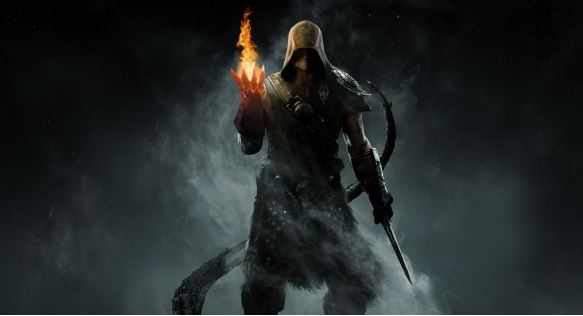
The Dark Elf is a great build if you’re hankering to cast some Destruction magic. The race receives the highest bonus towards the tree of any class in the game, and with the added bonuses toward Sneak, Light Armor, and Illusion the Dark Elf can quickly sabotage enemies from far away, remaining undetected. Quiet Casting under the Illusion tree is an excellent choice, as it allows you to quietly snipe with projectile spells from clever angles.
Lurking about with a high sneak, Quiet Casting, and maximized rune spells is a uniquely rewarding experience. And don’t forget that increased damage perks for elemental spells (like frost or shock) also increase the damage of corresponding weapon enchantments. This makes the Dark Elf a terrifying Light Armor dual-wielder when using enchanted melee weapons (we recommend dual daggers).
The Dark Elf approaches magic in a different way than either of the other mage-angled races. While the High Elf is the ‘pure mage’ and the Breton is the ‘battlemage’ the Dark Elf marries the two worlds. His maximized Destruction bonuses can put him toe to toe with even the most magically adept High Elves, and his Light Armor proficiency and fire resistance make him capable of holding his own in a fight comparably well (albeit differently) than the Breton.
Can we stop and remember how awesome a magic assassin is?
If you want to play a more subtle, versatile mage with an emphasis on stealth gameplay and powerful Destruction magic, the Dark Elf is the race for you.
Imperial:
Help lead the Empire in quelling the Stormcloak rebellion
Diplomats and traders, the Imperial race is skilled with magic and might, much like the Breton. Unlike the Breton, Imperials receive more bonuses towards early-game martial skills, and have completely different special abilities. Another versatile race that can effectively cross-class with proper perks, the Imperial can fight, charm, loot, and sling spells with the best of them.
Skill bonuses at the start
+10 Restoration (starts at 25)
+5 Block (starts at 20)
+5 Destruction (starts at 20)
+5 Enchanting (starts at 20)
+5 Heavy Armor (starts at 20)
+5 One-Handed (starts at 20)
Passive:
Imperial Luck is one of the more interesting passive perks in the game. It grants the Imperial a 100% chance to find up to 10 more gold in any urn, chest, cabinet, corpse, or an NPC’s pocket. But how useful is gold in Skyrim? By late game, most players find they’ve more gold than they know what to do with. The bonus is really only useful if you spend the money earlier on: This will allow you to purchase more powerful spells, weapons, armor, and potions sooner than other races.
“I’m a casual looter.”
Forward-thinking players might also spend this early gold on crafting parts or alchemy ingredients, then level up Speechcraft, Smithing, and Alchemy quicker than other races who need to scrounge for those same supplies. Leveling up these more ‘grind-heavy’ skills will bump up your character level significantly quicker, meaning you’ll be able to throw more perks into your boosted martial or magic trees.
Power:
Voice of the Emperor can calm any humanoid target and has a 100% success rate. You might think this is weak when compared to other racial powers like Highborn or Berserker Rage, but you need to consider the various applications. Voice of the Emperor boasts more versatility than either aforementioned ability, and can be used in or out of combat for varying effects. If you’re outnumbered by angry soldiers the power could save your life; opponents will sheathe their swords and walk away from you as you lick your wounds.
Out of combat, it can help you lure targets into a false sense of security. When their suspicion drops and they turn away, reward them with a dagger in the back. Very useful on Dark Brotherhood missions, or when trying to shake the attention of a hold guard.
Summary:
The Imperial is an excellent choice if you know how to play the markets of Skyrim. While they receive no innate bonus to Speechcraft, their excess gold grants the Imperial early access to expensive crafting items like ingots, soul gems, enchanted gear, or rare alchemy. Alternately, you could save up and spend that money on a house (Breezehome can be unlocked early on in the Main Quest, and costs 5,000 gold. The house is in Whiterun right next to a bustling market district, meaning trade opportunities are abundant).
The Imperial masters restoration and one-handed to become a mighty paladin
As for mid-late game builds, the Imperial plays an excellent paladin class, wielding heavy armor, one-handed weapons, and the highest proficiency in Restoration magic of any race. Dawnbreaker should be a priority, as should enchanting items with fire, Soul Trap, or Banish Undead. This will keep you well-equipped for Skyrim’s many Nord Crypts, draugr caves, and tombs. Line your pockets with all the expensive loot you can carry, then go on a market spree back in town!
With both classes having ample opportunity to run a powerful battlemage build, what’s the deciding factor between the two races? The Breton has early-game boosts to four magic trees, while the Imperial has only three. It’s also much easier to ‘magic tank’ with the Breton, given his innate resistance to enemy spell effects. Of the two, however, only the Imperial actually gets bonuses to martial abilities, getting bonuses in Heavy Armor, One-handed fighting, and Block.
Fight for the Imperial Legion, based in Solitude
The Imperial can potentially level up faster due to increased gold/grinding, and can therefore fill in his perk trees faster than the Breton. If you’re a veteran Skyrim player and know your perk trees well, you’ll likely have more early-mid game success choosing the Imperial over the Breton. Mess up and Voice of the Emperor will always be your safety net.
If you want to play city-dwelling spellsword who comes back from epic adventures, arms laden with loot to sell, and pockets brimming with gold, the Imperial is your race.
Khajiit:
The Khajiit is hurled far from the desert home of Elsweyr
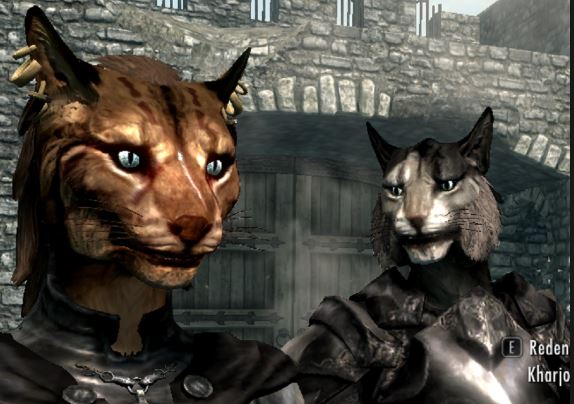
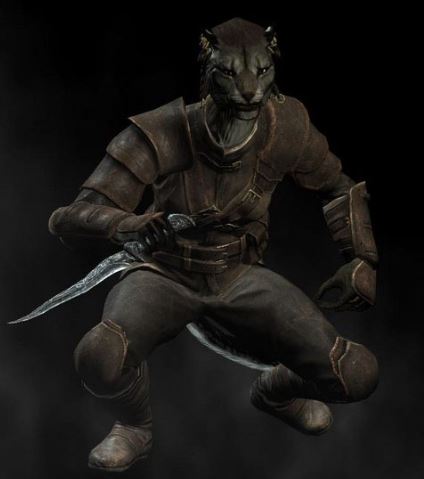
Excellent thieves and assassins, the Khajiit are the feline species of Tamriel, using night vision and sharp claws to bolster their roguish play styles. Recognizable by their cat-like features, and sly accent, Khajiit are typically nomads and wanderers. The rarest race in the province of Skyrim, they’re more often found in traveling caravans or as hired assassins from faraway lands.
Skill bonuses at the start
+10 Sneak (starts at 25)
+5 Alchemy (starts at 20)
+5 Archery (starts at 20)
+5 Lockpicking (starts at 20)
+5 One-Handed (starts at 20)
+5 Pickpocket (starts at 20)
Passive:
The Khajiit can use her claws to deal 15 points of damage with unarmed attacks. This is the highest unarmed damage in the game, and grants a tiny bonus to early-game damage if you don’t want to use a melee weapon. While this slight bonus to unarmed damage isn’t useful for long, the Heavy Armor perk Fists of Steel will add the gauntlets’ armor rating to your base punch damage. This makes unarmed combat more viable for the khajiit, and it feels pretty epic punching your way through a bandit camp …
Power:
Night Eye allows the Khajiit to see in the dark for a full minute, and is the only racial power that can be used indefinitely over the course of the day. This can prove useful if diving deep into Skyrim’s dark, murky rivers and grottos (cats hate water!) and can also help you navigate dark caves and crypts, or dimly-lit houses during thief missions.
Summary:
The Khajiit has bonuses to unarmed combat, but also earlier access to perks in Archery and One-handed, making them capable in a fight with or without a weapon drawn. While they receive no bonuses to armor, they have the highest Sneak in the game, meaning you’ll quickly be able to spend perks on keeping out of sight. Don’t forget the benefits of Alchemy either; the stacked sneak attack bonus from a dagger hit coupled with a potent poison can quickly take down even high-level enemies.
An unsuspected strike from a poisoned dagger is also a fast way to navigate Draugr dungeons without alerting the place and setting the entire horde against you.
The Khajiit favors a play style similar to that of an Argonian or Wood Elf, capitalizing on sneak attacks, pickpocketing, and lockpicking. Of the three, the Khajiit is the best at Sneak specifically, which is necessary when pickpocketing, stealing from chests, or when attacking from a hidden location. Since all thief abilities benefit from a high Sneak, the Khajiit is the best race to play if you plan on spending most of the game hidden in the shadows.
Stick to the shadows and strike with a dagger
They’re also the only race of the three to have bonuses in both Archery and One-handed, earning them earlier access to useful martial perks should the need arise.
If you like the idea of sneaking through the dark with Night Eye, stealing the dagger out of a guard’s pocket and silently killing him with it, then the stealthy Khajiit will sate your murderous cravings.
Orc:
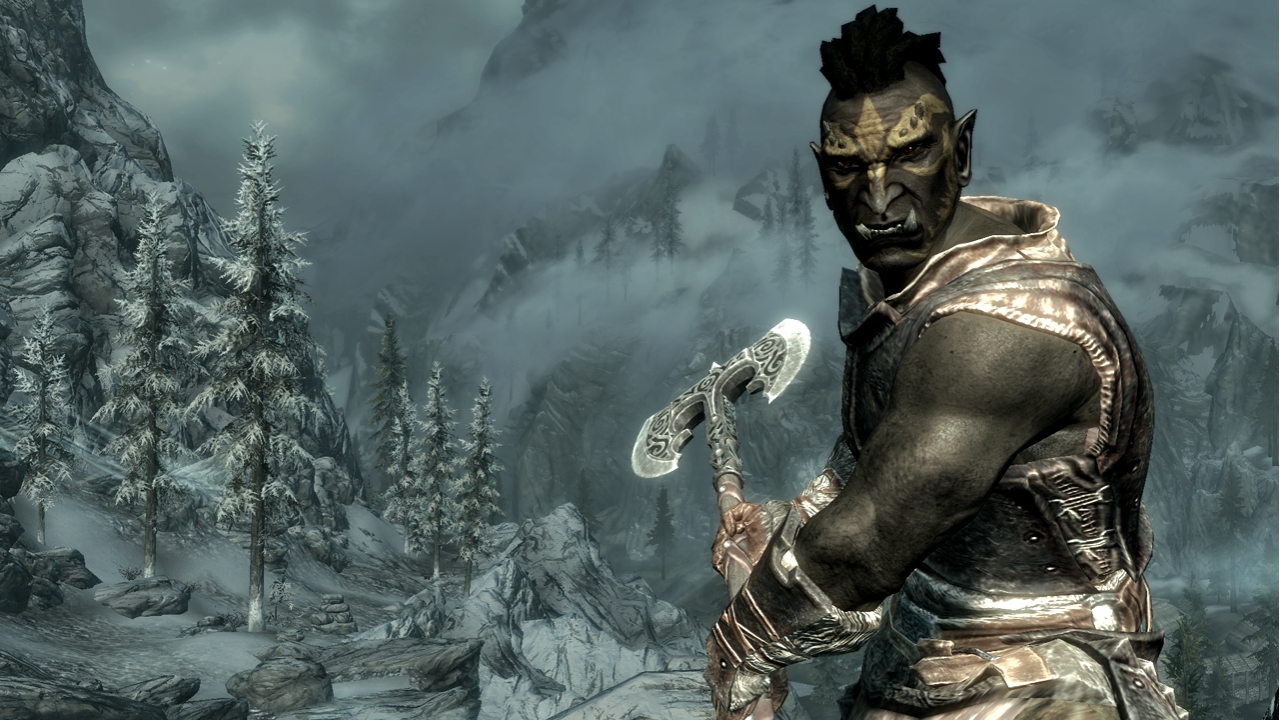
The Orc is a hard-hitting melee tank, his great axe a swinging pendulum of death.
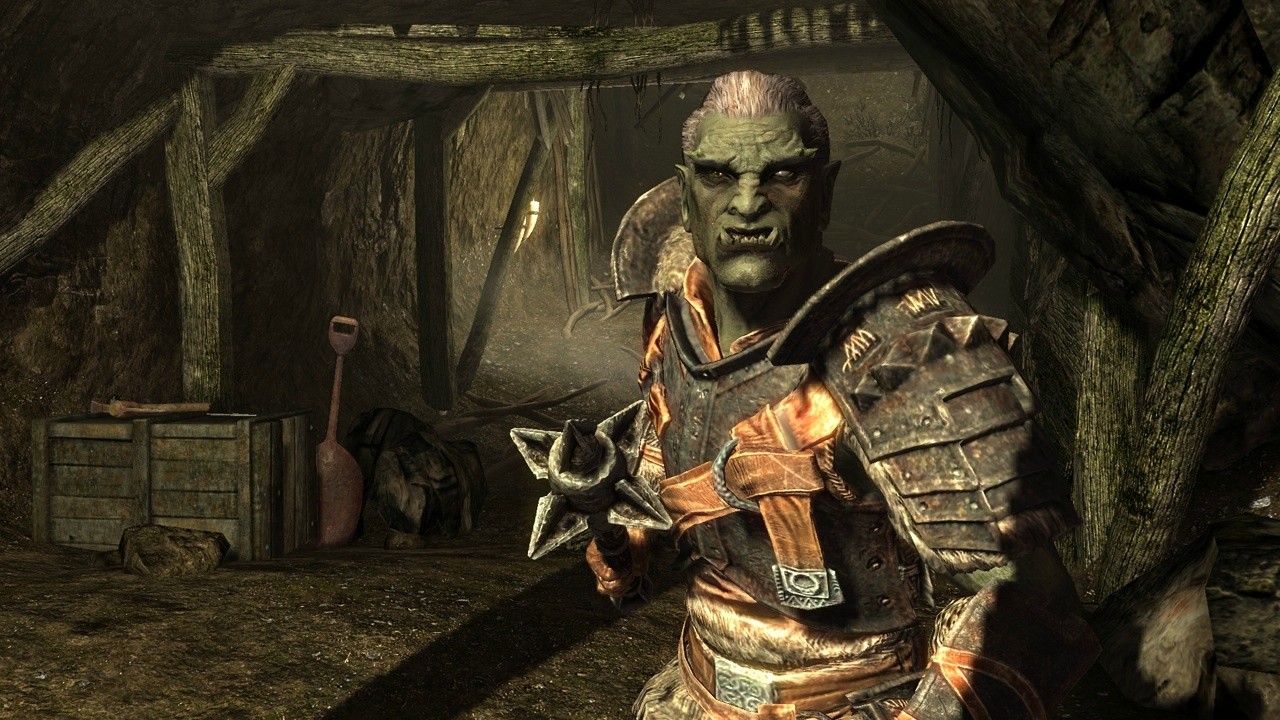
The Orc is the race of warrior and blacksmiths, and when it comes to melee combat “no one bests an orc,” as you’ll hear time and time again during fights against them. Arguably the greatest warrior race in the game, the Orc dives headfirst into battle clad in heavy armor swinging an axe or a hammer at all who dare get in his way, pummeling his foes to the ground with relentless lethality.
Skill bonuses at the start
+10 Heavy Armor (starts at 25)
+5 Block (starts at 20)
+5 Enchanting (starts at 20)
+5 One-Handed (starts at 20)
+5 Smithing (starts at 20)
+5 Two-Handed (starts at 20)
Power:
The Orc is the only race that does not get a passive ability, but frankly they won’t need one if you time your Berserker Rage well. Berserker Rage does two things: blocks 50% of all incoming damage (as long as it’s not magic), and allows the Orc to deal double damage for a full minute. What makes this ability so amazing is that it’s simply always useful in combat, no matter what level you are, how much armor you have, what you’re up against, or how much damage you deal without the buff.
Early in the game, reducing incoming damage can keep you in the fight longer, and later on, it’ll have you knocking dragons down from their mountaintop perches, glaring down at them with your blood-stained hammer in hand as raw adrenaline courses through your veins.
Summary:
The Orc excels as a warrior and literally all of their bonuses fall into this category except for one: Enchanting. However, Enchanting is a way to boost the damage you dish out with your weapons and a good enchanted suit of armor will keep you protected. Orcs have the highest bonus with Heavy Armor, and with the proper perks assigned, they can tank like no other race, particularly if the armor is properly enchanted. Play either a steadfast sword-and-board with a mace, ax, or sword and a strong shield in the other hand, or charge in headfirst with a great-ax or warhammer. Watch as groups of enemies try to swarm over you and wind up face-first in the dirt.
If you’re looking for a pure, unadulterated melee build, the Orc trumps both the Nord and Redguard. He does this because that’s pretty much all he can do (or at least that’s all he’s got bonuses towards). Nords have a more niche resistance against cold and have a few bonuses in tertiary skills such as Speech or Light Armor, but if you’re looking to melee tank the Orc is your guy. As for the Redguard, he’s got more agility, making him a different approach to the fighter play style altogether.
“This mine is mine. Get out!”
If you’re looking for a hands-down melee experience in Skyrim where you are a juggernaut of strength and a warrior powerhouse bar no other bonuses the Orc should be your top choice.
Redguard:
The Redguard is a wicked whirlwind of sword and spell, a deadly dance of scimitar and stamina
Skyrim’s Redguard is “the most naturally talented warrior in Tamriel” according to their in-game racial description. Play your cards right and this can be true. While the Orc is a raw tank race, the Redguard is a bit more classy, with the highest One-handed skill in the game and a smattering of bonuses towards Archery, Block, and Destruction. They are also able to perform an Adrenaline Rush during combat (or out of combat if you’re looking to sprint more effectively) that speeds up their stamina regeneration, allowing for more heavy strikes. Like the Argonian and Wood Elf, the Redguard also boasts a 50% resistance to poison.
Skill bonuses at the start
+10 One-Handed (starts at 25)
+5 Alteration (starts at 20)
+5 Archery (starts at 20)
+5 Block (starts at 20)
+5 Destruction (starts at 20)
+5 Smithing (starts at 20)
Passive:
The Redguard can resist 50% of poison just like an Argonian or Wood Elf, which at face value seems like a disappointing missed opportunity for such a unique race. However since the Redguard is more likely to engage in close combat than the other two races with the same ability, it will arguably serve him better in the long run. Come face to face with a frostbite spider early in the game, or a swarm of chaurus, and you’ll be happy to have it.
Power:
If Resist Poison was a disappointment, Adrenaline Rush will more than make up for it. While Highborn regenerates a High Elf’s magicka pool 10 times faster and Histskin does the same for an Argonian’s health, Adrenaline Rush boosts the Redguard’s stamina regen by 1000% for a full minute.
You don’t need much stamina to do a heavy swing …
How is this helpful? In Skyrim, you only need a very small amount of stamina to inflict a heavy attack (hold down the attack button). Adrenaline Rush regenerates a Redguard’s stamina so quickly that you’ll be able to unleash an endless chain of power attacks for the duration of its effect. You’ll be able to break blocks and stagger larger opponents, not giving them the chance to regain their footing or catch their breath.
Summary:
The Redguard is a fast and agile warrior, best covered in light armor and often dual-wielding, given their unrivaled bonuses in the One-Handed tree. Since you can hit so fast with the Redguard you can potentially have a mid-late game build with two legendary double-enchanted swords. Put your perks in One-handed and you’ll be dealing lots of damage with your sword early on in the game.
“Have you seen a Redguard woman?”
If you don’t want to go for dual-wielding, we recommend sinking points into Block, as the Redguard gets a bonus for this as well. You can also use Destruction and Alteration to throw more damage on your weapons, hit targets further away, paralyze your foes, and throw Stoneflesh or Ebonyflesh on before jumping into the fray.
Of the three classes, the Redguard is the only that receives no bonus towards armor. This might make him seem like the weakest of the three defensively, but this is not the case. Like the Orc and the Nord, the Redguard gets a bonus towards Smithing, so could easily craft and enhance armor with the same efficiency as the other races. The Redguard takes on a different approach to the warrior playstyle, favoring speed, swift strikes, a tactical push of magic, and a flurry of dual blows. The Redguard requires a little more finesse than the other warrior races, but once you get the rhythm down you’ll be able to make combat look like an artful dance of sword, spell, and stamina.
Redguard vampires can use Adrenaline Rush to negate the stamina penalty for being in the sun
Play the Redguard if you want an agile fighter who can outmaneuver and outperform heavier, bulky melee opponents and surprise mages with spells of their own.
And that’s a wrap! Hopefully, this guide has helped you to figure out which race you’ll be playing on your next run through Skyrim. Let us know your favorite race in the comments below, and if there’s a particular build that we didn’t mention on this list, definitely share it with us! In the meantime, guard your knees from stray arrows, and happy questing!
Here’s everything you could possibly want to know about Skyrim, from mods to graphics to glitches.
Since its initial release back in 2011, Bethesda’sElder Scrolls V: Skyrim has graced the market for PC, PS3, Xbox 360, Xbox One (Including Kinect capability), PS4, PSVR, and Nintendo Switch. Moreover, there are also three versions of the game regarding content as well: The base Elder Scrolls V game (2011), the Legendary Edition (with all three DLC included), and Skyrim Special Edition (2016) which also has all DLC included along with remastered graphics.
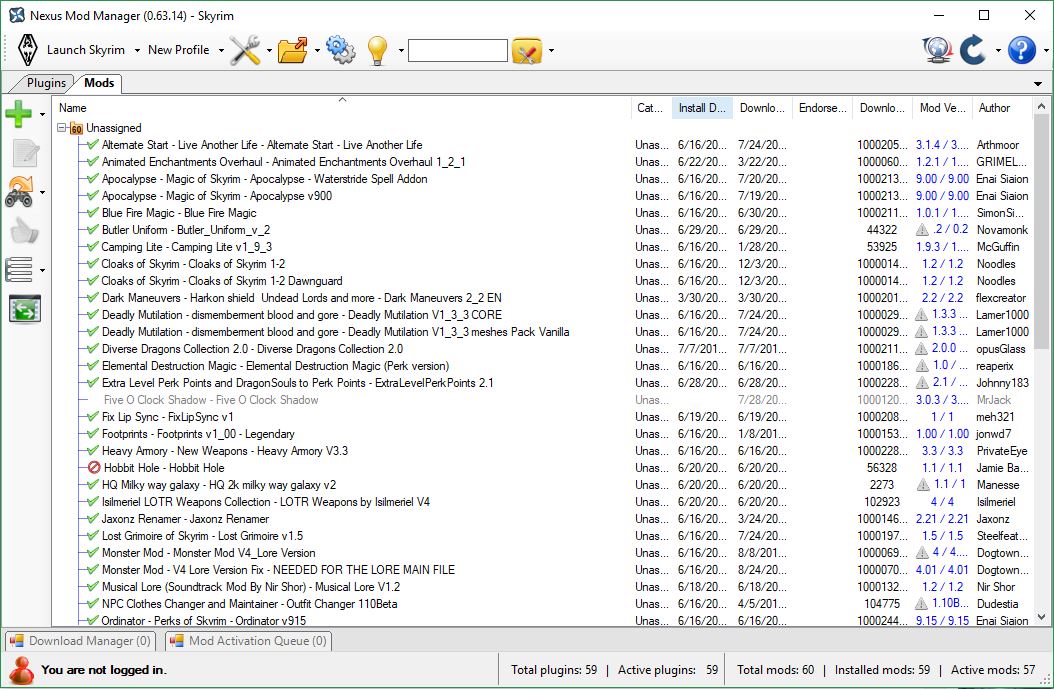
Normally when a game releases “updated” versions of a game the question of which to get is self-explanatory: Get the latest one! But with Skyrim the choice is a bit harder. Why? Because if you’re playing Skyrim in 2019 you’re likely playing it with mods. And lots of them. The modding community has become a huge part of both Skyrim’s fan base and its commercial success, and certain mods, especially ones made several years ago, will not work in Skyrim’s later editions.
For example, there are specific graphic mods that work well with the original Skyrim that are obviously not compatible with Skyrim: SE, since the Special Edition already enhances aspects such as water and spell-casting FX, water flow, god rays, dynamic depth of field, and screen-space reflections. Does Bethesda handle these changes better than the modders? The answer is subjective; everyone has different taste.
As such, this guide will be taking you through the different elements that make up Skyrim: Graphics, content, RPG, and smooth gameplay (yeah, there are bugs) in an attempt to help create the best Skyrim tips for you. The beauty of Elder Scrolls V is that with multiple editions of the game and a massive, growing community of modders, if you’re not enjoying Skyrim you’re simply not doing it right! Is the vanilla experience for you? Maybe the Special Edition with a couple added NPCs? Or are you going to load up 50+ mods to completely transform the game into something else entirely? Let’s get started!
The base game released in 2011 was critically acclaimed, with over 230,000 players on the first day of its release on Steam. Within two days of the game’s launch, 3.4 million units were sold. Impressive to be sure, but what was the draw? Bethesda did what they arguably do best: Created an open sandbox experience in a living, breathing world; literally infinite side quests, engaging combat, a streamlined RPG system that still offers tremendous replayability, and DLC content that adds value to the core game without overshadowing content.
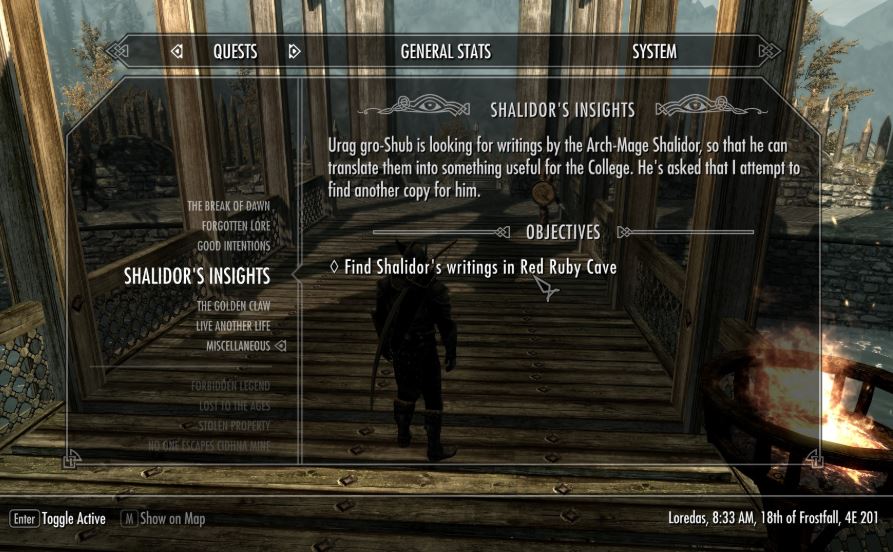
Urag will always have a fetch quest in a randomly-generated cave
Skyrim is the type of game that holds your hand during the brief intro tutorial, then drops you in the center of a breathtaking expanse of options and zero time limits. Do things at your own pace. Explore when you want.
Everything the light touches is yours. Except DLC. Then you should be level 15.
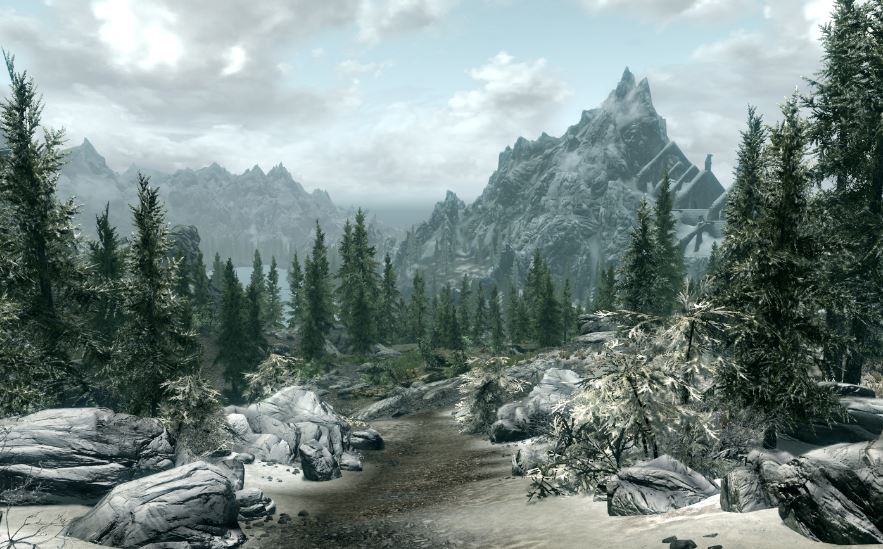
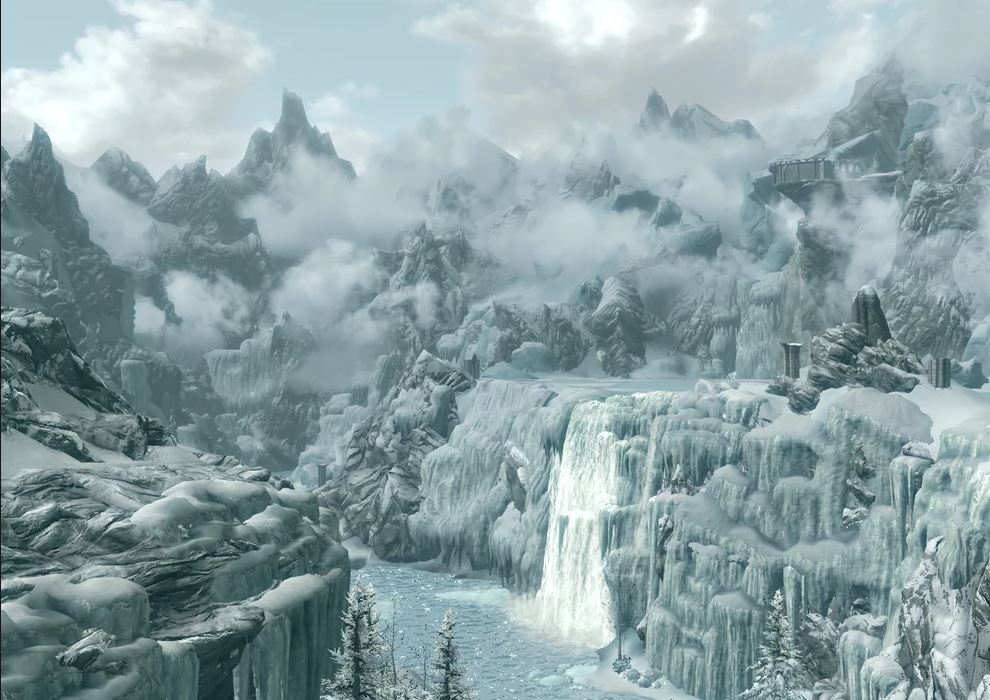
Fight anybody who crosses you, build your own house, level up however you choose, and gather all the phat loot you can stuff into your pockets. See those mountains far, far away? You can go there. That dark cave under the mountain? You can go there, too. The snowy crypt surrounded by undead? Sure. There’s no level-lock and there are no invisible barriers to block you from going anyplace you like.
It’s the replayability and the question of ‘what’s around the next corner?’ that keeps players booting up Skyrim and cataloging hundreds and hundreds of hours. The Main Quest is a solid 30 hours long, the Dawnguard DLC adding another 7 hours, and the Dragonborn DLC adding another 6 on top of that. That means the Legendary and Special Editions of Skyrim, both of which include the two DLC as well as the home-building Hearthfire, takes around 25-40 hours, doing added quests and grinding pushing that well past 100 hours.
The Dawnguard and Dragonborn DLC add over 13 hours of content.
Why is Skyrim bad? With so much to do, how could it be boring?
With all the positive things to say about Elder Scrolls V: Skyrim, we’d be remiss not to address the issues – and yes, there are issues. The bugs cannot be ignored, and while there is a lot of content and there are a ton of skills, it looks like the sky is the limit … until you hit the ceiling. While the Main Quests give you your money’s worth, they lack any branching options like you’d find in games like Mass Effect, Dragon Age, or Witcher 3. Dialogue options will have minimal to no effect on your quest line, and once you’ve, for example, restored the College of Winterhold, that story will be the exact same next time around. And the next time. And the next.
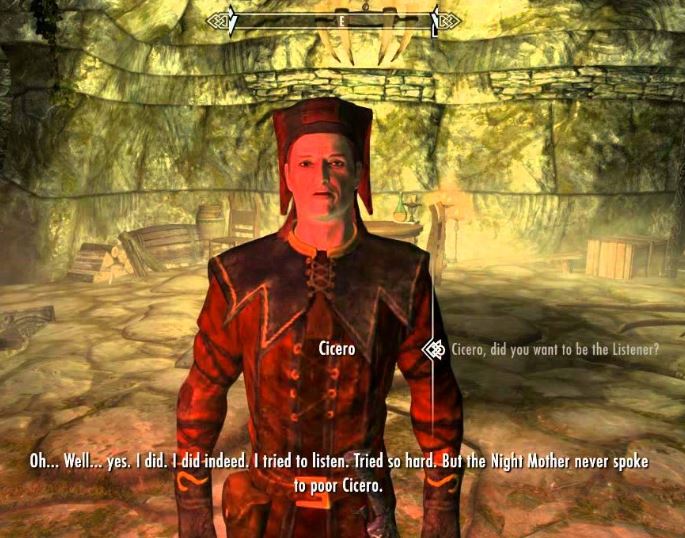
Poor Cicero will never get to be the Listener.
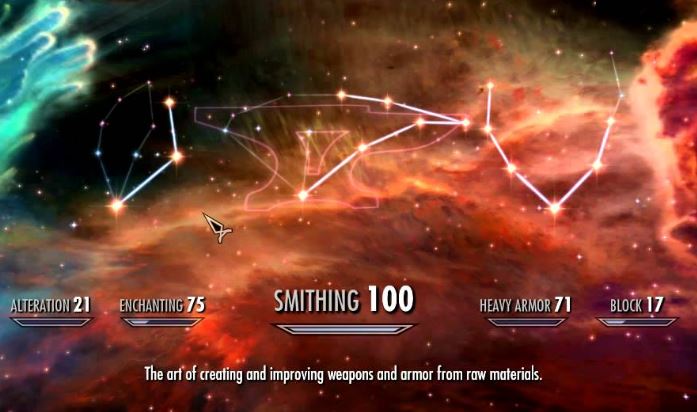
Furthermore, while any player can accomplish any build and acquire any skill in the RPG system, role-playing a specific character class will eventually stop yielding reward. Each of the 18 skill trees maxes out at 100, and once you’ve allocated the perks you want into the tree there’s not much more to do with the class and (unless you make your skills legendary) it also becomes harder to level up unless you start investing in the other trees. Let’s say you want to role-play a powerful wizard, for example.
There are six trees in the magic school. Once you’ve reached 100 with each of them (which takes a while!) you’ve got limited choices if you want to continue leveling up and growing as a character: Invest in the martial or thievery skill trees (at which point you’re not role-playing as a wizard anymore), buy some new spells (and unfortunately there is a set number; Skyrim does not have any kind of spell crafting mechanic), or make your skills Legendary. What this will do is reset your skills back to 15, removing all your allocated perk points. You’ll lose a lot of powers, but you’ll once again be able to level up your character by casting spells in the respective trees. Rinse, repeat.
Once you hit 100 with a skill, performing it will no longer raise your character level.
With no way to alter quest lines, skill trees that repeat, and also the fact that there’s definitely a ‘best equipment’ when it comes to finding, purchasing, or upgrading your armor and weapons, you’ll end up playing a Skyrim experience with less wiggle room than you might have thought.
The best Skyrim graphics
‘The best’ graphics in any video game easily just comes down to subjective taste. So here we’re going to be showcasing both work from Bethesda (specifically from the 2016 Special Edition) as well as a number of community mods that take different approaches to the game world, assets, animations, and character models. Note that higher resolution will mean a more taxing game for your hardware, and if you’re playing on a computer that’s having a hard time keeping up with 4k resolution, you might have to settle for lighter mods (of which there are still a handful to pick from).
Skyrim: Special Edition
To start off, Bethesda Softworks’ Skyrim Special Edition improves visuals by leaps and bounds. Remastered art and effects take center stage with dazzling new spell effects, bright plumes of flame streaming from the mouths of angry dragons, higher-definition trees, foliage, and cobblestone, and weapons that glint in the sunlight. The day/night cycle is enhanced with volumetric god rays peeking through the trees, pale dawn illuminating the snowy lands, and stunning sunsets adding crimson and violet to the craggy mountain backdrop.
The god rays might be our favorite new feature
Aside from the lighting and other visual game improvements, the Special Edition of Skyrim also adds increased stability when facing a swarm of opponents, more realistically flowing water, rain occlusion (precipitation won’t pass through solid objects anymore), and reduced z-fighting (glitchy-looking objects at far distances).
While the Special Edition is a great start, many modding players will not stop there when it comes to enhancing graphics. We’re going to show you a number of additional mods that tweak the game’s appearance. Obviously, it’s best to let the pictures and videos speak for themselves for this, so rather than explain what they do, we’ll leave you with links and pictures of some of the most popular.
Funny enough, ENB stands for “easy now, Boris,” referring to a modder named Boris who used to go above and beyond the call of duty when creating graphical overhauls for games. The acronym stuck and now refers to any complete visual reworkings of the game. These ENB mods are not simple fixes or changes, but are instead a radical re-texturing of practically every in-game asset. They are much larger files and do everything from adjusting lighting and textures to recreating Skyrim into absolutely new territory:
The True Vision ENB by Bronze316 is a good example of a complete character art overhaul
When you download an ENB, you’re committing to all the changes it makes to the game – completely different visual experience. The best thing about an ENB is that they are one-stop shortcuts; a one-install solution to a variety of graphical modifications you want to make. So rather than installing dozens of graphical enhancers to the core game and praying that they all work well together, an ENB should handle all the visuals by itself.
Making Skyrim look, feel, and sound more visceral is hugely important in adding immersion to the game. A better-looking quest line doesn’t necessarily constitute for an improved one. Once you’ve played a mission to death it will feel boring no matter how many god rays are shining down on it.
The answer? New content.
This is one of the broadest categories of our compilation since there are more NPCs, spells, weapons, and locations being added by modders every day. As such, we’re going to be focusing on DLC and modded content that provides the most organic, lore-friendly content to the story and world of Elder Scrolls. This list will not include any changes to the core gameplay; that’s in the next section.
The Dawnguard DLC kicks off once the player reaches level 10, and begins with an orc named Durak relaying news of a growing vampire menace in the peninsula. The quest line takes players through vast new destinations like the eerie Soul Cairn – a purgatory for captured souls led by the illusive Ideal Masters – and the icy tundras, crystalline palaces, and dark caverns of the Forgotten Vale.
Explore huge new environments as you follow the path of the Knight-Paladin Gelebor
Players can choose to follow the vampire-hunting Dawnguard guild on their crusade to defeat Harkon’s court of night stalkers, or rather choose to join his troupe, inheriting the powerful abilities of the Vampire Lord – sapping health from attackers, morphing into a cloud of bats, summoning gargoyles to your command, and feeding on helpless victims to stave off the wicked effects of sunlight.
Hearthfire
Hearthfire is a smaller DLC, but adds a cozy expansion allowing players to build and design their own houses and adopt children. If you’ve grown bored of the same five houses offered in the base game, this will definitely peak your interest. With Hearthfire you can purchase new land in Hjaalmarch, Falkreath, and the Pale. This includes a new housecarl for each home, tons of storage space, mannequins and plaques to showcase your favorite items, and a place to call your own, far from the bustling crowds of a city.
Dragonborn
Lastly, Bethesda added the Dragonborn DLC, introducing an entirely new area: Solstheim, a large island off the coast of Morrowind, the neighboring peninsula to Skyrim. Solstheim is largely populated by Dark Elves. Starting once you’ve reached level 10 and completed the Horn of Jurgen Windcaller quest, the Dragonborn DLC reveals that you are not the only surviving Dragonborn; Miraak is another, and aspires to take over the island and deem you a blasphemer to the title of Dragonborn.
The quest takes you through Hermaeus Mora’s tortured land of Apocrypha, where you’ll face powerful new enemies, solve puzzles, and earn new abilities ranging from shouts that can disintegrate foes to Dremora butlers, to even riding dragons through the sky, both on Solstheim and back on the mainland of Skyrim. If you’ve ever wanted to feel the true might of the Dragonborn, you’ll need to go through this DLC!
Best content mods
There’s a slew of modded content available for free on both the game’s Steam page and on nexusmods.com both for Skyrim and for Skyrim: Special Edition. There’s also many available on moddb.com. With mods in general we prize two things: Personalization and longevity.
Personalization allows for players to custom-fit Skyrim (or any game) to transform it into one that they want to play. This could be removing irksome features, changing aesthetics, or even providing an entirely new angle to the game experience.
Longevity refers to how much extra time the mods provide us in the game, breathing more life into something we’d otherwise have put aside many hours ago. Added content can keep a game fresh long after it’s worn down.
Ready for a new challenge? Learn how to mine stalhrim and forge new armor in the Dragonborn DLC.
With the three DLC, Bethesda added content to Skyrim that both enhanced what was already present, and also introduced hours more of story, puzzles, gameplay inclusions, player abilities, new challenging encounters, and even slightly branching paths for added replayability in the Dawnguard DLC. The most popular mods that add extra content do much the same thing: Add content that enhances the core experience of Skyrim, adding extra freshness and more avenues to explore.
The spell system in Skyrim is functional but streamlined. Once you’ve purchased your desired spells and acquired the necessary perks in the relevant magic trees there’s not much more to be done as a mage in Skyrim.
Apocalypse is the more popular spell pack, adding 155 completely new spells to the game: Fabricate objects, walk on air, weave tornadoes, conjure holograms, control minds, and a ton more.
opusGlass’ dragons do not replace or change dragon fights. Rather this mod simply draws the dragon you fight from a much wider selection of possibilities. Dragons in Skyrim, for the most part, will either use frost or fire, and have varying degrees of difficulty, set to match the level of the player character.
Diverse Dragons does the same thing, except it adds dozens of new skins, abilities, and stats for those dragons. You may fight a dragon that’s as difficult as a typical Revered Dragon, except now it will breathe poison instead of fire, or concentrated beams of energy. This mod restores some excitement to fight mechanics that can otherwise grow overdone or tedious.
Skyrim is a harsh land inhabited by many creatures looking to spill your coin or your blood. TiggyUK added hundreds of new lore-friendly monsters to the mix, making exploration more exciting and more dangerous. Many are complete with new or rare alchemy parts or items, making fighting and looting them well worth your while.
What’s especially cool is this also goes for dungeon bosses; instead of a leveled Draugr, for example, you might come face to face with a Dremora Spider or a Lich!
Once you’ve explored Skyrim from top to bottom you’ll have seen practically all the armor variants out there, from steel to ebony, glass to dragonbone, dwarven to daedric. They look cool, to be sure, but does it make sense that every bandit has the same matching outfit? No, it does not.
Hothtrooper44 drastically enhances the variety of armors in Skyrim in a very lore-friendly and balanced way – armors that can be found, purchased, crafted, or looted. If you want to fight enemies wearing a lot of cool new gear, or deck yourself out in some sweet ringmail with a kilt, you’ve got to check this mod out!
Another mod by the same dude who gave you Immersive Armors, Immersive weapons does the same thing, only this time with an array of gorgeous, lore-friendly weapons that people in the game world (including you) can use.
Want to use a spear? A naginata? A scythe? Maybe a Forsworn battle axe? It’s all here, it’s all integrated seamlessly, it’s all leveled appropriately, and all the aesthetics are believable.
Falskaar sates the same wanderlust cravings as Moonpath to Elsweyr, and is equally stunning in terms of scope, integration with the core game, and visuals.
There’s a new campaign with a worthy reward, NPCs, as well as new dungeons, alchemy, and encounters. All fully voice-acted and smooth. Enjoy 20+ hours of added content of lore-friendly quests and locales.
Much like an ENB is a complete overhaul of a game’s visuals, Enderal is a complete overhaul of Skyrim – stripping away all but some assets and the game engine. A total conversion mod for Skyrim, this does not add content to the core game, but is rather an outright transformation of Skyrim in virtually every way.
An open world with its own unique lore and landscapes, a brand new story, new characters and quests, and an entirely revamped skill system with classes and special abilities integrated. There’s 30-100 hours of content.
Skyrim is an RPG. What are the best RPG mods?
There are two facets that qualify a game as a role-playing game: Acting like a particular character and playing like that particular character. Since Skyrim’s lacking in the ‘make your own plot choices’ department, the RPG angle of Skyrim has to come out in its gameplay. It starts with the skill tree:
Skyrim’s RPG system is divided between 18 different skill trees: Six for martial skills, six more for magic skills, and then a final six for rogue skills. Performing one such skill will rank up the skill tree, unlocking more perks. When your character levels up, he/she earns a perk point to be spent on a tree of your choosing, slowly altering the way that tree works. It could be something as simple as enhanced damage for a weapon type, or something as complex as crafting wax keys based on locks you’ve previously opened. Some perks are better than others.
Bethesda added new gameplay mechanics in the Legendary and Special Edition versions of Skyrim that made slight modifications to the skill trees, namely in the form of the reward players receive upon completing the Dragonborn DLC, and in making skills Legendary. Making a skill legendary will revert it back to its starting level (typically 15), removing all perks you put into it, thereby making you a newborn babe at a skill you were godly at moments ago.
Why would anybody want to do this?
Because it means you can beat the level cap. Low-level skill trees means that you can one again level up by performing that tree’s relevant skills. This is particularly useful for mage characters who can’t seem to level up anymore because they insist on role-playing a pure mage. In short, if you don’t dabble in Skyrim, you’ll eventually flat-line. This fixes that.
Aside from these minor tweaks, there have been precious few alterations or enhancements to Skyrim’s RPG system, and gameplay can become stale. Luckily there are several RPG mods that add or change the way the game is played:
(Available on both Skyrim and Skyrim: Special Edition)
Ordinator is a complete skill overhaul that reforges all of Skyrim’s perk trees. Some of the necessary skills make returns, along with many new, creative ideas. These ideas include corrosive poisons under Alchemy, opening doors between dimensions with Alteration, controlling a subject’s dreams through Illusion, or knocking targets back with powerful one-handed blows.
Each tree has around 50 perks to choose between, and the potential for combinations that allow for entirely unique builds is jaw-dropping.
(Available on both Skyrim and Skyrim: Special Edition)
Looking to play a spellslinger this time around? Path of Sorcery overhauls the six magic perk trees and grants a better way to role-play as a mighty sorcerer or a wicked witch.
Path of Sorcery introduces a variety of clever perk options such as winning favors from your chosen divine (if you want to role-play a paladin or cleric), construct a skeletal army out of harvested bones, and even generate gold once per day!
(Available on both Skyrim and Skyrim: Special Edition)
This mod doesn’t change the perk tree, but instead addresses combat as a whole. If you don’t like the way combat ebbs and flows in Skyrim, then you definitely need to check out this mod:
Wildcat Combat is a streamlined approach to fighting in the harsh tundras with a focus on gritty realism, lethal combat, and aggressive AI – all accomplished without script bloating or heavy taxing on your system. If you enjoy games like Prey, Dark Souls, or Fallout then installing this will change your mind about fighting in Skyrim.
(Available on both Skyrim and Skyrim: Special Edition)
T3nd0’s Perkus Maximus is similar to EnaiSiaion’s Ordinator in the sense that it’s another complete perk overhaul. That’s where the similarities end. The release is modular, meaning that if there are some perks you wish to use, while others aren’t your style, you’re able to mix and match as you choose, allowing for greater individuality between players and a Skyrim experience uniquely your own:
One of the major draws of Perkus Maximus is that there are far fewer examples of ‘sinking perk points’ into simple damage buffs or lazy stat increases. Instead, PerMa rewards the player with more active abilities, such as animating weapons to fight for you, slowing down time when swinging weapons, and finger-trapping an enemy so they drop their weapon when attacking, or stumble when advancing. There’s even a new tree entirely called Wayfarer that focuses on exploration and nature. If you want a radically different experience to leveling up in Skyrim, this is the best RPG mod to get.
(Available on both Skyrim and Skyrim: Special Edition)
Tired of the same boring start to Skyrim? Alternate start allows you to choose from a variety of starting locations that aren’t the wagon ride to Helgen.
If you’re looking to better immerse yourself in a more real role-playing experience, then this mod helps start you off on the right foot. You can even start out as an Orc in a stronghold, or a newly born Vampire Lord in Harkon’s court.
(Available on both Skyrim and Skyrim: Special Edition)
This highly popular mod endeavors to turn Skyrim into a realistic survival game, adding debuffs from elements like cold and weather. Considering the frigid terrain and unforgiving environment it only makes sense that Skyrim would be difficult to travel. Scaling High Hrothgar should be a monumental undertaking, yet in the core game, it can be accomplished without sweat.
Craft heavy cloaks to cover yourself with, and seek warmth by building campfires as you explore the wilderness in one of the most immersive, game-changing mods available.
Glitches and bugs
Skyrim is infamous for being rife with bugs. While Bethesda fixed many issues as they added more DLC and released more versions, this remains the case even as recent as Skyrim Special Edition. No matter what Skyrim experience you’ve got your heart set on, we doubt that it’s one plagued by technical issues. Here are five tips that should minimize any detrimental gameplay issues on your next run through the game:
1. Save your game
Save often, and in different slots. This will help ensure that, should an issue arise, you can always reload the save and resume your progress. Lucky for you, Skyrim also autosaves any time there’s a load transition to a new cell, so if you’re going back and forth between areas in the game you’ll have your pick of recent saves to choose between.
Multiple saves means multiple chances to fix a corrupted game
The great news about Skyrim is that you can save pretty much whenever you like. Skyrim: Special Edition makes it easier still by incorporating a quicksave feature. If you don’t like having 10+ saves in your load menu, we recommend having one save at your residence (since players spend much time there once unlocking it), one save during travel, and a third save once you’re inside the quest location. Coupled with autosaves, you should be able to find a spot close to where you encountered the bug. Reloading and attempting again should often fix the issue.
Typically when you install a mod you’re adding more weight to the game through content and scripts and making your Skyrim experience more prone to bugs and glitches. Arthmoor’s Unofficial Skyrim Patch fixes a number of irksome bugs and crashes, and is readily available for both Skyrim Legendary Edition and Skyrim: Special Edition:
Arthmoor describes the mod as “a comprehensive bug-fixing mod” for the game with the eventual goal being to fix all Skyrim’s known bugs, including any issues in the DLC. New to Skyrim or a returning veteran, Legendary or Special Edition we recommend you get this mod.
3. Back up your files
If you do happen upon an unfortunate progress blocker or corrupted save file, the worst realization is when the most recent save was six hours ago. To avoid this, we recommend making semi-frequent backup saves in case calamity strikes. Your save files for Skyrim: Legendary Edition are located under your local drive:
(Local Disk C: by default) –> Users –> Name –> Documents –> My Games –> Skyrim –> Saves.
Your Special Edition saves are:
(Local Disk C: by default) –> Users –> Name –> Documents –> My Games –> Skyrim Special Edition –> Saves
Make a backup folder somewhere on your computer that’s easy to find (like your desktop) and just copy/paste them in there. That way you won’t lose hours and hours of progress just because a quest bugged or an NPC died.
4. Keep track of your installed mods
Whether you use Nexus or Steam, it’s easy to keep track of all the mods you have installed, particularly if you use the Nexus Mod Manager (which we suggest you do). If you run into any glaring issues one day that were not present the day before, the cause is usually a new mod.
Keep track of installed, uninstalled, or paused mods in your Skyrim game
Note when you install new mods so that you can crosscheck it with when your issues started to occur. Delete (or unsubscribe to) the mod, then go back and check if the problem is resolved.
5. Check mod compatibility, optimize their load order
Not all mods play together nicely. Luckily most publishers are polite enough to mention any known incompatibilities on the front page of their mod. Before you hit that big ‘install’ button, give the page a look to save yourself future trouble.
Wider mods up top, thinner mods towards the bottom.
Your mod load order can also be a deciding factor in whether your mods work as intended. The Nexus Mod Manager will show you your mod load order, and also allows you to change that order and move your mods around. The best general practice is to have your more over-encompassing mods towards the top, so that everything else can build off of them. Examples are DLC, graphics mods, big added content, or spell packages. Towards the bottom of your load order should be more specifically-targeted mods, such as ‘my followers can pick locks’ or ‘you can now marry this NPC’.
A final word
Skyrim remains such a popular game in large part due to its versatility and replayability. There’s an experience out there for everyone, and the prospect that your previous run through the game could be improved by different mods, updated graphics, or added DLC is what brings veteran players back time and time again. Even something as simple as an alternate start, a re-textured weapon, or a new perk tree can make all the difference. Will your next run through Skyrim be the best experience yet?