Square Enix has surprised the gaming community with the announcement of a new project titled Nier: Cosmic Horror, made at midnight on April 1st, a day famous for April Fools’ jokes. This has raised doubts about the veracity of the announcement, as many fans of the Nier series are divided; some believe it is a joke, while others hold out hope for a possible new horror game within the successful franchise. It is an April Fool’s Day that has not been well received The viral message, which includes […]
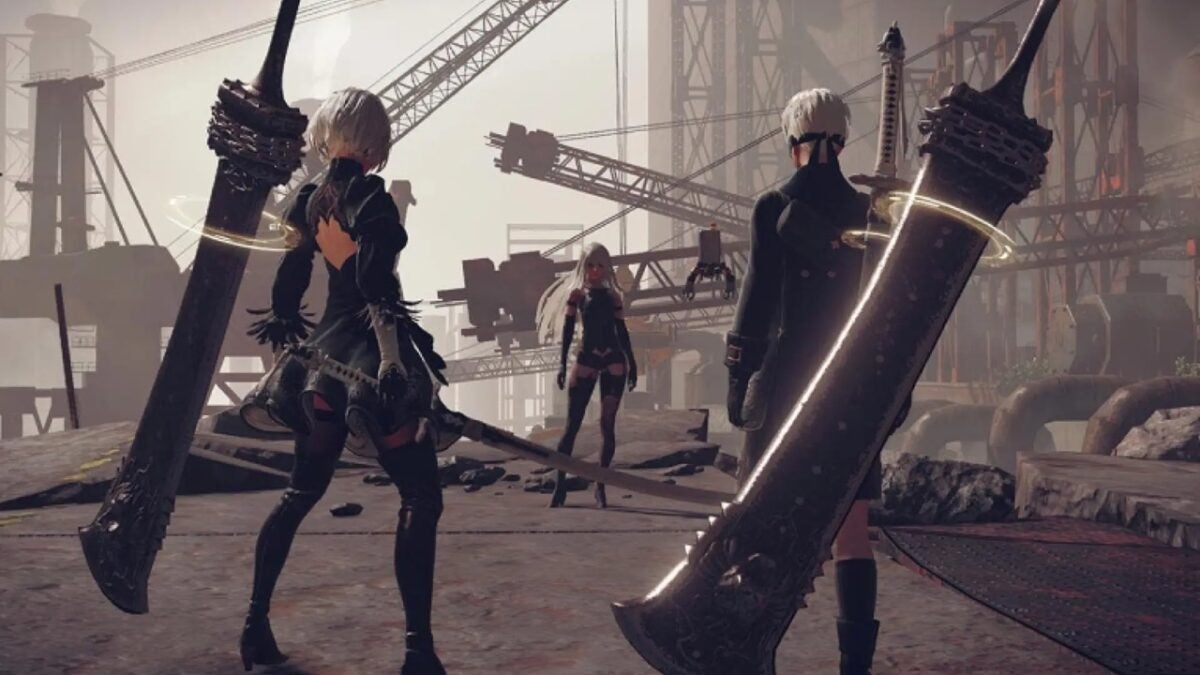
Square Enix has surprised the gaming community with the announcement of a new project, titled Nier: Cosmic Horror, made at midnight on April 1st, a day famous for April Fools’ jokes. This has raised doubts about the veracity of the announcement, as many fans of the Nier series are divided; some believe it is a joke, while others hold out hope for a possible new horror game within the successful franchise.
It’s an April Fool’s Day that hasn’t been very funny
The viral message, which includes an intriguing video featuring a robotic creature with a tentacle head and the iconic face of Emil’s mask, raises both existential and thematic questions: Born from nothing, is it hope? Or is it despair in the name of salvation?. This has led to speculation about the content and direction of the game.
The creator of Nier, Yoko Taro, has recently been in contact with The Weeknd, who has expressed his admiration for the series. Social media has exploded with conversations about this collaboration, which could elevate the franchise’s profile even further. While this social uproar continues, Yoko Taro has also remained active in his posts, sharing trivial moments from his daily life, which contrasts with the expectation and tension surrounding Nier: Cosmic Horror.
The announcement comes at a crucial time, as Nier: Automata has sold over 10 million copies, suggesting that fans may have reasons to be optimistic. However, due to the nature of the announcement and the context of its release, many are wondering if it is truly a new chapter in the saga or simply a marketing strategy disguised as a joke.
One of the most anticipated news for fans of the Final Fantasy saga has resurfaced: the animated series titled Final Fantasy: Black Mages Legacy is officially in production. This project, initiated by Cyber Group Studios, had been left in limbo after the company’s closure, but has been rescued by the producer Eurovisual, which has confirmed its development. The series will consist of 10 episodes, each 22 minutes long. An audience that was not there for its launch Despite Square Enix, the iconic developer of the franchise, granting its license and approval, it will not participate directly […]
One of the most anticipated news for fans of the Final Fantasy saga has resurfaced: the animated series titled Final Fantasy: Black Mages Legacy is officially in production. This project, initiated by Cyber Group Studios, had been left in limbo after the company’s closure, but has been rescued by the producer Eurovisual, which has confirmed its development. The series will consist of 10 episodes, each lasting 22 minutes.
An audience that was not there for its launch
Despite the fact that Square Enix, the iconic developer of the franchise, has granted its license and approval, it will not participate directly in the production. This approach allows the series to maintain the essence of the saga, although it targets a family audience, specifically children aged 6 to 13, which poses a friendlier and more accessible narrative.
The story is chronologically set after the events of Final Fantasy IX, and follows a group of Black Mages, known as the ‘children of the hero Vivi’. The protagonists, Imel, Koln, Luciola, Théa, Fala, and Doc, live in Alexandria, where their daily lives are interrupted by a mysterious discovery. Koln discovers Mel, a figure frozen in his inn, which seems to be linked to the tragic legacy of his father.
There is still no confirmed release date, leaving fans waiting for more details. The production seems to be a spiritual sequel that aims to keep alive the rich story of the Final Fantasy IX universe, a title that has left an indelible mark on the gaming community and is still available on multiple platforms, from PC to modern consoles.
Although this series is not the expected remake of Final Fantasy IX, its development ensures that the world of this beloved game continues to expand, allowing both new and old fans to enjoy new adventures in an environment they already know and love.
When we think of Square Enix, we think of JRPGs. After years of Final Fantasy and Dragon Quest, with their greatest efforts dedicated to that particular genre, it’s normal for everything to be associated with that genre. But among their ranks, they have some renowned creators who have been involved in franchises from genres very different from JRPGs. For example, visual novels. And in particular, detective stories. Because the best detective game of the last five years, which you probably haven’t played, has received a sequel. And it is as interesting or more so than […]
When we think of Square Enix, we think of JRPGs. After years of Final Fantasy and Dragon Quest, with their greatest efforts dedicated to that particular genre, it’s normal for everything to be associated with that genre. But among their ranks, they have some renowned creators who have been involved in franchises from genres very different from JRPGs. For example, visual novels. And in particular, detective stories.
Because the best detective game of the last five years, which you probably haven’t played, has received a sequel. And it is as interesting, if not more so, than the original game. Its name is Paranormasight: The Mermaid’s Curse, but the story of these games is as interesting as the story of its creator, who, although unknown in the West, is quite an institution in Japan. Also among JRPG fans.
A Big Man in Japan
The creator of the game is Takanari Ishiyama, which may not mean anything to you, and that’s normal. Although he has been working in the video game industry since at least the era of the first PlayStation, his name is not one that has resonated in the same way as other famous names like Shigeru Miyamoto or Hideo Kojima. In fact, he started working for the latter at Konami.Working in the sound department, he was responsible for the editing, composition, and adjustments of the sound effects and voices of Metal Gear Solid, as well as handling the sound effects for two little-known games in the West by Kojima: the first two volumes of Tokimeki Memorial Drama Series. Two visual novels spinoffs of a famous dating sim from that era.
Although later he would also work on design tasks in the racing game franchise Tokyo Xtreme Racer, which is little known in the West but extremely popular in Japan, he would join Square Enix in 2005, where he would work on several major titles, as director and screenwriter, particularly for mobile platforms. Highlighting his work as director on Final Fantasy XII: Revenant Wing and Blood of Bahamut, for Nintendo DS, two of the most underrated games on the platform, he proved to be one of the most talented authors in the company. Even if he is also one of the least known.
But before that, Ishiyama had already gained significant fame. At least, in terms of Japan. Because three years prior, he had started a franchise of seventeen installments that was a massive success on mobile. And it attracted a new audience to video games.
The man who made mystery great
Ishiyama published in 2002 for mobile phones Tantei Kibukawa Ryōsuke Jikentan Vol. 1: Kamen Gensō Satsujin Jiken, which we could loosely translate as The story of the case of detective Ryosuke Kibukawa: the masked fantasy murder. This would be the first installment of the Ryosuke Kibukawa detective series, where an employee of a video game company dies while playing the RPG of a rival company. Having to discover how much of the claim that the video game is cursed is real and how much is, in fact, that someone had motives to murder him.
Being a tremendous success, especially among the young female audience, what I would highlight about the series Tantei Kibukawa Ryōsuke Jikentan is that it adds a unique twist to classic detective stories. All of them address social issues, have some kind of occult twist, and place a great emphasis on discovering how much truth there is in the esoteric part and how much in the crime.
Unfortunately, if you want to play any of the seventeen titles of Tantei Kibukawa Ryōsuke Jikentan, you will need to know Japanese. Although they are easily available on Steam at an excellent price thanks to the company G-MODE, they have never been officially or unofficially translated into any other language besides Japanese. But what we do have are the games that, inspired by Tantei Kibukawa Ryōsuke Jikentan, with a much larger budget and, to be honest, even less publicity, Ishiyama has made for Square Enix: Paranormasight.
Published in March 2023 on Switch, PC, and mobile platforms, Paranormasight: The Seven Mysteries of Honjo offers us a most intriguing premise: in the Sumida district of Tokyo, a group of people is trying to unveil the Seven Mysteries of Honjo, a series of urban legends that seem to be behind a ritual that would allow them to resurrect the dead. Soon we will discover that all of this is true and that each of the mysteries is associated with a curse that can kill a human being if the right conditions are met, and that this is necessary to accumulate enough souls to bring someone back to life. Always for a price.
Our role here is that of a detective and facilitator. By putting ourselves in the shoes of each character in the story, being able to travel back in time and changing the order and the events themselves, we must ensure that they achieve their goals and do not reach dead ends, all while uncovering the secrets behind the mysterious disappearances and deaths surrounding each of them.
The game captivated both critics and audiences, both in Japan and the West. Even though it was in Japan where it stood out the most. Winning the Excellence Award at the 2023 Japan Game Awards, it was only a matter of time before Square Enix allowed Ishiyama to make a sequel. And it seems that the time has come.
Named Paranormasight: The Mermaid’s Curse, the structure is the same and our purpose has not changed. But now instead of being in a rural neighborhood of Tokyo, we are on the island of Kameshima, in the most remote part of Japan. Suffering from different curses among themselves, our goal will be to uncover the truth behind the secret of the Ise mermaids. And while those who have been able to play it have loved it, with even greater critical enthusiasm than its original release, you won’t have to wait to try it: the game comes out on February 19, 2026. As of the publication date of this article. And without needing to play Paranormasight: The Seven Mysteries of Honjo, although we recommend you do so anyway, what’s stopping you from diving into that incredible mystery?
Square Enix has made a significant shift towards the development of multiplatform games, opening the doors to greater accessibility for its most iconic titles. After several years of exclusives for specific consoles, the company has decided to release its games on various platforms, including PlayStation 5, PC, Nintendo Switch 2, and Xbox Series X|S. This evolution began with Final Fantasy VII Remake Intergrade, which is already available on both Switch 2 and Microsoft consoles. They believe that accessibility should be a priority. The director of Rebirth, Naoki Hamaguchi, has confirmed that both this title and its […]
Square Enix has made a significant shift towards multi-platform game development, opening the doors to greater accessibility for its most iconic titles. After several years of exclusives for specific consoles, the company has decided to release its games on various platforms, including PlayStation 5, PC, Nintendo Switch 2, and Xbox Series X|S. This evolution began with Final Fantasy VII Remake Intergrade, which is already available on both Switch 2 and Microsoft consoles.
They believe that accessibility should be a priority
The director of Rebirth, Naoki Hamaguchi, has confirmed that both this title and its sequel, Part 3, are scheduled to be released simultaneously on multiple platforms, which could happen between 2027 and 2028. This strategy reinforces Square Enix’s commitment to eliminating exclusivity agreements, a decision that has been supported by legendary figures within the company, such as Yoshinori Kitase, the historic producer of Final Fantasy, and Yuji Horii, the creator of Dragon Quest. Both have expressed their vision that video games should be accessible to a wide audience, without barriers to entry.
Kitase emphasized that improvements in hardware specifications have allowed developers to maintain high standards of quality across different systems. As technology advances, it is possible to offer top-notch gaming experiences regardless of the platform chosen by the player.
Additionally, the support for Xbox Cloud Gaming and the Xbox Play Anywhere functionality have added an extra level of flexibility, allowing players to transfer their progress between devices, even on handhelds like the ROG Xbox Ally. This strategy not only broadens access to games but also seems to position Square Enix on a more competitive path within the renewed interest in JRPGs.
The video game industry is undergoing a considerable transformation thanks to the implementation of Artificial Intelligence in various aspects of game development. Companies like Square Enix and Krafton are heavily investing in the use of this technology in their production processes, seeking to improve both the quality of their titles and the player experience. The ghost player that helps you when you get stuck One of the most intriguing developments comes from Sony, which has registered a patent for an innovative system that offers assistance to players through an AI-controlled avatar. This system, called […]
The video game industry is undergoing a considerable transformation thanks to the implementation of Artificial Intelligence in various aspects of game development. Companies like Square Enix and Krafton are heavily investing in the use of this technology in their production processes, seeking to improve both the quality of their titles and the player experience.
The ghost player that helps you when you get stuck
One of the most intriguing developments comes from Sony, which has registered a patent for an innovative system that offers assistance to players through an AI-controlled avatar. This system, called AI-generated Ghost Player, allows users to choose between two operating modes: Guide Mode, which provides solutions to game challenges, and Complete Mode, where the AI takes full control of the character to overcome obstacles, preventing players from getting stuck in the gameplay.
It is important to note that although this patent has been filed, it does not guarantee the implementation of the technology in future games, and Sony has not yet revealed concrete plans to allow AI to play for users. The gaming community may see this as an optional tool designed to enhance the gaming experience, but it also raises debates about the impact it would have on game design and player satisfaction.
In addition, Sony has filed another patent that would allow real-time modification of video game or movie content, which has raised concerns about the possibility of AI-managed censorship. This aspect has been viewed critically, raising questions about the ethics of these technological implementations in digital entertainment.
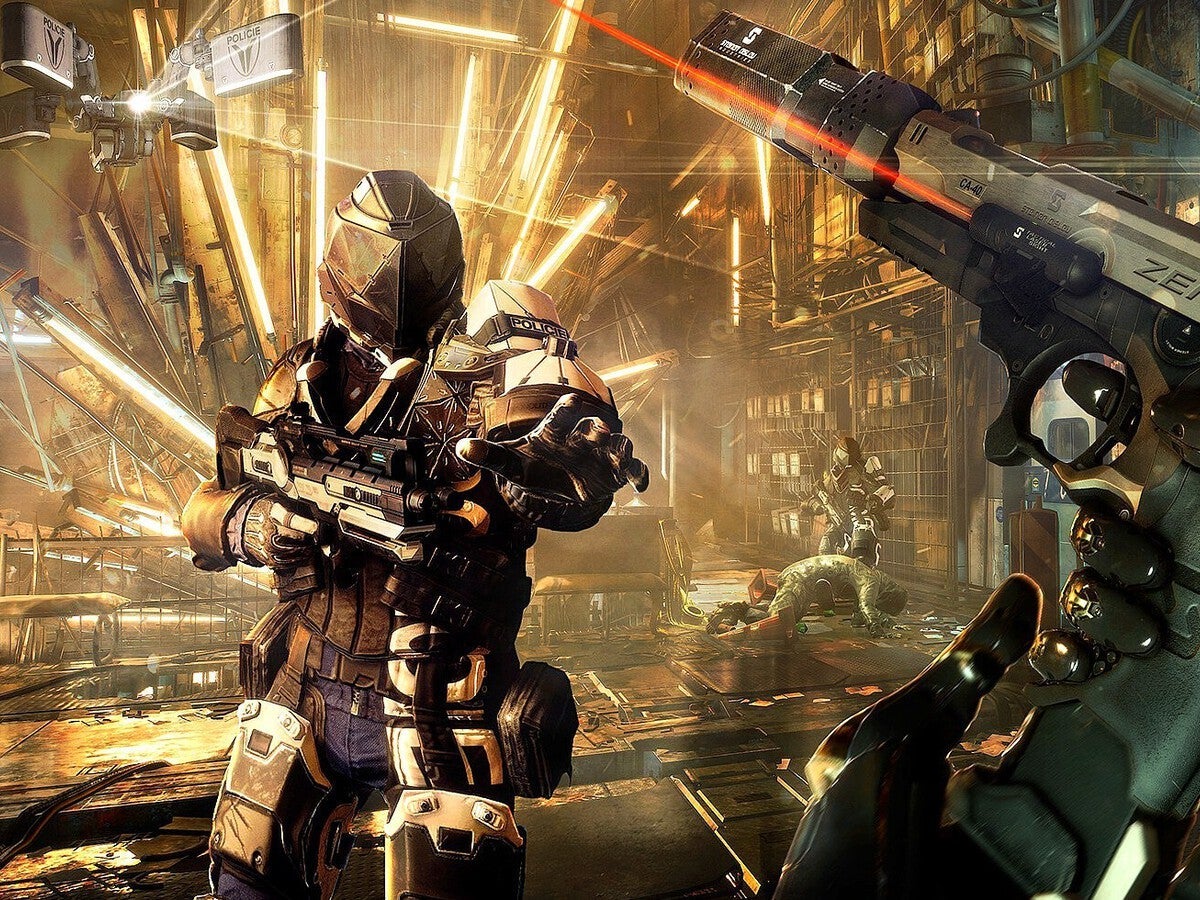
The iconic Deus Ex saga has not had a new title since 2016, when Deus Ex: Mankind Divided was released. Despite its acclaimed visual design powered by the Dawn Engine, the game received various criticisms pointing to an uneven narrative. Since then, fans have wondered when they will return to this cyberpunk universe, but expectations seem to be crumbling under the criticism of Elias Toufexis, the voice actor of the protagonist Adam Jensen. Hope is the last thing to be lost Toufexis has expressed his discontent with Square Enix and Eidos Montréal, accusing them of lack […]
The iconic Deus Ex saga has not had a new title since 2016, when Deus Ex: Mankind Divided was released. Despite its acclaimed visual design powered by the Dawn Engine, the game received mixed reviews that pointed to an uneven narrative. Since then, fans have been wondering when they will return to this cyberpunk universe, but expectations seem to be crumbling under the criticism of Elias Toufexis, the voice actor of the protagonist Adam Jensen.
Hope is the last thing to be lost
Toufexis has expressed his discontent with Square Enix and Eidos Montréal, accusing them of a lack of interest in the saga. Through his X account, he commented that there will be no Deus Ex because the people in charge are psychopaths, suggesting that there are no concrete plans for a new game. This comment resonates not only with his frustration but also with that of the franchise’s followers, who long for a return to the rich narrative of the game.
Despite the uncertainty surrounding Deus Ex, the recent news about the development of a new Tomb Raider by Crystal Dynamics, also under the umbrella of Embracer Group, offers a glimmer of hope.
For those who wish to experience or relive the story of Mankind Divided, Prime Gaming is offering the game as part of a promotion that allows subscribers to claim three free titles. In addition to Mankind Divided, the selection includes Dreamscaper and Living Legends: The Crystal Tear, providing players with a unique opportunity to immerse themselves in these worlds.
Alyson Stoner, known for her work on Phineas and Ferb and Step Up, has issued a statement to clarify the confusion caused by a comment she made at an event related to the Kingdom Hearts community. This comment was interpreted by some fans as a possible spoiler about Kingdom Hearts 4. Stoner, who has voiced characters like Kairi, Xion, and Naminé, mentioned in a clip that “a lot of people don’t like to know about Naminé,” which led to speculation about her return in the upcoming title of the franchise. No Kingdom, no hearts In this regard, Stoner used […]
Alyson Stoner, known for her work on Phineas and Ferb and Step Up, has issued a statement to clarify the confusion caused by a comment she made at an event related to the Kingdom Hearts community. This comment was interpreted by some fans as a possible spoiler for Kingdom Hearts 4. Stoner, who has voiced characters like Kairi, Xion, and Naminé, mentioned in a clip that “many people don’t like to know about Naminé”, which led to speculation about her return in the upcoming title of the franchise.
No Kingdom, no hearts
In this regard, Stoner used her Instagram story to clarify that her statement was misinterpreted and that she has no information about the game in development. “Unfortunately, I have no news about KH4, but I am as eager as you for an update“, she assured, emphasizing that any suggestion of a new role was incorrect. “I haven’t recorded anything currently and I didn’t mean to give the impression that there was something more behind my comment”, she added.
The Kingdom Hearts community is known for its fervor and the intense reactions provoked by the statements of the figures involved, which often results in rampant speculation. The series has had different actresses for the character of Naminé, which has also contributed to the level of confusion. Stoner explained that the lack of communication in the industry often means that actors are not informed about their projects until public announcements are made.
On the other hand, Tetsuya Nomura has confirmed that the development of Kingdom Hearts 4 is progressing well, although the information gap continues to generate anxiety among fans. In this context, Stoner’s hints, although unfortunate, reflect the community’s passion for the franchise.
The Dragon Quest and Final Fantasy franchises, fundamental pillars of the JRPG genre, have maintained a relationship of competition and comparison over the years. In a recent interview, Yuji Horii, creator of Dragon Quest, shared his vision on the narrative differences that characterize both sagas, highlighting how their design has influenced the player’s experience. Emphasis on narrative or immersion Horii pointed out that in Final Fantasy, characters have voice and personality, allowing them to build their own identities. Protagonists like Cloud from Final Fantasy VII or Tidus from Final Fantasy X […]
The Dragon Quest and Final Fantasy franchises, fundamental pillars of the JRPG genre, have maintained a relationship of competition and comparison over the years. In a recent interview, Yuji Horii, creator of Dragon Quest, shared his vision on the narrative differences that characterize both sagas, highlighting how their design has influenced the player experience.
Emphasis on narrative or immersion
Horii pointed out that in Final Fantasy, characters have voice and personality, which allows them to build their own identities. Protagonists like Cloud from Final Fantasy VII or Tidus from Final Fantasy X are examples of heroes who guide the narrative through their emotions and dialogues. This approach, while rich in narrative content, presents a marked contrast with the approach of Dragon Quest, where the protagonist remains silent, allowing the player to identify with the character. For Horii, this silence does not imply a lack of depth, but rather is a deliberate resource for the player to identify with the main character.
This divergence in design philosophies reflects two distinct ways of telling stories within the world of Japanese role-playing: silent immersion versus guided narrative. Both formulas have proven to be successful and have greatly contributed to the development of the genre, inspiring new generations of developers and players.
Horii also emphasizes that this historical rivalry is not negative, but rather represents a creative diversity that enriches the landscape of Japanese role-playing games. By observing how both sagas have evolved with remakes and new releases, their reflection remains alive in the hearts of players, who today can choose to become the silent hero of Dragon Quest or accompany the protagonists of Final Fantasy in their emotional stories.
Yoko Taro, the acclaimed creator of the NieR series, has been working on multiple projects since 2023, although many of them have been canceled, leading to the perception among fans that he is not active in the industry. In his recent statements at the South Korean event G-CON 2025, Taro demystified this idea, explaining that, despite being compensated for his work, the lack of releases leads his followers to mistakenly think he is inactive. “Although I was working on it, they were not published. I get paid, so it’s not a problem for me, but since my work does not […]
Yoko Taro, the acclaimed creator of the NieR series, has been working on multiple projects since 2023, although many of them have been canceled, leading to the perception among fans that he is not active in the industry. In his recent statements at the South Korean event G-CON 2025, Taro debunked this idea, explaining that, despite being compensated for his work, the lack of releases leads his followers to mistakenly think that he is inactive. “Even though I was working on it, it wasn’t published. I get paid, so it’s not a problem for me, but since my work isn’t published, people think I’m not working,” he stated.
Doesn’t want to release anything below its standards
Taro is known for its commitment to quality, which leads it to prefer not to release games that do not meet its standards. This philosophy aligns with a broader trend in the video game industry in 2025, where there has been a notable increase in cancellations and studio closures. Renowned companies like Microsoft and Square Enix have also decided to reduce the number of releases, betting on projects that ensure excellence and avoiding the risk of publishing games that do not fully satisfy consumers.
The creator of NieR also reflected on his current situation, noting that it is preferable not to launch certain projects than to risk presenting something that does not meet his expectations. “I think it’s better not to release anything than to release something strange, so I have no negative feelings about it,” he concluded, reaffirming his dedication to quality in each of his endeavors. Despite the challenges, Taro remains committed to his art and the creation of memorable experiences for players.
Jacob Navok, former business director of Square Enix, has defended the use of generative artificial intelligence (AI) in video game development, stating that the new generations of players do not seem to care significantly about this technology. In a recent statement, Navok argued that most players “do not care” about the use of AI and cited the commercial success of Arc Raiders, a title that prominently uses AI in its production. It knows users better than the users themselves The development of Arc Raiders by Embark Studios has been the subject of comments […]
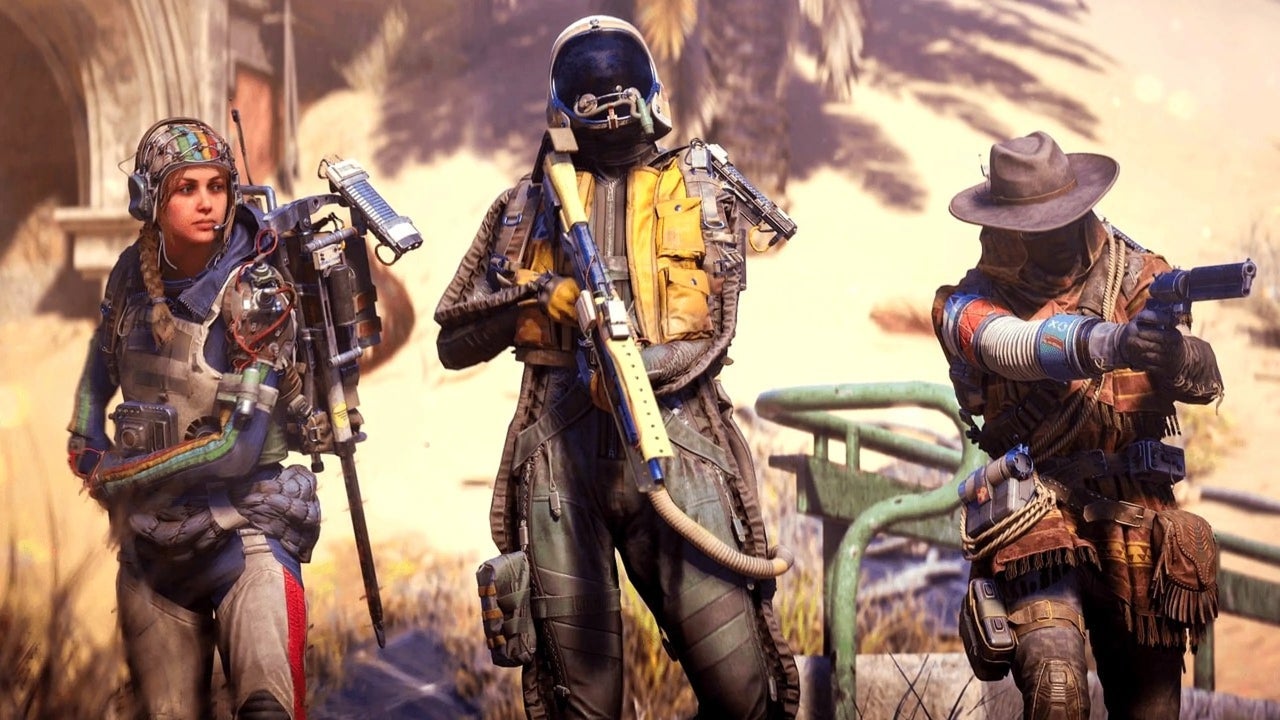
Jacob Navok, former business director of Square Enix, has defended the use of generative artificial intelligence (AI) in video game development, stating that the new generations of players do not seem to care significantly about this technology. In a recent statement, Navok argued that most players “do not care” about the use of AI and cited the commercial success of Arc Raiders, a title that prominently uses AI in its production.
Get to know users better than the users themselves
The development of Arc Raiders by Embark Studios has been the subject of polarized comments, especially due to its use of AI-generated voices. Despite having the resources to hire real voice actors, Embark has opted for a combination of recordings and text-to-speech technology in various aspects of its production process. This does not imply, according to its co-founders, the intention to replace actors.
However, not everyone in the industry shares Navok’s enthusiasm. Critical voices, such as John Buckley from Pocketpair, have questioned the value of generative AI in terms of creating game mechanics, suggesting that it represents a flawed approach. Despite this, companies like EA and Take-Two have expressed their interest in AI, committing to adopt it cautiously and with a balanced approach.
The debate over AI remains divisive, with a large number of developers and organizations expressing concerns about the unauthorized use of their intellectual property. Groups representing major names in the video game and anime industry, such as Studio Ghibli and Square Enix, have urged AI companies to avoid the misuse of their intellectual property.
As technology advances, the question of whether generative AI will become a staple in video game development or generate more resistance will remain a hot topic in the gaming community.