Seth MacFarlane, the well-known creator of Family Guy and The Orville, has expressed his concern about the current trend in the film and television industry, which focuses on violence and dystopian narratives. In recent statements, MacFarlane argued that Hollywood has adopted a negative approach in its storytelling, which could have a discouraging effect on the audience. According to him, in a world full of uncertainties, it is essential to offer stories that inspire hope and optimism. McFarlane does not seem like the most appropriate person to make this reflection “It seems that nowadays everything […]
Seth MacFarlane, the well-known creator of Family Guy and The Orville, has expressed his concern about the current trend in the film and television industry, which focuses on violence and dystopian narratives. In recent statements, MacFarlane argued that Hollywood has adopted a negative approach in its storytelling, which could have a discouraging effect on the audience. According to him, in a world full of uncertainties, it is essential to offer stories that inspire hope and optimism.
McFarlane does not seem like the most appropriate person to make this reflection
“It seems that nowadays all I see are violent movies and dystopias on television,” MacFarlane commented. His call to action arises from a genuine desire to see more productions that offer the audience a positive perspective, instead of immersing them in pessimism. “That is exactly why I created The Orville, because when I look at what is available, I feel that we need more stories that uplift us and provide us with a sense of hope,” he added.
The series The Orville, which combines elements of comedy and science fiction, is a clear reflection of MacFarlane’s vision. In this project, the creator has sought to present plots that, although sometimes addressing complex themes, always result in optimistic and uplifting messages. This stands in stark contrast to the prevailing trend it critiques, in which violence and unease seem to dominate the screens.
MacFarlane’s proposal resonates with viewers who yearn for more positive narratives in a media landscape that, according to him, is saturated with a gloomy tone. As the industry continues to face criticism for its creative choices, MacFarlane’s words could spark a debate about the kind of stories that should be told today.
We have completely gotten used to watching series during our commute on the subway or on whatever public transport we take: it’s as easy as taking out our phone, putting it in front of us, opening the app we need, and enjoying it. However, not so many years ago it wasn’t that easy, and only a few could afford such a grotesque and absolutely monstrous device: the portable television. Only for a very select audience, who didn’t want to listen to the radio or their walkman, and for whom missing a single minute of what was happening in their favorite soap opera was nothing less than […]
We have completely gotten used to watching series on our commute in the subway or on whatever public transport we take: it’s as easy as taking out our mobile, holding it in front of us, opening the app we need, and enjoying. However, not so many years ago, it wasn’t that easy, and only a few could afford such a grotesque and absolutely monstrous device: the portable television. Only for a very select audience, who didn’t want to listen to the radio or their walkman, and for whom missing a single minute of what was happening in their favorite soap opera was nothing short of a sin. If you remember them, you may have idealized them. If not, get ready to be surprised by one of the least useful and most forgotten devices in the history of technology.
Me, the novel, I take it everywhere
The story of portable televisions begins in 1963, when Mechianix Illustrated showed the future of television and computing in general, such as miniature tape recorders, book-sized computers, or tiny televisions, which RCA was supposedly working on. However, many believe it was a lie, because, after just a few prototypes, the industry did not start until 1971.
That’s when Panasonic created the innovative yet impossibly named IC TV MODEL TR-001. Of course, it ran on a rechargeable battery and allowed you to watch programs on its incredible three-and-a-half-inch screen (diagonally). You couldn’t see anything, of course, so with the purchase of the bulky device, they also gave you a magnifying glass. Additionally, it had a tiny speaker right below the screen. It’s worth seeing: it’s a huge rectangular device that had a very small screen and its only selling point in the ads was “It’s small and you can take it anywhere.” It didn’t matter if it was good or not, of course.
There were even advertisements referencing the arrival on the Moon the previous year, with the slogan “Now you can see the Russians arriving even if you are 402,000 kilometers from Earth”. The Cold War, at its peak. More models came out that evolved the concept of “portable television,” but the 1980s is where it had a boom: Sony, coming off the success of the Walkman, tried to imitate it with the “Watchman”, a kind of portable radios with screens that lasted from 1982 to 2002: with the transition to digital, it could no longer receive satellite signals (unless you used an adapter), and it ultimately lost all interest.
Over time, the five-centimeter black and white screen ended up becoming color in 1988 (later than its competitors), and it even had a “Mega” size model. In other words, a television with a handle that you could take anywhere, which caused a stir in campsites and guardhouses in the 90s. It may never have competed with other devices of the time, but it was certainly recognizable. So much so that it even appeared in the movie Rain Man, which went on to win the Oscar for Best Picture. Quite something.
In the end, portable televisions of a certain quality with LCD screens ended up costing 100 euros, but soon even the most enthusiastic fans no longer needed them after the release of the iPhone, which allowed you to have a whole universe, now indeed, in your pants pocket. You can still keep buying, but most of it is just vintage that won’t bring you anything… Unless you’re so fed up with Netflix and the rest of the streaming services that you’ve decided to go backward. Next step: open a video rental store. You never know.
According to new projections, adults in the United States are expected to spend an average of 2 hours and 29 minutes a day watching traditional television in 2025, which represents the largest portion of time dedicated to media compared to other activities. This data, extracted from a report by eMarketer, underscores the persistence of linear television in a constantly evolving media landscape. Among young people, the situation is very different. However, the media consumption landscape is changing, especially among younger audiences and those who have chosen to cut the cord. These groups […]
According to new projections, adults in the United States are expected to spend an average of 2 hours and 29 minutes a day watching traditional television in 2025, which represents the majority of time dedicated to media compared to other activities. This data, extracted from a report by eMarketer, highlights the persistence of linear television in an ever-evolving media landscape.
Among young people, things are very different
However, the media consumption landscape is changing, especially among younger audiences and those who have opted to cut the cord. These groups are gradually shifting their attention towards digital video platforms and social media, which means that marketers and media buyers need to reevaluate their advertising strategies. The key to maximizing reach lies in balancing traditional ad purchases with investments in OTT (Over-The-Top) platforms and social media videos.
On the other hand, the growth of the FAST space (free ad-supported television) is highlighted, which is emerging as an attractive and economically viable advertising option. This segment provides advertisers with new opportunities to capture the attention of audiences that have migrated to digital.
Estimates about the time that American adults will spend on different media are essential for companies to adjust their advertising budgets. It is clear that, although traditional television remains dominant, the shift towards digital media is redefining how consumers interact with content, a phenomenon that analysts expect will continue in the coming years.
Jimmy Donaldson, known in the digital world as MrBeast, has established himself as the content creator with the most subscribers on YouTube, thanks to his iconic competitions and challenges that attract millions of viewers. His ability to generate engaging content has led to his show currently being considered for an Emmy in the categories of Outstanding Competition Series and Outstanding Host. This nomination highlights not only his impact in the realm of digital entertainment but also his influence on traditional television. An award success that also translates into fans The organized events […]
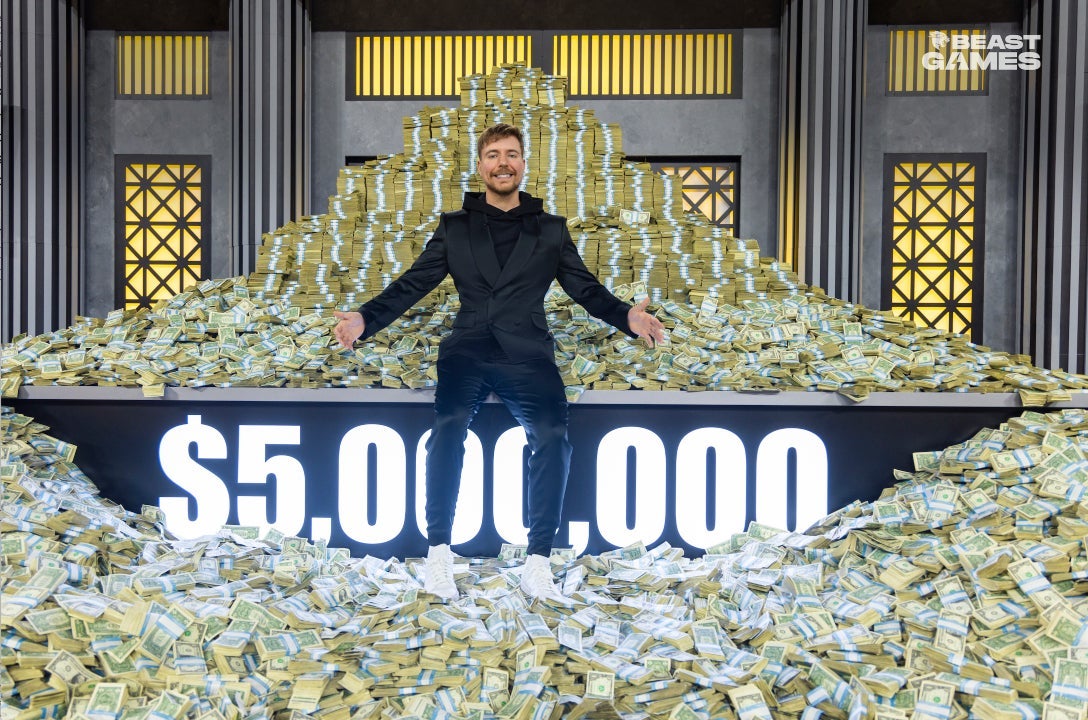
Jimmy Donaldson, known in the digital world as MrBeast, has established himself as the content creator with the most subscribers on YouTube, thanks to his iconic competitions and challenges that attract millions of viewers. His ability to generate engaging content has led to his show currently being considered for an Emmy in the categories of Outstanding Competition Series and Outstanding Host. This nomination highlights not only his impact in the realm of digital entertainment but also his influence on traditional television.
An award-winning success that also translates into fans
The events organized around MrBeast’s shows have unleashed an unprecedented attendance phenomenon. Children and adults stand in long lines, sometimes for hours, to be part of the experience, demonstrating the immense appeal of his entertainment format. This popularity is a testament to how digital content has managed to break through the barriers of conventional media, generating a loyal fan base eager to interact in person with their favorite creator.
On any given day, it is common to see lines stretching across several streets at the Television Academy in North Hollywood, where eager fans wait for the chance to see MrBeast in action with his challenging games. His success not only redefines what it means to be a content creator in the digital age, but also raises questions about the future of industry awards, especially regarding the convergence of streaming platforms and conventional television.
As rumors about a possible expansion of his program continue to circulate, it is evident that MrBeast is in a unique position to influence both pop culture and the way entertainment is conceived today.
Sometimes, the best things come from where you least expect them. In this case, it’s time to talk about the series The 11th Body, which has captured the attention of the public in Israel and is now coming to streaming, where fans of the police thriller genre can enjoy its seven episodes. The plot follows detective Iris Abramov, played by Magi Azarzar, who investigates the appearance of a body in a laboratory at the Haifa University of Technology. During her investigation, she finds a second body related to a missing medical student, which further complicates her […]
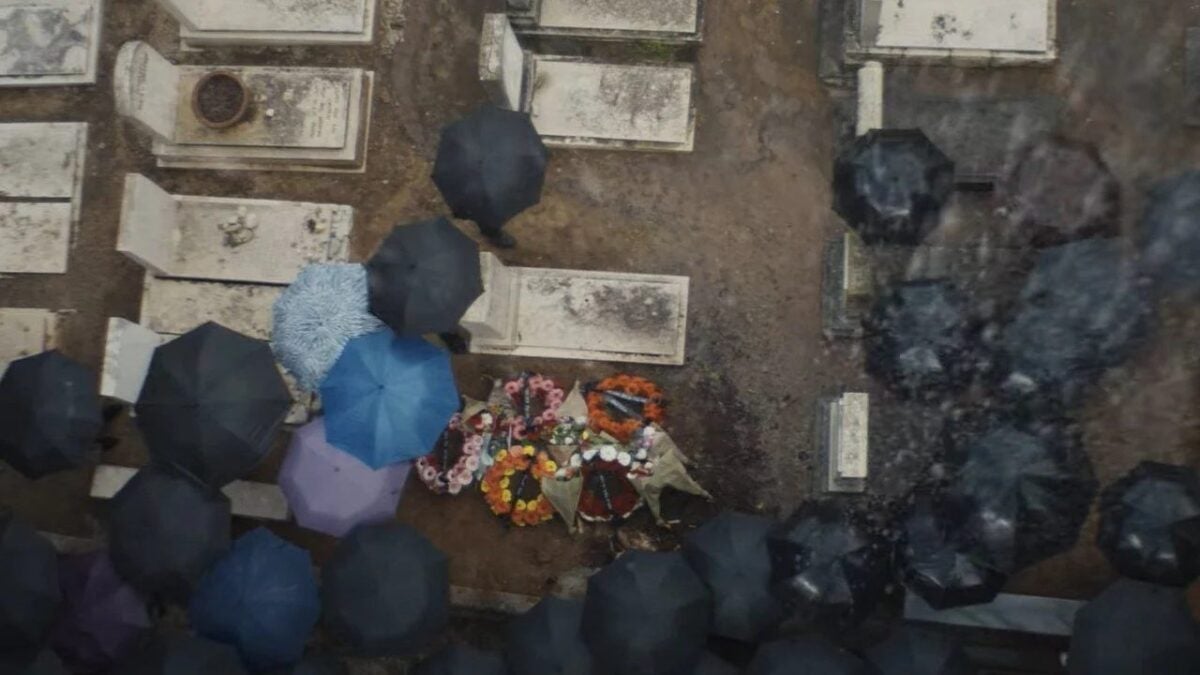
Sometimes, the best things come from where you least expect them. In this case, it’s time to talk about the series The 11th Corpse, which has captured the attention of the public in Israel and is now coming to streaming, where fans of the police thriller genre can enjoy its seven episodes. The plot follows detective Iris Abramov, played by Magi Azarzar, who investigates the appearance of a corpse in a laboratory at the Haifa University of Technology. During her investigation, she finds a second body related to a missing medical student, further complicating her already challenging personal life, marked by a complicated divorce and caring for her father with dementia.
Created by Yaniv Iczkovits, an author known for his critical stance towards Netanyahu’s government and operations in Palestine, the series not only captivates with its intriguing narrative but also raises a debate about the morality of artists in the performance of their work. Recently, a significant number of users on various social networks have started to boycott the series, claiming disagreement with the author’s political views, which raises questions about the separation between the work and the creator’s ideology.
Despite the controversies, The Cadaver Number 11 has achieved remarkable success in its country of origin, standing out for the mix of genres that combines thriller with a human narrative focused on the emotional background of its protagonist. The series promises to captivate not only mystery lovers but also those interested in complex stories with multi-layered characters.
With its arrival on the international market, The Eleventh Corpse presents itself as an essential option for those seeking an engrossing plot in series format. From its focus on investigation to Iris’s personal struggles, the production offers a rich narrative experience that will not leave viewers indifferent.
The perfection measured to the heart and the classicism almost typical. Game of Thrones, today, is as exciting as watching paint dry.
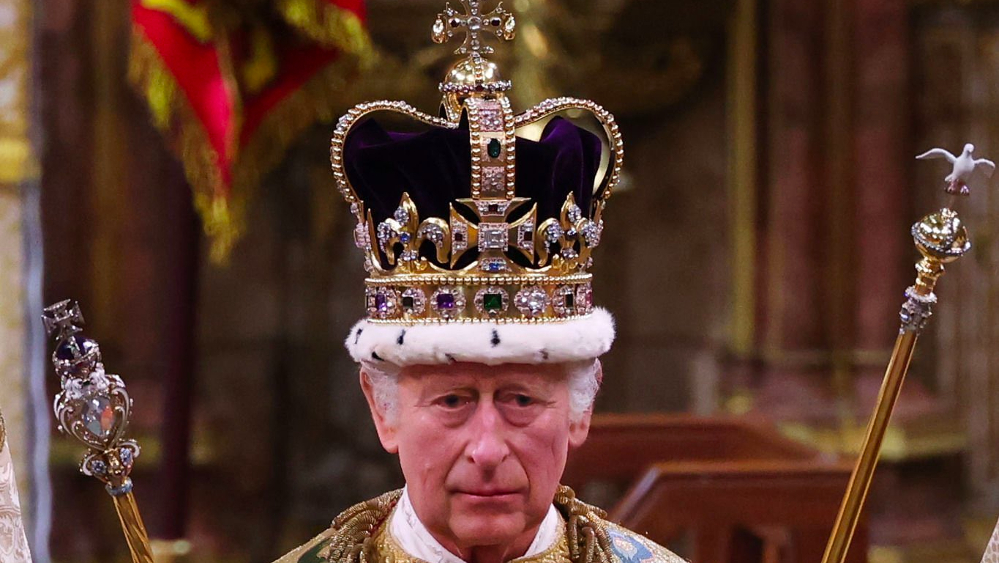
Well, there you have it. Charles III is officially the king of the United Kingdom, to the excitement of a few and the chagrin of all of us who have watched a few hours of absolute anti-television: the ceremony was intended to be the most modern Coronation in history but, beyond the historical importance (which it has) has shown that the perfection measured to perfection and the classicism almost typical of ‘Game of Thrones’, today, is as exciting as watching paint drying.
The Coronation of Queen Elizabeth II was an event remembered by all Londoners since 1953. It is clear: not only was it the 1950s and, in general, there was much more belief in the British Royal Family, but also Elizabeth II was loved by the population. She was 26 years old and was a revolution for the stagnant British monarchy. However, in 2023, we know that, in their archaic traditions, everything was more of the same.
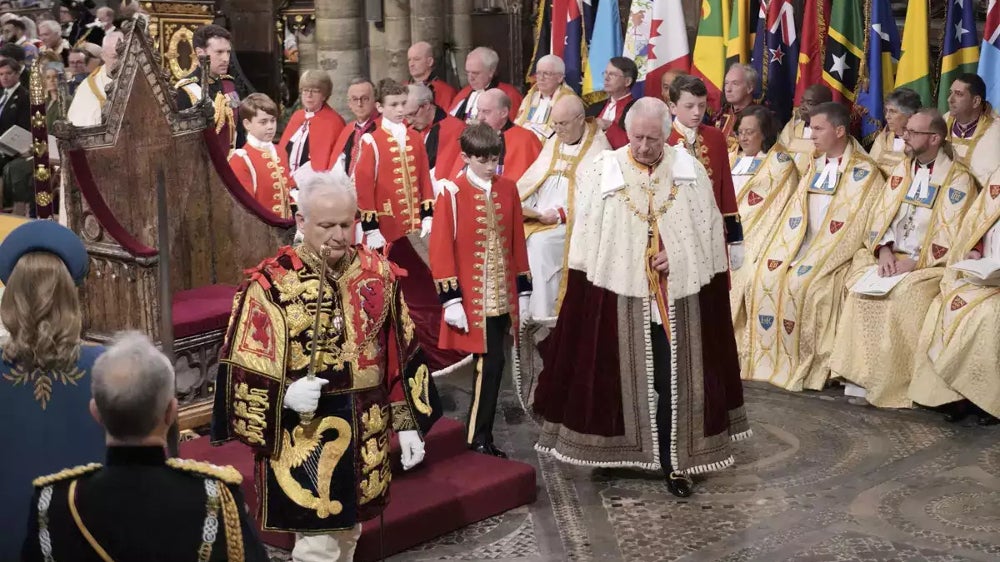
And it does not seem that Charles III is going to move to modernize the institution in the least: watching the Coronation has been like looking through a crack to the past, that in which there were lords, subjects and vassals, the Church still had magical power and the kings were anointed with divine oil by the hands of the Bishop of Canterbury. In an age of social networks, artificial intelligence and the future in the present, eating the ecclesiastical ceremony has been like enduring the longest (and most luxurious) wedding in the world. One of those in which you end up asking yourself “Well, what’s there to eat after all this?
In the end, the historical anachronism is the only thing that has been of any interest: the giant sword, the golden orb, the scepters, the kneeling, the “Hail to the king”. For a monarch who only has a 49% approval rating, this ostentation of power and wealth, no matter how much he insists on saying that it is an austere ceremony, cannot be good.
What’s next?
There were many who, between memes and news, have taken the opportunity to point out a reality: the kings who would have really been laureates were others. The only way to turn this blunder into a really interesting initiative for citizens would have been to anoint William and Kate, the golden couple of the British monarchy, while they still have years ahead of them in which they can evolve an institution that has been stranded in the past.
Charles and Camilla are not liked by an English society that has had to see them go through numerous scandals, from the famous Tampax conversation (if you do not know what we mean, Google it, you will not regret it) to everything related to a Lady Di who has been more present today in the conversations than the queen herself. They don’t even know it, and maybe only Harry has realized it: the current British monarchy is a show… that Charles has not known how to put on.
The Coronation of 2023 will go down in history for its historical significance, yes, but not for the mark it leaves on jaded citizens still recovering from the combo of Brexit, the pandemic, Boris Johnson, Liz Truss and the passing of the Queen Mother. The moment when the bishop has asked people from home to shout cheers to the king and kneel to show respect and vassalage, I couldn’t help a chuckle: the 16th century forcing its way into the 21st century. Pure modern life.
RL Stine made gold with books, the series, spin-offs like “In search of your own nightmare”, board games and all kinds of merchandising. And meanwhile, at Scholastic they kept thinking about the easiest way to further capitalize on the success.
Perhaps nothing encapsulates better what the 90s were like than ‘Goosebumps’, both the original saga of 62 books (of which only 60 were published in Spain) and the TV series that tried to terrify a whole generation in ‘Club Megatrix’ with its well-known “Temblad, muchachos, temblad, qué miedo váis a pasar”(Tremble, boys, tremble, you’re going to be scared).
1995 and 1996 were a real “Nightmaremania”, especially in the United States (although watch out for the publication of the magazine ‘Goosebumps’ in Spain and other acts of dubious legality). RL Stine was making gold with the books, the series, spin-offs such as ‘It’s Only a Nightmare!’, board games and all kinds of merchandising. And meanwhile, Scholastic couldn’t stop thinking about the easiest way to capitalize even more on the success. They succeeded, of course. And they succeeded.
Before ‘Goosebumps’, Stine was already known in the publishing world: he wrote quickly and efficiently, and his ‘Fear Street’ novels were a success. Perhaps that is why he was asked to transform adolescent terror into children’s fears with a collection that he hesitated to write, but ended up making him world famous: even now new novels of the saga are still coming out, although without repeating the crazy success of yesteryear, of course. In July 1992, ‘Welcome to Dead House’ and ‘Stay Out Of The Basement’ were published to general indifference. Three years later, a series that would run to 74 episodes premiered.
‘Goosebumps’ not only adapted 48 books from the original saga: it also brought to television short stories and a couple of books from the consequent series, ‘Goosebumps 2000’. There were even three episodes, dubbed ‘Chillogy’, which were completely new stories. In fact, there RL Stine wasn’t even credited as a screenwriter. And it was strange, because his name was on everything from novels he clearly hadn’t written to the ultimate shameless cash grab for 90’s kids: ‘Goosebumps presents’.
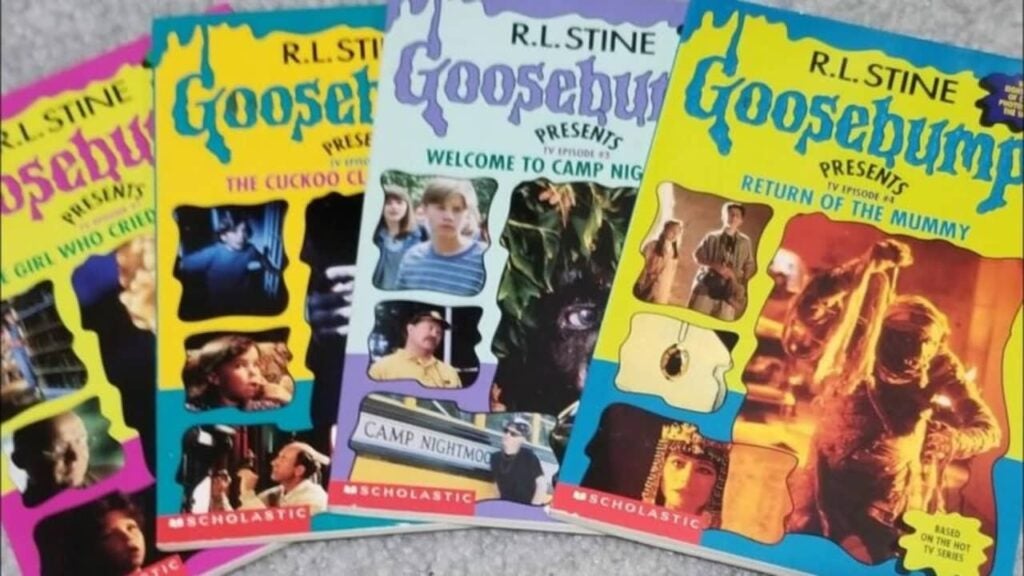
Each episode of ‘Goosebumps’ was based on an original book of about 120 pages. But Scholastic thought they could still make a few dollars more by releasing smaller books based on the TV episodes, in which RL Stine would only put his name on the cover, but not write a single word. The first experiment, in February 1996, was a small 57-page book based on ‘The Girl Who Cried Monster’. And the ticket machine took another turn.
Nearly twenty
One could believe that nobody would fall for such an obvious deception, but the truth is that 18 books were published between February 1996 and February 1998 by different authors, such as Carol Ellis (expert in writing books on demand for sagas like ‘Cheerleaders’ or ‘Zona Límite’), Megan Stine (not related to RL Stine and who ended up making a name for herself writing biographies for children) or Francine Hughes (who had just adapted ‘Space Jam’ and ‘Beethoven 2’ into novels). All in all, a complete fiasco.
You may be thinking about why these books existed. And, on reflection, it makes sense: it was a time without streaming, when there were almost no VHS releases of TV episodes. If you had really liked an episode, you had to hurry up and record it or wait for it to be rebroadcast. These books, which contained full-color pictures, were a way to keep it alive in your memory. In the golden age of novelizations of any kind no one thought it was a rarity. Ah, the good part was that, since they were made from scripts and not the final episodes, you could see (well, read) some unpublished scenes. That’s something.
‘Nightmares’ currently has more than two hundred novels that have made RL Stine a millionaire. Of course, it doesn’t seem that on this book day many are going to go out to the Retiro expecting to find the literary adaptations of the television adaptations of these novels for children. But at least you know they exist: not everyone does!
What everyone does not know is that his adventures come from a literary saga that transcends 88 television episodes to last for more than 600
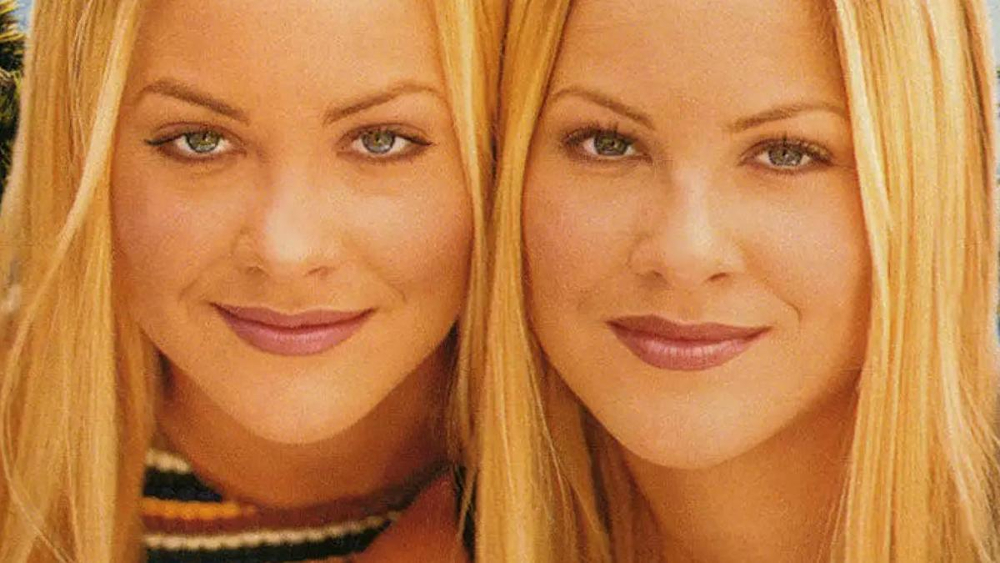
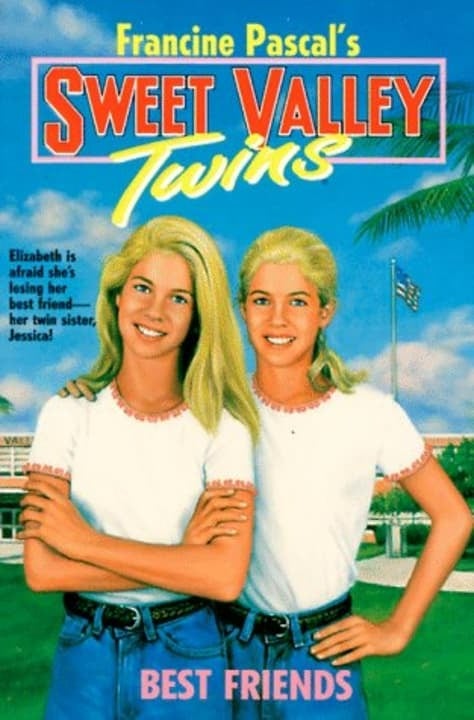
Las gemelas de Sweet Valley’ is a landmark of 90’s television: in fact, its success was such in Spain that it was broadcast at the same time on TVE and Antena 3. What not everyone knows is that its adventures come from a literary saga that transcends the 88 television chapters to extend over more than 600 issues between main novels, spin-offs, adult sagas and secret clubs. Taking advantage of the book day, let’s take a look at a never-ending saga that you could never, ever read in its entirety (unless you dedicate yourself exclusively to it): ‘Sweet Valley’.
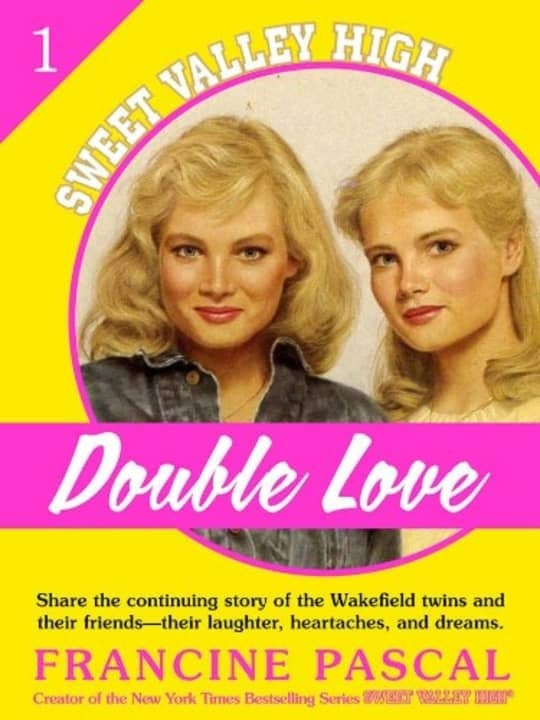
Francine Pascal has been behind the lives of Jessica and Elizabeth for forty years, two twins who started out in high school and whose lives have taken a few twists and turns since October 1983 when it all began with ‘Double Love’, a novel in which the two sisters fight over the same boy, Todd Wilkins, who would later become Liz’s boyfriend. The author’s original idea was to make a soap opera in book format for teenagers, and boy, did she succeed. At least in length.
Originally, Pascal wanted to tell her story as a television series, but, when her dream came true, she ended up hating the end result. Not that ‘her’ story is entirely hers either: under the name Francine Pascal lurks a host of ghostwriters who have added chapters to the story over the decades at a lightning pace. From October 1983 to July 1998 there was a ‘Sweet Valley Twins’ book every month, for a total of 143 packed with love affairs, double dates, rants, whispers and even dead boyfriends returning in spirit form. Suck it, ‘Grey’s Anatomy’.
In addition to the original saga books, a special novel called ‘Super Edition’ was published once a year: there were twelve issues in which love affairs were put aside to focus on earthquakes, avalanches, trips to Cannes, forest fires and online stalkers. In addition, there were nine issues of ‘Super Thrillers’, packed with murder, Witness Protection, politics and kidnapping: the Sweet Valley twins weren’t bored, no.
Spin-offs a cascoporro
And here the madness begins: the ‘Magna Editions’ told things we had already seen but from a different point of view (the pig gets everything) and ‘Super Stars’ were stories about the secondary characters (Lila, Bruce, Enid, Olivia and Todd) that joined those of ‘Sweet Valley Twins’, a saga of 118 books that was published at the same time as the original and that took place a few years before (the continuity thing is going to be a mess, we’re going to warn you). The plots ranged from finding the secret ingredient to make cookies to girls suffering from cancer or teachers playing the Nazi Holocaust with them. Almost nothing.
This spin-off had, in turn, fourteen ‘Super Editions’, with stories like “twins go to an amusement park but don’t talk to each other”, “Jessica lives the same day over and over again until she finds her Christmas spirit” or “twins go to Paris and think their caretaker is a murderer“. Oh yes, and nine ‘Super Chillers’ featuring ghosts, magic pens and cursed masks (in a plot absurdly plagiarized from ‘Nightmares’). Also three ‘Magna Editions’, 23 novels of ‘The Unicorn Club’ and two of ‘Team Sweet Valley’, where the twins do gymnastics and volleyball.
And you’ll say “Well, that’s it, isn’t it?”. Of course not. From 1990 onwards, 70 more ‘Sweet Valley Kids’ books were published, featuring the characters as children, with seven ‘Super Snooper’ and five ‘Super Special Editions’ included. And when the original saga ended in 1998 with the twins’ graduation, another one began: ‘Sweet Valley Junior High’, which told stories of both the year before it all began: 30 more books in the bag and more chronological teasers.
But as well as going backwards, the saga also continued forwards: ‘Sweet Valley Senior Year’ had 48 novels since 1999, but six years earlier, in 1993, they had already begun their college adventures in ‘Sweet Valley University‘, which had 63 titles, including 18 ‘Thriller Editions’. After college, in 2001, ‘Elizabeth’ followed for six novels one of the twins running away to London and falling in love with a millionaire while clearing up the reasons for the breakup with her sister.
Ten years later, in 2011, Francines Pascal released ‘Sweet Valley Confidential’, which took place, coincidentally, a decade later. Finally, the author decided to put an end (for now) with a six-book saga, ‘The Sweet Life’, which told the story of the twins in their thirties: marriages, children, reality stars and much more to culminate these 604 books (we repeat: 604!) that many did not even guess when, in 1994, the TV series premiered. Don’t you feel less lazy now to start with this nine-part macro-saga of adventures? You’re welcome.