Leveling Up Health Management: The Super Nintendo Game for Kids Battling Diabetes

In this case, the assignment was… certainly, special. And the protagonist was a diabetic superhero who had to face aliens.

It’s 1992. Diabetes in the United States was on the rise, affecting around 5% of the population, who had to learn concepts like “insulin,” “hyperglycemia,” and how to adopt a healthy diet. But that’s what video games are for, after all. Or at least this one, which disguised itself as a profound aid for children with diabetes, but also concealed, unsurprisingly, advertising from a pharmaceutical company. Welcome to the world of ‘Captain Novolin’.

SNES9x DOWNLOAD

Insulin and nothing else

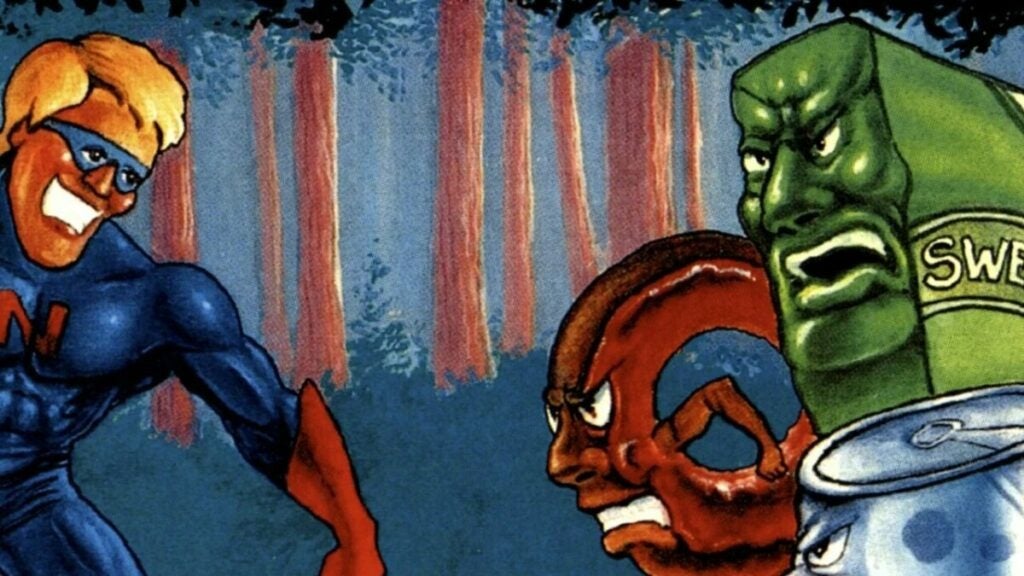
Novo Nordisk, the pharmaceutical company behind the medication Novolin, was responsible for bringing it to life in collaboration with Sculptured Software, a company that created games of no small importance, such as ‘Super Star Wars’ or ‘Bart’s Nightmare,’ the spin-off video game of ‘The Simpsons.’ In this case, the project was quite unique. The protagonist was a diabetic superhero who had to confront extraterrestrials.

But beware, because these extraterrestrials took the form of junk food. Killer cereals, giant licorice, cubes of sugary soda… Our hero had to traverse the entire city, defeating them until reaching the location where the mayor was hiding, in the midst of a hypoglycemic attack (he’s diabetic too), and cure him. Fortunately, to heal, along the way, there are apples and all sorts of healthy food items to teach children how to take care of themselves.

Between levels, the game also provides very basic reminders about using insulin, such as a good breakfast plan, and introduces trivia-style questions to help retain the essentials (“Hypoglycemia occurs when blood sugars are…”). Straddling the line between education and promoting more medication, 10,000 copies of the game were distributed for free in hospitals and summer camps for diabetics. Although it has gone down in history as one of the worst games in Super Nintendo history, the truth is that it was quite remarkable in terms of its theme at the time.

So much so that it gave rise to many more educational-pharmaceutical games like ‘Rex Ronan,’ focusing on the dangers of tobacco, ‘Bronkie the Bronchiasaurus,’ about asthma, or ‘Packy and Marlon,’ ‘Detective,’ and ‘Buildup Blocks,’ centered around diabetes. For whatever reason, it doesn’t seem like PS5 is preparing its lineup of insulin-related games. That might be just around the corner, probably.

SNES9x DOWNLOAD

Some of the links added in the article are part of affiliate campaigns and may represent benefits for Softonic.

Rare Pikachu Cars from the 20th Century Spark Collectors’ Craze

Tons of merchandising for the saga have been made over the last 25 years, but none like the one we’re showing you today: the Pika-car.

If you think Pokémon is an invincible monster capable of devouring anything in its path, that’s because you didn’t live through the late ’90s when the first generation arrived on Game Boy, the anime was on everyone’s lips (even for the infamous seizure-inducing episodes), and Pikachu became nothing short of an icon. Countless merchandise items have been created for the franchise over the past 25 years, but none quite like the one we’re showcasing today: the Pika-car.

eBay DOWNLOAD

Pika-kar

Do you have a yellow-painted Volkswagen Beetle (the classic Beetle) with Pikachu‘s ears, tail, and cheeks in your house? If you said “No,” you’re a monster. If you said “Of course,” we have bad news: there were only twenty of them in the entire world in 1998. They were primarily used for events in the United States, but as the initial craze faded, they were largely forgotten… and now fans would give anything to have one, even though most of them have vanished.

One lucky person managed to find one. Grace Klich, an avid Pokémon collector, simply had to follow the trail. Some of these cars were given away during the premiere of ‘Pokémon 3,’ so she just had to track down one of the winners who lived two hours away from her. The winner eventually passed it on to a friend, who, many years later, sold it on Facebook for a low price. The car was in poor condition, but after spending over $6,000, it can now be driven on the streets of Virginia and showcased at comic conventions to earn some extra cash. Well, to each their own with their money…

There are still 19 more cars to be located. Parts of them have been found in different places (a tail here, an engine there), but it’s challenging to determine if another complete Pikachu car exists in the world. The ones made to promote Gold/Silver, a PT Cruiser with the color and shape of Lugia, are in better condition… although only five of them were produced. By the way, Klich, the collector mentioned earlier, also has one. Why would someone want two Poke-cars? The answer is, “Why not?”

Being a Pokémon collector is more than just a hobby; they consider themselves “archivists” in the sense that there is a lot of lost material that brought joy to an entire generation but now seems to be gone forever, from chewing gum wrappers to images of specialized stores, tournaments, or first-generation plush toys. Hey, who said being a fan was an easy and inexpensive task?

eBay DOWNLOAD

Some of the links added in the article are part of affiliate campaigns and may represent benefits for Softonic.

The Great Goofy Debate: Exploring the Elusive Nature of Goofy’s Species

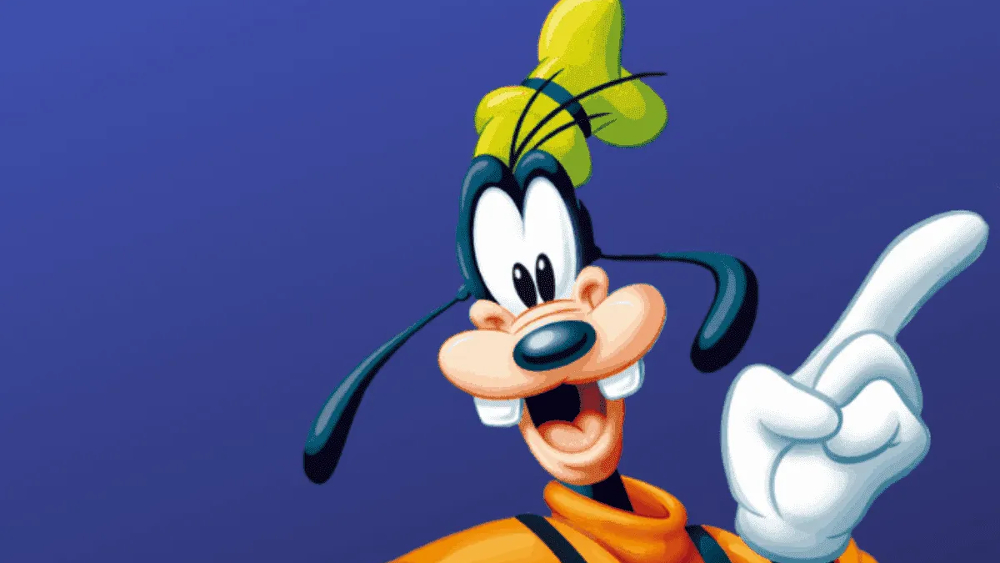
Mickey is a mouse. There is no doubt about it, just like Donald is a duck. And Pluto is a dog. It’s easy to distinguish Clarabella as a cow and Chop and Chop as squirrels, but the million-dollar question has been lurking since 1932: What the hell is Goofy? Yes, yes, you can laugh all you want, but there’s something hiding between that long nose, those ears and that goofy laugh. And we’re willing to go all the way.

Disney+ DOWNLOAD

Is it a dog?

The first answer is obvious: it’s a dog, isn’t it? In his first appearance he was called “Dippy Dawg”, which already gives us an idea of the origin of the character. In 1939 he was finally given the name we all know, in the short film ‘Goofy and Wilbur’, but it didn’t make anything clear about him. At that time Pluto had already been around for nine years, and he is undoubtedly a classic dog, the first thing that comes to mind when you think of one.

Some people say “They are just drawings, don’t think about it: they are both dogs. Only one talks and reasons and the other does not. There must be something else going on. His more modern girlfriend is Clarabella, a cow: if Minnie is a mouse and Daisy is a paw, you would think that at Disney they suffer from the “Noah’s ark” syndrome and put animals of the same species together. Then it’s settled, isn’t it? Goofy Goof is a cow.

Is it a cow?

Well. Or not. Goofy has been known to have other girlfriends who were definitely of the canine branch: chances are he doesn’t care, or that no one at Disney has spent as much time brooding over Goofy’s love life as the fans have. In the 1960s his girl was Glory-Bee, whose description only indicated that she has a dog’s nose.

What’s more: as we learned in the immeasurable ‘Goofy and Son’ he was married to a woman of whom we only know her name (Mrs. Goof) and they had a son, Max, who although he has the same problems as Goofy in terms of his animal origins, has more of a doggy face. Disney has stated that we have never met Goofy’s ex on screen, so we can rule out any of his loves. At least it’s clearer that he’s a dog. Sort of.

More or less?

Yes: Bill Farmer himself, the voice actor for Goofy since 1987, broke with everything when he bluntly said, in an interview with Yahoo, “Its not a dog“. Eye. “Pluto is a dog, but Goofy seems to be in the canine family in the same way that a wolf is not a dog but is also in the canine family”. Before being able to open new theories, the actor himself discards them because he knows how annoying fans can be with our absurd niches.

“I think Canis Goofus is the technical Latin term for what Goofy is. It’s simply Goofy.” Forever sunk. We started writing not knowing what the hell Goofy is (but seriously suspecting the doggy option) and now all we keep knowing is… we keep not knowing anything. Please, Disney, we need a solution. Who the hell is Goofy Goof?

Disney+ DOWNLOAD

Some of the links added in the article are part of affiliate campaigns and may represent benefits for Softonic.

Curro: Expo 92’s Iconic Mascot Finds Final Resting Place in Doll Cemetery

Curro, by the way, was about to be called Colón, but in the end they kept the name Francisco: because yes, Curro is still an affectionate name, right? Why have you never thought about it?

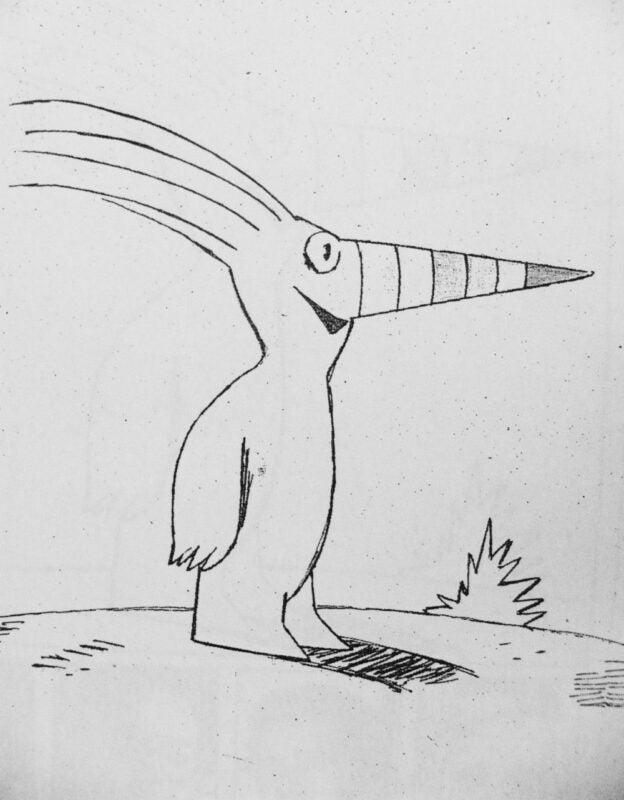
1992 was the year when Spain lost its innocence. After a period of Transition and well into the 90s, it was time to venture out into the world again, and what a way to do it: Olympics in Barcelona and Universal Expo in Seville. Quite something. And each event had its respective mascot: Cobi, the squashed dog by Mariscal, focused on sports, but to showcase Andalusia to the world, they chose a strange bird with multicolored hair. It was Curro’s turn, the peculiar one.

Google Maps DOWNLOAD

Let’s get to work!

This was not the only mascot presented to the organizing committee, of course. Three possible mascots made it to the final selection, which took place in January 1989: Curro, designed by Heinz Edelmann (art director of ‘Yellow Submarine’); El Ángel, created by Mingote; and Caballo Cartujano, designed by Miguel Calatayud, which bore a striking resemblance to the contemporary character BoJack Horseman.

As we know, Edelmann emerged as the winner, a decision that didn’t sit well with Mingote, who ended up in third place and withdrew from the competition afterwards (somewhat like canceling a game when you’re losing 10-0). Interestingly, Curro was almost named Colón, but they ultimately kept the name Francisco. After all, Curro is just an affectionate nickname, isn’t it? Bet you never thought of it that way!

Curro’s first sketch has seen some things

Curro appeared everywhere. Absolutely everywhere. From the TV show ‘Un, dos, tres’ to being a guest on the inaugural voyage of a perfect replica of the Victoria, Juan Sebastián Elcano’s ship, which unfortunately sank just 26 minutes after leaving the port, sending the mascot into the water. Things didn’t start off well, but they would end up even worse.

The Expo never grew tired of telling the story behind Curro’s nasal and capillary colors: apparently, he was born from a rainbow (hence the colorful hair), and then, by drinking water from a puddle where it was reflected, his nose ended up like that too. Quite a coincidence, right? Behind the costume, during the major appearances, was Chelo Vivares, better known as Espinete. Talk about enduring an extremely uncomfortable suit…

After the Expo, there were hundreds of Curro dolls left without a place to rest. Nowadays, they might have been sold at auction or on eBay, but back then there was only one solution: taking them to Alcalá de Guadaira, specifically to Romano Antigüedades, where they are piled up, waiting for someone to offer them a home. Do you want one? It can be yours for 225 euros. Just don’t bring it near any boats, just in case.

From Collectible Craze to Millennial Obsession: Unveiling the Centennial Story of Tazos

The history of the tazos begins seventy years before and covers half the world: yes, only in one country did we have the Chiquitazos, fistro.

In the 90’s if you didn’t have tazos you were nobody. That’s how it was. For 25 pesetas you could have a bag full of potatoes and the most coveted thing: a plastic round with drawings on both sides that was worth different points and that was useful to win fights in the schoolyard, expand the collection and be the king with a Portatazos full to the brim. However, the history of the tazos begins seventy years before and goes halfway around the world: yes, only in one country we had the Chiquitazos, fistro.

Twitter DOWNLOAD

This is the milk

Maui, Hawaii, 1927. Milk bottles have something very special apart from the food itself, which the manufacturers introduced as a mere necessity: a little cardboard circle that serves as a cap to protect the bottle, each one with a different brand. Children, sixty years before the NES and twelve years before television, had to have fun somehow: they collected these little circles, put them in a tower and played at knocking them down. You took the ones you knocked down, and it was the next one’s turn. A game of chance in which you could enter with forty and leave with eighty… or nothing at all. Take that, Las Vegas.

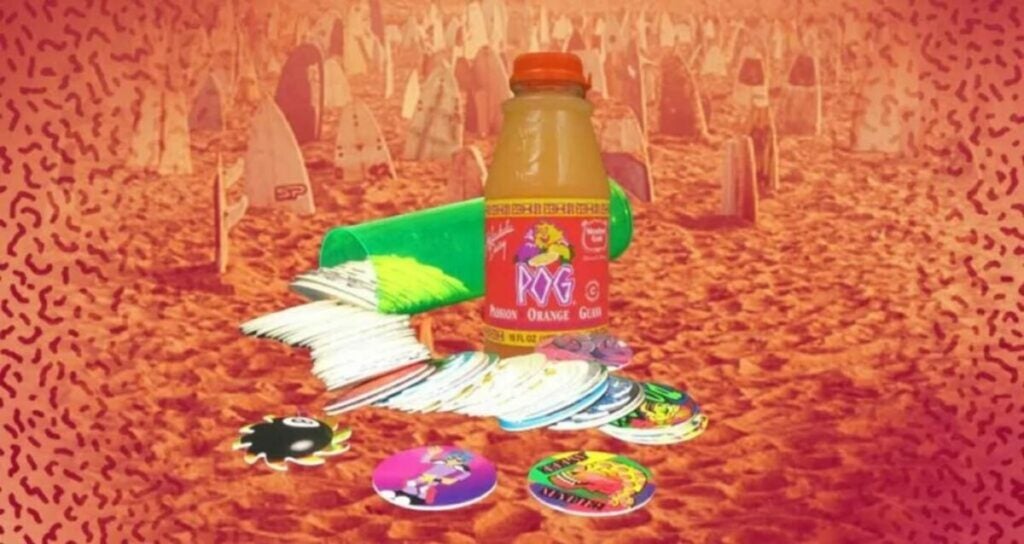
But the new bottling system made them a thing of the past, and in the 1940s they were lost, never to return… until 1971. That’s when Haleakala, a Maui milk brand, launched a new fruit drink called Pog (Passion Orange Guava) and, to promote it, gave away little cardboard circles like the ones of yesteryear with their logo printed on them. They became such a hit that they adopted the name of the drink itself: pogs. Incidentally, the drink in question is still on sale today, but without a prize.

Twenty years later (not even Doctor Who travels that far back in time), in Hawaii in 1991, a teacher on Oahu taught children to play pogs as a way of learning math and hoping that the kids would stop throwing balls at each other and move on to a non-violent alternative. Little did he know that he had just unleashed a typhoon that would reach Europe and South America in record time. To give you an idea: before it was exported out of Hawaii, the average number of pogs a child could have there was estimated at 1700.

From pog to tazo

In 1993, Pogs was no longer the only one selling them: it quickly became a smash hit around the world. Any company you can think of (like McDonald’s or Marvel) introduced them in the United States, causing a real fever that was called by different names around the world, like Flippos and, of course… Tazos.

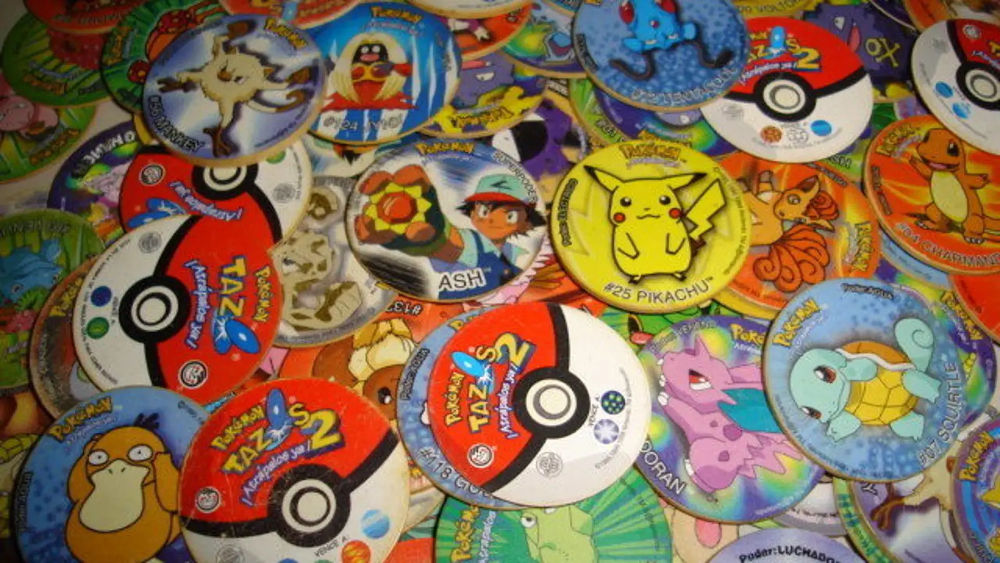
Contrary to what you might think, Tazo was not a random word. Quite the contrary: in Mexico it was used as an apocope of “taconazo”, a game in which children opened bottles with their feet trying to send the cap as far as possible. And while in the United States they began to prohibit playing in school playgrounds because they considered it a form of gambling, in Spain in 1994 we children opened potato bags to find inside plastic roundels of Looney Tunes and, later, Tiny Toons and Tazmania: between the three of them there were 254 tazos, which were advertised as “the game that sweeps the world, just arrived from America”. Get them all. It was just the beginning.

We saw the pull of it right away. So much so, that we even put two obsessions together to bring out Fistros, a unique product based on Chiquito de la Calzada that had jokes on the back, Bocabits cut in half inside and a Chiquitazo inside (out of a total of 10, including “Meretérita”, “Fistro”, “¿Te das cuen?” or “¿Cómor?”). Pure history.

The year of the tazo

1994 was the year of the tazo. They were easy to produce and very profitable: As newspaper gave away Real Madrid ones, Dunkin chewing gum gave away ‘Mortal Kombat 3’, Panini joined the tazos to ‘The Lion King’ sticker collections and Vidal candies gave ‘Street Fighter II’. But nothing could compare with Matutano’s classics, which between ‘Dragon Ball Z’, ‘Barbie’ and ‘Pokémon’ quickly saw that it was time to evolve before being left behind.

Between 1994 and 1997, the tazos mutated: we had the Supertazos, which gave more points; the Megatazos, which were thicker; the Mastertazos, which were directly a plastic billet that could handle anything; the Macro Tazos, which came in big bags and were four times bigger than any other tazo, with Chester Cheetos as the main character; the Sticker Tazos, which had a sticker incorporated; the Magic Tazos, which varied the image when moved; the Flying Tazos, with slits to join it to another one and launch it through the air and 3D version, or even some with hexagonal shape, which, supposedly, could be better directed. And now they come up with the NFTs thinking they have invented something.

Little by little they dissipated, although there is always a company that wants to revive them with all kinds of bizarre collections. But times have changed: children no longer consume so many bags of chips, we have the latest generation of video game consoles and the Internet. Tazos are a thing of the past… Or are they? In the end everything comes back, and recently it was announced that in some Latin American countries Bad Bunny would launch the “Bad Tazos” in Sabritas bags (i.e. Matutano). What if it’s never too late to relive this momen-tazo?

Sweet Valley Twins: The Impossibly Large Saga That Captivated Generations

What everyone does not know is that his adventures come from a literary saga that transcends 88 television episodes to last for more than 600

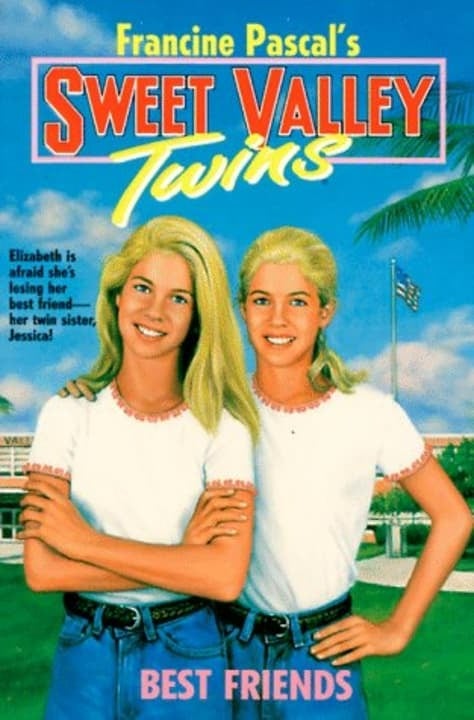
Las gemelas de Sweet Valley’ is a landmark of 90’s television: in fact, its success was such in Spain that it was broadcast at the same time on TVE and Antena 3. What not everyone knows is that its adventures come from a literary saga that transcends the 88 television chapters to extend over more than 600 issues between main novels, spin-offs, adult sagas and secret clubs. Taking advantage of the book day, let’s take a look at a never-ending saga that you could never, ever read in its entirety (unless you dedicate yourself exclusively to it): ‘Sweet Valley’.

Books at go-go

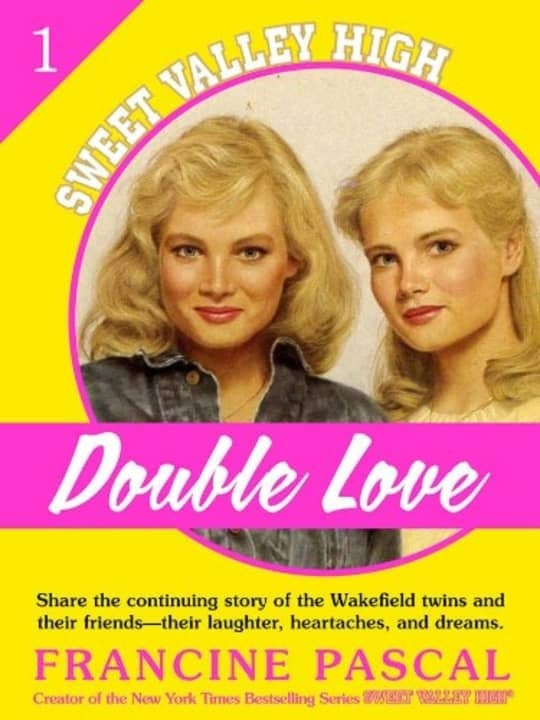
Francine Pascal has been behind the lives of Jessica and Elizabeth for forty years, two twins who started out in high school and whose lives have taken a few twists and turns since October 1983 when it all began with ‘Double Love’, a novel in which the two sisters fight over the same boy, Todd Wilkins, who would later become Liz’s boyfriend. The author’s original idea was to make a soap opera in book format for teenagers, and boy, did she succeed. At least in length.

Originally, Pascal wanted to tell her story as a television series, but, when her dream came true, she ended up hating the end result. Not that ‘her’ story is entirely hers either: under the name Francine Pascal lurks a host of ghostwriters who have added chapters to the story over the decades at a lightning pace. From October 1983 to July 1998 there was a ‘Sweet Valley Twins’ book every month, for a total of 143 packed with love affairs, double dates, rants, whispers and even dead boyfriends returning in spirit form. Suck it, ‘Grey’s Anatomy’.

In addition to the original saga books, a special novel called ‘Super Edition’ was published once a year: there were twelve issues in which love affairs were put aside to focus on earthquakes, avalanches, trips to Cannes, forest fires and online stalkers. In addition, there were nine issues of ‘Super Thrillers’, packed with murder, Witness Protection, politics and kidnapping: the Sweet Valley twins weren’t bored, no.

Spin-offs a cascoporro

And here the madness begins: the ‘Magna Editions’ told things we had already seen but from a different point of view (the pig gets everything) and ‘Super Stars’ were stories about the secondary characters (Lila, Bruce, Enid, Olivia and Todd) that joined those of ‘Sweet Valley Twins’, a saga of 118 books that was published at the same time as the original and that took place a few years before (the continuity thing is going to be a mess, we’re going to warn you). The plots ranged from finding the secret ingredient to make cookies to girls suffering from cancer or teachers playing the Nazi Holocaust with them. Almost nothing.

This spin-off had, in turn, fourteen ‘Super Editions’, with stories like “twins go to an amusement park but don’t talk to each other”, “Jessica lives the same day over and over again until she finds her Christmas spirit” or “twins go to Paris and think their caretaker is a murderer“. Oh yes, and nine ‘Super Chillers’ featuring ghosts, magic pens and cursed masks (in a plot absurdly plagiarized from ‘Nightmares’). Also three ‘Magna Editions’, 23 novels of ‘The Unicorn Club’ and two of ‘Team Sweet Valley’, where the twins do gymnastics and volleyball.

And you’ll say “Well, that’s it, isn’t it?”. Of course not. From 1990 onwards, 70 more ‘Sweet Valley Kids’ books were published, featuring the characters as children, with seven ‘Super Snooper’ and five ‘Super Special Editions’ included. And when the original saga ended in 1998 with the twins’ graduation, another one began: ‘Sweet Valley Junior High’, which told stories of both the year before it all began: 30 more books in the bag and more chronological teasers.

But as well as going backwards, the saga also continued forwards: ‘Sweet Valley Senior Year’ had 48 novels since 1999, but six years earlier, in 1993, they had already begun their college adventures in ‘Sweet Valley University‘, which had 63 titles, including 18 ‘Thriller Editions’. After college, in 2001, ‘Elizabeth’ followed for six novels one of the twins running away to London and falling in love with a millionaire while clearing up the reasons for the breakup with her sister.

Ten years later, in 2011, Francines Pascal released ‘Sweet Valley Confidential’, which took place, coincidentally, a decade later. Finally, the author decided to put an end (for now) with a six-book saga, ‘The Sweet Life’, which told the story of the twins in their thirties: marriages, children, reality stars and much more to culminate these 604 books (we repeat: 604!) that many did not even guess when, in 1994, the TV series premiered. Don’t you feel less lazy now to start with this nine-part macro-saga of adventures? You’re welcome.

HeroQuest: How a Beloved Board Game Became the Center of a Crowdfunding Controversy

It may not be the best, but for many it was the first. This is the story of HeroQuest.

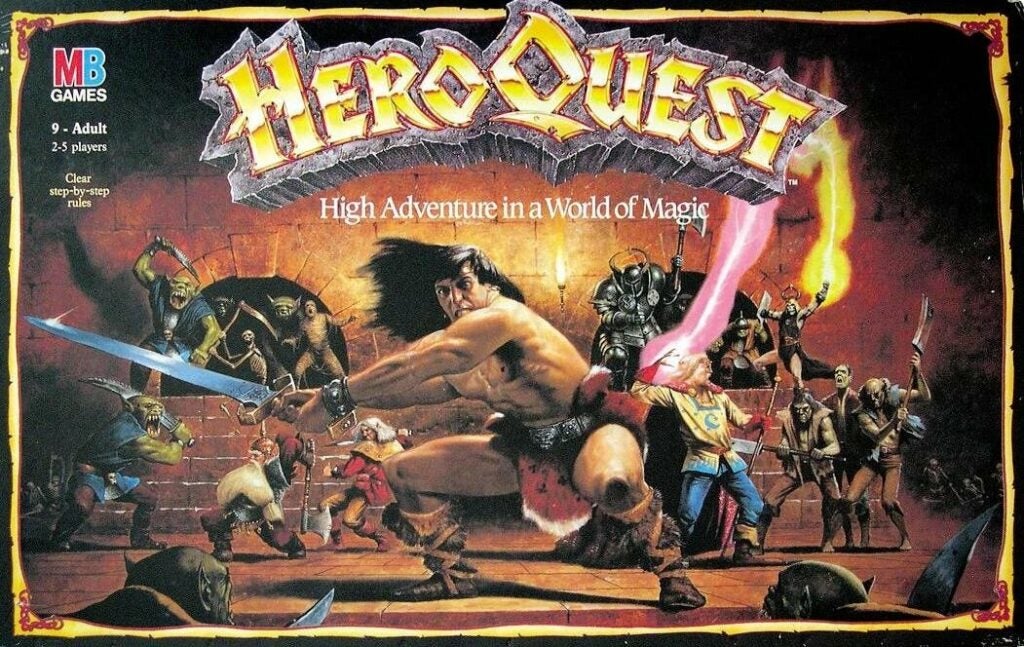
If you already have gray hair (or are on your way to it), there is a board game that will bring a smile to your mouth irrepressibly. It is the memory of clashing swords, battles won at the last moment, medieval epics, miniatures and dungeons that unfolded before us: it may not be the best, but, for many, it was the first. This is the story of ‘HeroQuest’.

level20 DOWNLOAD
A free program for Android, created by TwinCoders.

Pure dungeon crawling

By the end of the 80’s, ‘Dungeons & Dragons‘ was already more than established in popular culture. With the second edition about to be published, which would introduce the first major changes to the role-playing game, more than a few people tried to capitalize on its success. Among them, Games Workshop, founded in 1975 and which brought Gary Gygax’s work to the United Kingdom as well as creating complex miniatures and games like ‘Warhammer 40K’, which even now continues to receive versions and expansions.

In this scenario, in which medieval fantasy took all the glory, we find Stephen Baker, a game designer who left Games Workshop to go to the friendlier Milton Bradley (better known in Spain as MB). His idea, to create a fantasy game in the style of ‘Warhammer’ but one that could be played by everyone. Said and done: the only requirement was that it be simple enough for the whole family to understand.

Originally, Baker was going to contact his former company exclusively to make the miniatures, but he finally decided to trust them to create and develop the whole game. In 1989 it exploded in sales in Europe and became the gaming craze: ‘HeroQuest’ was a mix between role-playing game, miniatures game and board game that for four years was absolutely everything.

Role for novices

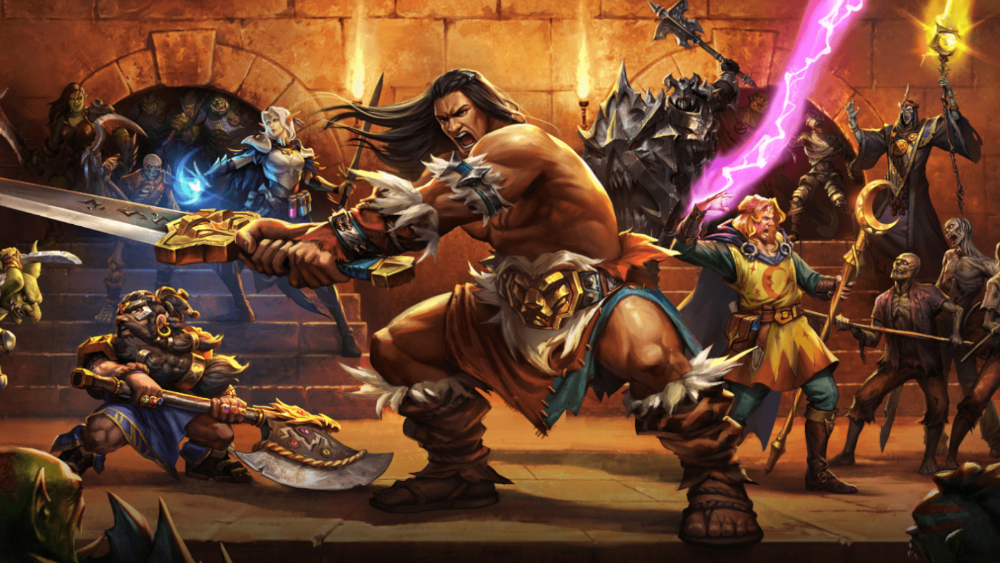
In ‘HeroQuest’, players had to fight against the master (“Morcar” as we know him or “Zargon” as he is known in the United States), who set up dungeons to try to defeat them. Players could choose from four archetypes (barbarian, dwarf, elf and mage), each with their own range of abilities, who fought against all the enemies put in front of them. For an experienced player it was really simple, but the kids of the time felt that finally a game gave them the epic they needed.

The same year of its release, ‘The Tower of Kellar’ allowed players to try to free the Emperor and his army by going through ten new scenarios with 17 different monster miniatures (it would appear in 1991 in the United States). And, at the same time that expansions were appearing like hot cakes (‘Return of the Warlock Lord’, ‘The Wizards of Morcar’), Games Workshop was preparing a special version for the most experienced players.

Advanced HeroQuest’ was the same game but more complicated, to put it simply. The characters acquired new characteristics and the combat was more complex… although at the time the fans didn’t like it very much. In fact, the fame of HeroQuest, in general, was falling over the years. And then came its darkest moment: crowdfunding.

Launch it

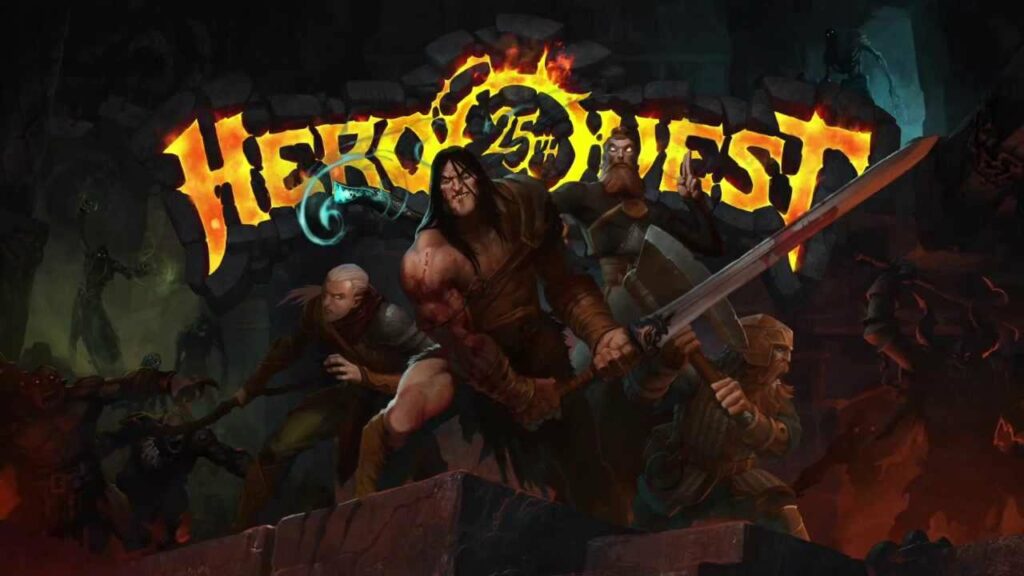
They asked for 58,000 euros, but managed to raise 679,927: a small company called Gamezone “accepted the challenge” of releasing a 25th anniversary version of ‘HeroQuest‘ giving it the level it deserved as a game that changed the life of a whole generation. They promised it would see the light of day by Christmas 2014. To this day, no one has seen a single figurine… or their money back. Gamezone didn’t get the rights but nevertheless launched the crowdfunding, convinced that, seeing the success, they would get them.

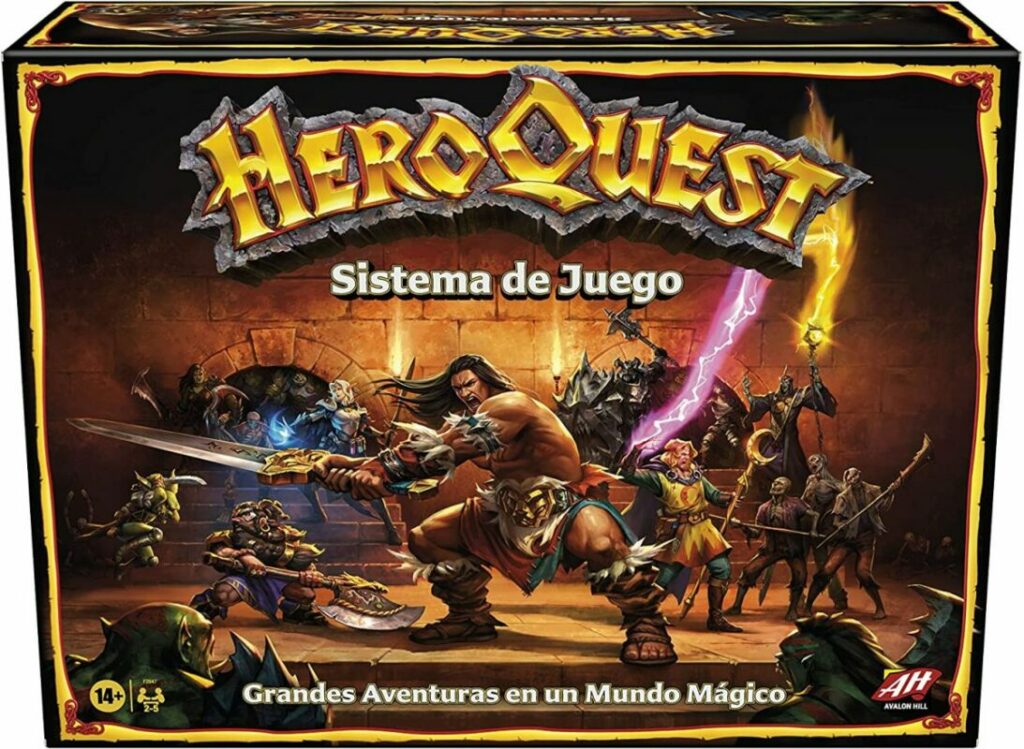
In 2021 the trial was still going on, and it doesn’t seem that it will end soon because of its “extreme complexity”. Luckily, last year Avalon Quest (Hasbro in Spain) was able to calm things down by releasing ‘HeroQuest’ for sale again with the usual expansions and some new ones trying to take advantage of the current wave of board game success.

HeroQuest’ is a game that has marked many childhoods, defined many lives and changed many minds about what role-playing games are. It may not have had a smooth path and it may have started as “an easy version” of role-playing, but in the end the numbers speak: especially in Spain, it was more than pure nostalgia. It was a mass phenomenon. Grab your axe, open the dungeon and get ready to collaborate to kill all the bugs: Let the battle begin!