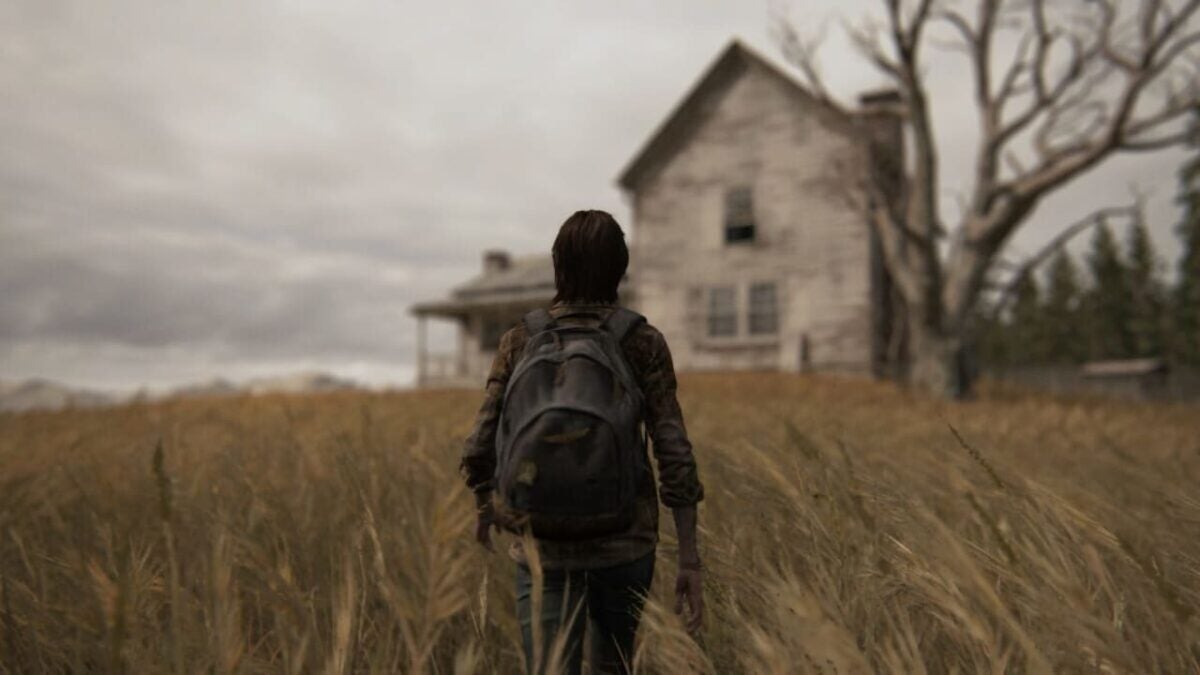
Fans of The Last of Us: Part 2 have found an intriguing puzzle in the chapter Seattle Day 1: a room that seems accessible but is impossible to enter. Several players have shared their attempts to discover what is inside this mysterious room, a topic that has sparked intense debate in the Reddit community. User MindlessNote3735 described their experience near a motel where the room has an open window, but there is no way to enter. “Is there really no way to get in?” they wondered, expressing a common concern among players. Others, […]
Fans of The Last of Us: Part 2 have discovered an intriguing puzzle in the chapter Seattle Day 1: a room that seems accessible, but is impossible to enter. Several players have shared their attempts to discover what lies inside this mysterious room, a topic that has sparked intense debate in the Reddit community.
The user MindlessNote3735 described their experience near a motel where the room has an open window, but there is no way to enter. “Is there really no way to get in?” they wondered, expressing a common concern among players. Others, like AFC93, also joined the conversation, recounting how they spent long periods of time trying to maneuver objects like a dumpster to gain access, only to give up in front of an “invisible wall” that prevented them from progressing.
This phenomenon has led to speculation about the purpose of the room. Some players took a technical approach using the game’s photo mode, which revealed that the interior of the room is empty. This suggests that it might have been a deceptive design by the developers at Naughty Dog, adding a layer of intrigue to the game that would otherwise be just a simple graphical representation.
Fans, going crazy, hope to find answers in the series
The interest in the game has increased thanks to the announcement of the return of the HBO series “The Last of Us” in April, which has rekindled curiosity about its mysteries and secrets. With the combination of the new content from the series and these enigmas in the game, it is likely that the community will continue to intensely explore everything that “The Last of Us Part II” has to offer. Rumors suggest that there may be more hidden surprises in future updates or additional content, encouraging players to keep revisiting this critically acclaimed title.
Sony is a huge multinational. That doesn’t escape anyone. Even beyond video games and its other technological businesses, it is a giant in film, television, and music that can extend its tentacles in any direction it sees fit. That’s why it’s strange that, with all the franchises it has, some of them very powerful and recognized, it has never bet on something that has been in vogue in Japan for decades and in the US they have been trying to figure out how to exploit for almost ten years: transmedia. The possibility of taking success from one medium to another and turning […]
Sony is a huge multinational. That doesn’t escape anyone. Even beyond video games and its other technological businesses, it is a giant in film, television, and music that can extend its tentacles in any direction it sees fit. That’s why it’s strange that, with all the franchises it has, some of them very powerful and recognized, it has never bet on something that has been in vogue in Japan for decades and in the US they have been wanting to know how to exploit for almost ten years: transmedia.
The possibility of taking the success of one medium to another and turning a franchise into multiple media is a sweet opportunity that Sony has never shown much interest in. Until now. They have started to convert many of their most important franchises into other audiovisual formats.
The Near Future of Sony: Series and Movies for Everyone
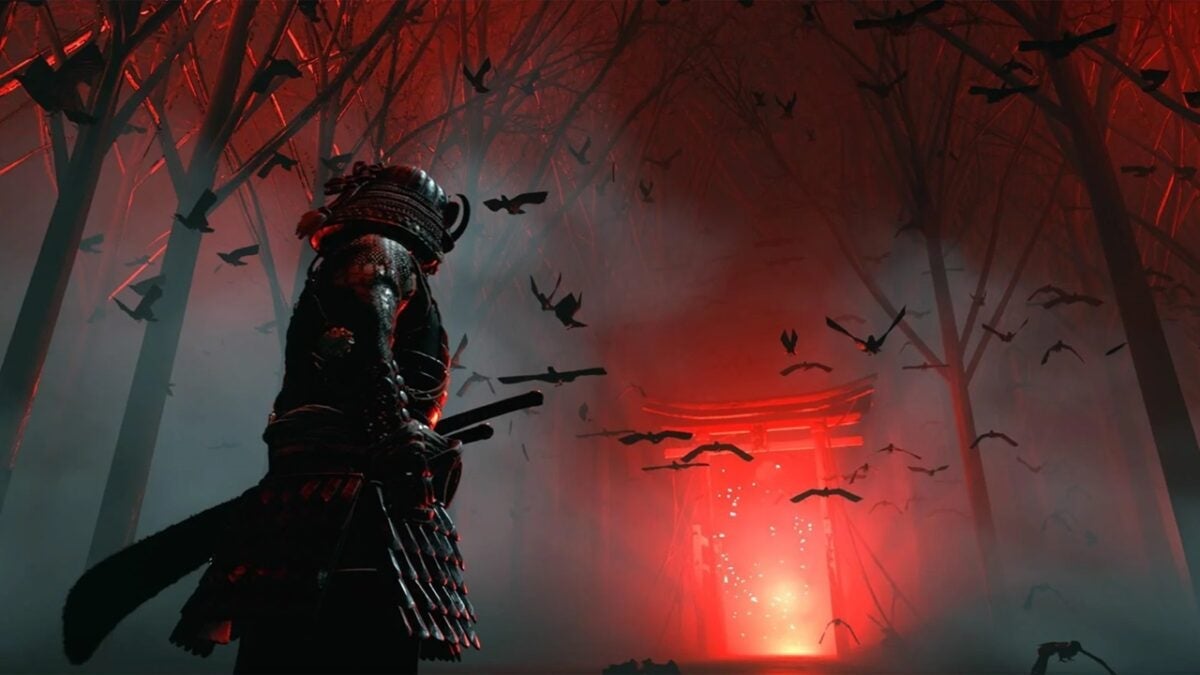
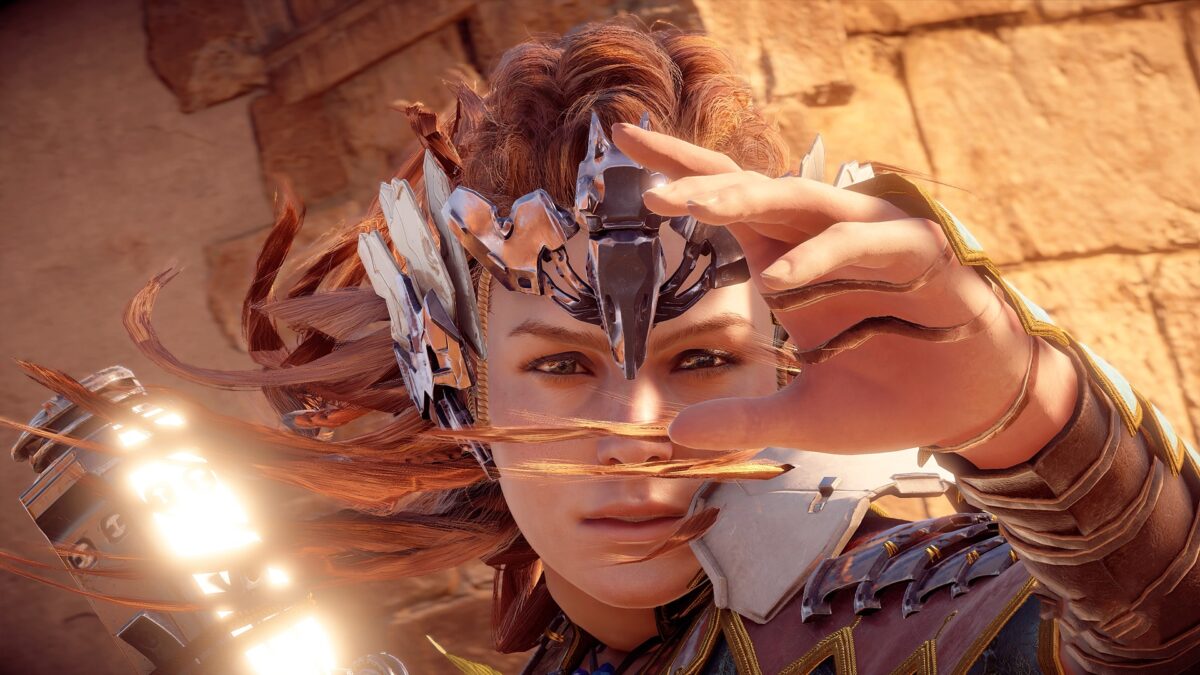
Sony made a presentation at the past CES in Las Vegas, showcasing some of their new projects. All of them related to audiovisuals. Announcing that they are making live-action movies of Helldivers and Horizon: Zero Dawn, as well as an anime of Ghost of Tsushima: Legends, they wanted to confirm that their idea is to focus on their best-performing franchises and continue working on them. With shorter developments and entering the transmedia world to leverage their popularity.
This should not catch us by surprise. Sony already confirmed last year that they were developing ten other movies based on their video games. And we also know that the three games have, if not sequels, at least other derivative projects already in production. Which should only be a half surprise.
The question is, why now? It’s not a decision they’ve made suddenly. They haven’t jumped into the pool without first knowing if there was water. Sony has been testing for several years to see if there is a market for this kind of product and they have found, to their satisfaction, that there is. And it’s very strong. Finally deciding to do something that many other companies do without even having proof that there is an audience for their plans.
But how have these approaches to transmedia by Sony worked in the recent past? The most pessimistic might think poorly. Terribly. Except for honorable exceptions, which have worked well. Exceptionally well. And they would be wrong. The things that have not worked well have not worked so badly —and we could even say that, in business terms, they have worked quite well—, and the things that have worked well have worked as well as it seems. That’s why it’s worth taking a look.
Good or bad are relative concepts, because what a viewer thinks and what an executive thinks are very different things
Gran Turismo and Uncharted are two of Sony’s most recent major productions. With big names involved in the production and a large budget, they were movies that failed spectacularly among critics, demonstrating that it is impossible to make good video game adaptations. Except that’s not exactly the whole story. While it’s true that as movies their quality is more than questionable and as adaptations they are, at best, not very faithful, both performed well with the audience. But they did so especially at the box office. Especially in the case of Uncharted, which managed to be such a success that it has secured a sequel.
Is that the impression it gives from the outside? The truth is, no. They are not movies that captivate hardcore gamers, but they work quite well among an audience that matters a lot: the casual viewer. Who apparently, is also a casual gamer and recognizes the names of these games and is not so obsessed with fidelity or quality, but rather with having a good time watching an interesting movie.
That is not the case for fans of The Last of Us. A fandom obsessed with fidelity, canonicity, and the quality of the original work. Sony is aware of this, and that’s why it’s surprising that, when it came to making an adaptation, they chose the television series format and did it with such a powerful business partner as HBO. And the result was as expected: a critical and public success that occupied all imaginable public space throughout its entire broadcast period.
The other big news during CES 2025 has been, in fact, the confirmation of when the second season of the series premieres: April of this year. Something that has stirred up even more buzz than all the other announcements. Together. Demonstrating that Sony is not wrong with its focus on transmedia.
If there is one undeniable thing, it is that it is a smart move they should have made even earlier
We don’t even need to ask ourselves if this is the beginning of an approach of this kind. It is. It’s a fact, and we knew it even before CES. What confirms that there are two movies and an anime series of these characteristics is the approach they want to give to this transmedia approach to their franchises: certain products will be aimed at the general public, without necessarily seeking to please the more hardcore audience or critics, while another will be specifically aimed at the more specialized audience and critics. Going case by case depending on the interest of each of their franchises in particular among the public.
Is this the best move Sony could make right now? Probably. It allows them to have a global direction for the future, while also giving a breath of fresh air in two directions to an increasingly dying film section: it provides franchises to work with that will succeed and, if they achieve success, they can turn them into video games in the future. And if that ends up happening, how can we deny that this was the right move?
The creative has come forward to clarify that he has never been as arrogant (at least in public) as shown in the interview published by Sony.
Suddenly, the Internet exploded on itself. Once again. It happens every Tuesday and Thursday, more or less. In this case, the target of the outrage was Neil Druckmann, producer and co-director of ‘The last of us’, and also president of Naughty Dog, who recently said that the next thing they were preparing was going to redefine the world of video games as we know it. However, it seems that it was all a mistake by Sony.
The creative has come forward to clarify that he has never been as arrogant (at least in public) as shown in the interview published by Sony, in which he claimed that the studio’s next game could “redefine perceptions of mainstream games”. Druckmann has tweeted from his own account, directly, “That’s not even close to what I said”.
“When editing my answers in my recent interview with Sony, some of my words, context, and intentions sadly got lost“, adding the complete response without cuts. The surprising thing is… that, indeed, Druckmann never said such a thing, something that the news writer (when not ChatGPT) completely made up.
In editing my rambling answers in my recent interview with SONY, some of my words, context, and intent were unfortunately lost. Well, here's the full long rambling answer for the final question about our future game… pic.twitter.com/tVuxX3LYJF
This is a very unique summary of a response in which it explains that, after the success of the series ‘The Last of Us’ and the two video games of the saga, “people outside the world of video games are watching us, waiting to see what we will release next. I’m really looking forward to seeing the reaction to this thing we are creating“.
Obviously, Druckmann doesn’t want to throw Sony under the bus by pointing fingers and saying “But why are you making things up”, but his intention is quite clear: indeed, in the big company they thought it was a good idea to skip the literal statements and add their own phrases. And no. It’s not right to turn a creative’s nervousness about the reception of his new game into the egotism of someone who believes he alone can redesign the world of video games. No matter how you look at it, whether it’s Sony or anyone else.
The Last of Us 2 was inspired by the least expected game: Bloodborne, even though that inspiration wouldn’t be notably visible in the game.
Few mainstream video games have generated a cult following like The Last of Us. With a legion of devoted followers and the idea that it is an author’s work, both installments are considered essential works in the world of video games. This has led to a very serious critical treatment of both games, leaving little room for analysis. Except for the fact that their own developers can always speak about it, shedding light on places we didn’t even know existed.
Grounded II is a documentary about the development of The Last of Us Part II that was released on February 3rd. Since then, it has already surpassed 750,000 views. Quite an achievement for a two-hour documentary that covers all aspects of the development and is not afraid to give voice to all the key players involved. Some of them provide details that we could have never imagined.
According to the game’s lead designer, Emilia Schatz, as mentioned in the documentary, during the first four months of development, the game took inspiration from the most unexpected game we could think of: Bloodborne. Their idea was to create a world similar to Bloodborne, where the city of Yharnam is practically a character in itself, and where the space becomes larger as you explore. According to Anthony Newman, the game’s co-director, this approach was also inspired by Bloodborne, with a special emphasis on melee combat. However, this idea was almost completely discarded as it was considered not to work for The Last of Us.
All of this has been somewhat overshadowed by one of the most striking details of the documentary: the possibility of a The Last of Us Part 3. Neil Druckmann, director and creator of the franchise, has confirmed in this documentary that while he doesn’t have a story, recent events have given him an idea of how he could continue what he has done so far. This doesn’t mean he will do it, but it’s on the table.
Is The Last of Us 2 remaster necessary? Yes and no, and we are no longer talking about the players: but about the needs of Naughty Dogs itself
Creating a video game costs a lot, both in time and money. That’s why actions that might seem greedy or absurd make sense when we consider the material reality behind development studios. They simply help keep them afloat. Or at least, sustain them for the future. Even studios that seem to have a guaranteed future must bear this in mind, although it’s not pleasant to think about.
A few days ago, Naughty Dog announced the release of The Last of Us Part II Remastered. Set for January 19, 2024, this is great news for PlayStation 5 users. Being able to play the game with technical improvements, new game modes, and ultimately an enhanced version of an already celebrated and beloved game is good news. However, this doesn’t mean there aren’t some significant “buts.”
The first “but” is the price. Charging ten euros to upgrade the game from the PlayStation 4 version doesn’t seem very reasonable, especially when the norm has almost always been that these kinds of updates are free. Particularly considering the major “but” of this remaster: it’s the same game.
Naughty Dog is dedicating resources to essentially recreate the same game. A game released less than three years ago, which already looks fantastic on PlayStation 5, and whose graphical changes hardly justify this remaster. Neither do the gameplay inclusions, with two new game modes that don’t seem to add anything substantial to the original game, where the focus was primarily on the potential of the story being told.
Certainly, there are reasons behind this decision. Making games costs a lot, and Naughty Dog isn’t in the best position right now to develop them.
Following The Last of Us 2, the studio experienced a significant departure of its workforce due to its precarious labor practices. According to journalist Jordan Middler, the project has been conceived to help new hires understand the game’s workings. Meanwhile, Druckman’s team is working on an original game.
This might make sense in business terms. It’s a remaster that will work financially and helps new members integrate into the studio’s dynamics. The problem is that it also reinforces the more negative trends in the industry that we’ve been systematically witnessing throughout 2023.
Throughout the year, widespread layoffs have become a common trend. If Naughty Dog’s move is a success, other studios might take note and see it as a solution to the problem they’ve created themselves. If they lack experienced individuals to adequately work on studio projects, they could always hire many people and have them work on a remaster, an expansion, or DLC from a previous project they know will sell well. This way, they ensure training without it costing them much time or money.
That’s why the release of The Last of Us Part II Remastered feels bittersweet. Hopefully, being able to enjoy it on PlayStation 5 with minor improvements and some additions is good news, but it’s easy to see a price that’s too high to pay for it. We could have had a new game instead if, simply put, Naughty Dog had better working conditions in the first place. That’s why we can celebrate it, but not too much.
Although we don’t know what Naughty Dogs are doing, LinkedIn is very indiscreet, and thanks to that we know that The Last of Us will have a remaster
Naughty Dog has maintained a low profile since the release of The Last of Us: Part 2. It’s evident that they are working on something; no studio really knows a moment of rest. However, what they are working on remains a mystery. Despite knowing they are busy with The Last of Us Factions, the multiplayer game for The Last of Us, whose development has hit some hurdles, we don’t know what else the studio is working on besides that. Or we didn’t know until someone put more information than they should have on their resume.
Mark Pajarillo, an artist who has worked on environments for games like Uncharted 4, Uncharted: The Lost Legacy, and The Last of Us Part 2, recently updated his LinkedIn profile. Specifically, he mentioned that, as a subcontracted artist, he was “responsible for overseeing the production of all externally produced environments, art assets, weapons, and interactive props for two iconic titles: The Last of Us Part 1 and The Last of Us 2: Remastered.” This information was removed from his LinkedIn profile at the time of this news publication, but it was captured in a screenshot by a user on Resetera.
Of course, The Last of Us Part 2: Remastered has not been announced by Naughty Dog or Sony. However, that doesn’t mean it hasn’t been referenced. Gustavo Santaolalla, the composer of the game’s soundtrack, hinted in a video interview with Blender that a new edition of the game might allow players to interact with his character. In this hypothetical new version, players could request him to play different songs from the game’s soundtrack during his banjo cameo.
That’s why, while everything is still up in the air, all signs seem to point to Naughty Dog’s next game being a remaster of their latest title. A somewhat puzzling decision, considering it was released on June 19, 2020, and doesn’t appear to need a remaster at all. Only time will confirm or debunk these pieces of information.
Many men are unable to accept that there are leading female characters in video games. What is this about? Thats what we answer.
We live in a pluralistic society. That means that there are different expressions of gender, race, sexuality, ideology and culture. Different people are represented in different identities and that is good. It brings diversity. It brings richness. So it is understandable that culture has also changed over time. For example, in video games, we have more and more female protagonist characters. Women who are not just narrative excuses, prizes for protagonists, but key characters with motivations and a heroic arc just like any man’s. Even if there are many people out there who can’t accept it.
Why does this happen? This is a very interesting question. If we ask people who complain about female representation in video gaming, they will probably give us a series of arguments that we have all heard. That women don’t really play video games. That a character’s identity doesn’t matter when it comes to feeling represented. That they make all women ugly now because the feminist agenda hates female beauty. And regardless of whether these are good arguments or bad arguments, they are arguments. And to answer the question that really interests us, why is representation, female or otherwise, important to the video game and to all media, let’s answer these three arguments with as much good faith as we can muster.
Do women play video games?
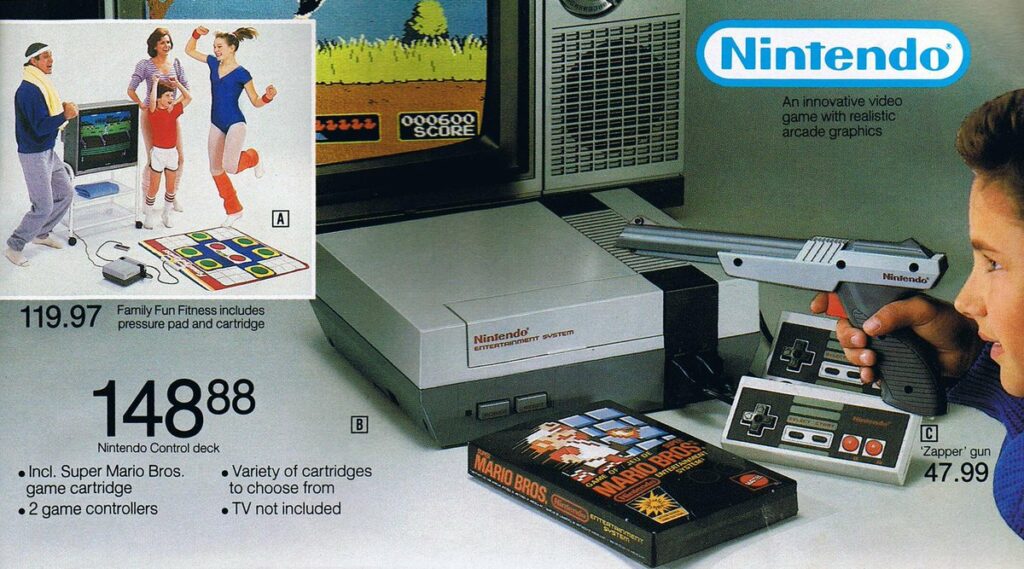
The argument that women don’t play video games is not as old as many people may think. Although it is true that there has always been a certain air of suspicion towards them, it wasn’t until the mid 90s, and particularly the early 00s, that the argument that women don’t play video games became strong among gamers. Mainly because that is what was sold by the specialized press and the industry itself: video games were a boy’s thing.
If we look at the ads up to that time, they were virtually all starring boys and girls equally. There wasn’t such a clear gender bias. The kind of games weren’t even that segmented, even games, particularly on consoles, didn’t seem to have a gender focus. F-Zero wasn’t a boy’s game. Pokémon wasn’t a girl’s game. Mega Drive was not a boy’s console. Game Boy was not a girl’s console. But the marketing and press began to shift from the PlayStation and Nintendo 64 generation onwards, focusing more and more on a genre segmentation of the market, which reached its culmination in the PlayStation 2, Game Cube and Nintendo DS generation, where it became clear that there were boys’ games and girls’ games. That the former were more valuable than the latter and that by extension, it would end up becoming that girls don’t play games. Or that what they play are not real video games.
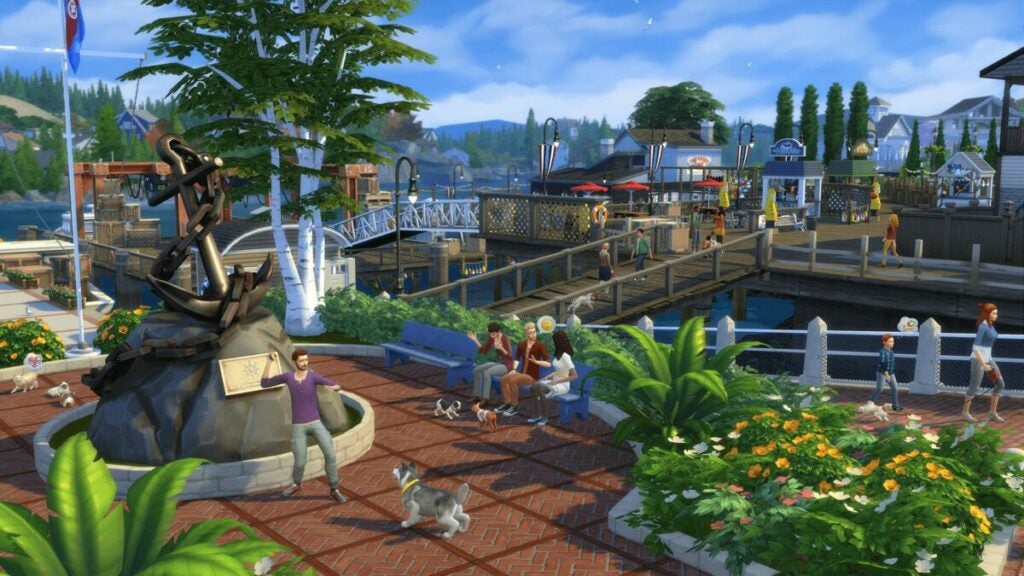
The Sims today may be considered a “girl’s” game, but it is not as it was perceived upon its release on January 31, 2000. In the same way, girls today may be perceived as not playing video games. What the data says, however, is that the reality is quite the opposite.
According to a study by Mat Piscatella, CEO and video game industry analyst at Circana, 47% of console gamers are women, 50% of PC gamers are women and 54% of mobile gamers are women. There are as many women as men playing video games. Many men might then ask, where are these women, why are they absent, never appearing under their radar, making them believe they don’t exist? While the answer is obvious – no woman wants to be perceived as a woman when she knows that’s a reason to hate her – the following questions will help us develop it.
Is the identity of a character important when playing a video game?
Historically, most video game protagonists have been male. When they have not been names, they have been coded with masculine traits. Aliens or monsters or entities with deep voices, relatively square in appearance and given to violence. Even when they have been female, they have shared male traits – violent, lethal and with a quip always on their lips. Lara Croft may be a great female character, but the problem is that she’s a woman coded with the traits befitting a man; she’s exactly like all the other protagonists of the era, but sexy. Where male protagonists didn’t need to be sexy and yes it is Lara’s main attribute.
That means that boys have a mirror to look into and girls don’t. Or worse, the mirror they have is broken and distorted. Or worse, the mirror they do have is broken and distorted. They have manly figures to imitate, for better or worse, and they have either passive objects to be rescued or coded male protagonists, which if imitated would be considered “unfeminine and unacceptable” behavior. In other words, since the second half of the 90s, the space of interest for women in video games has been greatly reduced.
What is the point of having female protagonists? So that girls can have mirrors in which to look at themselves. Examples they can identify with. To prove that women can be strong, funny, intelligent, cultured, good, sweet, candid, but also evil, cruel, brutal, ironic, weak, or any other positive or negative trait, as men can be. That’s what having more female protagonists is for. Or black. Or Asians. Or gay. Or trans. So that people can relate and can know that their life, what they are, is something normal, not an anomaly, where the protagonist is always a middle-aged white man with a square jaw.
Why can’t a female character be sexy?
That brings us to answer the last question, why aren’t female characters sexy by default anymore? But at this point the answer is easier by asking the reverse question, why aren’t male characters sexy by default?
If today’s female lead characters are not necessarily attractive to the average heterosexual male’s canons of beauty, it is because they are not there to be attractive. Neither have male lead characters ever been. They are there for people to project themselves onto them, to feel represented and to conceive of themselves as an ideal to aspire to. Can that ideal be one of beauty? Yes, but it doesn’t have to be. The classic hypermuscled male protagonist, unlike what many men believe, is not an ideal of beauty, but a fantasy of power. By the same token, female lead characters don’t have to be sexy. Or spectacularly beautiful. They have to be aspirational for a female audience. Something where the male perspective counts less than how women perceive it.
A protagonist character is, practically always, aspirational. That’s why they can have attributes other than physical attractiveness to create a connection with the player. If this can be understood with male characters, it is not difficult to understand why the same happens with female characters. And while it is true that we can empathize with characters regardless of gender, it is no less true that, living in a society divided by gender, it is easier to do so with those of our own identity.
Brief conclusions (or why it’s good to have female protagonists)
That’s why it’s important to understand why video games need female protagonists. They are half of the players. They need role models. They need to see themselves represented just as men do. In the same terms. It’s not hard to understand and, when you remove the veil of misunderstanding, it’s easy to see: they need that space too.
Those who are unable to understand this are people who refuse to understand anything that escapes their perception of reality. People who want to believe a very specific account of reality, where they are the heroes or the victims of some sort of conspiracy. The reality is that when there are more and more female protagonist characters and more women are declaring themselves gamers it is not because of any kind of political struggle or attempt to appropriate something that is not theirs, but because of something much simpler: because there is a group of people who want to feel represented and are willing to make an effort to achieve it. There are no conspiracies. It’s not an attempt to erase men or women as men like them. It is simply a matter of fairness. But to understand what is justice, you first have to want to listen to how others feel, not just what suits us.
Some of the links added in the article are part of affiliate campaigns and may represent benefits for Softonic.
For all of us who have watched the premiere of this new HBO series, ‘The Last Of Us‘, there is great news. The second episode of this game-inspired TV series will be broadcasted tonight (Sunday, January 22nd) at 8/9 PM.
Yes, that’s right! You can watch the second episode tonight. Also, the good news is that every new episode will be broadcast on Sunday evenings.
There are nine episodes in the first season, and all episodes will be broadcasted on Sunday evenings around 8/9 PM, turning your cozy Sunday evening into a horror night. If you are ready, then reserve your seat in front of your TV. We have already mentioned that it’s a horror TV show in a zombie apocalypse setting. The main two characters are Joel (Pedro Pascal) and Ellie (Bella Ramsey).
To some gamers/watchers, Pedros is a hero trying to save the world, but will he stay in that role, or will he betray humanity for his own reasons? We are about to see. He is a smuggler who has to take Ellie all across the country. The story starts some twenty years after a pandemic caused by a mass fungal infection.
The title of the second episode is ‘Infected’ and it reveals what is going on. Prepare yourself for more walking-dead creatures with a brain infection caused by the Cordyceps. There will be a lot of running and escaping from the Infected.
Is The Last of Us Worth Watching?
Yes, it is. Especially if you have ever played the game The Last of Us, because it is adapted into this TV show. Naughty Dog’s Neil Druckmann and Chernobyl’s Craig Mazin are the team members who put this video game on the screen. Such a fandom is already created around this TV show. As proof of this, it has become the most-watched HBO TV show since The House of Dragons (in 2010), only after the first episode.
If this isn’t enough, the opening scene is terrifying thanks to actor John Hannah, whom we remember from the Mummy film. As a doctor, he warns people about the potential effects of the Cordyceps brain infection. We won’t spoil all the content of the first episode. It’s for you to watch it.
Its soundtrack was done by Gustavo Santaolalla, which foreshadows the theme of the TV show and creates a picturesque setting. Gustavo was inspired by Spanish folk music and gothic country. The other great songs are also used throughout the whole first season. The closing credits in the first episode belong to Depeche Mode. It’s their song ‘’Never let me down’’.
Get ready for a game-series adventure
It’s beyond doubt that this TV show is worth watching, even if you haven’t played the game or if this genre isn’t your type. Challenge yourself and turn your lovely Sundays into Sundays of post-apocalypse. We hope you won’t scream that much. Great cast, chilling music and fascinating story are waiting for you.
Many fans are exhilarated at how similar The Last of Us series and game are. You may want to check for yourself.
Fans are raving about the remarkable similarities between The Last of Us HBO series and the video game, and this is only after watching the first episode. There have been video game adaptions previously, and it can be a miss instead of a hit. But HBO seemed to knock it out of the ballpark with The Last of Us series!
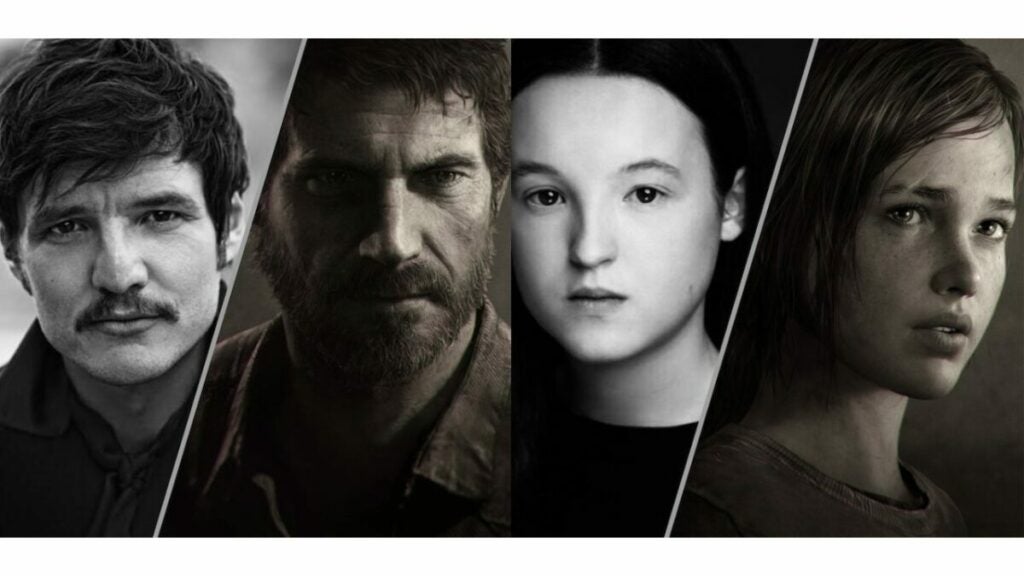
Developed by Naughty Dog, the Playstation video game follows Joel (Pedro Pascal), whose aim is to transport the 14-year-old Ellie (Bella Ramsey) across the postapocalyptic United States. 20 years after the destruction of modern civilization, zombies transformed humans into hostile creatures known as the infected.
This recreation of the video game scenes is amazing ⚡️
The writers have gone above and beyond to remain loyal to the video game. After its release in 2013, it instantaneously gained an immediately devoted fanbase due to its stunning visuals, compelling characters, and the strength of its narrative.
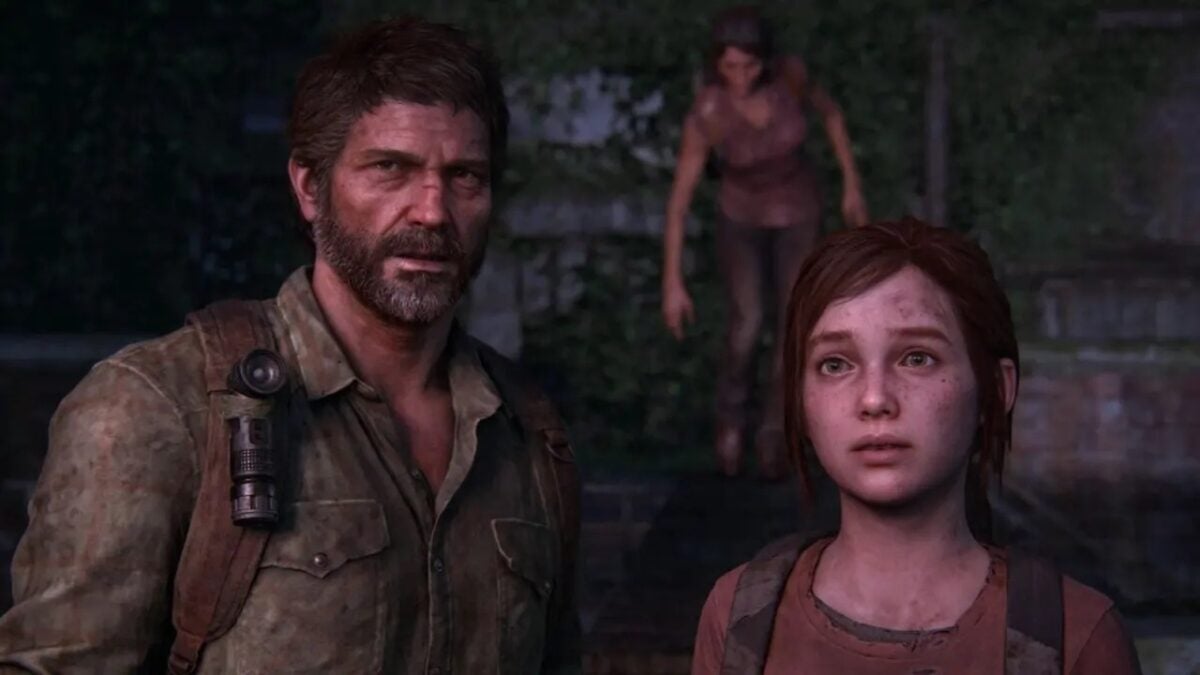
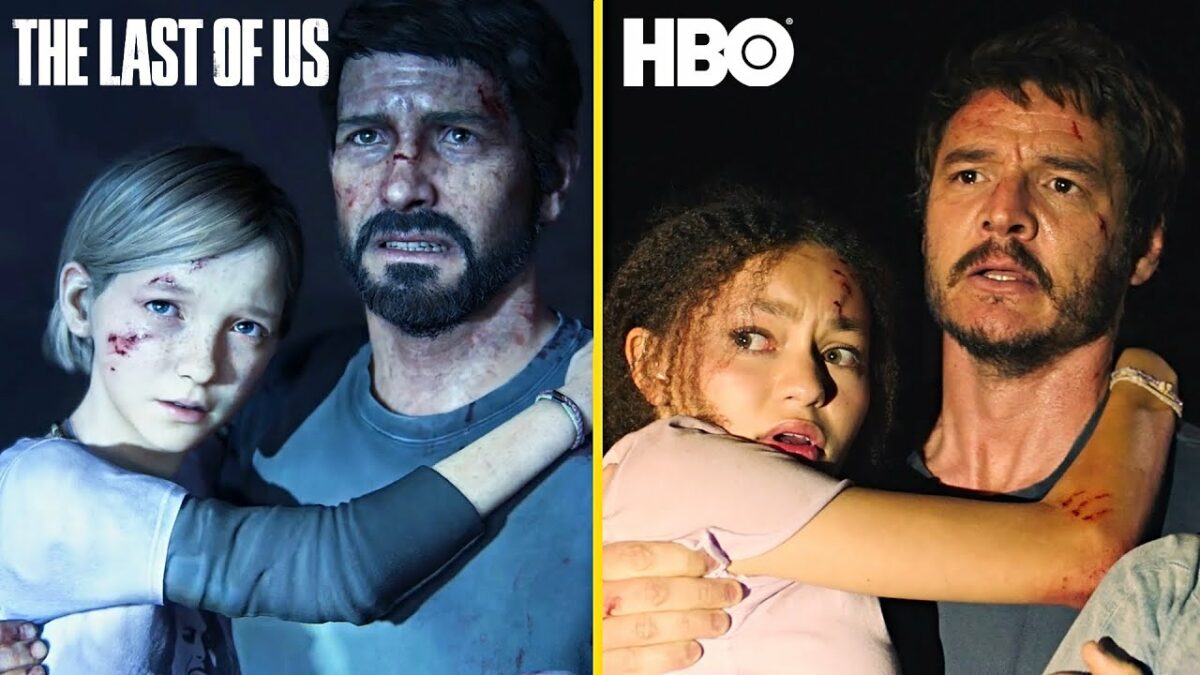
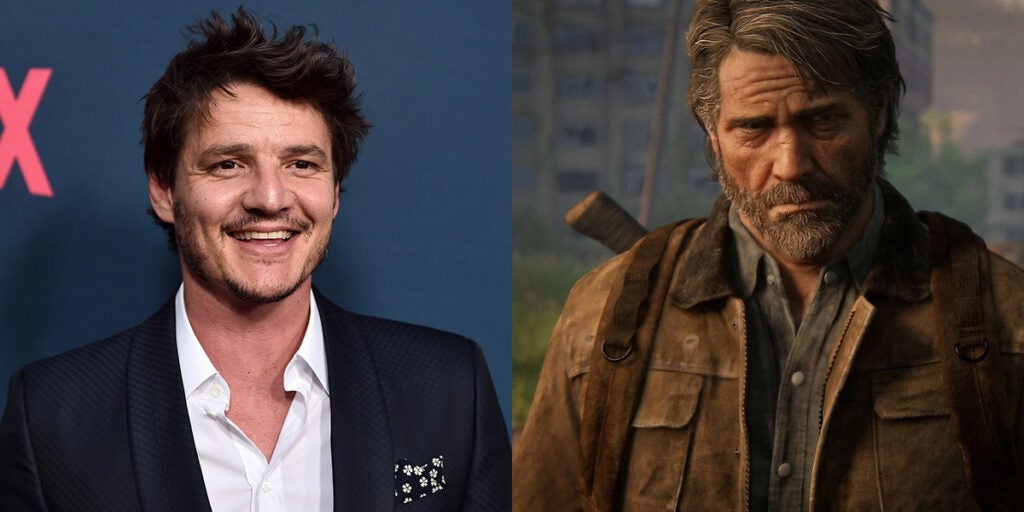
The resemblance between the video game character Joel Miller and Ellie and the HBO series Pedro Pascal (Joel) and Bella Ramsey (Ellie) is remarkable and another way the series stayed true to the adaption of the video game.
Joel, who resides in a quarantine zone is hired and tasked to chaperone Ellie, a teenager across the wasteland. Ellie’s safety is a crucial part of the storyline, but I would rather not spoil why she is so important, especially if you haven’t played the game.
There are numerous scenes in the first episode that frame for frame match gameplay that has fans and viewers in awe at the miraculous attention to detail.
Many believe that the new HBO series will outshine the video game stating that there are already definite signs. Of course, it was only the first episode, but we all know that first impressions leave a lasting impression, and The Last of Us HBO series looks like a winner in that area to me!
Fans can’t get enough of the parallels between the series and the video game and are raving about it on Twitter. Many gamers familiar with the game stated that while watching the first episode, it felt as if you were playing the game, that is how precise it was.
listen, a lot of us were sceptical about HBO's #TheLastOfUs, but fans have been calling it the best video game adaptation of all time
from perfect casting to incredible parallels between the game and the series, here's why I think it deserves that titlehttps://t.co/m7QVQR45qo
There was a balance of emotional moments and nail-biting suspension that left you sitting on the edge of your sofa that replicated the video game to the T, and the characters delivered an excellent show.
The Last of Us is a popular zombie video game, and the new TV show with the same name is a scary adaptation of the storyline. It is a terrifying story with amazing tales of humanity. The story is set decades after a zombie apocalypse and follows a young girl, Ellie, who discovers she is immune to infections.
The story follows Ellie as she moves across the country along with a smuggler, Joel Miller. Together, they fight humans and infected zombies.
Beautiful Story
Gamers love the game because of its beautiful story. It’s all about family and to what extent people go to protect their loved ones. Now, these amazing actors have brought the video game to life, and this series has attracted more than just gamers. So who are the actors that have portrayed these characters to perfection?
Joel Miller
Joel Miller is a survivor and ruthless smuggler who is responsible for moving Ellie through the country till they reach Fireflies. Fireflies is a movement that is fighting to find a cure for the Cordyceps infection. Miller is played by Pedro Pascal. Along the journey, he begins treating Ellie as his daughter, as he comes to terms with his past while remembering the daughter he lost.
Pedro Pascal was also seen in movies such as Wonder Woman: 1984 and famous series like The Mandalorian and Game of Thrones.
Ellie Williams
Ellie is a 14-year-old survivor that is immune to the infection. Ellie is played by Bella Ramsey. This series is about Ellie’s journey and how she teams up with the FireFlies in their endeavor to find a cure. Bella was seen in Game of Thrones, Catherine Called Birdy and His Dark Materials.
Tess Servopoulos
Tess is Joel’s smuggling partner, and the two always look out for each other. Although not explicitly stated, their relationship is more of lovers than colleagues. Anna Torv plays Tess Servopoulos. Anna is known for her roles in Mindhunter and Fringe.
Tommy Miller
Tommy is Joel’s brother and was last seen when the infection broke out in Texas. Although both brothers seem to have escaped together, something forces them to go their separate ways. Gabriel Luna portrays Tommy Miller, and he was seen in The Terminator: Dark Fate and Agents of S.H.I.E.L.D. Tommy was a Firefly and he is a crucial aspect of Ellie’s and Joel’s journey.
Marlene
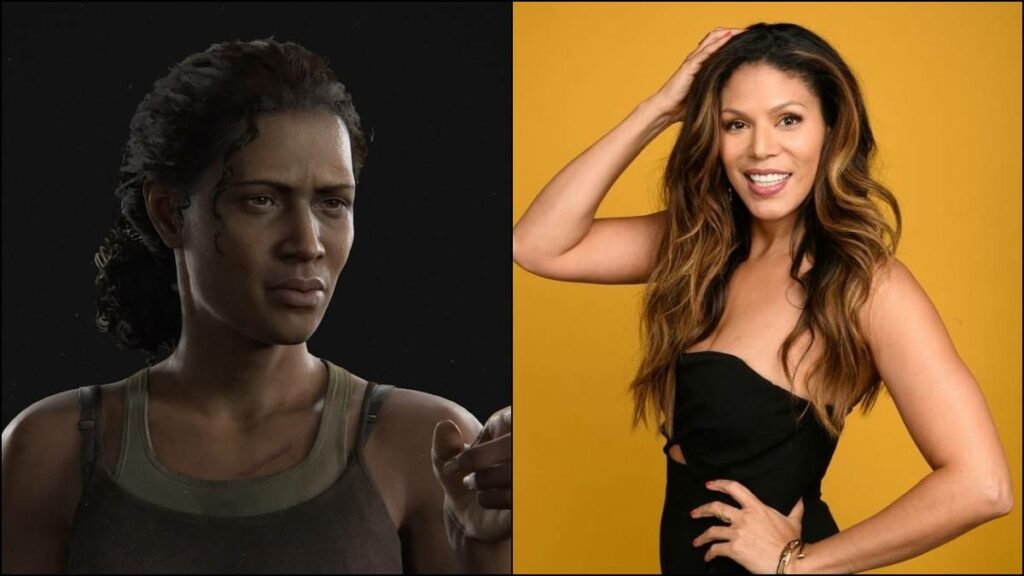
Merle Dandridge reprised her video game role and plays Marlene, the leader of the Fireflies in Boston. Marlene is committed to finding a cure for humanity and is prepared to make sacrifices to achieve this. Merle was also seen in The Flight Attendant and Station 19.
Bill
Bill is also a survivor that joins Ellie and Joel in their cross-country journey. Bill is a loner and is an explosive expert who lays traps for the infected. Nick Offerman plays Bill and was seen in popular series such as A League of Their Own, Devs, and Parks and Recreation.
Frank
Frank was Bill’s partner and left Bill after he got tired of his survival fascination. The series follows Frank’s relationship with Bill and how it turns sour after the outbreak. Murray Bartlett plays Frank and was also seen in Welcome to Chippendales and The White Lotus.
Riley Abel
Riley is Ellie’s friend who grew up with her in the post-apocalyptic world. Riley joins the Fireflies as she looks for a way out; however that also means she leaves Ellie behind. Storm Reid plays Riley and is seen in other amazing movies such as The Invisible Man, Euphoria, A Wrinkle in Time, and The Suicide Squad.
Sarah Miller
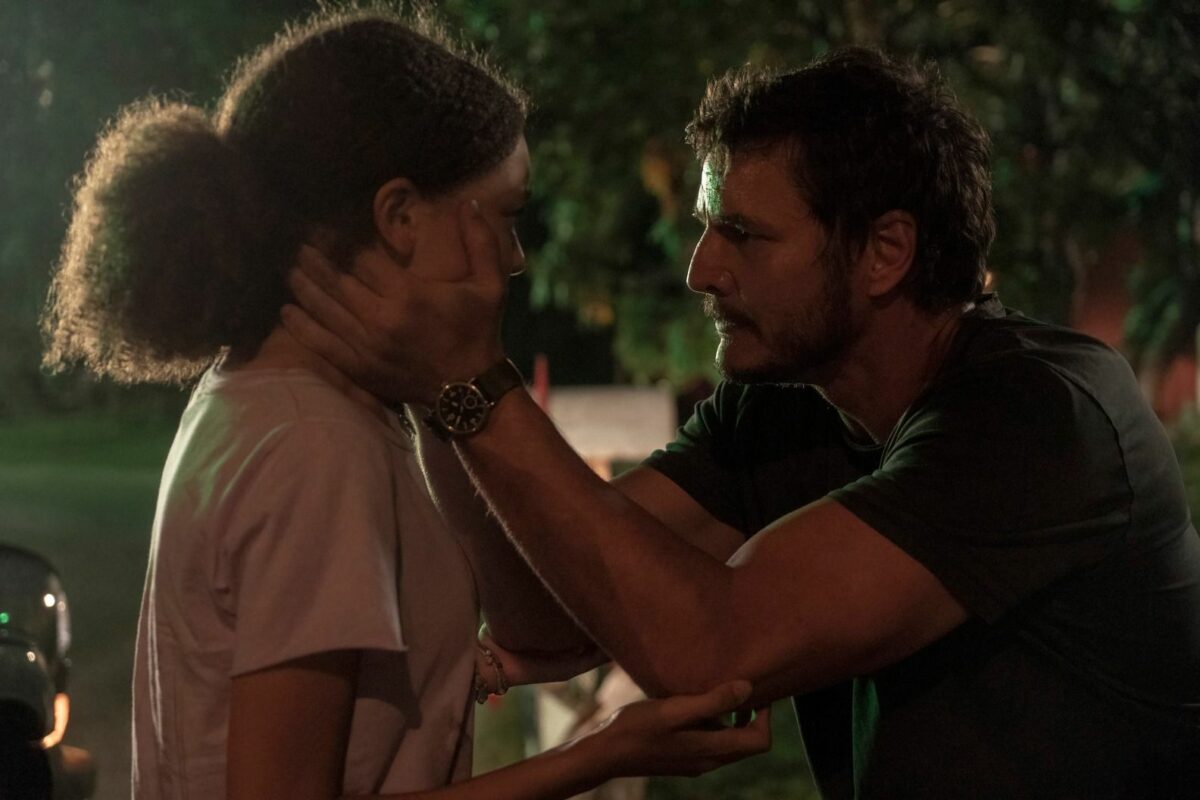
Sarah is Joel’s 14-year-old late daughter. She lived with him before the outbreak in Texas. If you haven’t played the game, you should know that Sarah’s story will bring out a lot of tears. Nico Parker plays Sarah. She was also seen in Reminiscence and Dumbo.
Kathleen
Kathleen is a new character and was not part of the video game series. Not much is known about her character, except that she leads a violent revolution out of Kansas City. Melania Lynskey plays Kathleen and she was also seen in Yellowjackets, and I Don’t Feel at Home in this World Anymore.
Sam
Sam is a young boy growing up in the post-apocalyptic world, much like Ellie. He has an elder brother and the only family surviving. Kevin Woodard plays Sam and this is his first major role.
Henry
Henry is Sam’s elder brother. In the video game, he and Sam meet Joel and Ellie while running from Scavengers; however, in the series, it is speculated that they will meet in Kansas City while hiding from Kathleen’s revolutionary movement. Lamar Johnson plays Henry, and he was also seen in All the Bright Places, Your Honor, and The Hate U Give.
Fun Game = Fun Series
Now that you know the characters, it’s time to check out the series. Even if you haven’t played the game, it will be a fun series to watch. It already premiered on HBO on January 15th and promises to be a fun ride.