Now you can download two applications at the same time from Google Play Store

As you Android users know, until now the way to download apps on our phones from the Google Play Store was to go one by one or, alternatively, wait for one download and installation to complete before the other application we want starts installing on our device. Now, this has changed and the folks at Mountain View have implemented a new feature, which is one of the most anticipated by its users.

Google Play Download

As recently reported by 9to5Google, with the latest update of Google Play Store (version 40.6.31), the Android app platform now allows the simultaneous download of two apps. With this new addition, Android users undoubtedly benefit from this improvement in the download and installation process of a program we want on our Android smartphone, as it will now be faster when we want to install multiple apps.

One of the most anticipated features arrives at Google Play Store

Therefore, now, while two applications are being downloaded at the same time from the Google Play Store, and in case you want to install more, the rest will remain on hold until the first ones finish installing on the device. In addition, their progress can be tracked from the store itself as well as from the home screen. You also have to keep in mind that, although you can download two apps at the same time from the mentioned store, you cannot update two applications at once.

Google Play Download

On the other hand, it is worth mentioning that if you want to use this new feature, you have to make sure you have the latest version of Android and the Google Play Store itself. If you don’t have this feature yet, but you meet the mentioned requirements, it will probably be a matter of time before you can enjoy it on your device, as there are already many phones that can enjoy it. However, you can still choose to install only one app if you prefer.

Google Play Store receives a series of very interesting updates for its users

Like any other application, the Google Play Store receives different updates from time to time, some with more notable changes and others with smaller ones that usually go unnoticed. In this case, we have to talk about the latest update released by Google at the end of last October of this year, since with this update we could see a certain change when using our Android devices.

Google Play DOWNLOAD

To be precise, those from Mountain View released a series of updates for the Play Store on October 30th. Among its most notable changes, we can mention that now you can automatically configure any watch face you have downloaded on your portable devices. Furthermore, you can now also see warning messages on the app details page in the Google Play Store, which helps us identify which apps are more likely to fail.

Users now have more control over the use of the Google Play Store

Another of the most interesting additions is that, in the case of having an app downloaded from outside the Google Play Store, you can now keep it updated from the Android app store itself. As you can see, there are several notable changes, and these are not the only ones, but they are the most prominent. In fact, regarding the update about watch faces, it’s worth mentioning that Google had been implementing changes and improvements in its Wear OS system and user interface for some time. Remember that you can now seamlessly connect any wearable from one phone to another.

It has also been mentioned that Google is working on various improvements to the mobile user interface. For example, there’s talk of the Google Play Store Cubes feature, one that has been dormant since its inception but seems to be making progress and could be very useful for us to see much more tailored recommendations in the Play Store based on our personal interests in the future. However, as we mentioned, this would be a matter for the future, and it is not part of this most recent update for now.

Google Play DOWNLOAD

Many of the novelties mentioned in this post are very interesting and can have a significant impact on our daily use, but we will see in the coming weeks how they work and what effects they have.

Google will include videos in the Google Play Store to recommend apps to you

The Play Store, Android’s application store, has a very extensive catalog of applications covering all kinds of services, but there is usually too much choice among its repertoire. For this reason, Google has decided to launch The Play Report, a series of videos in which they will recommend the apps of the moment to users.

At the moment it will only be tested in the United States, and if the format is seen to work, it will be exported to the rest of the world. The Play Report will launch content in video format commenting on new applications that have arrived in the Play Store and that could bring added value to Android users.

Google play DOWNLOAD

Selection of editors in video format

Mainly, the service to be implemented does not differ much from the menu that has been present for years, which, called “editors’ selection”, shows some applications that Google itself recommends us for quality, success and reliability. Now, with this video format of The Play Report, any user will be able to know in a more interactive way the applications that Google recommends us to download.

These videos will not be for applications that have already been on the system for some time, but will be a way of presenting services that have recently been added to the Google Play store. Thus, new applications will be able to take off more easily, something that will increase the chances of commercial success for application developers.

Google’s multichannel work

Google works tirelessly to offer improvements in all the services it offers in all areas, although it often does not work out well, as happened with Google Stadia. However, many other projects are going well, such as the evolution of Google Play Movies to Google TV, a content ecosystem that seeks to compete with Amazon’s Fire TV.

Google’s Play Store has been offering service for more than a decade

The U.S. company is one of the most important technology companies in the world, and part of that success comes from working in a multitude of sectors, and doing so almost always from a position of power. Certain markets still resist it, but today it is difficult to think of the Internet or cell phones without Google coming to mind.

Google play DOWNLOAD

Google launches a bug bounty program

Google’s new Developer Data Protection Reward Program (DDPRP) is now targeting cases of data abuse and offers rewards of up to $50,000

The Google Play Store has been plagued with bugs, fake apps, phishing scams, and general malware for years. We’ve reported on an endless stream of malware discoveries in recent times with the stories falling either to security researchers who’ve discovered something not right or Google efforts to clean up some sort of mess.

With Google’s Android mobile operating system sitting at the heart of most of the smartphones on the planet, this prevalence of bad code is to be expected. It is even less of a surprise due to the open nature of the Android source code. Google wants anybody who can code to be able to contribute to the OS but unfortunately, that also opens it up to hackers and cyber criminals too.

It is in this environment that Google has recently announced the formation of a new program that will incentivize the reporting of bad code. This means it won’t just be relying on the good faith of the ‘good guys’ to out the behavior of the ‘bad guys.’

Google’s new Developer Data Protection Reward Program (DDPRP) is now targeting cases of data abuse and offers rewards of up to $50,000

The new DDPRP that Google recently announced in a blog post is now offering massive rewards to security researchers who can identify certain issues. The program is targeting cases of potential data abuse in apps that fit three categories. These are third-party apps that have access to the Google API, Android apps listed on the Play Store, and Chrome apps and extensions listed on the Chrome Web Store.

The blog post says, “In particular, the program aims to identify situations where user data is being used or sold unexpectedly, or repurposed in an illegitimate way without user consent. If data abuse is identified related to an app or Chrome extension, that app or extension will accordingly be removed from Google Play or Google Chrome Web Store.” Although the Android Developer’s Google blog post goes on to say that there will be no fixed table of rewards for certain types of discoveries it does make it clear that bounties will go up to $50,000.

This new Google initiative mirrors a recent move made by Facebook in the wake of the Cambridge Analytica scandal. Like Google, Facebook has an incredibly large user base and so when user data was leaked it was on an industrial scale and the consequences rocked Western democracy as we know it. Facebook recently extended its bug bounty program to include Instagram apps and now Google has also moved to offer rewards to developers and programmers out there with a nose for sniffing out foul play.

If you use Facebook on your Mobile you need to Beware of this Scam

Google hasn’t fallen victim to a huge infraction on the scale of the Cambridge Analytica debacle, that many analysts say Facebook is still reeling from today. As we mentioned earlier, however, it has been hit with multiple smaller scandals involving apps on the Google Play Store. With such huge numbers of apps being added to the store every day, freelancing out the bug hunting program is likely the most effective method of policing the platform.

As to whether the move will prove successful in the long run and result in fewer outbreaks of malware etc. remains to be seen. It is refreshing, however, to see a pro-active move from the mountain view company.

8 million Android phones infected with adware

You might have downloaded an app infected with adware. Here’s how to fix it!

Android

More than 80 Android apps infected about 8 million Android users’ phones.

The apps in question were fakes impersonating photo editing tools and games.

All of the apps in question were removed from the Play Store, so you don’t need to worry about downloading them going forward.

What do adware apps do?

As the name suggests, adware apps deal with advertising. While you surf the internet on your phone, adware clicks on ads in the background, which generates money for advertisers. This might not sound bad, but you can be bombarded with ads as a result, and your phone will also waste battery and data in the process.

According to an article from TechCrunch, these apps were very sneaky and weren’t offering any clues that anything fishy was going on in the background. The ads were also notoriously hard to close. 

Yeah, this sounds scary, but iPhones aren’t faring much better in the news these days:

What should I do?

The best thing you can do is to download a trusted antivirus program like Avast. If you run Avast, you can delete all traces of the adware. Just make sure you restart your phone after you run it.

However, from now on when you download apps on from the Play Store, make sure that you know the app comes from a trusted publisher. If an app has thousands of downloads and positive reviews, you can probably assume that you’ll be safe. According to the TechCrunch article, pretty much all of the apps in question had awful reviews on the Play Store. However, weekly virus scans are a great way to make sure you are safe from adware and other viruses. 

Google bans major Chinese app developer from the Play Store

Google has banned CooTek from the Google Play Store and its ad platforms.

Google has been having a bit of a torrid time with the Play Store recently. As well as the many scams and malware infested apps that constantly plague the Google store, the internet giant has also been having to deal with wholesale abuse of its best practices by major app developers based in China. In recent months we’ve seen a number of bulk breaches of trust that have led to Google taking drastic action in order to protect Play Store users.

The first came from app developer DO Global that had over 100 apps on the Google Play Store that between them had been downloaded over 600 million times. Google had to remove 46 of these apps while also looking into subsidiary developers linked to DO Global because the developer was committing ad fraud on a massive scale and abusing user permissions.

Another massive breach of trust came via the Chinese-based firm CooTek. CooTek’s 238 apps had amassed an impressive 440 million downloads between them. The problem was that they were also running unauthorized adware that could make the victim’s phones useless. The adware would lay dormant on the victim’s phone for some time before eventually bombarding them with so many ads that many victims couldn’t even perform basic functions like unlocking their phone.

Google has banned CooTek from the Google Play Store and its ad platforms

Google responded to the CooTek scandal by requesting the developer update all of its software and replace its apps on the Play Store with clean installs. CooTek duly complied with the Google request and it looked like all CooTek apps on the Google Play Store had been removed or updated.

Unfortunately, however, it appears CooTek wasn’t actually doing what it said it was. Rather than simply removing BeiTaPlugin, the aggressive adware in question, CooTek broke it up and hid its various functions deeper in the code of each of its apps. This meant that anybody downloading one of the affected apps could still fall victim to the aggressive ads that make normal use of a phone impossible.

Following the investigation that discovered the above, Google has taken swift action, banning CooTek both from the Play Store and its ad services. A Google Spokesperson said, “Our Google Play developer policies strictly prohibit malicious and deceptive behavior, as well as disruptive ads. When violations are found, we take action.” Google also confirmed that the hundreds of CooTek apps on the Play Store are being removed and that over 60 are already gone.

Although this puts the CooTek issue to bed this likely won’t be the last time we hear about fake apps and ad scams finding their way on to the Play Store. The sheer size of the platform makes it almost impossible to completely protect. Stick with us then, to stay up to date with all the latest news relating to where you buy all your Android apps.

Supreme Court rules iPhone owners can sue Apple for App Store monopoly

Is the App Store a monopoly?

Supreme Court

The Supreme Court has ruled that iPhone owners have the right to sue Apple. The court ruled that Apple may be violating U.S. antitrust laws with its App Store. Speaking on the decision, Justice Brett Kavanaugh (who surprised many by siding with the liberal half of the Supreme Court on this matter) said: “This is why we have antitrust law, [for when] retailers engage in unlawful anticompetitive conduct that harms consumers.” It was a 5-4 decision.

Though the Supreme Court did not accuse Apple of breaking antitrust law itself, it is saying that Apple’s App Store exclusivity gives its customers the right to sue them.

Apple’s App Store is notorious for being airtight. They have an extensive approval process for their store and Apple takes 30% of all money made on app purchases (including in-app purchases). Developers who want to make apps for iOS devices are forced to play ball with this 30% cut, as Apple does not currently support any way to obtain apps other than the App Store.

Android, on the other hand, offers most of its apps through the Google Play Store, which takes a similar cut. The difference between the two platforms is that Android users can download apps through third-party sources (like Softonic or via APKs), rather than being locked in to the Google Play Store.

iOS app developers have claimed that they have had to inflate their prices to make up for Apple’s 30% cut, which they cite as the result of anticompetitive, monopolistic behavior on Apple’s part. Apple countered by saying that customers have no right to sue, as they consider the App Store to be an intermediary between customers and app developers. Responding to Apple’s claim, Justice Kavanaugh said:

“Apple’s theory would provide a roadmap for monopolistic retailers to structure transactions with manufacturers or suppliers so as to evade antitrust claims by consumers and thereby thwart effective antitrust enforcement.”

Of those who disagreed, Justice Neil Gorsuch (who, like Kavanaugh, was appointed by President Trump) argued that if Apple’s App Store policies could be considered monopolistic, then the app developers are being hurt the most, and they would have the right to sue rather than consumers.

Apple seems confident that they will prevail in this suit. In a statement, they said:

“We are confident the App Store is not a monopoly by any metric. We’re proud to have created the safest, most secure and trusted platform for customers and a great business opportunity for all developers around the world. Developers set the price they want to charge for their app and Apple has no role in that.”

The Supreme Court ruling could have huge ramifications for digital platforms with similar marketplaces to the App Store. More open digital platforms lead to a greater diversity of ideas, so moving forward this can be seen as an absolute win both for consumers and developers.

Privacy scandal: Thousands of Android apps have been recording everything you do

More than 17,000 Android apps have been collecting identifying information and creating permanent records.

google play store

Permissions are supposed to be a big deal for mobile apps. Our phones are constantly collecting all sorts of data based on what we do with them and apps are only supposed to be able to access that data, if we give them permission. When we say apps here, we also mean the companies behind the apps. They can only access the data we give them permission to access. At least, that is how it is supposed to go.

More than 17,000 Android apps have been collecting identifying information and creating permanent records

This latest Privacy Scandal has hit the news thanks to research by the International Computer Science Institute (ICSI). The report by the ICSI shows that these apps go against Google’s best practices for app developers and that the data collection methods used straight-up violate Google’s policies on collecting user data for advertising purposes.

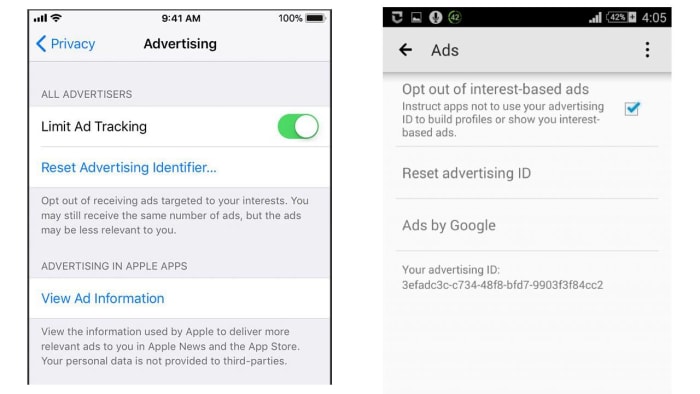
The way these apps have been collecting data is by matching various ID numbers with data that is unique to your mobile phone. For example, your Advertising ID may be a resettable number, but your phone’s IMEI, Android ID, and MAC address are much more difficult (if not impossible) to change. Rather than simply taking your advertising ID number, like Google’s guidelines point out, the apps in question have also been pilfering all of the permanent data unique to your device. This makes the data they can send to advertisers much more valuable and takes away what little control you had over your own data.

Screenshots of mobile ad permissions
Image via: Serge Egelman

According to Serge Egelman, who led the research team at the ICSI, “Privacy disappears,” when tech companies act in this way. Egelman also mentioned a few of the 17,000 apps they found to be acting in this way, which included Angry Birds Classic, Audiobooks by Audible, Flipboard, and Clean Master. To show just how far and wide this problem goes, Egelman pointed out that Clean Master alone has been downloaded and installed on over 1 billion devices.

Google has responded to the ICSI’s research, with a spokesperson saying, “We take these issues very seriously… Combining Ad ID with device identifiers for the purpose of ads personalization is strictly forbidden. We’re constantly reviewing apps — including those listed in the researcher’s report — and will take action when they do not comply with our policies.” The problem Google raised, however, is that it can only enforce its policies when the violating data is sent to its own ad networks. If the data is sent to external ad networks, Google can’t enforce its policies.

Google is working on the problem, but only when it shows itself, which seems like a massive dereliction of duty on the part of the internet giant. If it is unable to enforce its policies properly, what is the point in having them?

For more information on the ICSI report click here.