Hackers found a flaw in WhatsApp’s security system to steal personal data from users.
Update WhatsApp right now. A dangerous malware threat has been discovered that could give hackers access to your data.
In the attack, targets received a WhatsApp call. Even if you didn’t answer, the malware could still infect your device. That would give the attackers access to your personal information, including location data and private messages. The threat applies to Android and iOS devices.
“The attack has all the hallmarks of a private company reportedly that works with governments to deliver spyware that takes over the functions of mobile phone operating systems,” a WhatsApp spokesperson said.
Be sure to stay with Softonic for the latest news on this story and any other cybersecurity threats.
Blockchains might not be as air-tight as we once thought.
High-profile security breaches and issues with privacy are massive concerns for everyone.
Now, we’re seeing more of those security issues are emerging in crypto. That’s surprising since blockchain technology has been presented as the solution to our privacy woes.
Whether blockchain is slated to become the new “backbone” of the internet or the future home for our genetic data remains to be seen. However, we’ll need to remove the rose-colored crypto-glasses if we intend to move more sensitive info onto the blockchain.
As reported in the MIT Technology Review, hackers have stolen nearly $2 billion worth of cryptocurrency since the beginning of 2017. Most of that money has been taken from the exchanges — not from lone-wolf hackers, but organized crime rings.
The belief that blockchaining is unhackable does seem odd. This is because blockchain hacks are one of the main reasons that the general public has even heard about this decentralized technology.
Here’s the thing: blockchains aren’t unhackable
Blockchains are powerful platforms. But if we’ve learned anything from looking at high profile breaches, it’s that all technology has weak points.
For some reason, many people have gotten the idea that blockchains were an impenetrable force. Password protectors, VPNs, and even blockchains are not entirely hack-proof.
They’re leaps and bounds ahead of using the web unprotected — but you still need to be careful.
Are blockchain hacks actually on the rise?
There’s been a near-constant stream of attacks going back for at least five years. The most notable example is Mt. Gox, where nearly half a billion dollars in bitcoin was stolen from users and the company.
This year, there’s been the Cryptopia breach, a January attack that wiped out approximately 94% of the company’s holdings. The total amount is unknown, but data analysts estimate the stolen coins could be worth about $16 million total.
In the ERC case, Coinbase detected suspicious activity in the form of a 51% attack, a type of attack once thought to be hypothetical. This occurs when a group of miners with more than 50% control blocks new transactions to maintain the majority.
By controlling the computing power, the attacker(s) can monopolize the mining of new blocks. Then, they can prevent other miners from completing blocks while siphoning off their rewards.
Are blockchains safer than actual banks?
Forbes wrote critically about blockchain in January. The article says that people keep backing blockchain because there’s a case of industry anxiety.
It goes on to say there’s never been anything on this scale in the traditional banking world — a $2 million Bank of America robbery from 20 years ago is the biggest heist listed on Wikipedia. That number pales in comparison to the amounts stolen via hacking.
The point isn’t necessarily that the technology is bad news, but that people should be wary of keeping large sums in blockchain-powered accounts.
Just found this interesting sensor looking at me from the seat back on board of Singapore Airlines. Any expert opinion of whether this a camera? Perhaps @SingaporeAir could clarify how it is used? pic.twitter.com/vy0usqruZG
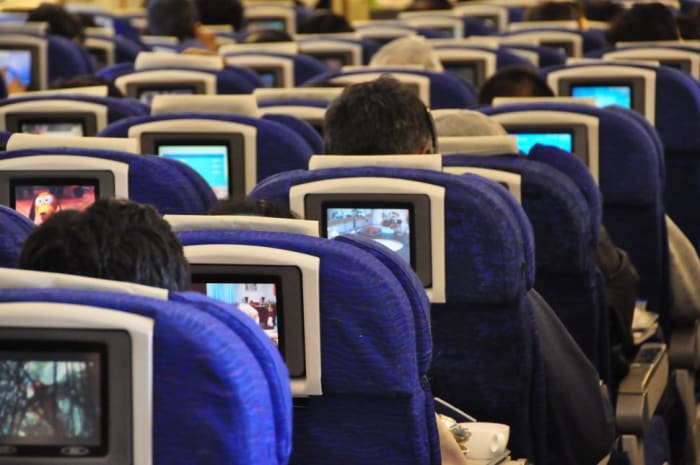
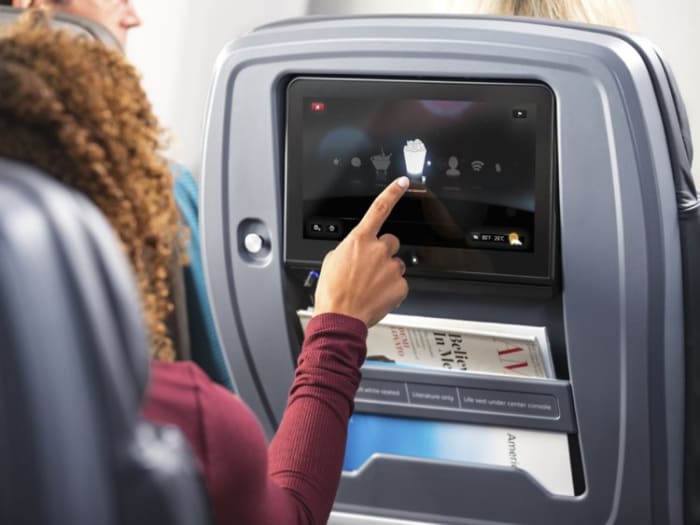
Apparently, we do, as three major airlines have already confirmed our fears: United, American, and Singapore Airlines not only admit to having cameras placed beneath viewing monitors, but they have no plans of removing them. “These cameras on our newer IFE systems were provided by the original equipment manufacturers,” Singapore Airlines said in a tweet. The justification for what otherwise seems an egregious breach of trust is that while the cameras are there, they are not actively watching passengers. “We have no plans to enable or develop any features using the cameras,” they immediately explained.
Good to know they’re not already watching us, at least, but honestly it’s small comfort. Will passengers even be aware should they be turned on? If you think this sounds like a scandal waiting to happen, you’re not alone.
Which begs the question …
Why are there in-flight cameras to begin with?
So if these cameras are not on, what’s the point? “This is a standard feature that manufacturers of the system have included for possible future purposes such as video conferencing,” a United spokesperson explained.
Panasonic Avionics (the maker of the IFE system) acknowledged the outrage by arguing their actions were in compliance with General Data Protection Regulation (GDPR), the data protection law for the European Union. “Our cameras have never been activated on United aircraft,” a spokesman of United Airlines assured, “and we have no plans to use them in the future.”
Some may be assuaged by this claim, but let’s address the elephant in the room: Just because an airline isn’t spying on its passengers with in-flight cameras doesn’t mean a third-party hacker can’t easily access them. After all, if a hacker can slip into someone’s home via IoT devices, who’s to say it’s not possible on a major airline?
Turns out that movie you’re watching is also watching you.
“As far as IFE is connected to the Internet, there is a possibility of remote hack and espionage if such devices can be activated in software,” said Kaspersky’s Vitaly Kamluk.
The Airline Passenger Experience Association (APEX) asserts these fears are misplaced, however, with their CEO Joe Leader claiming that “the greatest risk to airline passenger privacy breaches come from their own smartphones, tablets, cameras, computers, and smart devices used in private settings.”
Kamluk disagrees, arguing that “the true risk comes from potential unauthorized access to these devices from powerful malicious attackers.” Until a scandal breaks out we’re likely not going to know who’s right here. On the other hand, could this technology one day be praised for its benefits?
Can these be helpful?
Maybe we’re asking the wrong questions. Like all manners of new technology, the benefits may outweigh the risks. After all, there are still millions of people on Facebook despite the numerous privacy risks. Likewise, can we benefit from in-flight cameras?
Leader argues that there are several advantages to these cameras: “Since the advent of the smartphone a decade ago, airlines realized that they need to be thinking ahead to serve the future travel experience,” he said in a statement. “The systems selected years ago are now on aircraft today and in many cases will be on aircraft for the next decade. With explicit customer permission, airlines will be able to provide better service and safety to their passengers using new technology.”
Could in-flight cameras make air travel safer or more convenient?
It’s not unthinkable that these cameras could prove useful, sending alerts if passengers are suddenly sick, or monitoring for incidents like assault, theft, or human trafficking. “Airline passengers are typically tracked outside the aircraft dozens of times on a typical journey through stores, security, roadways, and airports by cameras without any permission,” says Leader, the point being that if there’s no outcry about it outside the plane, why should there be one on the plane? “In contrast, airlines only want to use cameras in the future with permission when technology has advanced to offer personalized service improvements that passengers desire.”
Do you think these cameras will help improve flight safety and convenience? Or is this a breach of privacy and trust that needs to be answered ASAP? Let us know in the comments below, and stay tuned for more.
New thieves can jack your car with only a tablet. Watch what happens.
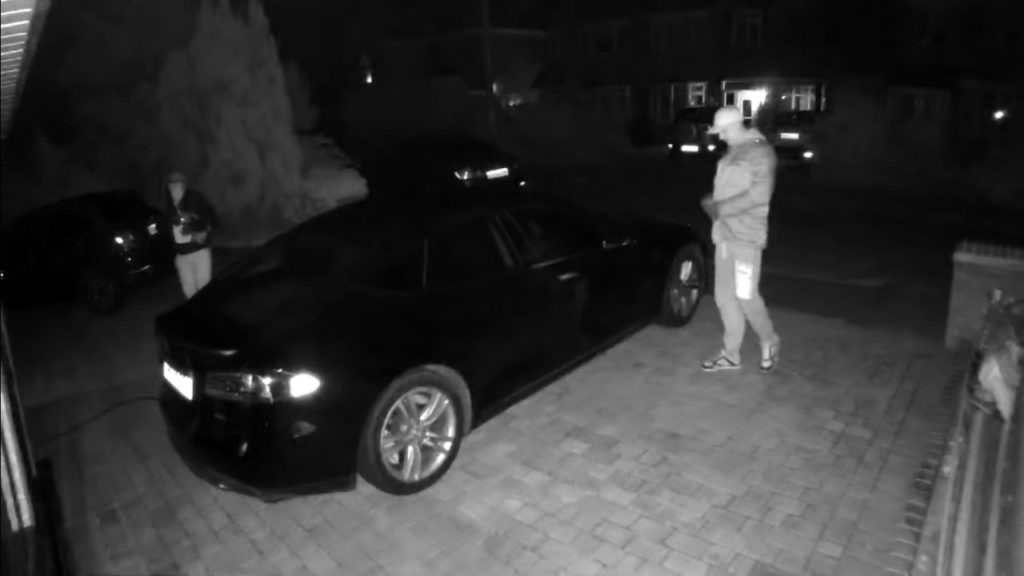
The future is now, people. You can now steal cars by hacking into them. A (former) Tesla owner in the UK posted security footage online that shows thieves hacking into his car and driving away with it. The footage can be viewed below.
This looks like something out of Watch_Dogs. So, how exactly did these tech-savvy thieves hack into the car?
The thieves exploited something called a key fob. A key fob is a chip used in wireless car keys that send a randomly generated 40-bit code to the car, along with a command (unlock the doors, open the trunk, etc.). The car will recognize the code and then complete the command. The thief with the tablet is walking around in an attempt to catch the signal of the car owner’s key fob, while the other thief is presumably using his phone to boost the tablet’s signal. Once the key fob signal was picked up by the thief with the tablet, he could use it to give the car any command that could be used on a normal wireless car key.
For all of their technical prowess, the thieves seemed to have a lot of trouble unplugging the car from the charging cable. All you need to do is press a button on the cable.
There are a few things Tesla owners can do to protect themselves from technically proficient but cord-challenged thieves in the future.
First, disable “passive entry” mode while at home. Passive entry mode allows owners to unlock their car simply by walking towards it when their key is on the vicinity. Passive entry was enabled for the stolen car, allowing the thieves to access the fob key in the first place.
Second, enable “PIN to drive.” This feature allows users to set a code that must be entered before the car can actually be driven.
Third, place your wireless key in a faraday bag while at home. A faraday bag is a special pouch that prevents your key from transmitting signals while inside, preventing hackers from picking up on your key fob.
Be careful, Tesla owners. All of the fancy technology included in these cars can be used against them. We’ll end this article on a lighter note by telling a joke:

 Update WhatsApp right now. A dangerous malware threat has been discovered that could give hackers access to your data.



 Forbes