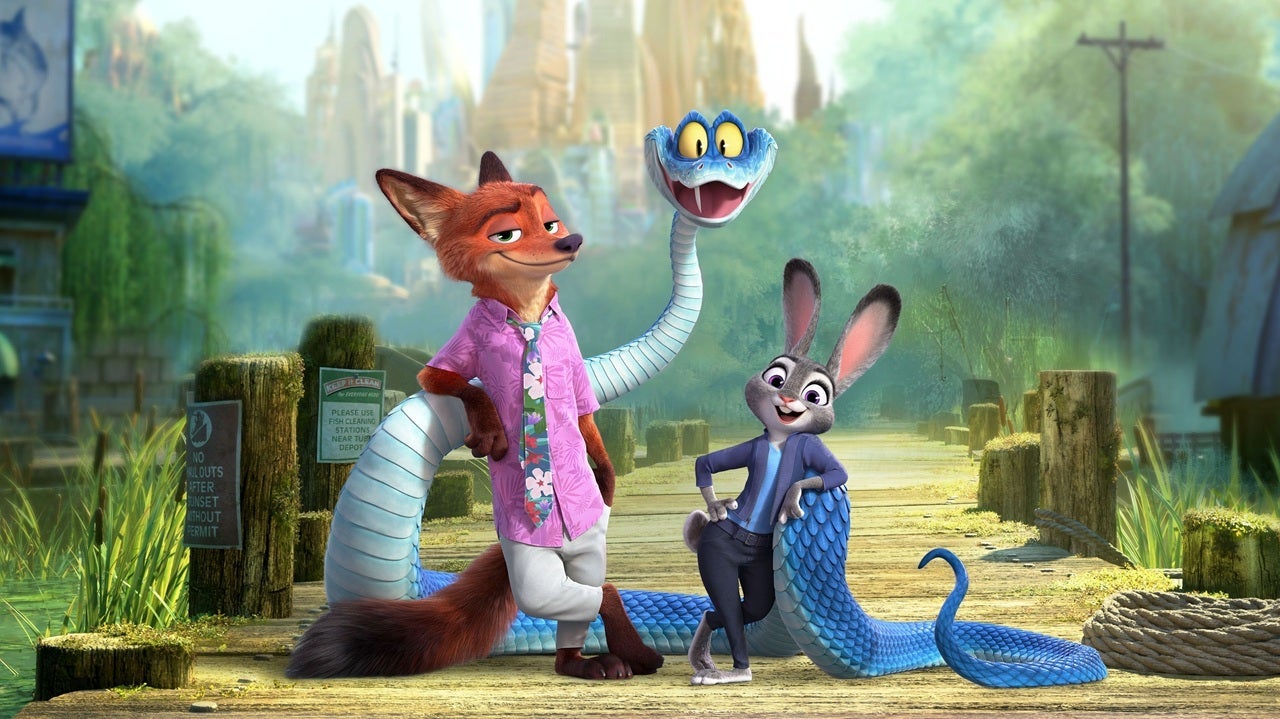
The animated Disney movie, Zootropolis 2, has recorded a solid performance at the South Korean box office, accumulating $8.3 million during the weekend of December 5 to 7. This success has brought its total earnings to $25.7 million after 12 days in theaters, demonstrating a strong public interest in the sequel to the acclaimed original, which debuted in 2016. A movie that is a hit wherever it goes According to KOBIS, the tracking service managed by the Korean Film Council, Zootropolis 2 has sold 1.2 million tickets just on the mentioned days. This number highlights […]
The Disney animated film, Zootopia 2, has recorded a solid performance at the South Korean box office, accumulating $8.3 million during the weekend of December 5 to 7. This success has brought its total earnings to $25.7 million after 12 days in theaters, demonstrating a strong public interest in the sequel to the acclaimed original, which debuted in 2016.
A movie that takes the world by storm
According to KOBIS, the tracking service managed by the Korean Film Council, Zootropolis 2 has sold 1.2 million tickets just on the mentioned days. This number highlights not only the popularity of the film but also its ability to attract viewers at a time when box office competition is fierce.
With a market share of 68.8% since its premiere, Zootopia 2 has established itself as a pillar in family entertainment, standing out above other productions in the movie box office in South Korea. This remarkable performance can be attributed to the combination of its accessible narrative, endearing characters, and the recognition of the Disney brand, which remains a significant draw for the youth and family audience.
The enthusiasm for Zootopia 2 could have positive long-term effects for the franchise, as if current trends continue, it is likely to generate even more revenue as the holiday season approaches. Expectations from critics and the public are high, and with the initial positive feedback about the sequel, there is a real possibility that Zootopia 2 will set a new milestone in Disney’s animated releases.
‘Jujutsu Kaisen: Execution’ has become a phenomenon at the Japanese box office, accumulating 1.51 billion yen (approximately 8.34 million euros) and surpassing one million viewers in just three weeks since its release. This compilation film, which summarizes the Shibuya Arc of the second season of the popular anime, is making a notable impact in theaters, displacing other major productions like ‘Demon Slayer’ and ‘Chainsaw Man’. A marketing campaign to match Despite being a film that compiles already known content, its success lies in the emotional connection that the […]
‘Jujutsu Kaisen: Execution’ has become a phenomenon at the Japanese box office, accumulating 1.51 billion yen (approximately 8.34 million euros) and surpassing one million viewers in just three weeks since its release. This compilation film, which summarizes the Shibuya Arc of the second season of the popular anime, is making a notable impact in theaters, dethroning other major productions like ‘Demon Slayer’ and ‘Chainsaw Man.’
A marketing campaign to match
Despite being a film that compiles already known content, its success lies in the emotional connection that fans have with the characters and the franchise. Additionally, the production company MAPPA has planned an attractive marketing strategy, offering exclusive gifts, which could further boost revenue between November 29 and December 5.
It is important to note that ‘Jujutsu Kaisen: Execution’ has not yet been released in all international markets. For example, its premiere in the United States is scheduled for December 5. However, in Spain it has already shown good performance, ranking second at the box office with a revenue of 598,161 euros, only behind ‘Now You See Me 3’.
However, the outlook is not so optimistic for all anime productions. Recently, ‘Scarlet’, directed by Mamoru Hosoda, debuted in theaters but failed to capture the audience’s attention, only ranking fifth. This highlights the difficulty that original anime films face in achieving success without a solid backing, such as that of recognized directors, reflecting a growing trend in the industry where established franchises dominate the box office.
The year 2025 had been anticipated as a decisive moment for the box office, promising a major readjustment after several years of uncertainty. However, so far, expectations have not been met. The winter was disastrous, with a notable shortage of successful titles and a general decline in interest in franchises that were previously considered infallible. There is no box office for current cinema. Spring brought a slight uptick in public interest, with some films managing to capture attention, but this recovery has been fleeting. Summer, while acceptable, failed to maintain the momentum, leaving […]
The year 2025 had been anticipated as a decisive moment for the box office, promising a major adjustment after several years of uncertainty. However, so far, expectations have not been met. The winter was disastrous, with a notable shortage of successful titles and a general decreased interest in franchises that were previously considered infallible.
There is no box office for current cinema
Spring brought a slight uptick in public interest, with some films managing to capture attention, but this recovery has been fleeting. Summer, while acceptable, failed to maintain the momentum, leaving the industry in a vulnerable position. In contrast, autumn has proven to be tragic, with a series of releases that have failed to connect with audiences. The inconsistency in the availability of successful films is directly affecting the overall box office performance throughout the year.
Moreover, there has been a notable decrease in interest in stars that previously dominated the industry, raising questions about the future of big productions. Figures that used to draw crowds seem to have lost some of their shine, and franchises that used to guarantee success are also struggling to attract audiences. This phenomenon reflects a shift in viewer preferences, as they now seek new experiences in front of the screen.
In summary, 2025 has not managed to establish the turnaround that was expected in the film industry. Future projections seem uncertain as studios face the challenge of regaining audience attention in a rapidly changing entertainment landscape. While some rumors suggest that there could be a significant readjustment in the way movies are produced and distributed, the final outcome remains difficult to predict.
The Chinese market is becoming increasingly important for Hollywood. Although it may not seem like it, for a movie to succeed explosively, it needs to perform well in that market. That is why movies are increasingly being adapted to the tastes and criteria of the Asian market. Although it is not necessary to reach the Chinese market for a movie to be a success, nor is it the goal of most movies, blockbusters are increasingly trying to succeed in that market. Something in which The Kingdom of the Planet of the Apes is no exception. Tenth […]
The Chinese market is becoming increasingly important for Hollywood. Although it may not seem like it, for a movie to succeed explosively, it needs to perform well in that market. That’s why movies are increasingly being adapted to the tastes and criteria of the Asian market. Although it is not necessary to reach the Chinese market for a movie to be a success, nor is it the goal of most films, blockbusters are increasingly trying to succeed in that market. Something that is no exception is The Kingdom of the Planet of the Apes.
Tenth film in the Planet of the Apes franchise and the fourth in the series after the reboot, the film directed by Wes Ball is a 145-minute odyssey that cost around 160 million dollars and managed to gross 400 million dollars at the box office. Partly thanks to the Chinese market.
Projecting $50-55 million in the US for its debut weekend, it ended up making just over $58 million. Similarly, it was expected to make between $80-90 million outside the US, but it ended up making $129 million. Among them, $6.4 million came from Mexico, $7.1 million from France, and $11.4 million from the second largest market in the world: China. Demonstrating the crucial importance it has in these big-budget films.
Even so, the movie was a success thanks to its domestic and global success. Although it performed well in China, which greatly boosted its numbers, its triumph was largely because it performed radically better than analysts around the world expected. Something that was also reflected in the reviews, receiving an 80% on Rotten Tomatoes, with 323 positive reviews. Even if on Metacritic, where scores tend to be much harsher, it barely reached a 66 out of 100.
Being the fourth installment of the franchise, one would expect it to have performed considerably worse than the previous ones. And although it made 100 million less than the previous film, War for the Planet of the Apes, it was considered a complete success. And why did it work? Mainly, because the movie knows how to maintain a perfect balance between continuing the story of the previous films and being completely understandable without having seen them. By elegantly maintaining that precarious balance for its two and a half hours, it manages to keep the attention of viewers looking for intense and bombastic entertainment, allowing them to enjoy a blockbuster that clearly shows where its budget is: in the special effects.
The reason for success: following the story and the visuals
Because the other great differentiating factor of the film is the great spectacle it offers. With highly crafted special effects and absolutely spectacular CGI, it has been compared in quality to Avatar, the film by James Cameron. This translated into numerous award nominations and, very notably, a nomination for the Oscars for Best Visual Effects in 2024, which Dune: Part Two would ultimately win.
Now the kingdom of the planet of the apes arrives on HBO Max so we can enjoy it in the comfort of our homes to relive the tremendous show it represents. And while it’s not the same as watching it in the cinema, it is surely still a spectacle worth seeing.
The fall box office has faced mediocre performance, leading Hollywood to venture into the hope that Predator: Badlands will revitalize the cinematic landscape. The film, produced by 20th Century Studios, a subsidiary of Disney, is projected to achieve a global opening of approximately $60 million. Of this figure, it is estimated that more than $25 million will come from the United States and Canada. An obscene but realistic figure, Predator: Badlands represents a significant investment for Disney, especially during a period where public interest has been affected by a series of failed releases and […]
The fall box office has faced mediocre performance, leading Hollywood to venture into the hope that Predator: Badlands will revitalize the cinematic landscape. The film, produced by 20th Century Studios, a subsidiary of Disney, is projected to achieve a global opening of approximately $60 million. Of this figure, it is estimated that more than $25 million will come from the United States and Canada.
An obscene but realistic figure
Predator: Badlands represents a significant investment for Disney, especially during a period where public interest has been affected by a series of failed releases and overwhelming competition for consumer attention. Hollywood recognizes the importance of this film not only as a product of entertainment but also as a potential lifeline for the box office, at a time when the numbers have largely disappointed.
The return of the iconic science fiction saga, which has captured the imagination of viewers since its debut in 1987, could be just what the industry needs. However, the reception from the public and critics will be key to determining whether Predator: Badlands will truly make a positive impact at the box office, or if it will go unnoticed like other recent releases.
The industry will be watching this release closely, as the success or failure of the film could have significant repercussions on future productions. Despite low expectations, the combination of nostalgia and the return of such an iconic character could be determining factors that attract audiences to theaters, and Hollywood hopes that this strategy will result in a more robust box office as the year-end holidays approach.
The sequel to the horror movie Black Phone, produced by Universal and Blumhouse, has had a solid opening, grossing 42 million dollars in its first weekend globally. The film, which follows the line of its successful predecessor from 2022, continues to explore psychological horror with an intriguing plot that has captured the attention of both critics and audiences. The sequel to a hit has also managed to be a success. Of the 42 million dollars raised, 26.5 million come from the United States and Canada, standing out as the main market for this release
The sequel to the horror movie Black Phone, produced by Universal and Blumhouse, has had a strong opening, grossing 42 million dollars in its first weekend globally. The film, which follows the line of its successful predecessor from 2022, continues to explore psychological horror with an intriguing plot that has captured the attention of both critics and audiences.
The sequel to a success has also managed to be a success
Of the 42 million dollars raised, 26.5 million comes from the United States and Canada, standing out as the main market for this release. The rest, 15.5 million, was distributed among 71 international territories, a figure that, although significant, suggests that the film could have greater growth potential in the global market as the marketing campaign develops and positive reviews solidify.
The film has received various opinions, but it seems to have managed to connect with horror genre lovers. Many critics highlight its tense atmosphere, as well as memorable performances that elevate the source material. The combination of Blumhouse’s creative direction and the impactful narrative presented by Black Phone in its first installment has created a solid foundation for its sequel, attracting the attention not only of horror fans but also of those who enjoy complex and emotional stories.
The good reception at the box office suggests that Black Phone 2 could be on its way to becoming a new success within the genre. However, despite the good numbers, there is always the possibility that creative approaches may vary in sequels, which often leads to speculation. In this sense, it can be considered that the film has the potential to evolve its narrative in future installments, if the studios decide to continue developing this unsettling saga.
Mark O’Meara, owner of a cinema in Virginia, reports that the earnings from new movies continued to show disappointing results over the last weekend. Although several premieres, such as One Battle After Another, have been critically acclaimed and some of them sound like contenders for the Oscars, their box office performance has been considerably low. One box office after another One of the standout premieres of the week was The Smashing Machine, a sports biographical film starring Dwayne Johnson, who plays MMA fighter Mark Kerr. Despite the expectations raised by […]
Mark O’Meara, owner of a cinema in Virginia, reports that the earnings from new movies continued to show disappointing results over the last weekend. Although several releases, such as One Battle After Another, have been critically acclaimed and some of them sound like contenders for the Oscars, their box office performance has been considerably low.
One box office after another
One of the most notable releases of the week was The Smashing Machine, a biographical sports film starring Dwayne Johnson, who plays MMA fighter Mark Kerr. Despite the expectations raised by Johnson’s presence, the film “sank” on its opening, which raises concerns for exhibitors at a critical time for the film industry.
This outcome has been corroborated by O’Meara, who reviews the box office figures weekly. The competition at the box office has intensified, as not only The Smashing Machine disappointed, but other acclaimed titles also failed to attract audiences. The figures indicate that interest in new productions is declining, which could reflect a shift in audience preferences or an adjustment in the market’s supply and demand.
Experts suggest that this situation may be due to a series of factors, such as market saturation and the growing popularity of streaming platforms that offer diverse content from the comfort of home. In this context, the film industry faces significant challenges in revitalizing public interest in attending movie theaters, which could have lasting implications for the evolution of the industry.
The upcoming weekends are expected to bring new releases aimed at capturing the audience’s attention and reversing this trend. The film community remains attentive to the evolution of these dynamics, in search of answers that promote a recovery at the box office.
The worldwide debut of Tron: Ares reached $60.5 million, of which $27 million comes from the international market. Despite the high expectations set before the opening weekend, the film directed by Joachim Rønning did not meet the initial projections, raising concerns among Disney executives. The cyber saga, which has captivated audiences for 43 years, showed a performance that has been labeled as below expectations. This could very well mean the end of Tron The release weekend coinciding with the promotional tour in […]
The worldwide debut of Tron: Ares reached $60.5 million, of which $27 million comes from the international market. Despite the high expectations set before the opening weekend, the film directed by Joachim Rønning did not meet the initial projections, which has raised concerns among Disney executives. The cyber saga, which has captivated audiences for 43 years, showed a performance that has been described as below expectations.
This could very well mean the end of Tron
The release weekend coinciding with the promotional tour abroad for the Tron: Ares team may have influenced its performance, as the absence of the main actors and its director from the U.S. market could have limited local interest. However, despite the low box office performance, the reviews and audience reception have been mostly positive, suggesting that the quality of the content may not be the main issue.
The Tron franchise has experienced ups and downs throughout its history, from the acclaimed release of the original in 1982 to the sequel Tron: Legacy in 2010. Tron: Ares seeks to revitalize interest in this iconic saga, but the initial low performance could influence future projects. Some experts suggest that the lack of proper promotion at home and competition from other films in theaters may have significantly affected the box office.
In conclusion, Tron: Ares begins its journey on a shaky commercial footing, despite the positive reviews, which leaves its future at the box office uncertain and whether it will manage to attract a wider audience in the coming weeks.
The movie No Other Choice, directed by the acclaimed South Korean filmmaker Park Chan-wook and starring the renowned actor Lee Byung-hun, had a successful debut in theaters, grossing $4.5 million during its opening weekend from September 26 to 28. This figure translates to a total of 609,280 attendees, representing 45.2% of the country’s box office sales during that period. A film that has captivated the audience The movie was screened in 1,871 theaters in South Korea, which facilitated its access to a wide audience and contributed to its prominent position […]
The movie No Other Choice, directed by acclaimed South Korean filmmaker Park Chan-wook and starring renowned actor Lee Byung-hun, had a successful debut in theaters, grossing $4.5 million during its opening weekend from September 26 to 28. This figure translates to a total of 609,280 attendees, representing 45.2% of the country’s box office sales during that period.
A movie that has captivated the audience
The movie was screened in 1,871 theaters in South Korea, which facilitated its access to a wide audience and contributed to its prominent position at the box office. According to data provided by KOBIS, the box office tracking service operated by the Korean Film Council, No Other Choice has reached a total of $7.4 million since its release, indicating a solid performance in the coming weeks.
The combination of Park Chan-wook’s direction, known for his distinctive visual style and provocative storytelling, along with the popularity of Lee Byung-hun, has been key in attracting the audience. This drama, which addresses contemporary themes with an emotional depth characteristic of South Korean cinema, has generated expectations and analysis from both critics and the public alike.
No Other Choice is expected to continue dominating the box office in South Korea, as more viewers are drawn in by the promise of an intense cinematic experience. The film industry will closely monitor the movie’s performance in the coming weeks, as it becomes a benchmark for the potential of local productions in the current market.
The movie One Battle After Another, directed by Paul Thomas Anderson, has had a successful debut at the box office, grossing $22.4 million in its first weekend in 3,634 theaters in North America. This impressive result places the film at the top of the box office charts, surpassing other competing productions in an increasingly challenging film market. An action comedy like no other In this action comedy, Leonardo DiCaprio plays an ex-revolutionary who finds himself in a constant state of evasion. His performance has been well received by both critics […]
The movie One Battle After Another, directed by Paul Thomas Anderson, has had a successful debut at the box office, grossing $22.4 million in its first weekend in 3,634 theaters in North America. This impressive result places the film at the top of the box office charts, surpassing other competing productions in an increasingly challenging film market.
An action comedy like no other
In this action comedy, Leonardo DiCaprio plays an ex-revolutionary who is in a constant state of evasion. His performance has been well received by both critics and audiences, contributing to the film’s appeal. The combination of Anderson’s direction and DiCaprio’s talent has generated great interest, attracting diverse audiences to theaters.
The international box office has also been remarkable, with the film adding $26.1 million in markets outside North America, bringing its global total to $48.5 million. This figure reflects a strong acceptance in various countries, suggesting that One Battle After Another has the potential to continue increasing its revenue in the coming weeks, as more viewers seek to enjoy the blend of comedy and action it offers.
Box office experts are closely watching how the film’s performance will develop in the coming days, as its success could largely depend on word of mouth and the reviews it receives. With the arrival of other scheduled film releases, One Battle After Another will need to maintain its traction to solidify its success in a constantly changing cinematic landscape. However, at this moment, its initial figures are a clear indicator of a promising start.