Say goodbye to social media

Social media is a term that, today, has a very loosely-defined meaning. It refers to a class of apps, such as Facebook, Instagram, and Twitter, designed to keep us connected, but as the social mediums of the past changed, so too did the meaning of the word. In the article that follows, we’ll explore the rise and current fall of social media. We’ll also briefly touch upon the dangers that these apps pose and how society has become so fully engrossed in social media. 

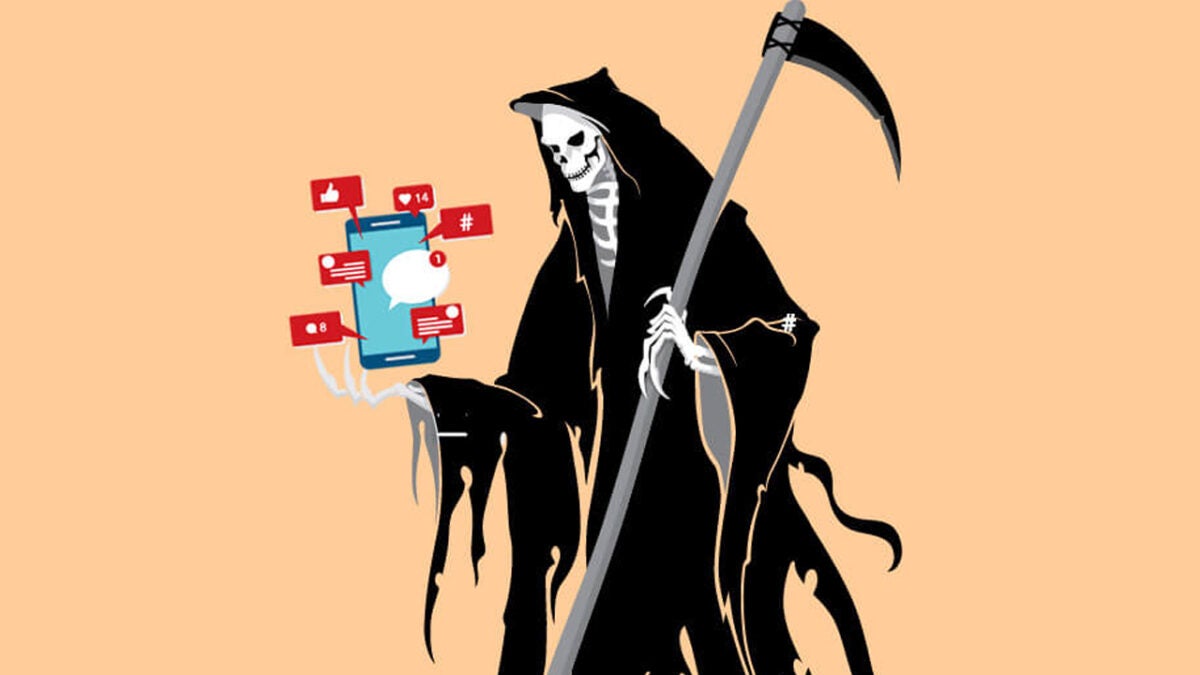
You take the blue pill, and nothing changes. Then, You carry on posting, mindlessly scrolling, and experiencing the short-lived but constant supply of dopamine that social media feeds you. You take the red pill, and you wake up. You learn what it means to communicate again. From there, you rediscover what it means to be alive – truly alive, not alive but stuck in a virtual fantasy nestled atop a slowly crumbling house of cards. So, what will it be? 

What is a social network?

In its simplest and earliest expression, a social network is a way to combine your list of close connections with someone else’s list of close connections so that you both gain a larger list of connections, albeit not always as close as the former. A non-digital social network could be you introducing your group of friends to another friend’s group of close friends. Somewhere in the chaos, new connections are bound to develop, such as strengthening the bonds within the new social network. That’s literally all there is to it. 

Of course, we live increasingly more digital lives these days. And social media, in digital terms, has come to mean so many things to so many people that it’s lost its original meaning. However, given the current climate of the social media industry, we needn’t quibble over terminology. 
Is social media dying

How did humanity become so addicted to social media?

It happened slowly, like bringing a frog to a boil so slowly that it doesn’t realize it’s burning – until it’s too late. Social media was born out of a desire to connect people to each other more effectively – and for a while, this is exactly what early social media did. Back in the day, content meant satisfied if you pronounced it slightly differently, and social media was more about connecting with other people, not publishing mindless content.

For instance, one of the earlier utilities, Friendster, allowed people to connect their groups of friends to other people’s connections, thereby giving people gateways to friends of their friends’ friends. The purpose of social networks was to network socially with other people. This is a far cry from the trashy Instagram measuring contest that most social media has become. 
Is social media dying 2

The age of social media addiction and the decline of social networking began with the release of Instagram in around 2009. Let’s be clear; Instagram, as it was envisioned by its original creator, Kevin Systrom, was very different from how it’s turned out. Basically, Instagram was meant to allow people to share their experiences with their friends through video and photos, but that was pretty much it. The dumpster fire, political, virtue signaling, toxic, influencer nature of the app is primarily thanks to our greedy friends at Facebook – now Meta. Meta is not to be confused with the Metaverse, Zuckerberg’s misguided attempt to lure humanity into a future that he solely controls. 

Ugliness aside, the launch of a media-sharing platform like Instagram catapulted us into a world where the average human isn’t just experiencing broadcasted media but is actually themselves a broadcaster. This would likely have turned out fine if Systrom was left to manage the app himself. Instagram, formerly called Burbn, would have continued operating at a loss, gained popularity, lost popularity, and inevitably lost humanity’s interest.
Is social media dying 2

Fun Fact: Facebook has always been in the business of collecting user data and buying other platforms. Its founder, the powerful Zuck, has a historic propensity for calling his app’s users ‘dumb f***s’. User data is money because whoever controls user data, has access to the likes, dislikes, desires, and secrets of whoever uses their app.

This is power over entire countries that can be sold to threat actors for a massive profit. Any social media platform that tells you it isn’t interested in your data is lying to you. Data drives the algorithm, which drives your engagement, which drives the type of data that is collected, which drives the algorithm, and so it goes until you’re left with a system that knows you better than you’ll ever know yourself and thus has power over you. Is that really the kind of future you want? 

When Facebook gets a hold of another platform, the first step is to make it profitable. This means ads, lots of ads. It also means finding ways to boost engagement which boosts data collection, which boosts engagement, and so on. The more engagement, the more money. 

In any case, the tide change from the average human simply reading or watching to actually creating ‘content’ has landed us where we are today. 

The current social media climate

Where we are today is at a crossroads. This takes us back to the red pill/ blue pill statement from before. Social media in its current iteration is primarily comprised of people doing either stupid, dangerous, provocative, illegal, or downright disgusting things for ‘clout’ – or social media exposure.

This is because more followers, likes, views, and comments typically means more chance at becoming that rare thing; a social media influencer. The fact that we call these people influencers should already be a red flag of note. That literally means that we accept that their actions, opinions, and biases are meant to influence the masses. These influencers have already had some mark on society in the past, such as in the US presidential elections of 2016.

Social media is in a state of disarray right now. We live in a time where Zuck is complaining that Facebook is losing money because people of a certain demographic are dying. The rest of the social media extended universe is calling Facebook an old folk’s home, Twitter is in an inherently unstable liminal space at the moment, TikTok, a Chinese app, seems to be brainwashing western children with insipid dances and vapid influencers while in China, the app is reportedly used to educate children on how to live healthier lives.

It’s as if this entire effort has been a massive social experiment. The experiment has failed, for the average person at least. For corporations, however, this experiment has generated billions upon billions in cold hard cash – or cryptocurrency. 
Is social media dying 4

The anti-social social media movement

There’s a massive movement toward a disconnected life happening right now. Disconnected from social media, that is. Which, in turn, means more connected to each other. This is most noticeable amongst the generation termed Gen-Z. Gen-Z, while having grown up suckling at technology, are moving away from social media and toward healthier lives. Gen-Z, for the most part, realizes that you cannot be happy with yourself while being exposed to the fallacy that everyone else on social media has a more fulfilling life than you do.

In a larger proportion of people, social media usage and mental stability are mutually exclusive ideas. You’ll also find that the larger portion of people who are truly happy on social media have found a way to generate an income from it. The anti-social media movement is gaining traction by the day and is resulting in droves of people deleting their social media accounts or, at least, using social media less and less. 

Where does it end? 

This story ends with the inevitable demise of social media – at least in its current form. Every day, people are slowly realizing that they don’t need influencers; they don’t need the constant drip of dopamine that keeps them addicted to social media. People are waking up and realizing how much social media has taken over their lives. While there are good aspects to social media, a lot of these were lost when we moved from social networks to modern social media.

In order to remain a part of the human experience, social media needs to change. Unfortunately, or perhaps, fortunately, it won’t change. Tech billionaires are not likely to get less greedy, and the only way that social media could ever be healthy is if it became less about trying to make money at the cost of the freedoms and liberties of others – and that’s practically Meta’s bread and butter. We’ve seen how much money means with Meta cutting services and products and firing half its workforce. It’s also visible with Twitter saving on employee and infrastructure costs in the Musk era.

I want to end by saying that I’ve spoken a lot about addiction and stripping away people’s freedom. I understand that using social media is a choice we make ourselves, but we also need to understand that that choice isn’t always all that conscious. We are incredibly easy to influence, and social media is incredibly difficult to detox from.

I also admit that many people have found a way to coexist with social media in its current form. But we still shouldn’t have to. Social media should be a small part of the human experience. It shouldn’t completely take over our lives as it has in many cases.
The Best Social Networking Sites

Human beings are (generally) social animals by nature, so it comes as no surprise that the rise of social media has been one of the world’s greatest digital milestones. These sites let you communicate with people all over the planet in real time, connecting with others like never before. Whether you love sharing photos or videos, or you’re just a person who has a lot to say, social media is an ideal place to express yourself and be heard.

Mujer utilizando un portátil

Today, you have hundreds of social networking sites right at your fingertips. There are all kinds, ranging from highly specialized platforms to ones that simply let you share every aspect of your life with other users. Knowing how to choose the best site is essential in order to make the most of everything social media has to offer.

To help you find the perfect network, in today’s article, we’re going to share a roundup of the best social media platforms out there, which are also the most popular ones in the world. Because obviously, it would make no sense to join a social network with a limited number of users. We hope you find it helpful!

1. Facebook

Logo de Facebook

With more than a billion users, Mark Zuckerberg’s network takes the crown as the world’s most popular social media platform. Nowadays, it would be hard to find anyone who doesn’t know what Facebook is or have an account on this versatile social networking site.

Facebook is designed to let you share any moment of your life or thought with friends and family members. It has so many users that you can find virtually anyone by running a simple search. Could there be a more perfect way to reconnect with childhood friends or get to know your coworkers, neighbors or acquaintances better?

You can even buy and sell items in Facebook’s marketplace, use its popular messaging service, make video calls and broadcast live videos. It therefore comes as no surprise that it’s one of the most multifaceted social networking sites around.

Creating an account on Facebook is absolutely free, you just need to be over the age of 14 and click here. You can also use Facebook and its messaging service, Messenger, on a convenient mobile app. Click below to download both of them quickly and easily.

Facebook

Facebook DOWNLOAD
8

Messenger

Messenger DOWNLOAD
8

2. Instagram

Instagram

Instagram is a social networking site that lets you share your most special photos as a way of connecting with others. Unlike similar platforms, Instagram revolves around photos and videos, so it’s the perfect choice for audiovisual fans.

With thousands of active users, Instagram is one of today’s most popular social networking sites. Since it’s a highly visual network, Instagram is packed with tools to help you create the perfect image. You’ll find hundreds of fun filters and special effects, guaranteeing that your pics and videos will always turn out exactly as you want them to. What’s more, Instagram has a messaging service and lets you create temporary posts known as “Stories.”

If you want to try Instagram, you can check out the website here. You’ll also need to download the app, which you can do quickly and safely below.

Instagram DOWNLOAD
8

3. Twitter

Tableta con Twitter

Twitter is the famous 280-character social networking site inspired by the old saying “a little birdie told me…” It lets you share news, feelings, thoughts, images and basically anything you want. The only rule is to never go over that character limit. The rest is up to you!

With 340 million active users, Twitter is the perfect social media platform for sharing news at lightning speed. In fact, in recent years, Twitter has become an indispensable tool used by media outlets, journalists and local authorities to transmit information to the public instantly.

If you’re one of those people who likes to eat breakfast every morning while reading the newspaper, we highly recommend Twitter. Moreover, using its powerful hashtag (#) system, you can find information about any topic you’re interested in without the need to follow specific users.

You can visit Twitter’s official website here and download the mobile app quickly and safely below.

Twitter DOWNLOAD
8

4. YouTube

YouTube

YouTube is a social networking site whose content-sharing is centered on videos. Browsing through YouTube, you’ll find all kinds of videos, ranging from music videos and movie trailers to educational clips, cooking shows, and people demonstrating all kinds of curious talents.

YouTube currently has more than two billion active users, and with more than a billion hours of video each day, it’s the ultimate platform for multimedia content. That’s why YouTube is the perfect social networking site if you enjoy watching videos or sharing your creations on your very own channel.

If you like to create videos or want to attract followers by showing your talent in front of the camera, YouTube is the social network you’ve been looking for. To start using it, you just need a Google account (get one here), and you can visit the website here. You can also download the mobile app below.

YouTube DOWNLOAD
8

5. TikTok

Tik Tok

A social media platform geared towards a younger crowd, TikTok features lighthearted content based on fun videos. Having reached its zenith in 2020 (especially during the months of confinement), TikTok is a hit with millennials and anyone who’s looking for fast, viral entertainment.

Tik Tok currently has 800 million users and is one of today’s most talked about social networking sites. You can use it to record all kinds of videos and enhance them with countless special effects. One of TikTok’s strong points are its challenges from user to user, which go viral online in a matter of seconds.

If you’re looking for an social network that’s unabashedly fun, TikTok is an excellent option. Check out the website here or download the mobile app below.

Tik Tok DOWNLOAD
8

6. LinkedIn

LinkedIn logo

So far, we’ve talked about social networking sites designed for sharing thoughts, photos, videos and challenges, but… did you know there are also platforms that can help you find a job? The best example is LinkedIn, which has become a fundamental tool for job seekers and HR recruiters.

The way LinkedIn works is very simple. Users create an account and list their professional experience on their page in CV format. This information is backed by a network of professional contacts who can recommend them and connect them to potential jobs.

Every year, thousands of LinkedIn users find jobs through this social media platform, making it one of the most useful sites on this list. To learn more about LinkedIn, visit the website here. You can also download the mobile app quickly and safely below.

LinkedIn DOWNLOAD
8

7. Pinterest

Logotipo de Pinterest

It might fly under the radar a bit more than the others, but Pinterest is an interesting social networking site designed for sharing ideas through photos and videos, as opposed to sharing messages and snippets of your life with other users.

This social media platform features countless photos in the form of pins. They can be about literally anything, from illustrations to photos of furniture, wedding centerpieces, or ideas for exercise routines to do at home. You can even find a wide variety of hairstyle tutorials. When you find something you like, just pin it to your albums for easy access whenever you need it.

Pinterest is an especially interesting site for artists who need albums or photos for inspiration, and for professionals such as interior designers and wedding planners. You can check out the website here or download the mobile app quickly and safely below.

Pinterest DOWNLOAD
8

We hope our roundup of the best social media platforms has been helpful to you. Did we forget any sites that you think should be on this list? Tell us about them in the comments section!

The Negative Effects of Heavy Social Media Use

Social media has become a fundamental part of our everyday lives. We spend a large part of our days glued to our phones and updating our statuses, sharing our experiences, or simply scrolling through our feeds to find out what our friends are up to. While all this may sound like innocent fun, it has the potential to cause serious problems.

Mujer joven mirando las redes sociales

Social media is undeniably a great way to keep in touch with family and friends and stay on top of breaking news, but it’s also responsible for many of the problems of modern life. Addiction, depression, loss of close friendships and insomnia are only a few of the effects it can have on us.

In today’s article, we’re going to look at some of the main problems that social media has brought into our lives. It’s up to us to start using it in moderation.

1. It’s a waste of time

Hombre utilizando el teléfono móvil

One of the main problems with social media is that it’s a major waste of time. It’s probably happened to you more than once: you’re scrolling through Facebook or Instagram, and before you know it, the entire afternoon has gone by. At first glance, this habit may seem innocuous, but in the long run it can become a serious problem.

Spending too much time on social media can have a negative impact on our lives, starting with our health. Since the rise of social media, many of us have traded taking walks and playing sports for lounging on the sofa and posing.

It not only affects your body, but also puts your mental health at risk. Excessive social media use can throw off your internal clock, causing you to lose your notion of time and even your ability to distinguish between night and day.

Other problems caused by wasting time on social media include difficulty concentrating or performing well at work, and the tendency to neglect one’s real-life friends in order to focus on the online ones.

That’s why it’s so important to limit the amount of time you spend on social media every day. Keep in mind that life is going on around you while you stare at your screen, and you’ll never get back the time you’re wasting.

2. It increases stress

Mujer mirando redes sociales en el coche

Being addicted to social media can exponentially increase your stress level. Considering how we already live in a high-stress society, this is not something to be taken lightly.

Social media can lead to information addiction and the need to always know what is happening in the world or in the lives of your friends or acquaintances. In the long run, this leads to F.O.M.O. (Fear of Missing Out), a social anxiety disorder stemming from the irrational fear of missing some event and consequently being excluded from your group of friends.

Another major stressor arising from social media networks concerns their messaging services. You’re constantly wondering if the other person received your message, and when they take too long to respond, it can make you anxious and even depressed.

It’s important to know how to limit and manage the information you receive on social media and to avoid thinking of these platforms when you’re not connected to them.

3. It causes low self esteem

Mujer triste

On social media, the temptation to compare your life with those of the people you follow can be irresistible. What many users don’t realize is that the lives portrayed on Facebook or Instagram are often not real, but pure fabrications created to attract more followers or to appear to be something one is not.

As the saying goes, comparison is the thief of joy, and when you constantly see your friends partying, flaunting perfect bodies, living in luxury or traveling around the world, you may perceive yourself as inferior to them.

Many social media users live in a constant state of depression due to a sense of inferiority and lack, since they don’t have the same lifestyle that they see everyone else enjoying every day.

Keep in mind that the majority of what you see on social media is just for show. Often, a person on social media who always looks happy and appears to have the perfect job is secretly unhappy and only wants to show the world the life that they wish they were actually leading.

4. It makes you lose your individuality

Mujer sacando foto a comida

Social networks have led to the rise of the so-called influencers, a select group of users who, due to their charisma or posts, have amassed millions of followers. Influencers are so popular that major brands use them to promote their products or fashion.

Anything influencers say is applauded by their followers, and they are the ones who decide what is in or out of style. This generates a loss of individuality, because their followers become like sheep, following trends dictated by a handful of people.

5. It generates depression

Chica triste

Although there are countless things that make social media great, it can be an endless source of depression for users. These networks generate a sense of dependency and a constant need for affirmation from other users through “likes” and comments.

Excessive social media users could fall into a deep depression due to a tiny incident such as posting a selfie and not receiving as many “likes” as expected.

Another factor that can impact your mood concerns attacks by trolls or people who amuse themselves by posting hurtful comments online. Social networks have made it much easier to spread hate through groups where these individuals often pop up.

6. It affects your sleep

Mujer con insomnio

Excessive social media use is directly linked to insomnia. This is a consequence of other factors we have mentioned, such as stress and depression, which together create a vicious cycle of unhappiness.

It is proven that using any screen before bedtime makes it much harder to fall asleep. What’s more, social media is addictive and hard to stop thinking about even after you go to bed.

It is advisable to use social media in moderation and avoid looking at it before you go to sleep. That’s the only way you can be sure it won’t keep you up all night.

7. It generates arguments and misunderstandings

Pareja peleando

Social media lets us stay in touch with friends who live thousands of miles away and be close to our family no matter where we are. However, it can also lead to arguments and has the potential to break up even the strongest couples.

A comment on a photo that you dislike, a party you weren’t invited to, a message that was read and never answered… the reasons why people argue on social media are endless. What’s more, since it’s in writing, it’s much easier to misinterpret the tone of a conversation and reach erroneous conclusions.

Since their appearance, social media networks have brought families and friends closer together but have also destroyed stable, long-term relationships.

8. It generates a fear of being different

Chica triste con portátil

Social media breaks down the privacy barrier in our lives. They help us to learn things about our coworkers, friends and family members that we otherwise would not know.

Living life your own way, spending your time how you see fit, or thinking in a different way can generate a fear of being different from your loved ones. This leads to confusion, insecurity, and often a fear of not fitting in because you’re too different.

What to do if you feel negatively impacted by social media

As we’ve explained above, social media isn’t just an innocent way to have fun and be connected to the rest of the world. It has many negative effects that we need to know how to mitigate.

If you identify with any of the symptoms we’ve described, we recommend spending a few days away from social media and doing a digital detox. The first few days without being able to check Facebook, upload photos to Instagram or let off steam via Twitter will be hard for you, but in no time at all, you’ll find yourself feeling better. Once you have regained control of your life and time, you can always go back to social media, making sure you use it with moderation.

If you find yourself incapable of spending a single day without it, you probably have a serious social media addiction. In this case, we recommend deleting the apps from your phone and seeking professional help. It may seem like an extreme measure, but in the long run, you’ll realize it was the best decision you could have made.

Do you know of any other negative effects of social media? Tell us about them in the comments section!

The Positive Effects Of Heavy Social Media Use

In just a few years’ time, social media has become a fundamental part of our daily lives. In fact, for many of us, it would be hard to imagine our lives without being able to check Facebook or share our most special moments on Instagram. Without a doubt, social media has dramatically changed how we use the internet and relate to other people.

Redes sociales

If you’re a social media fan, you’ve probably had more than one friend or family member warn you of its many adverse effects. And truth be told, while they’re useful, these communication tools can take a toll on your mind and body when used obsessively.

That said, the world of social media is not all bad, and if you don’t let it become an addiction, it can help you to live a much fuller and happier life.

In today’s article, we’re going to look at the positive impact that social media can have on your daily life. These revolutionary communication tools can make your day-to-day routines a lot more pleasant. Keep reading to find out how!

1. It can help you make new friendsHombre saludando a un portátil

Social networks make it exponentially easier to find people with hobbies and tastes similar to yours, which isn’t always possible face to face. In addition, it’s much easier for friendships to flow without superfluous aspects such as preconceived ideas or first impressions based on someone’s physical appearance.

Of course, before starting a friendship with someone, it’s important to make sure the person you’re talking to is who they claim to be. Otherwise you may be the victim of a scam or a con or have your heart broken by a catfish. Want to know how to spot one? You can find out by reading the article below.

2. It can reunite you with family and friends

Mujer hace videoconferencia por Internet

One of the amazing things about social media is the fact that it has made families more united than ever while helping people to get back in touch after being out of contact for many years.

What’s my childhood best friend up to? How’s my brother who works in the UK? Is my mom okay? Thanks to social media, the answers to all these questions are right at your fingertips. It’s just a matter of typing a person’s name and finding their profile. Then you can chat, follow their updates, and have them back in your life just like in the good old days.

3. It can help you stay on top of breaking news

Mujer con portátil

Social media sites like Twitter have revolutionized the news industry. They make it possible to learn about important current events only seconds after they happen without needing to depend on mainstream news sources.

One of the reasons social media is so popular is that you don’t have to look anywhere else for the latest news. All you have to do is log into the platform of your choice to see the news posted and organized on your wall. You can keep track of what’s happening in the world and even in your city or neighborhood in the blink of an eye.

4. It’s an unlimited source of interesting content

Mujer consultando redes sociales

Another important point about social media: it gives you access to a variety of content that is specifically tailored to you and displayed in a simple, pleasant format. Through the accounts and groups you choose to follow, you can receive videos, tutorials, articles and unlimited content promising hours of education and fun.

Best of all, like the news, once you decide to follow an account, all of its posts will appear automatically on your wall. It will then become an endless source of content tailored to your tastes and preferences.

5. It can help you find work and promote yourself Mujer en la oficina

Social networking sites are great for staying in touch with family and friends, but they also play a fundamental role in the work world. There are social media platforms like LinkedIn that can help you find a new job, and they’re also useful if you’re searching for employees or looking to promote your business online.

6. It reveals things you didn’t know about peopleMujer asombrada con portátil

You may assume that you know all your friends, acquaintances and even co-workers like the back of your hand, but do you really know everything about them? In person, we often put up a shield or wear a mask of normalcy so as to not seem strange to people we barely know. But on social media, we give free rein to our thoughts, hobbies and beloved pastimes without worrying about seeming strange.

Often, when you add an acquaintance on social media, you realize that they’re much more interesting than you initially imagined. You might discover that you have a lot in common with one of your friends and that you enjoy many of the same activities, which you can start doing together.

7. It creates new jobs

Mujer trabajando con un portátil

The rise of social media has driven the creation of new jobs. Just think of everyone who works in the Social Media field. These consultants are in charge of capturing new clients, sharing key content on social media, and being the voice of a company or a product online. They have generated close, direct contact between companies and users, resulting in happy consumers who are loyal to the product.

8. It brings people closer together

Chica feliz con un portátil

Social media has managed to bring millions of people closer together even though they are thousands of miles apart. Although there were already programs to make calls or video calls, social media has taken things up a notch, making it even easier to communicate.

These platforms make it possible to follow your loved ones’ daily lives in a fun, uplifting way and to communicate with them instantly or through a post. This means you can have your friends around for all the important moments of your life even if they don’t live in the same town as you.

9. It makes it easier to donate to a good cause Perro tumbado en la calle

Social media plays an important role in sharing messages to help people and charitable causes. For instance, thousands of people who have lost their pets have recovered them after rapidly sharing a photo of their dog or cat on social media.

Social media is also used to spread the word about good causes to a large number of people. Through these sites, donations can be made to sponsor research on a rare disease, to end hunger in the third world, to save an animal shelter, or simply to help an elderly person pay for their sick dog’s operation.

10. It gives free rein to your creativity

Mujer creando contenido con portátil

If you’re a creative person, social media is an excellent way to share your works of art with the rest of the world. Regardless of whether you use Facebook, Twitter, Instagram or Pinterest, social media is a great way to showcase your talent and receive instant feedback from other users.

There are numerous cases of amateur artists who have posted illustrations, music or writing samples and have been discovered and hired by professionals. Social media is inarguably a fantastic platform for new artists who want to try their luck with their creations online.

11. It lets you freely express your thoughts

Chica joven utilizando portátil en la cama

Social media encourages all of us to come out of our shell and share our thoughts without fear of being judged. This makes it much easier to communicate for introverts, who see social media as a place to freely express themselves. That’s why for many people, being on social media is far more than a way of staying in touch with family or sharing interests with friends. It’s a communication format that allows them to open up to the world completely.

As you can see, social media has brought many positive things into our lives. However, it’s important to keep in mind that using it all the time can generate addiction and lead to serious health problems. So, be sure to use common sense, and never forget that the real world lies beyond your phone’s display.

What’s your favorite social media platform, and what’s the best experience you’ve had with it? Tell us about it in the comments section!

This new Twitter filter could block out spam and abuse

 Twitter is preparing to test a new Direct Message inbox filter that will cut out spam and abuse

twitter on a tablet

Twitter certainly has its uses, but it isn’t exactly the most wholesome place. Many users have to deal with constant abuse and if a user has their Direct Messaging inbox set to open, anybody is free to send them whatever they want. It shouldn’t fall to individual users to close off their inboxes to protect themselves from abuse and spam. It now looks like Twitter is moving to protect this notion with the introduction of a new filter.

Twitter is preparing to test a new Direct Message inbox filter that will cut out spam and abuse

For too long, Twitter has thrown all inbound direct messages into a single inbox. This means that whether you’ve received messages from a friend, somebody you follow, or a stranger, somebody you don’t, they’ve all shown up together. When you think about how big the internet is, this concept alone is almost ridiculous. Add to this the fact that trolls exist, and the internet is full of not very nice people, and this clearly becomes a recipe for disaster.

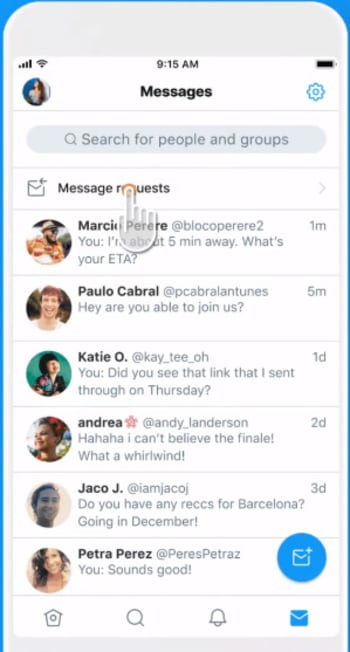
Now, following a tweet from twitter, this situation finally looks set to change. Twitter is adding a new button to your Direct Message inbox called Message Requests. This is where you’ll find all the messages you receive from people who you don’t follow.

Furthermore, the new Message Requests section of your inbox also comes bundled in with new filters. These filters should catch all unwanted material and hide it behind a new Show button. This means that whenever you read a message from somebody you don’t know, that has been caught up in the filters, you won’t have to view the message unless you tell Twitter you want to see it. It gets better because if Twitter thinks the message has potentially harmful content, it won’t show any preview of the message. You’ll be able to delete any messages you receive from people you’re not sure about, without even having to read the first few words.

Twitter message inbox

This move from Twitter mirrors how Facebook Messenger handles inbound messages from strangers. They’re hidden away and need to be sought out, before they can be viewed. Personally, this means that I’ve stumbled across messages I received years ago, that I never even knew about.

All in all, though, this is a very positive move from Twitter and one that should be applauded. It is an unfortunate truth that many people have to close their Twitter Direct Message inboxes because of the abuse they receive. This move potentially makes Direct Messages a much more useful tool. More of us will set our inboxes to open, if we can be certain that having open Direct Message inboxes isn’t going to leave us vulnerable to torrents of abuse. Quite frankly, it is about time Twitter did this.

Twitter’s new feature allows you to subscribe to replies

Twitter is testing a new function that allows users to get notifications when someone replies to a tweet reply!

Twitter

Twitter is now testing a new feature that allows users to get notifications by subscribing to tweet replies.

Now, if a user replies to a tweet, you can be notified!

How do I do it?

Well, it’s only for mobile for now. If you were hoping to use it on your desktop, you’re out of luck. If you want to try this out on mobile, tap on the reply that you want to follow. From there, click on the bell in the top right of your screen. After that, you can get notifications for if someone replies to the tweet in question.

Why would I do this?

The best way to describe this feature would be “neat, but unnecessary.” There aren’t many situations when subscribing to replies sounds like a good idea. If you want to follow some Twitter drama that’s going to stem from a reply, this can help out. If you’re interested in the conversation between users in a reply chain, it can come in handy. However, you can also just periodically check back also.

Before this new feature, you would only get a notification from a tweet reply if a user replied to you. Even if you commented somewhere in the reply chain, you would only get a notification if the replying user also replied to you.

You enjoy TV less when you’re on Twitter

Discover how live-tweeting a show makes it less enjoyable.

Family on phones

Since 1941, television has been the great American pastime. Get home after work, flip on the tube, and stare at drama, comedy, or reality jackassery until it’s time to go to bed. TV is our constant companion, so it’s no wonder that when social media came around, we’d find ourselves multi-tasking with the two. Unfortunately, our divided attention is taking away from our ability to enjoy our favorite shows.

Researchers at the University of Connecticut separated 230 college students into two groups. One group watched episodes of “Friends” while tweeting; the other group watched the same show without tweeting. The tweeting group had to tweet at least five times during the half-hour show.

After the show, researchers gave them surveys, and the results are not good for tweeters. The people who tweeted while watching the show were less likely to enjoy the program. People who only focused on the show were more likely to experience “transportation” into the entertainment, and they had greater emotional engagement.

Does TV seem less fun these days? Part of it is the glut of options (not all of them good), but part of it may be our addiction to social media. More than half of TV viewers aged 18 to 24 use a second screen web-connected device for social media to discuss what they are watching.

Add to that the fact that the internet is literally changing our brains, and it’s no surprise we’re not enjoying our entertainment as much as we used to.

Watch fat Thor sing ‘Hurt’

Thor hurt himself today, to see if he still feels. He focused on the pain; the only thing that’s real.

Fat Thor singing

Last night, Chris Hemsworth went on “The Tonight Show” and shared video of himself dressed as Thor from Avengers: Endgame singing Johnny Cash’s cover of “Hurt.” And it’s amazing:

Today, Hemsworth tweeted out an even longer cut of the God of Thunder wallowing in acoustic self-pity:

First off, who knew that Hemsworth could play the guitar so well? Secondly, this video is hilarious.

After Thanos killed half of all life in the universe and destroyed the Infinity Stones, Thor went off the deep end. He fell into a pit of depression and drowned his sorrows in beer and Fortnite (Not kidding).

However, when opportunity strikes to undo Thanos’s genocide, Thor discovers that his failures do not make him unworthy as he sets off to avenge the fallen. 

‘Hurt’ is originally by Nine Inch Nails, but most people like the Johnny Cash cover better.

Hopefully, we will see more of the cast of “Avengers: Endgame” show off their musical talents. Maybe we can hear Spider-Man sing “Dust in the Wind,” or Black Widow sing “Free Falling.” (Too soon?)

Cracking the Twitter algorithm in 2019

Here’s how to stand out on Twitter after the recent changes.

Twitter

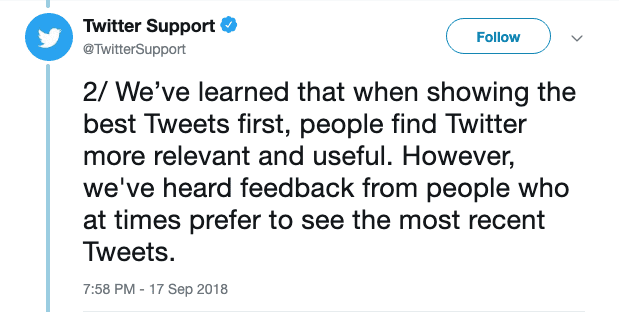
Last September, Twitter announced that users would be able to switch between a Top Tweet view and a chronological Latest Tweets timeline.

So, people now can move between an algorithm-based feed and a chronological timeline. This is something Facebook and Instagram have stayed away from in an effort to be relevant and engaging or whatever.

But just because the algorithm is optional doesn’t mean that everyone is opting out in favor of an old-school chronological feed.

Below, we’ll look at some of the key ranking signals you can expect to find inside your account.

7

What are the ranking signals?

As is the case with Facebook and Instagram, Twitter’s algorithm depends on a handful of ranking signals.

In 2019, the algorithm-based feed consists of the following sections:

Top Tweets

Top tweets are determined by the algorithm. Users will see content from accounts they follow, as well as content from their followers and suggested accounts.

Users also have the option to provide feedback on the content displayed in this section. This allows them to see some types of posts less often.

Latest Tweets

Latest Tweets represent a reverse chronological feed containing tweets from your followers.

ICYMI (In case you missed it)

In case you missed it, this is a compilation of top tweets determined by the algorithm. ICYMI is typically displayed to users who haven’t logged in lately. Frequent users won’t see this content much.

Happening Now

This is a section that appears at the top of your timeline, featuring trending topics and current events.

Trends for You

Another section determined by the algorithm, Trends for You highlights content that Twitter has determined to be relevant or interesting based on past activity.

You’ll have the option to customize this content by going into the Content Preferences section of your account.

As is the case with Facebook and Instagram, Twitter’s algorithm depends on a handful of ranking signals.

Here’s a quick look:

Recency

When was the tweet published? Timing weighs heavily into the Twitter algorithm, even if the user opts out of the algorithmic feed.

Rich media

Rich media refers to posts that contain video, audio, or GIFs, which encourage viewers to engage with the content. In other words, Twitter gives preferences to posts that contain more than a stock photo and a one-liner. That helps explain why this video just exploded:

Engagement

Engagement refers to how many tweets, impressions, replies, and clicks a tweet has received. It also takes into account how often people engage with the author’s account. It also factors the engagement of a tweet relative to other tweets posted by that same user.

Why chronological matters

Clock

Chronological content is one of the few ways that you can access neutral information in the aggregate format of a social media channel.

When you’re looking at something like top posts, that means that the platform’s algorithm is making a judgment call on your behalf. It is deciding what information you’re likely to click on, not which news stories are the most important or what is happening in real time.

We’ve become increasingly critical of what kind of content we see while scrolling mindlessly through social media.

Twitter’s move to allow people to opt out of the whole algorithm thing is actually a big deal.

Twitter feedback

Where Facebook has stated on multiple occasions that the algorithm offers users a better experience, it’s hard to separate that push toward engagement from the value it offers to advertisers.

Switching back to the chronological feed on a desktop is a matter of navigating to your account settings and unchecking the box that says “Show the Best Tweets First.”

change twitter timeline settings

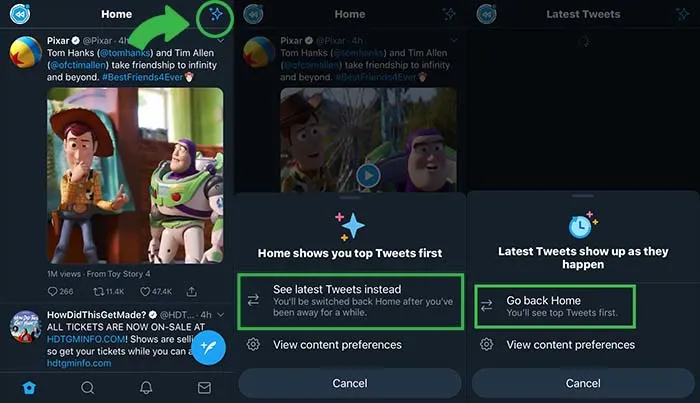
On your phone, click the little star icon and it will open options for you to flip back and forth between “top tweets” and “latest tweets.”

Twitter feed preferences

How to make sure people see your Tweets

Despite having the option to skip the algorithm in favor of an orderly feed, many people are likely going to stick to the curated feed.

With that in mind, here are some tips for making sure that your content gets in front of as many eyeballs as possible.

Use hashtags

The hashtag was actually created on Twitter as a means of helping people find tweets and accounts they might find interesting. To this day, adding a hashtag is one of the best ways to get “discovered.”

Respond to your followers

Because one of the key ranking factors is “engagement,” you’ll likely get more visibility in others’ feeds if you retweet, like, comment, or reply on the platform.

As we’ve seen with Facebook and Instagram, there’s been a real push toward getting people to engage more with others, rather than focusing on collecting more followers.

Add visuals

This draws back to the idea that rich media tweets do better than those without any compelling visual elements. It’s well-documented at this point that social media content depends on visual aids.

Take it a step further and diversify your feed by adding in video clips, live videos, GIFs, and audio.

Don’t be afraid to max out character limits

Yes, the whole concept of Twitter is based on brevity.

This is why there was a bit of controversy when the social media platform doubled the character limit — going from 140 to 280. That said, it seems that the expansion has created an opportunity for more engagement.

According to Twitter research, they found that Japanese users were able to say more with fewer characters, which led to more valuable conversations.

Bottom line

Just because Twitter has the option to toggle between chronological and algorithm based feeds doesn’t mean everyone is opting out of the algorithm.

This means if you want to get the best possible results, you’ll need to play to the algorithm’s rules.

Doctor forms team to stop spread of fake medical news

One doctor is leading the charge against fake medical news on social media.

fake drugs

If you’re a frequent social media user, you’ve probably encountered posts spreading misinformation about medical topics like vaccinations. According to a study published in ScienceDirect, top posts on social media relating to common diseases contained misinformation 40% of the time.

It’s easy to see why people turn to fake medical news. These posts often promise cheap, powerful miracle cures to common ailments. Factual medical information, on the other hand, is significantly less flashy and optimistic, often only promising moderate success. It’s completely understandable that a person who has a disease that makes their life miserable would skip over all of the pessimistic posts regarding realistic treatment in favor of fantastical stories about miracle recoveries. However, this creates false hope and can discourage patients from seeking legitimate treatment.

No one knows the harm that fake medical news can cause more than Dr. Austin Chiang. An internet-savvy, Harvard-educated gastroenterologist, Dr. Chiang has over 20,000 followers on social media. Dr. Chiang uses his online platform to spread factual but digestible medical advice. Whereas most doctors on Instagram are hopelessly drab, Dr. Chiang presents himself as relatable yet knowledgeable.

View this post on Instagram

Diagnosing cancer (or pre-cancerous) lesions often isn’t black of white. ? It’s like piecing a puzzle of information together between appearance on different imaging modalities (CT, MRI, EUS) + needle sampling + medical history + clinical picture. ? . ❗️Nowadays, only 200 microliters of pancreatic cyst fluid is required to test for some tumor markers like carcinogenic embryonic antigen (CEA) and DNA mutations. ?Also included in the analysis is detection of KRAS and GNAS mutations, which might indicate certain types of mucinous cysts…some of which could become cancer one day. ? . . . #cancer #diagnosis #science #biology #doctor #cancersucks #pancreaticcancer #cyst #meded #puzzle #mystery #usmle #medico #醫生 #癌 #健康 #hospital #health

A post shared by Austin C. MD MPH 。 GI Doctor (@austinchiangmd) on

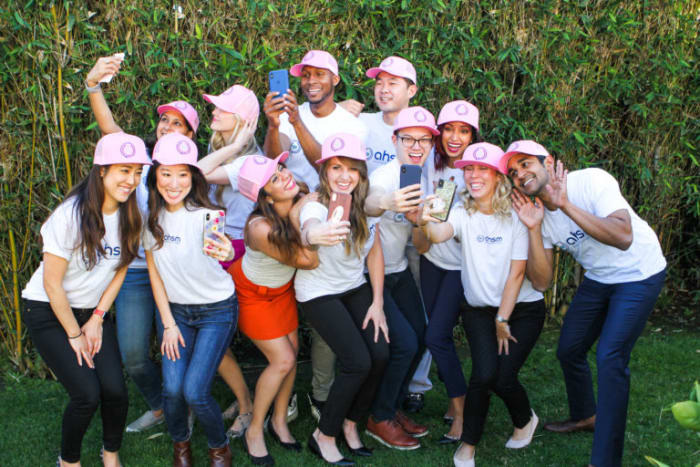
While Dr. Chiang’s charming social media posts have gotten him a sizeable audience, his follower count pales in comparison to that of big anti-vax and alternative medicine accounts. He called this massive social media presence “the greatest health crisis of our time.” Realizing he can’t combat these campaigns on his own, Dr. Chiang set out to assemble a team of like-minded healthcare professionals to fight misinformation, forming the Association for Healthcare Social Media (AHSM)

Dr. Chiang is using his position as Chief Medical Social Media Officer of Jefferson Health to recruit other savvy professionals. Dr. Chiang and his team are well aware that the public does not salivate over professional medical journals and press releases, and his team is hard at work packaging medical information for the social media age. The AHSM knows that scare tactics and emotional manipulation are what spreads in the medical social media sphere, and they use the opposite approach of easily understandable language and concise information told in a non-condescending manner.

With platforms like Instagram and Facebook facing huge issues with anti-vax accounts and other fake medical news spam, doctors taking to social media is the antidote we need moving forward. By combining legit medical knowledge with the hugely popular inspirational lifestyle aesthetic, medical professionals can build up huge followings to fight harmful medical advice.