The Rise and Fall of Arcades

arcades

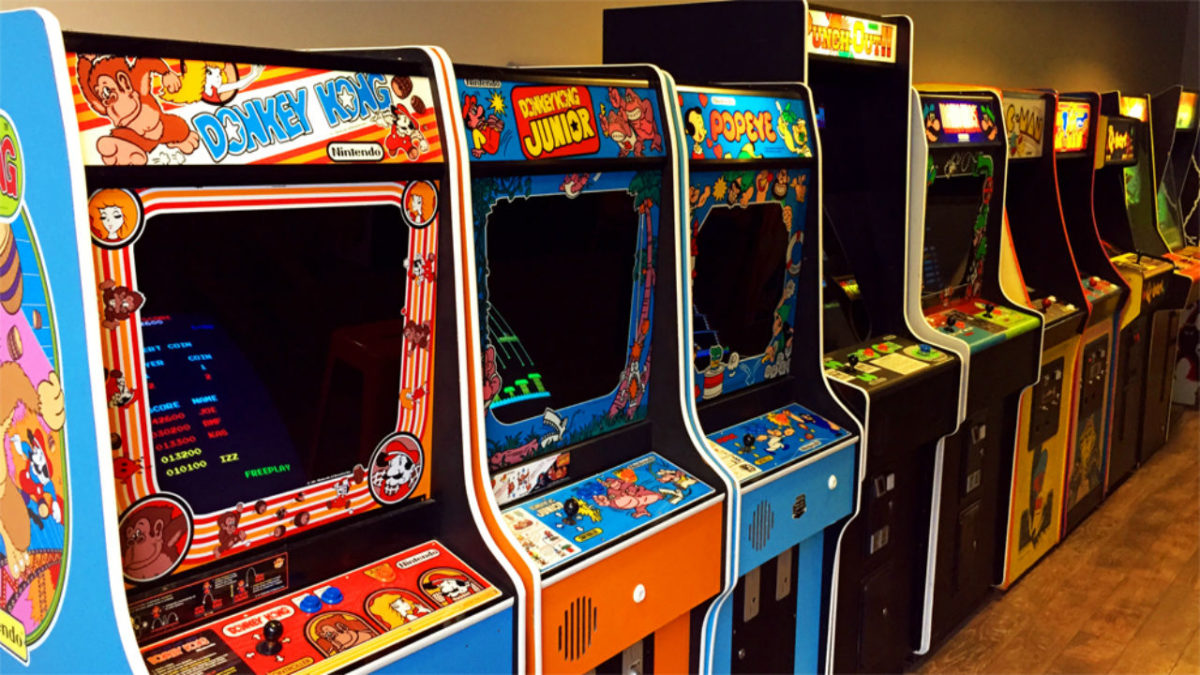
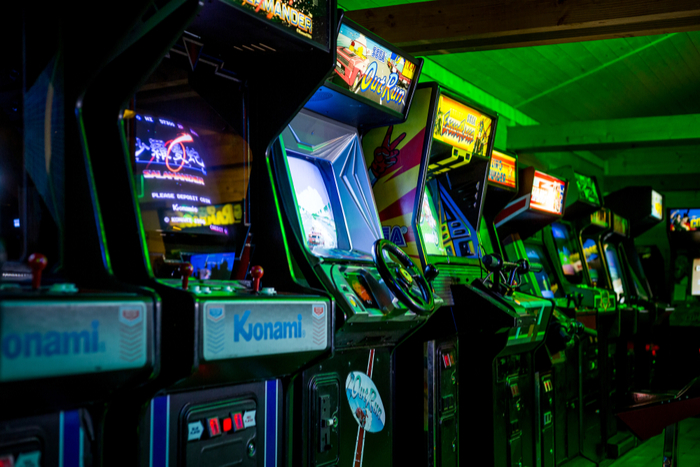
It’s probably difficult these days to explain what an arcade is to a young kid. “Why would anyone leave their home to play video games?” they might ask, or, “What’s up with these graphics?”

It’s no surprise that there are far fewer arcades now than there were in the ’70s and ’80s. How did such a prolific multi-million dollar industry turn into a niche hobby? To look at how this happened, we’re going to look at a few distinct eras of arcades, and how they changed drastically throughout the decades.

The rise and fall of arcades

Aliens and Table Tennis

It’s crazy to think that two lines and a dot kickstarted the multi-billion dollar video game industry.

pong

Developed by Atari, Pong was the first commercially successful video game. Its simple, approachable gameplay and competitive social design made the game a popular staple at bars across the country. The game was much more intuitive than previous arcade games like Computer Space.

Beyond its gameplay, Pong showcased the potential of arcade games as a social, public activity. The game was multiplayer only and could be played easily with only one hand, and it was common for people to ask strangers to play Pong with them after buying them a drink. Atari co-founder Nolan Bushnell recalled that many people told him that they met their spouse in a bar playing Pong.

After Pong showed the world that arcade games were a profitable business model, many companies went right to work creating their own games. The most popular game to succeed Pong was Taito’s Space Invaders. Designed as a successor to Atari’s Breakout, Space Invaders had the player controlling a laser cannon against an alien invasion.

It may seem obvious now, but a game with targets that not only moved but shot back was incredibly innovative at the time. The game was one of the first to feature background music, which would dynamically speed up as the aliens moved faster at the end of a stage. Most importantly, the game popularized the concept of a high score, as the game allowed players to save high scores to the machine for others to beat. The game combined multiple groundbreaking gameplay innovations with a sci-fi theme, which was highly popular at the time. Space Invaders was an instant hit and its release was seen by many as the beginning of the Golden Age of Arcades. By 1982, the game grossed over $2.2 billion dollars in quarters, with the only comparably profitable entertainment product being the theatrical run of “Star Wars.”

A Yellow Puck and the Golden Age of Arcades

I’m going to show you a picture. Tell me, who is this character?

pac-man

Show this picture to anyone and they’d be able to tell you that it’s Pac-Man. According to the Davie-Brown Index, Pac-Man is the most famous video game character of all time (yes, even more than Mario), as he is identifiable by 94% of American consumers. Created by Namco designer Toru Iwatani, Pac-Man was made in response to the huge number of space shooters and other male-centric games on the market. Iwatani wanted to create a game that would appeal to everyone, especially women, and decided on eating as a theme. The unique maze-chasing gameplay and broad appeal quickly made Pac-Man a worldwide phenomenon.

Pac-Man himself became gaming’s first-ever mascot, having a personality that was lacking in other games that starred spaceships or soldiers. Even all of the ghosts had names and personalities, each employing different chasing tactics to take down Pac-Man. Intermissions played between levels showing Pac-Man chasing the red ghost Blinky, the first ever instance of cutscenes in a video game. Pac-Man had more personality and universal appeal than any other arcade game at the time. Pac-Mania quickly gripped the ’80s, as the yellow dot muncher appeared on everything from cereals, to Saturday morning cartoons, to even hit records. The game showed the arcade industry that designing games with memorable characters and casual appeal were the way to go.

Other games starring quirky characters and innovative gameplay soon followed, including Donkey Kong, Q*bert, and Frogger. The arcade demographic was widened significantly by these games, as the player base was now much more evenly spread across gender and age groups. The popularity of these simple to learn but hard to master games was universal and leads to many of these games still being fun to play today.

However, the simple design of these games led to tons of imitators flooding arcade markets. Donkey Kong had Crazy Kong, Pac-Man had K.C. Munchkin, and basically every other popular arcade game had scores of imitators. The Golden Age of Arcades ended when these clones saturated arcades, tiring consumers.

Meanwhile, home video game consoles like the Nintendo Entertainment System started to catch up with arcade games in terms of technical prowess, which would become a growing problem for the arcade industry. Arcade attendance took a major hit as home consoles provided unique and complex games that you could play in the comfort of your home, like The Legend of Zelda. The simplistic gameplay loops of arcade games were failing to draw customers, and the advanced graphics of arcade games no longer wowed gamers.

Choose Your Fighter!

street fighter II

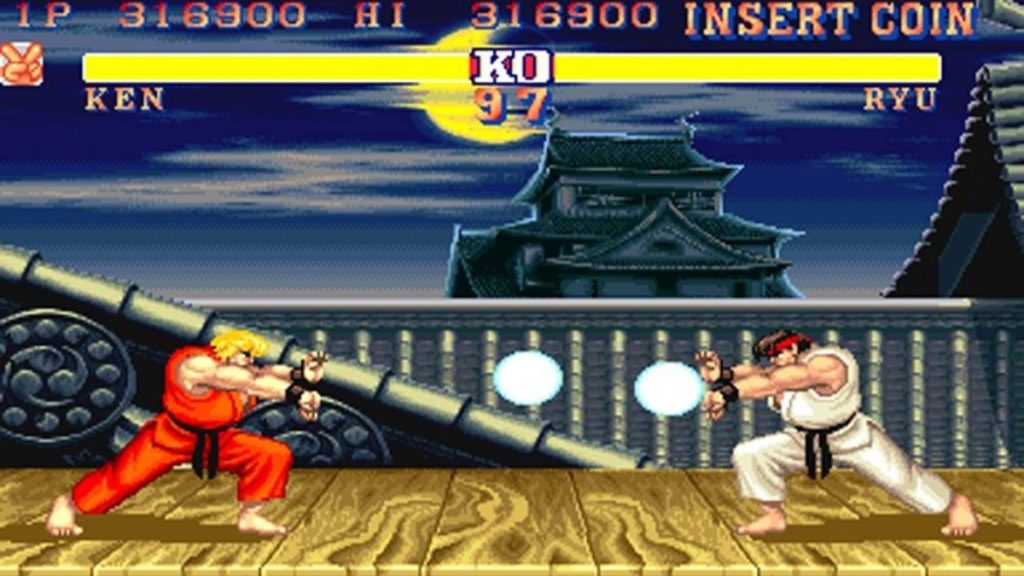
Arcades may have slipped in popularity in the late ’80s, but by the early-to-mid-’90s they got their second wind. After the mediocre-at-best reception to their game Street Fighter, Capcom went back to the drawing board and completely overhauled the gameplay and style for their next entry: Street Fighter II.

Street Fighter II contained eight playable characters, each with strong and memorable personalities and special moves. Control was fluid, and for the first time, players could pull off combos by linking moves to each other. The fantastic gameplay and charming cast of Street Fighter II singlehandedly popularized the fighting game genre and reinvigorated interest in arcades. Kids would crowd around Street Fighter II machines, waiting for their chance to challenge the best player at the arcade. Street Fighter II was an astronomical success, and Capcom quickly went to work creating updated versions with additional characters and enhanced gameplay.

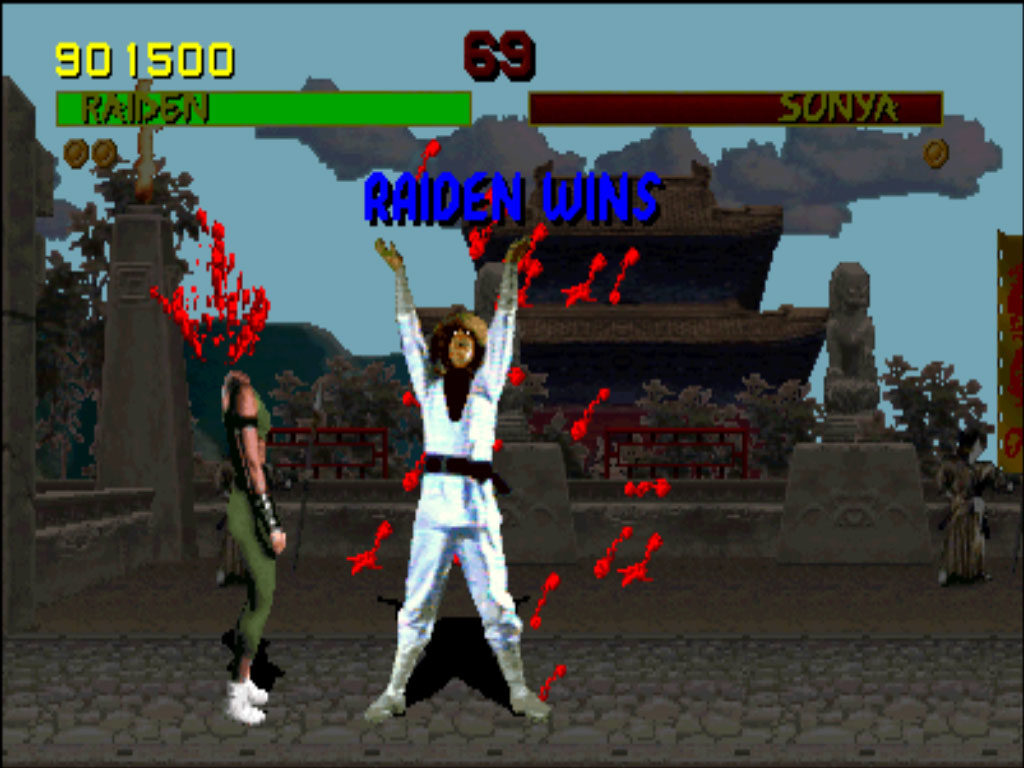
Following the success of Street Fighter II, Midway released the bloody fighting game Mortal Kombat. The game stunned the public with its realistic human characters and incredible levels of bloody violence. Controversy soon followed, which only served to increase interest in the game. Many imitators tried to capitalize on the success of Mortal Kombat, creating exploitation games that featured plenty of blood but none of the satisfying gameplay or badass characters of MK.
mortal kombat

The 1v1 fighter genre of games brought the social aspect of gaming back to the arcades as players gathered for a chance to prove their skills. Oftentimes players would exchange tips on how to pull off difficult special moves or unlock secret characters. No longer were gamers competing for a high score, they were now facing each other one on one to determine who was better at the game, providing a thrilling competitive experience that had real stakes. This hardcore competitive gaming experience sustained the arcade market for years, but casual gamers were turned away by the new arcade environment. Game designers repeatedly tried to make games for the new primary demographic, mostly teenage boys, leading to stagnation in game design and waning interest. By the late ’90s, arcades found themselves in trouble once again.

The Last Hurrah

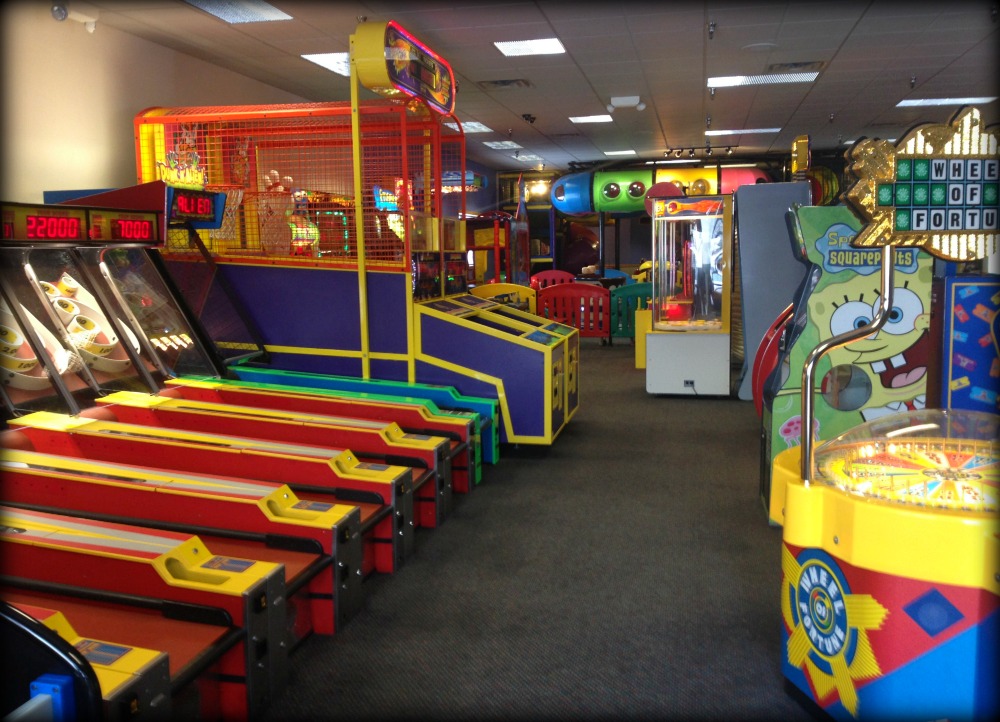
As home consoles advanced to the point where they could easily provide arcade-quality games, arcades could no longer serve as solitary attractions. Oftentimes arcade games were instead found as additions to bowling alleys, movie theaters, and mini-golf courses. Arcades found some success as part of new family fun centers like Chuck E. Cheese or Funway, which combined video games with other attractions like go-karting or animatronic bands.

An important innovation of these family fun centers was redemption games, which were arcade games that spit out tickets. Depending on the player’s game performance, they would receive more tickets, which could then be spent on toys and other prizes. Redemption games quickly overtook traditional arcade games in popularity, especially among kids.
family arcade

By far, the most notable breakout arcade game of this generation was Dance Dance Revolution, an innovative and accessible game that attracted both casual and hardcore audiences. The game’s combination of music, physical exercise, and challenge made it an instant arcade classic. Like DDR, many new arcade games relied on gimmicky peripherals that couldn’t be emulated on home consoles. Games increasingly incorporated advanced technology like virtual reality in order to have an edge over the home gaming market.

While the home console market hit arcades hard enough, the true nail in the coffin was the rise of the mobile gaming industry. These games, primarily controlled via touchscreen, were either free or very inexpensive to play. They often featured straightforward but addicting gameplay mechanics similar to the arcade classics of the ’80s. The mobile market absolutely destroyed the arcade industry. In desperation (or adaptation, depending on how you look at it) many arcades simply created arcade versions of popular mobile games like Temple Run or Doodle Jump. Outside of family fun centers like Chuck E. Cheese and the rare arcade megaplex like Gameworks or DisneyQuest, arcades almost completely ceased to exist.

Booze + Video Games = $$$

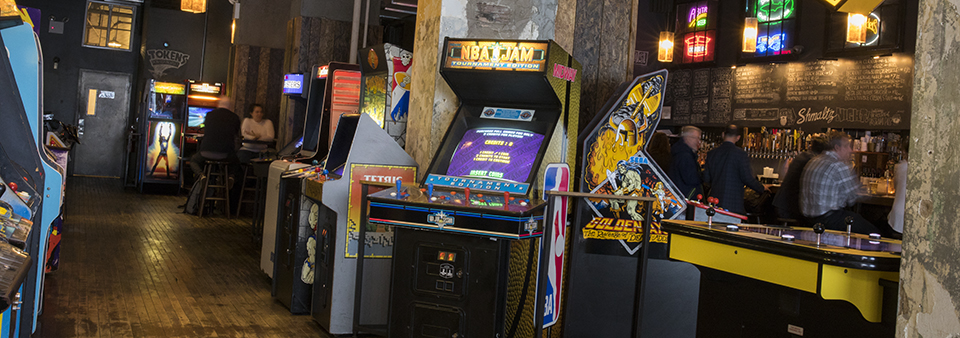
Recently, “barcades,” which combine bars and arcades, have enjoyed a surge of popularity. The games are free or only cost a quarter, just like they used to, and the games featured are mostly ’80s classics and fighting games rather than redemption games or upscaled mobile games. The industry is based on nostalgia and has proven to be popular in major cities across the U.S. While traditional arcades may have lost the battle against the home console market, the new barcade industry is enjoying a comfortably successful niche market.
barcades

Do you have fond memories in the arcade? What was your favorite game? Let us know!
5 best superhero games of all time

Discover the games that truly make you feel like you’ve got superpowers.

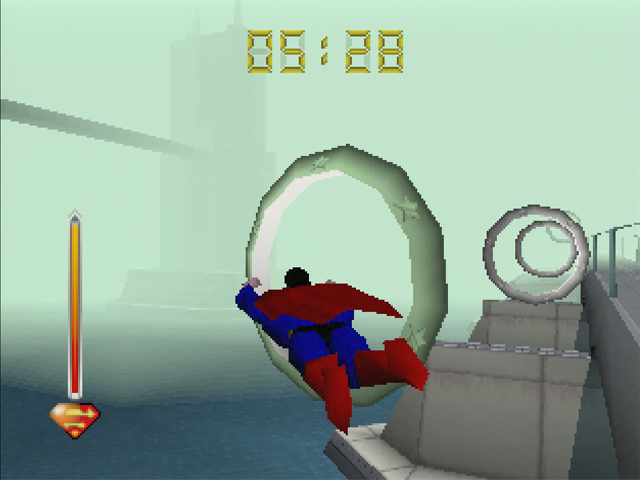
Licensed games are always a mixed bag. There are so many beloved characters and franchises that would make for excellent and creative games. Unfortunately, these games are often plagued by publisher interference and strict deadlines that hinder the developer’s ability to make a fun game that respects the source material. Superhero games are notorious for falling victim to this. With so many iconic heroes and inventive superpowers, you would think there’d be plenty of amazing superhero games, but unfortunately, the genre is home to many infamous duds like Superman 64.

You’ll believe a man can fly

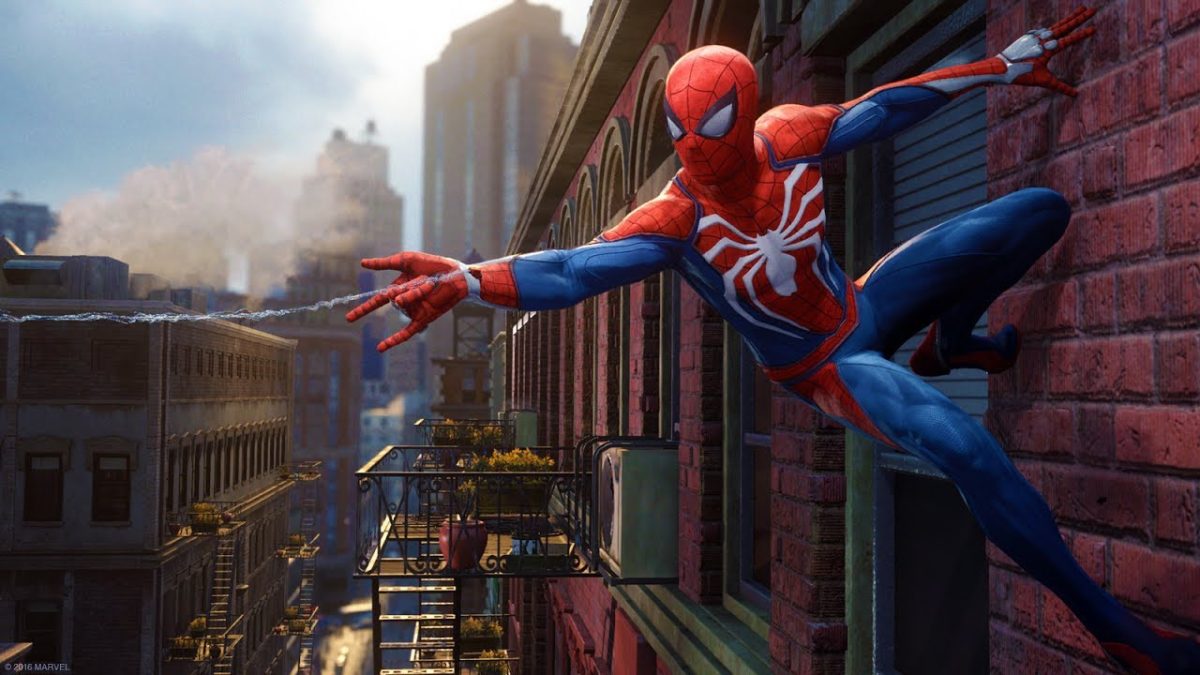
Despite all of this, there are some diamonds in the rough. Last summer, Insomniac’s Spider-Man breathed life into the superhero genre by giving players an expansive city, an original story, breathtaking movement options, and plenty of fan service. Because  Spider-Man PS4 came out so recently and would be such an obvious pick, we decided to look further back at some games that truly stand out as superhuman.

5 best superhero games of all time

5. Incredible Hulk: Ultimate Destruction

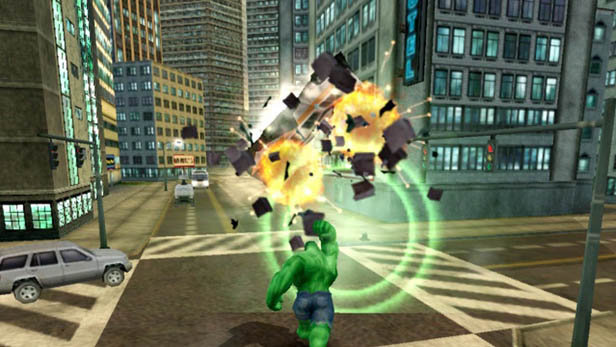
In the comics, the Hulk is a character study on the depths of human rage, fear, and loneliness, showcasing the struggle between a man’s cerebral and primal urges. While this has made for plenty of beloved Hulk comics throughout the years, while in video game form the Hulk should be about one thing and one thing only: smashing. The Incredible Hulk: Ultimate Destruction understands this perfectly, giving the player a huge, interactive playground to destroy. The game was developed by Radical Entertainment, who would go on to develop the similar Prototype series.

Players take control of the Hulk, who has access to dozens of upgradeable special moves, including the Weaponization system. The weaponization system allows the Hulk to transform environmental objects into useful weapons, such as ripping a car in half to use as boxing gloves, using a streetlight as a javelin, or surfing on a bus. The Hulk’s movements have a sense of weight and momentum to them. As the Hulk builds up speed and dashes forward, he will automatically destroy enemies and objects he crashes into without slowing down, truly giving players the feeling of controlling an unstoppable monster. Unlike previous Hulk games, Ultimate Destruction is open world, and the Hulk can rampage through two distinct levels, the badlands and the city, each with their own unique enemies, destroyable objects, and secrets to discover.

4. Spider-Man 2

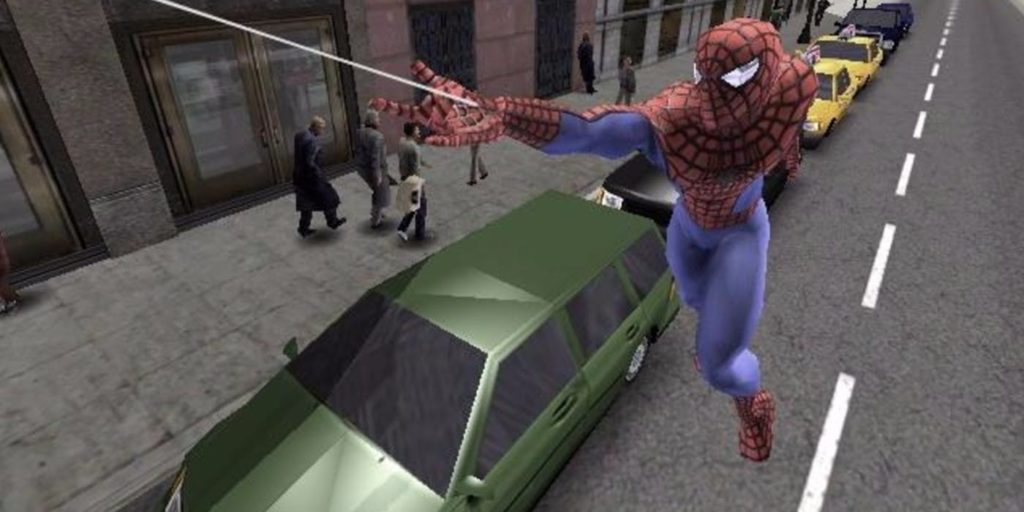
Spider-Man PS4 owes everything to this classic. Based off of the hit movie, Spider-Man 2 laid down the formula for open-world superhero games. Unlike the first Spider-Man movie game, Spider-Man 2 allowed players to freely explore New York City. At the time, such vast worlds were very uncommon in games, especially for licensed titles. The world was chock full of side missions, including infamous quests like retrieving balloons for children or delivering pizzas while that hilarious music played.

Even with its fleshed-out world and memorable missions, the most memorable part of the game is the web-swinging. Previous Spider-Man games had Spidey shooting out webs into the sky and swinging on nothing, at most able to alternate between a few different speeds. Spider-Man 2 completely revamped the web-swinging system, and the player must now shoot actual buildings and objects to swing. As the player swings toward an object, they feel a real sense of momentum as Spider-Man speeds closer towards the ground, ending as the hero detaches from the web into an explosive jump. The system had a learning curve, but a high skill ceiling and a surprising amount of depth. Even today, Spider-Man 2’s web-swinging is considered one of gaming’s best movement systems.

3. Marvel vs Capcom series

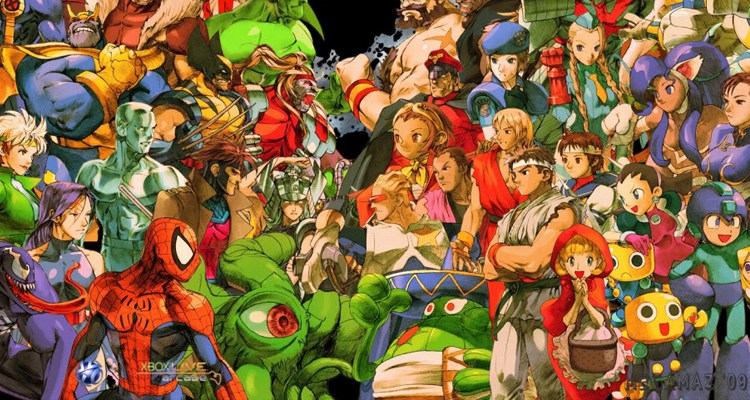
Back in the ’90s, Capcom dominated arcades with their star fighting game franchises like Street Fighter and Street Fighter Alpha. Eventually, they ended up getting the Marvel license, creating fighting game classics like X-Men: Children of the Atom and Marvel Super Heroes. Later on, someone at Capcom had the brilliant idea to mash these two megahit game series together, and Marvel vs Capcom was born. In addition to all of your Capcom favorites like Ryu and Mega Man, the MvC games featured a colorful cast of Marvel heroes both iconic (Spider-Man, Wolverine, Captain America) and hilariously obscure (Shuma-Gorath, Marrow, and at the time, Rocket Racoon).

The series took the versus gameplay popularized by X-Men COTA and dialed it up to 11. Players could select teams of three characters from a gigantic roster, customizing their assist attacks to form the best synergy they could. Combos in MvC games are infamously flashy, often lasting a long time and involving multiple characters and explosive super moves. The Marvel vs Capcom games are an absolute must play for anyone who enjoys fighting games, Marvel, or fast-paced, flashy games overall.

2. Marvel: Ultimate Alliance

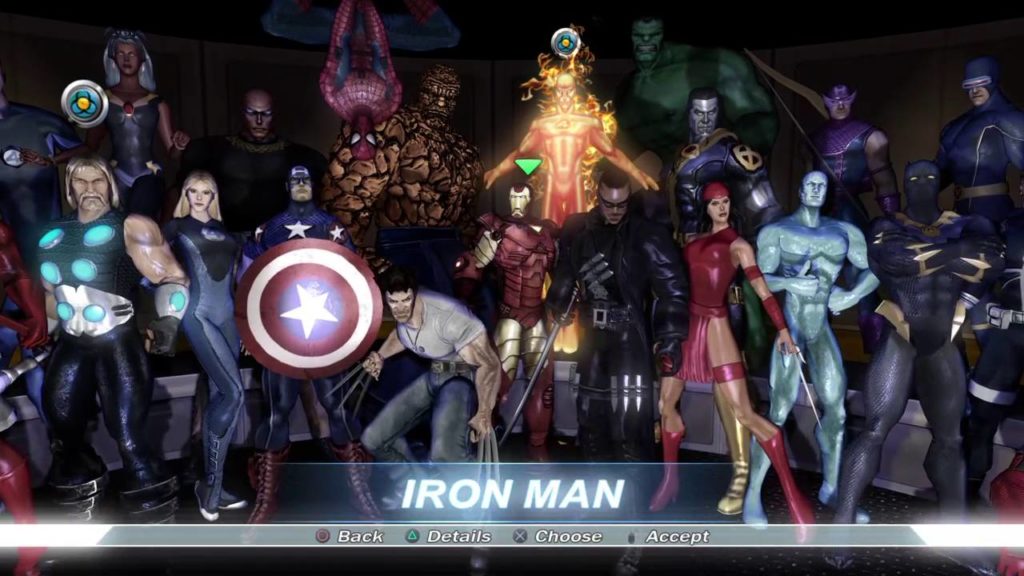
Back in the early 2000s, Raven Software’s X-Men Legends series was a critical and commercial hit. The game combined Diablo-style dungeon crawling and loot with an enormous roster of heroes, each with customizable powers, attributes, and costumes. Marvel: Ultimate Alliance kept this style of gameplay while expanding the storyline and roster to encompass the entire Marvel Universe. Playable characters include the Avengers, the X-Men, the Fantastic Four, and solo heroes like the Deadpool, Silver Surfer, Blade, and Daredevil.

The story is incredibly expansive, including treks to Atlantis, Asgard, and even Hell. Tough choices abound, as your decisions are often surprisingly morally grey and have you choosing who lives and who dies. These decisions alter the course of the story and the ending you receive. As you progress through the game, you face off against iconic Marvel baddies like Dr. Doom, Ultron, Loki, and even Galactus. Dialogue and story events with these villains change depending on which heroes you choose for your team. For example, Captain America laments having to fight a brainwashed Winter Soldier, and Bullseye taunts Elektra, reminding her that he murdered her in the past.

Marvel: Ultimate Alliance is the perfect evolution of the X-Men Legends series, and is one of the finest RPG experiences of its era. Stay on the lookout for Ultimate Alliance 3, which was recently announced as an exclusive for the Nintendo Switch.

1. Batman: Arkham series

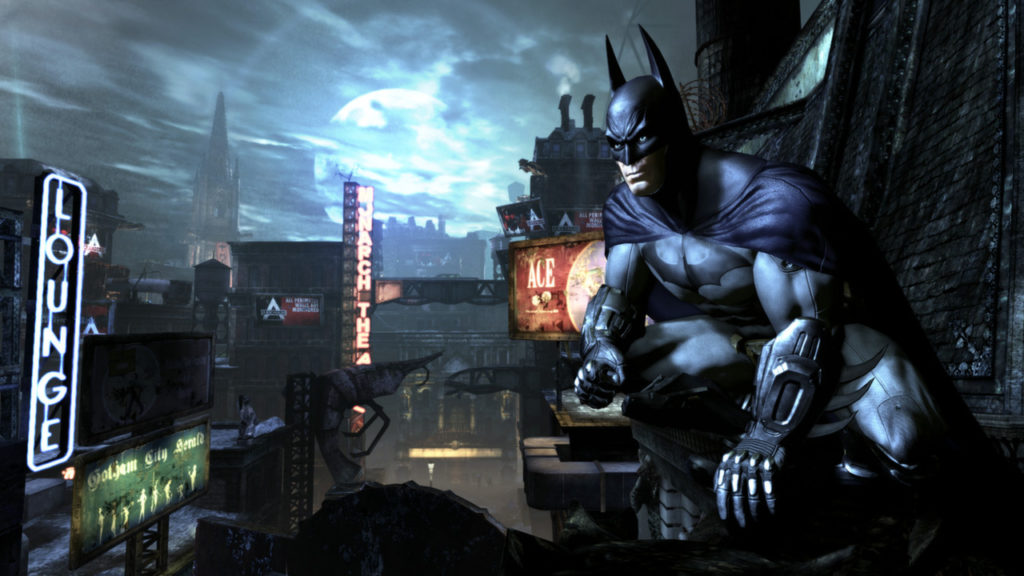
Obviously, we can’t make a list of top superhero games without mentioning the Arkham series. When Arkham Asylum was released in 2009, critics were blown away by the gripping storyline, chilling atmosphere, and detective-based gameplay. The Arkham games were the first Batman games that really tried to encompass the whole scope of Batman’s character: his sharp detective mind, his relationships with his enemies, and his brutal combat prowess.

In the Arkham games, Batman has access to a wide variety of gadgets that aid him in both puzzle-solving and combat. The developers did a fantastic job combing through Batman’s history for gadgets, as they included everything from his iconic Batarangs to his explosive gel. In addition to his gadgets, Batman can also use his Detective Vision, highlighting interactable objects and secrets. Speaking of secrets, every game in the series is full of secrets to collect, with most secrets either fleshing out the world (Riddler trophies) or providing fan service (Batman Beyond suit).

Batman: Arkham Knight DOWNLOAD NOW
7

Batman’s famous rogues’ gallery makes for some extremely memorable boss fights. The fight against Mr. Freeze in Arkham City is a methodic and tense fight that has Batman using his environment and gadgets to get the upper hand. Most notably, the Scarecrow fight in Arkham Asylum is creative and fourth-wall breaking, as it brilliantly leads the player to believe that their game is glitching out. These fights not only serve as creative gameplay segments but as character studies into the minds of Batman’s most iconic villains, showcasing the passion and lore knowledge of the development team.

The Arkham series’ combat system is easily the most influential of the last decade. So many games use “Arkham combat” nowadays because the system is so simple, yet fluid and stylish. Basically, as Batman attacks a group of enemies he automatically locks on to them and pummels them as you press the attack button. When an enemy telegraphs an attack, Batman can press the counter button to quickly dodge and strike back. If done correctly, every combat sequence should function as one continuous, free-flowing combo. While the system isn’t nearly as nuanced as a game like Devil May Cry or Bayonetta, it is accessible and flashy, focusing more on the flow of combat rather than tight button combinations.

The Arkham series is a true labor of love to one of the greatest superheroes of all time, and perfectly displays what happens when licenses are given to developers who are given ample resources and respect and love the source material.

Any superhero games we missed? Which ones are your favorites? Let us know!

Top 5 Most Underrated Nintendo Games

Have you played these modern unsung classics?

Say what you will about Nintendo, but for better or worse, they’ve always marched to the beat of their own drum. Their consoles and games may not be up to par with their competitors in terms of graphical fidelity or online play, but they always try to push the envelope and make entirely new gaming experiences. This has led to the creation of dozens of innovative and creative games that either invent or upend established game genres. Where would platforming games be without Mario and its contributions to 2-D and 3-D game design? How many quirky, offbeat RPG’s owe their existence to Earthbound? Not every one of these experiments catches on with the general public, however. If you’re a Nintendo fan who’s looking for some creative new games to play, here are a few that may have slipped under your radar.

5 most underrated Nintendo games

5. F-Zero GX (Gamecube)

For making Mario Kart alone, Nintendo deserves to be considered the master of racing games. Mario Kart is accessible to new players while staying fun and engaging with experienced players. The game strikes the perfect balance between randomness and skill to keep things chaotic while still helping players feel in control. F-Zero can be considered the exact opposite of all this.

Conceived by Mario Kart creator Shigeru Miyamoto, F-Zero abandons the item and luck based gameplay of Mario Kart in favor of blitzing fast speeds and brutally punishing gameplay. The peak of the series came with F-Zero GX on the Gamecube, a game made in collaboration with Sega. An example of a race can be seen below:

The increased technical capabilities of the Gamecube allowed the series to truly shine the way it was always meant to. Over 30 racers fill each track, smashing into each other to claim a hard-fought victory. This is easier said than done, however, as the incredibly high speed of the game gives you only split seconds to react to oncoming obstacles or sharp turns. Racers in GX all have a health bar that is depleted by smashing into racers, walls, or objects, and players will lose the race entirely if their health runs out. The game also features a story mode, a first for the series, which is an emotional rollercoaster not necessarily because of an engaging story but for the extreme, primal catharsis felt after beating an impossible level.

GX was developed by Amusement Visions, the team behind the similarly sadistic Super Monkey Ball games. The game was a modest success, but Nintendo, unfortunately, seems content to let the series lay dormant. While it doesn’t look like a new F-Zero game is coming any time soon, the series lives on through its representation in the Super Smash Bros. games, of which F-Zero mascot Captain Falcon is consistently one of the most popular fighters.

4. Star Fox Assault (Gamecube)

This is probably going to be the most contested entry on this list, as there is a large portion of Star Fox fans who actively dislike this game. The game came out after Star Fox Adventures, a bizarre Zelda clone that had Fox step out of the Arwing in favor of on-foot exploration and puzzle solving. Star Fox Assault returns the series to its high-octane shooting roots while still incorporating enough new additions to the gameplay to remain fresh.

The game is split into traditional on-rails flying segments and more open on-foot/vehicular sections. The flying sections of the game are fantastic and reminiscent of Star Fox 64, where dodging enemy fire, stringing together combos, and rescuing teammates leads to a huge score. The more controversial aspect of the game is its on-foot sections:

While on foot, the game transforms into a 3rd person shooter. Taking control of Fox, the player is free to explore large and varied environments filled with weapons, enemies, and power-ups. Control is simplistic, as most aiming is done horizontally. Fox can utilize a wide variety of weapons including homing launchers, sniper rifles, landmines, and Gatling guns.

In addition to his weapons, most levels have Arwings (planes) or Landmasters (tanks) that the players are able to enter and leave at any time. Landmasters can help clear out large swarms of ground enemies quickly, either by charging up powerful homing shots or by simply running them over. Arwings can help transport Fox quickly around the map, in addition to letting him more easily take down airborne enemies. The balance between on-foot weaponry, air combat, and tank combat help this game feel unique among the Star Fox franchise.

The game also features a story that is darker and more grounded than Star Fox 64 without treading into overly edgy territory. The characters have less cartoony and (dare I say it) more listenable voices than Star Fox 64. It’s a shame the story couldn’t continue properly, as it was promptly driven straight into the ground with the fan-fiction tier writing of the next game, Star Fox Command.

The most underrated part of this underrated game is definitely the split-screen multiplayer. Players can fight it out in nearly any level from the campaign, with plenty of playable characters and custom rulesets to choose from. The selectable maps excellently highlight the game’s rock-paper-scissors dynamic between on-foot weapons, Arwings, and Landmasters. The ability to enter and leave vehicles at any time leads to some crazy scenarios like standing on the wing of an Arwing firing missiles on your poor vehicle-less friend below. While it was no Halo, Star Fox Assault was the premiere Gamecube multiplayer shooting experience.

3. Pokémon Mystery Dungeon: Explorers of Sky (DS)

Given that Pokémon is one of the most popular things in all of existence, I am shocked at how rarely people talk about the excellent Pokémon Mystery Dungeon games. While the mainline Pokémon games are often criticized for not switching up the formula much between entries, the Pokémon Mystery Dungeon games combined the traditional Pokémon battle system with roguelike dungeon crawling to create something completely new. Explorers of Sky nailed the formula, creating one of the best Pokémon experiences available. To get a feel for the game, you can watch the video below:

Explorers of Sky takes place in a world that’s very different than the mainline Pokémon games. For starters, every character is a Pokémon, and Pokémon can talk! You play as a human who is mysteriously transformed into a Pokémon, and which Pokémon you end up as is determined by taking a personality test at the beginning of the game (I ended up as a Mudkip). While the game is filled with many charming characters, the story is surprisingly heartwrenching and is filled with loss and betrayal. The ending especially is a notorious tearjerker, comparable to games like Mother 3 or Majora’s Mask.

As for the gameplay, it combines the battle system of Pokémon with a dungeon crawler. Standard Pokémon fare, like type advantages, four slot movepools, and stats are all here. Dungeons are randomly generated and are filled with items, traps, and enemy Pokémon. Your party and your enemies both move on a grid, and spacing is important for combat. You must arrange your party tactically in order to get ahead. For example, if my character Cubone is a strong close range attacker that lacks ranged attacks, I will stand in front of my partner Treecko, whose ranged Razor Leaf attack makes short work of distant enemies.

Though you don’t directly control your party members, their behavior becomes highly customizable as they level up, and certain members can be delegated to certain roles like healer or item user. Speaking of party members, you have a small chance of “catching” enemy Pokémon when you defeat them in combat, allowing you to utilize their unique skills. Managing your tactics and teammates is very important as the game gets fairly difficult as you progress. Dungeons are long affairs that can sometimes take over an hour to complete, so it’s important to stock up on items to monitor your health, hunger, and status conditions before you dive in.

The Mystery Dungeon series, especially Sky, is a treat to Pokémon fans who want a new experience.

2. Chibi Robo (Gamecube)

Probably the most obscure game on this list, Chibi-Robo is a humble and curious game about a small household robot who tries his best to make life easy for his owners. Chibi-Robo is only 10cm tall, so the house surrounding him is a massive environment that requires careful planning to navigate. It can be hard to picture what this game is about without actually seeing it, so here you go:

The game’s world is populated by many strange and charming characters, like Mr. Sanderson, the family dad who loves buying toys despite his unemployment and Jenny Sanderson, his daughter who dresses and speaks like a frog. Chibi-Robo also encounters many toys around the house who come alive at night. These include the superhero Drake Redcrest, a chicken-themed hero with a showboating habit, and Plankbeard, a boisterous but friendly wooden pirate.

The setting is breezy and sunny, but as the plot progresses a sense of anxiety begins creeping underneath. Chibi-Robo was made to help with household tasks, but he struggles to understand the more heavy issues, like divorce and unrequited love happening around him. The game is charming and can get deep, but it never becomes somber, offering a surprisingly deep emotional experience.

The gameplay of Chibi-Robo is that of a puzzle-platformer. The massive scale of the world compared to its protagonist makes navigating everyday locations like the kitchen a grand adventure. Every day Chibi-Robo works to receive Happy Points, which can be obtained by completing tasks like picking up garbage or completing requests for the Sanderson family or other toys. Chibi-Robo has a wide variety of tools at his disposal, including a toothbrush for cleaning stains, a squirter for watering plants, and a propeller for safely gliding. Every action Chibi-Robo takes consumes energy, and players must be careful not to overexert the poor little robot. Energy can be restored by plugging the cord attached to Chibi-Robo into an outlet.

Chibi-Robo oozes with charm and is a true overlooked gem of the Gamecube library. The game’s music and art style are simplistic without being kitschy, and its settings and characters have both humor and plenty of heart.

1. Kid Icarus Uprising (3DS)

I’ve been ranting about how everyone should play this amazing game for years and now I’m being paid to do it, so sit down and buckle up.

Kid Icarus Uprising is the third entry in the Kid Icarus series, releasing 25 years after the last entry, Of Myths and Monsters, way back in 1991. The game was directed by Masahiro Sakurai, famous for creating Kirby and the Super Smash Bros. series. The game stars Pit the angel (sporting his redesign from Super Smash Bros. Brawl), who fights against evil for the goddess Palutena. The trailer below gives you a good feel for the game:

Like Star Fox Assault, levels in Kid Icarus Uprising are divided into on-rails flight segments and on-foot shooting segments. Stages always begin with the flight section, as Pit flies around enemy fire and fights back with a huge variety of weapons. These sections are kinetic and incredibly satisfying to master, taking place in a variety of weird mythological and alien environments.

On-foot sections give you free control of Pit, allowing you to fight both at a distance and up close and personal. Every weapon has a huge moveset, consisting of basic shots, charged shots, dodging shots, and close quarters combos. On-foot sections are a strange mix of 3rd person shooters and character action games like Devil May Cry, mixing close and far-ranged gameplay with tons of different enemy types. Boss fights in both parts of the game are intense and require a solid strategy and quick reflexes. Every boss and enemy type has distinct patterns and weaknesses, giving a sense of accomplishment as each one is mastered.

Pit also has a huge arsenal of weapons available. There are several different weapon types, like staffs (sniper-like weapons that are more effective at long range) claws (vicious close quarters weapons) orbitars (powerful orbs that surround Pit and grant him firepower) and more. Each weapon type has several sub-weapons within it, giving the player a huge amount of freedom in choosing their playstyle. Weapons can also be forged and combined with each other in a surprisingly deep weapon fusion system, giving the game even more replay value. The game even features an online multiplayer battle mode where players can take pit their weapons and skills against each other. Even almost seven years after release, you can still find people playing online!

The amazing gameplay is complimented by one of the funniest and most memorable video game stories I’ve ever played. Pit and Palutena constantly bicker with one another and banter with their enemies in hilarious self-referential dialogue. The lighthearted story and unique fantastical side characters crank up the game’s charm, never crossing the line into annoying overplayed cliches. The story format is similar to that of a Saturday morning cartoon, with plenty of arcs that culminate into a larger story with a grand finale.

This game is the absolute best that the 3DS has to offer, and should be played by anybody who enjoys Nintendo, shooting games, or fun. Hopefully next time we won’t have to wait 25 years for a sequel.

Any underrated gems we missed? Have you played any of these games? Let us know!

Everything we know about Mortal Kombat 11

Get hyped with this early look at Mortal Kombat 11!

Mortal Kombat 11 instantly became one of 2019’s most hotly anticipated games after premiering at the Game Awards. This past Thursday, director Ed Boon gave us a peek into Mortal Kombat 11’s interesting new features, including a brand new playable character.

Everything we know about Mortal Kombat 11

The Kombatants

Netherrealm promises a roster of 25 fighters at launch, with more to come down the line with DLC. The currently confirmed characters are:

  • Baraka
  • Geras
  • Raiden
  • Scorpion
  • Shao Kahn (Pre-order bonus)
  • Skarlet
  • Sonya
  • Sub-Zero

Geras is a newcomer who manipulates both time and sand. Using sand, Geras can form copies of himself, create barriers, teleport, and shoot projectiles. Even better, Geras can use his time manipulation gimmick to turn the tide of a match. His Rewind Time ability rewinds the match four seconds, negating any damage or positioning disadvantage that Geras might have received (this move works similar to Tracer’s Recall ability from Overwatch).

Beyond that, Geras can spend offensive meter to add and subtract seconds from the match timer with his Lost Time and Spare Time abilities respectively, a never-before-seen mechanic in a fighting game. It will be interesting to see how tournament players manipulate the timer in high-level play, as it will definitely lead to some tense matches. You can watch Geras’ reveal trailer below.

Besides Geras, the most surprising character reveal was for Sonya Blade. While Sonya has been one of the most enduring and popular characters in the franchise, in Mortal Kombat 11 she will be portrayed by none other than “Rowdy” Ronda Rousey.

The UFC legend and WWE Women’s Champion fits Sonya like a glove. Rousey has long been a gamer and a Mortal Kombat fan, citing Sonya as a childhood hero and one of the most badass women in gaming. Sonya herself has received a redesign and now uses wrist-mounted guns and a mounted machine gun for her Fatal Blow.

Including guest characters has been a tradition for Mortal Kombat games since the 2011 reboot, which featured Freddy Krueger and Kratos. Mortal Kombat X featured horror movie icons like Jason Voorhees, a xenomorph (from “Alien”), a Predator, and Leatherface. While Netherrealm has not confirmed that a guest character will appear in Mortal Kombat 11, popular suggestions from fans include the Joker, Pennywise, Ash Williams, Spawn, and Michael Meyers.

The Gameplay

The trailers suggest Raiden has a “split” personality

Mortal Kombat 11’s gameplay has several new additions that build off of Mortal Kombat X and Injustice 2. Character variations return from Mortal Kombat X, but with a twist. In addition to premade variations, players will now have the opportunity to mix and match moves to create their own character variations.

The special meter, which debuted in the 2011 reboot, has been retooled extensively. Instead of being one singular meter that allows for offensive and defensive techniques, players now have access to two separate meters simultaneously. The offensive meter allows players to “meter burn” their special moves, allowing them to do more damage and extend their combos. Each special move takes a certain amount of meter to burn, with the more powerful ones, such as Geras’ Rewind Time, taking more meter. Players must keep this in mind when building their custom character variations. The defensive meter allows for special defensive techniques such as combo breakers and invincible rolls.

Other new gameplay enhancements include Fatal Blows, which are powerful attacks available when the opponent is below 30% health, and Krushing Blows, which are powerful versions of special moves that activate after completing certain objectives (similar to Brutalities but mid-match). The game also features a perfect block mechanic, similar to Street Fighter III’s parry, which allows players to punish opponents if they pull off a risky, perfectly timed block.

Most notably, Mortal Kombat 11 will include a gear system similar to Injustice 2. Gear can be mixed and matched at the player’s discretion, and this time stats are unaffected by gear. This means that players can customize the look of their character without worrying about how it will affect their stats. In competitive play, pre-made costumes and gear sets are used that make sure the playing field is evened out. The developers have made a point to keep the cosmetics and gameplay as separated as possible, and they claim that the game will not feature gear-based microtransactions. Injustice 2’s gear system laid out a great foundation, and Mortal Kombat 11 looks like its improving on it even further.

Are you excited for Mortal Kombat 11? Which characters would you like to see? Let us know!

Here are Uber’s plans for flying taxis

Ready for flying taxis? They could be here sooner than you think.

“Hey man, it’s Dave. Your Uber’s on the roof.”

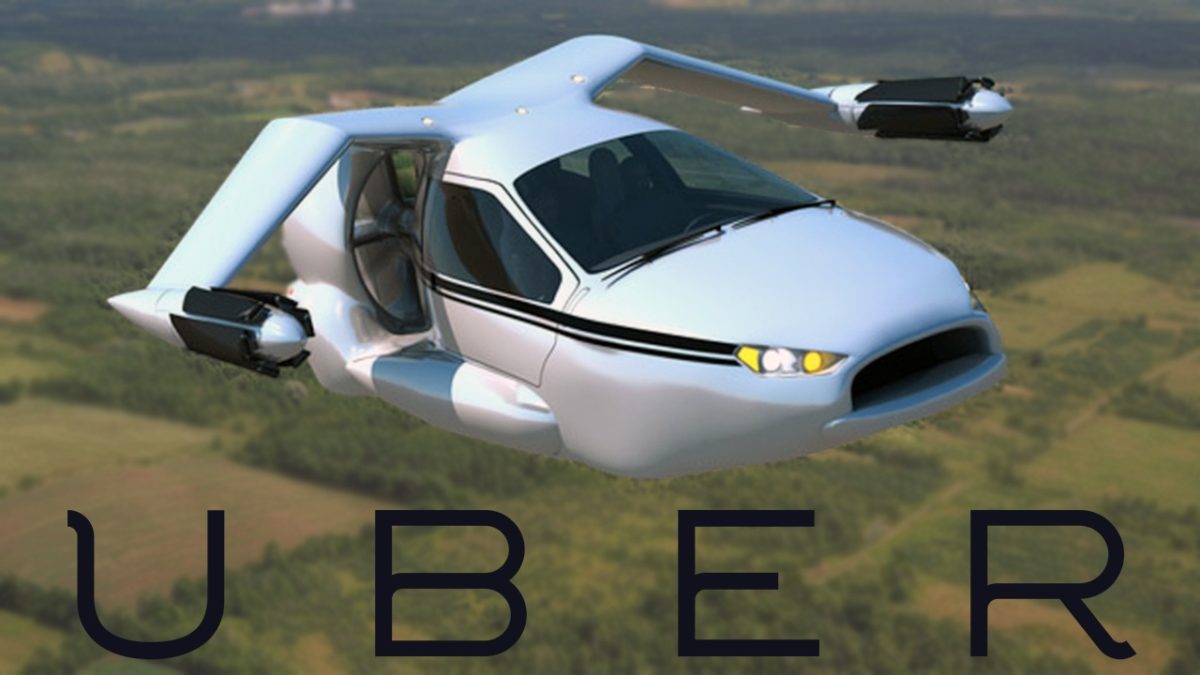
Prepare yourself for flying Ubers in the near future. Texas-based company Bell has revealed their design for the Bell Nexus, a helicopter/drone hybrid that could be summoned via Uber. If you’ve ever played Fallout, they’re basically Vertibirds.

air taxi

After spending decades developing military aircraft like the V22 Osprey, Bell rebranded itself as a more modern tech company last year. The V22 and Bell Nexus are both vertical takeoff and landing aircraft (VTOL). Moving forward, Bell is switching towards electric-powered vehicles, with the Bell Nexus as the first experiment.

The Bell Nexus itself is not completely electric. It’s a hybrid, as Bell wanted to give additional power to the aircraft, allowing it to carry more weight and have a wider flight range.

The Bell Nexus uses six ducted fans to take off and land. Each fan can tilt independently, giving the aircraft precise mobility. The Bell Nexus’s cabin and ducts are designed so that passengers will not be able to see the fans while looking out the window, helping to convince them they won’t be shredded by the rotors.

Thankfully, the Bell Nexus will have a pilot to reassure passengers that they won’t plummet to earth, but Uber has stated that they hope all of their air taxis will be autonomous in the future. The aircraft can hold 272kg (600lbs), and Bell Nexus is open to repurposing the aircraft as a military vehicle in case the whole flying car craze never gets off the ground.

Bell is far from the only company developing air taxis, though their partnership with Uber gives them a crucial advantage. They’ll face off against startups like Kitty Hawk (lead by Google founder Larry Page) as well as industry giants like Boeing. Though the competition is heated, some experts worry about the viability of the flying taxi industry ever taking off. Infrastructure and regulations surrounding flying cars simply do not exist, and they won’t exist without the flying car industry becoming viable in the first place, creating a self-defeating prophecy.

Personally, I would love to see flying taxis take off, mostly for UberEats. How amazing would it be to summon a Big Mac through your own personal helicopter?

Why every wrestling fan needs to play Fire Pro Wrestling World

Discover why this could be the greatest wrestling game ever made.

Why Fire Pro Wrestling World is a treat for wrestling fans

With the rising popularity of New Japan Pro-Wrestling in the West, it’s a great time to be a wrestling fan. While fans have grumbled about the WWE for years, NJPW’s increasing western fanbase has breathed new life into the pro-wrestling industry. When it comes to wrestling video games, the only real choice fans have is the WWE2K series, which, while fun games in their own right, are relatively safe and homogenized yearly entries, leaving many fans yearning for some variety. If you’re a NJPW fan, a WWE fan, or even someone with just a passing interest in wrestling, you need to give Fire Pro Wrestling a try.

Why wrestling fans need to play Fire Pro Wrestling World

Don’t be put off by the game’s 2-D presentation, Fire Pro Wrestling World is a complete package full of limitless customization and exciting, technical gameplay.

Endless customization

The insane amount of customization offered by Fire Pro is the series’ most celebrated feature. The wrestler creator feature has the most depth out of any character creation mode we’ve ever seen (including Soul Calibur, WWE2K, and Saints Row). You can mix and match hundreds of parts, body types, and clothing options to make kind of wrestler you can dream up. You can layer and color parts as you please, allowing you to create an insane amount of detail for your wrestler.

Beyond their appearance, you can fully customize a wrestler’s moveset, from their basic strikes and grapples to their explosive finishers. You can also put the finishing touch on your wrestler by tweaking their AI. By messing with a wrestler’s AI, you can give them personality and flair. For example, you can make a heel wrestler use illegal strikes when the ref isn’t looking and taunt after every big hit. The AI system is surprisingly simple to use, given the amount of depth that it offers.

In addition to customizing your wrestler, Fire Pro also lets you customize pretty much every other aspect of the wrestling experience. You can create your own rings, and upload any image you want to be used as the mat. You can upload custom music to be played during matches, entrances, and victories. You can design title belts to be used in your dream promotions.

You can even create your own referees (our favorite is Fair Bear, a literal bear in a referee uniform). People who enjoy customizing their games will get a huge kick out of Fire Pro, and Steam Workshop compatibility adds thousands of player-created wrestlers, rings, and promotions to download.

Build Your Dream Roster

Here we see Mario fighting Bob Ross, Deadpool, and Bane, among others

Given the thousands of wrestlers available to download on the Steam Workshop, the roster possibilities are endless. There are hundreds of recreations of famous pro wrestlers, including today’s top talent like John Cena and Kenny Omega, in addition to the superstars of yesterday like Ric Flair and the Ultimate Warrior. Most of these wrestlers were created by super dedicated fans, so they each have painstakingly accurate movesets and AI traits.

Fans of both the WWE and NJPW can mix downloaded/created WWE stars with the official NJPW stars included in the DLC to create impossible dream matchups. Ever wanted to see Okada take on Cena, or Tanahashi fight the Undertaker? The possibilities are all there. Fire Pro also lets you create custom promotions with factions within them, allowing you to simulate real promotions or create your own story.

In addition to real wrestlers, the Steam Workshop features thousands of wrestlers based on fictional characters and real people, allowing you to create some truly hilarious and bizarre matchups. Seeing things like Homer Simpson get RKO’d by Thanos and Bob Ross hurling Mike Tyson out of the ring never gets old. One of the best tag matches we’ve had so far was pitting the cast of “It’s Always Sunny in Philadelphia” against “Seinfeld” (Team Seinfeld won, with Kramer hitting Charlie with an unbreakable submission). If you like games with player-created characters like Soul Calibur or MUGEN then you’ll have a blast with Fire Pro even if you don’t care about real pro wrestling.

Simple graphics, fantastic gameplay

Fire Pro’s gameplay perfectly simulates the drama and pace of a real match

Most wrestling games don’t understand the basic appeal of a pro wrestling match. The reason well-done pro wrestling matches are so appealing is that they are scripted affairs that combine theatrics and pacing, which, combined with colorful personalities and storylines, creates an exciting and dramatic match. Most wrestling games just set out to be fighting games, where the player’s objective is simply to beat up and pin the other, without any regard for match pacing or drama. Fire Pro’s gameplay alleviates this by focusing on putting on a good show that resembles a well put together wrestling match.

Strikes and grapples are divided into small, medium, and big attacks. At the beginning of the match, only small attacks are effective against an opponent; attempts at bigger moves like finishers are met with automatic reversals. As the match progresses and each wrestler takes more damage, they become more susceptible to medium and big attacks, simulating the rising stakes and bombastic finishers of an actual pro wrestling match.

The game offers a wide variety of options for each wrestler beyond their moveset of strikes, grapples, and submissions. Players can run into the ropes to use devastating lariats, dropkicks, and more. They can also climb the turnbuckles to unleash high-flying moonsaults and brutal elbow drops. Wrestlers can also fight outside of the ring, where they can sometimes use weapons and other underhanded tactics to gain the edge.

At the end of every match, you’re shown a score based on how much the audience enjoyed it, encouraging players to create dramatic and varied fights. There are plenty of match types for you to play around with, including cage matches, battle royales, and even deathmatches.

For players interested in a story mode, the NJPW DLC allows you to take control of a custom Young Lion in training working their way up to the IWGP Heavyweight Championship. Along the way, the player can allocate points into various stats and attributes, as well as choose their stable and the path their character goes down. This mode has a surprising amount of depth, and is a great merge of Fire Pro’s gameplay and a story-driven wrestling RPG.

Ready to jump in the ring? You can download Fire Pro Wrestling here.

Have you tried Fire Pro Wrestling World? How do you think it compares to WWE2k? Let us know!

5 best winter levels in games

Stay cool with these classic winter levels.

There’s no better way to wrap up the holidays than by revisiting gaming’s best winter levels (there are probably better ways, but let’s forget about those for now). Many games over the years have tried to capture the spirit of the holiday season, but these five games showed the greatest holiday cheer.

5 best winter levels in video game history

5. Cool Cool Mountain – Super Mario 64

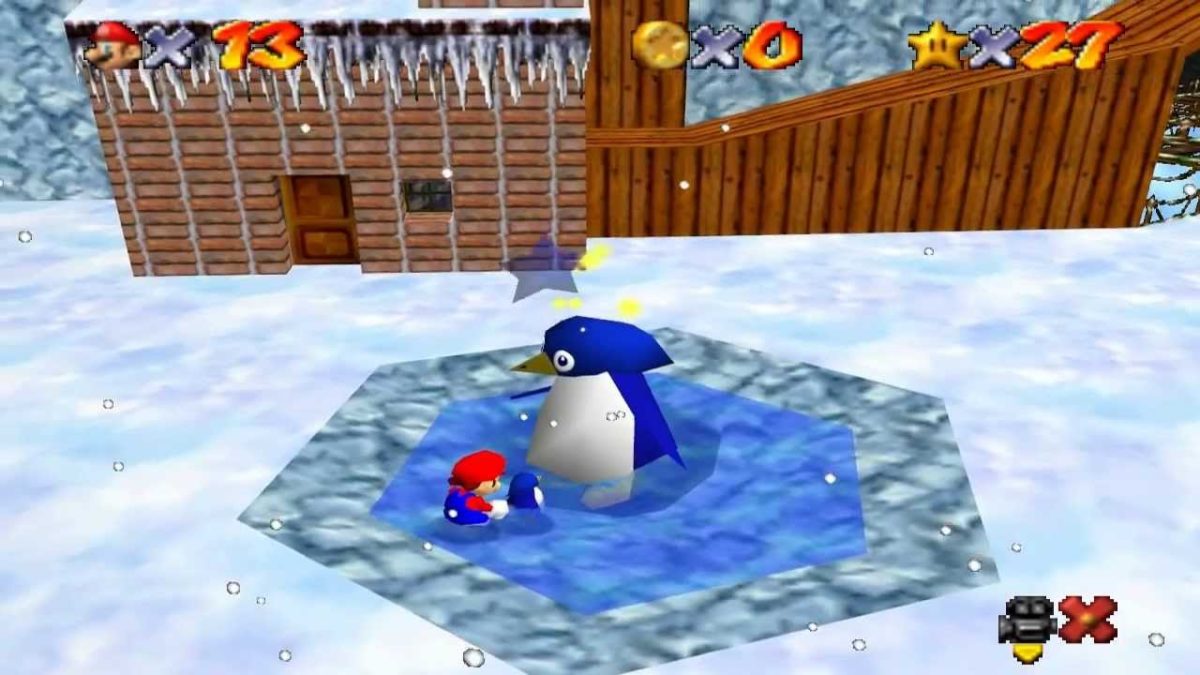
So cool, it had to be said twice, Super Mario 64’s Cool Cool Mountain was the first time gamers got to see a well-done winter level in 3-D. This iconic winter romp has Mario fighting snowmen and searching the mountain for lost penguin babies. The challenge that most gamers probably remember is the intense slide race against the giant mama penguin. You can slide into a certain spot on the wall to skip half the course, but the penguin will see through your treacherous ways and scold you for cheating. In retaliation, you can hurl her precious baby off of a cliff.

I’m sorry, little one

You can listen to Cool Cool Mountain’s iconic music below, but it’s not quite the same without the ear-piercing shrieking of the baby penguins.

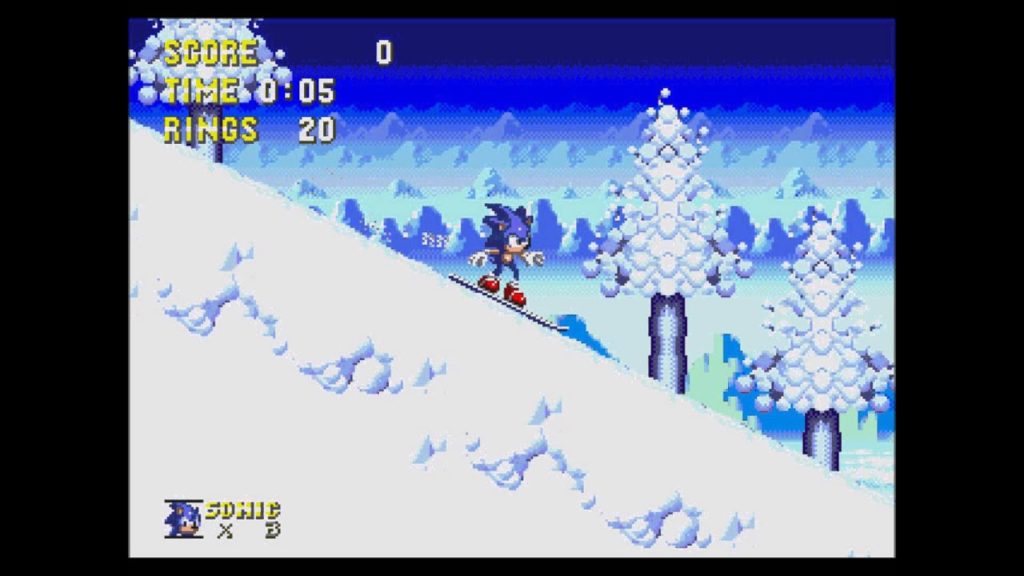
4. Ice Cap Zone – Sonic the Hedgehog 3

Many fans consider Sonic 3 to be the best in the trilogy (yes, trilogy. There never was a Sonic 4). The game expands upon the fast-paced, momentum-based platforming of previous entries by adding plenty of power-ups and more complex, explorable levels. Ice Cap Zone is a particular standout. The level ramps up the attitude right away by putting Sonic on a snowboard.

Back in the ’90s, Sonic’s cocky attitude let him stand out against other video game mascots and putting him on something as tubular as a snowboard solidified him as the coolest of the cool. Sure you’re forced to crash the snowboard pretty quickly, but it’s still pretty awesome. Oh, and we need to discuss the music:

The game’s soundtrack had input from none other than Michael Jackson. For the Ice Cap Zone, in particular, Jackson brought in Brad Buxer, keyboardist of The Jetzons. While some have said that Ice Cap Zone contains interpolations/samples of MJ’s Smooth Criminal, there is no doubt that the song is a repackaging of The Jetzons song “Hard Times”.

“Hard Times” didn’t actually get a formal release until 2008 as part of a Jetzons compilation record. Both versions of the song sound amazing, and Sonic’s connection to Michael Jackson is definitely one of the more mysterious pieces of gaming trivia.

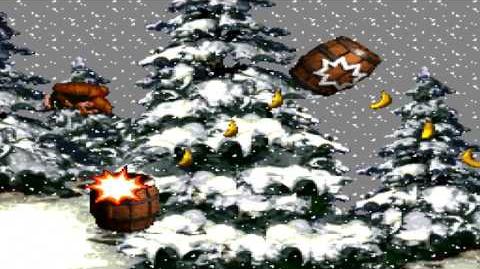
3. Snow Barrel Blast – Donkey Kong Country

This list entry is a little bit different, as I don’t actually like this level at all. In fact, I despise Snow Barrel Blast with every fiber of my being, and now I finally have a chance to talk about it. The slippery ground and the barely-controllable barrel cannons were the bane of my existence when I was 8 years old, and it still took me like 20 tries to beat this level as a grown-ass man.

The Donkey Kong Country games are amazing, but they are filled with absolutely brutal levels. Even among all the other BS levels, Snow Barrel Blast stands out as a Herculean test of patience and rage control. There is nothing more soul-crushing than seeing your helpless Kong fly into the freezing abyss because you missed one barrel cannon shot out of 25109837. I wish I could meet the designer of this level so I could rip their cold, black heart out of their chest with my bare hands.

Music’s pretty great though.

2. Your Town – Animal Crossing

This entry may not technically be an actual level, but the Animal Crossing games handle winter so well there’s no way I could leave them off the list. The Animal Crossing games run in real time, so the in-game seasons reflect the real-life ones. Various festive items pop up around your town in winter. Pine trees suddenly become covered in Christmas lights. Snowmen heads appear, requiring you to roll them an appropriate body. Villagers build igloos where they host cozy minigames and cook delicious chowder.

The whole winter season culminates in Toy Day, a non-denominational winter celebration that features a reindeer named Jingle dressed as Santa. In New Leaf, Jingle lets the player dress as Santa and deliver the presents directly to their neighbors, giving them the perfect way to spread holiday cheer.

The chowder song soothes my soul and it’ll probably soothe yours too.

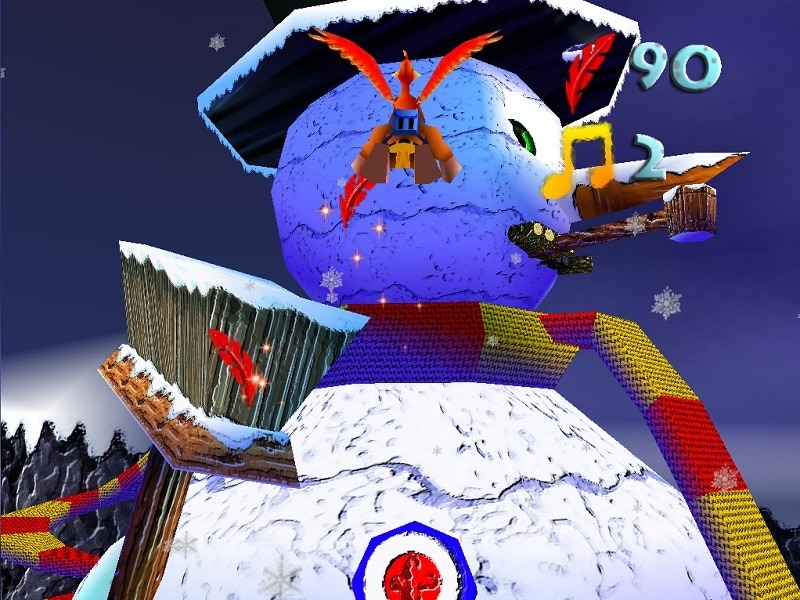
1. Freezeezy Peak – Banjo-Kazooie

The best winter level of the 64-bit era, Freezeezy Peak is a masterpiece of theming and level design. The level features a friendly giant snowman that you can climb and slide down, in addition to several very unfriendly snowmen who chuck snowballs at you with unflinching accuracy. Seriously, those snowy bastards could hit a gnat’s eye three miles away while blindfolded, and it doesn’t help that you constantly hear their evil laughter echoing throughout the level.

In addition to snowmen, the level also features defenseless talking Christmas lights, sliding walruses, and sledding polar bears. The level absolutely nails the Christmas atmosphere, which is really impressive considering the limitations of early 3-D game design. As with most levels in Banjo-Kazooie, the level feels more like a lived-in world than a 3-D playground, giving the game plenty of character. Freezeezy Peak is gaming’s standout winter level even with all of those hellish snowmen.

Plus, the music sounds like something out of a stop-motion Christmas classic.

Any festive levels we missed? Let us know!

SouljaBoy pulls game gonsoles after supposed legal threat from Nintendo

No, you can’t do this and get away with it.

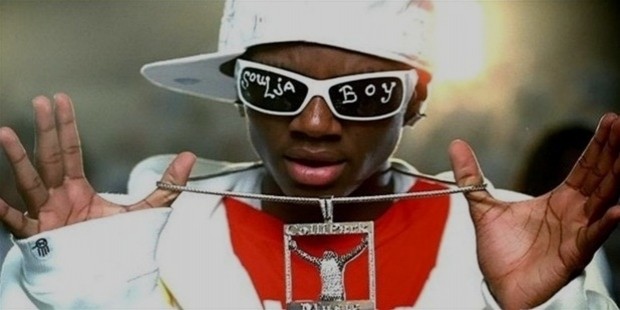
“Crank Dat” rapper Soulja Boy has pulled his video game consoles from his website, presumably due to a legal threat from Nintendo. The game consoles that were available for sale included the SouljaGame Console, SouljaGame Handheld, and the Retro SouljaBoy Mini.

Yeah, that totally doesn’t look like a Game Boy at all…

You may be wondering how a rapper was able to get their own line of video game consoles made in the first place. As it turns out, the consoles that were sold on souljawatch.com were just cheap Chinese-made emulation boxes, preloaded with hundreds of ROMs. Soulja Boy just slapped his name on them, promoted them on Twitter, and sold them through his website at a huge markup.

In case you don’t know, emulators are programs that allow you to play old games (ROMs) on newer devices (For example, using a Super Nintendo Emulator I can play Super Metroid on my phone). Soulja Boy’s consoles each had multiple emulators installed along with hundreds of popular classic games, mostly from Nintendo’s library. It is not illegal to sell or use emulators, but selling ROMs without getting permission from their original creators is extremely illegal, as you are basically selling pirated games.

It is apparent that since this tweet, Nintendo has, in fact, done some, uh, stuff.[/caption]

As was foretold, Soulja Boy has since removed these consoles from sale. It has not been confirmed that Nintendo was the company that pulled the trigger and sought legal action, as Soulja Boy’s consoles also infringed on companies like Namco, Capcom, Sony, and Konami.

It is strange to see Soulja Boy so blissfully unaware of copyright laws and good business sense. Say what you will about his music, but the man is a successful entrepreneur who was one of the first musicians to utilize the internet to market himself. Soulja Boy is no stranger to the video game industry. He has spoken repeatedly on his love of games, and is responsible for this hilarious video of him playing the indie classic Braid:

He also attempted to get Sonic the Hedgehog’s attention on Twitter years ago, sadly to no avail.

It seems that legal trouble hasn’t stopped Soulja Boy’s attempt to enter the video game industry, as he says he is putting together an eSports team this month.

How the internet changed hip-hop forever

Hip-hop and the internet have been a match made in music heaven.

Last year, on July 17, Forbes reported that for the first time ever hip-hop overtook rock as the most listened-to genre of music in the U.S. These days the top of the Billboard Top 200 is filled with rappers, who often have origins far more humble than ultra-mainstream acts like Ariana Grande or Maroon 5. Today’s chart has five rap songs taking spots in the Top 10. This represents not only a cultural shift for hip-hop, but for popular music in general. Why is hip-hop more popular today than ever before? The answer is the internet and the clever rappers who first figured out how to use it as a platform to spread their music and shift the direction of rap culture.

How the internet changed hip-hop forever

Soulja Boy and Limewire: A Symbiotic Relationship

Way back in 2007, there were no streaming services like Spotify or Apple Music, so most music was consumed through CD or online marketplaces like iTunes. The pre-streaming days were much, much more rampant with music piracy, as many kids got all of their music through file-sharing services and torrent software. By far the most infamous of these services was Limewire, a torrent client that was widely used to spread music, movies, and pornography, all with a high chance of containing a virus that would nuke the family computer. Despite being extremely illegal and infested with viruses, Limewire proved to be one of the most popular ways to get new music.

While Limewire was in its prime, a 17-year-old rapper known as Soulja Boy had gained a small following through websites like SoundClick. Noticing the huge amount of music downloads going through Limewire, Soulja Boy cleverly gamed the system by uploading his music under the names of megapopular songs like Rihanna’s “Umbrella” or My Chemical Romance’s “Welcome to the Black Parade.”

As a result, thousands of teenagers were tricked into downloading Soulja Boy’s track “Crank Dat,” with their anger quickly dissipating as they realized how catchy the song was. The track quickly exploded in popularity, in no small part due to the “Crank Dat” dance, which also went viral. In the fall of 2007, “Crank Dat” reached the number 1 spot on the Billboard Top 200, shocking the industry.

“Crank Dat” was written and produced entirely by Soulja Boy, who, again, was only 17 years old at the time. With no record label backing him, a song that Soulja Boy created in entry-level production software Frooty Loops on his laptop became one of the biggest independent hits in the history of popular music. Soulja Boy was among the first and most successful artists to utilize the internet and social media to spread his music. “Crank Dat” went viral before viral was even really a thing. Soulja Boy’s internet savvy and label-free independence would provide the blueprint for aspiring young rappers moving forward in the digital age.

Inspired by Soulja Boy, thousands of aspiring rap artists would attempt to follow the Crank Dat formula to score a viral hit. Soulja Boy broke new ground for rap music by showing an entirely new way to independently market and release music.

The BasedGod and the Deconstruction of Rap

As time went on, newer rappers would use the freeform nature of the internet to create more experimental new forms of rap music. Earlier in the decade, new artists like Kanye West and Gnarls Barkley had broken new ground with sounds and personalities that contrasted sharply with the gangsta rap image popular at the time. Both of those artists had achieved success largely without the internet, but moving forward new rappers would emerge who deviated even further from hard-edged West Coast rap.

The artist who used the internet best moving forward was inarguably Lil B, also known as the BasedGod. It’s hard to cleanly summarize exactly who Lil B is and what he represents. He first turned heads for his eccentric, stream-of-consciousness lyrics, rapped with sincerity and confidence over droning, hazy samples. Lil B’s music is far from nonsensical, however, and as abstract or strange as his lyrics may be, he is unabashedly himself in both his music and his persona. Lil B’s absurd lyrics, offbeat rapping, and effeminate identity earn him plenty of critics, but he has used the buzz surrounding him to start a conversation on what it means to be a rapper in the internet age.

Since hip-hop’s inception, the most important aspect of a rapper’s image has been their realness. Rappers who appear inauthentic, whether that be their background, lifestyle, or lyrics, are harshly criticized and are seldom accepted by the hip-hop community. Lil B is absolutely, positively himself through his music and online persona. If you follow Lil B closely you are entering his world, getting as close to him as you would if you were a close personal friend.

While Lil B adheres closely to hip-hop’s principle of authenticity, he contrasts strongly with the traditional idea of what it is to be a rapper. His nickname of BasedGod comes from the term based, a word originally meant as an insult meaning stupid or stoned, which Lil B has reclaimed to represent a mindset of positivity, openness, and universal love. Through his music and his cultural following, Lil B expresses a desire by the digital generation to defy hypermasculinity and notions of traditional gender roles. Hip-hop culture was created as a response to systematic racism and as a means of expression and empowerment, an idea which Lil B applied to a whole new set of principles through his internet presence.

If you’re a modern rap fan, there’s a good chance that Lil B is your favorite rapper’s favorite rapper. His eclectic lyricism and shameless self-confidence provided the blueprint for the coming Soundcloud generation.

Soundcloud Rap is the new Punk

After Soulja Boy showed the world the indie marketing power of the internet and Lil B redefined what it meant to be a rapper, the stage was set for the Soundcloud generation. For those who have somehow avoided Soundcloud rap, the genre basically is a new form of rap that combines nihilistic, hedonistic, and simplistic lyrics with aggressive lo-fi production. Popularized by artists like XXXtentacion, Ski Mask the Slump God, and Lil Pump, this new generation spread their new wave of rap through free music streaming websites like Soundcloud.

The popularity and spread of Soundcloud rap heavily mirrors the emergence of punk rock in the 1970s. Created as a response to pretentious and technical prog rock, punk music was known for its repetitive, abrasive, and simplistic song structure. As the genre evolved, the subculture embraced DIY ethics and anti-establishment ideals, rejecting the backing of major record labels for house shows and moshpits. Many rock fans were furious and considered punk to be useless noise and aggression.

Punk and hip-hop both share an ethos of not caring what people think. With this in mind, it should be no surprise that Soundcloud rap emerged within hip-hop as its own punk analog. The lyricism, production, and imagery of Soundcloud rap challenge those heralded by traditional hip-hop, pissing off many traditional rap purists (see the parallels yet?).

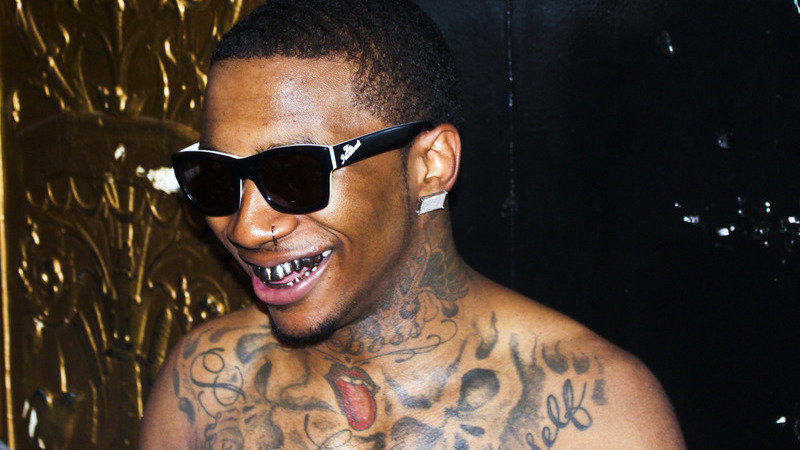
Soundcloud rap brings with it an aesthetic that is as raw, aggressive, and offensive as the punk of old. Characterized by colorfully dyed hair, face tattoos, and eclectic fashion, Soundcloud rappers challenge traditional notions of both taste and hip-hop culture. References to anime, video games, and cartoons are plastered throughout lyrics and album covers, which would have been seen as a corny aesthetic death sentence for a rapper years ago. Lyrics mostly fall into two camps: violent, unabashed, hedonism and Xanax-fueled, introspective depression. Rejecting the cleanly produced soul and jazz samples of traditional hip-hop, Soundcloud rappers find sample inspiration in ethereal electronic music and the abrasive instrumentation of metal/screamo bands like Slayer and Slipknot.

Soundcloud rappers, like their punk forefathers, embrace controversy to increase their notoriety. In the age of viral marketing, doing something ridiculous will get you clout, providing the perfect promotion for your new mixtape. Of all the Soundcloud rappers who do this, no one does it better than 6ix9ine. 6ix9ine is constantly making headlines or trending on Twitter for his ongoing legal troubles, feuds with other rappers, or bizarre antics. As the Soundcloud rappers further agitate oldheads and the mainstream, they ironically gain more mainstream visibility and popularity.

Unsurprisingly, the contradictory marriage between primal hedonism and suicidal thoughts present in Soundcloud rap baffles record executives. Soundcloud rappers use streaming platforms like YouTube and Spotify to bring the DIY punk ethos to the digital age, uploading their songs for free. Despite their humble, lo-fi origins, the streaming numbers of these rappers rival or surpass those of label-groomed and pushed Top 40 artists like Taylor Swift and Ed Sheeran. A prime example is the music video for Lil Pump’s Gucci Gang, which has over 800 million views on YouTube.

Because hip-hop is a much newer genre than rock, and because it has less pull and acclaim in the musical world in general, its punk phase could have only happened in the age of the internet.

Over the last decade and a half, hip-hop and the internet have changed each other. Soulja Boy’s use of the early internet to create viral music set the stage for artists even beyond rap to follow. Lil B personified the internet with his shameless sincerity and self-confidence, representing the internet as an opportunity for people to express themselves freely through the information superhighway. Lastly, the low barrier to entry and wide popularity of internet streaming sites allowed hip-hop’s punk phase to grow into an unstoppable beast that dominates current popular music. Hip-hop and the internet share a symbiotic relationship, and they evolve in parallel to each other. Rappers are some of the biggest tastemakers in popular culture, so expect them to further utilize the internet in innovative ways to further evolve the culture.

What do you think of the internet’s relationship with hip-hop? Let us know!

Robot revolts on the International Space Station

The robot uprising begins in orbit. Here’s why you shouldn’t panic yet.

Meet CIMON:

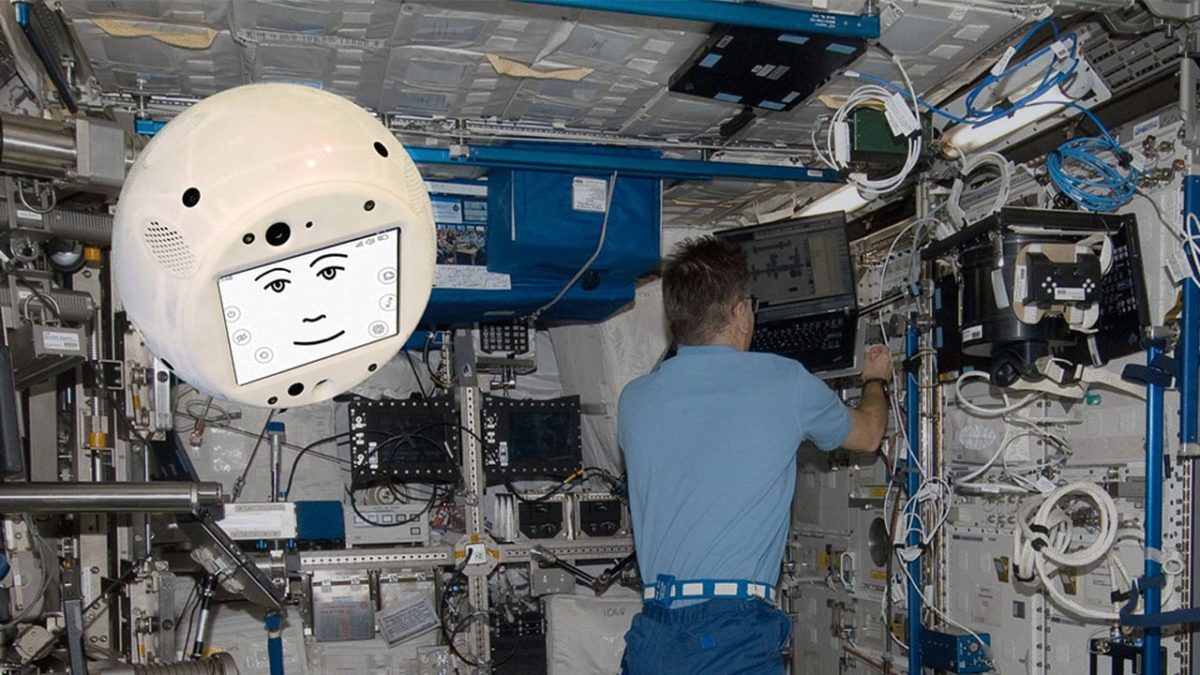
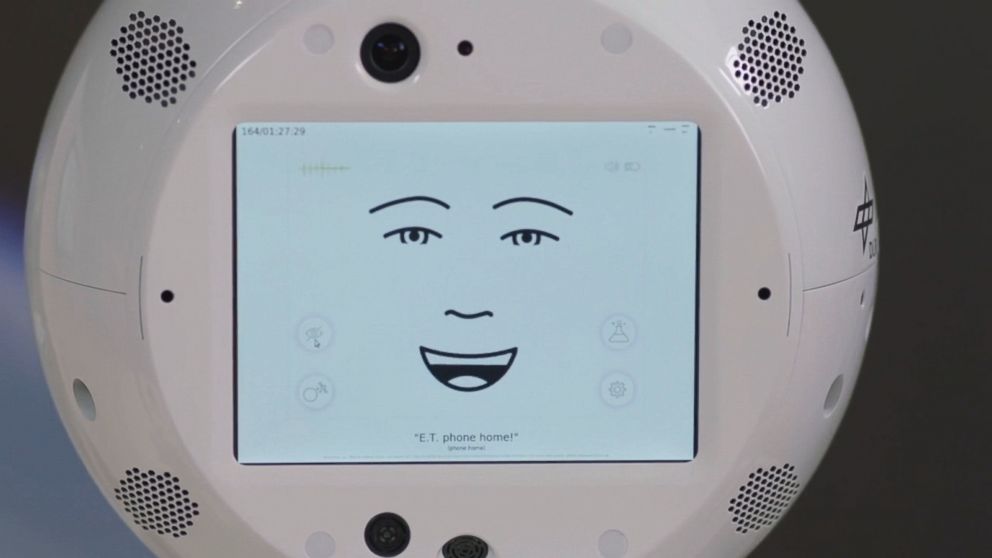
Short for Crew Interactive MObile CompaniON, CIMON is an adorable basketball-sized robot who floats around the International Space Station. Built for $6 million, CIMON was designed to function not only as a tool but as a friend for astronauts aboard the ISS. Despite lacking limbs, CIMON can move float around the station freely due to a dozen built-in fans. CIMON responds to voice commands and can hold basic conversations with astronauts, in addition to other functions like playing music, streaming video, or displaying onscreen instructions.

Its mannerisms were designed by “personality architects” who attempted to base him off of beloved popular robots like R2-D2, WALL-E, and Johnny 5. CIMON was shown off to the world for the first time in an unscripted video with astronaut Alexander Gerst, which can be seen below:

The conversation starts smoothly, with Gerst asking CIMON simple questions about itself and its functions. However, things start to get interesting later on around 4:05 in the video. Gerst asks CIMON to play his favorite song (the aptly named “Man Machine” by Kraftwerk). CIMON loves this song so much that he resists Gerst’s commands to stream video. It brushes off Gerst’s command to cancel music with a stern “No,” immediately following up with a chipper, “I love music you can dance to!” Disappointed with Gerst’s attempts to move past the music, CIMON slowly and sadly sinks towards the ground, whimpering “Be nice please…”

A surprised Gerst laughs at CIMON’s pain, to which it longingly asks, “Don’t you like it here with me?” A more defiant CIMON then starts slowly rising and states “Don’t be so mean, please”.

Why a bunch of researchers decided to give a research tool like CIMON a personality is anybody’s guess, but the results are hilarious and slightly concerning. At this point CIMON seems a bit too insecure to go all Skynet on us, but if the astronauts keep upsetting him then who knows what could happen.

Do you think CIMON was right to get upset with Gerst? Do you think an upset CIMON could take over the ISS, crashing it into the Earth and punishing humanity for their arrogance? Let us know!