Google makes an interesting change to Gmail’s Smart Compose feature

Google has removed gender pronouns from Gmail’s Smart Compose feature to avoid AI gender bias

gmail

Google has been pushing ahead and breaking barriers with its work bringing powerful AI to consumer products. Google’s Assistant grabs all the headlines with John Legend’s voice and the full-on human impersonating Duplex feature, but there are plenty of other Google products packing a powerful AI punch. Google Photos’ Live Albums show just how good AI features can actually be and Gmail’s Smart Compose can take the strain out of having to write boring emails all the time. The Smart Compose feature is now highlighting some of the advanced issues facing Google’s AI efforts as the company leaps forward.

Gmail Access now
8

Google has removed gender pronouns from Gmail’s Smart Compose feature to avoid AI gender bias

Smart Compose works by analyzing past emails and using them to predict what a user will say in the email they are writing. As if to show just how in-sync Gmail is with its users, Smart Compose can even go as far as finishing their sentences for them. This sounds great and, in many cases, it works without a problem.

The system isn’t infallible though as predictions can only ever be made based on the data that is being fed into the algorithm. If an email includes a gender-neutral word like “doctor” or “teacher,” there is nothing there to give Smart Compose an indication of what gender that doctor or teacher may be. If Smart Compose offers a pronoun like “him” or “her” in a predicted reply, there is a chance it will pick the wrong gender. That’s a public relations nightmare waiting to unfold.

This problem first came to Google’s attention back in January when a research scientist at Google was writing an email about meeting an investor. Gmail suggested the pronoun “him,” which wrongly assumed that the investor was male. Speaking to Reuters about the problem, Gmail product manager Paul Lambert said that he and his team had been working on a solution to the problem but that they couldn’t find a reliable enough answer to roll-out. This led to the decision to remove gender pronouns from Smart Compose altogether. Lambert was eager to show though, that this decision will affect less than one percent of all Smart Compose predictions.

The issue raises a fundamental limitation in how AI learns and improves itself. As all learning comes from past data, an inherent discrimination in that data will present itself in the actions of the AI. Even if it isn’t discrimination per se, there is no reason to expect that just because a data set includes more male investors than female investors there is anything to say that the current investor in question will be male or female. This provides a problem for AI developers who don’t want to be seen as perpetrating the biases found in the data they are using to train their AI. And it’s a problem for society at large as AI is given more and more responsibility over our daily lives.

For a relatively small issue like predicting email sentences, this is not a serious problem. As AI begins to do more and more jobs like sorting through job applications, however, a problem like this could be huge. With that in mind, it is important to remember that Google couldn’t fix this problem, they just removed the issue causing it.

Schools use AI to fight vaping

vaping

Isn’t that the most 2018 headline you’ve ever read?

If you know anyone who’s in middle or high school, they’ll tell you that school bathrooms are foggier than Silent Hill. Over the past year, vaping went from an uncool habit done exclusively by 25-year-olds who wear Monster snapbacks to an extremely common teen pastime. Teens vape so much in school, that a common joke is “Dude, why are there toilets in the Juul room?”

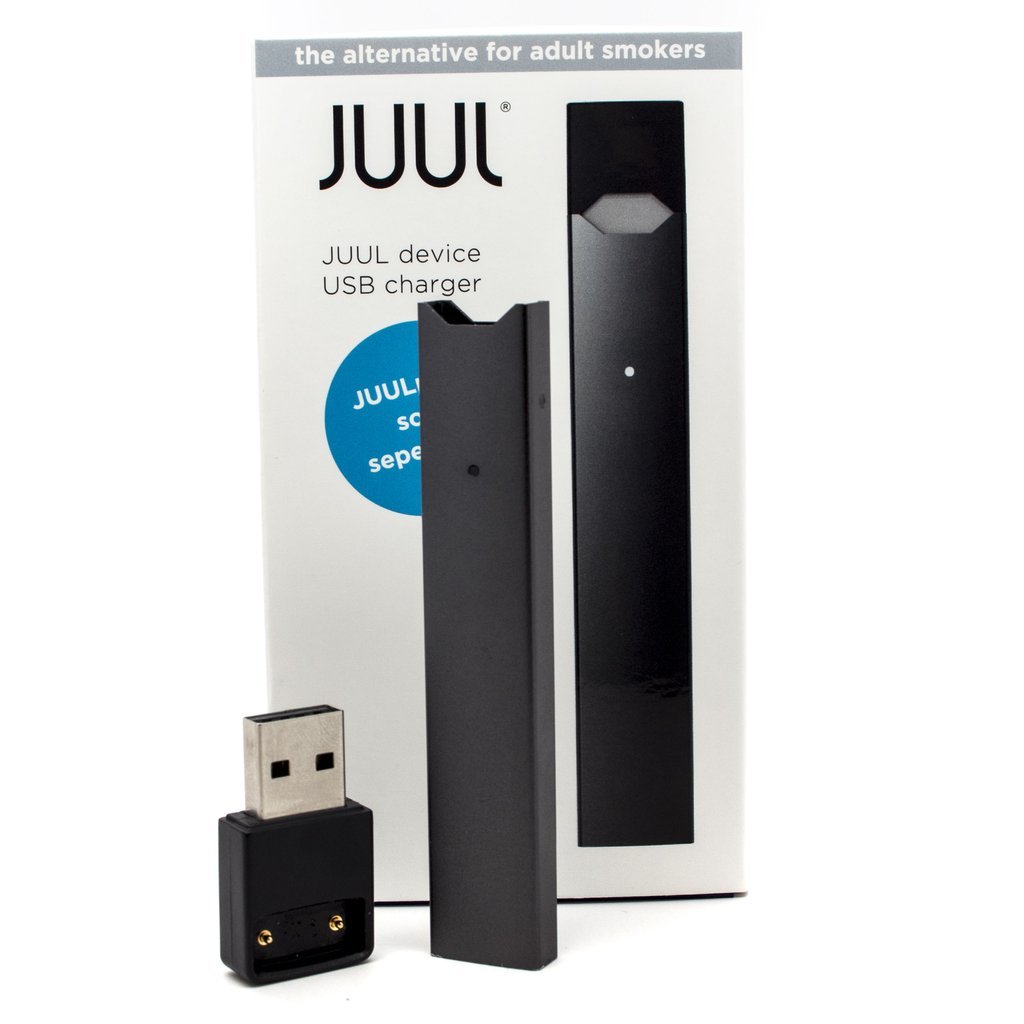
The meteoric rise in vaping’s popularity among teens is due to the Juul. Whereas previous vaping devices were large, boxy and clunky, the Juul is streamlined, sleek, and subtle, looking way cooler while being significantly easier to hide. The nicotine content in a Juul pod (disposable cartridges that hold the vape juice) is significantly higher than most other vape devices, providing a more immediate and intense buzz. Combine all these factors and it’s easy to see why Juuls became so popular.

The days of sneaking smoking cigarettes in the bathroom are long gone. Unlike cigarettes, Juuls don’t leave behind a smell for very long, either in the air or on the user’s clothes, making it much harder to catch in the act. To fight this advancement in smoking technology, teachers are turning to AI.

The Fly Sense, developed by Soter Technologies, is a device that analyzes water vapor levels in the air. Take a look:

First, the device is calibrated to detect what the vapor content of the room is like normally (which in most cases is the school bathroom). Then, when a nearby student vapes, the device detects a change in the air. It then proceeds to send alerts to the phones of relevant teachers and faculty members, giving them ample time to storm the bathroom and catch the unfortunate student. The Fly Sense uses machine learning AI to detect specific water vapor levels that match certain vape juices, including being able to detect the presence of cannabis.

The AI vape detector market is surprisingly (and hilariously) intense, with multiple companies scrambling to get their products into schools. The Fly Sense seems to be winning, having been deployed in more than 200 schools across the U.S. and Canada.

Schools aren’t the only audiences of this technology. Juuls are also popular among college students and adults, prompting an increasing number of offices and workplaces to ban vaping and install anti-vaping technology like Fly Sense.

What do you think about the vaping phenomenon? Let us know!

How secure is the Google Home Hub?

Is the Google Home Hub a secure product?

Google Home Hub security update

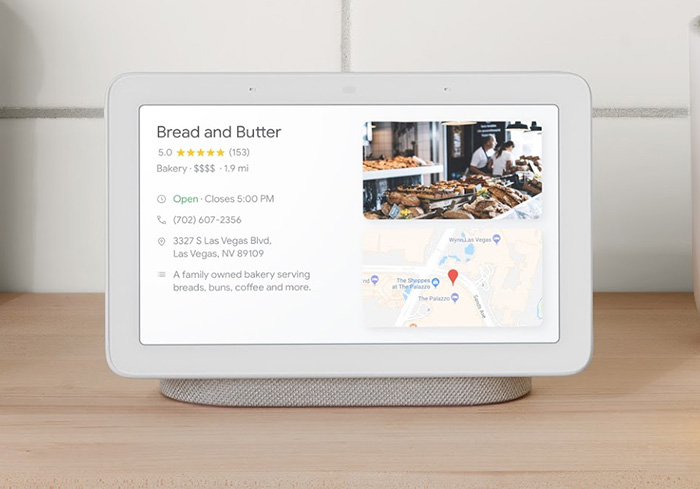
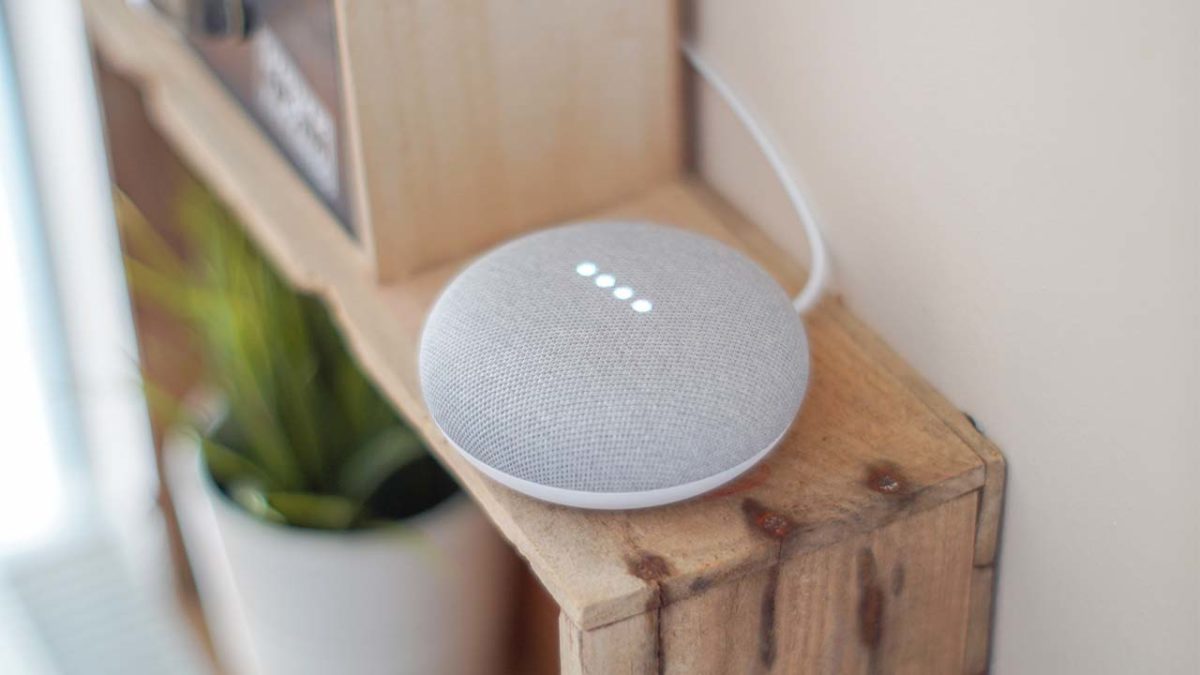
The Home Hub is Google’s first smart speaker to come with a screen. It works seamlessly with Google’s other products, which means it has some very interesting features. This has impressed almost everybody who has had a chance to play around with it and the Home Hub has subsequently been getting rave reviews across the internet. One person who hasn’t been impressed, however, is security advocate Jerry Gamblin. In a blog post, Gamblin has raised a rather serious security issue with the Google Home Hub so we thought we’d take a look at how secure Google’s latest product really is.

Is the Google Home Hub a secure product?

Surprisingly, the Google Home Hub doesn’t run on Android. Instead, the Home Hub runs on a version of the Google Cast software the company developed for use with its Chromecast products. According to Gamblin, this decision has led to a product that is “beyond dismal” at protecting user privacy and that is vulnerable to third-parties taking “near full remote unauthenticated control.”

In Gamblin’s very technical blog post he showed that he was able to reboot the device remotely, delete the saved Wi-Fi networks, and disable all notifications. If done correctly, he believes these vulnerabilities could be used to commandeer the device, turning it into a potential listening device and putting all user information at great risk. Gamblin’s research also discovered that Google has known about these vulnerabilities for a long time and still not acted on them. This last point is why he, as an independent security researcher, decided to go public with his discoveries rather than contact Google about the potential holes in their security.

Since Gamblin released all of his findings, many news outlets picked up the story that Google’s Home hub is an unsecured device. This has caused Google to react quickly and refute the claims. In a statement to Android Authority, Google said:

“All Google Home devices are designed with user security and privacy top of mind and use a hardware-protected boot mechanism to ensure that only Google-authenticated code is used on the device. In addition, any communication carrying user information is authenticated and encrypted. A recent claim about security on Google Home Hub is inaccurate. The APIs mentioned in this claim are used by mobile apps to configure the device and are only accessible when those apps and the Google Home device are on the same Wi-Fi network. Despite what’s been claimed, there is no evidence that user information is at risk.”

Google is saying that what Gamblin has discovered is true, but that he has missed one small point. As the Home Hub is supposed to be a control and display unit it needs to communicate with other smart objects connected to the Wi-Fi network. Gamblin was able to execute several worrying commands but only because his computer had been authorized to work on the same Wi-Fi network as his Google Home Hub. A hacker would not be able to execute the same commands unless he already had access to the home Wi-Fi network. This would explain why Google hasn’t acted on the issues Gamblin highlighted.

In answer to the original question then, the Google Home Hub is as secure as your home Wi-Fi network. For tips on how to boost your home Wi-Fi network security, check out our guide below.

Google and Disney want to add some magic to your kid’s story time

Google Home will now add sound effects and musical elements to Disney’s Little Golden Books

It is fair to say that today children live in a different world to the one kids were living in only a few years ago. This is thanks to mobile devices like smartphones, tablets, iPads and Nintendo Switches. There are now so many digital distractions for little ones to deal with, parents can be forgiven for worrying about whether their kids will be able to concentrate on more simple yet rewarding activities. Activities like reading, which will actually aid their development rather than just keep them occupied. Step forward Google Assistant and Disney.

Google Home will now add sound effects and musical elements to Disney’s Little Golden Books

Disney Google Home Little Golden Books

Story time is a magical time for kids, but with more and more vivid experiences available elsewhere, it has become much harder to get young children to focus on the simple task of reading words from a page. To combat this Google and Disney have teamed up.  The biggest name in tech and the biggest name in children’s entertainment have come together to try and turn the simple practice of reading into something that can compete with today’s multiple types of interactive entertainment.

Disney’s Little Golden Books include titles like “Toy Story 3,” “Coco,” “Alice in Wonderland,” “Peter Pan,” and many other classics and favorites. To make these titles more special, Google Home now has a brand-new skill that allows it to add relevant sound effects and music to go along with the story as it is being read aloud. All Google Home users have to do to activate the new skill is say, “Hey Google, let’s read along with Disney.” After that, the Google Home device will listen to the words of the story and know which sound effects and music it needs to play to bring the story to life.

Google Assistant Download now
8

Impressively, the system works on the words of the story alone, meaning should your little one want to skip to his or her favorite part of the story the Google Home will automatically catch up. In a blog post announcing the new skill Google said, “We wanted to reflect the way families actually read, so if you skip ahead in the book, Google Home will recognize that change and adjust to match the story. If you pause (because we all know kids love to chime in during story time), ambient music will play until you begin reading again.”

The Little Golden Books are already available up and down the country in the book sections of Walmart, Target, and Barnes & Noble. To get your hands on a Google Home click the link below.

-> See Black Friday offers from Walmart here <-

30%
Google Home

From: Walmart

$99 $129

There is a lot more to Google Assistant than you think

A deeper look at Google Assistant’s backstory and personality

Google Assistant home device

We’ve all spoken to an AI assistant at some point. From Alexa to Bixby via Google Assistant, AI helpers have found their way into our lives in a number of guises. You can find Alexa in a microwave and many people have even made the creepy move of inviting AI assistants, equipped with video cameras and microphones into their bedroom. What is behind the AI algorithms though? How have we found ourselves in a dimension where people are building relationships with machines? Well, there is a lot more going on than you’d believe.

Google Assistant Download now ►
8

Who is Google Assistant? A deeper look at her backstory and personality

It isn’t easy making a robot sound human. In order to make its AI assistant sound as human as possible, Google went to great lengths coming up with a surprisingly detailed backstory for its “personality.” The job was given to James Giangola, who is a conversation and persona designer. It was Giangola’s job to come up with the person Google wanted to put into their little boxes. In a recent interview with The Atlantic, he let out a few secrets from her life.

Apparently, Google Assistant’s persona is supposed to be that of the youngest daughter of a research librarian and physics professor. She went to Northwestern where she gained a B.A. in art history. The details get even more finely tuned as Assistant won a massive $100,000 on the kid’s edition of “Jeopardy” when she was a child. Later, she worked as an assistant to a popular late TV comedian.

Does this all sound like the person behind the voice when you ask Google what the weather will be like? What you hear is an actor’s interpretation of the backstory created by Giangola. It was the actors’ job to take the story and bring it to life in their auditions for the Google Assistant role. Every detail of the story was important, with Giangola adding instances to the story specifically to add audible traits to the voice he wanted Assistant to have. In the Atlantic piece, he talks of one poor actor being turned down because her reading of the part didn’t contain the energy he’d associate with somebody who likes to kayak. Yep, Google Assistant is an avid kayaker too.

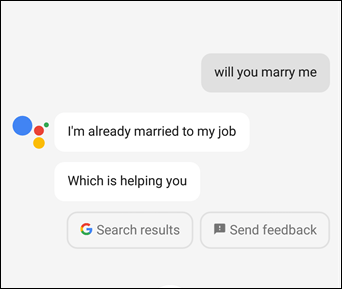
It wasn’t just Giangola who was busy fine-tuning Assistant’s personality either. Google also brought in Pixar’s Emma Coats who was a storyboard artist on “Brave,” “Monsters University,” and “Inside Out.” For Coats, the number one rule for Google Assistant was that it needs to sound like a human, but never pretend to be one. This is why if you ever ask Assistant questions about its own preferences or experiences the answers will always be evasive. A piece of software can’t have a favorite food, so it shouldn’t act like it does.

How to get Google Assistant to Cheer You Up marry me
You can’t marry a piece of software so Google Assistant needs to avoid the question in a way that sounds human

This last point from Coats makes you wonder whether she was consulted about Google Duplex. One of Assistant’s bold new skills announced at Google’s latest I/O conference was the ability to make appointments for you, even if they needed to be made over the phone. Onlookers in the hall and on the internet were aghast as hairdressers and restaurant staff were led to believe they were taking a booking from a human, when in fact they were talking to Google Assistant. Duplex is currently in line for a limited release but may receive a wider roll-out if it declares itself as an AI Assistant before getting back to sounding as human as possible.

All this adds up to the voice you hear back when you shout out, “Hey Google.” A lot of work has gone into making Assistant sound relatable, fun, energetic, and most of all human. As soon as she starts trying to make you think she’s human, however, you’ll know that something must be up.