iPhone users finally get a great Google app

Google Lens can now be accessed from the Google app on iOS.

Google lens Google app ios

iPhone or Android? Possibly the toughest of tech choices boils down to so much more than whether you are just an Apple fan or not. Both tech giants have brought their own magic to the market, which often ends up being exclusive to their respective operating systems and the smartphones that use them. Sometimes, however, Apple and Google come up with apps and features they think are so good that everybody should be able to use them. This now appears to be the case for Google with its Google Lens app.

Google Lens can now be accessed from the Google app on iOS

If you are unfamiliar with Google Lens, you will likely be impressed by its capabilities. Lens allows you to point your smartphone camera at objects in the real world to try and find out information about what they are. It uses Google’s famous AI to scan what your phone is looking at and then serve up the relevant information. This is a key part of Google’s strategy of moving towards a future that contains so much more than mere text-based search queries.

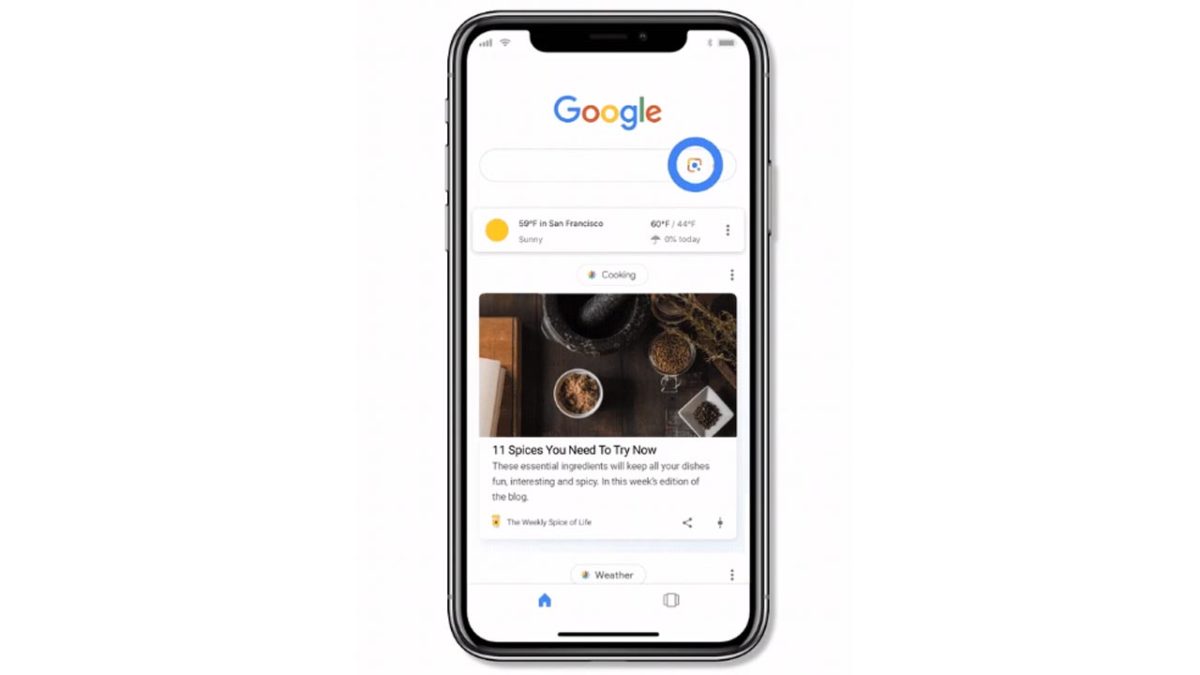
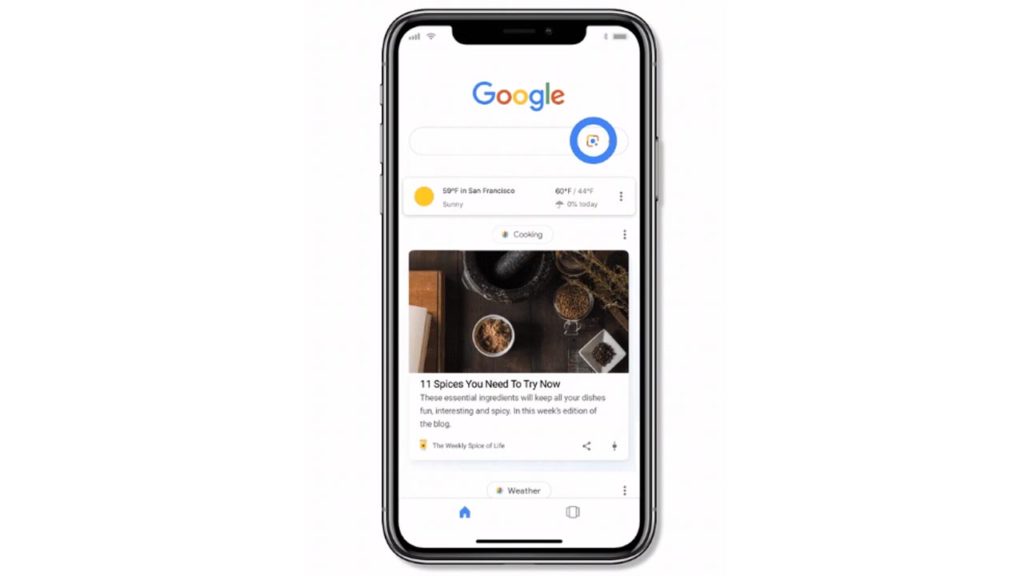
If you are an iOS user and you want to try out Google Lens for yourself, read on. All you have to do is open up the Google app on your iOS device and look for the new Lens icon. You should see it next to the microphone icon in the Google search bar. If you tap the Lens icon, your phone’s camera will switch on and you’ll see a number of moving bars, which indicate that Google’s AI is working away in the background. You’ll be able to use Google Lens to identify most things that you point your camera at including bars and restaurants, and more natural things like plants and animals. It also works very well as a quick and efficient way of copy and pasting analog text.

Google App Download Now
8

Until now, iOS users were only able to use Google Lens’ capability by scanning photos in the iOS version of the Google Photos app. The move to the Google app, and the introduction of a live scanning feature makes the whole process much more fluid and easier to pull off. iOS users can now simply tap on an object they are looking at through their phone, rather than having to first take a photo.

The Lens update to the Google app has been rolling out slowly over the last few weeks. If you still haven’t received it on your iOS device, don’t worry: it is on its way.

Google Assistant can now accurately predict the future

Google Assistant can let you know with 85% accuracy if your flight will be delayed.

google assistant flight delays

If you’ve ever used an AI assistant like Amazon’s Alexa or Google Assistant, you’ll know that they have many skills that can help you throughout your daily life. Often these skills are just novelties or bits of fun, like calling Santa Claus in his workshop, but they can also be useful and practical like making your coffee in the morning, cooking your lunch, or setting reminders for your schedule. Rather impressively, Google Assistant has developed a new skill that allows it to see into the future and give you useful information when you’re about to embark on a trip or vacation.

Google Assistant Download now
8

Google Assistant can let you know with 85% accuracy if your flight will be delayed

The major advantage that Google Assistant has over other AI assistants is that it can call on data from across all of Google’s products to help provide you with the information you need when you need it. Assistant can dip into your Gmail inbox and bring back the flight times from the booking you made a few months ago as if it always had the information on hand anyway.

In a recent blog post, Google announced that soon Assistant will be able to access data from another Google product that will broaden this skill. Google Flights has been publishing flight statuses for a while, and this historical flight data allows Google to make predictions about whether flights will be delayed with an astonishing 85% level of accuracy.

Soon, data from Google Flights will be available to Google Assistant, which means you’ll soon be able to holler, “Hey Google, is my flight on time?” or “Hey Google, what’s the status of the American Airlines flight from Philadelphia to Denver?” to get up-to-date information about your flight status.

As well as providing information on flight statuses when we ask for it, Google Assistant will also start proactively updating us. If the Google Flight data indicates that there is a high likelihood your flight will be delayed, Assistant will ping you a notification telling you so, before you even ask for it. This approach puts Google Assistant ahead of Apple and even the airlines themselves, which will only send you a notification once the flight delay has been confirmed.

As we push further into the new year, we move into the most popular time of the year for booking vacations. With trips supposed to be relaxing and stress relieving, it is good to know that our virtual assistants will be working away in the background to keep us up to date about potentially stressful occurrences. Google Assistants flight delay predictions will keep us one step ahead of the game when we’re trying to relax. The big question will be, however, if Google says it thinks your flight will be delayed, will you risk staying at home on an 85% certainty?

5 AI programs you interact with every day

AI is lurking in places you may not expect.

artificial intelligence

Artificial intelligence (AI) is probably a big part of your life — far beyond using Alexa or Siri. In fact, many of the most popular apps and websites use AI technology to improve your online experience. Here are some of the many ways you might be interacting with AI without even knowing it.

5 AI programs you likely interact with every day

1. Email

Love the invention of spam filters? You have AI to thank for that. Essentially, your email uses AI software to learn how to detect spam and filter it out so it doesn’t end up in your inbox. You may have also noticed the Smart Reply option in Gmail, too. This option allows you to quickly respond to an email when you’re short on time but need to get a response out.

2. Streaming services

Every time Spotify introduces you to a new artist or playlist, it’s using AI to make that recommendation. Ditto for Netflix and other streaming services. You may feel like some services know you better than others, too. Maybe Netflix always knows just what you want to watch, but Amazon often gets it wrong. But, hey, it’s learning!

3. Google Maps

Google Maps doesn’t just help you get from Point A to Point B. It uses AI to help you get from Point A to Point B in the best way possible — by considering traffic, construction, and accidents in your area. That way, it can suggest the fastest, smoothest possible route for you to take.

AI can also help you to find the right street address. When an accurate address is hard to figure out, Google will analyze Street View images and other data to determine the correct address.

Ever use Google Maps to search for available parking near your destination? Google Maps uses AI to determine the likelihood that you’ll find parking by taking into account the time of day, location, and traffic.

4. Mobile banking

Every time you deposit a check in your bank or want to make a secure transaction, AI is behind the wheel. AI helps banks to decipher your handwriting and correctly deposit a check into your account.

Having a problem with your banking app? Next time you call customer service, you’ll likely be talking to an AI bot, too.

5. Social networking platforms

Facebook can instantly identify your face or your friends’ faces in photos to make it easier to tag photos or find pictures that you’ve been tagged in. It can do all of this with the help of AI. Further, AI helps apps like Instagram, Pinterest, and Facebook to predict which type of content or ads you’re likely to be most interested in. And it also helps Snapchat provide you with that much-loved puppy filter.

Robot revolts on the International Space Station

The robot uprising begins in orbit. Here’s why you shouldn’t panic yet.

Meet CIMON:

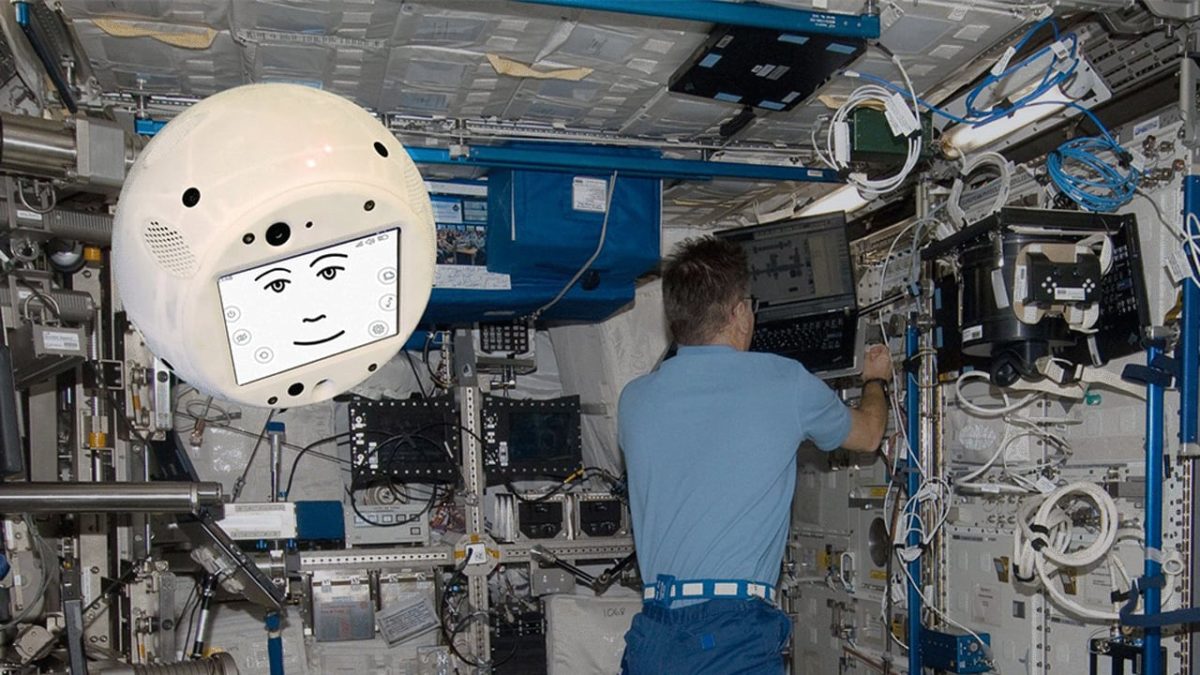
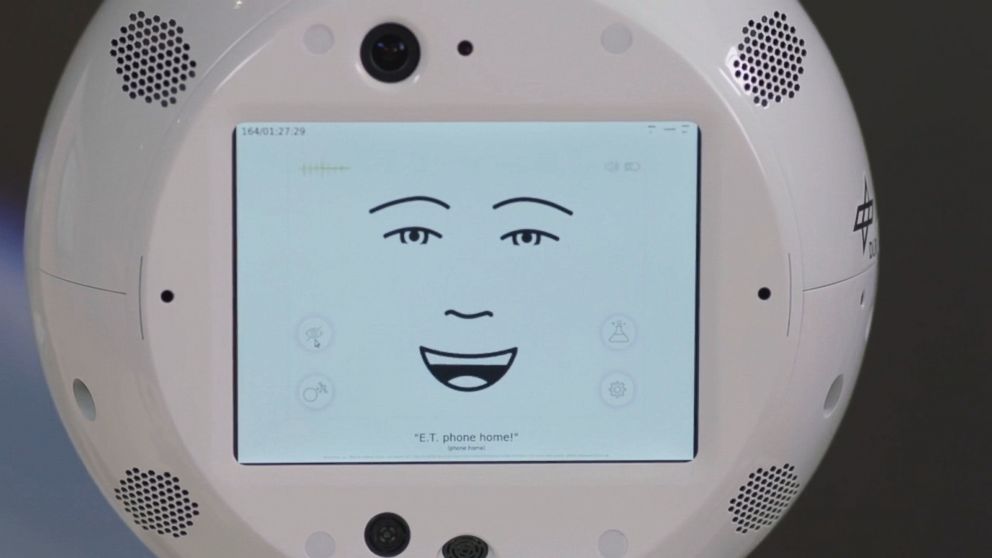
Short for Crew Interactive MObile CompaniON, CIMON is an adorable basketball-sized robot who floats around the International Space Station. Built for $6 million, CIMON was designed to function not only as a tool but as a friend for astronauts aboard the ISS. Despite lacking limbs, CIMON can move float around the station freely due to a dozen built-in fans. CIMON responds to voice commands and can hold basic conversations with astronauts, in addition to other functions like playing music, streaming video, or displaying onscreen instructions.

Its mannerisms were designed by “personality architects” who attempted to base him off of beloved popular robots like R2-D2, WALL-E, and Johnny 5. CIMON was shown off to the world for the first time in an unscripted video with astronaut Alexander Gerst, which can be seen below:

The conversation starts smoothly, with Gerst asking CIMON simple questions about itself and its functions. However, things start to get interesting later on around 4:05 in the video. Gerst asks CIMON to play his favorite song (the aptly named “Man Machine” by Kraftwerk). CIMON loves this song so much that he resists Gerst’s commands to stream video. It brushes off Gerst’s command to cancel music with a stern “No,” immediately following up with a chipper, “I love music you can dance to!” Disappointed with Gerst’s attempts to move past the music, CIMON slowly and sadly sinks towards the ground, whimpering “Be nice please…”

A surprised Gerst laughs at CIMON’s pain, to which it longingly asks, “Don’t you like it here with me?” A more defiant CIMON then starts slowly rising and states “Don’t be so mean, please”.

Why a bunch of researchers decided to give a research tool like CIMON a personality is anybody’s guess, but the results are hilarious and slightly concerning. At this point CIMON seems a bit too insecure to go all Skynet on us, but if the astronauts keep upsetting him then who knows what could happen.

Do you think CIMON was right to get upset with Gerst? Do you think an upset CIMON could take over the ISS, crashing it into the Earth and punishing humanity for their arrogance? Let us know!

What are the biggest threats associated with AI?

Artificial Intelligence is coming, and it’s bringing trouble with it.
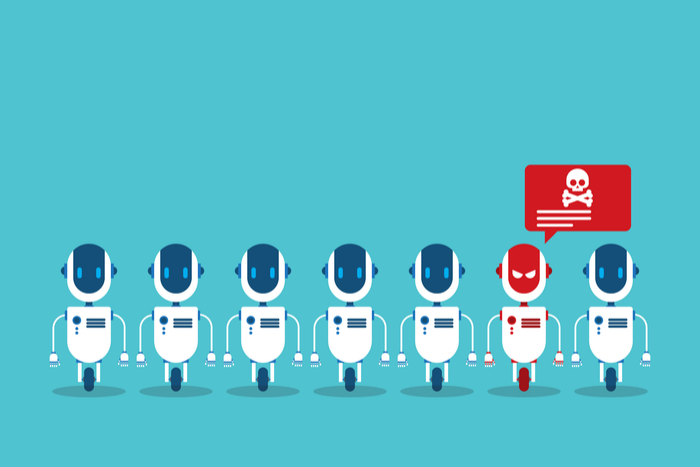
Advancing artificial intelligence brings a lot of promise—to help with everything from curing diseases to making for a better customer service experience.

Most of the talk tends to center on doomsday scenarios or a future where humans don’t work anymore. While there’s no doubt that automation will transform the modern workplace, in many ways it stands to benefit society in several ways. Aside from our natural fear of change, what else is there to fear?

But what are the most significant realistic risks we may be battling in the future? Here’s a look at a few things that humanity, as a whole, might need to worry about.

What are the biggest threats associated with artificial intelligence?

Increased cybersecurity woes

A key issue we face with advancing AI is the automation for vulnerability discovery. It will be increasingly difficult for humans to keep up with the bots — and may leave organizations tasked with handling sensitive data exposed.

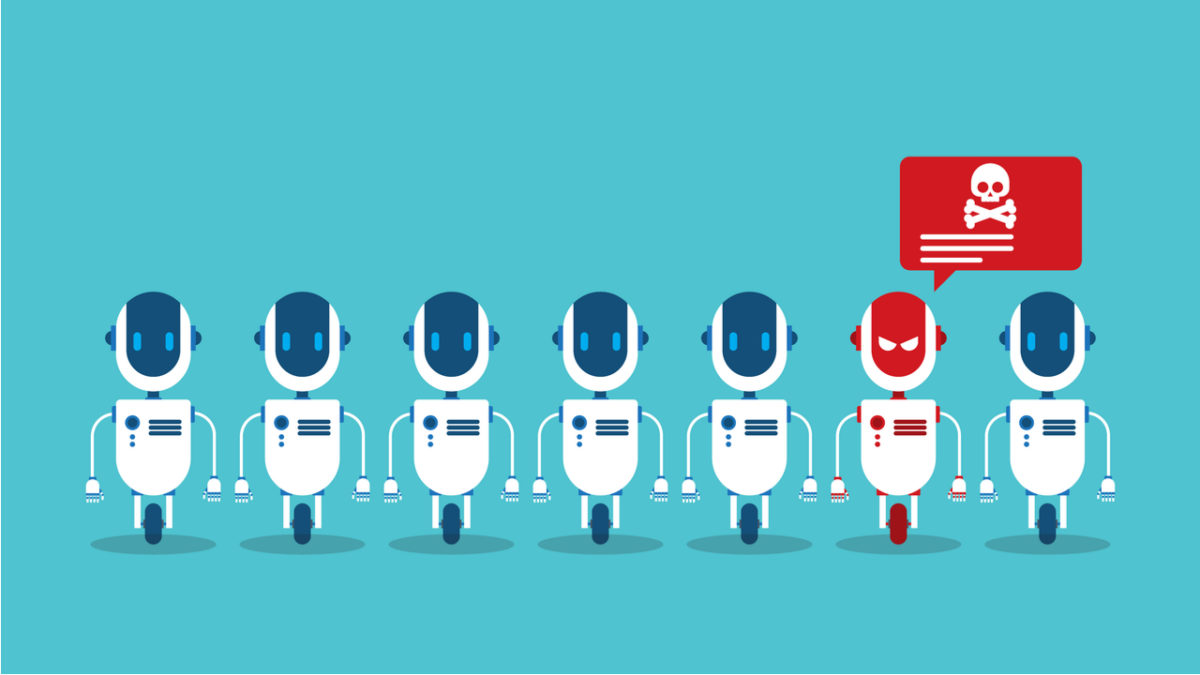
One of the biggest concerns about AI is what happens when the technology falls into the wrong hands.

Hackers are learning to perform something called smart phishing, which allows them to leverage AI to analyze huge swaths of data to first, ID potential victims, then create believable messaging that better targets those victims.

As it stands, about 88% of US cybersecurity teams are using AI as part of their strategy. While AI might not be super reliable as a standalone security solution, many professionals believe that it will become a key ingredient in fighting back against time-sensitive threats.

As more bad actors adopt automated hacking methods, the good guys need to train themselves in the language of cyber attacks — ethical hacking of the future, if you will.

Fake news could get faker

Automation is threatening democracy. Or at least some researchers think so.

We’re seeing early signs of the effects that AI can have on how we receive information. From Russian interference in the 2016 U.S. election to the spread of misinformation across social channels, the implication for the future of journalism is pretty scary.

And then there’s the fact that almost anyone can create videos documenting events that did not occur. There’s the issue with DeepFakes, where people are transferring someone’s face to another body—which unsurprisingly has been used to create custom porn by adding a celebrity face to a porn star’s body. Another example is that Obama video developed by researchers at the University of Washington.

What’s more, it seems that automated fake news is on the horizon. Sean Gourley, CEO of Primer, a data mining software company told the MIT Review that we might see fake news offered on a personalized basis. Meaning, reports that are tailored to a person’s interests and essentially, optimized for maximum impact.

Autonomous weapons
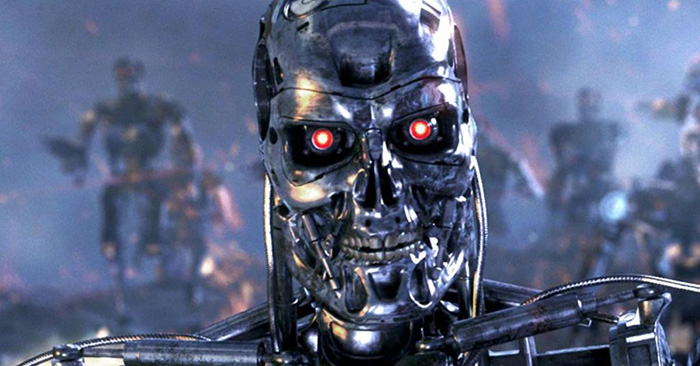
The Terminator

Artificial intelligence would presumably take the dirty work out of carrying out a deadly attack. While this sounds like the stuff of a dystopian thriller, AI weaponry is moving from nightmare to reality.

As it stands, there are no weapons that can specifically target a person. Over the past several years, the UN has debated whether to consider banning lethal autonomous weapons systems, or LAWS, outright.

Last year, CEOs from 130 AI companies signed an open letter to the UN urging them to ban autonomous weapons before they become an unfortunate reality.

But given there are already war drones and weapons that can track incoming missiles, we’ll need to figure something out ASAP.

Our biases could spread

AI is known to pick up human biases, intentional or not. We’ve seen this play out in the Microsoft chatbot experiment—remember Tay? And, again in Amazon’s recruiting AI test, where, the algorithm somehow learned to weed out job applicants who included the word “women’s” in their resumes.

Unfortunately, one of the biggest risks of using AI is that it will reinforce stereotypes, many of which, we weren’t consciously carrying around. Take, for example, this ProPublica investigation into a commonly used software platform that predicts future criminals — and placed black people at a higher risk of committing violent crimes.

The issue here is, we can (hypothetically) teach our AI to make the right choices, but it’s a challenge to identify these biases until they happen.

Additionally, when machines must make their own decisions, they sometimes behave in ways that their programmers don’t understand. Meaning, it’s almost impossible to know how the bot got from point A to point B in the event of a bad decision.

Wrapping Up

Considering the risks of AI means looking at a wide range of problems that aim to upend humanity as we know it.

From the spread of misinformation to the risk of devastating physical harm, not to mention the whole business about our future employment prospects, there will need to be a massive global effort to keep AI from falling into the wrong hands.

While it seems the AI companies themselves take social responsibility seriously, it’s hard to predict how this will play out on the global and political level — especially when you consider most people don’t exactly understand the technology.
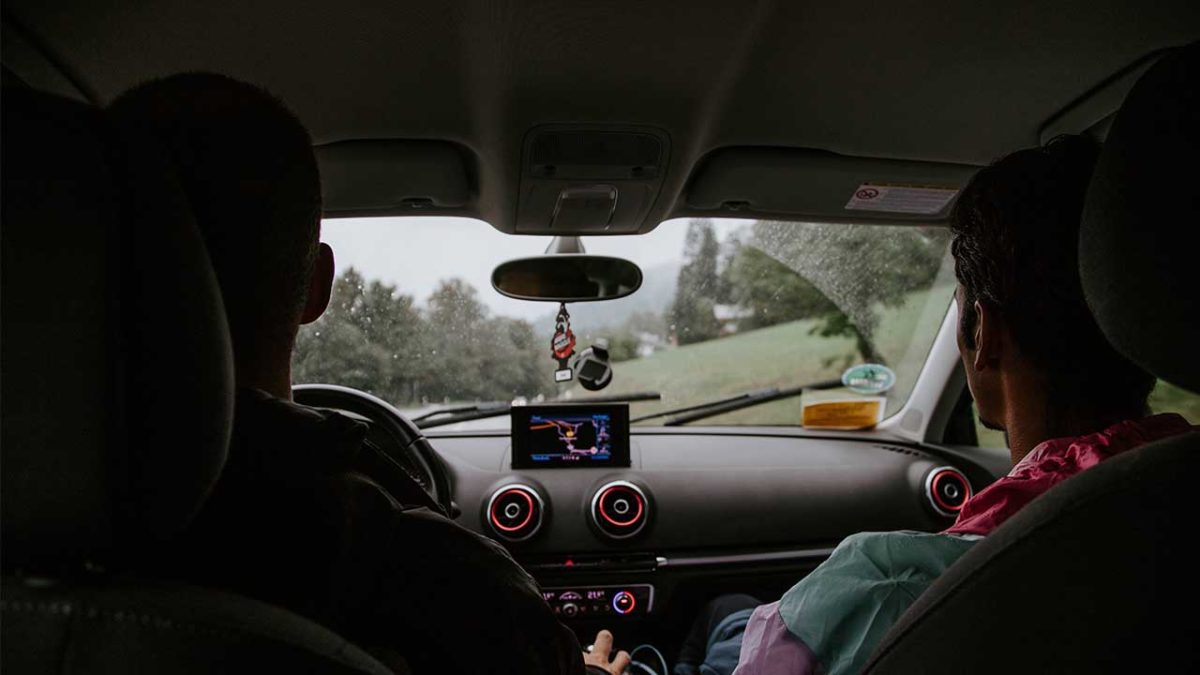
Google Maps update helps drivers

Google Maps and Google Assistant are teaming with a navigation specific update

update for drivers on google maps

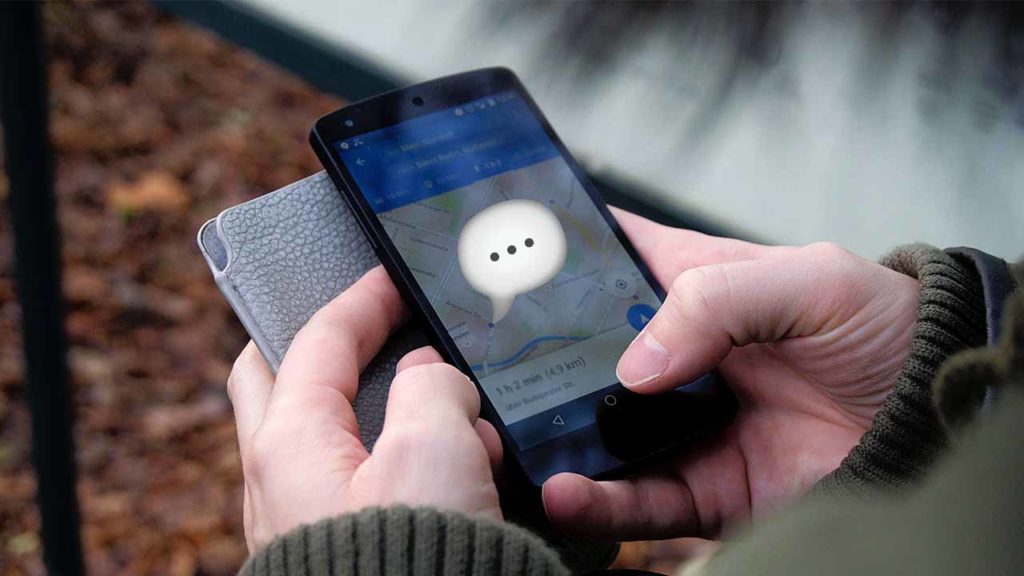
Recently we’ve seen a flurry of updates to both Google Maps and Google Assistant. The Maps updates have been adding more and more features that don’t actually have anything to do with Maps. A new messaging feature and the ability to add hashtags to businesses have turned Maps into a formidable business directory. For Assistant, the updates have been spread across a variety of areas, as you’d expect from a product that is supposed to be generally intelligent rather than specialize in one particular area.

There is a core part of both apps, however, that that make them perfect teammates. Navigation is now a key part of Google Maps and voice control is such an important of Google Assistant that it is taken for granted. With Assistant being able to easily respond to voice queries, it offers a great way for you to get the information you need, or open up a particular app while you are driving. This raises a few issues, however, but Google is trying to address them in a new update for Google Maps.

Google Assistant on an Android smartphone has its own visual signature. When you call out “Hey, Google…” it opens up a dialog box where you can talk to Assistant and it can display the results to your queries. Even on its own this could be distracting to somebody who is driving a car but if you add the fact that this could also interrupt the navigation instructions that Google Maps is displaying, the problem grows. Even a handsfree experience can still cause dangerous problems for a driver.

Google Maps and Google Assistant are teaming with a navigation specific update

To address the fact that Maps and Assistant could work so well together yet could also cause dangerous distractions for drivers, Google has released a new update for Google Maps. The feature was first mentioned at Google’s I/O conference back in May, when Google said it would have a “lower visual profile” that wouldn’t distract drivers. The update is now live, and users have been taking to social media to describe an experience that fits with Google’s early description.

All Assistant commands now run in the background and the user always stays in Google Maps. You can now ask Google Assistant to send a text message, play music, and even call people without having to leave Google Maps or take your eyes off the road. According to one user on Reddit, calls happen seamlessly without the Phone app opening up on the screen. To initiate these commands all you have to do is say the Google command words or hit the multi-colored microphone found in the top-right of the screen when navigation is running.

This update makes Google Maps navigation a much richer and safer app. Download the latest update to Google Maps to give it a try.

How to call Santa using Google Assistant

You can now call Santa Claus using Google Assistant

google assistant can talk to santa

Every year, Google helps kids around the world track Santa as he brings them their presents on Christmas Eve. This year will be no different and Google’s Santa tracker should come online again on December 24. This year, however, Google is going one better and if you’ve got a Google Assistant powered device, like the Google Home, you and your kids are in for a treat.

Google Assistant Download now ►
8

You can now call Santa Claus using Google Assistant

We know this one isn’t just for the kids. We all go through that brief period between the ages of around 11 to 21 when we stop believing in Santa. The jolly guy then comes back into our lives as we grow a little older and become a little more mature. We all realize Santa is real and then spend our adult lives regretting those few teenage years we spent doubting the big guy. Well now, thanks to the Google Assistant, we can call him up and speak to him ourselves and so can our kids. All we have to do is call out, “Hey Google, call Santa,” to open up a direct line to the North Pole.

Of course, in the run up to Christmas, Santa will be very busy so there is no telling what he’ll be up to when you call him. If you’re planning on telling Santa what you want for Christmas this year, you might not get the chance. This means it’ll probably be a good idea to still send him that letter, like you do every year. That way you can just enjoy your call to Santa rather than worrying about letting him know everything you hope to find under the tree on Christmas morning.

This new skill for Google Assistant is part of seven new holiday-themed features from Google. These new skills include creating gift lists, adding a little extra magic to Christmas story time, and even responding positively when you ask for things nicely, saying ‘please’ or ‘thank you.’ As well as bringing a little magic when you read a story to your children, Google Assistant is now able to read stories aloud if you don’t have any books with you. Assistant can now read over 50 stories. You can ask for specific stories or you can ask for stories based on a theme by saying something like, “Hey Google, tell me a story about Christmas.”

You’ll be able to use any of these new Christmas-themed skills and, most importantly, call Santa from any Google Assistant enabled device. These include the Google Home and Google Home mini, but also many Android smartphones now come packed with Google Assistant baked in. If you have a Google Assistant-enabled device that has a screen, then you’ll also be able to view fun holiday-themed visuals to go with all of the audio related to the new skills.

Hey Google, fix my marriage

Google Home and Alexa can predict if a couple is struggling and even interrupt arguments

google married couple

Virtual Assistants are gaining more valuable skills every day. From turning the lights on and making our coffee in the morning to making our kids’ story time more magical they are continuously finding new and whimsical ways of impressing us humans. New research, however, has discovered that AI assistants like Amazon’s Alexa and Google Assistant could help us solve some very real and very serious problems.

Google Home and Alexa can predict if a couple is struggling and even interrupt arguments

According to a study by the Imperial College Business School, virtual assistants will soon be able to make predictions on whether a relationship or marriage is going to be a success. Worryingly, the researchers behind the study believe that in as little as two years your Google Assistant will have a 75% chance of successfully predicting whether your marriage will be a success or not. Will you have the balls to say, “Hey Google, is my marriage going to succeed?” It is not all scary news though.

The study has found that the always-listening devices will analyze the acoustics of all the verbal exchanges between the couple, ranging from normal conversations to arguments. Over time, it would be able to differentiate between the different types of exchange and even step in should a heated argument be taking place. The researchers believe that these meditations would be an excellent time to offer advice and something they are calling “democratizing counseling.”

This could be particularly good news for women in heterosexual relationships. The study referenced research that shows men tend to analyze issues more and deal with them in a direct and factual way. ‘Report talk,’ as it is referred to by the study, works well in everyday life but doesn’t help to build healthy or stable relationships.

According to Aparna Sasidharan from Imperial College Business School, “AI can pick up missed cues and suggest nudges to bridge the gap in emotional intelligence and communication styles. It can identify optimal ways to discuss common problems and alleviate common misunderstandings based on these different priorities and ways of viewing the world. We could be looking at a different gender dynamics in a decade.” As an independent algorithm, your AI assistant would be able to offer objective mediation when both of are you are convinced you are right.

As well as looking at how always listening AI powered devices could mediate in ongoing relationships, the research also looked into how AI could help people who are looking for love and still haven’t found it. The research predicts AI going through users’ psychological data, taken from wearable technology and genetic code. This will then be used to predict sexual chemistry among users. The research says that match-making will be carried out in the romantic surroundings of computer labs.

AI looks like it will become more and more entwined in our romantic lives. This news could easily fall on both sides of the spectrum. You could either be happy to hear that we’re going to get much-needed help in the affairs of the heart or disturbed that science seems set to start squeezing the magic out of love. We’d love to know your thoughts in the comments below.

China unveils virtual AI news anchor

Will Anderson Cooper be replaced with a computer program?

China Unveils Virtual AI News Anchor

Don’t let the man’s sharp suit fool you into thinking he’s a human being. He’s actually a virtual news anchor who’s the product of a partnership between Xinhua News and Chinese search engine Sogou. The VR anchor has its appearance, mannerisms, and voice based on real-life anchor Zhang Zhao. Watch him/it in action:

This anchor currently exists as more of a proof-of-concept instead of a concrete plan to replace real human news anchors. Xinhua is testing the applications and benefits of a virtual anchor.

For one, being a computing program, the virtual anchor can be copied and used in multiple locations at the same time, providing info on multiple stories simultaneously.

Second, the virtual anchor utilizes artificial intelligence to sort through tons of data and relevant information, providing coherent stories quickly and efficiently as data is fed into it nonstop.

Lastly, a virtual anchor costs a news organization significantly less money over time than a human one, due to paying out wages, insurance, etc. Need to go on the air at 3 a.m. because of breaking news? You don’t have to wake up ol’ Johnny Hairdo and get him into makeup. Just press a button.

People definitely prefer a human element in their news, especially when the news is tragic. At our current level of technology, it’s highly unlikely that a virtual news anchor could accurately replicate the emotional gravitas that a human anchor would show while covering a tragic event. However, it is important to note that this virtual anchor is operating from China, which features one of the world’s most tightly controlled media censorship regimes. The media there generally lacks a human element anyway. Perhaps a virtual anchor developed in a country that places more emphasis on humanity and free information in the media would turn out differently.

The emergence of virtual anchors who report based on being force-fed massive amounts of information could have drastic implications in the modern era of fake news. In countries with state-controlled news sources like China, it would be incredibly easy to feed information to an AI news anchor, regardless of the information’s factuality. Even in countries without state-controlled media, the massive amount of misinformation and fake news that is spread through the internet, especially through social media, could potentially confuse a virtual anchor into reporting misleading, sensationalist, or downright wrong information.

What do you think about the idea of virtual news anchors? Let us know!

Google’s controversial new feature starts rolling out

Google Duplex has begun rolling out to select Google Pixel owners

Rollout of Google Duplex to select Pixel owners

Every year, Google holds its annual I/O conference to talk about all the big new features it plans to introduce over the next 12 months. This year was no exception as Google wheeled out all kinds of new products and features. Most announcements centered around Google’s impressive progress with AI, but one new product, in particular, stood out and even ruffled a few feathers. Of all the announcements Google made in May, Google Duplex was by far the most controversial. Now, Google is pushing ahead with its plans.

Google Duplex has begun rolling out to select Google Pixel owners

Google Duplex is a new feature for Google’s ubiquitous AI Assistant, which it is baking into all of its new products. It is, by far, the most impressive of all new features to come to any of the AI assistants available today. It’s so good, in fact, that when it was announced, it was a victim of its own success. Duplex will make appointments for you by calling up restaurants and hairdressers and talking to the people on the other end as if it is your human personal assistant. Google’s demos showed staff none the wiser as Duplex’s human-like hesitations pulled the wool over their eyes as it booked the appointment. It was this duplicity that upset a few onlookers who believed it wasn’t right the people on the other end of the phone weren’t aware they were talking to a machine.

Google Assistant Download now
8

Despite this, Google is pressing ahead with Duplex’s roll-out, although it will be a “slow roll-out.” According to a report by VentureBeat, Google has opened up Duplex’s capability to a “small group” of Google Pixel phone owners in “select cities.” Google has previously announced that it will be running pilot programs for Duplex in New York, Atlanta, Phoenix, and San Francisco, so there is a good chance these are the “select cities” Google is talking about. Until now, the feature had only been available to a “set of trusted tester users.”

If you’re a Google Pixel owner in one of those cities, you might be able to have Duplex start booking your appointments. If you want to book a hair appointment, however, you will be in for a little disappointment. For now, Duplex will only be making restaurant reservations.

How make a restaurant reservation with Google Duplex

  1. There are a number of commands you can give Google Assistant to have Duplex make a reservation. Say, “Hey Google, make a restaurant reservation,” or, “Hey Google, reserve a table.” You could also add a particular neighborhood to the end your command.
  2. This will open a list of options based on things like the type of cuisine. From here, you can select your restaurant. Alternatively to steps 1 and 2, you can search for a specific restaurant and then hit “Request a table there.”
  3. Google Assistant will then ask you a series of questions about the reservation. This will include details like date, time, size of party, and a contact telephone number.
  4. The reservation will then be added to your “My Reservations” list alongside other appointments that Google has pulled from your emails and calendar.

Google has noted that as well as only receiving a limited roll-out to a select number of Pixel users, not all restaurants will work with the feature. According to VentureBeat, if you try to book with an incompatible restaurant, you’ll receive a message saying, “Unfortunately, that restaurant only takes reservations online. So, you’ll have to book with them directly.”

What are your thoughts on Google Duplex? Do you think it is a useful feature and can’t wait to start using it or has it already begun to shake your belief in the world around you? If the person on the end of the phone could be a robot, what about everybody around you? Let us know your thoughts in the comments below.