Google disables the 100 results per page feature and leaves users stunned

Google has recently disabled the ability to see 100 results per page in its URL bar, a feature that, although unofficial, had been in use for years. This change has generated great uncertainty among users and developers, as search position tracking tools have reported issues and have become inaccurate since the modification. A step backward in achieving more precise results? Following this update, many sites have reported a significant decrease in the percentage of impression data in Google Search Console. This loss of data has led […]

Google has recently disabled the ability to see 100 results per page in its URL bar, a feature that, although unofficial, had been in use for years. This change has generated great uncertainty among users and developers, as search position tracking tools have reported issues and have become inaccurate since the modification.

A step back to achieve more accurate results?

As a result of this update, many sites have reported a significant decrease in the impression data percentage in Google Search Console. This loss of data has led to questions about its accuracy, as some experts suggest that the previous numbers may have been inflated by bot activity. However, Google has not provided clarifications on why this change was implemented or its impact on Search Console data, leaving many questions unanswered.

A spokesperson for Google stated that the use of the URL parameter is not something the company officially supports. The company had tacitly accepted its use for many years. In 2018, Google removed the interface that allowed users to request a specific number of results on the search page, but the URL parameter maintained its functionality until last week, when it abruptly stopped working.

This change requires that search result tracking tools adapt to the new situation. Several companies have already informed their clients about the need for adjustments in their systems. Additionally, there is a possibility that the new limitation on results will make Search Console data more accurate, based on real interactions rather than inflations of previous data.

More and more people are looking for information with AI… but they hardly click on the results

AI-driven search platforms are experiencing rapid growth in the tech sector, but still account for less than 1% of referral traffic, according to new data from BrightEdge, an enterprise SEO platform. This data highlights the disparity between the media attention AI receives and its actual impact on web traffic. Is this a healthy Internet? From January to August of this year, AI-driven search referrals have proven to be less effective in terms of conversion and growth compared to organic search. While the […]

AI-powered search platforms are experiencing rapid growth in the tech sector, but they still account for less than 1% of referral traffic, according to new data from BrightEdge, an enterprise SEO platform. This figure highlights the disparity between the media attention AI receives and its actual impact on web traffic.

Is this a healthy Internet?

From January to August of this year, AI-driven search has proven to be less effective in terms of conversion and growth compared to organic search. While organic search tends to drive significant conversions, AI-based search resembles more of a research channel, suggesting that users primarily use it to gather information rather than make purchasing decisions.

The BrightEdge analysis covers thousands of search queries and high-performing websites, including numerous members of the Fortune 100 list. In this context, the company’s co-founder, Jim Yu, emphasized the importance of not getting carried away by the excitement of new AI platforms without assessing their effectiveness in the real digital marketing environment.

Despite the apparent stagnation in the adoption of AI-driven search, projections are optimistic. In a report titled “AI Search Visits on the Rise in 2025,” it is suggested that a significant increase in this type of traffic is expected in the coming years. However, it is crucial for companies to balance their approach between organic search and the exploration of emerging technologies to maximize their reach and effectiveness in the market.

Google's new phones, against AI misinformation

Google has announced that its new Pixel 10 phones are compatible with the C2PA standard (Coalition for Content Provenance and Authenticity) from their launch, allowing verification of the origin and history of digital content. This incorporation is done through C2PA Content Credentials in the Pixel Camera and Google Photos apps, a move aimed at improving transparency in digital media. Google, going after cybercriminals The C2PA Content Credentials function as a cryptographically signed digital manifest, providing verifiable provenance for images, videos, and audio files. According to Google, this metadata acts as […]

Google has announced that its new Pixel 10 phones are compatible with the C2PA standard (Coalition for Content Provenance and Authenticity) since their launch, allowing verification of the origin and history of digital content. This addition is implemented through C2PA Content Credentials in the Pixel Camera and Google Photos apps, a move aimed at improving transparency in digital media.

Google, going after cybercriminals

The C2PA Content Credentials function as a cryptographically signed digital manifesto, providing verifiable provenance for images, videos, and audio files. According to Google, this metadata acts as a “digital nutrition label” offering information about the creator, the creation process, and whether the content was generated using artificial intelligence. The camera app of the Pixel achieved Level 2 Security, the highest rating defined by the C2PA Compliance Program, highlighting Google’s commitment to digital security.

The Pixel 10 phones also include support for reliable timestamps on the device, which ensures that captured images are trustworthy even after the certificate has expired. This functionality is made possible by the Google Tensor G5 processor and the Titan M2 security chip, which further reinforces data integrity.

In addition, Google has ensured that the implementation of C2PA was designed to be secure, verifiable, and usable offline, which guarantees that provenance information is reliable without compromising the user’s personal identity. Although C2PA Content Credentials are not the only solution for identifying the provenance of digital media, Google considers them a tangible step towards greater transparency and trust in digital content as human creativity is increasingly leveraged with artificial intelligence.

ChatGPT has more engagement than Google, but that is harming the Internet

ChatGPT’s traffic is surpassing that of Google in terms of user engagement, according to a new report from Siege Media. Between 2024 and 2025, the data indicates that ChatGPT’s traffic shows 1.73% more engagement compared to Google’s organic search. This finding marks a significant shift in how artificial intelligence platforms are affecting online user behavior. Classic Internet is dead One of the key aspects of the report is that artificial intelligence referrals, although generating much smaller traffic volumes, […]

ChatGPT’s traffic is surpassing that of Google in terms of user engagement, according to a new report from Siege Media. Between 2024 and 2025, the data indicates that ChatGPT’s traffic shows 1.73% more engagement compared to Google’s organic search. This finding marks a significant shift in the way artificial intelligence platforms are affecting user behavior online.

The classic Internet is dead

One of the key aspects of the report is that artificial intelligence references, although they generate much smaller traffic volumes, attract highly qualified visitors. This suggests that while brands may benefit from greater depth in engagement, they may also face a limitation in the breadth of their audience. Michael Archambault, the report’s author, highlighted that this phenomenon could change the marketing strategy of many companies looking to maximize their reach.

The analysis by Siege Media covered engagement data from 304 client properties, spanning the period from January 1, 2024, to July 31, 2025. Interesting trends were observed in traffic channels, where paid channels, affiliates, and blog pages proved to be the most engaged. The average engagement rates reveal a diverse landscape, suggesting that content platforms are rapidly evolving in the digital age.

The report titled “GA4 Engagement Rate Benchmarks: ChatGPT vs. Google” not only highlights the differences between these two sources but also opens a debate on how the integration of artificial intelligence in digital marketing could redefine success metrics and audience strategies for many brands in the near future.

If you want to survive AI, forget SEO: it's time for GEO

Large language models (LLMs) are radically transforming the way consumers discover brands and find answers to questions, both simple and complex. This shift forces marketers to rethink their strategies, moving from a traditional SEO approach to one more focused on being cited as sources in the answers generated by these technologies. Will the Internet survive AI? Unlike conventional SEO strategies, which focus on achieving a high ranking in search engines, the new goal is to be mentioned within generative answers. This approach, […]

Large language models (LLMs) are radically transforming the way consumers discover brands and find answers to questions, both simple and complex. This shift forces marketers to rethink their strategies, moving from a traditional SEO approach to one more focused on being cited as sources in the answers generated by these technologies.

Will the Internet Survive AI?

Unlike conventional SEO strategies, which focus on achieving a high ranking in search engines, the new goal is to be mentioned within generative responses. This approach, known as GEO (Generative Engine Optimization), is based on key metrics that allow measuring the effectiveness of marketing actions, such as mention frequency, referral traffic, and share of voice.

However, the transparency in the decision-making of these generative engines is limited. They often operate as “black boxes,” making it difficult to identify why certain content is cited. This opacity complicates the task of replicating success and measuring the real impact of GEO strategies on web traffic. It is essential to monitor the traffic coming from these engines, as it reveals the direct value of the strategy in terms of site visits.

In addition, the importance of the position and prominence of content in generative responses is emphasized, as well-positioned content reflects the engine’s perception of the brand’s authority and relevance. Despite having some solid metrics, marketing professionals must be aware of the limitations in value attribution, especially when multiple sources are combined into a single response.

As the GEO landscape continues to evolve, experts will need to master current metrics while seeking to unravel the complexities that will define the future of optimization in an increasingly influenced environment by generative artificial intelligence.

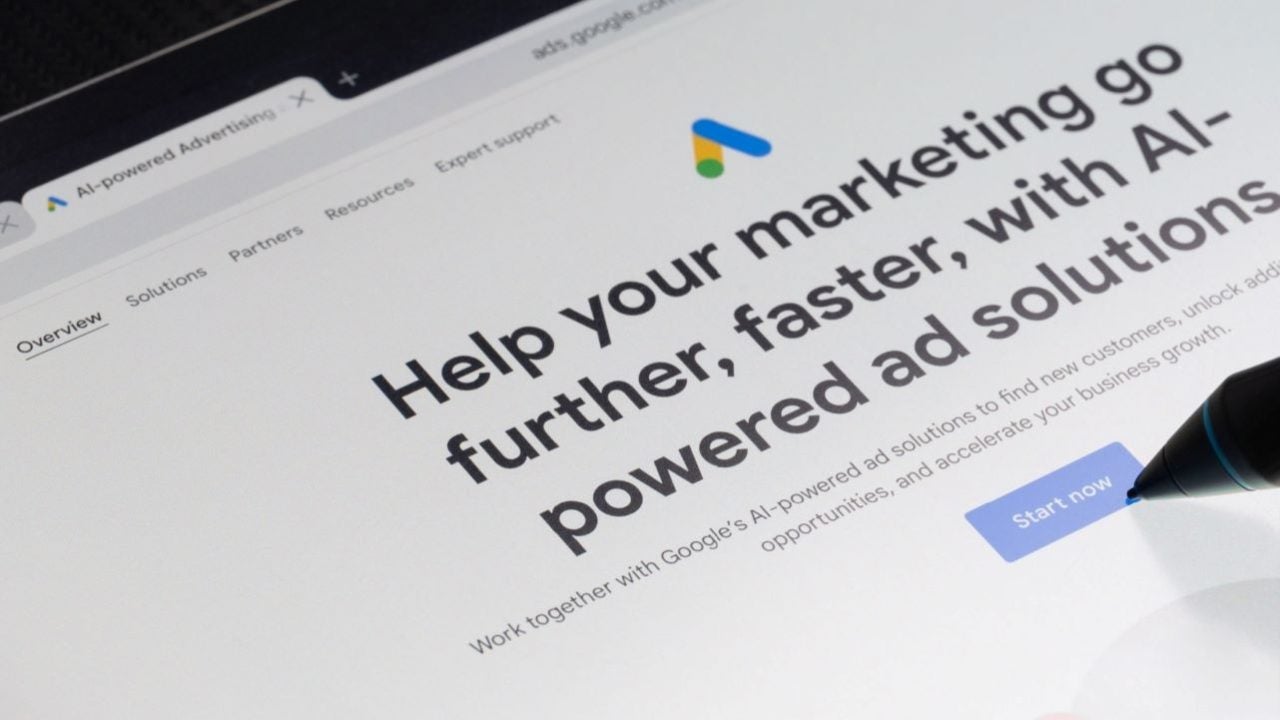
How to improve AI in your advertising campaigns with Google Ads

Google Ads has undergone a significant transformation, driven by artificial intelligence and automation, which has drastically changed the management of advertising campaigns. This change brings with it a promise of greater efficiency and performance, but also poses new challenges for advertisers, who must balance trust in these automated systems with human intervention. Ads with little intelligence, very artificial Smart Bidding strategies, such as Maximize Conversions, require a minimum volume of conversion data, at least 30 in 30 days, to be effective. However, in sectors with long conversion cycles and high values, […]

Google Ads has undergone a significant transformation, driven by artificial intelligence and automation, which has drastically changed the management of advertising campaigns. This change brings with it a promise of greater efficiency and performance, but also poses new challenges for advertisers, who must balance trust in these automated systems with human intervention.

Advertisements with low intelligence, very artificial

Smart Bidding strategies, such as Maximize Conversions, require a minimum volume of conversion data, at least 30 in 30 days, to be effective. However, in sectors with long conversion cycles and high values, such as the legal field, the effectiveness of artificial intelligence may be compromised. This is because a single high-value conversion can distort the data, making it difficult for the system to learn.

Despite the advantages of automation, it is crucial for marketers to carefully manage their resources. Automated suggestions can be helpful, but their implementation without review can lead to unnecessary expenses. On the other hand, creating customized automations allows advertisers to maintain full control over the specific actions they want to take.

The quality of the data feed in Google Merchant Center also determines the performance of automated campaigns. A well-structured and updated feed can significantly improve results. However, fully relying on automated features, such as Performance Max, can be problematic as they offer little transparency, leaving advertisers without the detailed control needed to optimize their campaigns.

Ultimately, the collaboration between artificial intelligence and human judgment is shaping up to be the key to navigating the complex ecosystem of Google Ads. While AI can handle the heavy lifting, advertisers must focus on strategy and control to maximize the impact of their campaigns.