The Splatterhouse video game series, known for its gothic horror approach, has taken an unexpected turn with the discovery of a playable ROM of an unreleased title: Splatterhouse: World. Originally scheduled for release in 1993 for the Famicom, this dark JRPG was finally presented to the public in October 2023, placing special emphasis on its rarity within the genre. A particularly unique spinoff This title, which combines JRPG mechanics with terrifying elements, sparks the interest of fans due to the scarcity of horror-themed role-playing games at that time, being Capcom’s […]
The Splatterhouse video game series, known for its gothic horror approach, has taken an unexpected turn with the discovery of a playable ROM of an unreleased title: Splatterhouse: World. Originally scheduled for release in 1993 for the Famicom, this dark JRPG was finally presented to the public in October 2023, placing special emphasis on its rarity within the genre.
A very particular spinoff
This title, which combines JRPG mechanics with terrifying elements, piques the interest of fans due to the scarcity of horror-themed role-playing games at that time, with Capcom’s Sweet Home being one of the few notable examples. The story behind Splatterhouse: World is intriguing, as a promotional video that circulated among retailers in 1992 indicated that the game was very close to its official release, but it was canceled for reasons still unknown.
The release of the ROM on October 31 was a turning point for fans, who quickly mobilized to translate the game into English. This task was carried out by the Aeon Genesis group, allowing non-Japanese players to now enjoy this piece of video game history. The translation, completed in record time after the release of the ROM, has generated a stir in the Splatterhouse fan community.
Despite the fact that the series has fallen somewhat into obscurity, its legacy remains alive thanks to a small but dedicated community of fans. These enthusiasts not only value the game’s story, but also strive to revive the franchise as much as possible. It tells a context in which Splatterhouse: World, despite its unknown trajectory, has found a way into modern life.
Season 5 of Stranger Things has once again captured the attention of fans with nostalgic moments that transport the audience to the 80s. In episode 3, the character Derek Turnbow, played by Jake Connelly, stars in a scene in his room decorated with toys and video games from that time, creating an authentic atmosphere reminiscent of a Sears catalog from the era. However, a noticeable error has generated reactions on social media. The arcade version, not the NES version During this sequence, Derek is shown playing Ghosts ‘n […]
Season 5 of Stranger Things has once again captured the attention of fans with nostalgic moments that transport the audience back to the 80s. In episode 3, the character Derek Turnbow, played by Jake Connelly, stars in a scene in his room decorated with toys and video games from that time, creating an authentic atmosphere reminiscent of a Sears catalog from the era. However, a noticeable mistake has generated reactions on social media.
The arcade version, not the NES version
During this sequence, Derek is shown playing Ghosts ‘n Goblins on his NES console. However, the problem lies in the fact that the image displayed on the screen does not correspond to the NES version of the game, but rather to the original arcade version from Capcom, which is graphically superior. This slip has led to the creation of at least three Reddit threads and many tweets where users comment, mostly with good humor, about this “unforgivable mistake” within the series.
Despite the fact that the vastness of the audience will likely never notice this inconsistency, the small group of retro video game enthusiasts has taken the opportunity to share their frustration in a lighthearted manner. This situation recalls the iconic line from The Simpsons, “I hope someone got fired for that blunder.” Amusingly, some fans have started using this trivia to entertain their friends and family.
On the other hand, another detail that has annoyed purists is that Derek plays with the NES cartridge cover open, which could allow dust to enter the device. For those interested, you are invited to read the review of season 5 and to follow the release schedule of new episodes, ensuring that you don’t miss anything that this latest installment of the series has to offer.
Nintendo is not going to go down in history for celebrating the best anniversaries. If you want someone to plan your birthday, don’t call Kyoto. If for the 35th anniversary of Super Mario they gave us three ROMs in a cartridge for Switch for a limited time, for the 40th anniversary it seems that with the trailer of…
Nintendo is not going to go down in history for celebrating the best anniversaries. If you want someone to plan your birthday, don’t call Kyoto. If for the 35th anniversary of Super Mario they gave us three ROMs on a cartridge for Switch for a limited time, for the 40th anniversary it seems that with the trailer for their new movie, the port of two Wii games, and a new Yoshi game should be enough. This makes us wonder if they really understand the purpose of celebrating an anniversary: to honor the person being celebrated. In this case, the Super Mario Bros. franchise.
But since Nintendo is not very good at celebrating anniversaries, it’s better not to talk about Luigi; it seems that the fans have kept that in mind. That’s why a group of dedicated fans has decided to align the release of their remaster of Super Mario Bros. with the birthday of the planet’s favorite plumber.
A remaster like the one we would expect from Nintendo
Super Mario Bros Remastered is a native PC port that allows you to play the original Super Mario Bros. on your computer completely legally and for free. For that, you just need to download the files they offer on their website and have a Super Mario Bros. ROM extracted from your original NES cartridge. Once you do that, you will be able to play the game they have created: a recreation made entirely from scratch that does not reuse any elements from the original game, with new sprites, levels, and audio, featuring an almost perfect recreation of the original game’s physics and mechanics.
Being able to play Super Mario Bros., Super Mario Bros. 2 (better known in the West as Lost Levels), a selection of new levels created for the occasion, and also levels created by the community, the content offered by this remaster is practically infinite. Especially because it includes an editor with which new levels can be created, allowing anyone to create new content for the game, just like in Super Mario Maker.
Additionally, like in the best remasters, it allows us to customize our experience down to the smallest detail. Being able to choose element by element of the game whether we want the classic or modernized experience, we can choose a mix of modern or old elements, allowing us to create a remaster to our liking from the options menu. This includes support for modern controllers, a 16:9 screen, and a new soundtrack inspired by the Super Mario All Stars version of SNES.
Cada juego tiene sus pequeños problemas
All of this sounds ideal, but it has its disadvantages. Although you probably won’t notice them unless you’re a true fan of Super Mario Bros. And we don’t mean that you just played it when you were a child.
The behavior of enemy AI and traps has changed, resulting in unusual behaviors, or making them pose no challenge in some cases, especially when playing in 16:9 due to their behavior. When we collide with an enemy, we lose only one upgrade, not all the upgrades we have, which is a substantial decrease in difficulty compared to the original game. And some physics have been slightly altered, both due to the change in object behavior and FPS in 16:9, as well as the arrangement of objects in general, making some jumps and the control of fire shooting and movement when we have the flower less fluid than it should be.
Estos son problemas que el 99% de los jugadores ni siquiera notará, pero están ahí y son detalles que cambian el comportamiento de una manera más o menos sustancial en algunos casos. Por eso no se puede afirmar que sea la mejor o más fiel manera de jugar los juegos originales, aunque sea una excelente manera de jugarlos para aquellos que no los han jugado antes, o para aquellos que no tienen un problema con esa fidelidad extrema a la idea original de sus creadores.
Because I mention these details, Super Mario Bros. Remastered is exactly the kind of project one would expect for an anniversary. A demonstration of the love and affection felt for the honoree. Something that Nintendo has not shown, but that its fans have undoubtedly managed to convey with this remaster.
The entertainment and video game platform Steam has excited retro fans with the release of 3dSen, an innovative emulator that allows playing NES titles in 3D. This emulator, which has been in early access for five years, is characterized by its ability to create custom profiles for each game, allowing it to transform 2D graphics into 3D for a unique visual experience. Currently, 3dSen supports 100 NES games, including classics like Contra, Super Mario Bros, Castlevania, and Gradius. A new way to play the classics In addition to its 3D conversion, 3dSen includes […]
The entertainment and video game platform Steam has excited retro fans with the release of 3dSen, an innovative emulator that allows playing NES titles in 3D. This emulator, which has been in early access for five years, is characterized by its ability to create custom profiles for each game, allowing it to transform 2D graphics into 3D for a unique visual experience. Currently, 3dSen supports 100 NES games, including classics like Contra, Super Mario Bros, Castlevania, and Gradius.
A new way to play the classics
In addition to its 3D conversion, 3dSen includes modern features that enhance gameplay, such as quick saving, rewind, and fast forward. These tools are especially useful for players who want to complete time-consuming sections of games, such as some levels of Final Fantasy. The combination of nostalgia and technology makes this emulator stand out among its competitors.
3dSen was the first emulator to be sold on Steam, with prices of $9 USD for the standard version and $15 USD for the VR version, which also includes the standard version. VR compatibility allows players to enjoy titles like Duck Hunt and Punch-Out!! using motion controls; however, this option is more expensive and may not be accessible to all users.
It is important to highlight that the use of emulators like 3dSen is not illegal, as long as players provide their own ROMs. This offers relief to users concerned about potential legal implications, especially as the rise of emulators on official platforms like Steam is observed. With the modernization of classics in this format, players can rediscover their favorite childhood games in a completely new and exciting way.
In the vast history of video games, many titles have left their mark on the collective memory of players. One of these classics is Snake Rattle ‘n Roll, developed by Rare, creators of Donkey Kong, for the NES. This game is characterized by its peculiarity and difficulty, where players control charismatic snakes that traverse isometric levels filled with colorful challenges. However, one of the most memorable elements is the inclusion of a surreal enemy: a giant foot that descends from the sky to crush the snakes for no apparent reason. A classic of English humor in the […]
In the vast history of video games, many titles have left their mark on the collective memory of players. One of these classics is Snake Rattle ‘n Roll, developed by Rare, creators of Donkey Kong, for the NES. This game is characterized by its peculiarity and difficulty, where players control charismatic snakes that traverse isometric levels filled with colorful challenges. However, one of the most memorable elements is the inclusion of a surreal enemy: a giant foot that descends from the sky to crush the snakes for no apparent reason.
A classic of English humor in video games
What many might have considered an absurd joke reveals itself over time as a tribute to Monty Python’s Flying Circus, the iconic British show known for its surreal humor. In the show’s introduction, a similar foot crushes everything at the end of a sequence of absurd images. However, in the 80s and 90s, British humor had a limited presence on Spanish television, which may have led many NES players to overlook this cultural nod.
Rare, known for its distinctive sense of humor and innovative approach to video game design, has influenced numerous titles over the decades, managing to create connections with its audience through cultural references. This inclination for humor is present not only in Snake Rattle ‘n Roll but in many other projects of the company.
Additionally, it is interesting to remember that Rare tried to enter the handheld console market with the Playboy, a color device that aimed to compete with Nintendo’s popular Game Boy. Despite its efforts, this console did not achieve the expected impact, but it reflects the studio’s ambition to diversify its legacy in the video game industry.
In reality, and although it is hard for us to believe it now, Where’s Wally? started as a simple plagiarism of another book series, Busy Places, by Philippe Dupasquier, a collection of images filled with people where something is always happening, but which did not have a playful component: they were large murals to admire. However, Martin Handford, in 1986, had a different idea: to introduce, within these images, a recognizable character that had to be found by the readers. The following year, the first book of the series was published, and it was such a success that from […]
In reality, and although it is hard for us to believe now, Where’s Wally? started as a simple plagiarism of another book series, Busy Places, by Philippe Dupasquier, a collection of images filled with people where something is always happening, but which did not have a playful component: they were large murals to admire. However, Martin Handford, in 1986, had a different idea: to introduce, within these images, a recognizable character that had to be found by the readers. The following year, the first book of the series was published, and it was such a success that from that moment on he dedicated his life to the character, in a way, obviously, very lucrative. Will he find Wally now among his bills?
Where is the pixel?
Success, especially in the late 80s and early 90s, inevitably leads to its conversion into a franchise. Where’s Wally? ended up having seven main books (the last one in 2009), several activity and educational books, a magazine, a comic strip, two animated series – in the first one, from 1991, the screen would pause for a minute in each episode so that the viewer could find the character – cereal boxes, and even a mini-game on Google Maps. A proper Wally-mania.
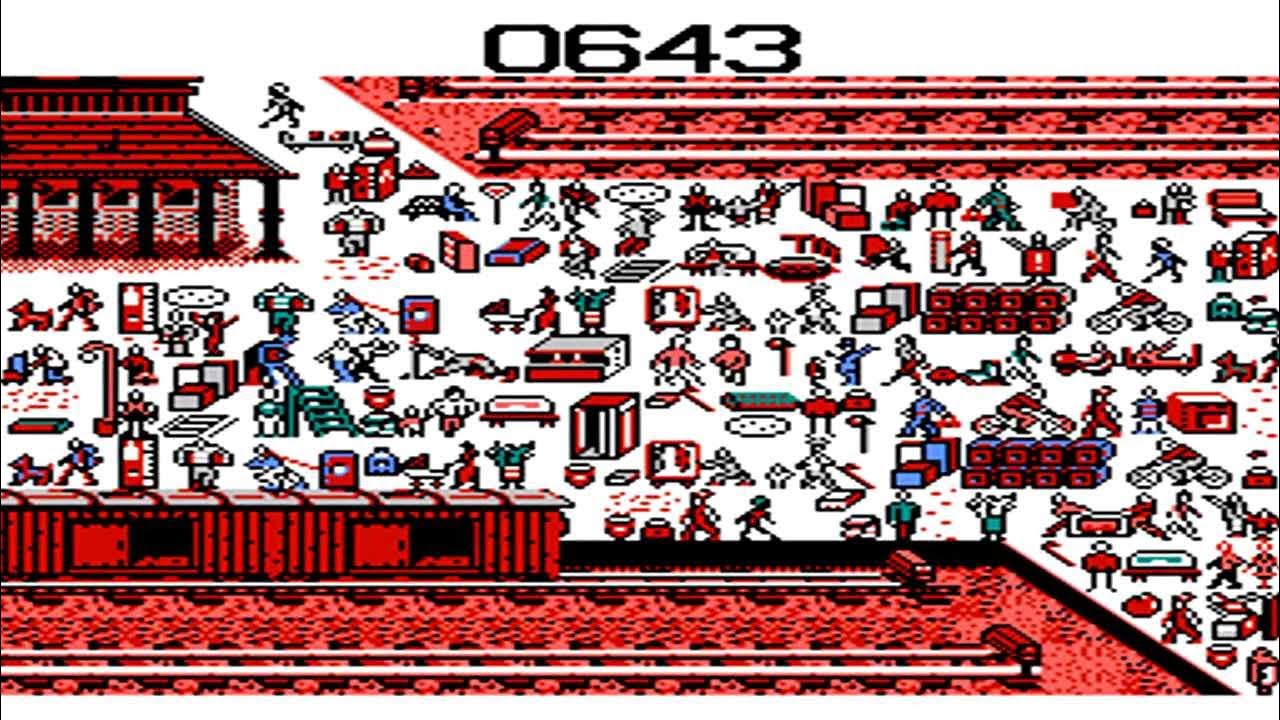
But a whole generation remembers Wally for his first video game, which appeared in 1991 for NES and whose gameplay was, well, just like that of the book: an image, in this case overwhelmingly pixelated, in which you have to find the time traveler in question across 8 levels. The smoothness of Handford’s stroke became pure pixel here and finding him became a task as arduous as it was boring, almost like doing homework. Moreover, the book was cheaper than the cartridge, so… what was the reason to buy this?
In the 8 levels, you control a magnifying glass that must be placed right above Wally to consider that you have found him and move on to the next level. There isn’t much more to it, except that in the higher difficulty levels Wally changes his outfit color to make it even harder to find him. Additionally, there were a couple of minor minigames. As you can see, it wasn’t much, but the curious thing is that behind this triviality was none other than Bethesda. Specifically, its programmers were Paul Coletta and Randy Linden, key figures in the history of video games who started their days rendering a pixelated image.
Where is the quality?
The critics ruthlessly tore apart Where’s Wally?, for obvious reasons. Beyond the fact that, indeed, Wally always appeared in a different place, thus providing variety and allowing the game to remain fresh, the graphics were dreadful, the gameplay nonexistent, and many wondered what the need was to adapt something so, at first glance, unadaptable. However, the game cost very little, made much more, and, logically, they began to plan its inevitable sequel.
In 1992, a year later, and already far from Bethesda, Where’s Wally? The Fantastic Journey was released, based on the third book of the saga, in which the player had to search for Wally, his dog, and various objects throughout the image across just five levels. In addition to NES, the game was released for Super Nintendo and Genesis, which significantly improved the clarity of the image. The idea was still a mess, but somehow, in 2009, a remake was made taking advantage of the capabilities of Wii, DS, and mobile phones.
Curiously, after this, Where’s Wally? has not returned to consoles in Europe (although it has in Japan), and on PC and mobile, it has only had a few titles that are either educational or simplistic. For now, the only thing that is clear is that Martin Handford, at 68 years old, doesn’t have to work another day in his life after selling his brand 15 years ago for two and a half million pounds. With that money in his pocket, anyone would start looking for Wally again!
Throughout the life of the original Nintendo, there were a good handful of games that indeed had the famous quality seal that simply ensured… that they were licensed. Although for years many confused it with a real quality seal (as if it were a selection of greatest hits), the truth is that it had nothing to do with that. However, when a title came without that distinction, it was time to start worrying. Great myths of the history of bad games, such as Bible Adventures or Action 52, were released without any kind of license, the excuse […]
Throughout the life of the original Nintendo, there were a good handful of games that, indeed, had the famous quality seal that simply ensured… that they were licensed. Although, for years, many confused it with a real quality seal (as if it were a selection of greatest hits), the truth is that it had nothing to do with it. However, when a title came without that distinction, it was time to start worrying.
Great myths of the history of bad games, such as Bible Adventures or Action 52, were released without any kind of license, the excuse that several publishers used to sneak in shoddy games with nudity (Bubble Bath Babes, Peek-a-boo poker), fake ports, or decidedly poor titles. The real taboo nonsense of NES is in this infamous list of unlicensed games, yes, but for a time, Nintendo tried to convince us that they could also walk the tightrope of morality.
We drew lots
Since 1987, a newly formed Rare was exclusively dedicated to making games for NES, basic but necessary adaptations in the entire catalog, such as Wheel of Fortune, WWF Wrestlemania, or Marble Madness. To give you an idea of the production level, in 1989 they made 16 titles for the console, more than one a month. Such was the quality, of course: it would still be years before their Battletoads, Donkey Kong Country, Goldeneye 007, or Banjo-Kazooie, and in those early days they were taking the opportunity to make some money to keep the studio afloat.
From time to time, they were tasked with creating an original game. This is what happened in 1988, when Tradewest, a distributor that had gained some traction with Ikari Warriors for arcade and the NES adaptation of Double Dragon, decided it was time to exploit the then-burgeoning American tarot trend with a game that promised strong emotions thanks to a title that at the time captivated every teenager looking for new gaming experiences that crossed their path. Taboo: The Sixth Sense was released in April 1989 in the United States, but no one expected what was hidden inside.
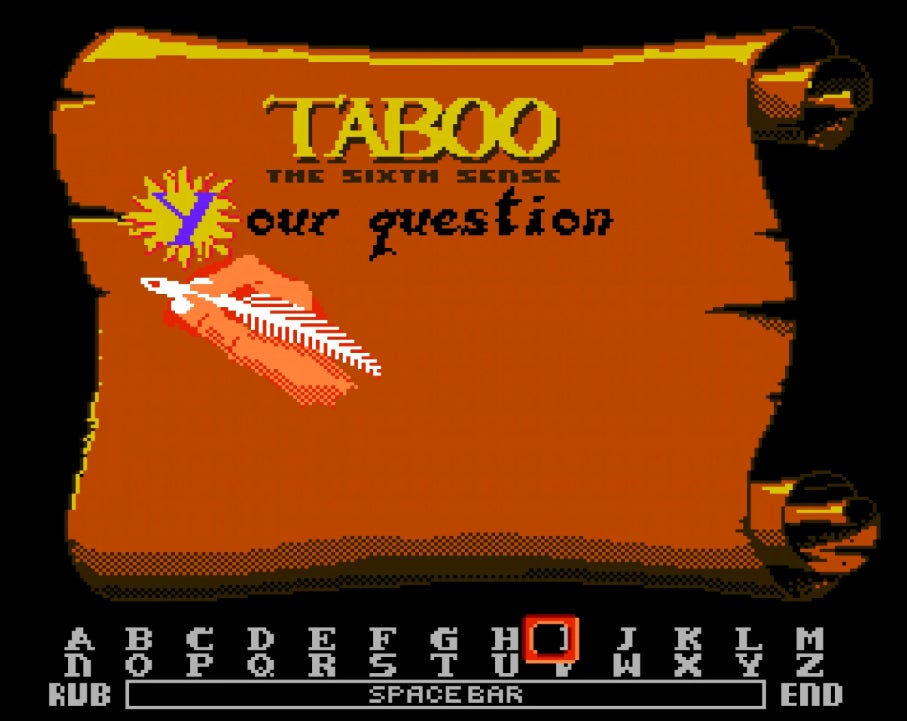
And the thing is, Taboo was marketed as a party game for kids and adults, but it was actually… a tarot card reading simulator. Just like that. When you turned it on, the screen asked for the player’s name, date of birth, and gender, requested them to ask something, shuffled the cards, and generated a tarot reading. In case you were not amazed enough, it had one more twist: afterwards, players would choose a state from the country and it would generate numbers for the lottery. If someone won, of course, it has never been known. But Taboo, within its simplicity, hid several secrets inside.
What you were waiting to see: Pornographic Nudes!
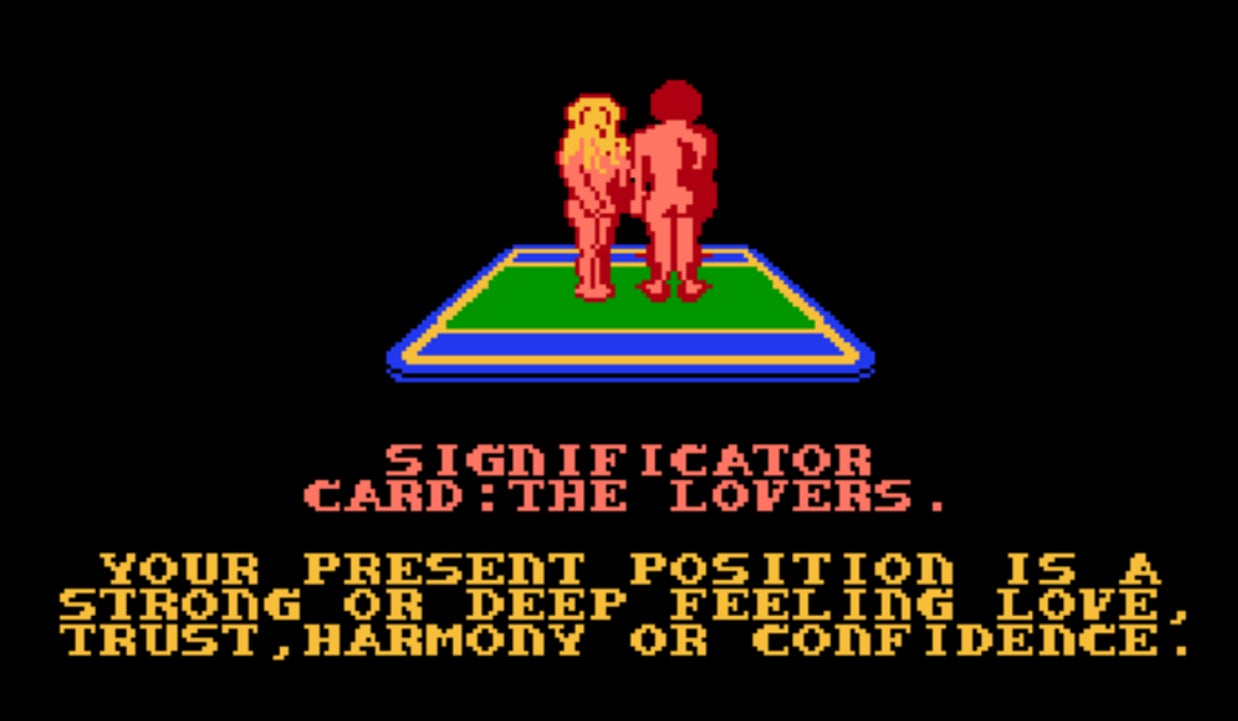
One of Nintendo’s maxims -especially in this early period- is that games should not have nudity or religious iconography. However, Taboo somehow managed to get away with both. Particularly, in a couple of cards you could see a woman without a shirt and a couple from behind showing their buttocks. It required a bit of imagination between pixels, but clearly Rare achieved the impossible: getting Nintendo to overlook this flagrant violation of its rules and eventually license it.
Shortly after its release, Taboo also earned an urban legend that follows it to this day. It was said that some kids, trying their luck, received the unmistakable message on screen that they were about to die… And they did shortly after, which led to the game being immediately pulled from stores. Of course, it’s all a lie: the game’s “prophecies” would never indicate anyone’s death, and the title, although it caused some controversy due to its adult content, was not well-known enough to be sanctioned by the U.S. Congress and banned from sale. Even before the Internet, there were fake news.
The most curious thing about Taboo, in the end, is its mere existence: A tarot game that is not played and is completely random, from Rare and released only in the United States in the late 80s? NES may have had more taboo games, but certainly few as strange as this one. Is it time for a reboot for Switch 2? With online stores, you never know.
In the world of video games, nostalgia is often a powerful driver of innovation, as demonstrated by the recent arrival of River City Girls. This title presents a modern reinterpretation of River City Ransom, one of the most iconic fighting games on the NES console, where players fight to rescue the girlfriends of the main characters in the colorful and chaotic River City. And now it can be yours for a price of zero euros. With bare fists Developed by Wayforward, known for its ability to combine classic design with modern elements, River City Girls gives a […]
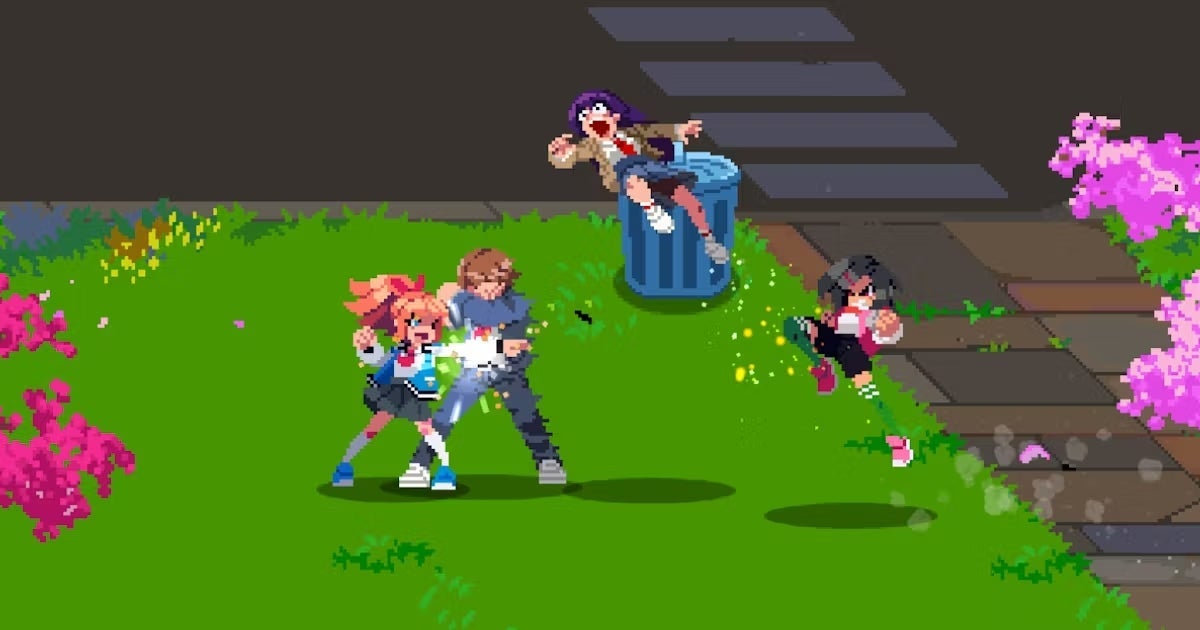
In the world of video games, nostalgia is often a powerful driver of innovation, as demonstrated by the recent arrival of River City Girls. This title features a modern reinterpretation of River City Ransom, one of the most iconic fighting games on the NES console, where players fight to rescue the girlfriends of the main characters in the colorful and chaotic River City. And now it can be yours for the price of zero euros.
With a clean punch
Developed by Wayforward, known for its ability to combine classic design with modern elements, River City Girls gives a fresh twist to the original story. The protagonists, Kyoko and Misako, are not only new characters in this universe, but they also bring their own unique set of skills. As they progress through the game, players can learn new techniques in a dojo, enriching the experience and allowing for more varied gameplay, ideal for local co-op.
The game stands out for its simple yet entertaining gameplay, maintaining the essence of classic brawlers while implementing modern combat systems. Players can find and use a variety of wacky items as weapons, from frying pans to magic wands, adding a fun and absurd touch that reflects the teenage theme of the title. There are also accessories that grant permanent bonuses, from hair ribbons to nostalgic electronic devices, which align with the youthful aesthetic of the game.
With an attractive visual design and a catchy soundtrack that enhances the experience, River City Girls promises to not only attract fans of the original series but also new generations of players. The simplicity and charm of the game make it a great option for those looking to relive the golden age of brawlers. River City Girls is now available for free on the Epic Games Store, which gives even more accessibility to players.
The world of video games has been with us for almost half a century. Among the numerous references that have left a mark, Lucasfilm Games, later known as LucasArts, stands out, responsible for classics like Maniac Mansion and The Secret of Monkey Island. In this context, the ambitious project Cronela’s Mansion emerges, a tribute to the legendary company that is taking shape through a crowdfunding campaign on Kickstarter. Look behind you, a three-headed monkey The goal of the campaign is to raise 125,000 euros, and so far it has raised almost 100,000 euros, with only nine days remaining for […]
The world of video games has been with us for almost half a century. Among the numerous references that have left a mark, Lucasfilm Games, later known as LucasArts, stands out, responsible for classics like Maniac Mansion and The Secret of Monkey Island. In this context, the ambitious project Cronela’s Mansion, a tribute to the legendary company that is taking shape through a crowdfunding campaign on Kickstarter.
The goal of the campaign is to raise 125,000 euros, and so far it has raised almost 100,000 euros, with only nine days left until its closure, meaning it is very close to achieving it. Cronela’s Mansion is designed as a point and click game, which will be available not only for PC and Nintendo Switch, but also for retro consoles like NES, Super Nintendo, and Game Boy, in highly anticipated physical editions for collectors.
Developed by the Straynus studio, located in Ciutadella, Menorca, this project reflects the vitality of the video game scene in Spain. The team behind the game has expressed their admiration for iconic creators like Ron Gilbert and Gary Winnick, whom they recognize for the originality of their scripts and the distinctiveness of their graphics. Additionally, Straynus considers Cronela’s Mansion a gift of nostalgia for fans of those golden eras.
Those interested in experiencing the game before its release can access various demos available on the Kickstarter page, which allow testing both modern and retro versions. The release date is scheduled for 2025, so retro enthusiasts and fans of the saga have one more reason to be excited. The anticipated return of the graphic adventure in physical format could revive the essence of the great titles of the past, making this project a celebration-worthy event.
The live concert series for Shovel Knight: Steel They Shovel will take place next month in New York and Los Angeles, celebrating the nostalgic impact of this iconic indie video game. Nick Wozniak, an artist from Yacht Club Games, shared his perspective on the importance of creating a game that respects and understands the retro gaming era, emphasizing that nostalgic authenticity cannot be simulated. “I can tell when a game is made by people who really know the kind of game they are creating,” Wozniak stated. Shovel Knight, a game with the limitations of a […]
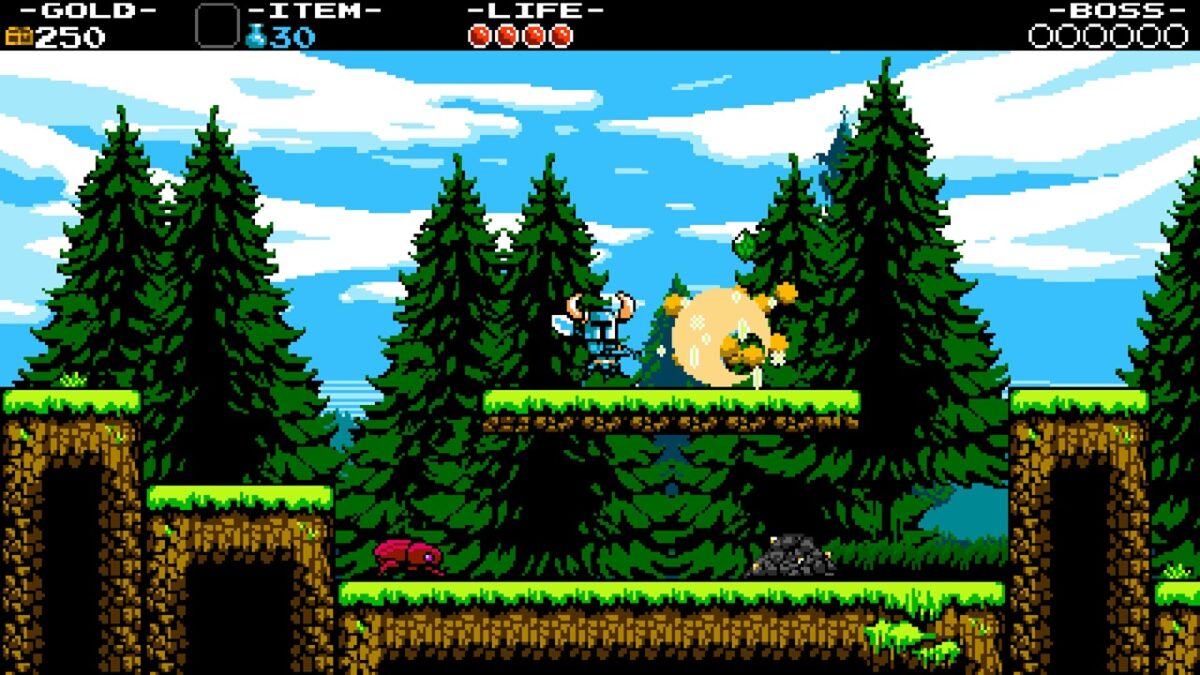
The live concert series for Shovel Knight: Steel They Shovel will take place next month in New York and Los Angeles, celebrating the nostalgic impact of this iconic indie video game. Nick Wozniak, an artist from Yacht Club Games, shared his perspective on the importance of creating a game that respects and understands the retro gaming era, emphasizing that nostalgic authenticity cannot be simulated. “I can tell when a game is made by people who really know the kind of game they are creating,” Wozniak stated.
Shovel Knight, a game with the limitations of an NES
Wozniak explained that, to evoke the authentic retro style, Shovel Knight mostly adhered to the NES color palette, limiting itself to the original 55 colors and adding only five more to enhance gameplay on modern screens. This not only helps anchor the game in a nostalgic context but also compensates for the limitations of old hardware by providing a richer visual experience on contemporary devices.
Jake Kaufman’s musical work was also highlighted by Wozniak, who emphasized that the Shovel Knight soundtrack can be played on original NES cartridges, which underscores the team’s commitment to authenticity. In his analysis of other developers, Wozniak praised Bloodborne PSX Demake and Nightmare Kart as examples of how to understand and effectively use nostalgia in game development.
Despite the fact that the retro gaming market has grown, Wozniak observes that many developers rely too much on their source material, highlighting the need to add a personal touch. He also mentioned that there are always new ways to make 2D platform games appealing to players of all ages. Meanwhile, Yacht Club is working on Mina the Hollower, their first game unrelated to Shovel Knight, inspired by Link’s Awakening.
I am long over the novelty of pixel art throwbacks. No longer can a game impress me solely by invoking my nostalgia. But Shovel Knight doesn't just look like a game from the 80s, it plays like one too. This tight, exacting platformer encapsulates all that was good about this early era of gaming, in an exciting and punishingly difficult new experience.