In recent years, Disney Plus has intensified its content release strategy for Star Wars, but this “more is more” approach has had disappointing results in the audience for several of its recent series. According to information from The Wrap, Ahsoka and The Acolyte experienced notable drops in their audience, each losing about 30% of their viewers during their broadcasts. Everyone wants more of Andor In contrast, the series Andor has shown growth in its audience. The first season accumulated approximately 674 million minutes of viewing, which increased to 931 million […]
In recent years, Disney Plus has intensified its strategy for releasing Star Wars content, but this “more is more” approach has had disappointing results with the audience for several of its recent series. According to information from The Wrap, Ahsoka and The Acolyte experienced notable drops in their viewership, each losing around 30% of their viewers during their broadcasts.
Everyone wants more of Andor
In contrast, the series Andor has shown growth in its audience. The first season accumulated approximately 674 million minutes of viewing, which increased to 931 million with the second season. This increase is attributed to the strong critical reception and word of mouth among fans, who are looking for quality content within the Star Wars universe.
The excessive number of content releases has led to a decrease in viewer anticipation and has impacted the perceived quality of the series. Many fans, including critics who were once staunch supporters of the franchise, have felt disappointed by the direction some of these productions have taken. A commentator expressed their disillusionment with The Acolyte, mentioning that the plot and its resolution were disappointing, especially after the death of most of the main cast halfway through the series and the predictable revelation of the villain.
In light of this situation, there is concern about whether Lucasfilm will be able to learn from these experiences. It is suggested that the company should reduce the frequency of new series releases to focus more on quality, just as Marvel Studios has promised to do. This strategy could be key to regaining anticipation among fans and returning to the level of excitement that used to surround Star Wars productions.
Matt Smith will join the iconic Star Wars universe in the upcoming movie titled Star Wars: Starfighter, which will be directed by Shawn Levy. The British actor, known for his role as Daemon Targaryen in House of the Dragon, will play one of the villains in the story, which was confirmed during the Star Wars Celebration in Tokyo, and will be an independent narrative focused on new characters set five years after the events of The Rise of Skywalker. Production will begin in September 2023 and its release is expected on May 28, 2027. A role […]
Matt Smith will join the iconic Star Wars universe in the upcoming film titled Star Wars: Starfighter, which will be directed by Shawn Levy. The British actor, known for his role as Daemon Targaryen in House of the Dragon, will play one of the villains in the story that was confirmed during the Star Wars Celebration in Tokyo, will be a standalone narrative focused on new characters and set five years after the events of The Rise of Skywalker. Production will begin in September 2023 and its release is expected on May 28, 2027.
A role that can elevate you to stardom
Smith, who had a previous connection to the saga in 2019 by almost playing a young version of Emperor Palpatine, has been a reference in the world of science fiction and fantasy. After the rewriting of the script for The Rise of Skywalker, his character was removed. However, his enthusiasm for the franchise never waned, and in conversations on the podcast Happy Sad Confused, the actor described that proposal as “a really cool idea, a transformative concept.”
The inclusion of Matt Smith in Star Wars: Starfighter highlights Lucasfilm’s intention to incorporate established talent that can bring new depth to the villains of the universe. With the script by Jonathan Tropper, a collaborator of Levy, and the stellar presence of actors like Ryan Gosling and Mia Goth, the film promises a new direction for the saga, moving away from old narratives and betting on a fresh and vibrant approach.
With Smith’s experience in roles that require both charisma and darkness, fans can anticipate a rich and multidimensional interpretation of his new character. Expectations are sky-high, and followers of the Star Wars universe are eager to see how this promising addition to the legendary galactic legacy unfolds.
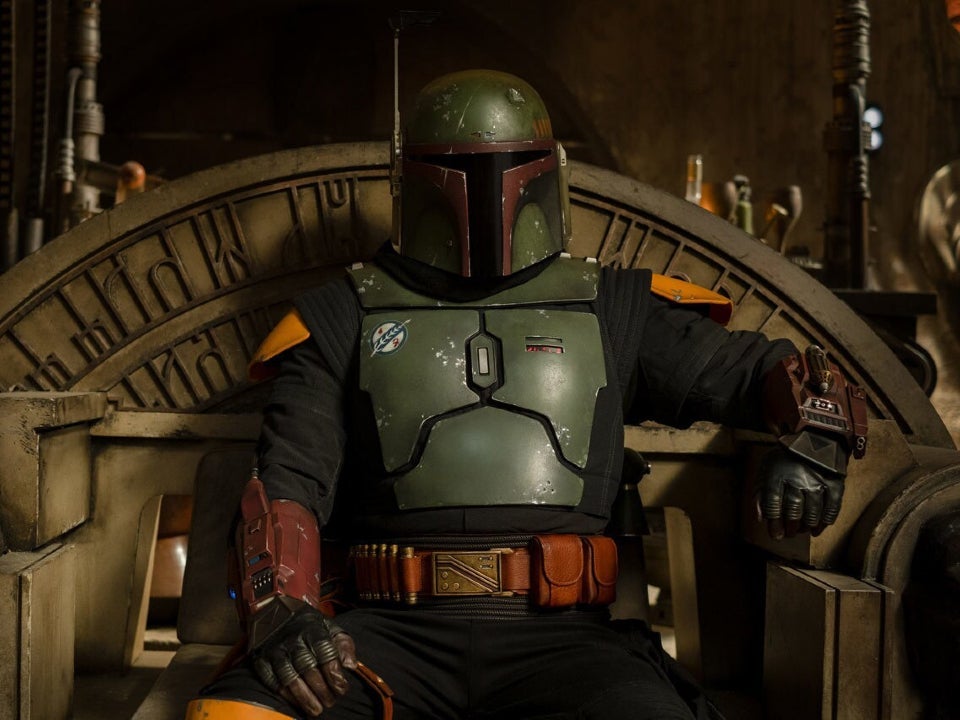
Temuera Morrison, known for his role as Boba Fett and other characters in the Star Wars universe, has been linked to this iconic franchise for over two decades. Recently, the actor attended the Tampa Bay Comic Convention, where he took the opportunity to address fans and make a call to Disney. Morrison urges Star Wars followers to pressure the company to bring him back in future productions, as his desire is to continue exploring his role in this rich galactic narrative. A universe without Boba Fett is not the same During the […]
Temuera Morrison, known for his role as Boba Fett and other characters in the Star Wars universe, has been linked to this iconic franchise for over two decades. Recently, the actor attended the Tampa Bay Comic Convention, where he took the opportunity to address fans and make a call to Disney. Morrison urges Star Wars followers to pressure the company to bring him back in future productions, as his desire is to continue exploring his role in this rich galactic narrative.
A universe without Boba Fett is not the same
During the event, Morrison expressed his passion for the Star Wars universe and his desire to reprise the character that has accompanied him throughout his career. Fans, who have shown a constant interest in the development of new projects within the saga, could be the key for Disney to consider bringing the actor back into their ranks. “What the fans do could influence the future of Boba Fett,” commented Morrison, who has felt the support of the community over the years.
The interpreter is not only a pillar in the history of Star Wars, but he has also been part of several productions, including The Mandalorian and The Book of Boba Fett. His experience and charisma have been fundamental in revitalizing interest in his character, making Boba Fett a favorite among modern audiences. Now, fans are waiting for more news regarding the direction the franchise will take and how Morrison might fit into future projects.
In the realm of speculation, rumors have emerged about the possibility of Morrison appearing in new Star Wars series or movies. As the expansion of the universe continues, the involvement of iconic actors like him could be crucial to keeping the emotional connection of fans with the series alive.
Liam Neeson, who played Jedi Master Qui-Gon Jinn in Star Wars: Episode 1 – The Phantom Menace, has expressed his discontent with the way his character died. In a recent interview with GQ, Neeson referred to his death as “a bit silly” for a Jedi Master of his status. “I fell into that, ‘Oh, I’m going for your face, no, I’m going for your stomach. Oh, you got me,’ please! Hardly a Jedi Master,” the actor commented, hinting at some disappointment about how his character was portrayed in one of the franchise’s most memorable sequences. A […]
Liam Neeson, who played Jedi Master Qui-Gon Jinn in Star Wars: Episode 1 – The Phantom Menace, has expressed his dissatisfaction with the way his character died. In a recent interview with GQ, Neeson referred to his death as “a bit silly” for a Jedi Master of his status. “I fell into that, ‘Oh, I’m going for your face, no, I’m going for your stomach. Oh, you got me,’ please! Hardly a Jedi Master,” the actor commented, hinting at some disappointment about how his character was portrayed in one of the franchise’s most memorable sequences.
A bit of a clumsy Jedi master
Despite his reservations, Neeson fondly recalled his brief return as Qui-Gon in the Disney Plus series Obi-Wan Kenobi, where he had the opportunity to share the scene again with Ewan McGregor, who played his padawan. “It was nice to recreate that and be with Ewan after 18 or 20 years,” he added. However, Neeson also admitted that he has “lost track” of the franchise, raising doubts about whether he will appear as Qui-Gon in future projects.
Regarding the future of the saga, several upcoming releases in the Star Wars universe have been announced, such as The Mandalorian & Grogu, which will premiere on May 22, 2026, and a movie starring Ryan Gosling, scheduled for 2027. Additionally, Daisy Ridley is expected to return as Rey in another film that is also in development. For Star Wars fans, these announcements are a reason to be excited, although the evolution of the story and Neeson’s involvement as Qui-Gon remains uncertain.
Kurt Russell, conocido por su sólida y duradera carrera en Hollywood, está reflexionando sobre un momento clave que podría haber cambiado su trayectoria profesional. A mediados de la década de 1970, aunque ya era una figura reconocida en la industria, aún no había alcanzado la fama que le llegó en la década de 1980
Kurt Russell, known for his solid and long-lasting career in Hollywood, is reflecting on a key moment that could have changed his professional trajectory. In the mid-1970s, although he was already a recognized figure in the industry, he had not yet achieved the fame that came to him in the 1980s. During that period, George Lucas expressed notable interest in having Russell play Luke Skywalker or Han Solo in the iconic Star Wars saga. However, uncertainty about his casting led him to reject the opportunity.
A questionable decision, but one he does not regret
In a memorable conversation with Lucas, Russell recalls asking him about his role in the project, to which the director replied that he wasn’t sure which character he would prefer the actor for. This ambivalence prevented Russell from accepting to participate in the film, as he was presented with an offer to star in The Quest, a television western. Although the project turned out to be a failure and was canceled after only 11 episodes, Russell felt compelled to choose the job opportunity that arose at that moment.
The series The Quest premiered in September 1976 and was quickly canceled, while Star Wars: Episode IV – A New Hope was released in May 1977, becoming an undeniable cultural phenomenon. Despite the magnitude that Star Wars reached, Russell does not seem regretful about the decision he made. “I don’t regret anything,” he stated in an interview, emphasizing that decisions in life happen for a reason and that he is satisfied with his career.
Interestingly, it was a science fiction film, 1997. Escape from New York, that propelled his career to stardom in 1981. This movie, directed by John Carpenter, became a milestone and transformed his image in the film industry forever.
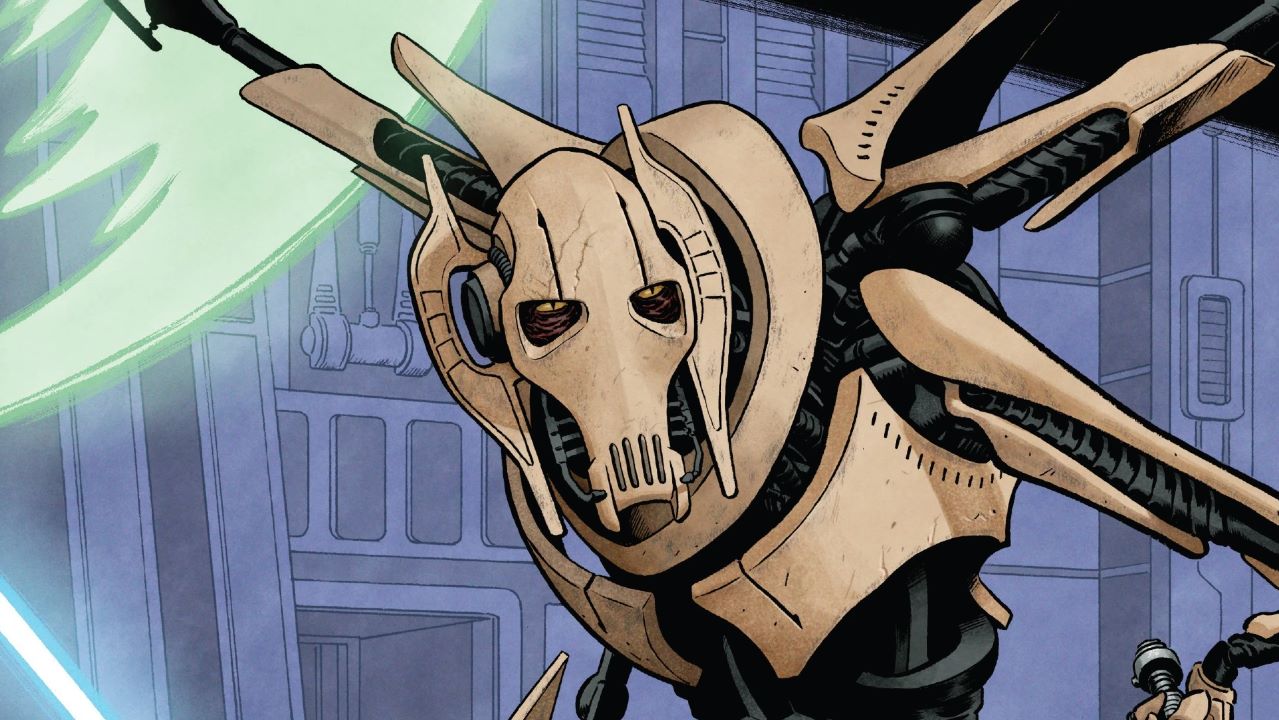
In some time, in a comic book store very, very close by… Lucasfilm Publishing has announced the development of a new prequel centered on the iconic character General Grievous, as part of a series of graphic novels that will be released in the coming years. This news comes in the context of the twentieth anniversary of Revenge of the Sith, a film that has been a pillar in pop culture and that stood out for its intense marketing campaign, where Grievous played a key role in the promotion. May the panels be with you The graphic novel, titled Star Wars: Hyperspace […]
In some time, in a very, very nearby comic store… Lucasfilm Publishing has announced the development of a new prequel centered on the iconic character General Grievous, as part of a series of graphic novels that will be released in the coming years. This news comes in the context of the twentieth anniversary of Revenge of the Sith, a film that has been a pillar in pop culture and stood out for its intense marketing campaign, where Grievous played a key role in the promotion.
May the bullet points accompany you
The graphic novel, titled Star Wars: Hyperspace Stories—Grievous, will be set between Attack of the Clones and Revenge of the Sith, exploring the general’s mission to conquer the planet Katou. The story will feature familiar elements for fans, including the involvement of Jedi and clones and the threat posed by Grievous in his quest to prove his worth to his Sith masters, including Count Dooku.
The argument suggests that Grievous will face Jedi Cardiff Baye and his clone troops in a battle that promises intense fights and strategic secrets. The narrative questions whether the brute force of the general will be enough to defeat the heroes of the Republic, or if his wild nature will be his downfall. This could offer fans a renewed perspective on a character who, despite his impressive background in other works of the franchise, turned out to be somewhat disappointing in the movie.
Star Wars: Hyperspace Stories—Grievous will be available in American bookstores starting January 13, 2026, and in comic shops on January 14, 2026, priced at $19.99. Fans of the saga are eagerly awaiting this opportunity to rediscover Grievous in a format that aims to enhance his representation compared to his cinematic debut.
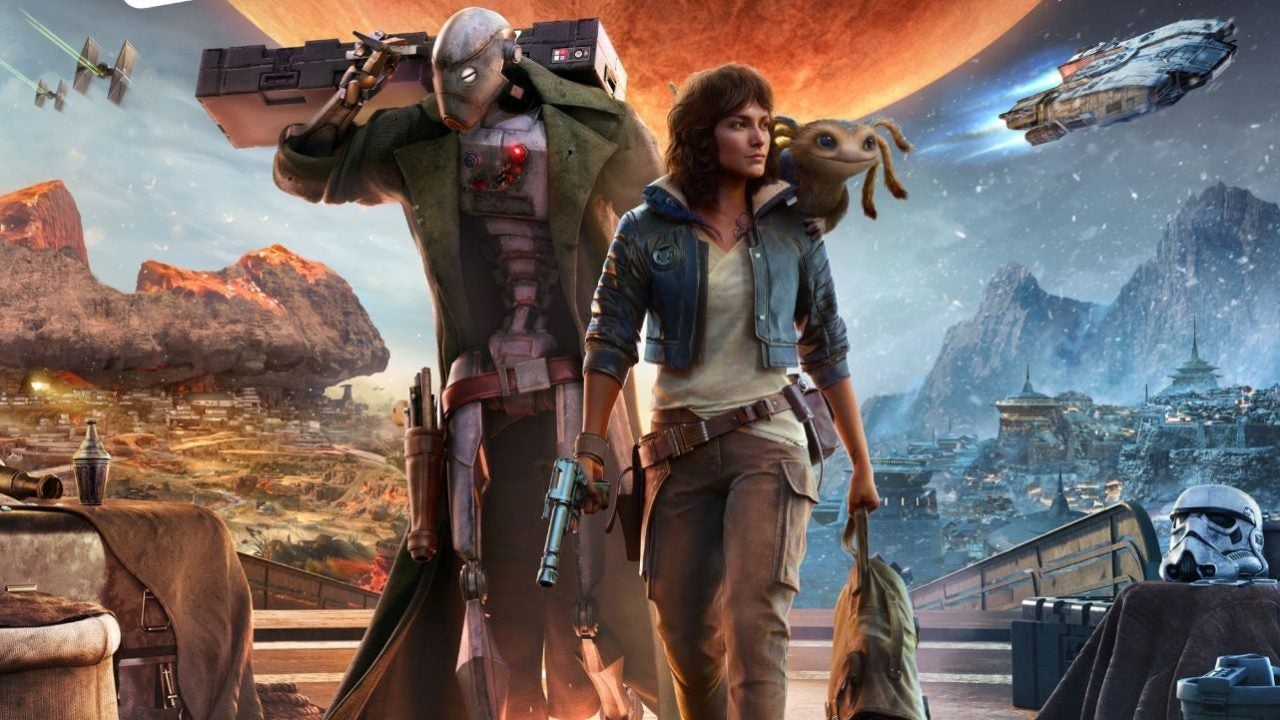
Recently, in a very, very close console… Ubisoft recently held its annual shareholders meeting, during which its CEO, Yves Guillemot, addressed both the successes and failures of the company. One of the highlights was the disappointing commercial reception of Star Wars Outlaws, a title that has been considered a quality game and received post-launch support, but did not meet the expected sales targets. Guillemot attributed the game’s underperformance to several factors, including market saturation of Star Wars content and fatigue […]
Not long ago, in a galaxy very, very close… Ubisoft recently held its annual shareholders meeting, during which its CEO, Yves Guillemot, addressed both the successes and failures of the company. One of the highlights was the disappointing commercial reception of Star Wars Outlaws, a title that has been considered a quality game and received post-launch support, but did not meet the expected sales targets.
Did Not Feel the Force
Guillemot attributed the game’s poor performance to several factors, including market saturation of Star Wars content and general brand fatigue. The franchise has ramped up its releases, presenting multiple series in 2024, which, according to him, has led to less enthusiasm among fans. Additionally, Outlaws faced a lot of competition, especially from the acclaimed Jedi Survivor.
The CEO also acknowledged technical failures in the launch of Outlaws, which negatively affected its sales. However, he stated that these issues were resolved quickly and that they plan to launch an improved version for new consoles, such as the Switch 2.
In response to the drop in sales, Ubisoft decided to delay Assassin’s Creed Shadows to ensure that the game was polished before its release. Guillemot noted that the company learned from this experience, although it raises the question of why they hadn’t done it earlier, given their extensive time in the industry.
Finally, despite the criticism, Outlaws is still seen as a tribute to the saga and many fans hope to find it at more affordable prices during the sales. This case reflects how content saturation can overlook games that, despite being well-crafted, fail to capture attention in such a competitive market.
Everything related to Star Wars is an immediate success, as long as you don’t touch the jedis. That is an extremely dangerous minefield that is better left untouched. No one wants a twist on what is already known, and even expanding what is already known is often met with skepticism by some fans who are quite aggressive about their franchise. Especially if it includes talking about jedis who were women or non-Caucasian. This is something that one of the most interesting Star Wars series experienced firsthand […]
Everything related to Star Wars is an immediate success, as long as you don’t touch the jedis. That is a tremendously dangerous minefield that is best left alone. No one wants to see a twist on what is already known, and even expanding what is already known is often met with skepticism by some fans who are quite aggressive about their franchise. Especially if it includes talking about jedis who were women or non-Caucasian.
This is something that one of the most interesting Star Wars series in recent years experienced firsthand. Star Wars: The Acolyte wanted to do something different, looking into one of the richest and most vibrant eras of the Star Wars universe, with an impressive cast, but fans hated it. Why? That is a good question, because it doesn’t seem to be that the series was bad at all.
Jedis when being a Jedi was not yet strange
Set at the end of the High Republic era, approximately 100 years before The Phantom Menace, the series takes place in a time of peace. There is relative stability in the galaxy and the Jedi are still at their peak, although all of that is about to change.
The series begins with Osha, a former padawan who abandoned her training as a Jedi due to an internal turmoil regarding her connection to the Force, who reunites with her Jedi master, named Sol, to investigate a series of terrible crimes. Something that will lead them to discover a terrible truth: the Sith order, which was thought to have disappeared from the galaxy, is still standing. And it has a deep connection with both of them.
From here on, the series is a remarkable blend of detective story, kung-fu, and a classic Star Wars movie. Resulting in a very fresh and different mix that makes it much more interesting than most works derived from the franchise.
Another reason why it is interesting is because of its casting. With particularly rich characters and vivid interactions, it particularly highlights Master Sol played by Lee Jung-jae, known in the West for his role as Seong Gi-hun in Squid Game. Thus demonstrating his versatility by excellently portraying not only a completely different role from the one we know him for, but also doing so in a language that is not his own.
A review bombing for woke
However, as we have said, the reception of the series was less than positive. There were legitimate criticisms, with many people who genuinely did not like it for various reasons. This happens even with the best series. But there was also a group of people who felt offended by certain aspects of the series that should not be problematic for anyone at all: that its main actors, who were also the most prominent jedi, were women and people of color.
The lead actress, Amandla Stenberg, is of African descent. The lead actor, Lee Jung-jae, is Korean. Adding to that the fact that they are jedis ignited the fuse for many fans who saw it as an attack, considering the series as woke, even calling it The Wokelyte, initiating a process of review bombing and harassment where they tried by all means to bury the series. This resulted in the perception and reception of the series, after its first few weeks, being absolutely terrible.
Something that contrasts with its original reception. During its first five days, it achieved 11.1 million views, becoming the most-watched series on Disney+ in 2024 so far. Critics also reached a favorable consensus about the series. And only after the start of the review bombing with accusations of being a woke series did the idea begin to spread that it was bad or a failure of some kind.
A series that deserves another chance
Cancelled in August 2024, it seems unlikely that we will see a new season of The Acolyte. Being yet another victim of the cultural wars initiated by far-right individuals, too sensitive for a multicultural and inclusive reality.
That doesn’t change the fact that it is still possible to see the first and only season of the series. A unique series within the Star Wars universe, both for its tone and the era it visits, which, while it may not be to everyone’s taste, certainly deserved a chance. Because whether people like it or not, The Acolyte had many virtues that make it worth revisiting.
The premiere of The Last Jedi eight years ago sparked an intense debate among fans of the Star Wars saga. This controversial film, directed by Rian Johnson, became a recurring topic on social media, where polarized comments about its content and direction remain alive. The cultural impact of the film is undeniable; every time it is mentioned, a torrent of reactions arises, proving its relevance in the Star Wars universe. There were ideas, but nothing formal. Although Johnson had ideas for a trilogy that would have expanded his vision within the […]
The premiere of The Last Jedi eight years ago sparked an intense debate among fans of the Star Wars saga. This controversial film, directed by Rian Johnson, became a recurring topic on social media, where polarized comments about its content and direction remain alive. The cultural impact of the film is undeniable; every time it is mentioned, a torrent of reactions arises, proving its relevance in the Star Wars universe.
There were ideas, but nothing formal
Despite Johnson having ideas for a trilogy that would have expanded his vision within the galaxy, the director clarified in a recent interview with Rolling Stone that the project never went beyond the initial phase. According to his words, only a few ideas were discussed with Kathleen Kennedy, but there was no formal treatment for the trilogy, leaving everything as vague and pleasant concepts: “Nothing really happened. We had a great time working together,” Johnson stated.
Moreover, the director is aware of the displeasure he has generated in some sectors of the fandom, but it seems that it doesn’t affect him too much. He commented: “It’s never pleasant when someone attacks you on the Internet, especially when they do it with things I disagree with about something I’ve created.” However, the story of The Last Jedi may follow a similar path to that of The Phantom Menace, which, after receiving harsh criticism upon its release, is now recognized as an important pillar of the franchise.
Time may offer a new perspective to future generations on Episode VIII, allowing it to be valued in a different way. Meanwhile, Johnson is focusing on his current projects and distancing himself from online comments that could affect his mental health, enjoying the creative process without the distractions of social noise.
If trilogies are so famous, it is because of The Lord of the Rings. No trilogy has had such an impact and has shaped a genre so radically. Thinking of fantasy without thinking of Tolkien’s work in general, and The Lord of the Rings in particular, is impossible. Without The Lord of the Rings, we wouldn’t have Dungeons & Dragons, nor 99% of contemporary fantasy stories. This demonstrates the power of its legacy: it created, by itself, what the genre is today. That makes […]
If trilogies are so famous, it’s because of The Lord of the Rings. No trilogy has had such an impact and has shaped a genre so radically. Thinking of fantasy without thinking of Tolkien’s work in general, and The Lord of the Rings in particular, is impossible. Without The Lord of the Rings, we wouldn’t have Dungeons & Dragons, nor 99% of contemporary fantasy stories. This demonstrates the power of its legacy: it created, by itself, what the genre is today.
This makes its importance crucial. And there are always people willing to bring back the trilogy in one way or another. Something that happened with particularly resounding success at the turn of the century when New Line Cinema decided to make the most epic and beloved trilogy of films in the history of cinema.
The film trilogy of The Lord of the Rings by Peter Jackson does not have the cultural impact that the novels had, because that is impossible, but they were a mass phenomenon. Everyone went to the cinema to see them, and it was a financial, critical, and awards success without absolutely any precedent. Something that made the absolute failure of its subsequent continuations even more surprising, something we are going to review today. Because we know you are eager to have an excuse to watch the movies again.
The Lord of the Rings trilogy premiered in 2001. Filmed simultaneously between October 11, 1999, and December 22, 2000, in New Zealand, it had a then-disproportionate budget of 281 million dollars, equivalent to about 530 million dollars when considering inflation. The three films were released in quick succession: The Fellowship of the Ring would premiere in 2001, The Two Towers in 2002, and The Return of the King in 2003. An exceptional fact, given that films are usually not shot simultaneously. But in this case, it helped to cement their success.
Upon their release with little waiting time, the films managed to capture the audience’s attention and the enthusiasm did not wane. Maintaining the interest of critics, the public, and the academy throughout the entire trilogy. Something that became evident through the numbers.
The Fellowship of the Ring grossed $887.8 million, The Two Towers reached $938.5 million, and The Return of the King made it to $1.1 billion. An exceptional fact, as it is normal for movie series to tend to earn less money with each new installment. But the rapid release of new installments, along with their quality, attracted more people to each new premiere, resulting in increased revenues.
What were the reasons for its success? Generally, it has been considered that fidelity to the novels, the strength of its direction, its enormous production values, and the quality of its performances are the main factors that captivated the general public. Although the fidelity to the novels was questioned at the beginning for not adapting certain parts of The Fellowship of the Ring, leaving out characters like Tom Bombadil, which later versions of the film showed were better off that way.
It swept even more in the houses
In fact, the movie was an even greater success in home formats. With numerous editions on DVD and Blu-ray, the three movies would have extended versions that would first be released in home format, but later would also be shown in theaters. This would extend the total runtime of the trilogy from 558 minutes to 683.
There are conflicting opinions about which of the two versions is better. According to some, the purest way to watch the movies is the extended versions, because they leave nothing out. According to others, the original versions are better because everything that was originally cut was for a reason, and it is noticeable in the excessively slow pace of the extended versions. A debate that still continues today among fans of the movie trilogy.
There was no doubt that they were masterpieces. Both critics and the academy agreed. With an average of over 90% on Rotten Tomatoes and a 9 on Metacritic, it is a tremendously respected trilogy. But nominated for 30 Academy Awards, with The Return of the King being the big winner, taking home 11 of them, including Best Director, Best Picture, and Best Adapted Screenplay, it demonstrates why they were an absolute cultural milestone. One that we have not experienced again and that, probably, we will never experience again: there was an absolute consensus on the quality of these films, and no one would have dared to question it.
A hobbit who couldn’t
That’s why everyone was eagerly awaiting the next from Peter Jackson and what would come from the Tolkien universe. Which was disappointing. Making several films in between, he released the Hobbit film trilogy between 2012 and 2014, resulting in a notable box office success, but a tremendous critical and awards fiasco. With the audience turning their backs shortly after.
What happened? To begin with, The Hobbit is a tale, not a trilogy of novels. The treatment as a trilogy of films made no sense. Furthermore, the excessive use of CGI, questionable direction, and performances that left much to be desired made it everything that the Lord of the Rings trilogy was not. It felt cheap, shabby, and not epic. Like one of those low-budget fantasy films where, instead of with enthusiasm, they try to disguise all the things where they lack imagination or money with second-rate effects.
After this, The Lord of the Rings spent several years dozing. It has had its ups and downs, with various series and movies, but nothing has achieved the success and significance of the original trilogy of The Lord of the Rings films. They are now returning to HBO Max so you can watch them in the comfort of your home, remembering something important: we are living through a historic event for culture, and we knew it. Because it was impossible not to know, when we were going to watch the trilogy of The Lord of the Rings films, that this was our Star Wars. And that only happens once per generation. If it happens at all.