Are personality tests keeping people out of work?

Have you ever had to take a personality test when applying for a job? Here’s why that’s a minefield for HR departments.

If you’re asked to take a personality test as part of your job application process, it’s pretty normal.

Some experts say that up to 60% of job applicants from summer job-hunting teens to seasoned professionals are subject to personality assessments as part of the process.

One popular test is the Myers-Briggs Type Indicator (MBTI). Author Adam Grant calls the MBTI about as accurate as a polygraph test — and that it fell somewhere in-between a horoscope and a heart monitor in terms of accuracy.

And that horoscope analogy makes perfect sense. If you look up your MBTI type, there’s a whole wealth of information that looks at career types, romantic matches, and your unique set of strengths. It’s fun — to some extent — and some may identify with their results more than others.

But using those results to determine whether someone is a good candidate is dicey.

Should HR departments trust personality tests?
personality tests

Personality tests pose some known problems

Personality testing has already raised some red flags with the Equal Employment Opportunity Commission. Some test questions are framed in a way that might disqualify someone with a mental illness.

Some experts also fear that using these tests might allow employers to discriminate against certain groups under the guise of cultural fit.

There’s also the issue that results might be flawed. With these types of tests, employees sometimes answer the way they think the employer wants them to answer.

Personality tests might exclude great candidates

One recent study found that personality tests don’t necessarily give companies access to employees that are a “better fit.” These tests don’t guarantee a certain level of job performance like skills testing. Rather, they appear to be a way to filter out the heap of applicants to a more manageable amount.

It’s understandable that companies look toward some measurable way to improve their pool of candidates — but in general, broad personality traits don’t necessarily indicate whether someone is a good fit. Sure, some strengths and weaknesses may be revealed — but that doesn’t account for the fact that an extrovert and an introvert might both be great sales reps, but bring different working styles to the table.

That said, hiring managers may benefit from some test results. Many of these tests measure things like positivity, willingness to work with a group, or a preference for autonomy. Still, it seems that the employee gets the short shrift.

Take the INTP personality type, as an example. According to the 16  Personalities website, this type is solitary, eccentric, and not exactly built for thriving in the structured, collaborative workplace of today. But those same people are reportedly intellectual innovators — which, obviously add value to many positions.
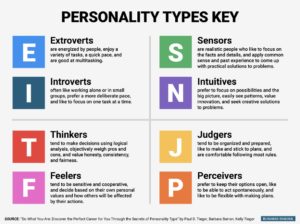
16 personalities test key

Or there’s the four quadrant personality test, another popular option. This test asks you to pick from four statements which one is most like you, then which one is least like you.
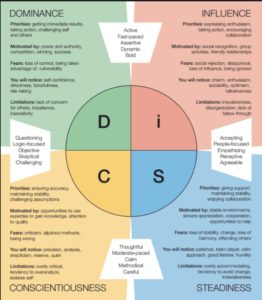

four quadrants personality

Or, worse, they might outright discriminate

A 2017 Hidden Brain episode looked at personality tests and noted that there’s something a bit unsettling about them — that ability to put someone in a box conjures up images from a not-so-distant past. A time when scientists would classify personalities based on race or gender. The point is, personality tests allow us to categorize people quickly without getting messy.

Psychologist Annie Murphy Paul compared the use of personality tests to phrenology, a bygone pseudoscience used to determine someone’s traits and attributes by measuring the bumps on their head. Like personality tests, phrenology was once big business — people would get tested and use the results to as a way to find the right career or the perfect mate. 

There’s also the issue that how you answer may have to do with what group you belong to — women and minorities, for example, may not answer in the same way that a white man might. And while that doesn’t seem like an issue, the way employers analyze the results often favors the “in” group.

But the problems come in a few different forms. There’s a test called the Culture Index that gives employers notes that aim to help them manage employees based on personality types. But, those notes might color employer feelings about a person — saying for example “this person is low energy and may need frequent breaks.”

While the company claims to help create a better employee environment, it raises some flags. This BBC article interviewed a CEO who said, the test helped her company weed out one candidate who seemed impressive in the interviews, but the test revealed they weren’t a team player or multitasker.

Wrapping up

Ultimately, the driver behind the rise in personality tests over the past decade or so can be chalked up to cutting costs and saving time. Not to mention the fact that people have grown more accepting of personality tests in general.

As a tool, personality tests do offer a way to learn about yourself. In the workplace, it’s complicated. On the one hand, a personality test could be an opening for employees and their bosses to have one-on-one conversations about work preferences and habits. Still, there needs to be a lot of trust in place to pull this off.


Level up your pay with these 8 free(!) online certifications

A few hours of studying could make your resume stand out to recruiters.

Free online courses have been around for a while now. There are thousands of choices, from MOOCs (online college-level classes) to specialized boot camps and program-specific certifications.

Getting free training where you can is a great way to make moves toward a higher paying job. But it’s important to understand that what you get out of these offerings depends on what you put into these options.

Below, we’ve listed a collection of digital resources that can help you keep pace with changing tech–whenever you have time.

Let’s have a look…

8 free online classes to make you more valuable

online learning

1. Hubspot: online certification courses

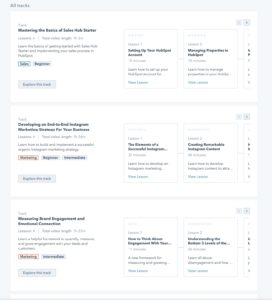
Hubspot certification tracks

Hubspot is a go-to site for sales and marketing professionals hoping to stay relevant in rapidly changing fields.

The site offers access to several training modules like sales strategy, inbound marketing, and social media—free of charge.

The marketing course, for example, will walk you through the basics of creating content for every stage in the buyer’s journey. It should take around four hours to complete, and you’ll then be able to take the test — a final exam delivered multiple choice style.

Are Hubspot certifications worth it?

They are, but they aren’t a requirement. For example, Hubspot Inbound Marketing is a great resource for the beginner marketing pro. Course offerings cover all of the “best practice basics,” and once you earn certification, you’ll have some proof that you’ve mastered the tricks of the trade.

Certifications are good for one year, and most are free. These courses are well-known in the sales and marketing spaces—often recommended by supervisors hoping to educate their teams quickly.

2. Udemy: This is how you make iPhone apps

iOS app workshop free

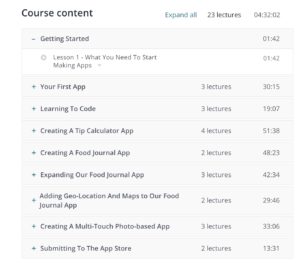
Udemy’s course is more of a workshop, designed to teach you how to create apps and submit your very first attempt to the App Store in less than a day.

This five-hour course is free and promises to teach you every step in the iOS App development process. While this might be easier for those with a bit of coding background under their belts, the course description does mention that coding newbies are more than welcome.

Course includes:

  • 4.5 hours on-demand video
  • Nine downloadable resources
  • Full lifetime access
  • Access to mobile and TV
  • Certificate of Completion

3. freeCodeCamp

free coding courses

freeCodeCamp is a non-profit online resource that will teach you HTML5, Python, CSS3, Javascript, and more. The mission is to help people learn to code through a vast library of online articles, lectures, and interactive coding lessons. Work at your own pace and earn certifications.

We should mention, the programs will be a significant time investment. Each certification requires 300 hours and the completion of five final projects.

Additionally, you can gain work experience by working on coding projects for nonprofits. So, while this is a lot of work, you will have the unique benefit of getting a free education and the documentation to back up your new found skill set.

4. Facebook Blueprint Certification

Facebook Ads Certifications

Facebook is a crucial element in any organization’s digital strategy, whether you’re striving for organic traffic or better ad results.

One way to go from generic marketer to social media pro is to become a certified Facebook pro through the site’s Blueprint training program.

What is Facebook Blueprint?

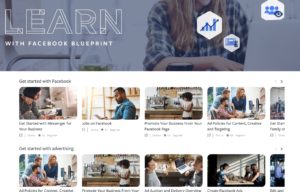
Well, it’s a comprehensive guide to all things Facebook ads. There are 100+ courses available, free, which show you how to do everything from creating Facebook pages to generating more Instagram activity.

FB offers two Blueprint certifications, one for planning and one for buying. Both require participants to pass two exams and certification is valid for 12 months. At which point, you can renew your credential. While the training is free, you do need to pay $150 per exam.

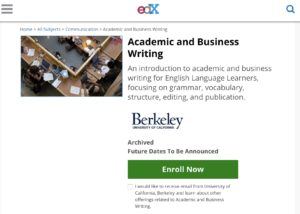
5. edX: Academic and business writing

UC Berkeley Business Writing free

Considering leveling up in the soft skills department? If so, brushing up your writing skills isn’t a bad place to start.

edX offers access to UC Berkeley’s intro to academic and business writing course, which provides an excellent overview of grammar, structure, editing, vocabulary, and publication.

6. Alison: Diploma in web business development and marketing

business marketing alison

Building a web presence is a complicated process, especially if you’re newer to the world of autoresponders and driving traffic. This free course blends email marketing basics and lead generation methods with backend stuff like web hosting and creating pages.

According to the site, you’ll finish the course with the ability to create a website, understand web design concepts, and identify different ways to monetize your website.

Alison courses are free, but obtaining certification means you’ll need to score 80% or higher in each assessment and you’ll need to pay for official certification via the Alison shop.

7. Copyblogger: Internet Marketing for Smart People

internet marketing for smart people

Copyblogger isn’t just a great blog for the internet writers out there; they also provide several certifications aimed at helping people become better writers.

This specific course, which consists of a collection of eBooks, modules, and more covers the best practices associated with creating a profitable online business.

So, it’s essentially a valuable tool for any business. Level up copywriting, content marketing, and relationship building.

You might not get an official diploma, but you will walk away with some new skills you can add to your CV.

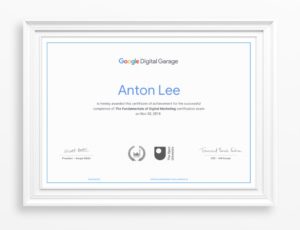
8. Google Digital Garage

Digital Garage online certification

Google’s Digital Garage is a hub for free tutorials that cover everything related to digital marketing—including video marketing, SEO, email marketing, search engine marketing, and more.

While the Google Analytics certification is better known (and worth doing as well), the search giant’s garage certification is essential for anyone who wants to learn digital marketing basics or brush up on the latest best practices.

Keep in mind that this isn’t a quick five-hour workshop. The free program spans 26 modules and 40 hours. Once you pass the test, you can download and showcase your new set of skills on LinkedIn and elsewhere.

AI and the media — what’s next for news of the future

Will AI help the news or destroy it?

News organizations have lost the power to define what is and isn’t news. Instead, social media channels and aggregators have called the shots, capitalizing on algorithms that directly impact the content that users see, as well as the type of content that gets created.

Marketing and advertising have been capitalizing on AI innovations for years, to the detriment of reliable news.

By contrast, few media outlets have harnessed the burgeoning technology successfully. Yet, AI offers a ton of promise for the media industry.

What stands in the way of AI adoption on a mass scale? Here’s a look at some of the challenges and emerging trends within the space.

Where are we at with AI and the news?

ai news

China rolled out their artificial intelligence news anchor a few months back. The Washington Post has been using their robot reporter for a couple years at this point. Other news organizations are using AI to help journalists analyze datasets that inform their reporting.

Then there’s the question of whether AI can write articles. The answer is, they can. However, writing is best done by a human, as it requires art, creativity, and empathy. Otherwise, you get something like this.

The best application is using robots as a resource for finding plagiarized content and errors and analyzing statistics. Or, perhaps, running a media bias fact check.

These elements come together for more accurate reporting — and let writers cover more ground in less time.

We’ve found that there actually are a lot of places where the media is taking advantage of the new technology. The problem is, like the artificial intelligence news anchor and the reporter bot, the news media has been using AI in these novelty applications.

Unfortunately, they haven’t been able to use it in the same ways that advertisers have — and are struggling to monetize.

Why is that?

One thing slowing down mass AI adoption — at least on the distribution side is the business model. TV news is funded by advertising shown during commercial breaks.

Companies that use AI for advertising or content distribution make money by selling products or through ad revenue. So, content that’s interesting gets top billing over balanced, unbiased reporting on unsexy topics like local news coverage or regulatory issues.

Some online news organizations now make money through digital subscriptions. Which, of course, is an alternative to the aggregator model which depends on behavioral targeting, clickbait, and promoting video content over the written word (customers see more ads, so more money).

News by virtual assistant

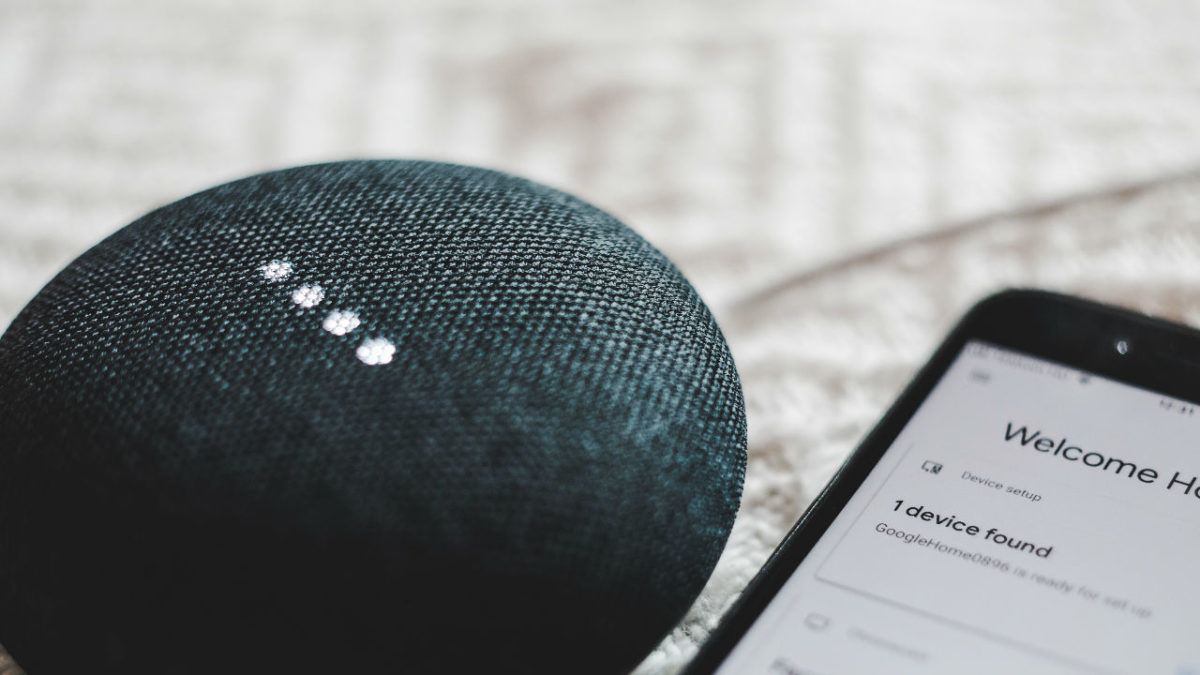
Smart speakers like Alexa, Google Home, and Cortana are giving people an easy way to get their daily updates from news organizations.

As such, several media outlets are beginning to experiment with how these digital assistants can help them deliver the news more effectively. According to Trushar Barot, of Harvard’s Nieman Lab, newsrooms predict that AI-driven interfaces could have a greater impact on how we consume information than the iPhone.

That same article then mentions that these organizations say, “they’re not technology companies.” Yet, automatically generated voice content is the next great threat to journalism.

That said, not every news organization is sitting around ignoring innovation. NPR has been working on voice AI. NPR product manager Ha-Hoa Hamano says the broadcaster’s hourly newscast is a gateway to the rest of NPR’s content, allowing them to reach the 32% of 18-34 year-olds who don’t have a radio.

Lack of industry standards for AI practices

The media have been reporting on AI since day one. Yet, using the black box algorithms responsible for promoting fake news hasn’t been part of the strategy. Responsible journalists can comment on these changes and continue to publish articles — and they should. But, it’s going to be hard to enact change if things keep going as is.

While newsrooms understand content and the process of creating quality content in a short amount of time, the next step is joining forces with sophisticated tech teams to reach a larger audience.

The robot hiring manager — impartial recruiter or totally biased bot?

Changing up the interview process to improve diversity in the workforce is one of the top priorities amongst large tech companies looking to bulk up their staff.
Unfortunately, depending on the human mind to make impartial hiring decisions means dealing with the hidden biases we hope don’t see the light of day.

The idea of adding the robots to the decision making process is to screen applicants based on logic — finding the right person for the job, regardless of race, gender, background, and so on.

So, it kind of makes sense right? After all, artificial intelligence stands to be this beacon of equality, hiding demographics and matching candidates based on skill, before the humans get to them, equipped with harmful biases.

The future of an AI HR department

Robo-hiring

How is the technology being used today?

These days, robots are part of the hiring process, but generally relegated to the initial screening process. For example, you might get a phone interview with a company, but rather than talk to a person through the phone or video conferencing app. You’ll answer a series of questions for a robot, who later applies an algorithm to your answers to gauge compatibility.

Companies like HireVue are supplying technology to companies like Goldman Sachs, Under Armour, and Unilever, among others. The platform gives all applicants the same set of questions, which HireVue says helps eliminate biases.

Proponents of AI-based hiring say it’s a means of streamlining the hiring process. And, it’s easy to understand the appeal. The process saves companies time and allows them to sort through more candidates than ever.

interview

Unilever has been using artificial intelligence to screen entry-level employees for nearly two years now. Their process screens candidates by asking them to play neuroscience-based games to measure traits like risk management or the ability to read contextual clues.

If applicants make it through the games phase, they’ll then continue onto the interview process — where they’ll record their answers to a series of interview questions. Interviews are not live. Instead, the AI analyzes each of the answers, scanning for keywords, body language, and intonation.

A company called Pymetrics is the name behind the games and advertises their service as a way of “matching talent to opportunity, bias-free.”

How it works is, participating companies have existing employees play the game. Pymetrics analyzes the data to pick out specific trends, then builds algorithms that scan for likelihood to succeed. Prospective candidates, like in the Unilever example, play the games and match to opportunities.

What are the advantages?

On the employer side, there’s the element of convenience, of course. For Unilever, the company found that the AI enabled them to hire more nonwhite employees, as well as entry-level staff from a wider range of colleges than they did before adding the technology to their recruiting strategy.

Employers are also hoping that the process can reveal the smaller things that humans miss during the interview process.

According to a CNN Tech article, companies are looking toward pre-employment lie detector tools that help companies see when an interviewee is embellishing their qualifications. While honesty is typically the best policy, we have to say the facial scanning is a bit creepy.

The advantages on the employer side are clear — obviously, the streamlined method benefits recruiters and companies more than the person who needs a job.

But, there’s some evidence an AI-guided experience could have some positives for the job seeker, as well. For example, chatbots can help candidates navigate complex application instructions — and the potential to reduce bias promises greater ethnic and economic diversity in the workplace.

But, there’s always a dark side

Many AI technologies are still in their early stages. So, the main risk for employers is that they’re looking at a solution that isn’t yet proven.

And, when you’re considering AI options that analyze candidates’ word choice, tone, and body language, you might be missing out on some awesome candidates that are — say, fidgety or uncomfortable while recording responses.

Cornell professor Solon Barocas spoke with the Washington Post and warned job hunters to be wary of any company who is using an algorithm in place of an actual hiring manager.

The professor highlighted Amazon’s failed experiment using an algorithm to evaluate job applications. In it, Barocas suggests companies should err on the side of caution when applying AI to these decisions that do, have significant effects on peoples’ lives.

algorithm

Algorithms, of course, come with their own biases, as engineers bring their own baggage to the table during development.

So, last month, Amazon scrapped its AI recruiting tool, after it was revealed to have some sexist inclinations.

The reason for this is, U.S. tech companies are still struggling to close the gender gap among developers and other technical positions.

Amazon’s AI engine primarily trained by male developers, and had started penalizing women’s resumes. In fact, even the word, “women’s,” prompted the AI to downgrade resumes from applicants who attended women’s colleges or listed accomplishments like “captain of the women’s basketball team.”

That issue might be a relatively easy fix for the company, but there’s also the issue of masculine language and job applications. Meaning, there’s a chance that applications like HireVue hold some biases themselves, in spite of their efforts to eliminate the ugly side of recruiting.

For example, the technology was found to place higher value on “aggressive” words like captured or executed, more common on male engineers’ resumes.

The tool’s inherent gender bias wasn’t the only problem. Another major issue came in the form of data problems, with the AI firing off recommendations at random. Researchers found the tool was matching under-qualified candidates to positions that were far outside their pay grade.

Of course, that’s just one example. But, the fact that algorithms are scanning for job qualities based on existing top performers, it’s hard not to wonder if they’re scanning for the same old masculine power words and mannerisms—rather than aiming for diversity in a more subtle sense.

The Washington Post article points out that an algorithm trained to match candidates to top performers based on performance reviews is already set up to reinforce biases.

They give the example of a female leader given low marks on a performance review for being too assertive while being an aggressive seller might be seen as an asset in a different context.

The point is, artificial intelligence doesn’t replace the recruiter’s job. There will always be the need for the human hand in the decision-making process.

Is waking up early really a virtue worth celebrating?

Is it better to be an early bird or a night owl? Here’s what science says.

We’ve long lived in a world that places a lot of value on the early bird.

Blame it on the Protestant work ethics or Prussian philosophy, but there’s this deep-seated perception that waking up early sets the tone for success — and late risers are lazy underachievers.

There are a million blog posts and TED talks that highlight the power of getting up early. Michelle Obama, Oprah, and a whole host of TED Talkers, entrepreneurs, and athletes are early risers, and there’s no shortage of content pointing toward the link between early call times and success.

Need proof? A while back, the Huffington Post compiled a list of notable early birds from Dwayne “The Rock” Johnson’s 4 a.m. gym time to Tim Cook’s 3:45 am (that’s night still, right?) email routine.

Should you wake up early?

waking up

Here’s what science has to say about catching the worm

Roughly 25 percent of people tend toward waking up very early.

Most people fall into a middle ground — it’s no big deal to wake up for a traditional job, but the idea of hitting the gym before the sun comes up sounds like a real pain.

A study published by Harvard Business Review found that of the 367 participants they surveyed, those who stayed up late reported higher levels of distraction and lower levels of productivity.

Morning people do enjoy more career opportunities, but that may be a product of society, tradition, and the fact that business hours are a fixed schedule that suits this group better than the night owls.

On the flip side, night owls reportedly have their own set of desirable traits. They’re more creative, have higher IQs, and often, as healthy and prosperous as early birds. This study from 1998 looked into the famous Benjamin Franklin quote, “Early to bed, early to rise makes a man healthy, wealthy, and wise.”

The aim was to see if Franklin’s claim had any truth to it, yet the findings found that late risers did not have a higher rate of health problems or have lower incomes than their go-get-em peers.

What are the stereotypes?

morning person

Morning people are seen as more conscientious and proactive. They’re stable, consistent, and agreeable. Night owls are seen as partiers, they’re lazy, and they lack self-control.

While studies have shown that late risers tend toward novelty-seeking behaviors and may be more impulsive and avoidant, there’s no evidence that this group works fewer hours or is less motivated.

Productivity really boils down to chronotypes. Chronobiology researcher, Katharina Wulff says it’s best if people work according to their body’s natural rhythms, rather than trying to fit into a schedule that doesn’t work.

Chris Bailey, of The Productivity Project, tried to change his chronotype to see if there was any truth to the link between success and morningness.

If you don’t remember, a few years back, Bailey spent a year experimenting with a range of strategies aimed at boosting productivity. The chronotype experiment involved changing from a night owl schedule to a strict 5:30 am wake-up call and 9:30 pm bedtime. Bailey reported that he’d find himself getting ready for bed just as he was starting to feel productive.

In short, getting a hard start on the day sounds like a great idea, until it starts to eat into your productivity. Tiredness isn’t exactly good for setting the tone for your best ideas.

The benefits of an early wake-up are appealing:

  • You’re dealing with fewer distractions
  • You get a head start on the day
  • You’re less likely to procrastinate
  • You have time to eat breakfast

Many of the successful people who wake up early mention the main reason they keep this routine is, the extra few hours of quiet before everyone else — be it kids or coworkers — are up and at ’em.

But most of these benefits only exist because of traditional working hours.

Increasingly, people are finding that there’s a need to cater to all types of people. Like Wulff and Bailey, Camilla Kring, founder of the B Society, sees the value in chronotype diversity. Her organization questions why school and work need to start at a certain time – -and advocates for more support for late risers.

If we were left to our own devices, waking and working according to natural biology, night owls might report the same advantages their early rising peers experience, just at a later hour.

Work according to your energy levels

morning energy

Shifting your chronotype is possible.

We’ve all experienced this to some degree when we’ve had to get used to waking up for work or school. However, studies have found that when you change your schedule, you don’t necessarily get the traits that come with the other chronotypes.

Late risers who become used to waking up early don’t feel any happier or suddenly become more traditional or conscientious. Instead, they might just feel tired more often and lament the struggles of trying to change their natural habits.

Some studies have found that these traits associated with morningness or eveningness boil down to other biological factors.

A recent study from the University of Haifa found that visually creative people tended to wake multiple times a night or suffer from insomnia. And, these qualities were associated with a dopamine receptor.

The main takeaway here is, work according to your energy levels. Some people work best in the evening, while others benefit from working out at 4 a.m. and getting to work before everyone else.

Start making a note of when you’re most productive and structure your day around energy highs and lows.

While morning people have an advantage when it comes to the traditional 9-5 grind, remote work and flexible schedules are increasingly becoming the norm. Maybe, society will soon get hip to the idea that time shouldn’t matter quite so much.

Smart home trends to watch this year

Discover the cool tech that everyone will have in their homes in the coming years.

Gartner predicted in 2017 that Internet of Things use would top 8.4 billion connected devices by the year 2020. We’re almost there, and interestingly, it doesn’t feel like we’re living in a world where IoT rules our lives.

But it’s undeniable that the smart fridge, Alexa, Google Home, and connected cameras have earned a place in the mainstream.

Cambridge technology company Arm commissioned a survey from research firm, Northstar to uncover the trends and expectations global consumers have for technology in 2019.

The results revealed consumers were expecting more energy efficiency, increased device flexibility, and high-tech healthcare tools.

What’s interesting is that the study demonstrates a shift in thinking. Earlier smart home devices were more convenience or novelty, and kind of felt like a showcase for what we can expect in the future. Now, we’re seeing things that speak to the mundane, like smart leak detection.

Still, tech trends for 2019 are looking pretty diverse. We’ve compiled a list of trends featured at CES and elsewhere, you can expect to see more of soon.

Smart home trends for 2019

smart home

Smart screen command centers

We saw Amazon launch the Echo Show, Google its home hub, and there’s Facebook’s entry, the Portal. Smart screens had a strong showing in 2018, though much of the technology was limited to smaller displays.

This year, larger smart screens, TVs, rather, are entering the mix.

LG has been solidly building a smart home strategy over the past few years, as has Sony and others. With Alexa-enabled TVs filling up Amazon, it’s only a matter of time before our virtual assistants start upgrading to newer, bigger homes.

Smart mirrors

smart mirrors

Smart mirrors bring voice search and a variety of applications into the bathroom. Sure, smart mirrors sound like a frivolous piece of technology, but their appeal is undeniable.

So, as you get ready for the day you can ask Alexa about the weather, play your favorite songs, or get your morning news update. Brands like Seura offer access to your calendar, email, and a long list of apps, allowing for voice-activated control and the option for touch navigation.

The smart mirror is the perfect high-tech upgrade for those considering a remodel anyway — though it certainly falls into that category of things you never thought you’d need.

Enhancements for dumb tech

Many home automation companies have started making smart-enabling devices that take your basic devices and well, make them smarter. Basically, you’ll now be able to buy a smart relay, which controls analog devices with tech like Bluetooth or Z-Wave.

Smart relays have been around for a while but digital assistants like Google Home and Alexa have made the technology more appealing. We’re bound to see more applications in the near future — think old technology like CD players, record players, and VCRs, equipped with the convenience of our day.

Energy efficiency expands

Energy efficient devices are going mainstream. From LED lights to low flow shower heads, we’ve long had a handful of methods aimed at reducing consumption. But, 2019 brings more to the home than energy efficient bulbs.

Take Mysa, for example, a smart home application that allows you to use your phone to control your heat. According to the company, the app can reduce your spend by up to 60% — and works with most electric baseboards.

mysa thermostat IoT

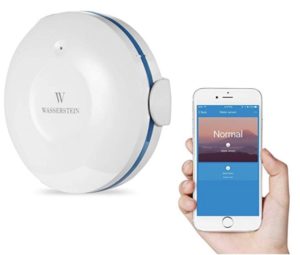
And then there are the smart leak detectors and water valve controllers. Leak detectors alert homeowners when water is detected in places it doesn’t belong. This allows you to get ahead of a burst pipe or leaky appliance before the damage spreads.

leak detector with app

A practical smart home application, a leak detection device can lead to major savings in damage.

Final thoughts

In the end, it’s interesting to see that 2019’s smart home innovations include more than speakers and screens. It might not be the year where we finally adopt IoT solutions across the entire home, but between the smart mirrors and the leak detectors, it’s clear that day is just around the corner.

How to ace your next job interview

When the interviewer asks “Why are you the best person for the job?” here’s how to answer it.

Are you really the best person for the job? There’s no way to know for sure. You might have a long list of top-notch credentials, glowing recommendations, and a knack for getting results from any team.

Still, “why are you the best person for the job?” is a question that sends chills down the spines of seasoned job hunters and fresh college grads alike.

The question sounds pretty straightforward, but the goal here is to understand how you’ll fit in with your new team and add value to the role.

Below, we’ll look more closely at this question and how to use it to your advantage during your next big interview.

“Why are you the best person for the job?”

job interview

Why do interviewers ask this question?

Some experts say that this question is a test. It’s a way to figure out how you interact with people and how you handle being put on the spot. It’s both awkward and vague — the perfect way to make you squirm in the hot seat.

The best person question also functions as a way to establish whether you fit in with the company culture and can be an opportunity to showcase how you stand to add value to the organization.

What it means to sell yourself

Selling yourself might not be the best name for this exercise in job hunting discomfort. Selling yourself, is, of course, a key component of the job hunting process, but it’s awkward.

But from an employer perspective, their role is to find the best person for the job. Should they fail, well, it makes them look bad. So, you need to convince them that:

  • You can do the work and do it well.
  • You fit in with the team, but bring something new/valuable to the mix
  • You’ll make your prospective boss’ life easier
  • Your skills and experience are a cut above the rest

That’s a tall order.

Rattling off your list of accomplishments and skills can easily cross that thin line between confident and arrogant.

Job hunters often go into the interview with the mindset that they need to talk managers into hiring them. And they do, but your goal is to come up with roughly 3-4 bullet point accomplishments that relate to the role. These can be industry awards, education, soft skills, technical skills, or the results you’ve achieved in your previous role.

Tread carefully, because these things you mention should be measurable and framed in the way that you are there to solve a problem.

The thing is, your interviewer doesn’t really care what you think about yourself. They care about where you, your skills, and experience come together to solve their problems.


This might sound familiar if you’ve worked in sales before. The idea is to listen to the interviewer’s needs, then focus on where you reduce the burden.

Easy, right? Well, yes and no. Nerves are bound to take over. If you’re shy, modest, or don’t do well on the spot, practice and preparation are your BFFs.

Let’s look at how to tackle self-selling and land that role.

How to sell yourself

job interview

Prepare

Before the interview, you’ll want to understand what the company does and how your specific strengths can help the organization. Candidates that do their research always impress employers, but you’re doing yourself a favor, too. Learn about the company’s culture, as well as their mission, their customers, and their goals.

Review the job listing again and scan for specific qualifications or skills they’ve mentioned. Compare those skill keywords to your resume and jot down some “times where you’ve done X” and how it’s prepared you for this role.

The second part of the preparation process is preparing a response based on the research you’ve gathered. Those bullet points we mentioned? Use those to craft a sales pitch. Your pitch should be a minute or two and should highlight the things that make you stand out the most.

Be specific

It’s not good enough to say that you’re a team player, a hard worker, a pro multitasker. To really position yourself as the best person for the job, you need to do more.

Use examples to illustrate your strengths. This is a chance to tie things back to the desired qualifications in the original posting. So, if the role requires strong collaboration skills, it might be a nice opportunity to tell a story about a time you demonstrated your ability to be collaborative.

Anyone can say that they’re great at communicating, thinking on their feet, or spotting the tiniest details. But few people can spin these buzzwords into a bonafide story.

Storytelling has become an increasingly valuable skill. As such, you should practice articulating your skills and accomplishments in an engaging, enthusiastic, and authentic manner.

Don’t make the focus on how much you need the job

Okay, this might sound counterintuitive  But, again, we’re looking at how you can add value to the company. From an interviewer perspective, no one cares that this is your dream job or that you’re running low on savings and need to land a role—any role—ASAP.

While it’s kind of annoying, interviewers don’t love it when you appear to be all about the paycheck and the flex benefits. Of course, you wouldn’t be there if you didn’t need a job—however, the candidate that demonstrates excitement about the opportunity is the one that likely gets the job.

Talk about what you expect to accomplish

Granted, this often is another common interview question; the old what do you hope to get done within your first 30, 60, or 90 days on the job?

But, this is another example of where you can prove yourself as someone who can solve problems and think ahead. Prepare by looking at the job description and coming up with a plan of attack; how might you increase sales by 20%? What leadership style will you bring to the workplace?

In short, bringing specific examples for how you plan to enact change will serve you well.

Finally, make sure you are the right person for the job

Before you go to the interview, consider this: does the job align with your goals and values? Does the role match up with your strengths? Will it challenge you? And does it fit your working style?

Ultimately, the “why are you the right person for the job” question serves as a means of figuring out whether you’re a fit or not.

It’s important to remember that selling yourself is not about convincing someone you’re right for the job when there’s a mismatch. A lack of chemistry means that you’ll struggle in that role no matter how many accolades you’ve racked up in the past.

From Airbnb to every designer brand — why everything looks the same now

Have you noticed how every website and app looks the same now? Here’s why.

For all the wonders of the web, it’s safe to say that things have become a little too homogenous.

Look at Instagram and you’ll notice that everyone in your feed from LA to NYC and across the globe are sharing the same lattes and posing against the same walls.

On the branding side, we’ve seen an overall flattening of fonts since the early ‘10s when American Apparel was still on top. Today, the brands leading the charge are Glossier, Outdoor Voices, Reformation, and as well as the tech giants like Airbnb, Twitter, and Apple.

But that hipster design aesthetic has some roots in practicality. Clean and modern is par for the course, but it’s got staying power for a few key reasons.

Why web design became so repetitive

web design

Blame the phones first

We hit peak hipster around the same time that smartphones became ubiquitous. In the early days of mobile sites, many companies were dealing with images that wouldn’t load or sites that presented all content in the form of links.

Removing shadowboxes and animated graphics eliminated a lot of issues and allowed us to fully embrace mobile. Font-wise, ditching the serif (those little lines on the ends of letters in Times New Roman and others) made web copy—mobile or otherwise—much easier to read.

This so-called flat design has been the reigning aesthetic for the better part of the past decade. And you’ve probably seen a ton of sites that look like this:

standard modern web design

It’s hard to argue against that level of practicality.

The simple, minimalist style gracing websites and apps was a breath of fresh air after an era of pop-ups, banners, and homepage animations gone wild.

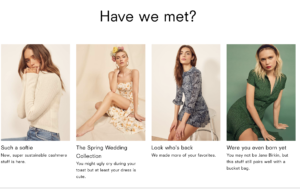
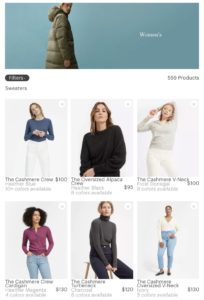
Sans serif, white space, and low contrast color spaces give us a sense of calm. Look at Reformation’s featured items — there is plenty of white space, it’s easy to read, and colors are relatively muted.

reformation minimalist

When we’re trying to consume information, usability is far more important than originality. Some older readers might remember, but reading articles online in the 90s was kind of a mess. Small print, weird formatting, and few pictures. Not exactly a pleasant experience, right?

Complaining about flat design is like complaining about white backgrounds or the fact that most books have similar fonts.

But… there are certain elements where originality is allowed: logos, photos, and graphics. This stuff operates on another plane — and a little variety won’t hurt the usability factor.

Pared down is part of the mission

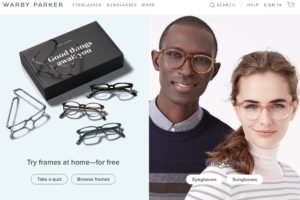
The uncluttered design isn’t just an aesthetic choice, it is a representation of a brand’s values. Many startups from Everlane to Warby Parker, and a million companies that promise the best hoodies, pants, and sportswear operate on the D2C model.

warby parker minimal home page

These companies make high-quality products and sell them straight to consumers. They source materials themselves and work with factories—no middleman required.

That pared-down business model is one of the key selling points. A brand might say, transparency is one of their core values. Or job creation. Or good U.S.-made products at a reasonable price. You get the idea.
basic design white space

That back-to-basics mentality is reflected in the design. Think about it. Most of these brands aren’t covered in logos or one-season trends. They’re built to convey longevity.

All of these qualities are generally a good thing. Just when it comes to design, there’s a risk that this simplicity won’t feel special anymore.

What’s with the lack of diversity on the design front?

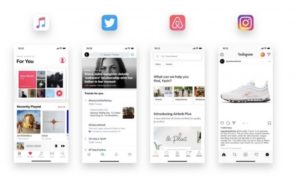
favorite apps look the same

If you’re looking at this sudden uniformity with a glass-half-full attitude, it might represent a narrowing world view.

However, consistency might not be a bad thing. We mentioned the rise of mobile. During that time, we’ve gotten familiar with a ton of apps. From Instagram and Facebook to Slack, WhatsApp, and our various financial services, email, and news apps. There’s too much going on.

Most people use a handful of essential apps regularly, while the rest get neglected or deleted after a single use.

These barebones apps might be on to something. Rather than focus energy on crafting a fancy exterior — companies now spend more time on user experience and content. Quality products, working digital solutions.

While it might feel like a downside when all of your apps look the same, it doesn’t necessarily mean that creativity no longer matters.

Rather, brands and their UX/UI designers know that utility comes first. Apps and websites have a job to do—and that job isn’t to mess with colors and spacing and veer from design norms. We all expect a shopping cart to work a certain way. We expect a clear navigation bar. We want to find information when we need it.

Good (and original) design isn’t going away. We’ve just been in the process of writing the “rule book” for what a site should do.

Still, it might be nice to see some new fonts every now and again.

How to build your personal brand online

Brands are people and people are brands. It’s the way of the world now; your online presence is your key to landing dream jobs and rising to the top of your field.

Look, we get it, the idea of creating a personal brand can feel kind of, well, gross at times.

It conjures up images of the aspiring thought leaders scrambling for claps on Medium — or the perfectly made-up Instagram models who can monetize just about anything.

But, these thirsty examples aren’t the only paths toward personal branding,

You want to be a go-to source in your field, right?

Chances are, that’s a yes.

Below, we’ll look at how you can ensure your digital profiles paint a picture of what you offer potential clients and employers, without compromising yourself in the process.

How to build your personal brand online

build your brand

What’s your story?

Some people prefer to keep the professional and the personal realms separate.

Others may feel straight up uncomfortable talking about themselves or telling their story.

Of course, selling yourself can be way harder than selling products or services — in this case, it feels personal when someone says, “thanks but no thanks.”

Think about your strengths and defining characteristics, your milestones, your passions, and your career path. If you’re not sure where to start, look at the thing that you’re best at and go from there.

Then, craft a story that looks at your path. Are you a former corporate lawyer that gave it all up to become a travel blogger? Are you a lifelong marketing pro, starting a company that helps small businesses turn it all around?

Yes, a lot of entrepreneurs talk about themselves a lot — sharing their origin story wholeheartedly.

If this truly makes you squirm, then we recommend creating a professional story that offers the highlights of your career and how it qualifies you to do what you’re doing now.

Know that branding and marketing are not the same thing

When you’re talking branding strategy, it doesn’t refer to the process of getting your name out there. Branding is more about what you do and why.

Strong brands — Apple, Coca-Cola, Amazon — all paint a clear picture when you hear their name. And while you’re likely not going to hit the big time on that level — you need to consider what people will think about when they hear your name.

And, if you don’t define this for yourself, others will go ahead and do it for you.

What are your values?

One thing to consider is authenticity. You don’t want your personal brand to represent a person that doesn’t exist. Instead, do some work—and uncover what matters most to you. PwC has a created a worksheet that’s quite helpful. The idea is, you’ll check off five or so values that mean most to you — then, cut it down to one or two that best represent you and your goals as a business person.

What is your professional persona?

personal brand

It might be helpful to think about your digital presence as your “professional persona.” It’s a version of yourself that embraces the fact that you need to share your accomplishments and ideas.

It’s also worth pointing out that social media is a great place for introverts to outshine their more vocal peers. Here, you can transform quiet contemplation into a way to share your ideas.

The professional persona, of course, keeps your presence limited to your work experience and accomplishments.

That said, a few personal details can endear you to others without getting, well, too personal.

This blog post from Social Talent recommends choosing just three things to share about yourself — and they don’t need to reveal much about your personality and preferences. The example used here includes sharing a photo after a run or some local sights, things that show you’re a person, but don’t dive too deep.

Okay, you’re probably thinking — what do you mean “persona?” I am a person.

But, here are a few things to think about when crafting your professional alter ego:

What is your niche?

If you’re a writer, which topics are your bread and butter? Designers, what’s your style? Consultant? What kinds of businesses do you work with? Your social accounts and personal website should lay this out in clear terms.

Writers, for example, should mention any niche topics they cover–whether that’s providing social media captions, copywriting ad content, or tackling a specific type of subject matter.

How do you talk about yourself?

Who are you, what do you do for your clients? On your LinkedIn page, website, and any additional profiles, you’ll need to present a consistent tone of voice, and carefully consider the language you use to talk about yourself.

Are you informal, funny, professional? Make sure this online voice aligns with the work you do, your values, and your personality. It should feel natural.

Why are people attracted to working with you?

Don’t hesitate to highlight testimonials, LinkedIn recs, or your own account of what you offer that no one else does.

What is your personality?

Again, it’s not necessarily a requirement that you reveal your Netflix preferences or your favorite spots to grab a drink.

Building a personal brand takes a lot of effort and a significant time investment. It’s easy to resign yourself to the fact that you have to craft a brand narrative, but you don’t need to start asking for “likes and subscribes” or booking speaking gigs you’re not feeling great about.

Frame it this way: you get to control the narrative about who you are and what you stand for. It’s a power move.

Practice makes perfect

For the social media averse, it’s unlikely that you’ll dive in and be swimming in followers overnight. Start slow.

Initially, this might mean filling out your LinkedIn profile and from there, publishing a weekly blog post on your website or Medium account. Maybe your next move is Twitter.

The point is, these little moves can help you push out ideas here and there that can reveal your talents and takes on various things.

It’s hard when you’re staring down a world of influencers and thought leaders pumping out podcasts and videos and inexplicably have tons and tons of professional grade photos.

But, authenticity wins. If that’s not you, focus on your strengths. Ideally, it’ll make it easier down the road when you have a list of accomplishments, skills, and content to point to next time you have an interview.

Helping the homeless with apps — which techie solutions are actually worth checking out?

Can technology help the homeless? Let’s take a closer look at some apps out there.

The idea of apps for the homeless sounds… interesting.

It seems well-intentioned, but with a hint of tone deafness built in. But as we looked into it a bit further, there’s a lot of variation within this space.

There are apps that people can download themselves to locate a shelter, others that allow people to donate directly to specific people, and some that creep into an invasive space.

According to a 2011 study published in the Journal of Urban Health, 62 percent of homeless youth have a cell phone. And, today, that number is likely much higher.

With that in mind, it’s no wonder there is a whole crop of apps designed to help the homeless — some offering a direct line of support from donor to the person in need.

Apps run the gamut from a gamified giving experience to city-sponsored efforts to make a difference.

How apps can help the homeless

homeless

What kinds of apps are out there?

Well, for one, many charities have begun to consider what a cashless society might look like and how that might have a negative impact on our neediest members.

Cash apps are typically linked to a bank account and many homeless people don’t have one.

WeShelter, for example, isn’t for direct giving.

The app, which has been around for a few years, has an indirect approach, a solution for those who don’t have cash or the will to talk to a homeless person.

Instead, the concept is, you might walk by a homeless person and you’ll tap a button that triggers a corporate sponsor to make a small donation to a service organization. WeShelter also has a built-in 311 function, which allows people to call for help if they see someone in need.

WeShelter Download Free ►
8

There’s Samaritan, which is more focused on relationship-building than WeShelter. How it works is homeless people are given a Bluetooth-enabled device called a beacon, which connects to an app.

People can download the app and when they’re close to someone with a beacon, they’ll receive a push notification, which tells them a bit about the person’s backstory and prompts them to donate by pushing a button.

Beacon holders must meet certain conditions to keep their status. Funds can be spent on select items — food, shelter, personal care items — no drugs or alcohol.

They also must keep regular appointments with a counselor. As such, Samaritan probably won’t do much for those on the street due to substance abuse issues or mental illness. There’s also the issue that people with better photos or more dramatic stories fare better than those who aren’t blessed with a photogenic face.

Samaritan Download Free ►
7

Australian app, AskIzzy presents something a little different. The idea is, homeless users can help themselves. Similar to Craigslist or Yelp, users can access a selection of nearby shelters, healthcare, and places serving food.

Downsides

WeShelter, for example, has kind of a gamified approach to giving, the founders laid out their concept by suggesting users tap a button every time they see a homeless person — which seems like it could be another way to dehumanize people who live on the street.

Some homeless people see WeShelter’s 311 function as a way to snitch on people, as it fails to involve the person it seeks to help, which takes away some of their agency.

And then… there are the tracking apps

charity food line

Last year, Wired ran an article about NYC’s attempt to track every homeless person across the five boroughs. The city rolled out a new tool called StreetSmart, which the article describes as a CRM system for tracking homeless demographics.

The idea is — hundreds of outreach workers will walk around collecting data on homeless people as they check-in — documenting things like income, health, their experience with the city’s shelter system, and so on.

The point is to track how many people make it into shelters or ultimately get off the street and into affordable housing.

San Francisco has rolled out something similar — the ONE System, which aggregates data about counseling, health, and shelter history. This data once spanned 15+ databases from several different agencies — so there wasn’t a centralized center for information.

Salt Lake City has been doing this since 2015 — and has reduced their homeless population by 91%.

Where homeless people might resist the idea of being registered to a database, the goal of these city-run applications is to get people access to services and ideally, permanent housing.

A lot of apps don’t have great download numbers

Unfortunately, many of these apps are underused.

A quick look through the App Store or Google Play reveals a lack of reviews, and it seems that people are still reporting homeless activity to the police or trying to get in touch with over-extended city service departments.

In the end, some apps provide lifelines for people in need and can be a real game-changer. AskIzzy and Infoxchange offer a practical solution for homeless people — allowing them to help themselves.

WeShelter, on the other hand, turns this into a hands-off game for the public, which kind of left a bad taste in our mouths.