Trending jobs in 2019

Discover which careers are booming this year.

Digital transformation is well underway.

Machine learning, chatbots, blockchain applications have all become part of the work landscape, all while stirring up fears of our pending irrelevance.

Obviously, healthcare tops the charts in most cases — surgeons, nurses, dentists, and orthodontists are always in high demand — so we opted to leave them out of our list of jobs on the rise.

In 2019, in-demand jobs are fairly diverse, but have something in common — many emphasize the human side of an automation strategy. As LinkedIn found in 2018, you don’t necessarily need to be in a highly technical role to see success. Sales, marketing, and communications professionals have a promising outlook, too.

Skills like leadership, project and product management and roles with a strategic component are sought after by employers. And of course — hard skills in the STEM purview are needed to develop and maintain this new wave of tech.

Here, we’ll look at some of the top jobs in 2019 — and likely beyond.

Trending jobs for 2019

data scientist

Data scientist

A data scientist is a person who gathers, processes, and analyzes data. With the hordes of data coming in thanks to advancing data collection methods, humans skilled in breaking these massive sets into usable insights are major assets for companies.

Database administrator

Database administrators are becoming increasingly in demand, as companies start using more software solutions that include AI and machine learning components. The ability to maintain clean, secure databases will be essential for ensuring software can be leveraged to meet an organization’s goals.

Product Manager

A product manager knows how to make a product sell. They work with multiple teams, as well as members of the public to make sure that products are at their best before going to market.

Product managers conduct market research, determine specifications, set pricing, and develop marketing strategies. While this isn’t a highly technical role, product managers often work in tech companies and will do well if they can “speak the language.”

Machine learning engineer

machine learning

Machine learning engineers are programmers with advanced knowledge in the areas of AI and machine learning. They work to develop AI technology and work with complex algorithms and datasets to train systems. As more companies invest in these technologies, engineers can expect to have their pick of opportunities.

Statistician

Statisticians are in demand, with growth expected to rise by 34% through 2024. Statisticians collect and analyze data, looking for patterns that explain human behavior or uncover insights that address a range of public and private sector concerns. Today’s businesses basically run on these massive datasets, so those with a firm grasp on statistics are a major asset to any company.

Sales director

Sales professionals will still be in demand this year, and likely moving forward. Recruiters have long been having trouble filling sales positions with skilled workers who can keep pace with change.

That change can be attributed to CRMs and other analytics tools that are now industry standards. There’s also a shift in buyer demographics, as millennials take on the lion’s share of B2B purchasing decisions.

Still, technology, combined with the ability to read the room and connect with others makes a good salesperson hard to replace with a machine.

Marketing Managers

Marketing managers stand to stick around for the long haul, though their role may change in the coming years. As it stands, your average marketing manager is in charge of marketing campaigns, branding, social media, and content strategy.

Successful marketing managers should also be project managers, critical thinkers, and have the ability to monitor ad performance and other metrics. As marketing tech advances, this role may begin to evolve into a more analytic, decision-making focused role.

And, moving forward, privacy concerns and a crowded social media market may make marketing more challenging. Those who can roll with the punches–and get around new rules and shifting algorithms will likely see success.

Financial Manager

financial planner

Financial managers are looking at a bright future, too. Because of the aging Boomer population, there is a huge demand for good financial advice. Financial managers help clients plan for short and longterm goals, like retirement, college funds, and buying a home. They also break down tax laws, investments, and monetary rules and regulations.

Job seekers — what to expect

Flexibility, improvisation, and a willingness to learn are all important qualities in a job candidate.

While the top tech jobs often require specialized education, tech-savvy marketers, managers, and writers all have transferrable skills required to supplement AI and machine learning applications.

Improve your prospects by earning certifications — in marketing or project management, as well as coding and software-specific training.  The point is, change is the only constant.

Will Facebook fix itself?

Can we trust Facebook to fix all its problems, or is the social media site doomed?

facebook

Facebook has become a leading news source for a number of people across the globe — which may be the actual problem here.

Some even believe the sites are causing full-blown damage to society. And, the evidence, well, it speaks for itself.

Between its hand in global unrest from election tampering to full-blown violence, plus the lack of transparency surrounding data use — it’s clear that something needs to change.

Which begs the question? Is Zuckerberg obligated to change the platform? Or are lawmakers the ones who must push for change?

It seems that FB is trying to change

We kicked off an eventful year with a Facebook algorithm change.

Zuckerberg announced the newsfeed would shift toward a more “social” model, one built on connecting with real people and limiting the presence of paid ads.

Part of this initiative was to address political ads, too. Now, ads must be labeled as sponsored by “X group.”

But 2018 was marred by scandal. Zuckerberg, Sheryl Sandberg, and other execs were called to Congress.

Fake news hasn’t gone away, and there’s still no clear solution to the problem.

Are regulations on the horizon?

Facebook has built this testing and tracking machine — one that has made advertising more effective and specific. The company has explained this as a way to present users with ads that “relate to things they care about.”

Maybe most people don’t mind seeing products they might actually buy. The issue comes when that data machine is used to wield influence by playing into users’ fears or existing biases.

As we saw in the Cambridge Analytica shakeout, social media has the power to manipulate people quite easily.

The firm claims to have 5,000 data points on every American and used peoples’ behavioral data to gently nudge them toward altering their behaviors.

Cambridge Analytica shared over 100 fake pro-Trump stories, as you may remember, which highlighted a major issue. It’s not that users are dealing with ads, it’s that efforts like these — manipulating voters — can eat into democracy and corrode trust.

Senators Bob Corker and Chris Coons are pushing for new regulations that address growing concerns about misinformation and privacy. Coons says that he expects Congress to come up with a solution comparable to the EU’s GDPR which rolled out earlier this year.

The GDPR requires companies to ask for user consent and that they state when they will be collecting personal data.

But if the government does get involved, there’s a lot to consider. Facebook and Twitter have long been promoting their platforms as centers for free speech.

There’s no doubt that internet speech should be protected — and the idea of rules governing that space is not going to sit well with users from both sides of the aisle.

One of the biggest problems is, the existing setup limits competition.

Last year, Senator Amy Klobuchar introduced a bill that would prevent corporations from acquiring up-and-coming startups.

So Facebook, moving forward, wouldn’t be able to build up its empire by acquiring a whole bunch of future WhatsApps and Instagrams.

The idea is, we’d eventually have new alternatives cropping up outside of the control of these relative few tech companies, thus giving customers more choice over where they take their business.

WhatsApp Messenger Download WhatsApp ►
8

Facebook is changing the rules for marketing

Earlier this year, Facebook announced it would be shutting down Partner Categories, a feature that lets marketers leverage third-party data to create targeted Facebook ads. Those third-party data brokers include some familiar names like Experian, Oracle Data Cloud, and Acxiom.

The companies have access to some of the most relevant consumer insights. Think incomes, family relationships, what kinds of cars they have, where they shop, their health status, and more.

That data was used by marketers to target people who just bought a house and were looking for a TV, say.

This change is a pretty big deal, actually. That data is a key ingredient for all kinds of companies.

And Facebook’s announcement signals a move toward protecting peoples’ privacy — though they will still provide their engagement and sales impact data on the back end of the site.

Will Facebook truly change? The jury is out.

Cold pitching 101: How to find actually prospective clients

Looking to sell your skills? Here’s how to open the door to new opportunities.

If you’ve dabbled in freelance writing — or freelance anything — you’ve seen post after post touting the power of cold pitching. It’s reportedly the best way to find high-quality clients and grow your business to new heights.

Unfortunately, a lot of the content out there is super promotional. And much of it involves successful bloggers selling their expertise to those with less experience or savvy in the space.

So what’s the story with cold pitching? The concept is as straightforward as it sounds — you’re reaching out to strangers to sell a service.

The thing we found more challenging was the research process. Where are people finding these lists of prospects, in the first place?

Here, we’ll look at some tips for compiling a list of your own prospects.

How to find new work opportunities

networking

What is cold pitching?

Cold pitching is the process of reaching out to a targeted list of strangers to convince them to give your company a shot. In most cases, you’ll do this via email — though you could try using the good old-fashioned phone.

Basically, you’re sending a company/person a personalized email after doing some research on your own. This means you’re qualifying leads on your own.

Pitches should be as concise as possible. Nobody likes to field a cold email, after all.

Why you should cold pitch

For one, being a freelancer means that you generally don’t have the luxury of taking home a reliable, bi-weekly paycheck. Your earnings depend on how much you work and how much clients are willing to pay for your service.

Among the biggest challenges for independent workers is locking down a steady stream of paying gigs that provide a predictable income.

So there’s this constant need to be prospecting, even when you’ve got enough on your plate. You can apply for jobs through job boards, go to networking events, or ask existing clients for referrals.

Cold pitching, however, offers some distinct benefits over the usual channels, and here’s why:

Easy-to-measure results

When you’re emailing cold leads, it’s easy to see which pitches get results. You have a record of sent messages that you can review to see how many conversions you’re getting compared to what was sent.

It’s easy

Well, sort of. Cold pitching requires that you write customized, well-researched emails to strangers, so it’s not this mindless effort. But, once you’ve got your list of leads, you’ll have a quick way to reach out to prospective clients — even just a few each day.

Freelancers can get busy, but keeping up the business development part of their job means they’ll be less likely to experience work droughts down the line.

Contracts are on your terms

Because you’re sending the email, you’re in the position of power.

While you are at the mercy of collecting enough yeses to pay your rent, those who sign on are agreeing to the terms you put out there.

One of the key reasons that freelancers tend to like this method is, it’s an effective alternative job board.

There’s nothing wrong with job boards, per se. But, the process of applying for multiple jobs and hoping the rates work out to more than $0.0008 per word can leave you feeling like your fate is in someone else’s hands.

How to identify the right clients

scouting clients

First of all, you should only approach clients that you can imagine yourself working with.

If you’re a writer with experience in writing about technology, your ideal clients might be software companies, cybersecurity firms, or web apps. You won’t want to approach roofing companies or fashion brands, otherwise, it looks like you’re sending mass emails with little thought as to where they land.

Niche matters, too. Stay in your lane. A generalist might have the right skill set, but they risk falling into the “jack-of-all-trades” category. Instead, you narrow your area of expertise.

As you start hunting for leads, you’ll want to ask yourself a few questions as you comb through each lead:

  • What can you offer this client?
  • Why will you be a good fit?
  • Does the subject matter interest you?

Where does one find these companies in the first place?

Okay, there are a few different ways you can start conducting your research. We’ll start with platforms. While the sites we’ve listed here are job boards, they’re actually a great place to conduct research.

Now, we’re not suggesting that you apply for the jobs. Rather, you can head over to a site like AngelList or LinkedIn and filter by company type. AngelList also allows you to email people directly through the platform, bypassing the actual job application part.

Some ideas:

Alternatively, you might want to Google startups within your niche. Startups need help getting the word out about their brand and may not have the budget for a full-time writer.

Tread carefully, though. Sometimes, it’s hard to work with new companies as their status changes from one day to the next.

  • Quora — Create an account that highlights your business. When someone posts a question you can help with, you can swoop in to help.
  • Social media — Twitter and Facebook both have decent search functions. Look for trending topics within your niche and reach out to companies that might be a fit.
  • Groups — LinkedIn and Facebook groups are another good resource for collecting leads. Facebook’s platform has a group for anything — local business owners to industry-specific offerings like digital marketing or tech startups. Joining groups means you’ll be able to make new connections and identify companies to reach out to outside of the platform.

Make a spreadsheet of the companies you find during your research. Create tabs for email addresses, status, notes, and anything else that might inform your messaging.

Find the decision maker

Going in cold usually means you’ll be reaching out to a company, not an individual. Chances are, the director of marketing won’t post their business email on the company website, but doing some research before sending an email to “Dear First Name” is a good idea.

Do some research on the company page and social media accounts to see if you can identify who is in charge of marketing, social media, or whatever your area of specialty is.

Be sure to address this person by name in the email — even if it’s just going to “help@company.com.”

How to get people to read your message

composing email

  • Make it personal — skip the template; cold pitching is already, well, cold. Instead, make it obvious that you’ve done some research. And skip the spammy salutations. No one reads an email addressed to “Sir/Madam.”
  • Create a great subject line — Spend some time coming up with creative subject lines. A good subject line makes the suggestion that there’s something worthwhile in the email. A bad one means you’ll get marked as spam. Check out Hubspot’s tips for some inspiration.
  • Include social proof, if possible — share links to your best work, endorsements, awards, or positive reviews from happy clients.

Don’t forget the follow-up

People often forget to respond to emails, especially when they’re not urgent. In general, you want to give prospects about a full week to respond.

Send a short, low-pressure reminder after the seven day (ish) mark. The second email should basically say, “I sent you an email and wanted to follow up to see if you’ve had time to consider the offer.”

Make sure you attach the previous email so they can easily access the information you sent the first time around. And if you don’t get a response, move on. There’s no use in trying to pressure someone into becoming a client.

How to stop robocalls from blowing up your phone

Sick of robocalls? Here’s how to stop them cold.

spam phone calls robocalls

Chances are, you’ve seen an increase in calls from local numbers coming through your phone. These calls that appear to be from your hometown are scammers, attempting to trick you into picking up and sharing personal information.

The practice, known as neighbor-spoofing involves spoofing caller ID to match the first six digits of your phone number. The aim here is to make the recipient believe someone they know — a friend, neighbor, or local business — is trying to reach them.

While the practice has become commonplace, mobile service providers and the government have yet to find a way to get rid of the problem.

That said, there are some solid methods for reducing the number of “scam likely” calls blowing up your phone.

How to stop robocalls

Why has this become such a big problem?

The reason for the uptick in unwanted calls is, basically anyone can become a robocaller. No longer reserved for more sophisticated, established criminal operations, the technology now gives DIY scammers access to a cheap, scalable “business model.”

In 2017, the FCC passed a Call Blocking Order, which sought to improve phone providers’ ability to block spoofed calls, yet the problem seems to be getting worse.

The FCC and CTIA, a mobile industry trade group have been looking for a better solution to the problem, but existing blocking methods come with the risk of blocking legitimate calls, or false positives.

Weirdly, spoofing itself isn’t always illegal

phone spam

The FCC rules prohibit anyone from transmitting false information with the intent to defraud or obtain sensitive information from the person on the other line.

If you answer the phone, it’s usually fairly obvious whether it’s a legitimate call. The Truth in Caller ID Act says that anyone illegally spoofing can be fined up to $10,000 per violation. But, you’ll need to be able to identify whether something is a scam to report it.

There are some legitimate reasons for spoofing. One example we found on the FCC site is a doctor calling a patient from their cell phone, but the patient sees a number that matches the main office.

Blocking spam calls on your iPhone

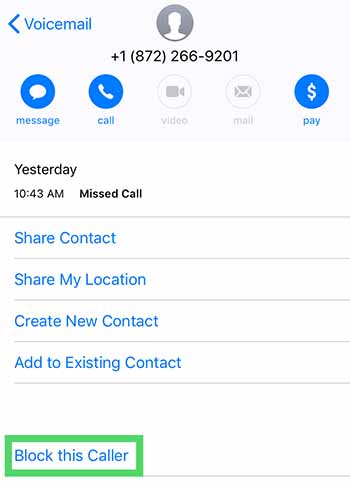
For the occasional unwanted call, you can block calls one by one. Do this by opening the contact details after the call and selecting the little “i” then scroll down and hit “Block this caller.”

block caller iphone

It’s a bit inefficient, especially given that robocallers change numbers constantly. This might be a waste of time.  One workaround is turning your phone on “do not disturb” mode, then selecting who you want to receive calls from.

Per Apple, here are the steps for eliminating robocalls from third-party calling apps.

  • Go to Settings > Phone
  • Hit Call Blocking & Identification
  • Then, go to Allow These Apps to Block Calls and Provide Caller ID
  • Change setting to on or off and reorder the apps according to priority.

Blocking spam calls on Android

On Android, the process is similar to iOS. Instead, you’ll tap on the caller’s name, hold the number, then tap block/report spam.

The DND workaround on Android can be performed by installing an app like Calls Blacklist, which allows you to limit calls only to those in your contact list. In some instances, this could be annoying—like if you’re waiting for a call from someone new. Still, it’s a decent option for limiting irrelevant spammy calls during the workday.

Calls Blacklist - Call Blocker Download Free ►
9

Protect your voicemail

Some voicemail services will grant you access from another phone if you enter a passcode. This set up could present an opportunity for hackers to spoof your phone number and use it to access your voicemail or use to defraud others.

Report fraud

Reporting spam calls can feel like a waste of time, a drop in the bucket. Try to think of this as a civil service. It’s kind of like calling your senator.  When enough people reach out, the government is more likely to take action.

Direct your complaint to the FTC, the FCC, the Do Not Call Registry, or the Better Business Bureau.

Download an app

While you can turn on call blocking settings on your phone, it’s often not enough. The issue is, blocking is typically limited to a single number on individual devices. So, if you’re looking to wipe out scammers and their rotating numbers, your best bet is looking for an app that takes care of business.

We recently published an article that highlights a few of the best apps for blocking spam calls. Check it out if you’re tired of blocking calls one by one.

How to sound like a real-deal subject matter expert in a hurry

A little research can change the entire trajectory of your career.

Subject matter experts, or SMEs, are people who know a subject inside and out. While the OG SMEs might be folks with advanced degrees or decades of experience in a certain niche, being able to write like a pro is a skill you can develop.

A useful skill that can help you advance your career in writing, marketing, and beyond, developing your expert voice goes beyond faking experience.

Understanding how to become a subject matter expert boils down to a few key things. You must learn how to do research, write in different voices, and learn to take complex material and spin it into something approachable.

Here, we’ll look at some of the ways you can sound like an expert even when you feel like a novice.

How to present yourself as an expert

expert

Mastering the art of research

As an SME-in-training, you’ll need to graduate beyond citing Wikipedia and learn where to find high-quality information.

In this phase, there are a few things you can do to start talking like an expert.

Where does your audience hang out online?

The first step is learning as much as possible about your chosen niche. Immerse yourself in the conversation by hanging out in the same corners of the web as the actual experts.

Find online forums in this space — think Reddit pages, online publications, and Meetup groups.

You’ll also want to join relevant social media groups — Facebook groups, LinkedIn Groups, follow key experts on Instagram, Twitter, and other relevant platforms. In any case, this is your chance to see what people are talking about in real time, which is far more informative than attempting to Google information and hope that it’s relevant.

Another good place to look is Medium. Here, you’ll find a lot of articles — which span a wide range of quality — geared toward every niche you can think of.

While these sources don’t necessarily have the credibility that comes with say, a scientific journal or reputable newspapers like the New York Times, Washington Post, or the Wall Street Journal, they offer a quick way to pick up on industry lingo and trending topics. Spend a lot of time in these corners of the web and you’ll be writing insider blog posts in short order.

ID industry publications

Beyond the social sphere, industry publications are another great source of specific information. Subscribe to all the newsletters and trade magazines you can, and follow the associated social media accounts.

White papers, eBooks, webinars — these types of content take a deeper dive than your average blog post.

Who are you competing with?

Competitive analysis is another great starting point for grasping the language and trends in a new niche.

You can learn how “the pros” in the space talk to their audience, what topics matter to this audience, and where you can offer something different or better.

Take note of the following:

  • What kinds of articles/blogs/digital resources exist?
  • What do competing brands post on their social media feeds?
  • Website copy.
  • Articles/blog posts/marketing collateral — how do competitors address their audience?

Practice breaking down complex terms into simple language

simplify

Explaining complex information in a way that connects with a broad audience without talking down to them is a skill that will serve you well. As you start to familiarize yourself with the new subject matter, try rewriting what you’ve just read in your own words.

Benjamin Franklin famously used this trick to teach himself how to write. Franklin would rewrite articles from The Spectator until he mastered the style himself.

In the SEO world, the technique is known as “skyscrapering.” Essentially, this means you’ll identify a piece of “good” content online and create something similar, but better.

Considering voice and tone

Another thing to think about is finding the right voice for the niche in question. How formal is the norm, here?

Are you going for a friendly expert vibe? Informal? Youthful?

Refer back to those competitor publications and look closely at how they communicate with their readers.

While the goal isn’t to copy someone else’s voice, most industries have a set of “cultural norms” that apply to the communications within the space.

For example; if you’re writing about food, you might opt for something friendly, approachable — like how you’d talk to a friend you invited over for dinner. By contrast, if you’re writing about supply chain management, a no-frills, plain language style might be your best bet.

Additionally, you need to learn the lingo. Using an incorrect term can raise red flags for readers who already have an understanding of the industry you’re writing for.

As a writer, you must provide value to your audience. Blog posts, white papers, and eBooks should help readers learn more about a topic; selling should come second.

Fake it til you make it

As a burgeoning SME, confidence will be one of your biggest challenges. As you learn new concepts and start making connections, it’s a good idea to practice writing to your audience. Deconstruct concepts and explain them in your own words — as confidently as possible.

Start by using a tool like Hemingway, which will help you identify the wishy-washy language, passive voice, and other hallmarks of low confidence. As you learn more, you’ll feel more confident in your ability to communicate like a bona fide thought leader.

Interview the real experts

interview

Interviewing experts adds an extra layer of credibility to your content. A direct source you can quote — it’s smart to set up phone calls with people who know their stuff.

Often these folks benefit from working with you because they’re too close to the subject matter. As an outsider, you can zoom out and explain concepts in a way that connects to people who lack in-depth experience.

For example — if you’re writing content for a machine learning startup — you’ll want to talk to the employees/founder about specific concepts. But they might be inclined to explain the ins and outs of the math used in their process, which could be alienating to readers.

Ask for clarification — for example, a plain language definition of natural language processing can help you connect with readers who are also learning about this topic.

Oh yeah, recording your calls can pay off. This way, you can focus on listening and asking the right questions, rather than frantically trying to take notes as they rattle off a bunch of new terms and topics.

Finally, if your experts are on board, you may want to ask them to review any content you’ve created to check for clarity and accuracy.

Who are you talking to?

“Buyer personas” are a marketing staple. The term refers to a fictional customer, usually a composite of the real people who might be interested in your product/service/ content. (For example, “Maria” might be the 30-40-year-old first-time mom you’re targeting. Or “Dave” might be the theoretical Patriots fan who loves craft beer and video games.)

When your goal is to sound like an expert within a particular niche, you need to understand the gamut of demographic information. Targeting a specific audiencecan make your writing sound more personal than if you’re just flinging it out there to the entire planet.

Wrapping up

In the end, learning to communicate with authority is a skill worth developing. Research, competitive analysis, and the ability to take on different voices as needed may seem like the domain of marketers alone.

But, this is a transferable skill likely to have value now — and down the road when AI encroaches on our job prospects.

The above steps offer a roadmap for learning about new topics in short order, but “talking the SME talk” takes practice and dedication.

Scam apps are all over the Play Store

The Google Play Store is packed with dangerous apps. Here’s what to look for.

scam apps

At the end of last year, the App Store and the Play Store removed a fake Alexa set-up app that was stealing users browser history and sending data to an unknown Chinese server.

We also recently posted an article covering the fraudulent GPS apps lurking in the Play store, and popular apps like WhatsApp and Fortnite are repeat targets of scammers trying to get a cut of the action.

Suffice to say, users from both the Apple and Android sides of the aisle should tread carefully when it comes to downloads.

Scam apps have long been a problem, yet, it’s difficult for the platforms to get ahead of these bad actors.

Widespread ad fraud

A few months back, Buzzfeed published an article that revealed a massive fraud ring in the Google Play Store. A company, called, We Purchase Apps was responsible for stealing millions in ad revenue. The story broke back in October 2018, and it looks like the company has since taken down their website.

And then there are instances like this one involving Cheetah Mobile and Kika Tech in December 2018. It was discovered that the two popular apps were engaging in ad fraud, by way of three malicious SDKs: AltaMob, BatMobi, and YeahMobi.

In this case, the scheme was something called app install attribution abuse, which means SDKs fake the number of new downloads to receive the payout from the developer. Google did remove the apps in question, demanding that they remove the SDKs.

It’s easy to ask why Google doesn’t just pull these apps automatically and inform consumers of fraudulent activity. But the sheer volume makes this a near-impossible task. Mobile attribution firm, AppsFlyer looked at 17 billion app installs spanning 7,000 apps globally. According to their findings, more than a quarter of those apps have engaged some form of install fraud.

The reason is, anyone can create and upload an app — and with so many amateur developers competing for space on the platform, there are plenty of opportunities for scammers to slip through the cracks.

A look at some of the biggest Play Store scams in recent memory

Fortnite fakers

Like WhatsApp, scammers are capitalizing on another one of the biggest apps in the game; Fortnite. Fortnite is a prime target for scammers, as the app is free and can be played across game consoles, phones, and PCs. While scams have spanned a range of mediums—the Play store has been walloped by fake apps.

One example is this Google Play app that claimed to help users earn free V-Bucks. As you can see in the image below, the scammers benefitted by including a link that “automatically gives the app a five-star rating.” That skewed results and prompted more downloads.

fortnite android scam

Navigation apps

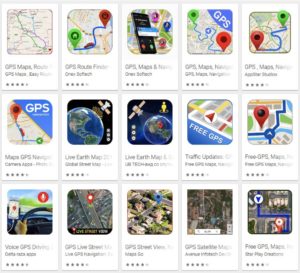
Researcher Lukas Stefanko of ESET found that the Google Play Store is loaded with navigation apps that pass Google Maps off as their own, then run ads over the program. Stefanko says that creating these fake apps is easy — all scammers need to do is add a small modification and they can start making ad revenue.

While the problem may be more of an issue for advertisers, consumers have found that the apps ask for a lot of information that has nothing to do with the program.

fake google map fraud

Fake WhatsApp

Over a million people were tricked into downloaded fake Android apps posing as WhatsApp. Initially, the fraudulent app was called “Update WhatsApp,” then it changed its name to “Dual Whatsweb Update” when users started to catch on.

Battery saver and performance booster fakes

battery saver apps

Many of the fraudulent apps currently lurking in the Play Store are apps that claim to save your battery charge or boost performance by freeing up RAM.

These apps are BS. They don’t do anything except give you a little animation to look at;  a technical representation of how “hard” the tool is working to generate more power.

Avoid these so-called performance boosters, as their advertised benefits are things your phone does automatically.

Apple users aren’t off the hook

Sure, Google might get more attention for their massive collection of scammy Android apps, but the App Store has its own share of problems.  One example is a Touch ID scam, a tactic that asks for your thumbprint or Face ID to authorize charges that, according to Wired, range from $90 to $120 each.

There have been several instances of these scams showing up in fitness assistant or health-focused apps, like this heart rate monitor or a since-removed app called Fitness Balance.

Tips for staying safe while shopping Google Play

The common wisdom for Play Store installs is; don’t download anything from malicious third-party apps. Unfortunately, fraudsters are becoming increasingly sophisticated.

These days you’ll need to be more careful; try the following preventive measures to lower your risk of installing infected apps:

  • Make sure you download from reputable sources only. Okay, duh. But, just a reminder: the top search result is usually the “official” version of the app you’re looking for. Double-check that the official developer posted the app. Additionally, add-ons or “cheat” apps like the Fortnite example from third-parties are especially risky, so be extra careful with these.
  • Read the reviews. Chances are, an infected app will have some low ratings, along with several bad reviews.
  • Do not change any security settings or root your device.
  • Use a reputable anti-virus scanner. While PCs are the usual malware victims, hackers can also break into your phone.
  • Check app permissions before downloading. Make sure permissions make sense. Granting access to sensitive data should be a red flag, so just double check that the fine print seems within the normal range.

Remember that you can also download apps from Softonic’s catalog as well, and we ensure that the apps we carry are free from any malware. Stay safe out there!

7 ways to stay inspired when you are your own boss

Do you work alone? If so, these tips can keep you creative, balanced, and happy.

Working for yourself might seem like the ultimate dream. You make your own hours, wear sweatpants if you want to, and don’t live life dreading pointless meetings.

Your business, your rules.

But, being a model employee and running a tight ship isn’t always easy. It’s hard to stay inspired, motivated, creative, when it’s day-in, day-out, cranking out work on your own.

Below, we’ve compiled a list of seven ways to stay inspired when you work for yourself.

How to stay motivated when you work for yourself

1. Make time for reading

reading

Adding reading to a never-ending pile of to-dos may sound counterintuitive. Where is that time for leisure reading supposed to come from anyway?

Even 45 minutes or an hour spent reading a good book can do a world of good.

For one, if you’ve ever spent days on end writing a ton of content, you know that you’ll start to sink into the habit of using the same words over and over. Reading works in a different style than your own can help you pick up some new ways to communicate an idea — even if you’re not aware of it.

Reading business books or self-help books can be great sources of inspiration, but don’t discount the power of a good pleasure read.

Emory University’s Center for Neuropolicy published in a 2013 study that found reading changes the brain not only during the activity but afterward, as well. The study found that reading promoted heightened connectivity in the temporal cortex, an area associated with our ability to process language.

In turn, reading can serve as inspiration, no matter the genre or relation to your day-to-day work.

We should mention though, the way we read on the web — scanning in an F formation — your Apple news habit doesn’t offer the same benefits as reading an old-fashioned book.

2. Spend time looking at the big picture

Focusing on the zoomed out view can help you keep your head in the game. Revisiting your mission is super important. Long term, you should look at two things: what do you want to create with your business? And, second, how far do you want your reach to extend?

It’s easy to lose sight of primary goal when you’re caught up in the weeds invoicing, editing, or putting together spreadsheets.

3. Write down goals—and review them frequently

goals

Writing down smaller goals is a basic concept. But this is different than making your to-do list.

Instead, write down goals, along with a progress report or the steps that need to be completed.

The point is, do whatever it takes to keep your big picture items in view, documenting your progress, and making plans for your business in the long run.

4. Become a mentor

Spending a lot of time working alone can make you a bit self-absorbed.

Taking some time to help someone who is just getting started in their career can renew some of the passion that gets lost in the day to day shuffle — between to-do list items, calls, and demanding clients.

Whether you choose to hire an assistant, get an intern, or spend time with someone who needs a little extra help — this relationship can be mutually beneficial.

For them — they’re benefitting from your knowledge and experience. On your end, you’ll have access to a fresh perspective. You’d be surprised; rattling off ideas and listening to what the new blood has to say can be a powerful motivator.

5. Delegate or outsource to save time

delegating

Knowing when to delegate is a skill that all bosses need to nail. It’s essential for time management and allows you to focus on the stuff that matters.

You may have started out doing everything yourself, but you can’t be a master of everything, right?

Instead, you need to realize that growing your own business means taking the time to hire an assistant for your social media accounts. Or outsourcing a graphic design job for your new website.

By all means, do the things you love, but know that getting qualified help allows you to take your vision to the next level.

One reason that people don’t delegate as much as they should is, it’s hard to write a job description and create a system for deadlines, deliverables, and standards. As such, you should start by taking a day to create your own SOPs and writing them out — for each job type.

Things to do before hiring a helper:
  1. ID tasks and associated deliverables
  2. Who do you need to delegate tasks to? How many different people do you need to find?
  3. Where will you find people? Some roles may be filled by gig workers, while others may be better suited to a real-deal employee.
  4. Management plan — from communication to deliverables ownership, to payments, write out all of the specifics, according to each role that needs to be filled.
  5. Set a schedule for status meetings and updates. Communication is critical, and regular check-ins mean you have the chance to make corrections if your designer/developer/freelance writer/social media guru isn’t entirely on the same page.

6. Brainstorm/network/talk with others

When we ditch the old 9-5, we miss out on the positives of working in an office setting too. As much as it’s nice to do your own thing, there’s a lot of creativity that comes from working with other people or you know, just chatting.

With the rise of social media and all of these business tools that have made it easier to work from anywhere, we lose something in the process. Make a point of grabbing lunch with a friend, attending local Meetups or networking events, or reaching out to contacts in your industry.

7. Find a schedule that works

schedule

Some say the secret to success is waking up early. Others get their best work done in the dead of night after everyone has long been asleep.

Whatever your chronotype, your preferences, and so on — it’s essential that you find a schedule that works for you and your brain.

Set the start of the day and the end of the day at the same time and stick to it Monday through Friday.

You’ll start to understand the times of day when you’re most productive and from there, can structure your daily tasks according to that schedule. Second, working the same hours every day makes it easier to set boundaries with your friends and family, as well as your clients.

While freelancers and entrepreneurs don’t always have the luxury of on time and off time, working during the same hours each day also prevents that inevitable work-life bleed.

Wrapping up

Inspiration comes in part by being smart with how you spend your time. For example, if you fail to delegate the tasks that are boring or hard or just not your thing, you’re sapping your mental energy before you get to the “good stuff.”

Instead, making time for networking and mentoring means you’re exposing yourself to new people and perspectives, which can help you break out of a rut. Or listening to podcasts you enjoy, reading a few chapters of a book before you go to bed each night, or even taking on a new hobby — these things get your brain working in ways that don’t immediately seem related to your work.

In the end, these habits listed above work together to save you time and help you avoid burnout.

Learning to say no

Have trouble saying “no”? Here’s how to get better at rejecting requests.

People pleasing isn’t a trait worth celebrating.

Many of us have trouble saying no — and that tendency doesn’t represent niceness, so much as a reputation as a pushover or someone who can be taken advantage of.

If you haven’t learned to say no, chances are, your emotional health might suffer in the long run. When you’re always going out of your way to make others happy, you’re not giving yourself a chance to be at your best.

And, you’ll be up to your gills in extra work and extra social activities you’d just as soon skip out on.

How to say no to people

how to say no

Why is saying no so hard?

Saying no seems like such a small thing. But, boy, can it be tough to employ those two tiny letters in certain moments.

We live in a culture that values a great big yes. The reason is, we’re social creatures. Humans thrive when we give and we get — and as we’ve evolved from being hunter-gatherers and traders, asking people for favors and doing them in return is what reciprocity means in a modern world.

One theory is, saying yes (even when we really don’t want to) is a means of putting off discomfort. Psychology Today says the difficulty stems from our desire to be accepted by our peer group.

We worry that if we don’t lend a hand or do a favor, we’ll be punished by the people we care about. At work, this translates to a fear of missing out on opportunities or not being seen as a team player.

Yeses lead to burn out

Jonathan Becher wrote an article for Forbes about the power of saying no. It’s essentially a roundup of quotes, but it’s a good source of inspiration for those who feel trapped in a cycle of saying yes. A favorite quip comes from Steve Jobs — focusing is about saying no.

If you feel overcommitted, it’s important to know yourself well enough to figure out what’s going to push you over the edge. Remember that no doesn’t need to be nasty — it’s about self-preservation.

Learn to figure out if someone is taking advantage of you

Sometimes people need help, others are trying to take advantage of you. It’s important to know the difference. Master manipulators might use flattery to get you to do something they don’t want to do; “you’re so good at X thing, can you help me with X project?”

These people will attempt to pressure you into taking on a project without any regard to your schedule or whether or not this is something you want to do.

If you encounter this kind of behavior, it’s important to remember you have a choice. Be firm and get out of the conversation as fast as possible.

saying no to extra work

Preparing for a “no”

While it sounds a little silly, it might be worth doing a little assertive role play at home. Here are a couple of ideas that might help you get more comfortable with the word, “no.”

Keep some stock phrases on hand
  • I appreciate your asking me, but no thanks.
  • Thanks for thinking of me, but I have too much on my plate right now.
  • No, thanks!
  • I’m booked solid, wish I could help
  • Sorry, I can’t.
  • I’d rather not, thanks.
  • I think I’ll pass.
Practice at home

Psych Central has a few good tips for saying no, some of which include practicing at home. The article mentions practicing in front of a mirror and reciting your predetermined phrases.

They also recommend talking back to commercials — saying no “I won’t ask my doctor about trying a new drug.” etc. It sounds silly, but the idea is, you’ll start feeling more confident as you hear yourself talking back more often.

Don’t add too many details to your response

If you want to say no, do it. But, there’s no need to tell this long-winded story about why you can’t. Otherwise, it feels like a lie. Keep it simple and use phrases like “I appreciate you asking me for help, but I just don’t have the capacity right now.” Or, “sorry, that day doesn’t work for me.” Be firm and strong in your response.

You’re not asking the other person for permission to get out of the situation at hand — the choice is yours.

Sleep on it before coming up with an answer

Few requests demand an on-the-spot answer. Keep that in mind before an enthusiastic “Yes, I’d love to” crosses your lips. Often something seems okay in the moment, only to turn into dread just as you’ve got a chance to think about what this new commitment actually entails.

Give yourself a chance to think about the request by saying something like “let me think about it” or “I’ll get back to you tomorrow.” This allows you to weigh the request against your existing schedule. You’ll need to check your calendar anyway to ensure you’re not overbooked.

With these tips, we hope you’ll learn how to assert yourself, protect your boundaries, and have healthier relationships. Good luck!

How to manage and restrict location data on your phone

Don’t let your location leak without your knowledge. Follow our guide for maximum privacy.

manage and restrict data access

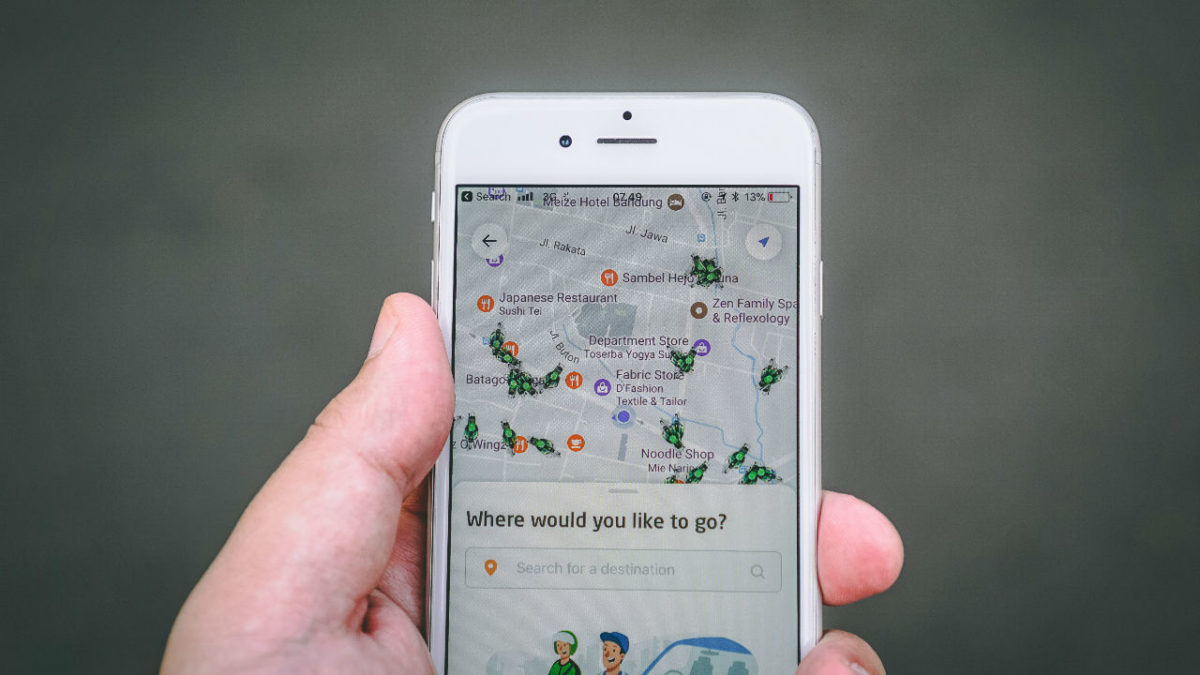
The New York Times found that at least 75 companies receive people’s exact location data from hundreds of apps with location services enabled. The NYT reported that these companies are selling that information to advertisers and investment firms.

Location tracking apps include things like maps and weather, which rely on GPS signals to deliver results.

So, which apps are gathering data? Unfortunately, there’s no clear answer here. The NYT article says there isn’t a definitive list detailing which apps are currently tracking our whereabouts.

Some apps collect location data and sell it to third parties right away, while others hang on to data and use it later.

In those cases, the makers of the app might be saving the information for targeted ads, emails, or something else.

How to stop location tracking on your phone

The process of turning off tracking is likely familiar to most readers. In your phone’s settings, you can opt in or out of location tracking services.

In case you need a refresher, here is a brief rundown of how to do this on your phone:

iPhone location settings

if you’re using an iPhone, check the settings for each individual app. Many apps come with internal settings that allow you to indicate that you don’t want your location used for advertising or whatever else. iPhones 8 or later give you control over which apps have access to the information stored on your device.

What this means is, you’ll have to grant messaging apps permission to import your contact list or social media sites access to your camera.

opt in data collection

Apple’s privacy page, however, does explicitly state that if you allow third-party apps to use your location data, you play by their rules.

Of course, the company recommends you read the terms of service that lays it all out. Not a bad idea, but who really does this?

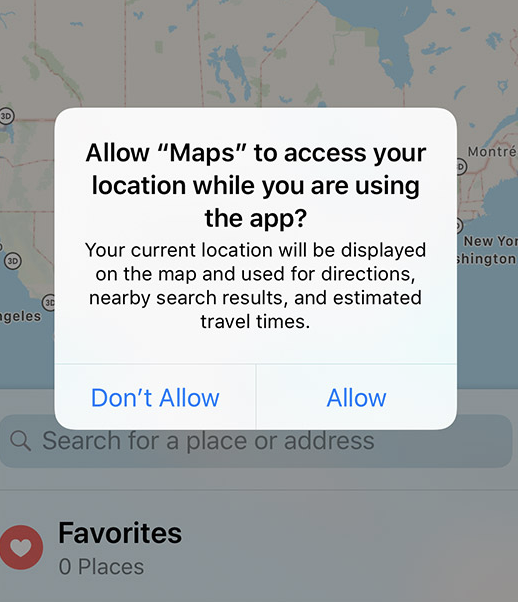
When you install a new app, there’s the familiar screen that asks if you’d like to allow X app to access your location while using the app. Click allow or don’t allow.

To turn off location services, head over to the privacy settings and press location services. There, you can choose which apps have access to location data and which you’d like to disable.

Android location settings

On Android, it’s a little more complicated. Android phones don’t allow you to limit an app’s access to your data to when you’re using it. Instead, apps that have permission to track can do so, whether you have the program running or not.

The newest versions of Android software allow you to limit data collection to just “a few times per hour” but that doesn’t give you any control — it just mitigates the risks of round-the-clock-tracking.

Of course, you can always just disable location services. But, the downside is, it interferes with your ability to use the GPS, call an Uber, or order food.

The problem is, however, there’s no good way to know what happens with the data you give apps access to. The NYT reported that they don’t know which 70-ish companies are buying data from your favorite weather app.

The only solution, again, is combing over privacy policies. Sorry.

Maybe it’s Google you need to worry about?

According to an August 2018 AP investigation, Google tracks location histories even if you’ve turned off the feature.

The problem, at the time of reporting, affected over 2 billion people using Google Maps on their devices. This number represents anyone with an iPhone or Android running the program. According to the support page, once you turn off your Location History for your Google account, it’s off for any device linked to that account.

Google’s location tracking deception may violate more than consumer trust. It also violates the FTC’s consumer protection statutes against deceptive privacy policies.  


How to disable Google Location History (for real)

Browser and iOS

  • Sign into Google
  • Go to Google Account (dropdown menu in upper right corner)
  • Personal Info and Privacy —> My Activity
  • Click activity controls —> Web & App Activity
  • Then, toggle setting to off

Android

  • Go to Google settings from Google Account
  • Tap data and personalization
  • Click web app and activity and do the same

Of course, this information is super vague. Google’s description of the Web & App activity settings is, turning it on saves your activity on Google sites. The benefit, according to Google, is faster searches, better recommendations, and personalized Maps, Search and other “experiences.”

Wrapping up

As you can see, turning off location tracking data is relatively simple. The main thing consumers need to be aware of is actually keeping track of which apps they’re giving their data to.

In many cases, forking over your data has benefits. Most app-based services use your location to deliver their set of offerings — think Uber, Lyft, Grubhub. Google Maps and Waze keep us from getting lost.

And then there’s the fact that it’s just plain convenient to use your Google log-in across sites and devices.

At the end of the day, between the Facebook fiascos and Google’s misleading auto-tracking practices, there are no more excuses to opt out of being informed. So, we’ll leave you with another tired reminder: make sure you read the privacy policies for all of your apps.

How to break a bad habit

Here’s a simple plan for changing your life.

quitting smoking

Bad habits interfere with our lives in a number of ways. They prevent you from accomplishing goals and they might annoy your friends, family, and colleagues.

We all have at least a few. Let’s be real here. Maybe you’re a smoker, a stress eater, or an extreme procrastinator.

To change these habits, you might resolve to change them. But change is easier to talk about than actually put into action. And, often, we revert back to old ways.

That got us wondering, what is it that makes an old habit die hard? And, what does it take to actually change for good?

Here, we’ll dive a little deeper into our capacity for change and whether there’s hope for us yet.

How to change a bad habit

What makes a habit?

There’s something called the habit loop. It’s the three stages that make up a habit: cue, routine, reward.

Bad habits and good habits are reinforced by this system that is inherently built into our psyche. So, with something like smoking, the cue might be boredom, which prompts you to go outside and smoke to get away from your desk. The reward comes from that little break and in the form of satisfying the nicotine craving.

Breaking a habit, means you need to set up a new loop. So — with the smoking example, it might mean purchasing nicotine gum and replacing the daily break with a short walk instead of your usual break. If it’s junk food, it may be a matter of replacing your go-to snacks with an alternative rich in protein vs. sugar.

Some say it takes three weeks to get set in your new ways, but it’s typically longer. We’re talking 60+ days. So, if you’re changing your diet or quitting smoking, you’re staring down a period of discomfort before the change feels natural.

Beyond that long adjustment, we all risk the occasional slip-up. Things like traveling, group dining situations or parties, and stress can all trigger a setback, so sticking to your goal requires some coping skills in addition to playing into the loop.

What about procrastination?

procrastination

Diets, smoking, and exercise-related habits are easier to wrap your head around than trying to change things like productivity habits.

Something like procrastination is an emotional reaction, so changing that behavior requires some internal work of your own.

You’ll need to identify why you put off certain tasks. Is it because it’s hard? Are you afraid you’ll fail? Do you hate the task for some reason?

Fighting your inclination to avoid what’s hard means neutralizing negative thinking. If destructive thoughts pop into your head when you think about a project, you need to change the language. For example, saying “I can’t do this” could be replaced with “If other people can learn X, then I can, too.”

Avoid feeling overwhelmed by breaking the task into smaller bits — even write yourself instructions if that helps.

Author James Clear recommends avoiding goals as your primary motivator. While that seems counterintuitive, it makes a lot of sense. Change is more about committing to a new system rather than getting from point A to point B.

The goal mindset can cause us to look toward that milestone — which might not be sustainable, as it presents an end-date.

So, how much can we really change?

This is an interesting thing to think about. Because there are certain things about us — think personality traits or our sleep chronotypes, that tend to stick with us even as we try to fight them.

A night owl can get up early — and develop that routine, but it never feels 100% natural. Or, an introvert can practice public speaking and load up their social calendar, but those choices might not be in line with that person’s preferences.

But, we’re not fully set in stone. Research has shown that we change a lot during our teen years and in our twenties but changes slow down as we get older.

Our personalities aren’t fixed. But the“Big Five Traits” tend to stabilize when we don’t make an effort to change.  As a point of reference, they are: openness, conscientiousness, extraversion, agreeableness, and neuroticism — sometimes known as OCEAN.

According to Psychology Today, it’s possible to change parts of your personality. The thing is, the person needs to commit to that change and stick with new routines for the long term.

The study cited took place over 16 weeks, and researchers agreed that the short period was likely not enough time to change in any meaningful way. Still, the main takeaway is largely positive — showing promise that we can, little by little, turn into a better person.