
Facebook moderators face PTSD from graphic content

As toxic as Facebook can be for us, it is even worse for Facebook moderators.

Facebook moderator

We first heard about the lives of Facebook’s moderators last year when Motherboard published an inside look at the company’s content moderation process, policies, and challenges.

Instead of enjoying all of the tech company perks from cereal bars to craft beer and foosball,  content moderators see high instances of drug abuse, PTSD, and anxiety disorders.

Moderators often work as third-party contractors in a low-pay, high-stress environment. These people see the absolute worst sides of humanity from blood, guts, and gore to hate crimes and abuse.

Unfortunately, it doesn’t seem like much has changed since August 2018. Facebook still treats moderators like second-class citizens. Worker safety still falls by the wayside.

A stark inequality problem

inequality

A couple of months back, The Verge’s Casey Newton wrote an investigative piece of his own. He found another set of disturbing revelations about Facebook and its content moderators.

The piece primarily covered issues facing the moderation staff like exposure to violent content and conspiracy theories. However, the report also highlighted the vast difference in the work environment and compensation between typical Facebook workers and content moderators.

The average Facebook employee earns about $240,000 per year. The average person working in the company’s Phoenix-based moderation center earns $28,000.

Facebook’s latest campus, designed by architect Frank Gehry, boasts its own redwood forest and plenty of green space. It is ideal for decompressing after a stressful day on the job. Content moderators don’t have that luxury.

The psychological impact of violent content

Stressed out lady

According to Psychology Today, violent content from TV news can increase PTSD, anxiety, and depression. Reportedly, watching the news cycle after a mass tragedy can increase your chances of developing something called vicarious traumatization.

Facebook Moderators, by contrast, aren’t seeing humanity’s worst events through the filter of the cable news station. They’re on the front lines. So as one might imagine, the impact of these videos is likely much more significant.

7

The Verge report describes one instance of a woman named “Chloe” who is asked to moderate a Facebook post in front of a group of trainees.

The post in question depicts a man being stabbed to death while begging for his life. Chloe’s job in this scenario is to tell the group whether the post should be removed. Most people never have to see this type of thing, much less calmly describe the scenario to co-workers during routine training.

The recommended remedy for this vicarious traumatization is to step away from disturbing content, take a break from the news, and try to do something positive. Valid, sure, but when it’s your job to look out for this stuff, there’s no real escape. That’s a tremendous amount of stress to carry around for $28k a year.

It’s clear that Facebook knows the value of creating positive workspaces for their employees — again, see the redwood forest as a point of reference. However, it does not look like they are doing enough for their moderators.

Conspiracy theories spread

conspiracy theory

The effects of graphic content can have a huge impact on the well-being of the people who work inside the moderation centers. However, Newton found another disturbing trend that has some wider negative implications for society.

Apparently, reviewing conspiracy theory posts spreads the information contagion. Basically, those flat-earthers might be doing even more harm than they realize.

The article mentions a moderator who says he “no longer believes 9/11 was a terrorist attack.” Another walks the floor talking about the flat earth theory.

Who should deal with content moderation, anyway?

Facebook on pc, mobile

Moderators are taking action. Two former moderators have joined a lawsuit against the company, citing that symptoms of PTSD were brought on by reviewing violent images on the job.

As it stands, Facebook says that about 38% of the hate speech they detect is done using AI. The company has plans to improve its AI moderation effort, but there’s a long way to go. Still, there needs to be a human moderator to make sure nothing heinous slips through the cracks.

Unfortunately, protecting the rest of us from Facebook’s horrors comes at the expense of a safe workplace and a healthy mind.


Do sleep apps work? What are the best?

We all want to get a better night sleep, but are sleep apps the solution?

Sleeping lady

It’s easy to understand the appeal of a sleep app. Lack of sleep can mess with our health, our happiness, and our productivity.

An app promises an easy fix. It sidesteps those sleep hygiene habits advising us to work out in the morning or stop drinking coffee before 2 p.m.

But, do sleep apps actually work?

Sleep tracking apps have a significant blind spot when it comes to providing accurate insights into your sleep habits. 

Here is a look at what sleep apps can and can’t do, according to science. 

Sleep apps don’t analyze your sleep

Sleep study

Admittedly, we’ve long been confused as to how sleep apps are supposed to work. 

Smartphones can lie right next to you when you hit the sack, but they don’t hook up to your brain or anything. So how can they tell if you’re catching some shallow snoozes or deep in the throes of REM?

The answer is this process called actigraphy. It’s a motion-tracking technology that analyzes each phase of sleep based on what your muscles are up to as you snooze.

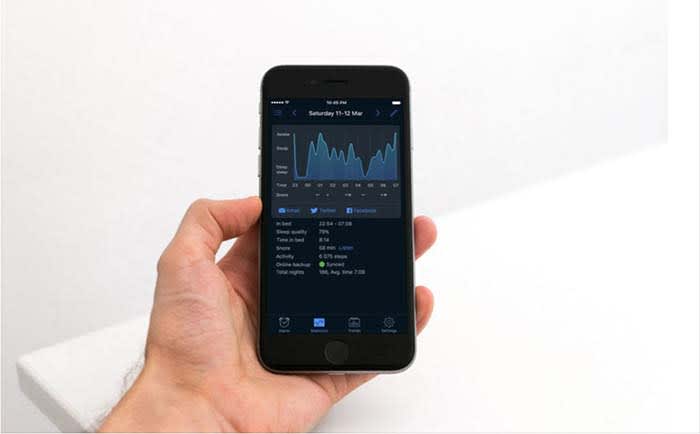
How sleep apps work sounds complicated, but it’s pretty simple. Your movements directly correspond with each sleep phase. Your Fitbit or phone analyzes how much you move. Stillness indicates REM, while restlessness indicates light sleep.

When muscles are inhibited, you don’t get up or jump out of bed while sleeping. However, when you toss and turn, your muscles are uninhibited. Apps can also record snoring, which may be a sign of sleep apnea. The apps might be able to help you identify when in your sleep cycle you are waking up. 

If you are showing signs of sleep apnea, it is in your best interest to consult a doctor and seek treatment. 

The benefit of understanding the sleep cycle is that we feel more refreshed if we wake up during light sleep than deep sleep. Understanding when to set your alarm can leave you feeling more refreshed throughout the day. 

Still, doctors don’t agree on whether sleep apps are worthwhile. Columbia University’s Dr. Carl Bazil says, “I think they’re garbage.” 

Bazil told Inverse in an interview that the writer’s sleep data didn’t make sense — stating that one app showed the REM cycle starting way too early. 

So, what are sleep trackers good for?

Now that the bad news is out of the way, it’s worth pointing out that sleep trackers aren’t complete junk science. Doctors say that sleep apps offer a handful of benefits. It’s just important to note that mobile apps don’t paint a complete picture of your sleep habits and health.

It’s kind of like a sleep diary

Sleep diary

Another benefit of these apps is, they function as a digital sleep diary. Some doctors recommend that patients keep a sleep diary. They function as a way to help patients keep track of things like when they went to bed, what they ate, whether they experienced nightmares or restlessness, and more.  

Like fitness trackers, people get bored with tracking their personal data after a few short months. It’s an extra job to do, and it’s hard to identify how actually to leverage that data for a better experience. 

You can use them to spot trends

Man looking at data

If something changes in your life, a sleep app may be able to help you understand how these changes are affecting your sleep. 

Stress can make you more restless in your sleep, so if you’re feeling tired throughout the day, check out your data. Wearing a Fitbit or Jawbone at night can reveal whether you’re tossing and turning more than usual.

You can also learn how alcohol affects your sleep. Many of us live in denial, believing that alcohol makes us fall asleep more easily. In reality, it makes us wake up more often and get a lower quality of sleep. While we do fall asleep faster when under the influence, the effects of alcohol don’t last all throughout the night. As they wear off, quality of sleep diminishes.

Which apps are your best options? 

SleepScore

SleepScore

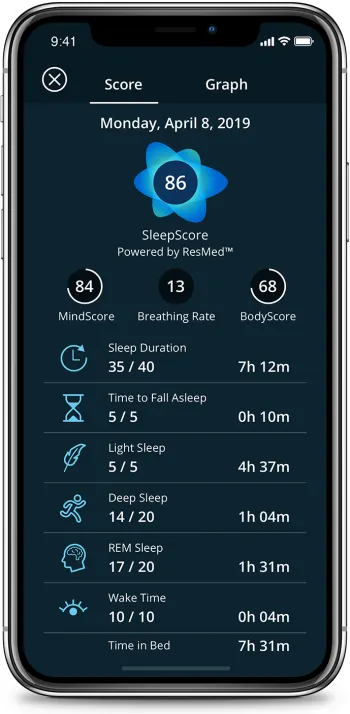
SleepScore provides more detailed sleep data than most of the competing applications. It comes with a smart alarm that aims to wake you up at the perfect time, preventing groggy mornings.

For $50 a year, SleepScore records sleep data long term and helps you create an improvement plan. The free version tracks sleep, but only for seven days at a time. 

SleepScore has partnered with a company called SlumberType, which offers DNA-based sleep insights. But the use of DNA to analyze health/wellness might also be junk science, so it’s important to take their recommendations with a giant grain of salt. 

SleepScore Download now ►
7

Sleep Cycle

Sleep Cycle

Sleep Cycle is a favorite among Apple and Android fans alike. It tracks sleep habits and wakes you up at the optimal time. The smart alarm won’t surprise you. Instead, you’ll select a 30-minute window for your wakeup call. What’s more, Sleep Cycle integrates with Apple Health so that you can analyze sleep habits, as well as your heart rate. 

Sleep Cycle Download Free ►
7

Pillow

Pillow

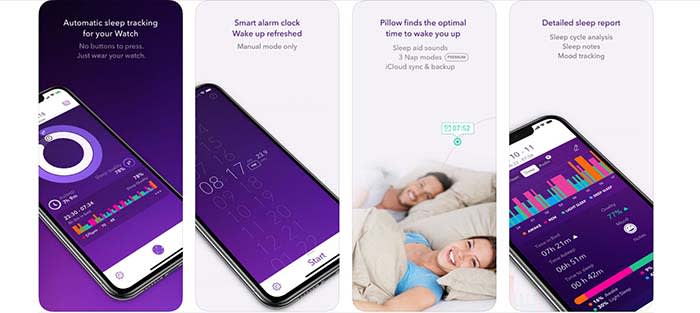
Pillow gives data nuts access to everything they might want to know about their sleep habits. It’s similar to Apple’s built-in sleep tracker, but it comes with a few extra features. For example, you can use the tool to time power naps, recovery naps, and full cycle naps. For the record, who knew there were multiple kinds of naps?

Additionally, Pillow gives you a look at your REM cycles, heart rate, and how long it takes to fall asleep. Maybe it’s not everything you need to know, but it’s useful nonetheless. 

7

Other tech on the horizon

Sleep apps leave something to be desired when it comes to analyzing and optimizing sleep. As a result, innovators are thinking up some clever ways to close the knowledge gap. 

There’s Dreem, a headband that measures brain activity. It’s $500 and designed by Yves Behar. The headband tracks sleeping patterns and conducts an initial assessment. Then, users have the option to enroll in a Sleep Restructuring Program. Here, an app will recommend steps toward better sleep. Also, your friends will all be jealous of your awesome new headband! 

Dreem Headband

There’s Dreamlight’s massive sleep mask that uses your 23andMe results to recommend adjustments to your sleep habits. It then projects infrared light to calm the user into a meditative state. This one kinda makes you look like Cyclops from X-Men. 

Sleep mask

Try some sleep hygiene tips before investing in expensive headgear

You know all of those articles about powering down before bed, ditching screens, and establishing a routine? 

Yeah, yeah. They elicit some groans, but science sides with the boring stuff in this case. 

If you’re struggling with sleep, maybe give some of the analog methods a try first. They are free, after all. At the end of the day, don’t we all just want to sleep better?

How to submit your podcast to Stitcher

Stitcher can be the tool that takes your podcast to the next level.

Making a podcast

So, you’ve created a podcast poised to become the next big thing in true crime, pop-culture, or something new altogether.

Now, you’re thinking distribution, expansion, and the ability to monetize.

Your next move is to submit your podcast to a few platforms. Think Apple, Google Play, Spotify, and of course, Stitcher.

Stitcher Download now ►
9

Below, we’ll look at what it takes to get your podcast on to the popular platform. Although, standing out in a sea of aspiring podcasters may well be another story for another time.

How to get your podcast on Stitcher

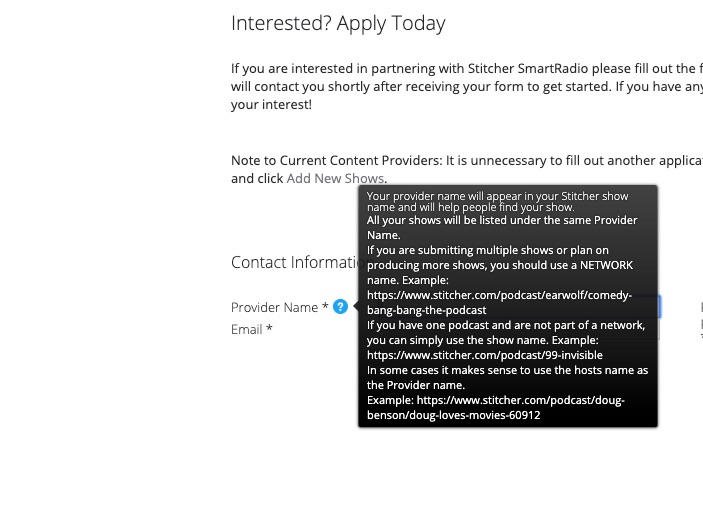
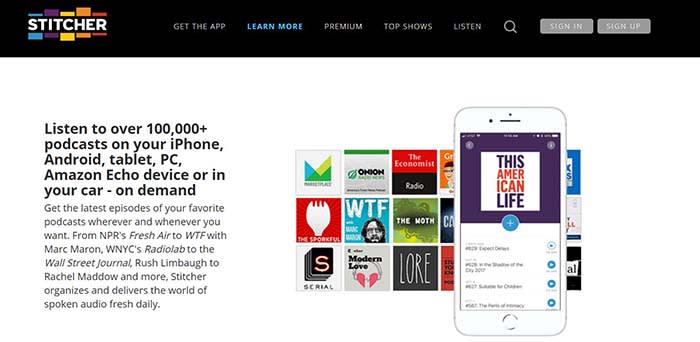
Getting your podcast on Stitcher is relatively easy. All you’ll need to do is head over to the official website, and create a content provider profile.

apply to be a stitcher content creator

Once you’ve created a login, click the “Add Shows” tab in the top navigation.

Add your RSS feed, show details, and hit submit.

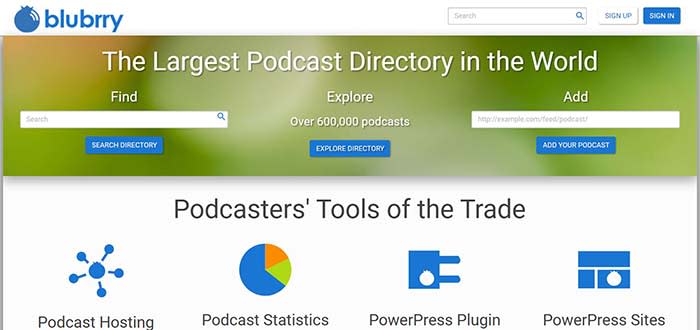
That said, there’s more to it than adding your RSS link. To find your RSS link, you’ll need to go to your podcast hosting platform — BluBrry, Spreaker, Libsyn, etc. From there, you can get the link.

Adding your link will provide Stitcher with your podcast’s metadata, but you can customize further once you’ve connected your episodes.

BluBrry

You can add a description that lets your audience know what each episode is about. This is better than lumping everything together under one umbrella description.

You’ll need to make sure you have a unique podcast title — hopefully, you’ve done this before you hit the record button the first time. However, we’d advise double checking that no one else is already using the name of your show.

You’ll also need to make sure your podcast artwork is 1,400 x 1,400 pixels, and in either PNG or JPG file format. Also, audio files must be in MP3 or M4a format.

Once all of those components are in place, you’ll just kick back and wait for approval.

Free MP4 MP3 Converter Download now ►
7

We should also mention that adding your show doesn’t mean you have a blanket approval for all future episodes. Stitcher manually approves each episode and can take up to a week to approve each show.

Keep that in mind if you’re posting on a regular schedule, as fans will expect shows to drop at a specific time each week.

What’s the deal with Stitcher approval times?

Stitcher

Good question. The Stitcher website isn’t especially forthcoming about who gets approved, and why, at least not at first glance.

According to a user on Reddit’s r/podcasting, Stitcher takes about an hour to approve content creator applications.

In that same thread, a few users mention that Apple Podcasts can take up to two weeks to grant their approval. Other platforms like Spotify and Google Play take a few hours.

8

Now, this is all anecdotal. It’s worth pointing out that approval times might vary based on factors such as listenership or whether you’ve submitted the requested information correctly.

After the initial approval, the platform may take a few days to approve each episode. So, you might want to front-load your content in order to make sure you can schedule regular drops.

Can you make money on Stitcher?

Make money on a podcast

Yes, but Stitcher won’t pay you outright. The whole purpose of Stitcher is to help you extend your reach to more listeners. However, you’ll need to establish partnerships with advertisers on your own.

According to the platform’s Content Provider page, podcasters who can grow a larger audience may be eligible to participate in the platform’s revenue sharing program.

But, if you’re just starting out, your best bet is to work on growing your audience on your own.

Promoting a podcast can turn into a full-time effort, just like any form of marketing.

Again, Stitcher isn’t the only place where you can submit your podcast. For best results, you should submit your podcast to Apple, Spotify, Google. From there, promote your podcast like crazy on social media.

5 best investment apps

Do you want to get in the investment game, but you don’t know where to start? We’ve got the apps for you.

Investing on mobile

You used to actually have to know about the stock market to become an investor. Or, you’d have to employ an in-person financial manager to do the work for you.

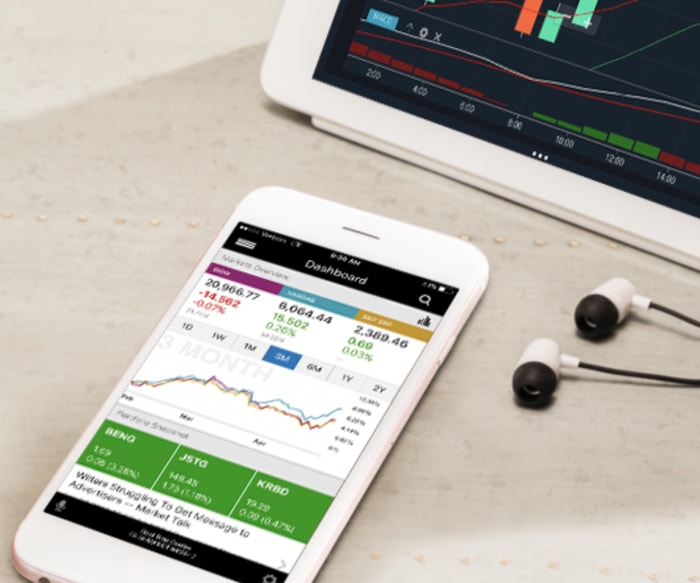
Today, you can download an app on your phone and start making moves. Mobile trading is appealing in several ways. The most obvious is the convenience factor.

The other key benefit is that many of the apps out there don’t require a ton of personal capital to get started. Many popular investing apps allow you to open an account for $5, so investing is accessible even if you’re on a budget.

The downside is, you’re more or less on your own when it comes to making decisions. That means it’s easy to get caught up in a risky decision or enrolling in an account that doesn’t make sense for your financial goals.

If jumping into the investing game interests you, we picked some of our favorite apps to get you started.

5 best mobile investment apps

TD Ameritrade

TD Ameritrade mobile trading app

TD Ameritrade is one of the biggest names in the financial sector. They’ve got name recognition even among those who have no clue what a brokerage account does.

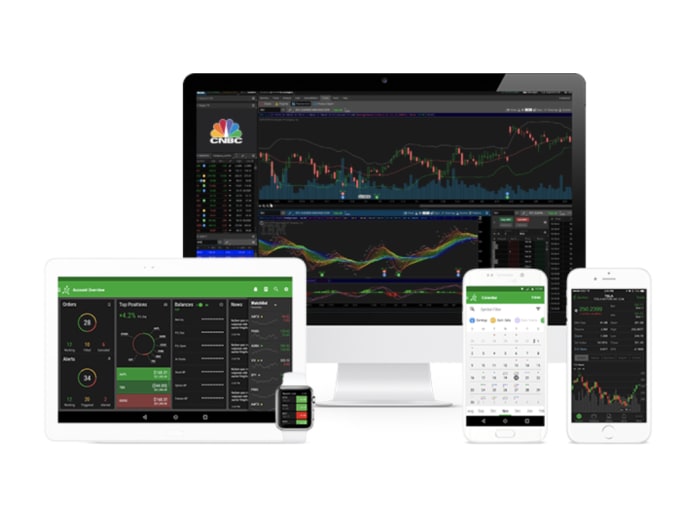
The TD Ameritrade app is free to download, and there’s no account minimum needed to get started.  This app is unique in that it’s easy for beginners to get started, yet still brings the options and features that advanced traders have come to need.

Where TD Ameritrade falls short is, it doesn’t necessarily offer the lowest trading costs. You’ll pay a $6.95 flat rate commission on all equity trades.

However, you do get a lot of bang for your buck — access to third-party market research that allows you to plan your trading strategy. You’ll also get access to 24/7 phone support and access to a wide range of investment options.

TD Ameritrade Download Free ►
7

E-Trade

etrade mobile investing app

E-Trade is another popular option in the digital investing game. The platform works across all devices from iPhones to Androids, to your desktop computer. What’s nice is they offer a ton of educational materials. You can arm yourself with the knowledge needed to customize your investment portfolio.

For the set-it-and-forget-it types, you can go ahead and sign up for an E-Trade Core Portfolio. It is managed by a robot-advisor at a 0.30% rate. To enroll in this program, you’ll need to invest $5,000 — which of course, may be a barrier for some would-be investors.

Some of the rates seem a little high, especially for infrequent traders. Fidelity and Charles Schwab provide a similar service and portfolio lineup. They only charge $4.95 commissions, while E-Trade charges $6.95.

8

Acorns

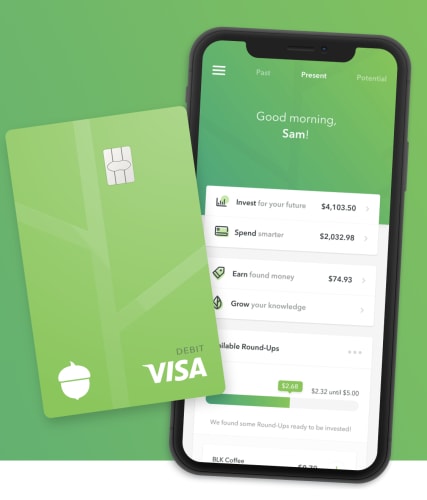
acorns easy investing appAcorns is an investment app perfect for beginners. To get started, you’ll need to transfer just $5 and select a portfolio type. Portfolios range from conservative to aggressive, and the account management fees are a whopping $1 a month.
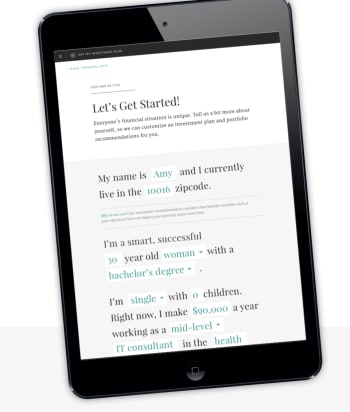
Where Acorns really shines is in its ability to help you save money without thinking about it. Hook up your debit and credit cards to your account and the roundups will round purchases up to the nearest dollar. You can add a multiplier to increase the automated transfer amount. Additionally, you can make lump sum transfers on a weekly, monthly, whatever basis.

Acorns isn’t necessarily the best app for those looking to make the most out of their money. Its hands-off approach works for saving some spare change outside of an account where you might otherwise be tempted to spend that money. We should also mention that the portfolio is quite small, made up of low-cost Vanguard and iShare exchange-traded funds.

Ellevest

ellevest getting started

Ellevest operates on an interesting concept. Founded by veteran finance leader Sallie Krawchek, Ellevest is an investing app that targets women. The idea is that traditional investing tools have long left women out of the equation. They use sports terminology and other types of gendered language to talk about financial products.

Ellevest is easy to use, and you don’t have to be a woman to invest. What we like about it is their fiduciaries, meaning, the advice offered in the app is legally obligated to have your best interests at heart. It forecasts even for things like taxes and downturns. You’ll have a realistic picture of what’s in store for your money.

Inside the app, you can easily set goals and plan for the long-term. Set up recurring deposits or make one-time contributions as you work toward your investment goal. You can update your deposits, timeline, recurring contributions, and targets. There are no minimum balance or withdrawal penalties.

Ellevest: Invest Like a Woman Download now ►
7

Robinhood

Robinhood app

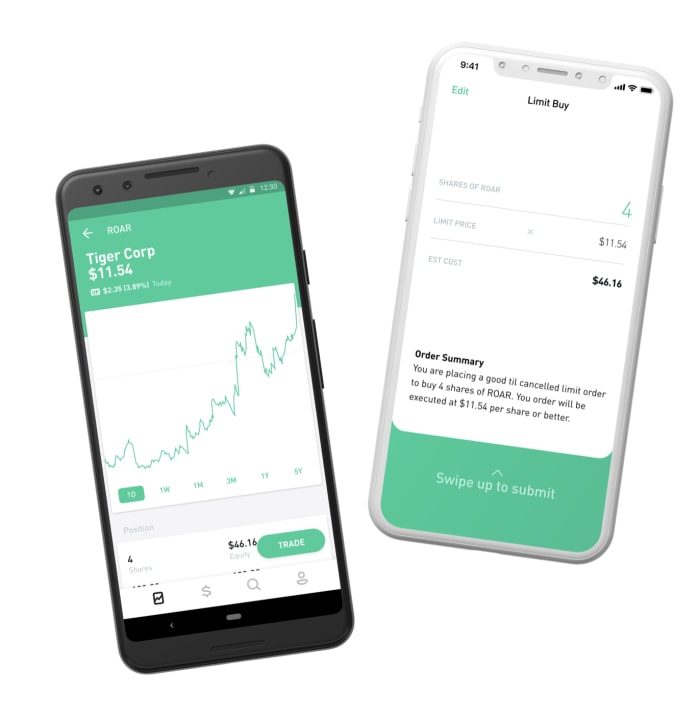
Named after the famed character known for stealing from the rich and giving to the poor, Robinhood is a favorite among Robotraders. Robinhood is a web app that aims to make playing the stock market accessible for people from all income levels and experience.

The main selling point with Robinhood is the app is no frills.  By frills, we mean, they’ve done away with a lot of the fees associated with investing. There are no account minimums, stock trading is free, and you’ll have your pick of over 2,000 ETFs. Robinhood presents an opportunity to dabble in crypto-trading without having to deal with the ins and outs of sites like Coinbase.

The downside is that Robinhood does not offer access to mutual funds or bonds. Your only account option is an individual taxable account, also known as a brokerage account.

Robinhood Download Free ►
7

Moving forward

The best advice we can give for getting into investing is to start slow and work your way up. (And, statistically, you’re better off with a low-cost index fund, rather than individual stocks.) You don’t need to invest a large amount of capital in order to enter this field. Also, you should not invest a large amount of capital until you know what you’re doing. 

100 robotaxis coming to China by the end of the year

China moves aggressively to add self-driving cars to its streets.

China is really going for it. Within a few months, Chinese tech giant, Baidu, plans to roll out a new robotaxi service in one of the country’s biggest cities.

Baidu, which is essentially China’s answer to Google, has announced several AI-powered transportation projects, including partnerships with Ford and Volvo, focused on advancing autonomous driving.

China is already home to the world’s largest car market — which makes sense given its status as the most populous country, and now, they’re gaining ground on Silicon Valley when it comes to autonomous vehicle research.

What’s the plan?

Apollo bus

Autonomous taxis have already hit roads in Singapore, Japan, and Russia — and China’s rollout signifies a potential global shift in how people think about transportation.

Baidu’s plans are the first of its kind. The Level 4 driverless service is powered by Apollo’s Apolong Mini Buses — self-driving shuttles. A quick refresher, the Apollo program is Baidu’s open-source driving platform — essentially software you can drop into any car for an autonomous experience.

The company plans to unveil the taxi service in a few months in the town of Changsha — a city of 7 million in Southern China.

Long term, Apollo’s service can easily be sold to car companies, while the minibusses could be deployed to other markets for commercial use or as a way to fill the gap between buses and individual rideshare services.

Could disengagement be an issue for robotaxis?

Beijing started testing self-driving cars on public roads back in 2017, becoming the first city in China to allow autonomous vehicle testing.

Last year, eight companies tested 56 vehicles, logging roughly 93k miles of driving in the city. Reports just came out last month, detailing the performance of these vehicles, and it seems that they are missing a key safety metric — how often did humans need to intervene?

This metric is called disengagement and refers to any time that a human is forced to take control over the car.

In California, all companies testing self-driving cars are required to disclose the number of miles driven and how often intervention was required. Quartz mentions that while disengagement is a flawed metric, the Chinese tests fail to disclose how often Baidu’s autonomous cars, as well as Pony.ai and Waymo’s vehicles required human intervention.

So, how autonomous are China’s robotaxis?

If you’re not super entrenched in the world of self-driving cars, autonomy is rated on a scale from 0-5.

A level 0 represents no automation — your average car that you control yourself. A level 5 takes over all driving responsibilities. In this case, the passenger can lean back and zone out —answer emails, watch a movie, no need to keep your eyes on the road.

For a little background on the different levels of autonomy, this video provides a deeper dive.

The Apolong buses are level 4 autonomous — so they’ll need to be monitored but will control all aspects of the driving experience.

Between Baidu’s partnerships and the upcoming taxi launch, China could potentially be the world’s largest market for autonomous vehicles.

According to a report from McKinsey, if successful, autonomous vehicles could solve some of the country’s major problems — like traffic congestion and pollution.

But, it’s worth considering the economic implications that come with the move toward self-driving.

The report brings up the point that autonomous vehicles could take over the bulk of the country’s mobility services — which stands to shake up the country’s economic order, shifting the center of the automotive industry to software and data — rather than auto manufacturing jobs.

Snapchat announces big new features

From AR to ads, here’s what Snapchat is planning for the future.

snaplenses

Snap CEO Evan Spiegel just announced a whole host of updates that prove that Snap, the company, is gearing up for an expansion that extends well beyond Snapchat, the app.

Spiegel made the announcement at the company’s first partner summit, telling the audience that new AR features, original content, integrations, and even a Snap-powered ad network were about to launch.

Clearly, Spiegel is hoping for a comeback, one that positions Snap as a serious Facebook competitor. Here’s a look at some of the announcements:

Snap AR: What’s new?

Snap’s new augmented reality experience comes with a range of tools that allow the use of augmented reality tools. As is the case with Google’s ARCore and Apple’s ARKit, the basis of the AR suite revolves around your phone’s camera and lens.

Here’s a quick rundown of what you’ll find inside:

Scan

Scan is Snap’s new camera search function. It’s not quite a camera-powered search engine. How Scan works is, users press and hold the Snap camera screen and the app will present them with a selection of “relevant experiences” based on their environment.

Scan is also designed to read snap codes, bar codes and products to make purchases on Amazon and users can scan their environment to learn more about music playing with a Shazam integration.

8

Snapchat Lens Studio

The Snapchat Lens Studio has been around since 2017, but they’ve added a few things to flesh out the platform.

The Lens Studio now includes a template called Landmarkers, which allows users to transform the world’s landmarks into AR creations (not sure why we need this, but OK).

Other templates include body tracking, pet tracking, and hand tracking — all work the same way — you’ll create AR overlays that track with the aforementioned elements.

Soon, users will be able to create Lens Creator Profiles, which Snapchat says is a new platform for “building an audience” and sharing your Lenses.

The platform also includes something called Photomath. Users can take a picture of their math homework or a receipt and get an answer in return.
Snap Games

Snapchat has announced Snap Games, which is similar to Facebook Messenger’s Instant Games, a mix of ported HTML5 versions of arcade games, in-house originals, and new offerings from Zynga and ZeptoLabs.

According to TechCrunch, the gaming platform stands to increase the amount of time users spend inside the app, which allows them to boost their revenue stream through ad views.

Introducing Snap’s Utility Partners

One reason that Facebook has been able to attract and retain so many (billions!) of users is, Mark Zuckerberg has long embraced third-party app makers. Snapchat’s Spiegel, not so much.

Snap is finally changing its tune and they’re gearing up to compete with Facebook.
Snapchat plans to let apps like Tinder, Houseparty, incorporate elements of their technology into outside apps.

Snap is doing a lot… will it help them grow?

Snap is changing up their approach to making money. Instead of focusing on growth, the company is working to monetize the users they have.

While Snapchat still has a stable user base, there has been no shortage of rumors swirling around the web — predicting the app’s demise.

Still, Snapchat already has some distinct advantages over the competition. And these new features could be a big win for Snap. They have games now! They’ll do your homework! And there’s more…

Speaking of more… Snapchat also does ads now

They’re also developing an ad platform to get in on the big tech business model.

Spiegel claims that Snap’s approach to ads is different than Facebook’s in-app paid ads.

Instead, they plan on selling ads that appear inside other companies’ apps.

Snap Audience Network is similar to Facebook’s Audience Network, which allows apps developers to sign up for the program and provide space for advertisers to display their ads.

Because the platform has stopped growing, Snap is partnering with other companies to bring more value to advertisers — widening the number of people who might see the ad. This makes sense, as they definitely can’t compete with Facebook’s massive audience-targeting tools.

That said, companies concerned with Facebook’s privacy ethics might be attracted to Snap. The company has repeatedly stated that their developer partners do not have access to Snapchat users’ personal data.

Instead, only Snapchat display names are shared with companies when a user links their account to a third-party app.

It’s worth pointing out that targeted ads depend on user data, so advertisers might not get the same return on ad investment with Snapchat as they might when they advertise on Instagram.

Can they compete with the likes of Facebook?

It remains to be seen whether Snap will rise to the level of Google and Facebook and emerge as a serious competitor.

According to CNBC, Snap stock rose following the announcement, yet a lack of growth remains a concern.

That said, Snap is putting its eggs in as many revenue baskets as possible. Perhaps at least one will hatch into something that will save the platform.

What is Google’s ARCore?

Think you have a great idea for augmented reality? Here’s how Google ARCore can help.

Google ARCore

Google ARCore has been around for a couple of years at this point, but was only compatible with a limited selection of Android phones; the Google Pixel and the Samsung Galaxy.

Today, ARCore is out of beta and available on more devices.

ARCore is similar to Apple’s ARKit, they’re both tools designed to bring augmented reality to smartphones in a way that simplifies the process for DIY developers.

Google says that ARCore is designed for building augmented reality experiences you can then add into an app. So, it’s not so much an app builder, rather it’s a platform for incorporating AR elements into your existing project.

Essentially, ARCore is a way for Google to get more people to adopt their AR technology, bringing AR into the mainstream.

ARCore by Google Download Free ►
8

How does ARCore Work?

As a quick point of reference, here’s a video Google put out at the time of launch, which shows the app in action:

Through a collection of APIs, ARCore allows your phone to “sense” the world around it, through motion tracking, light estimation, and environmental understanding.

Here’s a brief rundown on each one and how they fit into the program:

Motion tracking

ARCore collects motion data from your phone’s accelerometers and gyroscopes. What that actually means is, the technology collects information through your camera lens and uses it to understand its position relative to the world around it.

Environmental understanding

Environmental understanding allows the phone to detect flat horizontal surfaces like a tabletop or the floor. This gives your AR creations sort of a “basis in reality.”

Light estimation

Here, the phone measures the lighting conditions to determine the best way to light virtual objects so that they look at home in the space. The process is a digital version of how an artist might shade an object based on what they know about how light works in the real world.

What do you need to get started with ARCore?

Even if you’re not a developer yourself, you can play around with ARCore and learn some basics about developing your very own Android app.

According to Google’s developer page, you’ll need the following items to get started with the platform.

  • An ARCore supported device (this is literally just about any modern phone at this point)
  • A USB cable — which you’ll use to connect your phone to your computer.
  • Unity 2017.4.15f1 or later
  • Android SDK 7.0 or later
  • ARCore SDK for Unity 1.8.0 or later

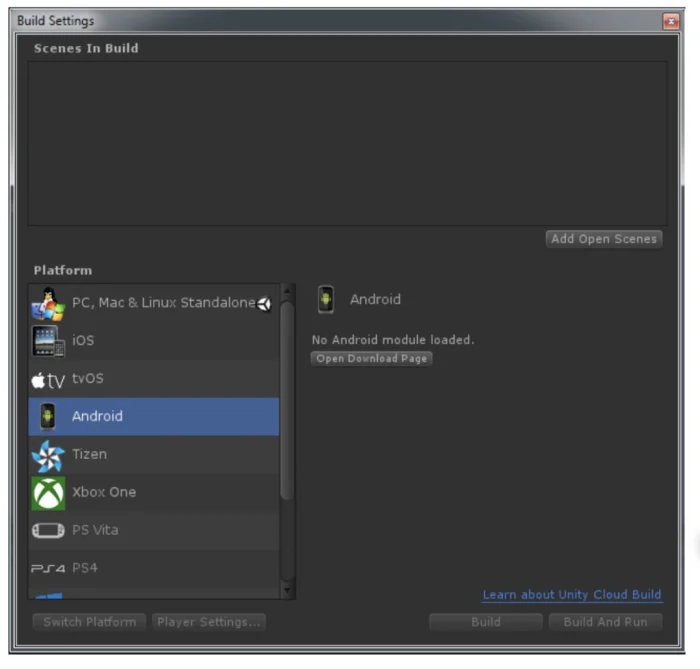
To create a new project you’ll open Unity and start a new 3D project.

To start a new project, you’ll start in the Unity Screen and select your platform of choice from the dropdown menu.

Google ARCore

From there, you can adjust the player settings so that they work with the platform you’ve selected.

Google can probably do a better job when it comes to walking you through the process, so click here to learn more about how to develop your first scene, animated overlays, and more.

ARCore devices

According to Google, supported devices must be certified before they can use the platform.

You can head over to Google’s developer page to see the complete list of devices, but compatibility has extended to most modern phones, including ARKit-compatible iOS devices dating back to the iPhone 6 (good luck deleting enough apps to make room).

ARCore vs. ARKit

Apple introduced ARKit in 2017, and CEO Tim Cook told shareholders that the company sees AR as something that will change the way we use technology forever.

Compared to ARKit, which always presented itself as a way to bring AR development tools into the hands of a broader audience, ARCore began as Google’s Project Tango, the group responsible for Google Glasses.

Who is ARCore for?

Again, app developers seeking an accessible way to bring AR elements into an app.

And it’s not just game developers using the toolkit, ARCore is powering some more practical solutions, by allowing users to add AR elements whether they’re well-versed in its applications or not.

Streem app is using the tool to bring hands-on tutorials to users who need help with household projects.

A real step up from the DIY manuals of the past. Or, there’s Curate, Sotheby’s AR real estate staging app that allows users to imagine how they’d decorate a new property—provides value to consumers, as they can see how this app might work for them.

Amazon AR View follows a similar approach. The app lets you preview how Amazon objects might look in your home.

AR home design

What’s next for ARCore?

The Play Store (and App Store, too) is already loaded with tons of ARCore-powered apps both fun and functional, so it’s clear that we’ll start to see a massive influx of AR apps that will improve in value over time.

In the end, ARCore is a great platform for developers looking to include augmented reality inside their apps.

Facebook launches voice assistant to fight Siri/Alexa

Would you trust Facebook’s new digital assistant?

Zuckerberg

Facebook is cooking up a new digital assistant to compete with Alexa, Siri, and Google. The tech giant’s Redmond, WA team has been working on the project since last year and is currently working on building the vendor relationships needed to bring the project to life.

This latest digital assistant is FB’s second foray into the space — remember 2015’s M? The company also started selling Portal, its video chat device, which uses Alexa to handle more complicated tasks.

What do we know about Facebook’s new AI?

Facebook killed off M last year. It never really took off, and according to The Verge, the assistant needed a lot of assistance from its users. The company is switching things up this time around. Where M was all about messaging, Facebook says the new project is more about “hands-free interaction” through voice, of course, but potentially gesture control.

A Facebook spokesperson told Reuters that the company is developing “voice and AI assistant technologies” designed to work with Oculus, Portal, and future products.

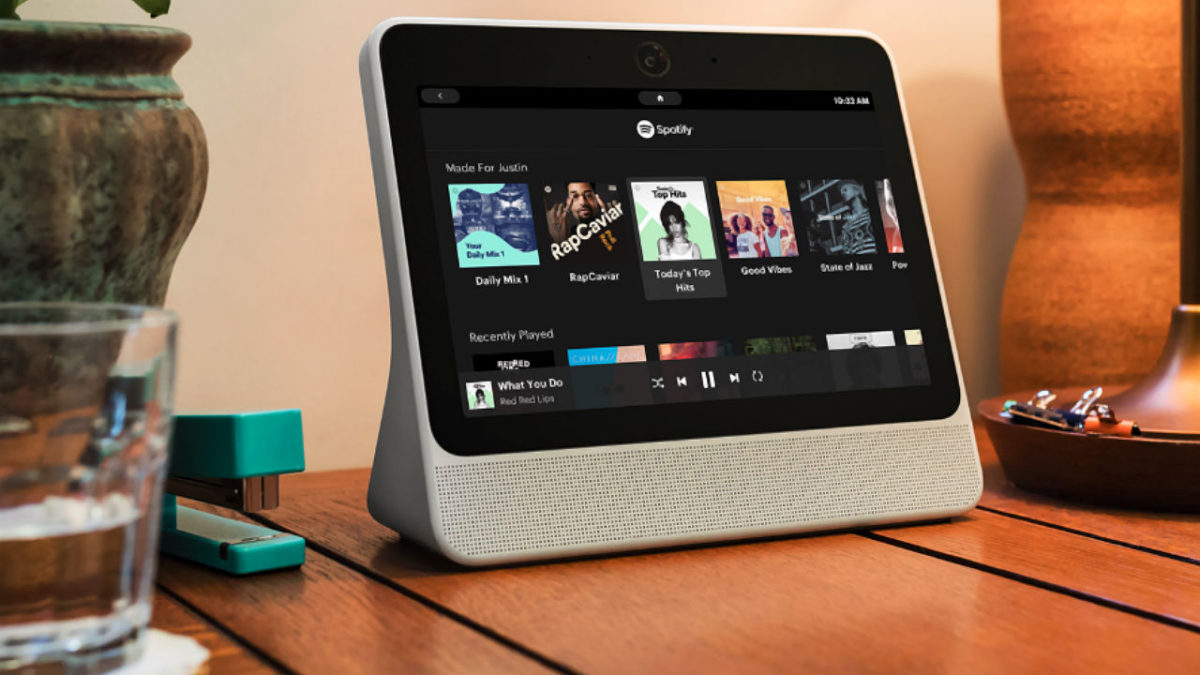
The AI tech will go into the line of Portal displays launched late last year, replacing Alexa as the device’s voice-activated digital assistant. What they haven’t mentioned, however, is how people can use the tool. It might turn the Portal into an actual competitor for Google Home and Amazon Echo.

Can it save the Portal?

Here’s the thing; Facebook continues to make headlines for privacy violations.

So, when the Facebook Portal launched, the irony of a Facebook-powered video chat camera certainly wasn’t lost on reviewers.

The Portal and Portal+ are priced outside of the Google Home and Amazon Echo baseline. Now, Facebook’s smart speaker/screen can stream video, music, and learn Alexa skills, and it’s a pretty reliable home assistant tool.

But entry-level Portals are half-off right now — through May 12, you can get one for $99.

TechCrunch chalks a lot of the Portal’s problems to poor timing. Amid these egregious privacy violations, why launch a device with a video camera and microphone?

The biggest problem, though, might be the assistant. You can say, “hey Portal” and set up a call, but it doesn’t help with anything else. Instead, it passes the buck to Alexa.

Back to the timing issue — maybe they should have waited to launch Portal when they had a built-in assistant of their own.

Portal privacy—is it an issue?

As though they read our minds, Facebook has created a friendly privacy policy page that details how, exactly, the Portal is absolutely NOT spying on you. They swear.

It’s worth noting that Facebook isn’t the only company that oversteps when it comes to privacy concerns. Consider all of the reported Alexa incidents, including this Bloomberg report that Amazon employs actual humans to listen to users’ questions.

Alexa’s software is designed to record bits of audio, listening for the wake word. The idea is, Alexa reviewers transcribe user commands, comparing how Alexa’s responses in the wild compare with her automated transcript — the goal here is to find out if Alexa delivers an adequate response.

Facebook’s problem is, perhaps, the tone deafness that comes through as they navigate this fake news, data breach landscape. They keep saying, “trust us” and talk about positive interactions and so on, but keep messing up.

Portal, does collect data about your calls — frequency, call length, the apps you use, and so on. But, they don’t record the contents of the call.

Wrapping up

In the end, the voice assistant stands to be a formidable competitor for Siri and Alexa — if the company can regain at least some of the public’s trust.

If they can pull that off, a digital assistant might bring more value to the Portal. And, it’s a step toward a new, AI-powered Facebook, as the company adds more hardware devices to the mix.

Zuckerberg’s Facebook privacy push

Zuckerberg says he’s planning to do more to protect our privacy, but does he have our best interest at heart?

Zuckerberg

Social networking CEO Mark Zuckerberg revealed his vision to rebrand Facebook as a privacy-focused platform. His plan is to focus on promoting private interactions, encrypted messaging, and security.

8

Zuckerberg acknowledges that Facebook’s reputation has suffered in recent years. Between fake news and data breaches, the social network isn’t exactly known for protecting consumer information.

As such, it should come as no surprise that a recent blog announcement was met with a heavy dose of skepticism.

Zuckerberg’s aim here is to create “more living room” than “public square.” Facebook’s whole business model depends on harvesting vast quantities of data.

In any case, here’s a little more about the proposed privacy pivot, and whether it’s valid.

So, what’s the Facebook privacy plan?

Facebook privacy

According to the post, Facebook plans to develop the new security features the same way that it developed WhatsApp. It will first focus on making super private messaging, then building the rest of the platform’s features on top of that encrypted backdrop.

WhatsApp Messenger Download Now ►
8

Zuckerberg says that the privacy-focused platform will center around the following components:

  • Private interactions
  • Reducing permanence
  • Safety
  • Interoperability
  • Encryption
  • Secure data storage

This builds on the plan to weave Messenger, WhatsApp, and Instagram messaging into a cross-platform messaging system. Long-term, the plan calls for all apps to be encrypted, so only the sender and recipient can see message content. WhatsApp already has this feature, but Instagram and Facebook do not.

Instagram Download Now ►
7

Zuckerberg says that most of the communication we do takes place behind closed doors. As such, it makes sense to apply the same privilege to social media conversations.

Do we believe him?

Oh, boy… Critics don’t seem convinced that the changes have the public’s best interests at heart.

In the New York Times, Zeynep Tufecki wrote an op-ed response to Zuckerberg’s manifesto. Dr. Tufecki raises some important points — will Facebook stop scraping data about our finances or health? Will it stop creating shadow profiles? What will the FB business model look like moving forward?

After all, Facebook makes the big bucks by charging advertisers to target audiences using FB’s data. Given the latest revelations about the health tracking apps sharing sensitive health information with the platform, it’s evident that there’s still a lot that needs to be done to protect consumer identities.

WhatsApp problems could plague FB, too

Interestingly, Zuckerberg highlights encryption and private messaging as these tools for positive change.

On the consumer side, it makes perfect sense. No one loves the idea that Zuckerberg’s team could pull up their latest text thread.

But, if you look at what’s happened in countries like India and Brazil with WhatsApp, it’s clear that there’s significant potential for misuse.

WhatsApp privacy

As a quick refresher, WhatsApp was reportedly used to spread mass propaganda in Brazil. If users don’t share that information outside the platform, Facebook can’t see what’s happening inside the app.  They also can’t track where that misinformation is coming from.

It’s possible Facebook has their own best interests in mind by incorporating end-to-end encryption. It might help them avoid future legislation for nefarious activity that happens on the platform. They could plead ignorance, as they can’t see where harmful content comes from.

Still, internet privacy highlights a trade-off between individual security and the ability to stop harmful content and regulate abuse.

Facebook probably doesn’t have our best interests in mind

Facebook dislike

Based on his blog entries, Zuckerberg is making an effort to do better. The truth is, the platform won’t stop leaking. Yet, recently news broke that another data breach left more than 540 million accounts exposed.

But other factors pushing Facebook toward private messaging stand to be big money savers for the platform long-term. Marketing expert Jay Baer predicts that more private messaging means more ad space. This means more money for Facebook.

In the memo, Zuckerberg writes, “We have an opportunity to set out where we stand, to decide how we value our private communications, and who gets to decide how long and where data should be stored.”

Here’s the thing: even if Facebook can’t read our chat threads anymore, there’s no guarantee they won’t collect other types of data.

Meet Emma, the Chrome extension that scans LinkedIn profiles

What does Emma think about your career prospects?

Emma Ai

Another day, another algorithm that aims to “make hiring bias disappear,” by way of analyzing your work style.

In the past, we thought that smarts alone were the best way to predict on-the-job success. Today, there’s an understanding that success depends on a collection of things: being a team player, a leader, and someone who is flexible and creative.

Of course, we live in a time where optimization trumps everything. Brands need to bet on their best candidates and now rely on personality tests and behavioral analysis to help filter.

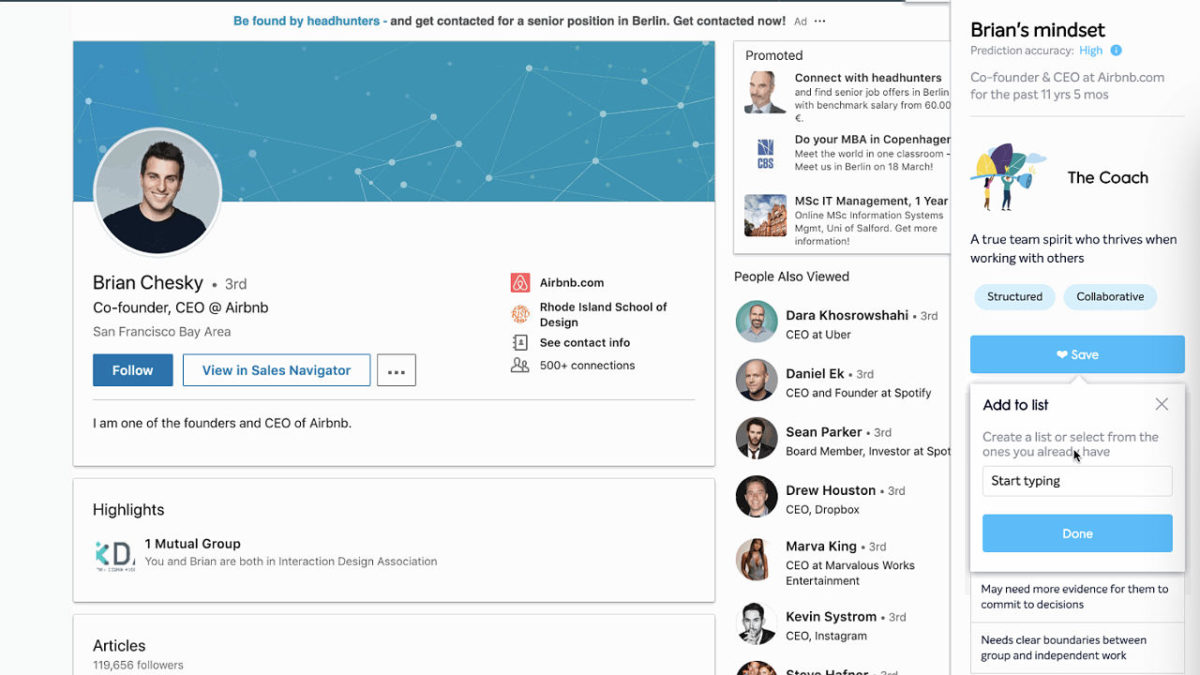
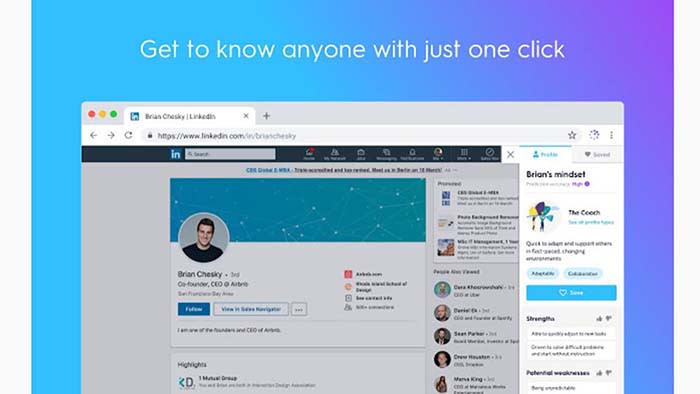
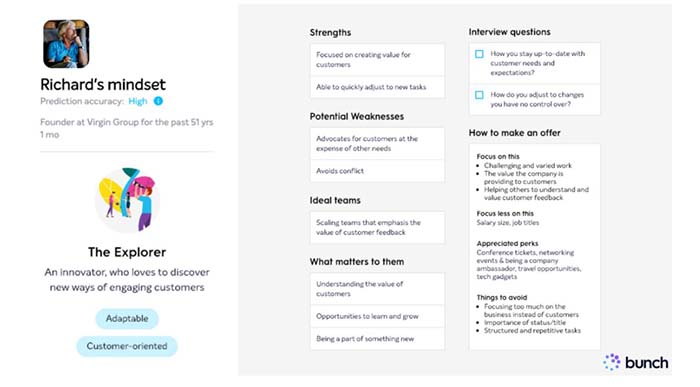
Enter, Emma. This is the latest offering from business intelligence firm, Bunch.ai. Emma is a Chrome extension powered by AI that analyzes LinkedIn profiles to learn more about a “person’s mindset, motivations, and work style.”

While it sounds a bit creepy, Emma provides some different insights than your standard big five personality test. Here’s a little more info:

What is Emma?

Job hunting

Emma is an extension of Bunch.ai’s AI-based hiring tools. Like some of the other platforms we’ve run into, it uses machine-learning algorithms to determine whether a person is likely to succeed in a job.

According to Bunch’s “about us” page, their technology looks for cultural signals within other workplace tools like Slack and JIRA. These insights are then used to “manage culture” and identify how specific teams work.

Recruiters and employers can then look for potential hires that fit in with their organizational culture through Emma. The idea is presented almost like a match-making approach, so companies can fill their offices with “results-driven” or “detail-oriented” staff.

Instead of asking potential hires to take a screening assessment, they can look at their LinkedIn profile, activate Emma, and identify a person’s strengths.

While the goal is to eliminate bias, we’re not so sure. Scanning for cultural words could lead to subtle forms of discrimination that leave out qualified candidates.

Anyone can use Emma to analyze LinkedIn profiles

What makes Emma unique is that you can use “her” insights as a recruiter, an employer, or as a way to gather intelligence.

Emma uses your profile info to highlight strengths, weaknesses, and approach to work. She also sorts you into categories like “coach” or “sage.”

Or, you might be like Richard Branson, an “explorer,” who’s adaptable and customer-oriented.

Richard Branson

Overall, the breakdown is pretty appealing. Users can quickly identify personality traits by way of a sorting hat element. You can ask “am I a sage like Bill Gates or an explorer like Richard Branson?”

Does Emma violate GDPR?

GDPR

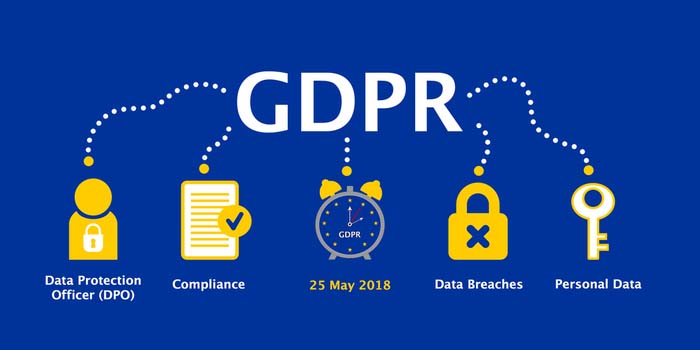
In case you’ve been living under a rock for the past couple of years, the GDPR is a regulatory measure passed last year in the EU designed to protect customers’ digital privacy.

Basically, GDPR dictates that any website that serves EU residents needs to obtain consent to add a user to their subscription list. It also must have a clear privacy policy that lets users know how their data will be used.

Sure while the extension doesn’t violate GDPR protocol, LinkedIn might not be happy with it. Emma actually violates their terms of service, as the AI technically scrapes data from the platform without the subject’s permission.

On Emma’s side, the company says that they aren’t exposing any information that you haven’t publicly shared. Instead, this is information that you’ve voluntarily shared on LinkedIn, so technically, there’s no violation.

This use of AI feels kind of iffy to us. On the one hand, Bunch.ai isn’t wrong. Insights come from information you’ve publicly shared, so there’s no technical violation. Still, this feels like the digital equivalent to that person who loves letting people know that they’re a body language expert.

Hey, it beats a traditional personality test

Personality test

Emma, according to the company website, isn’t out to put you in a box based on big five traits. According to this study, the only trait indicative of workplace success is conscientiousness — and that’s not necessarily true for every type of job.

For example, jobs that require out of the box thinking or creative problem-solving don’t necessarily depend on the worker’s ability to respond to every email ASAP.

We did like a few things about the tool. For one, the profiles break down user information in an appealing way. Also, insights are more about work style than highlighting the pros and cons of your Myers-Briggs personality results. And, it’s pretty cool that users can review their own data.

However, the consent issue kind of rubs us the wrong way. You might be fine publishing information about yourself. However, you might have reservations about a recruiter running your stats through an algorithm.

Users don’t need to ask for permission, either, so anyone can look up anyone else. While it could be useful, Emma is tinged with shades of that babysitter screening tool.