Hold tight, there’s a brand-new Instagram app incoming

Threads will work alongside the main Instagram app and will give users the chance to automatically share basic information with close friends and send more typical messages too

We have lots of different social networks and lots of different social apps these days. Facebook, Snapchat, Instagram, WhatsApp, Twitter. The list could go on with each app having its own specialist feature or use. If you were to take Instagram out of that list and think about what it is good at above all else, you wouldn’t say its best use is staying in contact with your friends. Sure, you can send people messages on Instagram, but you know you’d be more likely to send a message on WhatsApp or messenger than you would be on Instagram.

Instagram Download Now ►
7

This could be about to change, however, as reports are coming in of internal testing at Instagram HQ of a brand-new companion app designed to keep you in constant contact with your closest friends.

Threads will work alongside the main Instagram app and will give users the chance to automatically share basic information with close friends and send more typical messages too

According to journalists at The Verge, who’ve obtained leaked screenshots of the new Instagram app, Threads will allow you to automatically share information like your remaining battery life, internet connection speed, and location with your closest friends. The new Instagram app will also offer a more regular messaging app experience with features like text, voice, and video messaging all of which will have Instagram’s regular toolkit ready to make them look as fabulous as possible.
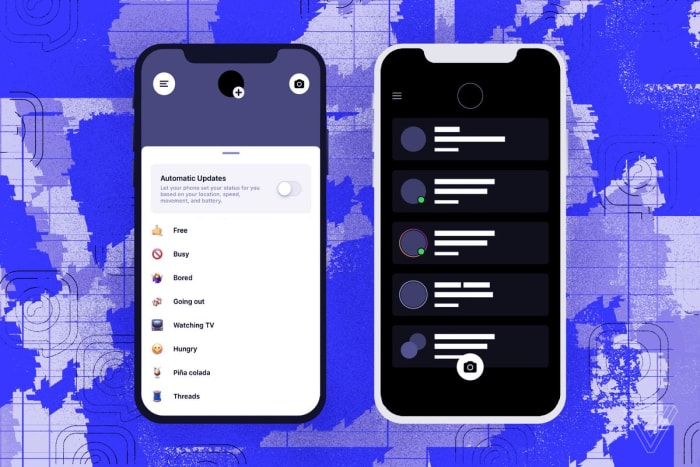
Image via: The Verge

This isn’t the first time Instagram has worked on a separate direct messaging app. The company also worked on an Instagram companion app called Direct, which, you guessed it, was supposed to make it easier for Instagram users to send direct messages to their friends. The thing is though, Direct never actually made it to general release with Instagram pulling the plug before the app made it to the app store. Direct messaging is still an internal part of the main Instagram app.

The key difference with Threads is the addition of the always sharing features that allow you to choose your closest friends who’ll then be ale to always see your live basic information. This automatic sharing will require you to opt-in to the service first, however, before Threads will start publishing your live information. You’ll also be able to view any of your closest friends’ recent Instagram Stories from inside Threads too.
Instagram's crackddown on sensitive content

According to The Verge, the main motivation behind developing Threads could be Instagram’s desire to match the impressive levels of engagement that Snapchat enjoys with its users. The average Snapchat user spends more time using the app than the average Instagram user does. Adding something like constant sharing on top of a regular messaging app experience could be a way for Instagram to try and drive up those engagement numbers.

What is missing in the report from The Verge though, is news of a release date for Threads. At the moment, there is no way of knowing when we might see the new Instagram receive a general release on iOS and Android. Indeed, with other Instagram companion messaging apps making it this far along the development path without being released, there is no way to guarantee it will ever be released at all. We’ll just have to wait and see.
More WhatsApp and Facebook integration

New “WhatsApp from Facebook” tab has been spotted in advanced WhatsApp beta code


WhatsApp and Facebook linkedA lot has been made in recent weeks about the integration that is going on between Facebook, Instagram, and WhatsApp. This goes way beyond the borrowing of app features between the three, like the recent news about a Boomerang feature coming to WhatsApp, which has been going on for years.

The big news is that behind the scenes, Facebook is working on integrating the code of all three apps so that users of each app can interact with each other, even if they don’t have an account on all three apps. Theoretically, when these big changes take place, a WhatsApp user will be able to send a message to an Instagram user from her WhatsApp account.

Obviously, this isn’t going to be the only major change and it has been becoming more and more apparent that Facebook plans to introduce these changes in a drip like fashion. We’ve already seen the share to Facebook feature land on the WhatsApp beta and now we have another little change coming in, designed to highlight how all three of these massive apps are linked.

New “WhatsApp from Facebook” tab has been spotted in advanced WhatsApp beta code

It wasn’t too long ago that serial tech tipster Jane Manchum Wong tweeted about an interesting little snippet she’d found in some Instagram code. Tucked away at the bottom of the settings menu were the words, “Instagram from Facebook”. It had been widely remarked at the time that Facebook had been exerting much more control over Instagram and the subtle new branding confirmed it.

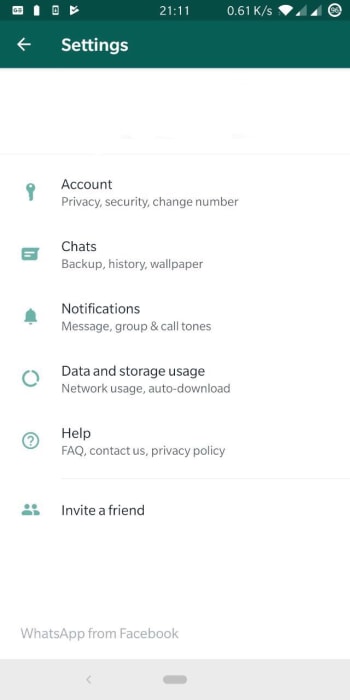
screenshot of new WhatsApp branding
Image via: WABetaInfo

Well, in a worrying development for all WhatsApp fans, that very same branding has been spotted by the guys at WABetaInfo at the bottom of the settings menu. With everything else that has been going on, it would be naïve to expect that this is simply just a few hidden words and not a part of some bigger structural changes going on behind the scenes.

WhatsApp is for adults only

In other WhatsApp news, it also looks like WhatsApp is upgrading its terms of service to target underage users of the messaging app. The new terms of service target users in the European Union who are under 16 years of age and users everywhere else who are under 13 years of age. Once WhatsApp starts enforcing this change, it’ll be an adults only app in the EU and a teens and above app everywhere else.

Also, with the roll-out of the latest WhatsApp beta version 2.19.222, it is becoming clear that the Facebook-owned app is in fact working on a feature that will enforce the new terms of service and ban underage users. If you’re a WhatsApp user in the EU and you’re not yet 16, or anywhere else in the world and you’re not yet 13, it looks like your days on the app could be numbered.

Facebook bulks up group privacy settings

Facebook Group privacy settings are now much clearer and easier to control

Facebook group settings

Facebook and privacy aren’t exactly synonymous with each other. When Mark Zuckerberg first burst onto the scene out of his Harvard dorm room he quickly declared personal privacy to be dead. Since then he’s waged a long, slow, and hard war on the things we hold dearly and, more importantly, privately to ourselves. He knows everything about us, and even knows plenty about people who don’t even use Facebook.

This has worked out well for the Zuck and his company as they’ve been raking in the cash at an incredible rate. At the same time though, Facebook and Zuckerberg are steeped in controversy and the social media giant seems to be stumbling from one privacy-related crisis to another. We don’t need to get into Cambridge Analytica when a record $5 billion fine is so fresh in everybody’s minds.

It could be that these seemingly never-ending scandals are behind Facebook’s latest moves to beef up the privacy settings for Facebook groups. Let’s take a look.

Facebook Group privacy settings are now much clearer and easier to control

A recent Facebook blog post announced some changes to Group Privacy settings. The idea behind the changes is to make it much easier to control who sees what is going on in the groups you’re an admin of. You could see this a tacit admission that the old system was deliberately designed to be too complicated, but let’s not go there.

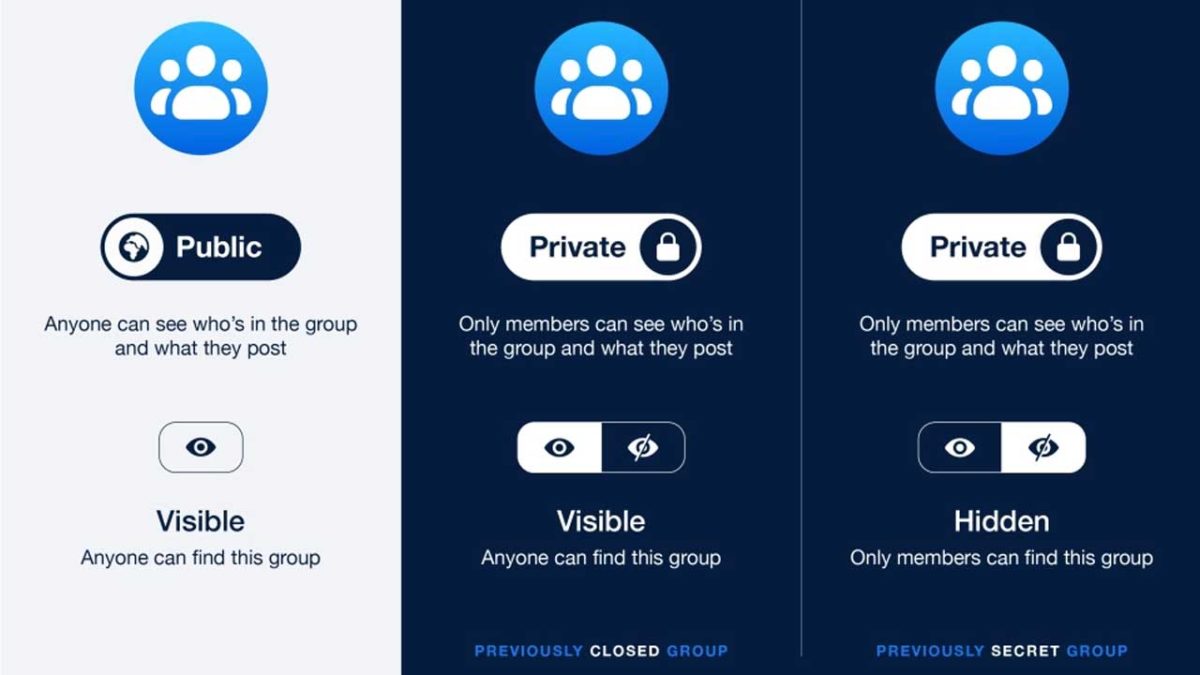
Image via: FB Newsroom

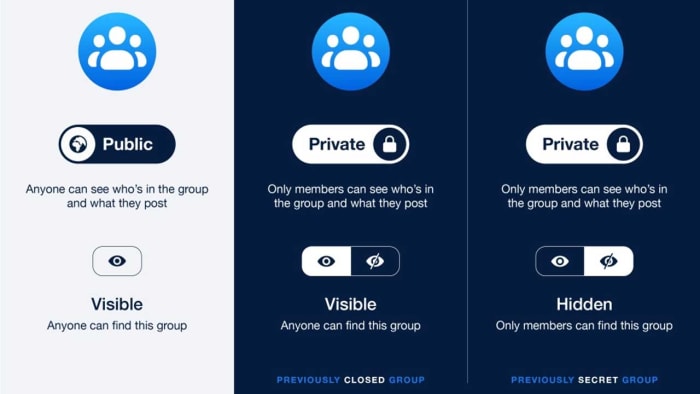
The post reads, “With two clear options, this new privacy model is much more intuitive. Public groups allow anyone to see who’s in the group and everything that’s shared there. With private groups, only members can see who else is in the group and what they’ve posted.” This means that if you post anything in a private group, only the registered members of the group will be able to see it. There is another setting, however, that Facebook has added.

7

Not all Private groups want to be hidden. Sure, the content of the group might contain sensitive information but that doesn’t mean that the group doesn’t want to be discoverable to new members. For these types of groups, admins will be able to set their private groups to “Visible”, if they so wish. This will make the group discoverable by anyone, while the “Hidden” setting will make it only possible for members of the group to find it. Public groups will always remain visible to everybody.

This is only a simple change, but the new Facebook groups privacy model is much clearer. The new options are presented in clear panels with simple switches being used to toggle groups between being public and private, and then with a further switch toggling private groups between being visible and hidden. These new features should be live now. If only things had been so simple from the start.

Facebook dark mode is coming

Soon you will be able to surf through Facebook all in a slick, new dark mode!

Facebook dark

It’s 1 a.m. and you’re in bed. Your phone gets a notification. It’s your friend and they just tagged you in a photo. As you unlock your phone to check the notification, you are blinded by the piercing white light from Facebook.

Well, it looks like your eyes are going to be saved as Facebook will soon have a dark mode. 

This new feature was discovered by Jane Manchun Wong, a sleuth known for uncovering updates for apps like Facebook and Twitter.

As you can see in the tweet above, the text will be white on a black background. There is no official release date for dark mode. Wong discovered the update by looking at the code in the Android app. 

The Facebook groups where people ask for money

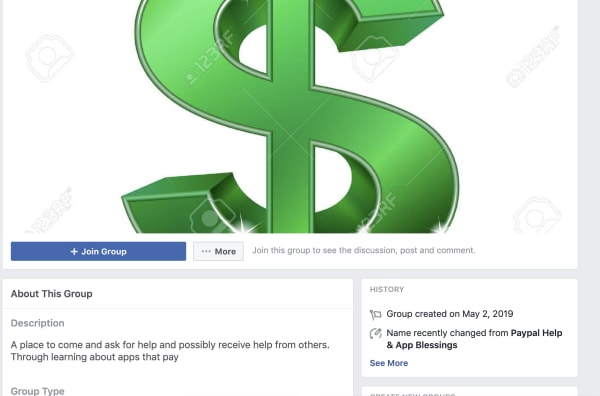
Blessing groups help Facebook users in need ask for financial aid, but are they safe?

Facebook money

It was only a matter of time. Facebook Messenger now makes it easy to send and receive money for free.

A recent piece from The Atlantic brought attention to a new trend on Facebook: asking for money in groups known as “blessings groups.”

While initially, we expected something akin to random Venmo requests, these Facebook groups appear to be a lifeline for needy users. They are also a way for good samaritans to give directly to those in need — in this case, mostly low-income moms who need some help getting by.

Here’s a look at what we learned about this social lifeline:

Messenger Download free ►
7

What are blessings groups and who is using them?

The concept is simple, blessings groups are similar to crowdfunding sites but less formal. Posters often request small amounts to cover basic living costs like gas money to get to work or a few extra dollars for food until that next paycheck comes in.

The key difference between blessings groups and a site like GoFundMe is that the latter is used for large expenses like medical bills, charity runs, or launching a new business. The groups offer smaller amounts and many cap funding at $500 per post.

Most groups have names like App Blessings or Give Me Some $$$. Yeah, they get straight to the point.

facebook groups donate

How it works is like this: people share how much they need, along with some logistical details like preferred method of payment, photos, and some sort of assurance that they’re a “real person” not some kind of a scammer.

From there, the community can respond by asking questions about the request in the comments section. Often, funders upload receipts as a way to add some transparency to the process.

Are these Facebook Groups regulated?

The bulk of the Facebook blessings groups we found were closed groups, operating according to a similar set of rules.

  • No promotional content or live-selling
  • No hate speech or violence
  • You need to have a profile picture that shows your face
  • No referral links to sites like GoFundMe

So, while there are no formal regulations in place, the platform seems to focus on enforcing some basic guidelines. People must be respectful and transparent about why they need the money, how much they’ve received, and so on.

What’s worth pointing out is that this is one of the few places, short of walking up to a person on the street where you can donate directly to an individual case.

Additionally, crowdfunding on Facebook is less polished than the GoFundMe and IndieGoGo campaigns where success often hinges on marketing savvy and attractiveness.

Another thing worth mentioning is that Facebook does offer some guidance for personal and non-profit fundraising. However, it’s unclear whether this approach is included in the rules.

Facebook crowdfunding offers an alternative

If you look at GoFundMe’s FAQ page, it does look like users do have the option to raise money for themselves and the site doesn’t take a cut. However, funds may take a few days to go through. According to the site, it could be up to five business days.

The other thing to consider is that a GoFundMe page might receive more criticism from their community than they would request money in this less formal setting.

Facebook payments are also sent through Messenger, Cash, PayPal, or Venmo, so people get paid immediately. This is huge,  as The Atlantic notes, users seek help on these platforms because they need to pay their gas bill that day or feed their kids.

One group, Give Me Some $$$ (strangers helping strangers and paying it forward), allows people to sign up for VIP membership.  It’s a $10 fee, which goes toward supporting the neediest users.

Bottom line: Facebook fundraising might be the new safety net

Panhandling

While there’s no guarantee that your donations aren’t going to someone lying about their situation for extra cash, Facebook users seem to do a pretty good job sussing out a scammer.
And, what’s more, like traditional crowdfunding, not everyone in need receives funding. That could be due to their conduct online or a case that’s less than glamorous.

Facebook Like and Share buttons may be removed from third-party websites?

The ECJ has ruled that websites using the Facebook “Like” button are responsible for the user data they send to Facebook.

Lots of Facebook like buttons

The Facebook Like button is an iconic symbol of what 21st-century life has become. We can use it to show the world that we like pretty much anything we see online. Your friend posts about something funny they’ve just done, Like it. A local bar is running a special on chicken wings during NFL matches, definitely Like that. Oh, it’s summertime and the sun is shining you say? Yep, I’m going to like that too.

The Facebook Like button and other alternatives from different social networks have become so ubiquitous that more often than naught, we tap them as soon as we feel anything remotely positive. In fact, there is a lot more going on with “Like” and “Share” buttons, a lot more. So much in fact, that they might be about to start disappearing from third-party websites.

8

This ruling might change everything

The reason we’ve slipped into the habit of liking everything we do online is because the like button and others of its ilk have popped on all sorts of websites all over the web. Now, however, thanks to a ruling in the ECJ on a case involving a website called Fashion ID, this might all be about to change.

In 2015, a German consumer group called Verbraucherzentrale NRW (we’ll just refer to them as NRW from now on) sought an injunction against a website called Fashion ID. Basically, NRW claimed that the Facebook Like button on the Fashion ID site was sending data to Facebook that users didn’t consent to share. 

The ECJ has ruled that since the Like button provided a financial benefit to Fashion ID, it is responsible for the user data the button collects and shares.

a like on mobile
WE share a lot of data about ourselves when we visit pages that have like buttons. This new ECJ ruling will mean pages that have them will have to tell us what that data is so that we can give them permission to then share it with a third-party website like a social network.

The move means that when two parties, a social network and a third-party website, both benefit from a social button then both must share responsibility for the user-data collected. Both will need permission, and both will need to make sure their digital infrastructures are compliant with privacy laws and regulations.

With global GDPR changes still fresh in everybody’s minds due to Europe being a regulatory superpower, there is a good chance this judgement could affect websites all over the world and not just in the EU.

Wrapping up

Do you think Facebook’s Like and Share buttons should be removed? Are they causing more trouble than they are worth? Let us know in the comments below!

Surprise: Facebook let advertisers have your phone number

Advertisers probably have your phone number now. Thanks, Facebook!

Facebook

Did you trust Facebook with your phone number? That might not have been the smartest move.

The Federal Trade Commission is about to file a complaint that suggests Facebook misled its users about how their phone numbers would be handled.

You may have uploaded your phone number as part of two-factor authentication. But the FTC says advertisers used those numbers to target you without your knowledge.

The feds are also attacking Facebook for not clearly explaining that users could turn off a facial recognition tool often used for tagging photos. Allegedly, 30 million users were left in the dark about that setting.

This news comes as the government ripped Facebook with a $5 billion fine, although reports say the original fine was supposed to be much higher.

So will Facebook ever learn or are we doomed to report these constant data leaks every single day?

According to the Washington Post, Facebook is agreeing to “submit to unprecedented federal oversight of its business practices, including the creation of a special committee on its board of directors that regularly certifies the tech giant is handling user data appropriately.”

Somehow, we think this isn’t the end of Facebook’s privacy scandals…

Facebook and Google know when you’re watching porn (even if you’re in incognito mode)

Thousands of porn sites are sending your info to Facebook and Google!

Man watching porn

It looks like the prying eyes of the internet are on us even at our most private, intimate moments.

A recent study from Microsoft, Carnegie Mellon, and the University of Pennsylvania determined that about 93% of porn sites leak user data to a third-party. 

Google and Facebook both had trackers on thousands of porn sites. Oracle also had trackers on thousands of porn sites. Even if you are watching porn in incognito mode, there is a chance that both Google and Facebook have followed you there.

Why do Google and Facebook want to know if I’m watching porn?

Google and Facebook might be acting like peeping Toms, but they aren’t using the info for what you think.

Tracking tools can be used to gather information about users. However, spokespeople for both Google and Facebook said that information from adult websites are not used to create marketing profiles.

“We don’t allow Google Ads on websites with adult content and we prohibit personalized advertising and advertising profiles based on a user’s sexual interests or related activities online. Additionally, tags for our ad services are never allowed to transmit personally identifiable information to Google,” a Google spokesperson told Business Insider.

Online privacy

If you see a link on a site to share that content on Facebook, there is often a Facebook tracker on that site. Basically, even though you probably can’t imagine sharing a porn video with your friends and family, Facebook may be tracking the site in case you do.

It’s hard to determine just what Google and Facebook are doing with this information, but it could be an accident.

It could be unintentional

As weird as it sounds, web trackers are not uncommon in the slightest. Even companies like the New York Times use web trackers to use and share data about its readers. 

Both Google and Facebook don’t allow pornographic content on their platforms. Even if you watch 18 hours of porn every single day, Facebook and Google won’t show you a single ad for pornography. Basically, there’s a real chance that although Google and Facebook are tracking you on a porn site, they aren’t necessarily doing anything with the data. 

We can’t tell if that makes it more creepy or less creepy.

What can I do?

First off, sign out of Google and Facebook before you start watching anything racy.

 Next, be careful about which sites you choose to visit, regardless of the content. All porn sites look like, well, porn sites, so it can be hard to find one that isn’t trying to give you a virus.  Also, make sure to run an antivirus program just to be safe:

Malwarebytes Download now ►
8

Finally, there are apps you can download that can stop web trackers in, well, their tracks. You can surf the internet safely with a VPN. Again, just make sure you aren’t signed into Google or Facebook.

7

You can also download DoNotTrackMe. It’s a simple little app that blocks web trackers from tracking you as you surf the web. However, although it will block most web trackers, it has been known to have a few slip through the cracks. Using a VPN is the better option, but if you don’t want to use that, this is a good option as well.

DoNotTrackMe Download now ►
7

And you should definitely ditch Chrome as fast as you can. Google is stockpiling huge amounts of data as you browse. Choose Brave or Firefox for a more private experience online.

Finally, make sure you’re not using Google to search for anything improper. A search engine like DuckDuckGo keeps your information private, while Google sucks it up into their giant database about you.

Wrapping up

Now that we know that Google and Facebook have trackers on porn sites, the question remains: “How will they respond?” If the trackers are removed, it means that it was an accident. However, if they stay put, it means that the data is probably being used for something, and we deserve to know what!

Facebook crushed with $5 billion fine for privacy issues

Facebook has to pay the largest fine ever imposed by the FTC due to their privacy issues.

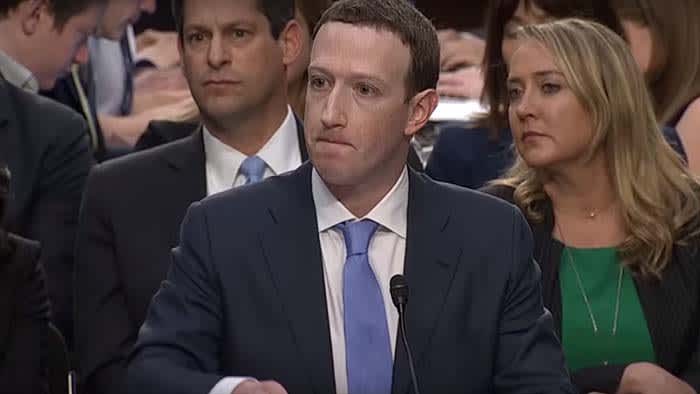
ZuckerbergFacebook privacy scandals are a dime a dozen. However, it looks like those dimes have added up to a $5 billion fine from the Federal Trade Commission. 
The fine was part of a settlement agreement between the FTC and Facebook, and it is the largest fine the FTC has ever slapped on a tech company.

What’s the full story?

In 2018, millions of Facebook users’ data landed in the hands of politically motivated actors in what has come to be known as the Cambridge Analytica Scandal. The data was used for politcal advertising purposes. This fine is largely in response to that scandal.

However, this also leads back to a promise Facebook made in 2011 and has since failed to keep.

In 2011, Facebook admitted to having deceived users about the privacy of their data. Facebook reached a settlement with the FTC and agree to be transparent about what was happening to their data, ask for consent before sharing their data, and give prominent notice before it was shared. 

If you’ve been paying attention to the news, you’d know that Facebook fails to keep this promise all of the time. 

What’s $5 billion to Facebook?

Yes, $5 billion is an insane amount of money. The fact that it is the largest fine ever imposed by the FTC to a tech company is also pretty crazy. The runner-up isn’t even in the same ballpark: Google had to pay $22.5 million in 2012. However, $5 billion is a drop in the bucket for Facebook as a whole. 

Mark Zuckerberg is worth more than $70 billion himself, and Facebook as a whole is worth more than $100 billion. Heck, Facebook made about $55 billion in 2018 alone. 

That’s right. Facebook is worth more than a ransom from Dr. Evil.

Let’s take a look at the numbers:

Facebook compromised data from 87 million of its users. That means that the company is paying about $57 for every user’s privacy they failed to protect.

Don’t you think your privacy is worth more than that?

(function(d,s,id){var js,fjs=d.getElementsByTagName(s)[0];if(d.getElementById(id))return;js=d.createElement(s);js.id=id;js.src=’https://embed.playbuzz.com/sdk.js’;fjs.parentNode.insertBefore(js,fjs);}(document,’script’,’playbuzz-sdk’));

Facebook’s other issues

The FTC has been probing Facebook for more than a year after the Cambridge Analytica scandal. In that time, government agencies have unearthed even more concerning details about the social media giant.

It almost seems like every week there is a new story that pops up about Facebook being involved in another scandal concerning privacy. Heck, we’ve covered so many that it’s kinda crazy:

Wrapping up

This is a step in the right direction, but Facebook still has a boatload of other privacy issues that they need to rectify. With nearly a third of the world’s population on Facebook, they need to be held to a higher standard to keep the privacy of their users safe. 

Facebook takes aim at misleading health products

Facebook reducing the spread of fake “miracle medicine” from the platform.

Instant Weight LossWe’ve all seen them: ads on Facebook promising a miracle cure that’s too good to be true.


These snake oil products say things like, “These pills will make you lose weight, grow your hair back, get rid of those stretch marks, make you live to be 100, and vanquish your enemies!”

As this misinformation about these miracle products counts as fake news, Facebook is making the effort to stop them. 

8

In a recent blog post, Facebook announced that they are reducing the following types of health-related posts:

  • Posts with exaggerated or sensational health claims
  • Posts attempting to sell products or services with health-related claims

Basically, if a pill claims that it can reduce belly-fat without changes to diet and exercise, Facebook will determine whether or not it should be hidden from viewers.

How big is this problem?

Essential oil

You might think that you’re savvy enough to realize when a product is too good to be true, but there are several that continue to dupe people.

For example, Essential Oils are making billions of dollars. Many people buy the product as they think it can treat their symptoms, but there are no studies that show that Essential Oils have any physical effect on the human body. Despite the fact that there is no research that says Essential Oils can treat your symptoms, they are still marketed as being something that can treat diseases like autism. 

Will this affect my page?

Unless you’re trying to hawk some “miracle pills” on your Facebook page, you won’t be affected. However, some pages you might be following will. Facebook said they will be handling the situation the same way they handle clickbait, which means they will be looking for key phrases commonly used in these snake oil sales pitches.

“Posts with sensational health claims or solicitation using health-related claims will have reduced distribution,” Facebook wrote. “Pages should avoid posts about health that exaggerate or mislead people and posts that try to sell products using health-related claims. If a Page stops posting this content, their posts will no longer be affected by this change.”

Keeping on the theme of Essential Oils, let’s take a look at a major Essential Oils Facebook page. Young Living Essential Oils has about 1.5 million likes. The page posts information about Essential Oils and links to buy their products. If they advertise that they can make your stinky apartment smell better, the post should remain on the page. However, if they advertise that the product will help reduce your child’s ADHD symptoms, they should be blocked according to this new policy from Facebook.

Wrapping up

It’s great that Facebook is taking steps to ensure that you won’t see these snake oil pitches. However, we need to stay educated about the misinformation these products spread across the web. Before making a purchase, do some research to determine whether or not the product is proven to work. Also, always consult your doctor before taking a new medication.