
This is why Facebook can’t stop election interference

Facebook unveils some futile policies to safeguard our elections.

Politics

When you’re not scrolling through wedding photos or baby photos on Facebook, you’re being pelted with ads that have been tailored especially for you. Don’t believe us? Go here and click “Your interests” to see what Facebook has learned about you.

That’s right. Every click you’ve made leaves a trail that helps Facebook put you into a box. Advertisers can then perform a surgical strike on your timeline, serving up an ad that’s tailor-made to get you to buy something or vote a certain way.

Facebook’s plan to fight global election interference

voting

Today, Facebook announced that it’s trying to prevent a repeat of history. Over the last several years, foreign groups have weaponized Facebook’s data to manipulate voters. Now, Facebook’s ad transparency tools are available globally.

A post on Facebook’s blog states, “as part of the authorization process for advertisers, we confirm their ID and allow them to disclose who is responsible for the ad, which will appear on the ad itself. The ad and ‘Paid for by’ disclaimer are placed in the Ad Library for seven years, along with more information such as range of spend and impressions, as well as demographics of who saw it.”

Until now, Facebook’s ad verification program was only available in 50 countries and territories. Now, “proactive enforcement” will begin in Ukraine, Singapore, Canada, and Argentina. Humans and computers will review the ads.

See all the political ads Facebook is running

Facebook will also give more countries access to its Ad Library Report. The library reveals that in the United States, more than $649 million has been spent on ads related to social issues, elections, or politics since May 2018. So groups are spending nearly $50 million per month to try to influence you.

The ad library can reveal some interesting stats. Donald Trump’s page has spent more than $14 million on Facebook ads since May 2018. And you can see them all.

Trump adsYou can also click on a specific ad to see who saw it.
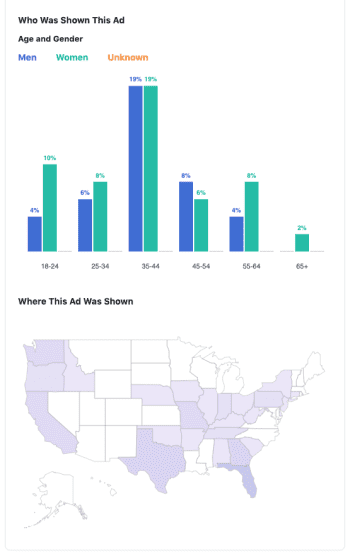
Trump ad performanceRemember, an advertiser can specifically target or exclude audiences. This map shows us that 13% of the ad’s audience was in Florida, a key state to any candidate’s electoral strategy.

We can also see that over the last 90 days, Trump’s campaign has spent $2.5 million, while former Vice President Biden spent the second most at $1.5 million. Something called the International Rescue Committee is third with $1.2 million, and ClassAction.com is fourth with $1.1 million.

Why this won’t work

The real issue is that this tool only helps with ads run by legitimate campaigns or Political Action Committees (PACs). Many of the forces working to undermine democracy keep a significantly lower profile.

Jesus adAccording to Politico, this ad of an arm-wrestling Jesus was created in October 2016. For $1.10, the Kremlin-linked Internet Research Agency was able to spread it around Facebook, targeting people age 18 to 65+ interested in Christianity, Jesus, God, Ron Paul and media personalities such as Laura Ingraham, Rush Limbaugh, Bill O’Reilly, and Mike Savage.
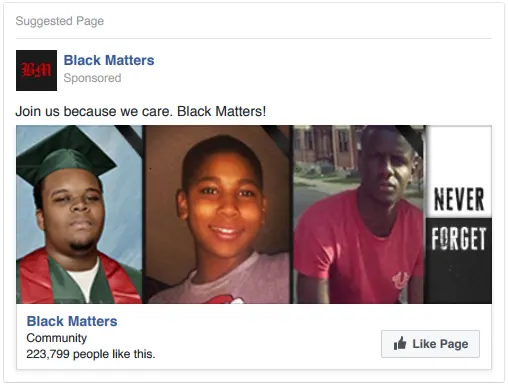
Russian ad

The same Russian group spent $915 to target this ad to people ages 18 or older in Georgia, Maryland, Missouri or Virginia. By accumulating “likes” on these fabricated pages, the Russians were able to amplify future divisive messages organically.

While 29 million Americans saw these kinds of Russian-backed posts directly, the algorithm ended up pushing them out to 126 million Americans during the 2016 U.S. presidential election.

The total number of voters in 2016? Just under 139 million.

Another issue is that Facebook is expecting these advertisers to self-report their goals. According to their policy, “when ads about social issues, elections or politics appear on Facebook products, they’re required to include information about who paid for them.” And what happens if a group doesn’t disclose that information? Facebook expects you, the regular user, to report the ad.
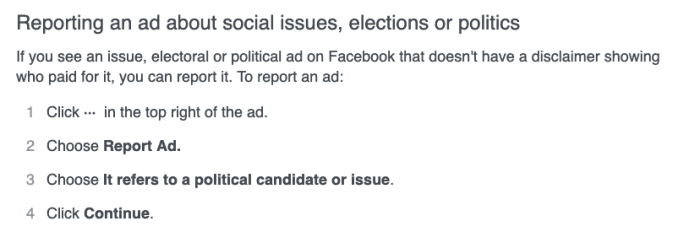
Facebook reportingWhat’s more likely, that Facebook users will police the platform or that they’ll simply scroll by or click like/share?

All of this action comes a month after Facebook refused to remove an altered video of Speaker of the House Nancy Pelosi. The page that posted that video is cranking out multiple videos every week. It’s not running ads. And if it’s not running ads, it’s not required to disclose who’s paying for their content. So Vladimir Putin himself could be running the page and spreading disinformation organically and we’d never know.

It’s possible that news organizations could clamp down on some of these pages by filing a copyright claim anytime a politically-motivated page uses their video. But that is something that only the copyright owner can do.

Facebook policyIn theory, you could upload the entirety of “Avengers: Endgame” to Facebook and unless Disney complains, Facebook wouldn’t take it down.

As much as Facebook tries to clamp down on disinformation, those who want to manipulate the algorithm will find a way to bypass the safeguards. It’s up to all of us to consider our clicks before we make them. And better yet, maybe it’s time to delete Facebook entirely and get your political information from publicly funded straight-shooters like NPR and PBS.


Facebook to try WhatsApp’s message forwarding limits

Facebook is limiting message forwarding on Messenger in Sri Lanka and clamping down on purveyors of fake stories in Myanmar

Fake news and Facebook

We’ve written a lot about WhatsApp’s fake news problem over the last few months and how the problem has also gripped Facebook in various parts of the world. We’re technology advocates and marvel at the way apps can change our modern lives. We also, however, understand the power that social technology on a global scale can have and this is why we report on the bad stuff like fake news as well as the good stuff like helping you get to work on time, for example.

WhatsApp and Facebook’s fake news scandals have been truly shocking with WhatsApp being at the heart of lynchings and horrific beatings in India and Facebook helping facilitate genocide in Myanmar. It is in India where most action has already been taken, with WhatsApp starting a number of initiatives including placing limits on message forwarding capabilities and even setting up an investigatory helpline to look into how users interact with false news stories.

It now looks as though Facebook is starting to apply what it has learned from its WhatsApp efforts in India to other parts of the world experiencing similar problems.

Facebook is limiting message forwarding on Messenger in Sri Lanka and clamping down on purveyors of fake stories in Myanmar

Facebook has released a blog post describing its efforts to halt the spread of fake news across its network and the most telling claim is that Facebook is starting to replicate what it has been doing on WhatsApp. In the post, Samdih Chakrabarti, who is a Facebook Director of Civil Integrity said, “In Sri Lanka, we have explored adding friction to message forwarding so that people can only share a message with a certain number of chat threads on Facebook Messenger. This is similar to a change we made to WhatsApp earlier this year to reduce forwarded messages around the world.”

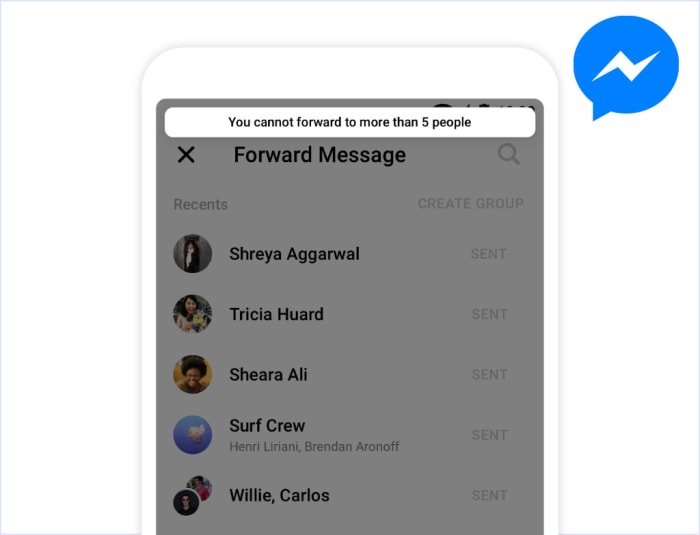
Message forwarding n Messenger limited to five people

A screenshot posted to the Facebook blog indicates the limits Messenger uses in Sri Lanka face will be the same as those faced by WhatsApp users in India. If you’re forwarding a message on Facebook Messenger, you’ll only be able to forward it to five people at a time.

In Myanmar, where Facebook’s fake news problem has helped whipped up hatred of the local Rohingya Muslim population, Facebook is taking a different approach. Chakrabarti went on to say, “In Myanmar, we have started to reduce the distribution of all content shared by people who have demonstrated a pattern of posting content that violates our Community Standards, an approach that we may roll out in other countries if it proves successful in mitigating harm.”

They’re targeting the sources of the problem, which is refreshing, and Facebook even said it is prepared to ban individuals or organizations promoting violence. This echoes past action taken by the social network against the Myanmar military.

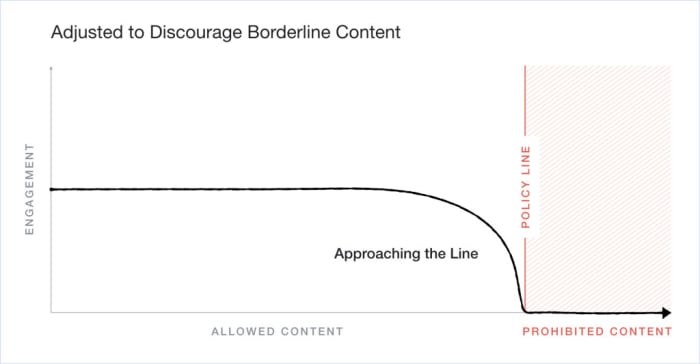
Facebook's new borderline content publication policy
Facebook’s new policy takes a harsher look on content that is close to its prohibition limit, rather than allowing it to naturally engage with other users.

It is good to see Facebook taking affirmative action in its bid to stamp out a true evil that has been able to spread across its network. It is also heartening to hear Chakrabarti recognize that, “This is some of the most important work being done at Facebook, and we fully recognize the gravity of these challenges.”

The damage that has already been done though, can’t be ignored and cleaning up the mess is only half of it. If Facebook truly understands the gravity of the situation, it will act more responsibly in the future to ensure this type of thing never happens again. With similar problems growing at home and with the hugely significant unveiling of Facebook’s planned cryptocurrency, it is more important than ever that the social giant recognizes its responsibilities and moves to fulfill them.

Facebook is making changes to how it ranks public comments

Facebook is trying to make your comments mean more meaningful

Facebook comments are a lot of different things to a lot of different people. Some people beam proudly about their best Facebook comments ever; others recoil at the annoying Facebook comments they have to deal with on a daily basis; while some constantly worry if they can delete their Facebook comments, thinking, will they know if I did?

shocking facebook comments

We all have a different relationship with Facebook, which is why we can see the same things differently. This is why Facebook, and other social networks like Twitter, have long eschewed showing things like your feed or post comments chronologically and have since attempted to rank everything according to how each of us uses Facebook individually. We don’t see the most recent Facebook comments, not even the most awesome Facebook comments; according to the social giant, we see Facebook’s most relevant comments.

7

Facebook is trying to make your comments more meaningful

In a recent blog post, Facebook announced a series of changes it is making to its public comments ranking system. The idea behind the change is to make Facebook comments more meaningful to the people that read them but also in relation to the original post they’re commenting on.

Facebook states, “Ranking is on by default for Pages and people with a lot of followers, but Pages and people with a lot of followers can choose to turn off comment ranking. People who don’t have as many followers will not have comment ranking turned on automatically since there are less comments overall, but any person can decide to enable comment ranking by going to their settings.” This means your comments likely won’t be ranked if you say something about a post from a friend or family member but if you comment on posts by a popular Facebook Page or account, they will be.

How Facebook ranks comments

Image via: FB Newsroom

Facebook looks at a number of different factors when it ranks a comment. These are integrity signals, which are designed to keep comments safe by removing comments that violate Facebook’s Community standards and clickbaity comments; how Facebook users have responded in official Facebook surveys; comment interaction; and the various controls Facebook gives the poster of the original post. You can find more information about toggling ranking on and off for comments on your posts here.

What changes is Facebook making to its comment ranking system?

There are two major changes Facebook is making to how it ranks public comments. Comments will rank higher if they have interactions with “the Page or person who originally posted.” The other factor Facebook is now considering is whether the comments or reactions are from friends of the person who made the original post.

Facebook hopes that these changes will make the publicly viewable comments on prominent posts much more meaningful to the people reading them. This slight tweak, however, will no doubt delight some Facebook users and annoy others.

Facebook Libra: Social Giant signs massive deal with Visa, Mastercard, PayPal, and more

Facebook’s crypto coin will receive more than $100 million from more than a dozen major backers.

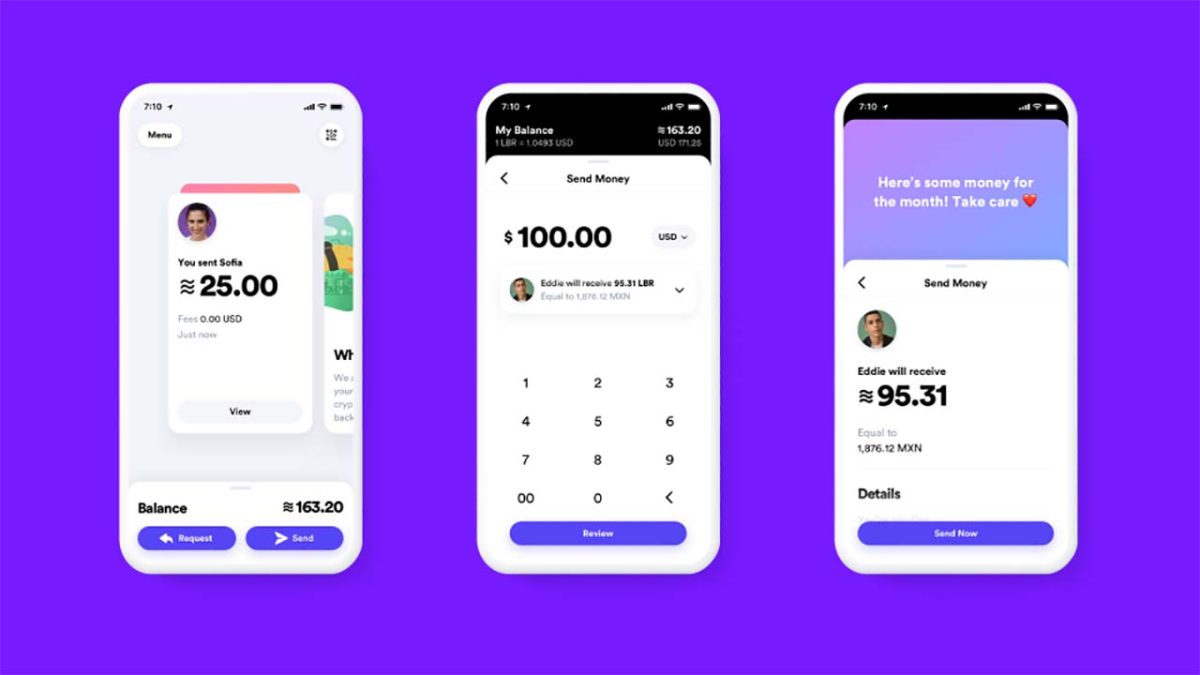
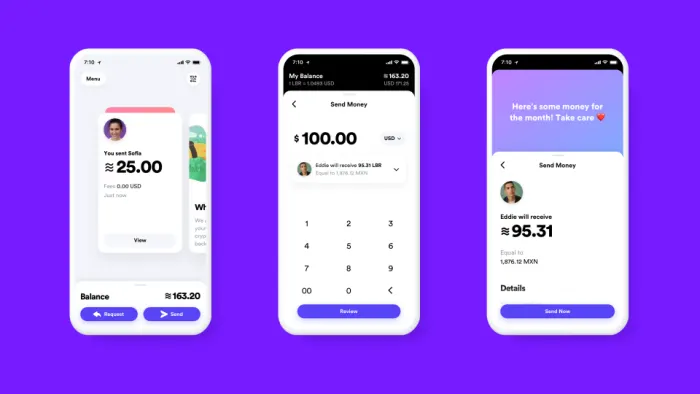
Facebook is branching out from its core social media offering yet again. It has been rumored for a while that the big blue social network has been working on its very own cryptocurrency and Facebook made the plan official today. The launch of Facebook’s virtual currency will be unlike other cryptocurrencies as the company has reportedly signed deals with some of the world’s leading financial institutions, who’ll back Facebook’s new crypto-coin, Libra. You’ll keep your Libra in a digital wallet app called Calibra.

Facebook Calibra

According to a report by the Wall Street Journal, Facebook’s crypto-coin will receive around $10 million worth of investment from each of more than a dozen major backers. Facebook plans to use the funds, which will total over $100 million, to assist in the development of the coin as well as the infrastructure needed to support it and the blockchain technology it will need.

Rumors around Facebook’s virtual coin had been swirling for months. The coin first hit the news in December and the BBC reported in May that Facebook is planning to launch the crypto-coin in the first quarter of 2020 and that at the time Zuckerberg and his company had already signed up at least 12 countries where Facebook users could use the cryptocurrency as a digital payment. It was also reported in May that Facebook had set up a financial services company in Switzerland.

7

Why is Facebook making a crypto-coin?

Facebook wants to create an affordable and secure way for Facebook, WhatsApp, and Instagram users to make and send payments, even if they don’t have a bank account. With smartphones putting Facebook into the hands of billions of users around the world, who wouldn’t otherwise have access to a PC, more and more Facebook users don’t have access to things most of us take for granted. Making a card payment online is impossible to many and Facebook is working on a way to allow these users to buy things both on Facebook or through third-party partners, and send money to other users across Facebook, Instagram, and WhatsApp.

Facebook wants to help you buy things online, even if you don’t have a bank account.

It isn’t just for users without bank accounts, however. Fintech companies that offer online banking services via apps, like Revolut, have been winning lots of customers recently, and it seems Facebook wants a part of the action. We all like it when apps make things easier and they’ve been making banking easier for some time now. With its new cryptocurrency, Facebook is trying to bring together the ease of use offered by these new types of banking apps and the security that comes with cryptocurrencies stored on the blockchain.

Calibra app
First look at the Calibra app

The fact that Facebook now has major backing for its new coin puts it in a very strong position. Cryptocurrencies are famous for being unstable in value but with major financial backers and a number of nations behind it, Facebook’s Libra has a very solid foundation indeed.

Zuckerberg knew about Facebook’s privacy issues and did nothing to stop them

In 2012, Facebook knew about an app that could steal millions of users’ data and did nothing to fix the problem.

Mark Zuck

Emails show that Facebook CEO Mark Zuckerberg had prior knowledge of Facebook’s privacy issues, according to a report from the Wall Street Journal.

One of the emails from April 2012 is deeply concerning. It shows Zuckerberg and Facebook insiders learning about a third-party app that took data from tens of millions of Facebook users while ignoring Facebook privacy policies.

The app was eventually suspended, but sources told the WSJ that this did not cause Facebook to look into their privacy issues.

Keep in mind that this was six years before millions of users had their data compromised in the Cambridge Analytica Scandal. It was also long before we knew about other apps that were stealing our data without our knowledge. 

To clarify, none of the emails appear to show Zuckerberg deliberately disobeying Facebook policy. However, they do show a huge lack of responsibility and respect for Facebook users. 

The emails were discovered by a probe from the Federal Trade Commission and were later reported by the WSJ.

Our take

Recently, Zuckerberg has been pushing privacy for Facebook. He wants to add more tools so users can be protected on Facebook, Messenger, WhatsApp, and Instagram.

Although some were inclined to believe him, this news suggests that Zuckerberg is only doing so because Facebook was caught with its pants down.

Your privacy and personal data should be your top concern when you’re on social media, and Facebook’s users deserve to be on a platform where the company has the same concern.

Deepfake Zuckerberg video tests Facebook policy

Deepfake videos can heavily influence voters, but will Facebook do anything to stop them?

Zuckerberg

“Imagine this for a second: One man, with total control of billions of people’s stolen data, all their secrets, their lives, their futures. I owe it all to Spectre. Spectre showed me that whoever controls the data, controls the future.”

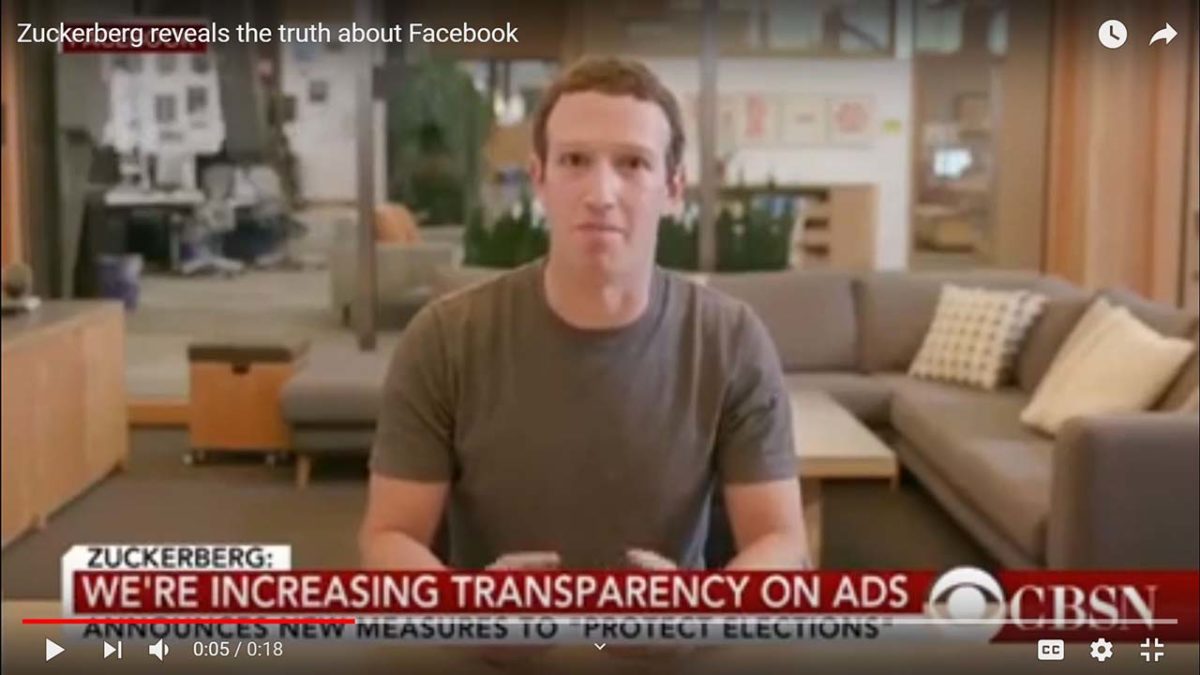
Those sinister words came from the mouth of Facebook CEO Mark Zuckerberg… or so you’d think. The video was actually a deepfake made for a much different purpose. Take a look.

How will Facebook respond?

The deepfake video was made to challenge Facebook’s policy for removing fake content. Recently, the social media giant was in hot water for not removing a manipulated video of Nancy Pelosi. 

Facebook has been trying to do more to stop the spread of fake news. They have increased their reporting tools for users so that they can work quickly to get the content flagged.

That Pelosi video had millions of views. Although Facebook eventually labeled the video as “fake,” they did not remove it from the site. However, the video got thousands of views before getting flagged. Now, Facebook is left to figure out if they will remove the video, and how long will they wait before they take action.

Many individuals, including Pelosi herself, called out Facebook for not removing that video. However, Facebook stuck by its guns.

“If it was the same video, inserting Mr. Zuckerberg for Speaker Pelosi, it would get the same treatment,” said Facebook director of public policy Neil Potts at a parliamentary hearing.

With this new deepfake video of Zuckerberg, we will see if what Potts said was true. Will Facebook let the video stay up? Or will it take a different stance when the CEO is the target?

How to spot deepfake videos

Fake news

With the next presidential election on its way, deepfake videos could potentially sway thousands of voters. Luckily, researchers from Dartmouth College are creating software that can help spot deepfake videos.

Essentially, the software analyzes hours of authentic footage of political influencers like Pelosi, Donald Trump, and Joe Biden. The software pays attention to things like how their head moves, speech patterns, and facial expressions so that it can tell if something is authentic.

According to the researchers, the software is about 95% accurate, but they are optimistic that they can get it up to 99% within the next six months. Until detection software can outpace the fake video producers, a quick trick is to look at the eyes. Deepfake-created humans almost never blink.

What’s new with Facebook’s redesign

Facebook tries to reinvent itself. Will it work?

facebook new look

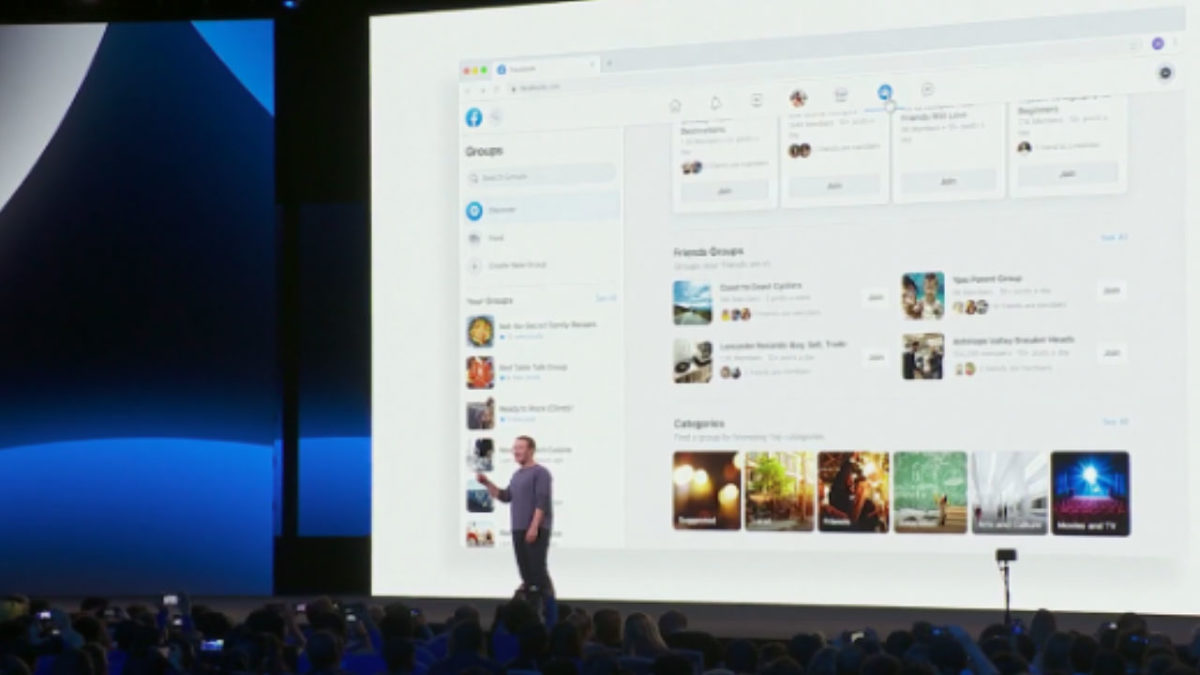
Facebook rolled out a redesign in the wake of its many recent privacy scandals. Today, it feels like Facebook is trying to wipe the slate clean with a minimalist interface and a pivot toward digital community-building.

Just last month, Facebook announced that significant changes were coming to the mobile and desktop platforms. They announced the changes would shift away from the news feed and toward the two features people still use: Events and Groups.

Watch the Zuckerberg announcement here, if you’re so inclined:

But, the gist of it is, Facebook is aiming to get more personal. The company is doing so by putting some distance between features like Groups, Messenger, and Events and the increasingly problematic newsfeed.

Here’s what’s changing:

New look, new feel

Facebook redesign

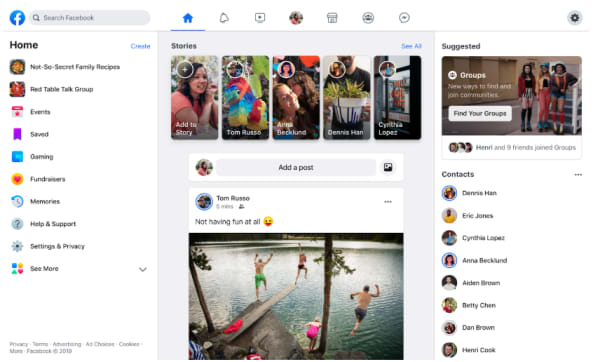
So, before we dive into the real meat of the redesign, Facebook has made some notable aesthetic changes. Instead of the big blue header at the top of the page, the site includes a lot more white space, with light gray icons for accessing your newsfeed, notifications, Messenger, and Facebook Watch.

They’ve also updated the logo, shifting gears from an F within a blue or white square to a brighter, circular icon.

7

It’s all about the groups

suggested groups

Zuckerberg is all about building communities these days. Groups represent a big part of that shift from a centralized newsfeed to a core focus on groups.

That focus on community, according to Zuckerberg, means building out both public and private groups on the platform. Increasingly, users seek private spaces where they can post content that reflects shared interests in front of an engaged audience.

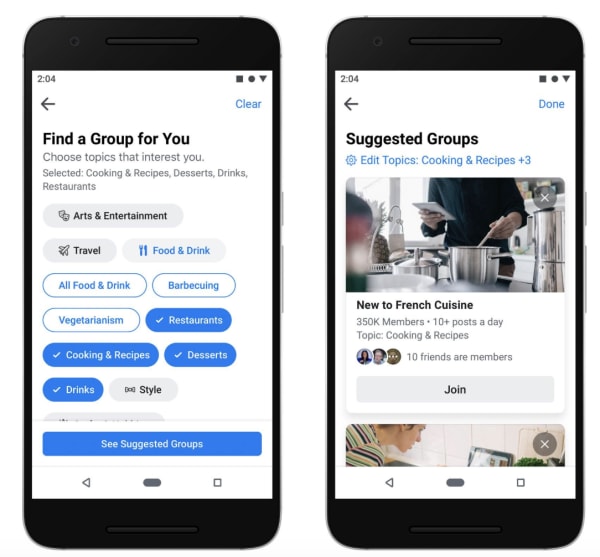
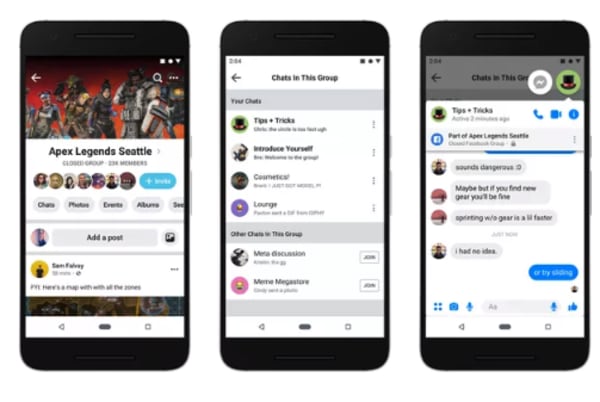
Facebook also plans on helping you expand your online circle by recommending groups based on past interests and interactions. Plus, they’ve improved the feed, making active Groups easier to find — within a personalized feed. Now, you can separate group posts from the regular newsfeed, making it easier to engage with other users.

Meet new friends

new friends on facebook

Remember when we could meet people online? Sure, dating apps are huge, and there are apps like Meetup designed to help you find a book club or a few local folks to go with you to happy hour.

7

But, the days of the chatroom are long gone — perhaps for a good reason (namely, safety).

It’s long been sort of taboo to add someone you don’t know in real life on Facebook. However, part of the redesign involves changing what’s become a digital norm.

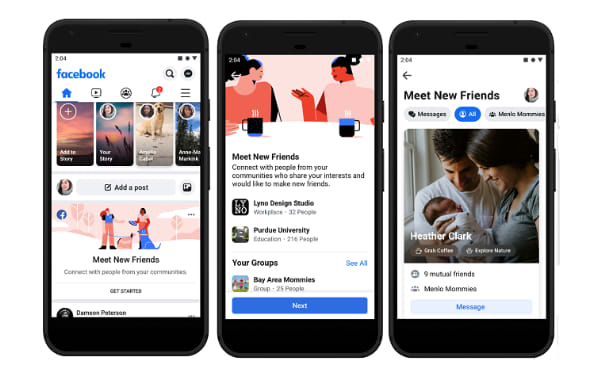
A new feature, Meet New Friends, aims to connect people with strangers who share an interest or connection. The goal is to help them meet up IRL.

Facebook Marketplace got a makeover, too

Facebook marketplace

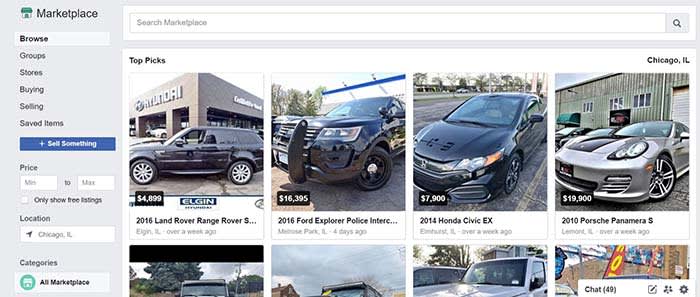
The social network’s e-commerce service, called Marketplace, also got an upgrade.

People selling goods through the platform will now be able to to take payment directly from the platform, including shipping costs.

As it stands, marketplace users have to arrange for payment outside of the platform — though they can do so inside Messenger.

Events

facebook events new look

Another area where Facebook is diving in head-first is its Events page. As is the case with groups, Facebook wants to help you find more things to do near where you live.

The new tab is now next to the Groups tab in the new menu bar layout. It offers a more detailed map view that allows you to see where the events you are interested in are located in relation to one another.

Facebook Watch is front and center

Wait, what is Facebook Watch? Don’t worry; if you’re asking that question, you’re certainly not alone. According to a Diffusion study, 50% of adult Facebook users in the U.S. had never heard about it.
Facebook Watch aims to capitalize on streaming trends — it’s trying to hitch a ride off of the success driving Netflix and YouTube. But, there aren’t any notable “hits” on the platform.

Facebook says that 75 million people now use Watch for at least one minute per day, and not necessarily all at once.

While we get why Facebook insists on making us notice Watch — it’s hard not to feel as though they’re really forcing us to pay attention.

Privacy

Privacy has been Facebook’s Achilles heel going on a few years now.

From Cambridge Analytics to the ongoing debate about the company’s data collection practices, the company has had some difficulties winning back the trust of the public.

To combat this image problem, Zuckerberg has been promoting a message centered around privacy. It runs in stark contrast to its old narrative as this digital public square.

Zuckerberg said, “Privacy gives us the freedom to be ourselves,” pointing to a shift in how we interact online these days.

In the past, the purpose of posting was to reach as many people as possible. Today, Zuckerberg says, we now crave a sense of intimacy online.

Which, in all honesty, is probably true.

Wrapping up

If the recent news about Facebook’s shareholders wanting to hire a chairman to oversee Zuckerberg is proof of anything, it’s that the company wants to change.

These new design changes to Facebook are nice, but we are hoping that the changes to the social media giant go beyond the cosmetic level.

Facebook shareholders vote to overthrow Zuckerberg (it doesn’t work)

Shareholders vote for a new Facebook chairman. Why won’t it work?

Zuckerberg

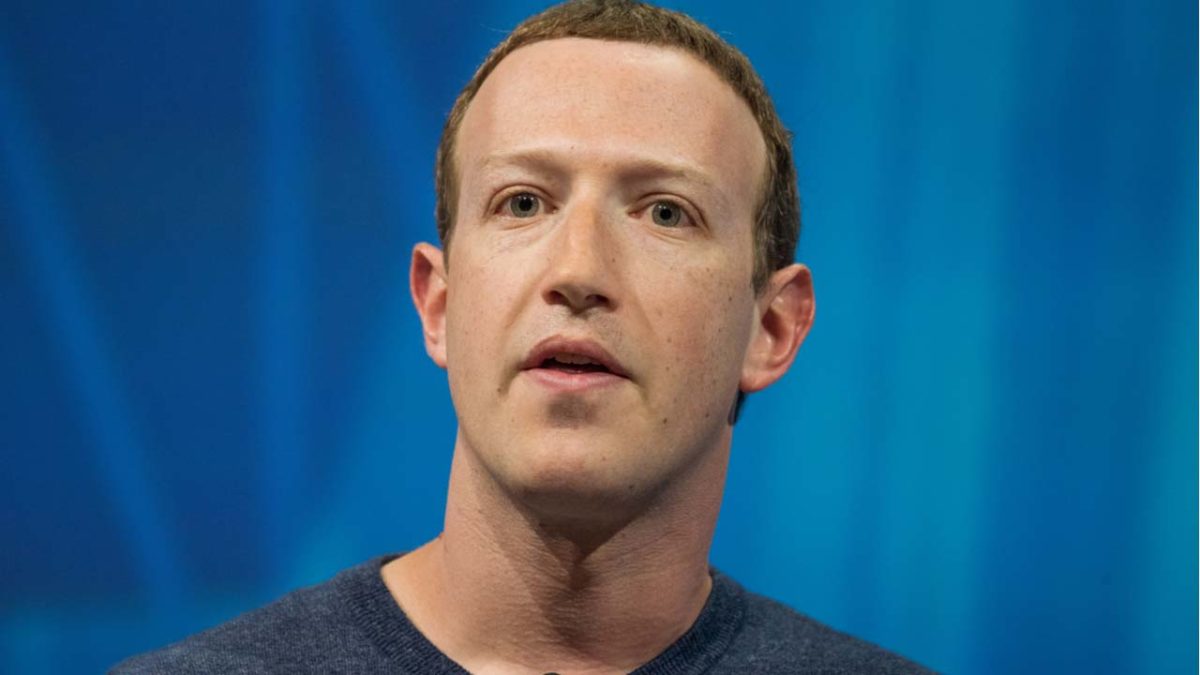
Nearly 70% of Facebook’s shareholders voted to reduce Mark Zuckerberg’s power in the company. This was revealed in a recent filing from Facebook from their shareholder meeting.

Last year, 51% of shareholders voted for an identical proposal. This year, even more Facebook stock owners are tired of how Zuckerberg has been conducting business.

Shareholders are upset with Zuckerberg over several major Facebook scandals. If you’re wondering what scandals they’re referring to, we can name a couple:

What do the shareholders want to do?

Shareholders are hoping to hire an independent chairman to hold Zuckerberg and his top team accountable.

Essentially, the shareholders are tired of Zuckerberg and his team not being held accountable. Hiring a chairman could put forward a set of checks and balances that would keep them from causing more harm to Facebook and its users.

7

Is anything going to come from this?

No.

The issue with hiring a chairman to oversee Zuckerberg is that he owns 60% of the company’s voting power. Zuckerberg and his team voted against hiring an independent chairman, so it’s not happening. Basically, no matter what the majority of shareholders propose, Zuckerberg always gets the final word.

This goes to show the importance of a chairman. Despite Zuckerberg’s majority voting power, a chairman could potentially approve or disapprove decisions made by Zuckerberg and his team. This would provide a new layer of accountability sorely needed at Facebook.

Should Zuckerberg not have as much power?

If you keep up to date with Facebook news, you’d know that there seems to be a new story about a Facebook scandal every week. Although Facebook will make a claim from time to time that they’re trying to make a change, the constant scandals speak for themselves.

To make matters worse, some scandals involved Zuckerberg’s direct actions.

Although Zuckerberg might be the founder of Facebook, his actions might continue to put the company in peril. If Facebook wants to outweigh the negative news with positive news, then they are going to need to make changes like these.

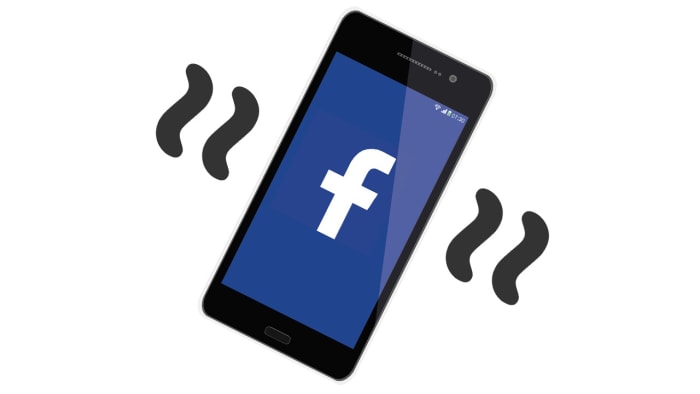
Facebook: Shake your phone to report bugs

Facebook is rolling out a “shake to report” bugs feature for mobile.

Facebook mobile

Facebook is unveiling a unique way to report bugs on the mobile app. Is it an inquiry? Is it a help bot? Is it a voice command? Nope, Facebook wants you to shake your phone.

When should I shake, shake, shake… shake, shake, shake… shake my phone?

The idea here is that Facebook wants to make it as easy as possible for users to report when the app isn’t working properly.

For example, you can shake your phone to report whenever a video won’t load or your news feed gets stuck. Facebook also hopes you will use it to ask for help if you can’t figure out how to do something.

7

How does it work?

The new action is simple enough. Whenever something doesn’t work or you want to ask for help, all you have to do is give your phone a little shake.

Remember, it’s a phone, not a Shake Weight.

There’s no need to risk throwing or dropping your phone. A gentle, little shake will suffice. When Facebook recognizes your shake, it will open up a pop-up menu where you can file your report.

This new way to report bugs on Facebook is brand-new for Android users, but it has been available on Facebook for iOS for a short while already. Until now, however, iPhone users have had to opt-in and activate the feature themselves. This will soon change.

How do I turn it on and off?

Your phone does not automatically have it enabled. To turn it on, follow these simple steps.

  1. Open your Facebook app
  2. Click the menu in the lower right-hand corner (it’s the three horizontal lines)
  3. Scroll down to “Help & Support”
  4. From there, click on “Report a Problem”
  5. A new window will pop up. Click on the gear in the upper right-hand corner of the window
  6. Turn the option to “Shake to Report” on or off
  7. You’re all set!

Wrapping up

With the general roll-out of the shake to report feature, Facebook will make it the default setting on all smartphones, Android and iOS. The feature is rolling out now to a small number of users globally, but Facebook expects the feature to arrive for everybody within two weeks.

Shaking Facebook on a mobile phone
Just shake your phone to report a bug or ask for help

Once it lands, you’ll be able to shake your phone whenever something isn’t right. Although shake to report is becoming the default action and will be activated on all phones within the next couple of weeks, you’ll still be able to report a bug the old-fashioned way. To do so, all you have to do is go to the Facebook Help & Support menu and report your bug there.

For the rest of us, we will be taking the advice of Metro Station. 

This new feature may sound intriguing to some, but we wouldn’t be surprised to hear about users accidentally flinging their phones at others. If you have a friend who doesn’t know their own strength, you might want to invest in safety goggles.

WhatsApp and Facebook take their first public steps towards integration

WhatsApp will soon allow users to post status updates on Facebook.

It was only recently, that Facebook announced it planned to pull together its three biggest apps. The code behind Facebook, Instagram, and WhatsApp would be transformed so that it would all resemble one single system. Although Facebook assured everybody that each would retain their independent qualities, the move was a controversial one as it was exactly what Facebook said it wouldn’t do when it acquired Instagram and WhatsApp way back when.

The move makes sense for Facebook as managing one big system is much easier than managing three smaller ones. Just ask Microsoft about why it is so determined to have all Windows users update to Windows 10, if you don’t believe us.

Facebook and WhatsApp link revealed
The links between WhatsApp and Facebook are beginning to show

For the users, the move is controversial as each app collects data from us in different ways, which means they collect different data. Putting the three together offers Facebook a much more complete picture of each of us to sell to advertisers and whoever else is willing to pay.

The flip side is that it might make it easier for us to start communicating across all three networks. Have a friend who is on Instagram but doesn’t have WhatsApp? No problem, soon you might be able to shoot them a message anyway. It looks like we might be about to start seeing these cross-platform features land on Facebook’s three big apps.

WhatsApp will soon allow users to post status updates on Facebook

The latest beta version of WhatsApp for Android, version 2.19.151, has a very interesting new feature. For WhatsApp users who also have Facebook installed on their phones, a new button appears in the WhatsApp Status tab. Just below the My status button there should be the brand new “ADD TO FACEBOOK STORY” button.

WhatsApp share to Facebook
Image via: WABetaInfo

Tapping the new add to Facebook button gives WhatsApp users the chance to post status updates on Facebook. For now, the feature is pretty limited. Users will be able to post status updates including images, videos, GIFs, and text but it’ll all have to be done manually. It isn’t as simple as just sharing your WhatsApp status on Facebook just yet. But then again, who posts WhatsApp status updates anyway? When users tap the “add to Facebook” button, they’ll be redirected to Facebook where they’ll be able to share their story.

In itself, this new feature is not something to get too excited about. It is, however, the very thin end of what is looking like a very large wedge. As time goes by, we can expect to see many more of these inter-compatibility features coming to Facebook, WhatsApp, and Instagram. As to whether they’ll be worth the privacy sacrifices that go with them, that’ll be up to you.

The “add to Facebook story” button is currently in beta testing, so you shouldn’t expect to see it on your regular version of WhatsApp just yet. If we hear anymore about when to expect it, you’ll be the first to know.