Wizards of the Coast, the company behind Dungeons & Dragons, is reviving nostalgia for fans by uploading episodes of the old D&D cartoon from the 80s. This nostalgic project takes place every Friday, where two to three episodes are presented in blocks, and to date, they have released 11 out of a total of 27 episodes. The series was co-produced by Marvel Productions and animated by Toei Animation, which aligns it with other classics of the era like Spider-Man and The Transformers. The return of a legendary series Despite its retro appeal, the […]
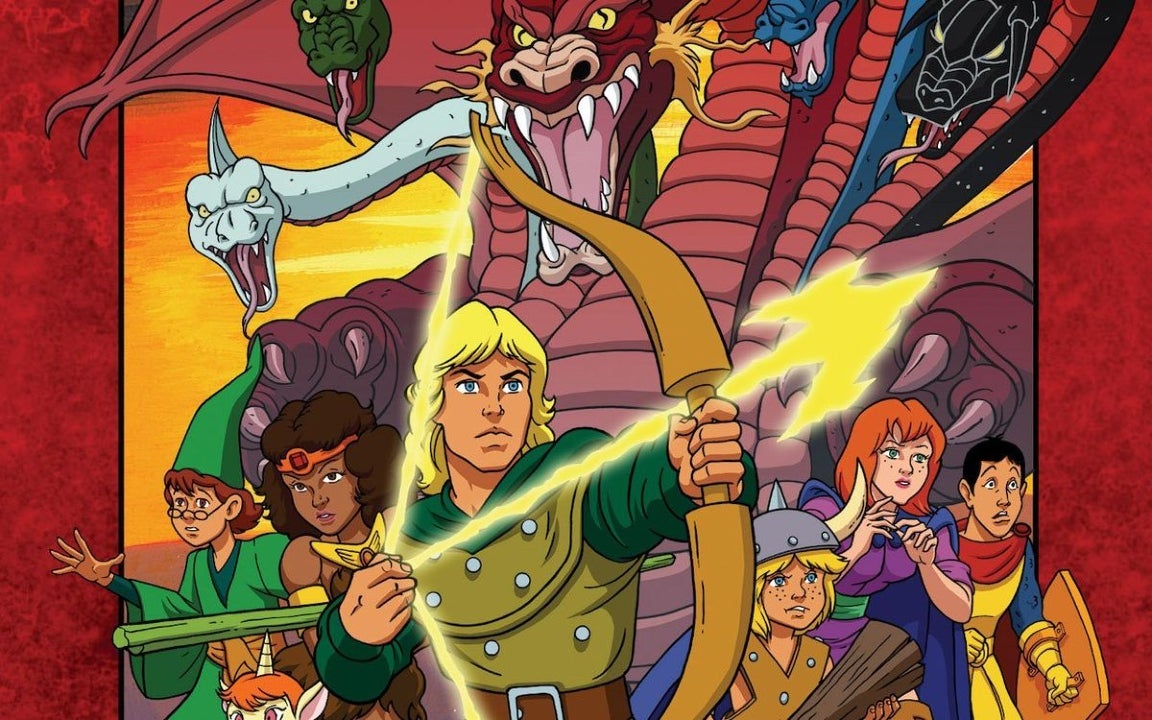
Wizards of the Coast, the company behind Dungeons & Dragons, is reviving nostalgia for fans by uploading episodes of the old D&D cartoon from the 80s. This nostalgic project materializes every Friday, where two to three episodes are presented in blocks, and to date, they have released 11 out of a total of 27 episodes. The series was co-produced by Marvel Productions and animated by Toei Animation, aligning it with other classics of the era like Spider-Man and The Transformers.
The return of a legendary series
Despite its retro appeal, the sound and animation quality of the cartoon is considered low, which adds a sense of humor and authenticity to the viewing experience. With iconic voices like Peter Cullen, who brings the villain Venger to life, and Frank Welker, who voices both Tiamat and the unicorn Uni, the show also allows D&D fans to discover references to various creatures from their beloved Monster Manual, such as dragons and frost giants. This mix of pop culture elements and the unique narrative of the episodes contributes to a peculiar entertainment experience, even in somewhat controversial moments, such as when Venger attempts to alter the course of history during World War II.
On the other hand, the phenomenon of Baldur’s Gate 3 continues to capture the attention of players. Recently, there has been in-depth discussion about its gameplay modes, romance options, and endings, which highlights the relevance of the title in the current video game trend. Additionally, it has become a point of discussion in various weekly and monthly newsletters, covering topics from technology to pop culture, satisfying the curiosity of fans and inviting them to join the conversation in the vast universe of D&D and beyond.
Every week, the world of digital entertainment is shaken by new updates about games, hardware, movies, and technology. One of the most prominent controversies of recent times comes from the acclaimed role-playing game Baldur’s Gate 3, which has captured the public’s attention not only for its complex narrative and exciting battles but also for an unexpected scene: a moment of intimacy between a character and a bear. A very special game The actor Dave Jones, who brings Halsin, the druid who can transform into a bear, to life, shared his reaction upon discovering this unique scene. During […]
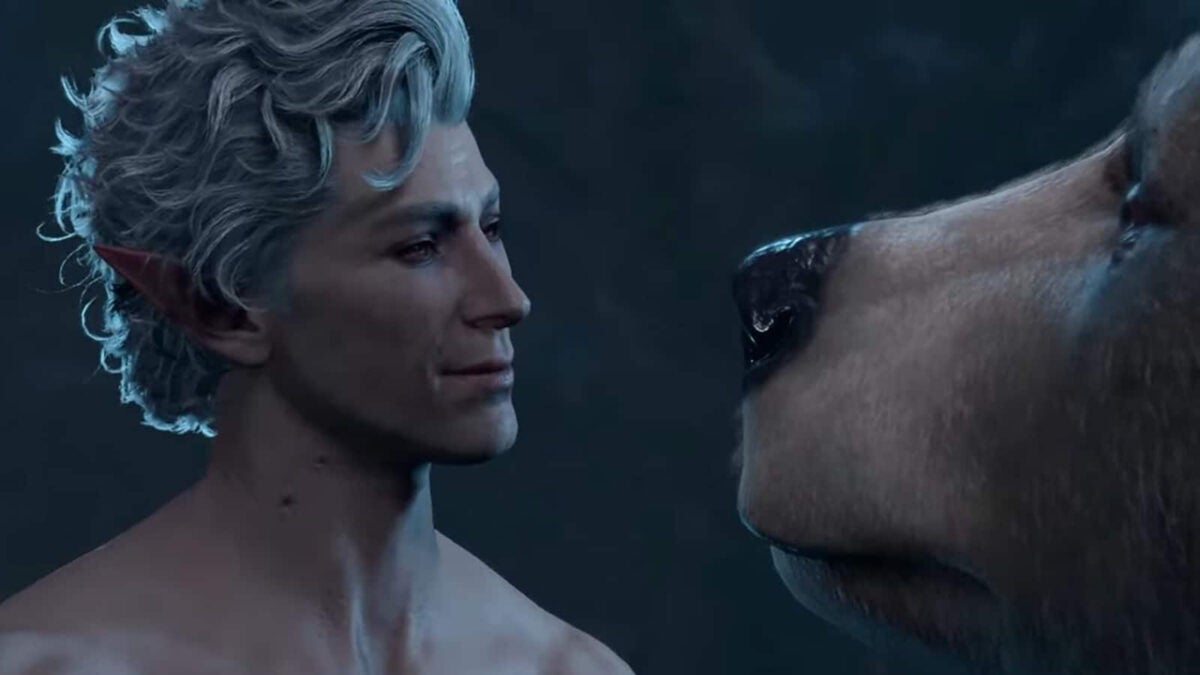
Every week, the world of digital entertainment is shaken by new updates on games, hardware, cinema, and technology. One of the most prominent controversies of late comes from the acclaimed role-playing game Baldur’s Gate 3, which has captured the public’s attention not only for its complex narrative and exciting battles but also for an unexpected scene: a moment of intimacy between a character and a bear.
A very special game
The actor Dave Jones, who plays Halsin, the druid who can transform into a bear, shared his reaction upon discovering this unique scene. During a train ride to one of the recording sessions, he read the script and couldn’t contain his laughter. “It was more the fact that, ‘Oh, oh, we’re going there. We’re going there,'” he commented in an interview with Fall Damage, reflecting the surprise that many players have felt upon learning about this content.
Baldur’s Gate 3 has become a milestone within the RPG genre, managing to stand out for its memorable and emotional moments, as well as for its robust character development. Although the scene with the bear has been a subject of controversy, it is undeniable that it has left a mark on video game culture, setting a precedent for narrative boldness in video games. While eccentricities like this can generate mixed reactions, they also invite reflection on the limits of interactive storytelling.
Meanwhile, expectations for the Divinity reboot are growing, and rumors have emerged about the exploration of equally provocative themes. Undoubtedly, the impact of Baldur’s Gate 3 not only persists but has opened the door to a broader dialogue about creative freedom in the realm of video games.
Owlcat has officially announced that The Expanse: Osiris Reborn will be released in spring 2027, generating great anticipation among fans of The Expanse universe. Additionally, players who purchase the Collector’s Edition for $289 or the Millers Pack for $80 will have access to a closed beta that will begin on April 22 of this year. An exclusive closed beta The beta will include a complete mission from the start of the game, allowing participants to explore the Pinkwater 4 station and meet important characters, including Zafar, who will join the crew. Players will also face […]
Owlcat has officially announced that The Expanse: Osiris Reborn will be released in spring 2027, generating great anticipation among fans of The Expanse universe.
Additionally, players who purchase the Collector’s Edition for $289 or the Millers Pack for $80 will have access to a closed beta starting on April 22 of this year.
An exclusive closed beta
The beta will include a complete mission from the start of the game, allowing participants to explore the Pinkwater 4 station and meet important characters, including Zafar, who will join the crew.
Players will also face powerful enemies, thus earning the title of captain. However, there is some concern that the game is not available for pre-purchase on platforms like Steam, raising questions about the refund policy once the game is on the market.
The development of this game by Owlcat, known for its focus on role-playing games, is a fact that intrigues many, especially considering that the series and the books of The Expanse have gained numerous followers. The inclusion of a twin character based on the player’s creation decisions adds an innovative element to the game, which could significantly enrich the user experience. Although the content of the latest trailer has shown some aspects that could be polished, a promising direction for the title is perceived.
While many players might hesitate to invest in early access, Owlcat’s decision to allow feedback at this early stage could be an indication of their commitment to delivering a polished product. The launch strategy and editing options present an interesting case in the gaming community and mark a significant step in the promotion of Osiris Reborn.
The Diablo IV community is eagerly awaiting the imminent release of the Lord of Hatred expansion, scheduled for next month. To make the wait more bearable, Blizzard Entertainment has announced that Season 12, called the Season of the Massacre, will begin on March 11, introducing unprecedented content to the saga. Transformations are coming to Diablo One of the highlights of this new season will be the possibility for players to transform into the infamous Butcher, one of the most terrifying demonic creatures in the franchise. This transformation will not only change […]
The Diablo IV community is eagerly awaiting the imminent release of the Lord of Hatred expansion, scheduled for next month. To make the wait more bearable, Blizzard Entertainment has announced that Season 12, titled Season of the Massacre, will begin on March 11, introducing unprecedented content to the saga.
Transformations come to Diablo
One of the highlights of this new season will be the possibility for players to transform into the infamous Butcher, one of the most terrifying demonic creatures in the franchise. This transformation will not only change the player’s appearance but will also grant them devastating abilities, allowing them to dismember enemies with force.
To access this form, players must complete specific missions and collect carnivorous offerings that will be used in a new type of sanctuary to activate the Butcher’s powers. In addition, the Massacre Season will include an event where players will compete in PvP zones to increase a savagery meter, ultimately facing the Butcher’s Idol. Victory in this contest will allow the winners to become the feared monster, sowing panic among their adversaries.
Another exciting development for fans is the reintroduction of the kill streak, a feature from Diablo III. Players who manage to eliminate enemies in quick succession will increase their streak, which will translate into greater experience and reputation rewards.
With these elements, the Season of the Massacre promises to be one of the bloodiest and most chaotic content that Diablo IV has seen so far, generating high expectations among players.
Video game fans now have an excellent opportunity to immerse themselves in the vast world of the Fallout saga, thanks to a Steam offer that makes all the titles in the series and their additional content available for just $77. This promotion is valid until February 6 and allows players to explore a compilation of experiences ranging from turn-based RPGs to 3D adventures in an open world. Looking to capitalize on the series’ appeal, the first two Fallout games are considered classics of the genre, with their isometric style and their […]
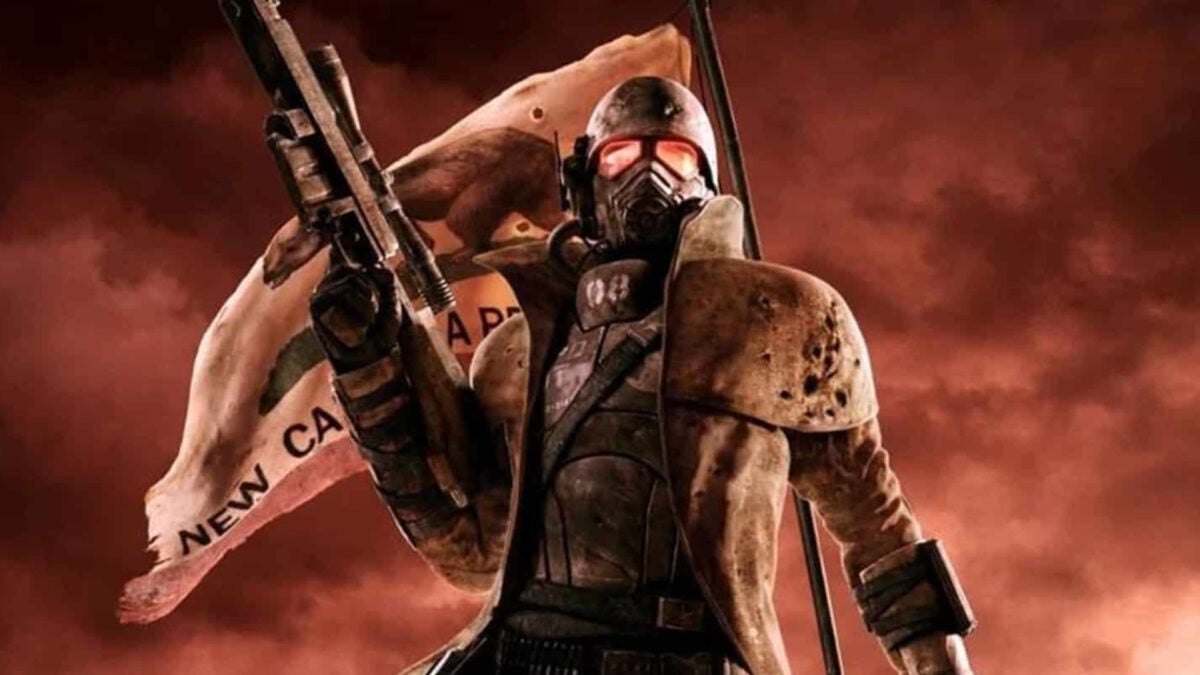
Video game fans now have an excellent opportunity to immerse themselves in the vast world of the Fallout saga, thanks to a Steam offer that makes all titles in the series and their additional content available for only $77. This promotion is valid until February 6 and allows players to explore a compilation of experiences ranging from turn-based RPGs to 3D adventures in an open world.
Looking to capitalize on the series’ pull
The first two Fallout games are considered classics of the genre, with their isometric style and turn-based design that established the foundations of the series. Although they have a nostalgic feel, these titles are essential for understanding the blend of retro aesthetics and sarcastic humor that characterizes the saga. Many new players are advised to start with these installments or with Fallout 3 and New Vegas, which offer a more modern and dynamic approach to RPGs.
Fallout 3 and Fallout: New Vegas, developed by Bethesda and Obsidian respectively, are widely praised for their immersive storytelling and real-time gameplay. These titles stand out not only for their graphics and combat mechanics but also for their deep character development and moral choices. While Fallout 4 introduced base building and resource mechanics, Fallout 76 strayed from the traditional format to offer a multiplayer experience in a survival environment, although its launch received mixed reviews. However, the game has evolved and has established itself as one of the most prominent in its genre.
With each release offering a diverse experience, the Fallout series has captivated millions worldwide and has become a cultural phenomenon. Anyone who chooses to delve into this universe is sure to find something that resonates with their inclination for video games. The sale on Steam presents a unique opportunity to enjoy these classics and more contemporary titles at an affordable price.
Dungeons & Dragons has translated the latest version of its rules into Spanish so that anyone can use them to create their own expansions.
Dungeons & Dragons is not only the oldest role-playing game but also the most popular. The latter is partly due to the former, but not exclusively. Its ability to define many different generations, evolve with time, and find a place in various eras and moments has a lot to do with its popularity. This includes the willingness to adapt and make its rules accessible to everyone completely free of charge, including in Spanish.
Now, Wizards of the Coast, the owners of the Dungeons & Dragons license, have released translated versions of the Systems Reference Document (SRD) in French, Italian, German, and Spanish. And what is the SRD? It’s a guide that contains the basic rules of D&D. This includes classes, races, and hundreds of monsters and spells, allowing limited gameplay and, most importantly, serving as a tool for players and designers to create content compatible with the fifth edition of D&D.
This became possible when Wizards of the Coast recently decided to change the license under which their system operates, not without controversy and significant pressure from their players, to operate under the Creative Commons license. This is a non-profit organization that drafts open-source licenses. As an internationally recognized and trusted company, their licenses are standardized and, therefore, legally binding. This allows any player or designer to use the SRD to create content for the fifth edition of D&D without needing explicit permission from Wizards of the Coast to publish it, whether for free or for profit.
Regarding this, Kyle Brink, the Executive Producer at Wizards of the Coast, expressed, “At Wizards of the Coast, we believe D&D should be accessible to everyone, so we are taking steps to make it more so… and this won’t be the last step we take in this regard.” It will be interesting to see what further initiatives they implement, but this is undoubtedly an incredible first step. And if you don’t know where to start, they have continued this excellent initiative with a demo to learn how to play Dungeons & Dragons.
Some of the links added in the article are part of affiliate campaigns and may represent benefits for Softonic.
Learning to play Dungeons & Dragons can be intimidating, but Wizards of the Coast has created a tool to make it less so.
Dungeons & Dragons is a popular game, but it can also be intimidating. It requires a group of people to play, a Dungeon Master, and while it seems fun, it also appears challenging. There are many things to consider, such as certain acting skills and improvisation, which may make role-playing games seem not suitable for everyone. Especially when there hasn’t been an easy way to enter this fascinating world, where you can quickly get a sense of what it’s like to play without committing a significant amount of time and money to find out. Until now.
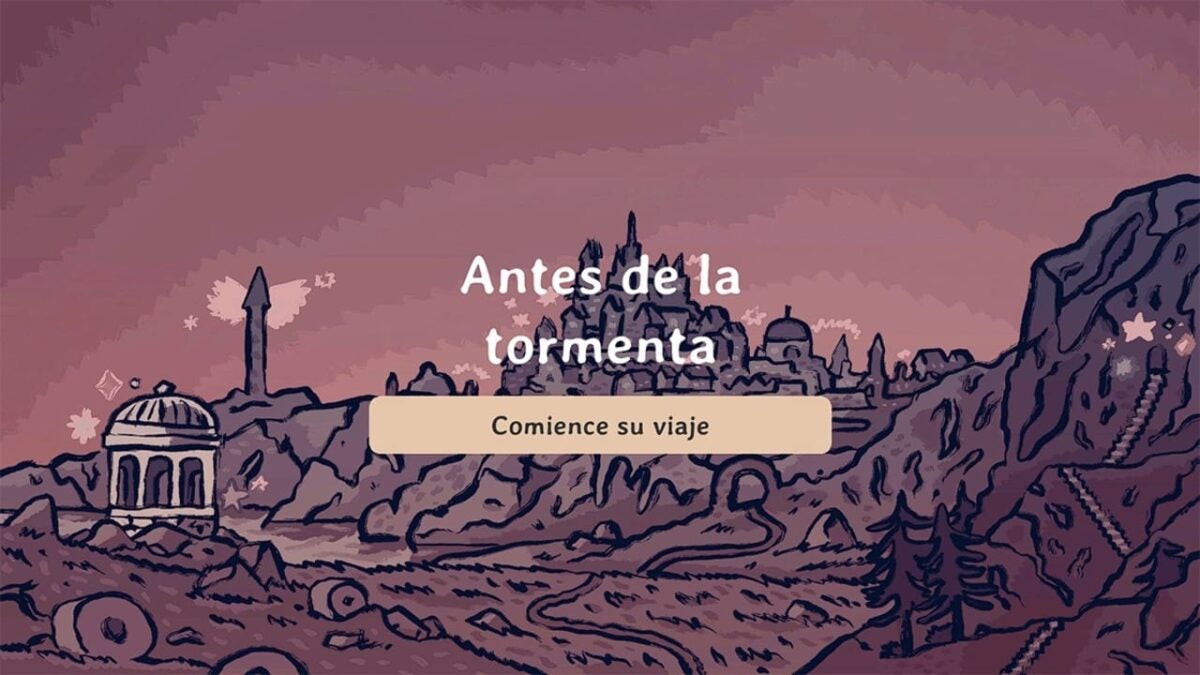
Wizards of the Coast, the company behind Dungeons & Dragons, has created an interactive digital demo called “Before the Storm,” which lasts just ten minutes. Adapting the introductory adventure from their Starter Set, this demo is designed for new players to learn the basics of Dungeons & Dragons and what it means to play a role-playing game. In this demo, players will choose a class, receive some context about the world and their character, and be immersed in an adventure centered around a treasure. Through the Dungeon Master’s narration, players will unravel the story, making decisions that, at times, will require rolling dice to determine their success or failure in certain circumstances.
In a way, “Before the Storm” is indeed similar to the classic Choose Your Own Adventure books, but with more elements. However, role-playing games are essentially an extension of that idea, involving more people, dice rolls, and a narrator guiding the story, without a pre-defined narrative or set situations as found in books. That’s the magic of role-playing games – the ability to inhabit your character and explore a world created collaboratively with the people you are playing with.
In this sense, “Before the Storm” is a great way to get started in the world of role-playing games in general, and Dungeons & Dragons, in particular. It may have some minor flaws, such as formatting issues, but nothing that can’t be overcome. Both veterans, who will enjoy a different way of playing something light and enchanting, and newcomers who want to understand why role-playing games shouldn’t be intimidating, will find delight in this demo.
Some of the links added in the article are part of affiliate campaigns and may represent benefits for Softonic.
In your usual store you will find hundreds of D&D manuals. And you just wanted to know if you were going to like it! Don't worry: we'll tell you everything you wanted to know about the most famous role-playing game in the world.
Surely more than once in your group of friends there has been someone who has wanted to form a group to play ‘Dungeons & Dragons‘. Since the arrival of Critical Role and the popularity of Twitch, more or less everyone has been curious to leave everything behind, learn a bit of magic, pick up a sword and set off to explore the Forgotten Realms. But of course, when it comes down to it, where to start? In your usual store you’ll find hundreds of D&D manuals. And you just wanted to know if you were going to like it! Don’t worry: we tell you everything you wanted to know about the most famous role-playing game in the world.
50 years ago…
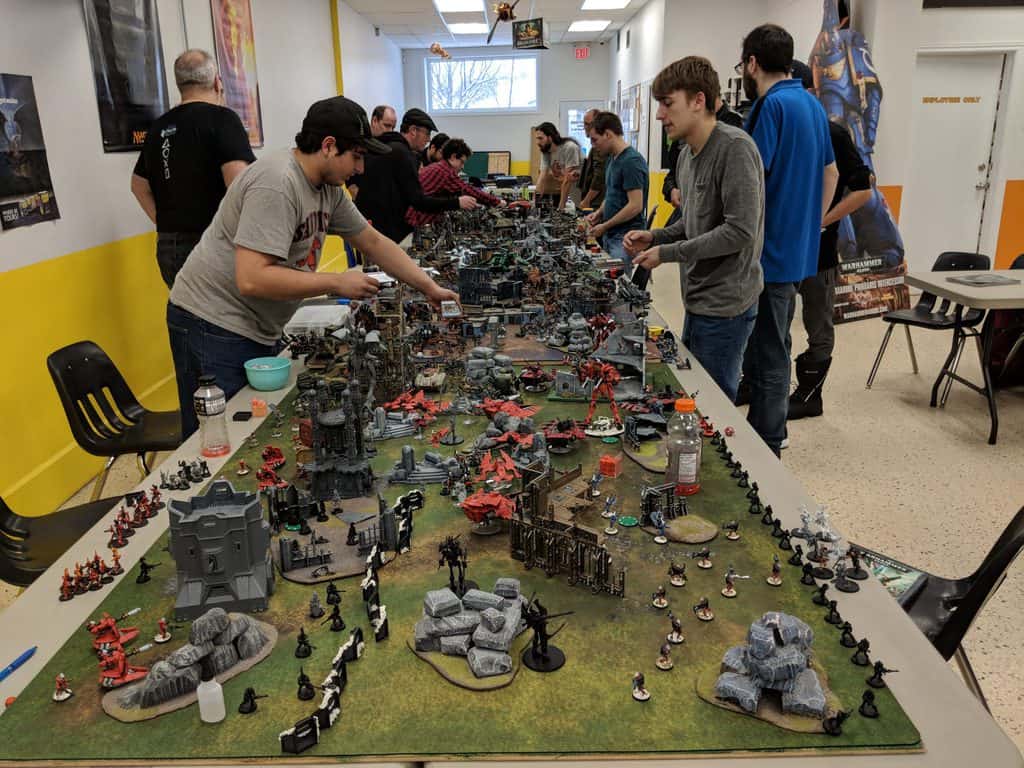
At the beginning of the 70’s, in the United States, board games were reduced to those that families could play: ‘The game of life’, ‘Monopoly’, ‘Connect Four’… The current boom in which we can take a ‘Gloomhaven’ or an ‘Exploding kittens’ to the table is terribly recent. If back then you wanted to find something of complexity you had to go to the tables of the young (and not so young) where they played what some have considered the pre-role-playing game: wargames.
Or, to put it in English, the war games that are still popular today. For example, the humorist Javier Cansado is a great fan of painting figurines and sending them to fight in the Napoleonic wars. These were realistic games in which two armies faced each other: the armies were not made up of fantastic creatures and fighters, but of Napoleonic soldiers or soldiers from the American Civil War at the Battle of Gettysburg. A party, come on. And among those gamers there was a thirty-something so fanatic that he had even set up one of the first conventions in history (the now ultra-famous Gen Con)… in the basement of his house: Gary Gygax.
Gygax did not know that she was destined to change the world of board games forever. In fact, more out of curiosity than anything else he helped create the game ‘Chainmail’, set in the Middle Ages with realistic battles, which had a small appendix explaining how to play with wizards, dragons, orcs, elves or… hobbits. With permission from JRR Tolkien? Of course not.
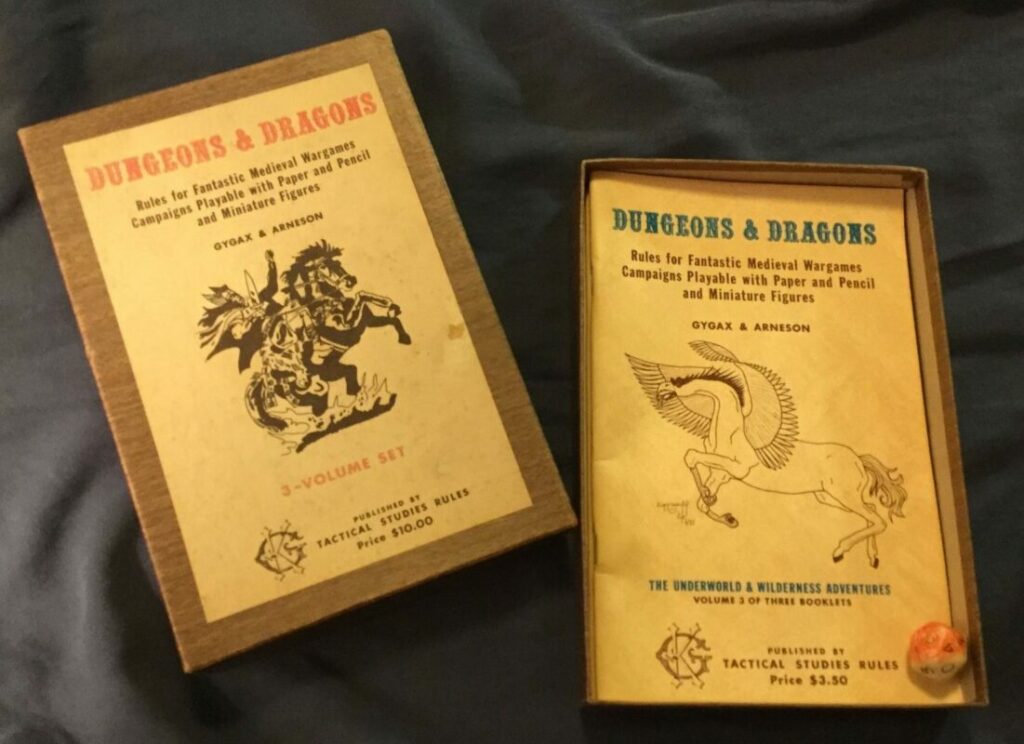
And you know what happens when you introduce a change, no matter how small, to a group of fans? A large part of them will angrily reject it. Chainmail’ had three editions but it didn’t seem that Gygax was going to become more than just a fan… Until 1974 when he released ‘Dungeons & Dragons: Playable medieval fantasy wargame campaigns with paper and pencil and miniatures‘. And the world changed forever… Even though this was not a role-playing game. Among other things, because nobody knew what a role-playing game was.
You the barbarian, you the archer
Actually, it cannot be said that this first edition of D&D was a role-playing game as we understand it now. In fact, a “referee” was supposed to be able to manage groups of up to 50 people at the same time – imagine doing that in a game right now if it’s already hard for four players to control themselves! This was a wargame at its core, but with one essential change that made it special: instead of moving armies, each person played with an original and unique character, which over the course of a campaign could evolve.
At no time was role-playing assumed as part of the experience, but the players adopted it naturally. Playing Napoleon’s army was not the same as playing Elf Langolier. Five years later, wargames took a back seat: the 80s were to be dominated -always in the United States, mind you- by D&D. In high schools, colleges… And on television.
Although now it may seem to us a thing only of a small group, really D&D, in its day, was an absolute devotion. So much so, that in 1983 began what for many was the first contact with the game: the cartoon series that, although it may seem impossible now, caused controversy in its day because of its violence. In total, 27 episodes co-produced by Marvel and Toei that coincided with the decision that ‘Dungeons and Dragons’ was a public danger.
There was no proof, but that has never stopped a generation from being frightened by what a more modern one does. Overnight, murder cases began to be linked with ‘Dungeons & Dragons’: mothers’ associations even pretended that before every episode of the very innocent series, warnings were issued that the franchise was linked with violent deaths.
Even Tom Hanks’ first starring role was in a 1982 anti-game pamphlet movie called ‘Monsters and Mazes’! In fact, at the time it was thought that playing the game led you to look up how to kill enemies in real life. Patricia Pulling, the mother of a child who committed suicide in the same year that the Tom Hanks movie appeared, claimed that there were 150 D&D-related deaths: “The child who is easily obsessed can end up looting graves while searching for objects needed to perform occult rituals, and is only one step beyond the need for blood”.
It may seem silly (because it is), but in the United States, which welcomed the board game with open arms, it gradually sank into marginalization. It ceased to be a game for everyone and only for a few, viewed with suspicion and a certain fear. Even in Spain, in 1999, ABC even linked it with Hitler and Marilyn Manson. Almost nothing. A year later, the third edition of D&D did not end up pleasing the fans (although more than the infamous 3.5) and the horrifying movie ended up sinking its fame completely.
The return
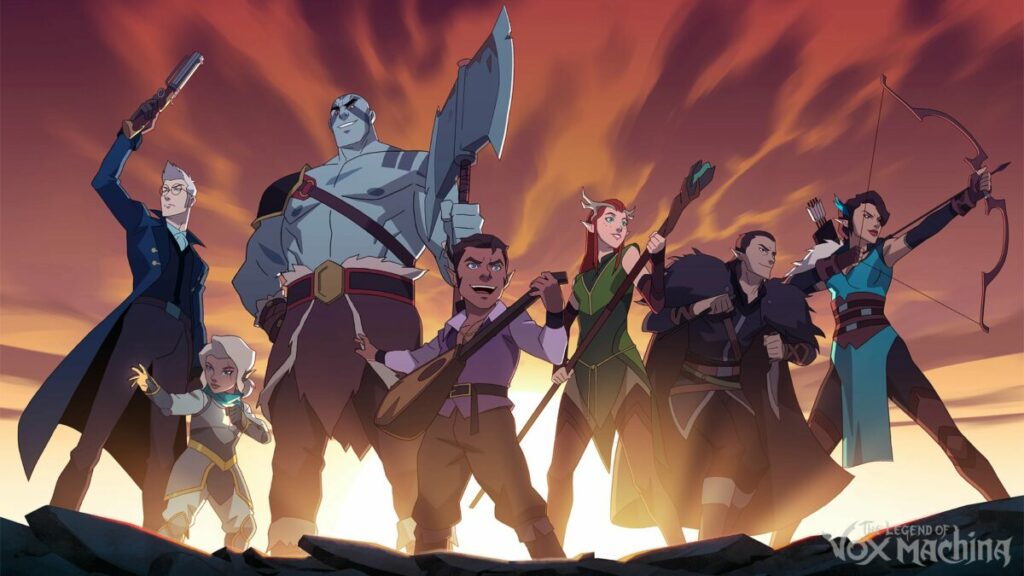
For a while it seemed that video games, even those based on D&D, had killed tabletop role-playing forever, but then came Twitch, Critical Role, Vox Machina and thousands of games played around the world in podcasts, live, videos, with celebrities, with voice actors, with anonymous. D&D was once again the king of fantasy. And no one could ever throw away its fame again.
And that brings us back to the beginning: if you want to play Dungeons & Dragons, what manuals do you need? If you want a recommendation, you can read most of the online rules on Wizards of the Coast’s own website, but it is possible that, instead of leaving your eyes and to always have something to consult, and in the absence of the Basic Box, you want the Player’s Handbook. This is the essential one, the one that has everything: the race, the class, the archetypes, how to set up each character and the adventures of the world.
As you progress, and especially if you have no idea how to make a game, you will need the Dungeon Master’s Manual and the Monster Manual. These are the three essentials (all three must be of the same edition, preferably 5E), to which you can add all sorts of additions. As for adventures, if you don’t want to create them yourself, there are entire manuals, such as Ravenloft, Strahd or the one that comes in the Basic Box, The Lost Mines of Phandelver (which I personally don’t find amazing, but it is true that, for convenience, it is one of the most played ones).
Dungeons & Dragons’ has become more than just a role-playing game. More and more, people are expressing themselves through their characters, their claims, their internal struggles, their powers and their relationships within their world. If you could be anything, what would you choose to be? What twist would you give to your character? How would you be with others? Maybe it’s time to pick up your die of 20 and find out.