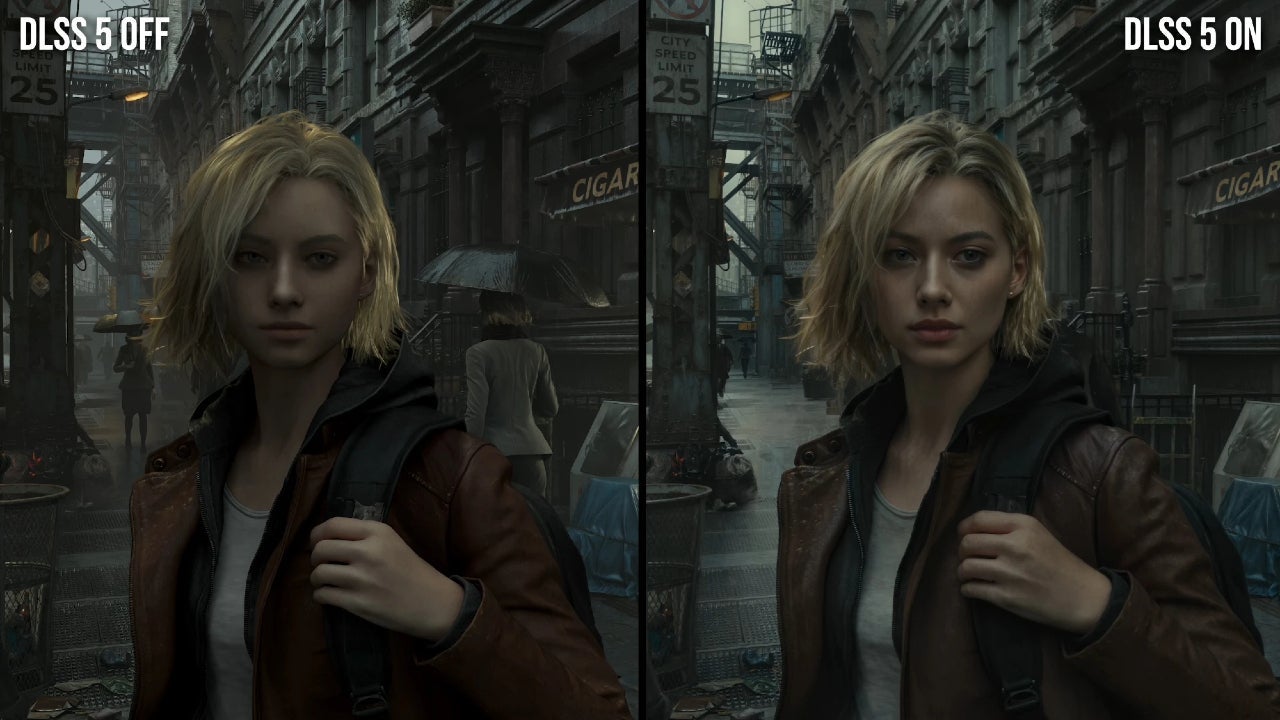
In a recent debate about the use of Nvidia’s DLSS 5 technology, senior animator Mike York expressed his deep criticism regarding its effects on video game characters. York, known for his work on titles like GTA 5 and Death Stranding 2, argues that this new technology, which is based on a real-time neural rendering model, distorts the appearance of characters in an unrealistic way. His analysis has gained relevance following the controversy generated by the use of DLSS 5 in Resident Evil Requiem, where he highlighted the transformation of the […]
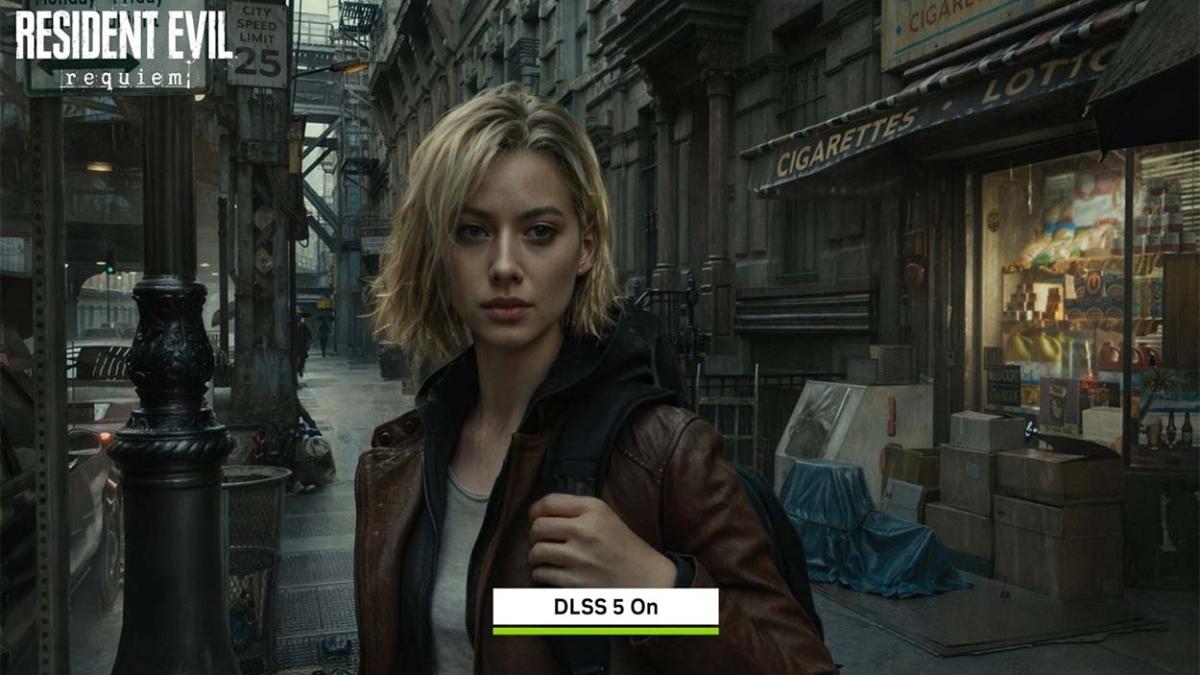
In a recent debate about the use of Nvidia’s DLSS 5 technology, senior animator Mike York has expressed his deep criticism regarding its effects on video game characters. York, known for his work on titles like GTA 5 and Death Stranding 2, argues that this new technology, which is based on a real-time neural rendering model, distorts the appearance of characters in an unrealistic way. His analysis has gained relevance following the controversy generated by the use of DLSS 5 in Resident Evil Requiem, where he highlighted the transformation of the protagonist Grace Ashcroft into an image that he considers comparable to a TikTok filter.
Consider that there is nothing good here
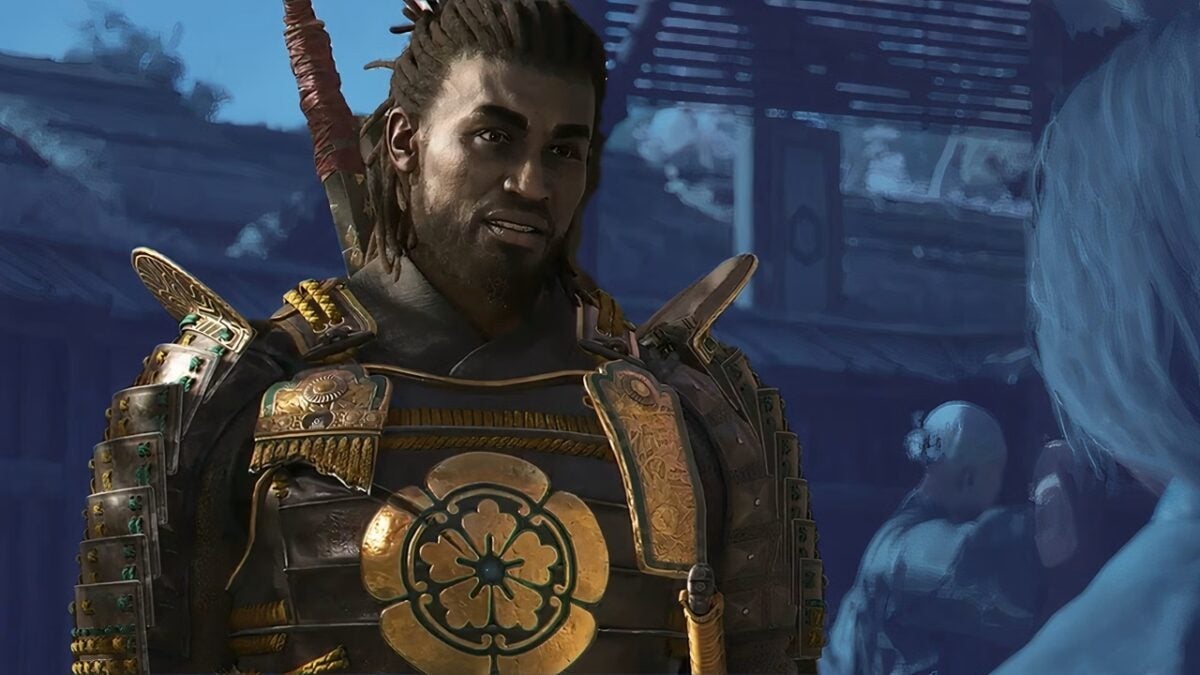
York’s criticisms come at a time when the debate over DLSS 5 is intensifying among players of other franchises. In particular, the Assassins Creed Shadows community has begun to protest against the new DLSS 5 filter, warning that it could harm the historical reputation of the saga. Gamers argue that the implementation of this technology could lead to results similar to those observed by York, which would create widespread discontent among the fanbase.
On the other hand, Digital Foundry’s initial response to DLSS 5 was more enthusiastic, although the publication has revised its stance, acknowledging that performance under certain conditions may not be as expected. This disagreement in perceptions highlights the current tension in the industry regarding the direction that graphics technology is taking and its impact on gameplay. While developers seek to innovate, the opinion of veterans like York brings to the forefront the need for a balance between technology and the player experience.
Nvidia had a special presentation yesterday. Brief, but with a lot of fanfare, they made a special presentation for a select few specialized technology media, unveiling their new upscaling technology: DLSS 5. Everyone was eagerly anticipating it because, with its flaws, DLSS is a great tool. It allows computers with lower capabilities to run cutting-edge video games at resolutions higher than they normally could with minimal compromises. The problem is that DLSS 5 has not been that. What they presented is something very different from DLSS 4.5 and that, almost universally, has been […]
Nvidia had a special presentation yesterday. Brief, but with a lot of fanfare, they held a special presentation for a select few specialized technology media, showcasing their new upscaling technology: DLSS 5. Everyone was eagerly anticipating it because, despite its flaws, DLSS is a great tool. It allows computers with lower capabilities to run cutting-edge video games at resolutions higher than they normally could with minimal compromises.
The problem is that DLSS 5 has not been that. What they have presented is something very different from DLSS 4.5 and that, almost universally, has been hated for its results. But why has it been? For that, we need to understand what DLSS is and what it is not. And what they are trying to sell us.
What is DLSS?
DLSS, Deep Learning Super Sampling, is a technology that Nvidia launched in September 2018 as a key feature of the GeForce RTX 20 series GPUs. Its greatest contribution was the ability to, through deep learning, upscale lower resolution images to a higher resolution without losing fidelity or graphical quality. This allowed for increased graphical settings and FPS, as it enabled setting a relatively low resolution that the system could handle comfortably, upscaling it to the resolution of the TV or monitor being used.
Each new iteration has introduced new elements. Version 2.0 introduced its own anti-aliasing, which smoothed out the jagged edges in the first iteration. Version 3.0 introduced the ability to invent frames between the existing frames to gain fluidity in the image. And version 4.0 reduced both memory usage and emphasized light detail, particularly through the use of ray tracing.
Although DLSS has obvious advantages, allowing relatively modest computers to run current games, it has also had some disadvantages that cannot be overlooked. The generation of frames causes input lag, meaning that the commands we give to the controller take a certain number of frames to translate into images, which can be fatal for both competitive games and games that require reflexes or precision. And because DLSS is capable of doing a very good job running the game, many developers have stopped efficiently optimizing their games, relying on DLSS or other forms of upscaling technologies to do the work for them to make their games run.
That’s why there was great enthusiasm to know what the new version of DLSS would bring. Each new version has improved upon the previous one, even if there have been some issues since 3.0 that perhaps haven’t been discussed in the detail they should have. And now, with the presentation of 5.0, people have erupted.
The disaster of DLSS 5
Nvidia presented DLSS 5 with a series of videos and explanations that can be summarized in that the new thing in DLSS is that it is less efficient, more resource-demanding, and the contribution it makes is to add a generative AI filter over the games. Although they have rushed to assert that developers still have control over their images, that is neither what was seen in the presentation video nor what has been sold to us: DLSS 5 completely changes the scenes, making us play a very different game. And for the vast majority of the audience, a much uglier one.
The most obvious thing is the faces. Presenting their technology with Resident Evil Requiem, Hogwarts Legacy, Starfield, and EA FC 26, among others, if something stood out throughout the presentation, it was that when activating DLSS 5, the characters looked different. It changed their physical features, reinterpreted their appearance, and provided a supposedly hyper-realistic version, but it is not.
Hyperrealism is a very specific form of art. It is a meticulous recreation of a photo or a scene from reality to which non-existent details are added to enhance its narrative qualities. Hyperrealism is, by definition, not realistic: it does not aim to reproduce reality, but rather to extract what is hidden in reality, betraying its small details. But DLSS 5 is not that. DLSS 5 is a layer of generative AI that makes an approximation based on algorithms to change images according to what is essentially a random calculation: there is no intention behind the changes. It is not enhancing what is hidden through its real reproduction, nor is it based on anything that exists in reality; it is not hyperrealistic, it is just ugly.
That’s why all faces look the same and are, very clearly, AI-generated faces. Because it has biases. Because it does not seek to enhance what already exists. It turns all women into models with infantilized faces and all men into subjects with defined bones and muscles. If someone has dark skin, hair, or eyes, it lightens them, and if a man is young or a woman is an adult, it ages or rejuvenates them due to its biases. Because it does not interpret and does not understand. It only applies the biases that have been given to it.
That’s why it’s not better when we talk about lighting effects or the settings, something that some people have defended more. The lighting lacks shading and is inconsistent, each scene fixture seems to be illuminated by its own LED spotlight, and instead of realistic, it looks like something else: as if filmed in a photography studio.
That’s why it produces the effect of the uncanny valley and why it has received such a negative reception. There is nothing here that is attractive, eye-catching, or interesting. The faces are strange, identical to each other; the scenes are unnatural, like very, very detailed models filmed in a studio. But furthermore, it is not even coherent. The face of Grace Ashcroft, the protagonist of Resident Evil Requiem, appears three times during the presentation, and each time it is a different face when DLSS 5 is activated. When it is not activated, Grace Ashcroft only has one face. Grace Ashcroft’s.
A Terrible Reception
Despite Nvidia presenting it with all the fanfare possible, even inviting Digital Foundry to their offices to release a fifteen-minute video praising the technology —and even then, unable to avoid stating that it didn’t do a good job with the faces—, the reception has been disastrous. And everyone has gone out to do damage control.
According to Nvidia, it is just a prototype, they are working on it and it will improve, because artists will still have control over the final result. They will be able to say how aggressive the filter will be. Moreover, that is not having control, because they will literally still not be able to decide how the changes are made and to what extent, that just leaves us with a question mark. So why have they presented it then? If it is just a prototype, if it is flawed, if artists will have more control, if they know all this, why have they presented it? Because they thought people would applaud it. Because Nvidia has interests in it.
They have thought about it, in part, because DLSS has been celebrated almost uncritically until now. It is a technology with disadvantages that, more often than not, any criticism made of it is disregarded. This has given them the confidence to release this product. But Nvidia, thanks to AI, is now the most valuable publicly traded company in the world. If anyone is interested in introducing AI and ensuring that AI succeeds in all aspects of life, including gaming, it is Nvidia. Their business and their superiority over the rest of humanity depend on it. That is why it should not surprise us: we have handed them the opportunity to do whatever they want, and on top of that, they have every reason to do so.
But it is normal for people to have reacted violently against DLSS 5. It makes games look worse, requires an obscene investment —as of today it works with two 5090s, one solely dedicated to DLSS 5; but Nvidia has also thought about that, why not use their cloud gaming service, Geforce NOW?— and moreover, it tarnishes a technology that everyone liked. But that’s why we need to be more critical. And that’s why we must not refuse to listen when others talk about the possible problems of a technology or a company. Because DLSS 5 is a disaster, but it is a disaster that was foreseeable.
The second trailer for Grand Theft Auto 6, released by Rockstar Games earlier this month, has caused a digital phenomenon by accumulating over one billion views on YouTube, an event that Strauss Zelnick, CEO of Take-Two, described as having “broken the internet.” This massive projection has led fans to recreate the original trailer in different styles, including a remake that simulates the aesthetic design of the PlayStation 2. GTA 6 looks incredible even on a PlayStation 2. This remake, created by a user named Foosmoke, includes details that evoke the gameplay of past eras, such as […]
The second trailer for Grand Theft Auto 6, released by Rockstar Games earlier this month, has caused a digital phenomenon by accumulating over one billion views on YouTube, an event that Strauss Zelnick, CEO of Take-Two, described as having “broken the internet.” This massive projection has led fans to recreate the original trailer in different styles, including a remake that simulates the aesthetic design of the PlayStation 2.
GTA 6 looks incredible even on a PlayStation 2
This remake, created by a user named Foosmoke, includes details that evoke the gameplay of past eras, such as graphical glitches and the representation of a less populated Vice City. In this clip, the character Jason struggles while robbing a convenience store, a humorous scene that reflects the technological limitations of the 128-bit era. However, the lack of subtleties in the animation and the body language of the characters affects the emotional impact of the trailer, making it less resonant than the original.
Digital Foundry, known for its technical analysis of video games, has indicated that the GTA 6 trailer will not run on Nintendo Switch 2, despite the significant improvements of the new console. However, a game with a retro design inspired by the PS2 could work on the current versions of the Switch. This raises a question about players’ interest in experiencing a downgraded version of GTA 6, especially after enjoying the impressive graphics of the original trailer.
GTA 6 is scheduled for release on Xbox Series X|S and PS5 on May 26, 2026. This delay is estimated to cost the video game industry approximately $2.7 billion in 2025, according to an analysis by Ampere Analysis, highlighting the magnitude of interest and expectations surrounding this title. This situation reflects not only the anticipation of players but also the economic challenges facing the sector.
Assassin’s Creed Shadows has captivated millions of players, transporting them to feudal Japan with a richly detailed open world, stealth mechanics, and samurai combat. Since its release, Ubisoft has tirelessly worked on updating the title to provide a more satisfying experience, dedicating significant resources to optimize the PlayStation 5 Pro version, which has been labeled as “the ultimate console experience.” Assassin’s Creed Shadows, better on PlayStation Pierre Fortin, technical director of Ubisoft, stated in a post on the PlayStation blog that the new version makes the most of the PS5 Pro hardware, offering […]
Assassin’s Creed Shadows has captivated millions of players, transporting them to feudal Japan with a richly detailed open world, stealth mechanics, and samurai combat. Since its release, Ubisoft has tirelessly worked on updating the title to provide a more satisfying experience, dedicating significant resources to optimize the PlayStation 5 Pro version, which has been labeled as “the ultimate console experience.”
Assassin’s Creed Shadows, better on PlayStation
Pierre Fortin, technical director of Ubisoft, stated in a statement on the PlayStation blog that the new version makes the most of the PS5 Pro hardware, offering performance that rivals that of a high-end PC. This statement comes at a time when the PS5 Pro is offered at a price of 799 euros, which could be more affordable than purchasing a computer with the specifications suitable for playing Assassin’s Creed Shadows on Ultra.
Digital Foundry has praised the optimization done on the PS5 Pro, considering it to be “one of the best updates” within the Assassin’s Creed franchise. The latest patch introduced significant improvements in visual quality, incorporating upscaling technology and ray tracing, elevating performance to 40 FPS and providing a smoother and more visually appealing experience. Previously, the version featured temporal anti-aliasing (TAA), but the advancement with the new Reflective Screen Space Reflections (PSSR) system promises a more stable image with fewer artifacts.
Fortin highlighted the collaboration with Sony to optimize the performance of the PS5 Pro, which allowed for the updating of the necessary parameters to make the most of the console’s capabilities. Compared to previous versions, the results are evident and demonstrate Ubisoft’s commitment to providing the best possible experience.
The gaming community has rated Grand Theft Auto VI as the most anticipated video game of all time, partly due to the prolonged wait since its announcement. During this time, fans have turned to rumors, leaks, and statements from former Rockstar developers to gather information about the anticipated title. The much-desired 60fps, impossible at launch According to Mike York, a former developer who worked on titles like GTA 5 and Red Dead Redemption 2, GTA 6 is expected to be released on current generation consoles, such as PS5 and Xbox Series X|S, with […]
The gaming community has rated Grand Theft Auto VI as the most anticipated video game of all time, partly due to the prolonged wait since its announcement. During this time, fans have turned to rumors, leaks, and statements from former Rockstar developers to gather information about the anticipated title.
The Much-Desired 60fps, Impossible at Launch
According to Mike York, a former developer who worked on titles like GTA 5 and Red Dead Redemption 2, GTA 6 is expected to be released on current generation consoles, such as PS5 and Xbox Series X|S, with a target performance of 30 FPS. In a recent interview, York emphasized that the studio might prioritize stability and visual quality over frame rate in the initial version of the game. “I don’t think they will be able to achieve 60 FPS from the start on a base console like the PS5,” York said.
Video game technology experts, such as analysts from Digital Foundry, agree that maintaining stable 60 FPS on the initial console version will not be feasible. It is anticipated that only PC players will be able to experience the game at 60 FPS, once optimizations are implemented and new graphics cards are released in the future.
The former developer also mentioned that, although the initial version might operate at locked 30 FPS, there is a possibility that performance will improve over time. “Once the game is available on PC, it will probably be optimized and able to run at 60 FPS,” added York. This perspective suggests that Rockstar will focus on providing a high-quality experience before trying to increase the frame rate in future updates.
PlayStation Vita lives. In our hearts. Sony’s handheld didn’t sell much, but it was a great console. Those of us who had it can vouch for it. Even today, it remains one of the best handheld consoles that have ever existed. And it’s no surprise that later Nintendo and Valve took notes from it to make their own handheld consoles. Nor is it surprising that Sony has decided it’s a good idea to return to the handheld console market. According to several reliable sources. Bloomberg mentioned last November that Sony was developing a new handheld console. Still only in […]
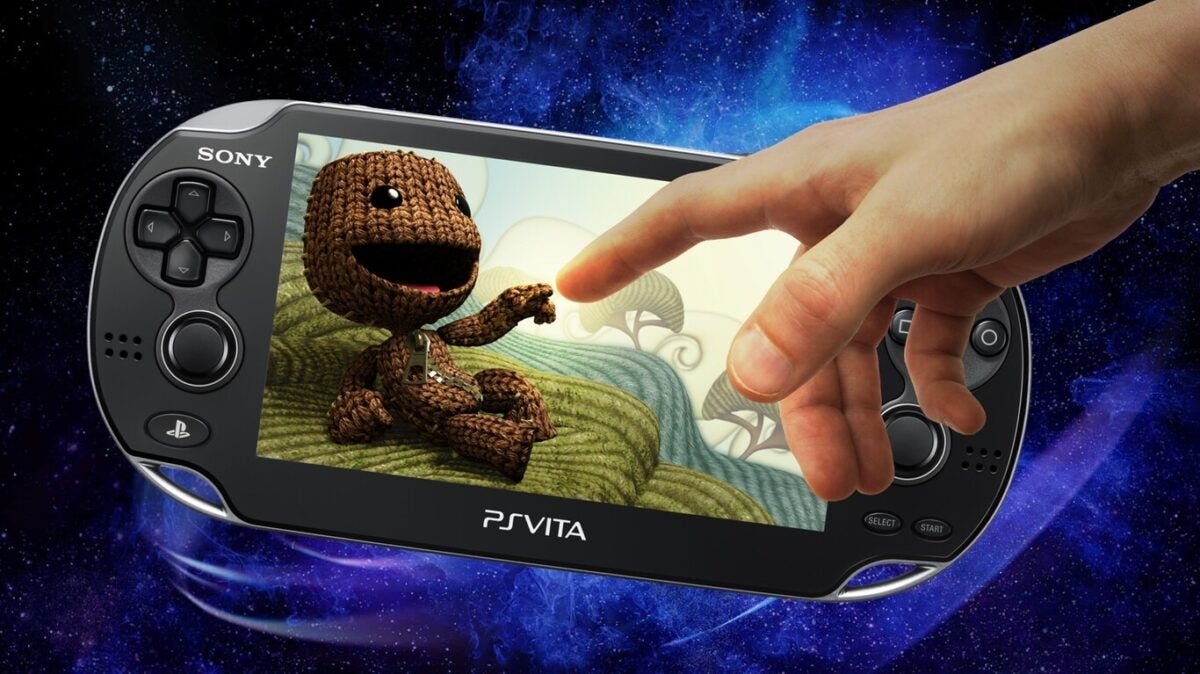
PlayStation Vita lives. In our hearts. Sony’s handheld didn’t sell much, but it was a great console—those of us who had it can attest to that. Even today, it remains one of the best handheld consoles that has ever existed. It’s no surprise that Nintendo and Valve later took notes from it to make their own handheld consoles. Nor that Sony has decided it’s a good idea to return to the handheld console market, according to several reliable sources that have already confirmed it.
Bloomberg commented last November that Sony was developing a new portable console, after realizing that there was a market for portable devices. Still only in the prototyping stage, this was due to the success of PlayStation Portal. It seems they are not the only ones who have heard that information, as other media outlets are joining in to confirm the news.
Last Monday, in their podcast DF Direct Weekly #191, Digital Foundry confirmed that they had heard the rumors that Sony was working on a portable console weeks ago. If they hadn’t commented on it, according to John Linneman, it’s because “we’re not in the business of leaking things.” He also mentioned that “it’s interesting that the news has finally started circulating, because it confirms what we had already heard.”
Sony is not the only one interested in portable consoles
Although they have not been able to provide many more details, it seems that there may already be a prototype of the console, or at least, a concept of what they are looking for. Considering that Sony has already made two handhelds in the past, the PSP and the PS Vita, not counting the Portal device, it would not be surprising if they have made more progress than we imagined.
For now, all we know is that they are interested and their idea is for it to be a console capable of running PlayStation 5 games. This also coincides with Microsoft’s interest in making a portable console, undoubtedly due to the success of Valve, Rog, and Nintendo, with their portable consoles. It seems they are experiencing a second life that is not close to ending.