Capcom has unexpectedly released an update for Resident Evil Requiem called Leon Must Die Forever. This minigame, promised by director Koshi Nakanishi last March, will put us in the shoes of Leon S. Kennedy to play in different scenarios from the main game, changing the order of enemy and item appearances to create a frantic and intense arcade experience. A highly anticipated update, Leon Must Die Forever is the first of the planned updates for the game, with the next being a paid DLC that will continue the story. While it has not yet been clarified how it will do so, there are […]
This mini-game, promised by director Koshi Nakanishi last March, will put us in the shoes of Leon S. Kennedy to play in different scenarios from the main game, changing the order of enemy and item appearances to create a frantic and intense arcade experience.
A much-anticipated update
Leon Must Die Forever is the first of the planned updates for the game, with the next being a paid DLC that will continue the story. While it has not yet been clarified how it will do so, there are two clear lines regarding this.
On one hand, since Grace does not appear in this update, it is possible that her story will continue. On the other hand, the game ends with Chris Redfield’s Hound Wolf Unit arriving at the laboratory, so they could develop what his involvement in the events of the game is.
For its part, Leon Must Die Forever contains five difficulty modes, a new progression system, and a randomized upgrade system. Something that sets it apart from other similar minigames in the franchise, like the much-loved Mercenaries mode, present since the first installment but particularly celebrated in the fourth and fifth installments.
The reception of Leon Must Die Forever, which is a nod to the highest difficulty mode of the Devil May Cry franchise (Dante Must Die), is generally favorable. While it is celebrated for its roguelike style, it is also receiving some criticism for recycling some content from the main campaign and for not having the same depth as the aforementioned Mercenaries mode. This could very well lead to some changes in the future regarding how to approach this kind of minigames.
Resident Evil Requiem and Leon Must Die Forever are now available on PC, PlayStation 5, Switch 2, and Xbox Series X/S. Additionally, to play this new game mode, you must have first completed the main campaign. And believe us, you will need to do so to survive.
Capcom is on a winning streak with video games. Pragmata has this premise. It has had a hell of a tumultuous story. It has finally been released and is being very well received. Its combination of action and puzzles works very well. It could take the GOTY from Requiem… and we still have Onimusha left. Capcom has an excellent streak when it comes to releases. Even limiting ourselves to 2026, they have released The Disney Afternoon Collection along with Digital Eclipse, Resident Evil Requiem, Monster Hunter Stories 3: Twisted Reflection, and Mega Man Star Force Legacy Collection in just three months. All meeting or exceeding internal expectations of […]
Capcom is on a winning streak with video games. Pragmata has this premise. It has had a tumultuous story. It has finally been released and is being very well received. Its combination of action and puzzles works very well. It could take the GOTY from Requiem… and we still have Onimusha to look forward to.
Capcom is on an excellent streak when it comes to releases. Even limiting ourselves to 2026, they have released The Disney Afternoon Collection together with Digital Eclipse, Resident Evil Requiem, Monster Hunter Stories 3: Twisted Reflection, and Mega Man Star Force Legacy Collection in just three months. All meeting or exceeding the internal expectations of the Japanese studio.
Although for the rest of the year we currently only know of two titles, that doesn’t mean they don’t have more prepared. Or that the ones we know are not two heavyweights. One of them, Onimusha: Way of the Sword, is the return of a beloved classic from the PlayStation 2 generation and has had several recent successful remasters, but it still doesn’t have a specific release date. The other has just been released and can already be considered a great success. Because Pragmata is a new IP from Capcom and it seems to be performing much better than they expected.
A game with a whole story behind it
Pragmata is an action-adventure game that puts us in the shoes of Hugh, an astronaut, who must protect Diana, a robot in the form of a girl, after a hostile AI from a research station on the Moon infects all the robots and begins to attack humans indiscriminately. This will translate into a tremendously emotional adventure where Diana and Hugh will bond throughout the journey while confronting the threats posed by the robots.
The most surprising thing about Pragmata is that it has been released at all. Because there was a time, not long ago, when it seemed that Pragmata was going to be one of those projects that gets put in a drawer and is quietly canceled without ever being mentioned again. With a release originally planned for 2022, in January 2021 it was announced that the game would be delayed until 2023. When June 2023 arrived, the game was delayed again, but this time indefinitely. This led many people to think that the game would never come out. Until in June 2025, during a Sony State of Play, Capcom announced that the game would finally be released in 2026.
Released on April 17, 2026, although the Japanese will have to wait until the 24th of the same month, the game has received fantastic reviews. With an average score of 86 on Metacritic and 95% of critics recommending it on OpenCritic, it is one of the highest-rated games of the year. And although it is surpassed by Resident Evil Requiem in average score, there is one thing everyone agrees on: Pragmata feels like an Xbox 360 game. And that’s a good thing.
A winning combination
Pragmata combines elements of action and puzzles in a very unique way. Hugh has up to four weapons available at all times, but the robots are very resistant to his attacks. To make them vulnerable, we will have to hack them remotely with Diana, which will expose their vulnerabilities, as well as induce altered effects or other kinds of particularities as we progress in the game. The uniqueness of this is that both things do not occur in separate instances. Both happen at the same time.
As we move with Hugh using the left trigger, we control the hacking puzzle with the right. This will force us to pay close attention to positioning and managing enemies, as we won’t be able to move the camera comfortably while hacking. Hence, the game feels like it’s from the 360 era. Invent something new, original, and fresh, in a way that already feels impossible for video games; the generation of 360 games was the last to do this kind of gimmicks, which have disappeared since the PlayStation 4 and Xbox One generation.
It is for that reason that it is not bold to imagine a scenario where Pragmata could end up snatching the GOTY from Resident Evil Requiem. Although the ninth installment of the zombie franchise is excellent, Pragmata brings something that the former cannot: it puts something original on the table. Something that feels new and exciting.
In that sense, Capcom has managed to create an action game that will delight old-school gamers, but can also resonate with modern players due to the uniqueness of its premise. However, that doesn’t mean they are resting on their laurels. As we have already mentioned, they still have to release another major title this year, still without a date, with Onimusha: Way of the Sword. By the end of 2026, we might find that the GOTY is contested between Capcom, Capcom, and also Capcom. For now, they are on the right track for that.
In a recent debate about the use of Nvidia’s DLSS 5 technology, senior animator Mike York expressed his deep criticism regarding its effects on video game characters. York, known for his work on titles like GTA 5 and Death Stranding 2, argues that this new technology, which is based on a real-time neural rendering model, distorts the appearance of characters in an unrealistic way. His analysis has gained relevance following the controversy generated by the use of DLSS 5 in Resident Evil Requiem, where he highlighted the transformation of the […]
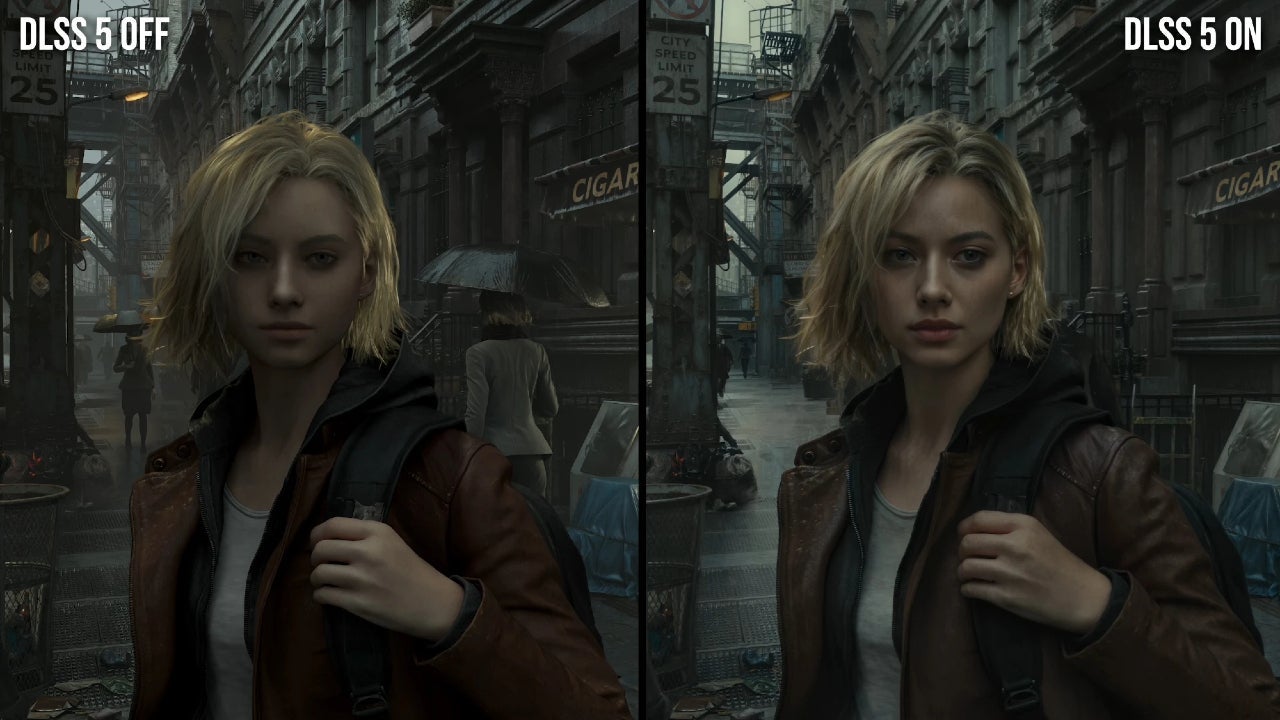
In a recent debate about the use of Nvidia’s DLSS 5 technology, senior animator Mike York has expressed his deep criticism regarding its effects on video game characters. York, known for his work on titles like GTA 5 and Death Stranding 2, argues that this new technology, which is based on a real-time neural rendering model, distorts the appearance of characters in an unrealistic way. His analysis has gained relevance following the controversy generated by the use of DLSS 5 in Resident Evil Requiem, where he highlighted the transformation of the protagonist Grace Ashcroft into an image that he considers comparable to a TikTok filter.
Consider that there is nothing good here
York’s criticisms come at a time when the debate over DLSS 5 is intensifying among players of other franchises. In particular, the Assassins Creed Shadows community has begun to protest against the new DLSS 5 filter, warning that it could harm the historical reputation of the saga. Gamers argue that the implementation of this technology could lead to results similar to those observed by York, which would create widespread discontent among the fanbase.
On the other hand, Digital Foundry’s initial response to DLSS 5 was more enthusiastic, although the publication has revised its stance, acknowledging that performance under certain conditions may not be as expected. This disagreement in perceptions highlights the current tension in the industry regarding the direction that graphics technology is taking and its impact on gameplay. While developers seek to innovate, the opinion of veterans like York brings to the forefront the need for a balance between technology and the player experience.
The Resident Evil saga has taken a new turn in its narrative with the recent release of Resident Evil Requiem, which has managed to sell over six million copies, setting a sales record for the franchise. However, what has caught the attention of fans is not just its impressive numbers, but also the unexpected evolution of the beloved character Leon S. Kennedy. Who is the mysterious lucky one? In several scenes of the game, Leon is seen wearing what appears to be a wedding ring, which has sparked speculation among followers about his […]
The Resident Evil saga has taken a new turn in its narrative with the recent release of Resident Evil Requiem, which has sold over six million copies, setting a sales record for the franchise. However, what has caught the attention of fans is not just its impressive numbers, but also the unexpected evolution of the beloved character Leon S. Kennedy.
Who is the mysterious lucky one?
In several scenes of the game, Leon is seen wearing what appears to be a wedding ring, which has sparked speculation among fans about his relationship with other iconic characters like Ada Wong and Claire Redfield. Although the director of Resident Evil Requiem, Koshi Nakanishi, has not provided definitive clarifications about to whom the ring belongs, he has explained that it signifies a “home” for the character and suggests that this will open new doors in the development of the story.
Nakanishi expressed that the ring represents a place where Leon can return after his long battles, inviting fans to imagine the moments of peace he could enjoy. This approach has led to various theories, from the possibility that Leon has formed a bond with one of his old love interests, to the more humorous option that he has married a character never seen before.
Although fans are hoping for a more concrete explanation, Nakanishi has confirmed that the “good” ending of Resident Evil Requiem is canonical, leaving the door open for future narrative developments that could be explored in a future expansion. This announcement, along with the already impressive sales performance, has kept the gaming community eager for more details that could come in upcoming updates.
In the field of video game performances, Angela SantAlbano, who made her debut in this medium with the role of Grace Ashcroft in Resident Evil Requiem, has expressed her desire to continue exploring her career in the realm of video games. In a recent interview, SantAlbano emphasized the importance of a good narrative and her desire to participate in more projects of this kind: “I would love to do more video games. I had a lot of fun doing motion capture and I am open to exploring different genres,” she commented. She wants to remain involved in video games. SantAlbano’s performance has been praised for her ability to […]
In the realm of video game performances, Angela SantAlbano, who made her debut in this medium with the role of Grace Ashcroft in Resident Evil Requiem, has expressed her desire to continue exploring her career in the field of video games.
In a recent interview, SantAlbano highlighted the importance of a good narrative and her desire to participate in more projects of this type: “I would love to make more video games. I had a lot of fun doing motion capture and I am open to exploring different genres,” she commented.
'Resident Evil Requiem' Grace actress Angela Sant'Albano would love to work on more video games 🎮
"I had so much fun doing motion capture. I would love to do it again and to explore sort of different genres … if there's a good story, there's a good story"
The performance of SantAlbano has been praised for his ability to convey stress and anxiety, heightening the tension during the sections of his character in Resident Evil Requiem.
This authenticity is a reflection of Capcom’s approach, which seeks to reinforce the cinematic quality of the actors’ performances. The company has allowed actors to review and redo scenes, thus promoting the improvement of their performances.
Additionally, the actor who plays Leon in the game has expressed his interest in collaborating with Sheva Alomar, a character considered “underutilized,” suggesting the possibility of yet unexplored stories within the franchise.
This search for new narratives resonates with the current trend in the video game industry of merging immersive plots with deeper and emotionally resonant performances.
Sony has released a new free update for the PS5 that introduces significant improvements in PSSR technology, or PlayStation Spectral Super Resolution. This AI-based tool aims to optimize video game performance by analyzing each frame pixel by pixel, resulting in greater stability in fps and superior visual clarity. Players will be able to enjoy an enhanced graphical experience, which may encourage the revitalization of popular titles released in recent years. Major titles that feature the new technology Since its initial launch, several games have already begun to […]
Sony has released a new free update for the PS5 that introduces significant improvements in PSSR technology, or PlayStation Spectral Super Resolution. This AI-based tool aims to optimize video game performance by analyzing each frame pixel by pixel, resulting in greater stability in fps and superior visual clarity. Players will be able to enjoy an enhanced graphical experience, which may encourage a revival of popular titles released in recent years.
Great titles featuring the new technology
Since its initial launch, several games have already begun to take advantage of PSSR capabilities, with Resident Evil Requiem being one of the first to adopt this enhancement. Konami has shown a remarkable interest in this technology, ensuring that the remake of Silent Hill 2 and Silent Hill f will be compatible, further enhancing the player experience. For its part, Square Enix joins the movement with Final Fantasy VII Rebirth, promising its users a more immersive gameplay.
The list of games that will benefit from PSSR is constantly expanding. Titles from well-known companies such as Remedy Entertainment, Ninja Theory, or Capcom are joining the initiative. A key upcoming release, Crimson Desert, will be compatible with the technology from its launch on March 19. Additionally, updates for Assassin’s Creed Shadows and Cyberpunk 2077 are expected in the near future.
For PS5 Pro owners, the gaming experience will be even more enriched, as PSSR will be available for all titles in general. However, Sony has warned that results may vary depending on the game in question, with differences in sharpness and smoothness. This improvement is optional, allowing players to enable or disable it according to their preference, while new releases will ensure compatibility with PSSR from day one.
Nvidia had a special presentation yesterday. Brief, but with a lot of fanfare, they made a special presentation for a select few specialized technology media, unveiling their new upscaling technology: DLSS 5. Everyone was eagerly anticipating it because, with its flaws, DLSS is a great tool. It allows computers with lower capabilities to run cutting-edge video games at resolutions higher than they normally could with minimal compromises. The problem is that DLSS 5 has not been that. What they presented is something very different from DLSS 4.5 and that, almost universally, has been […]
Nvidia had a special presentation yesterday. Brief, but with a lot of fanfare, they held a special presentation for a select few specialized technology media, showcasing their new upscaling technology: DLSS 5. Everyone was eagerly anticipating it because, despite its flaws, DLSS is a great tool. It allows computers with lower capabilities to run cutting-edge video games at resolutions higher than they normally could with minimal compromises.
The problem is that DLSS 5 has not been that. What they have presented is something very different from DLSS 4.5 and that, almost universally, has been hated for its results. But why has it been? For that, we need to understand what DLSS is and what it is not. And what they are trying to sell us.
What is DLSS?
DLSS, Deep Learning Super Sampling, is a technology that Nvidia launched in September 2018 as a key feature of the GeForce RTX 20 series GPUs. Its greatest contribution was the ability to, through deep learning, upscale lower resolution images to a higher resolution without losing fidelity or graphical quality. This allowed for increased graphical settings and FPS, as it enabled setting a relatively low resolution that the system could handle comfortably, upscaling it to the resolution of the TV or monitor being used.
Each new iteration has introduced new elements. Version 2.0 introduced its own anti-aliasing, which smoothed out the jagged edges in the first iteration. Version 3.0 introduced the ability to invent frames between the existing frames to gain fluidity in the image. And version 4.0 reduced both memory usage and emphasized light detail, particularly through the use of ray tracing.
Although DLSS has obvious advantages, allowing relatively modest computers to run current games, it has also had some disadvantages that cannot be overlooked. The generation of frames causes input lag, meaning that the commands we give to the controller take a certain number of frames to translate into images, which can be fatal for both competitive games and games that require reflexes or precision. And because DLSS is capable of doing a very good job running the game, many developers have stopped efficiently optimizing their games, relying on DLSS or other forms of upscaling technologies to do the work for them to make their games run.
That’s why there was great enthusiasm to know what the new version of DLSS would bring. Each new version has improved upon the previous one, even if there have been some issues since 3.0 that perhaps haven’t been discussed in the detail they should have. And now, with the presentation of 5.0, people have erupted.
The disaster of DLSS 5
Nvidia presented DLSS 5 with a series of videos and explanations that can be summarized in that the new thing in DLSS is that it is less efficient, more resource-demanding, and the contribution it makes is to add a generative AI filter over the games. Although they have rushed to assert that developers still have control over their images, that is neither what was seen in the presentation video nor what has been sold to us: DLSS 5 completely changes the scenes, making us play a very different game. And for the vast majority of the audience, a much uglier one.
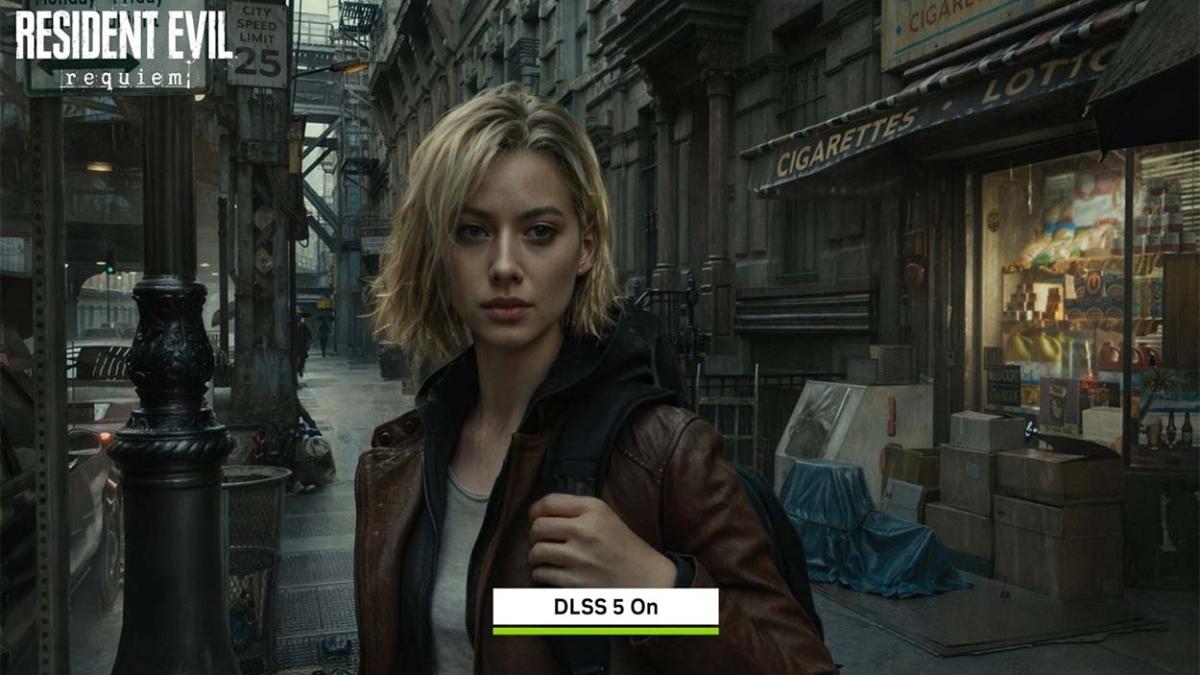
The most obvious thing is the faces. Presenting their technology with Resident Evil Requiem, Hogwarts Legacy, Starfield, and EA FC 26, among others, if something stood out throughout the presentation, it was that when activating DLSS 5, the characters looked different. It changed their physical features, reinterpreted their appearance, and provided a supposedly hyper-realistic version, but it is not.
Hyperrealism is a very specific form of art. It is a meticulous recreation of a photo or a scene from reality to which non-existent details are added to enhance its narrative qualities. Hyperrealism is, by definition, not realistic: it does not aim to reproduce reality, but rather to extract what is hidden in reality, betraying its small details. But DLSS 5 is not that. DLSS 5 is a layer of generative AI that makes an approximation based on algorithms to change images according to what is essentially a random calculation: there is no intention behind the changes. It is not enhancing what is hidden through its real reproduction, nor is it based on anything that exists in reality; it is not hyperrealistic, it is just ugly.
That’s why all faces look the same and are, very clearly, AI-generated faces. Because it has biases. Because it does not seek to enhance what already exists. It turns all women into models with infantilized faces and all men into subjects with defined bones and muscles. If someone has dark skin, hair, or eyes, it lightens them, and if a man is young or a woman is an adult, it ages or rejuvenates them due to its biases. Because it does not interpret and does not understand. It only applies the biases that have been given to it.
That’s why it’s not better when we talk about lighting effects or the settings, something that some people have defended more. The lighting lacks shading and is inconsistent, each scene fixture seems to be illuminated by its own LED spotlight, and instead of realistic, it looks like something else: as if filmed in a photography studio.
That’s why it produces the effect of the uncanny valley and why it has received such a negative reception. There is nothing here that is attractive, eye-catching, or interesting. The faces are strange, identical to each other; the scenes are unnatural, like very, very detailed models filmed in a studio. But furthermore, it is not even coherent. The face of Grace Ashcroft, the protagonist of Resident Evil Requiem, appears three times during the presentation, and each time it is a different face when DLSS 5 is activated. When it is not activated, Grace Ashcroft only has one face. Grace Ashcroft’s.
A Terrible Reception
Despite Nvidia presenting it with all the fanfare possible, even inviting Digital Foundry to their offices to release a fifteen-minute video praising the technology —and even then, unable to avoid stating that it didn’t do a good job with the faces—, the reception has been disastrous. And everyone has gone out to do damage control.
According to Nvidia, it is just a prototype, they are working on it and it will improve, because artists will still have control over the final result. They will be able to say how aggressive the filter will be. Moreover, that is not having control, because they will literally still not be able to decide how the changes are made and to what extent, that just leaves us with a question mark. So why have they presented it then? If it is just a prototype, if it is flawed, if artists will have more control, if they know all this, why have they presented it? Because they thought people would applaud it. Because Nvidia has interests in it.
They have thought about it, in part, because DLSS has been celebrated almost uncritically until now. It is a technology with disadvantages that, more often than not, any criticism made of it is disregarded. This has given them the confidence to release this product. But Nvidia, thanks to AI, is now the most valuable publicly traded company in the world. If anyone is interested in introducing AI and ensuring that AI succeeds in all aspects of life, including gaming, it is Nvidia. Their business and their superiority over the rest of humanity depend on it. That is why it should not surprise us: we have handed them the opportunity to do whatever they want, and on top of that, they have every reason to do so.
But it is normal for people to have reacted violently against DLSS 5. It makes games look worse, requires an obscene investment —as of today it works with two 5090s, one solely dedicated to DLSS 5; but Nvidia has also thought about that, why not use their cloud gaming service, Geforce NOW?— and moreover, it tarnishes a technology that everyone liked. But that’s why we need to be more critical. And that’s why we must not refuse to listen when others talk about the possible problems of a technology or a company. Because DLSS 5 is a disaster, but it is a disaster that was foreseeable.
Nvidia has announced the launch of DLSS 5, calling it its biggest advancement in computer graphics since the introduction of real-time ray tracing. This evolution of the AI-driven rendering technique promises to significantly enhance visual representation in a variety of video games, including Resident Evil Requiem, Starfield, and Hogwarts Legacy. According to the company, DLSS 5 can enable developers to deliver photorealistic graphics that were previously only achieved in Hollywood visual effects. A technology almost universally despised However, the announcement has generated mixed reactions online. A promotional video has accumulated 2,000 […]
Nvidia has announced the launch of DLSS 5, calling it its biggest advancement in computer graphics since the introduction of real-time ray tracing. This evolution of the AI-driven rendering technique promises to significantly enhance visual representation in a variety of video games, including Resident Evil Requiem, Starfield, and Hogwarts Legacy. According to the company, DLSS 5 can enable developers to deliver photorealistic graphics that were previously only achieved in Hollywood visual effects.
A technology almost universally despised
However, the announcement has generated mixed reactions online. A promotional video has accumulated 2,000 dislikes compared to 1,400 likes, and many users have compared the effects of DLSS 5 with popular AI filters on social media, highlighting a “strange” aspect that contradicts the original artistic intent of the games. Some comments have pointed out that the result resembles an excessive superficial treatment of the characters, creating a sense of ‘uncanny valley’.
Despite the criticism, several renowned developers have praised the potential of DLSS 5. Todd Howard from Bethesda mentioned that the technology has transformed the visual experience in Starfield, while Jun Takeuchi from Capcom highlighted that it will allow for even greater immersion in the world of Resident Evil. Others, like Charlie Guillemot from Ubisoft, have also expressed their enthusiasm for the enhanced capabilities in terms of lighting and materials that DLSS 5 can offer in future games like Assassin’s Creed Shadows.
DLSS 5 will be available this fall and will be implemented in numerous new and remastered titles, including AION 2, CINDER CITY, and The Elder Scrolls IV: Oblivion Remastered. The gaming community is preparing to see how these improvements will affect the aesthetics of their favorite titles, although doubts about the artistic direction persist.
The director of the new adaptation of Resident Evil, Zach Cregger, has once again demonstrated his commitment to the franchise by completing the latest release, Resident Evil Requiem, twice, according to a tweet from Deadline writer Destiny Jackson. Cregger, known for his work in horror films like Barbarian and Weapons, is set to bring his unique vision to the series, which celebrates its 30th anniversary this week. He can’t stop playing In a conversation with Entertainment Weekly, Cregger revealed that his film will depart from the iconic characters of the saga, offering a narrative […]
The director of the new adaptation of Resident Evil, Zach Cregger, has once again demonstrated his commitment to the franchise by completing the latest release, Resident Evil Requiem, on two occasions, according to a tweet from Deadline writer, Destiny Jackson.
In a conversation with Entertainment Weekly, Cregger revealed that his movie will depart from the iconic characters of the saga, offering a completely original narrative.
“When you see it, you’ll think, ‘this is very Zach,’” he noted. Despite the absence of these characters, Cregger assures that video game fans will not be disappointed. The production is receiving considerable creative freedom, and one of the producers has described the project as a “rollercoaster of relentless action.”
Meanwhile, Resident Evil Requiem has become the fastest video game release to reach six million copies sold within Capcom’s legendary series. The story follows Leon Kennedy and Grace Ashcroft on a chilling adventure through Raccoon City, promising an experience full of scares and plenty of action.
On the other hand, Jackson mentioned that Cregger stepped down from Resident Evil Village, calling it the “scariest” installment in the series. However, many players still believe that Resident Evil 7 holds its place as the most terrifying title, especially due to the unsettling monster from the Beneviento House that lingers in fans’ nightmares.
For those exploring the world of Resident Evil Requiem, the community has shared solutions for puzzles and safe codes, a helpful aid that enhances the gaming experience. With an ambitious blend of action and horror, fans are eager to see how Cregger will bring this new chapter to life on September 18.
With a recent launch on February 27, 2026, Resident Evil Requiem has caused a stir among horror fans and followers of the Capcom series. In its first hour, the game managed to reach an impressive record of 260,000 concurrent players on Steam, setting a new benchmark not only in terms of concurrency but also in sales, reaching six million units sold in just 17 days since its release. Shocking figures for the franchise Haruhiro Tsujimoto, president and COO of Capcom, highlighted this milestone in a public letter, stating that “global sales of […]
In its first hour, the game managed to reach an impressive record of 260,000 concurrent players on Steam, setting a new benchmark not only in terms of concurrency, but also in sales, reaching six million units sold in just 17 days since its release.
Resident Evil Requiem has sold over 6 million units.
• Fastest in the series to reach this milestone • 30th anniversary celebration coming March 22nd with 'various plans' to delight series fans
Haruhiro Tsujimoto, president and COO of Capcom, highlighted this milestone in a public letter, stating that “worldwide sales of Resident Evil Requiem, released on February 27, 2026, now exceed six million units, which is the fastest achievement in the series’ history.”
This initial success not only reflects the quality of the title but also the ongoing love of the community for the franchise. Critics have praised Resident Evil Requiem, describing it as “a masterpiece of the survival horror theater.”
According to statements from Koshi Nakanishi, the game’s director, Capcom has plans for ongoing support and additional content in the future. This includes a story expansion, a photo mode, and a new minigame, which promises to keep players’ interest in the long term.
As industry observers, it is not surprising to see Resident Evil Requiem succeed in such a short time. With a mix of intense action and a captivating narrative, the game has established itself as one of the most relevant titles of the year. If you haven’t tried it yet, be sure to check out our Resident Evil Requiem security codes to ease your progression in the game.