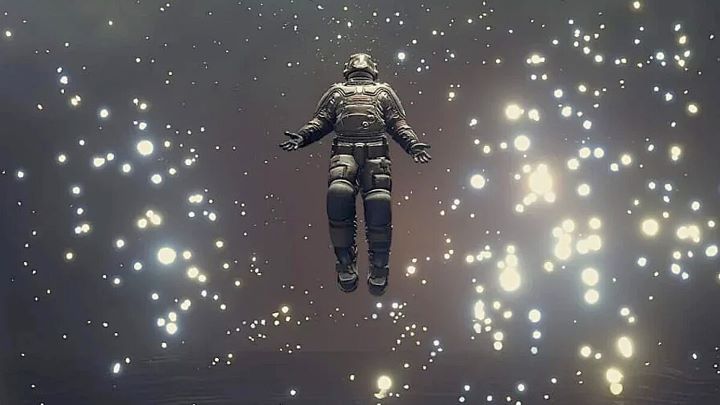
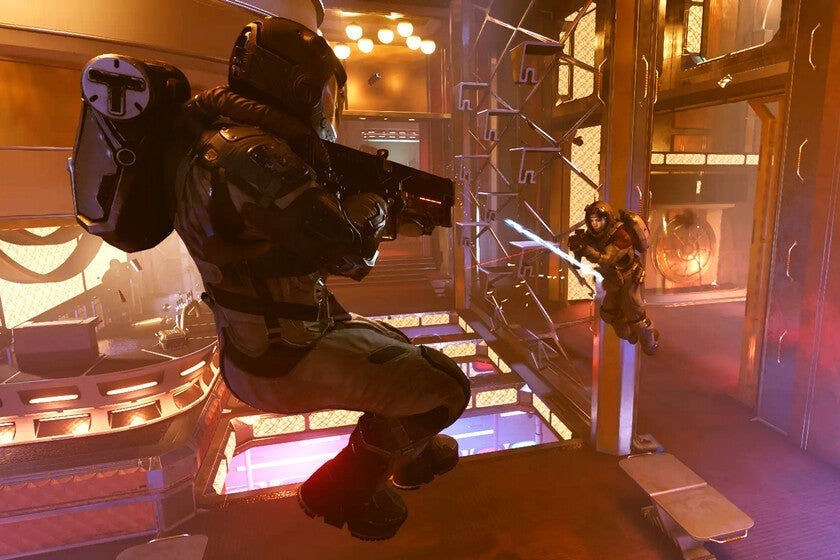
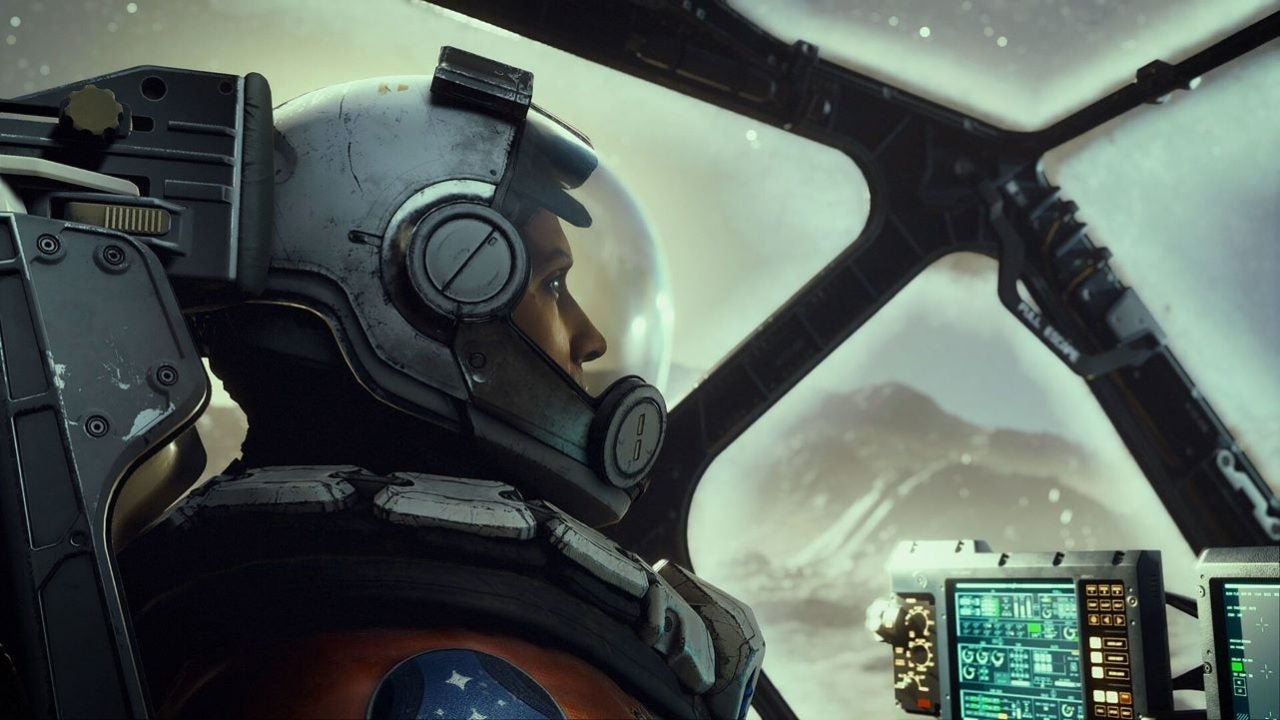
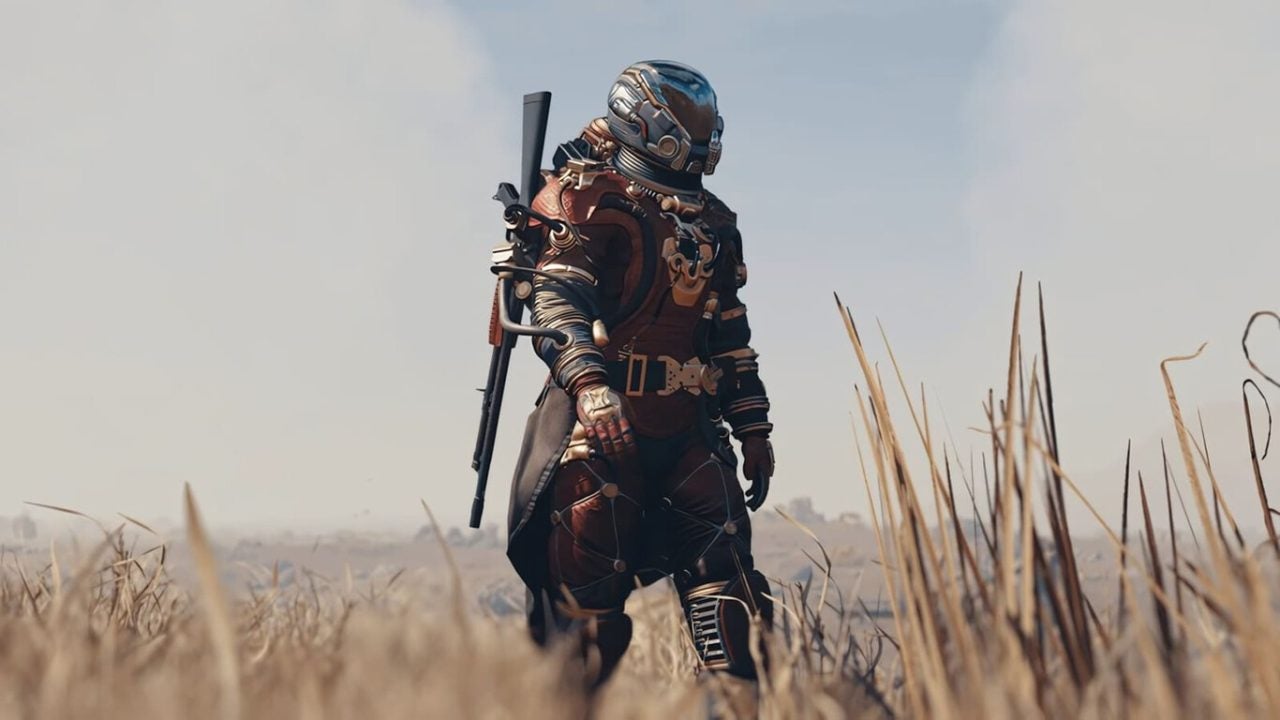
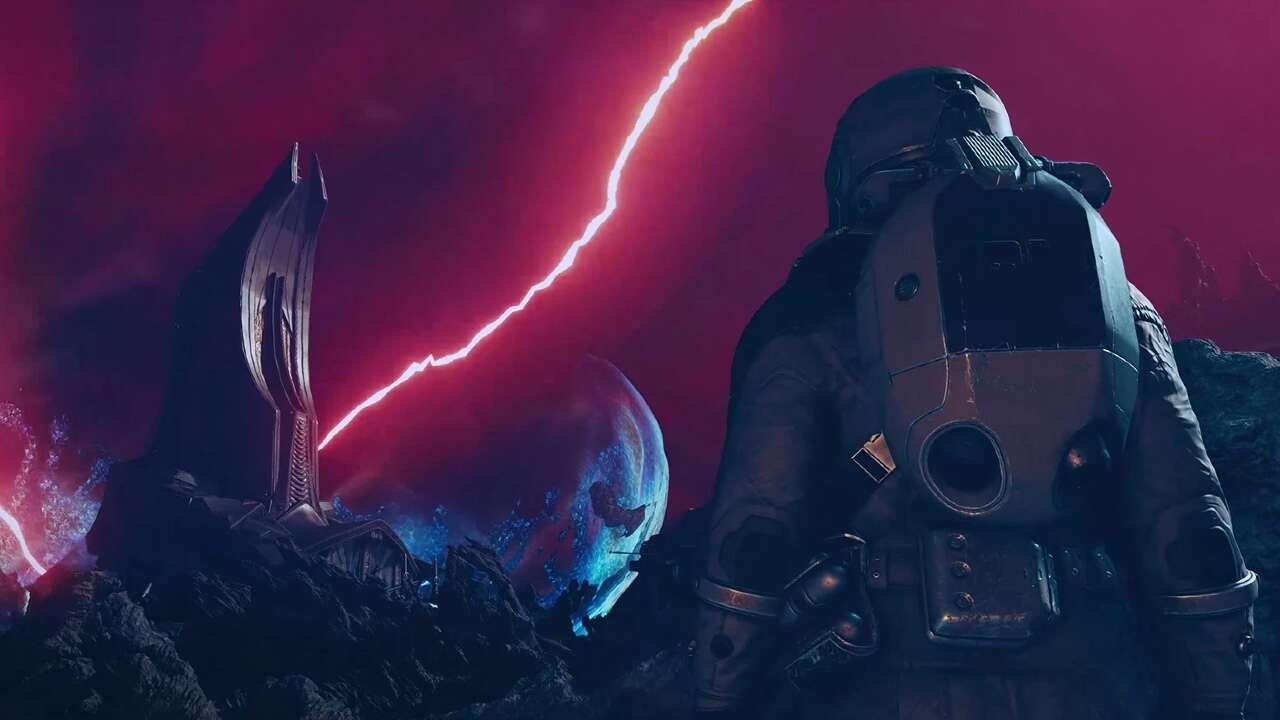
Bethesda has implemented significant changes in power management in Starfield with its recent update, Free Lanes. These powers, unique abilities that the protagonist acquires as they progress through the story, are one of the main rewards of the game, offering enriching gameplay both in the first playthrough and in subsequent New Game+ runs. Great strategic potential One of the most notable new features is the update to Quantum Essence. Previously used only to quickly recharge powers, it now allows players to enhance abilities without needing to return to the temples where they were obtained. This change streamlines the experience of […]
These powers, unique abilities that the protagonist acquires as they progress through the story, are one of the main rewards of the game, offering enriching gameplay both in the first playthrough and in subsequent New Game+ runs.
Starfield launches on PS5 on April 7th for $50.
A major new update is also releasing the same day:
• Free Lanes & Cruise Mode – freely fly between planets • Anchorpoint Station – a new station with new vendors and quests • New Space Encounters • X-Tech – Customize your… pic.twitter.com/15sKpSamBV
One of the most notable updates is the Quantum Essence upgrade. Previously used only to quickly recharge powers, it now allows players to improve skills without needing to return to the temples where they were obtained.
This change streamlines the gaming experience, as players can increase the level of their powers from the inventory. However, despite this advancement, players will need to start a New Game + if they aim to maximize all their skills, as there are not enough units of Quantum Essence available in a single playthrough.
Additionally, players will be able to create a new object called Quantum Entanglement Device, which facilitates the transfer of objects between games. This device, which unlocks a greater capacity to store materials, is obtained almost at the end of the main mission, allowing for a smoother interaction between game cycles.
The acquired powers offer a variety of strategic effects. From creating oxygen bubbles to summoning duplicates of characters, each ability has an energy cost and a specific location in the temples. With this recent update, Bethesda not only enhances gameplay but also invites players to explore this expansive universe more deeply.
Bethesda has announced the release of a new Starfield DLC titled ‘Terran Armada’ and a free update called ‘Free Lanes’, along with the expansion of the ‘Trackers Alliance’ system, all scheduled for April 7. This content will be offered at an approximate cost of 10 dollars/euros, although players who purchased the Premium edition of the game on PC or Xbox will receive the DLC at no additional cost. Available from April 7, ‘Terran Armada’ arises from community requests, aiming to provide more traditional missions and a context for exploring space. According to the game director, […]
Bethesda has announced the release of a new Starfield DLC titled ‘Terran Armada’ and a free update called ‘Free Lanes’, along with the expansion of the ‘Trackers Alliance’ system, all scheduled for April 7th. This content will be offered at an approximate cost of 10 dollars/euros, although players who purchased the Premium edition of the game on PC or Xbox will receive the DLC at no additional cost.
Available from April 7
‘Terran Armada’ arises from community requests, aiming to offer more traditional missions and a context for exploring space. According to the game’s director, Todd Howard, and the creative producer, Timothy Lamb, this expansion is not a reinvention of ‘Starfield’, but a phase of refinement aimed at improving specific aspects of the game. Lamb mentions that with ‘Terran Armada’, the goal is to give players the opportunity to explore new bases and face robotic enemy forces in a space conflict that reflects humanity’s need to establish itself in the cosmos.
The previous expansion, ‘Shattered Space’, had already received mixed reviews, and this new content seems to be designed especially for those who enjoy the game regularly. Additionally, the ‘Trackers Alliance’ system is expanded with five new adventures that will enrich the gaming experience, while the ‘Free Lanes’ update will address the community’s demands by refining and expanding multiple systems within the game.
Additionally, ‘Starfield’ will be released on PlayStation 5, which represents a significant expansion of the game’s universe. The standard edition will be available for 49.99 dollars/euros and the Premium for 69.99, which includes the base game, the previous expansion, and the new DLC. Bethesda has made it clear that it plans to provide ongoing support for ‘Starfield’ for years and has future ideas that have not yet been revealed.
Nvidia had a special presentation yesterday. Brief, but with a lot of fanfare, they made a special presentation for a select few specialized technology media, unveiling their new upscaling technology: DLSS 5. Everyone was eagerly anticipating it because, with its flaws, DLSS is a great tool. It allows computers with lower capabilities to run cutting-edge video games at resolutions higher than they normally could with minimal compromises. The problem is that DLSS 5 has not been that. What they presented is something very different from DLSS 4.5 and that, almost universally, has been […]
Nvidia had a special presentation yesterday. Brief, but with a lot of fanfare, they held a special presentation for a select few specialized technology media, showcasing their new upscaling technology: DLSS 5. Everyone was eagerly anticipating it because, despite its flaws, DLSS is a great tool. It allows computers with lower capabilities to run cutting-edge video games at resolutions higher than they normally could with minimal compromises.
The problem is that DLSS 5 has not been that. What they have presented is something very different from DLSS 4.5 and that, almost universally, has been hated for its results. But why has it been? For that, we need to understand what DLSS is and what it is not. And what they are trying to sell us.
What is DLSS?
DLSS, Deep Learning Super Sampling, is a technology that Nvidia launched in September 2018 as a key feature of the GeForce RTX 20 series GPUs. Its greatest contribution was the ability to, through deep learning, upscale lower resolution images to a higher resolution without losing fidelity or graphical quality. This allowed for increased graphical settings and FPS, as it enabled setting a relatively low resolution that the system could handle comfortably, upscaling it to the resolution of the TV or monitor being used.
Each new iteration has introduced new elements. Version 2.0 introduced its own anti-aliasing, which smoothed out the jagged edges in the first iteration. Version 3.0 introduced the ability to invent frames between the existing frames to gain fluidity in the image. And version 4.0 reduced both memory usage and emphasized light detail, particularly through the use of ray tracing.
Although DLSS has obvious advantages, allowing relatively modest computers to run current games, it has also had some disadvantages that cannot be overlooked. The generation of frames causes input lag, meaning that the commands we give to the controller take a certain number of frames to translate into images, which can be fatal for both competitive games and games that require reflexes or precision. And because DLSS is capable of doing a very good job running the game, many developers have stopped efficiently optimizing their games, relying on DLSS or other forms of upscaling technologies to do the work for them to make their games run.
That’s why there was great enthusiasm to know what the new version of DLSS would bring. Each new version has improved upon the previous one, even if there have been some issues since 3.0 that perhaps haven’t been discussed in the detail they should have. And now, with the presentation of 5.0, people have erupted.
The disaster of DLSS 5
Nvidia presented DLSS 5 with a series of videos and explanations that can be summarized in that the new thing in DLSS is that it is less efficient, more resource-demanding, and the contribution it makes is to add a generative AI filter over the games. Although they have rushed to assert that developers still have control over their images, that is neither what was seen in the presentation video nor what has been sold to us: DLSS 5 completely changes the scenes, making us play a very different game. And for the vast majority of the audience, a much uglier one.
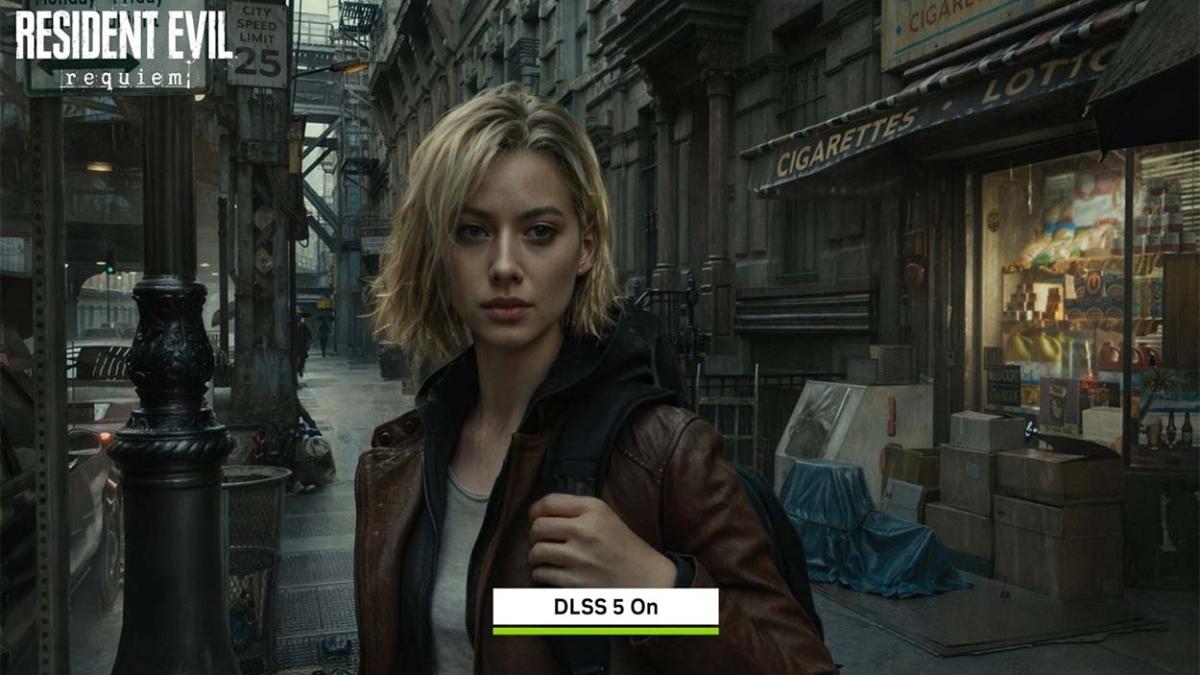
The most obvious thing is the faces. Presenting their technology with Resident Evil Requiem, Hogwarts Legacy, Starfield, and EA FC 26, among others, if something stood out throughout the presentation, it was that when activating DLSS 5, the characters looked different. It changed their physical features, reinterpreted their appearance, and provided a supposedly hyper-realistic version, but it is not.
Hyperrealism is a very specific form of art. It is a meticulous recreation of a photo or a scene from reality to which non-existent details are added to enhance its narrative qualities. Hyperrealism is, by definition, not realistic: it does not aim to reproduce reality, but rather to extract what is hidden in reality, betraying its small details. But DLSS 5 is not that. DLSS 5 is a layer of generative AI that makes an approximation based on algorithms to change images according to what is essentially a random calculation: there is no intention behind the changes. It is not enhancing what is hidden through its real reproduction, nor is it based on anything that exists in reality; it is not hyperrealistic, it is just ugly.
That’s why all faces look the same and are, very clearly, AI-generated faces. Because it has biases. Because it does not seek to enhance what already exists. It turns all women into models with infantilized faces and all men into subjects with defined bones and muscles. If someone has dark skin, hair, or eyes, it lightens them, and if a man is young or a woman is an adult, it ages or rejuvenates them due to its biases. Because it does not interpret and does not understand. It only applies the biases that have been given to it.
That’s why it’s not better when we talk about lighting effects or the settings, something that some people have defended more. The lighting lacks shading and is inconsistent, each scene fixture seems to be illuminated by its own LED spotlight, and instead of realistic, it looks like something else: as if filmed in a photography studio.
That’s why it produces the effect of the uncanny valley and why it has received such a negative reception. There is nothing here that is attractive, eye-catching, or interesting. The faces are strange, identical to each other; the scenes are unnatural, like very, very detailed models filmed in a studio. But furthermore, it is not even coherent. The face of Grace Ashcroft, the protagonist of Resident Evil Requiem, appears three times during the presentation, and each time it is a different face when DLSS 5 is activated. When it is not activated, Grace Ashcroft only has one face. Grace Ashcroft’s.
A Terrible Reception
Despite Nvidia presenting it with all the fanfare possible, even inviting Digital Foundry to their offices to release a fifteen-minute video praising the technology —and even then, unable to avoid stating that it didn’t do a good job with the faces—, the reception has been disastrous. And everyone has gone out to do damage control.
According to Nvidia, it is just a prototype, they are working on it and it will improve, because artists will still have control over the final result. They will be able to say how aggressive the filter will be. Moreover, that is not having control, because they will literally still not be able to decide how the changes are made and to what extent, that just leaves us with a question mark. So why have they presented it then? If it is just a prototype, if it is flawed, if artists will have more control, if they know all this, why have they presented it? Because they thought people would applaud it. Because Nvidia has interests in it.
They have thought about it, in part, because DLSS has been celebrated almost uncritically until now. It is a technology with disadvantages that, more often than not, any criticism made of it is disregarded. This has given them the confidence to release this product. But Nvidia, thanks to AI, is now the most valuable publicly traded company in the world. If anyone is interested in introducing AI and ensuring that AI succeeds in all aspects of life, including gaming, it is Nvidia. Their business and their superiority over the rest of humanity depend on it. That is why it should not surprise us: we have handed them the opportunity to do whatever they want, and on top of that, they have every reason to do so.
But it is normal for people to have reacted violently against DLSS 5. It makes games look worse, requires an obscene investment —as of today it works with two 5090s, one solely dedicated to DLSS 5; but Nvidia has also thought about that, why not use their cloud gaming service, Geforce NOW?— and moreover, it tarnishes a technology that everyone liked. But that’s why we need to be more critical. And that’s why we must not refuse to listen when others talk about the possible problems of a technology or a company. Because DLSS 5 is a disaster, but it is a disaster that was foreseeable.
Nvidia has announced the launch of DLSS 5, calling it its biggest advancement in computer graphics since the introduction of real-time ray tracing. This evolution of the AI-driven rendering technique promises to significantly enhance visual representation in a variety of video games, including Resident Evil Requiem, Starfield, and Hogwarts Legacy. According to the company, DLSS 5 can enable developers to deliver photorealistic graphics that were previously only achieved in Hollywood visual effects. A technology almost universally despised However, the announcement has generated mixed reactions online. A promotional video has accumulated 2,000 […]
Nvidia has announced the launch of DLSS 5, calling it its biggest advancement in computer graphics since the introduction of real-time ray tracing. This evolution of the AI-driven rendering technique promises to significantly enhance visual representation in a variety of video games, including Resident Evil Requiem, Starfield, and Hogwarts Legacy. According to the company, DLSS 5 can enable developers to deliver photorealistic graphics that were previously only achieved in Hollywood visual effects.
A technology almost universally despised
However, the announcement has generated mixed reactions online. A promotional video has accumulated 2,000 dislikes compared to 1,400 likes, and many users have compared the effects of DLSS 5 with popular AI filters on social media, highlighting a “strange” aspect that contradicts the original artistic intent of the games. Some comments have pointed out that the result resembles an excessive superficial treatment of the characters, creating a sense of ‘uncanny valley’.
Despite the criticism, several renowned developers have praised the potential of DLSS 5. Todd Howard from Bethesda mentioned that the technology has transformed the visual experience in Starfield, while Jun Takeuchi from Capcom highlighted that it will allow for even greater immersion in the world of Resident Evil. Others, like Charlie Guillemot from Ubisoft, have also expressed their enthusiasm for the enhanced capabilities in terms of lighting and materials that DLSS 5 can offer in future games like Assassin’s Creed Shadows.
DLSS 5 will be available this fall and will be implemented in numerous new and remastered titles, including AION 2, CINDER CITY, and The Elder Scrolls IV: Oblivion Remastered. The gaming community is preparing to see how these improvements will affect the aesthetics of their favorite titles, although doubts about the artistic direction persist.
The arrival of Starfield on PlayStation 5 is almost confirmed, according to multiple sources, including the well-known insider billbill-kun, who has a strong track record of leaks about Sony’s platform. These revelations suggest that the highly anticipated title from Bethesda will be released on April 7, 2026, in two editions: a standard one and a premium one. For now, these are just leaks. Reservations for the game are expected to open between March 17 and 18, suggesting that an official announcement could coincide with those dates, corroborated by other sources. The gaming community has been eagerly awaiting […]
The arrival of Starfield on PlayStation 5 is almost confirmed, according to multiple sources, including the well-known insider billbill-kun, who has a notable track record of leaks about the Sony platform. These revelations suggest that the highly anticipated title from Bethesda will be released on April 7, 2026, in two editions: a standard and a premium one.
For now, they are just leaks
Reservations for the game are expected to open between March 17 and 18, suggesting that an official announcement could coincide with those dates, corroborated by other sources. The gaming community has been eagerly awaiting this milestone, as the arrival of Starfield on Sony’s console is seen as an open secret, backed by the growing evidence that Bethesda was working on this version.
In addition, Bethesda has invited a select group of press and content creators for a presentation on the future of Starfield, which suggests that the announcement will include new improvements and content. Among the expected news is a DLC titled Terran Armada, which will add gameplay enhancements such as flight and space exploration, as well as exciting new features like new enemies, ships, and fleet building mechanics.
Although nothing is official until Bethesda announces it, expectations among fans are high and a significant event that will reveal the game‘s progress and the promised improvements is anticipated.
In a recent interview, Bruce Nesmith, former designer at Bethesda and known for his work on Skyrim, addressed the mixed reception of Starfield, the ambitious space exploration title released by Bethesda Game Studios. According to Nesmith, the lukewarm reception of the game could be attributed to the excessive expectations created before its launch, a heavy burden that seems to accompany all of the studio’s projects. “Bethesda finds itself in a bad position by having such high expectations that cannot be met,” he noted. The blame lies in being too good. Nesmith suggests that if Starfield had been developed by a studio […]
In a recent interview, Bruce Nesmith, former designer at Bethesda and known for his work on Skyrim, addressed the mixed reception of Starfield, the ambitious space exploration title released by Bethesda Game Studios. According to Nesmith, the lukewarm reception of the game could be attributed to the inflated expectations created before its launch, a heavy burden that seems to accompany all of the studio’s projects. “Bethesda is in a bad position by having such high expectations that cannot be met”, he noted.
The blame is being too good
Nesmith suggests that if Starfield had been developed by a different studio, it might have been considered as “the second coming of Jesus Christ”. This perception is likely due to Bethesda’s followers, who are used to the grandeur of titles like The Elder Scrolls and Fallout, expecting a similar experience. “Starfield is a good game. It’s a very good game. It’s just not the game that people expected it to be”, he added.
Despite leaving the company halfway through the game’s development, Nesmith shares an optimistic vision about a possible sequel. He believes that the team could enhance the experience based on what they learned from this first installment. “I would bet that a sequel would leave it all on the field”, he stated, highlighting that, despite some concerns, playing Starfield to the end is a triumph for Bethesda.
Additionally, Nesmith commented on how the development of Mass Effect 5 could benefit from learning from experiences like those of Baldur’s Gate 3, suggesting that it could adopt a style more aligned with Bethesda’s approach. This exchange of ideas suggests that the evolution of RPGs may be at an interesting crossroads, where lessons from various studios could influence key future releases.
Starfield, the highly anticipated space RPG from Bethesda, has generated intense debate within the gaming community since its release. While many players have enjoyed its vast exploration and storytelling, others have pointed out frustrating aspects that impact the overall experience. Among the most prominent criticisms is the opinion of Kurt Kuhlmann, former co-designer of Skyrim, who argues that Starfield never fully came together as a game. Too much bureaucracy and a team that is too large brings nothing good Kuhlmann, who was part of the team during the development of the title, suggested in a recent interview that the game should have […]
Starfield, the highly anticipated space RPG from Bethesda, has sparked intense debate within the gaming community since its release. While many players have enjoyed its vast exploration and storytelling, others have pointed out frustrating aspects that impact the overall experience. Among the most prominent criticisms is the opinion of Kurt Kuhlmann, former co-designer of Skyrim, who argues that Starfield never fully came together as a game.
Too much bureaucracy and a team that is too large brings nothing good
Kuhlmann, who was part of the team during the development of the title, suggested in a recent interview that the game should have been delayed to improve its quality. According to him, many of the problems faced by the team were due to increasing bureaucracy and a complexity in decision-making, which complicated communication between the various departments involved in the project. This more complicated work environment contrasted with the more direct dynamic that existed during the development of Skyrim.
Apparently, the echoes of the problematic launch of Fallout 76 also influenced the decision to extend the development time of Starfield, in order to avoid repeating the same mistakes. Kuhlmann emphasized that creating a new intellectual property (IP) like Starfield brought significant challenges, turning up to 50% of the development into a completely new process.
Rumors suggest that Bethesda is working on Starfield 2.0 and a future expansion that could redeem some of the questionable aspects of the game. The hope is that these improvements will help restore player confidence and elevate the title to the heights of the expectations that have accompanied the company’s veterans, such as Skyrim and Fallout 4. However, it remains to be seen how these concerns will be addressed in the future.
The Creation Engine graphics engine from Bethesda, used for decades in iconic franchises like The Elder Scrolls and Fallout, faces strong criticism for its constant loading screens, technical limitations, and a rigidity that hinders the promised innovation in new titles. This debate resurfaces with the anticipation of future releases like Fallout 5 and The Elder Scrolls VI. It would be a necessary change Dean Carter, leader of the Fallout: London project, has spoken out about the need for Bethesda to consider abandoning the Creation Engine. In recent statements, he expressed his concern about the persistence of an engine that has shown its […]
The Creation Engine graphics engine from Bethesda, used for decades in iconic franchises like The Elder Scrolls and Fallout, faces strong criticism for its constant loading screens, technical limitations, and a rigidity that hinders the promised innovation in new titles. This debate resurfaces with the anticipation of future releases like Fallout 5 and The Elder Scrolls VI.
It would be a necessary change
Dean Carter, leader of the Fallout: London project, has spoken out about the need for Bethesda to consider abandoning the Creation Engine. In recent statements, he expressed his concern about the persistence of an engine that has shown its age and that, according to him, limits creative potential. “It can be better, yes, but it’s not a bad engine; although I think it is starting to show its age,” Carter commented, suggesting that a renewal of the system could facilitate the implementation of new mechanics, such as vehicle driving.
Criticism of the Creation Engine focuses on the poor optimization of recent games, which directly affects the player experience. Carter emphasized that removing loading screens and improving optimization should be priorities if Bethesda opts for a more modern engine. However, changing engines is not a simple decision. Veterans of the studio have mentioned that the Creation Engine is fundamental to key aspects of their games, which would imply a laborious process of adaptation and staff training that could slow down development.
Although the recent update to Creation Engine 2 brought notable improvements to Starfield, many players believe that historical issues persist. With the pressure to meet fan expectations, the future of Fallout 5 appears uncertain; will Bethesda be able to harness the potential of the Creation Engine without compromising the essence of its franchises, or will it be forced to make a drastic change? This dilemma remains unresolved, marking a critical era for the company.
The debate about what defines a role-playing game (RPG) has resurfaced thanks to recent comments from Emil Pagliarulo, a veteran of Bethesda Game Studios, in an interview with GamesRadar+. Pagliarulo emphasized that there is no single definition for RPGs, which has led to numerous discussions among developers and players. Although elements like leveling systems, skills, and customizable characters are common features in the genre, many developers also incorporate elements from other genres, further complicating the delineation of the term. An RPG can be many things The evolution of the RPG concept is a topic […]
The debate about what defines a role-playing game (RPG) has resurfaced thanks to recent comments from Emil Pagliarulo, a veteran of Bethesda Game Studios, in an interview with GamesRadar+. Pagliarulo emphasized that there is no single definition for RPGs, which has led to numerous discussions among developers and players. While elements like leveling systems, skills, and customizable characters are common features in the genre, many developers also incorporate elements from other genres, further complicating the delineation of the term.
An RPG can be many things
The evolution of the RPG concept is a topic that Pagliarulo points out as constant, with contemporary examples like Cyberpunk 2077 and The Outer Worlds 2. In these titles, the narrative and player decisions play a crucial role, challenging traditional definitions of the genre. “What we really learned between Fallout 4 and Starfield is that there is no single definition of an RPG,” Pagliarulo stated, adding that some players don’t even consider Cyberpunk 2077 as such.
The fact that Bethesda is working on Elder Scrolls 6 also raises expectations about how this next installment will develop within the framework of an RPG. According to Todd Howard, it can be confirmed that Elder Scrolls 6 “definitely” will feature more trees than Skyrim, which adds an element of intrigue about the location of the new game. Despite the ongoing debate about the definition of the genre, what is clear is that Bethesda is focused on providing a quality narrative, an aspect that many consider essential in the RPG experience.
With this reflection, the gaming community eagerly awaits news about Elder Scrolls 6, which promises to continue the tradition of one of the best RPGs of all time.
Recently, rumors have emerged about the possible arrival of Starfield on the PlayStation 5 console, although Microsoft has not officially confirmed this information. According to some rumors, the announcement for PS5 is expected to take place in 2026. This news coincides with the growing trend of Xbox first-party games, like the aforementioned Bethesda RPG, being ported to Sony’s console. Also on Switch 2 Starfield, released in 2023, is currently available only for PC and Xbox Series X|S, which has generated expectations among players on other platforms. The same source suggested that the […]
Recently, rumors have emerged about the possible arrival of Starfield on the PlayStation 5 console, although Microsoft has not officially confirmed this information. According to some rumors, the announcement for PS5 is expected to take place in 2026. This news coincides with the growing trend of Xbox first-party games, such as the aforementioned Bethesda RPG, being ported to Sony’s console.
Also on Switch 2
Starfield, released in 2023, is currently available only for PC and Xbox Series X|S, which has generated expectations among players on other platforms. The same source suggested that the game could debut on PS5 in spring 2026, along with a potential second expansion called ‘Terran Armada,’ whose name was hinted at by Bethesda in a commemorative video for the second anniversary of the title in September.
Additionally, the possibility that Starfield may also see a release on the Switch 2, during the same year has been raised. This strategy suggests a broader approach by Xbox towards compatibility with other platforms, given that there have been successful releases of Xbox titles on rival systems, as is the case with the upcoming Indiana Jones game that will arrive on Switch 2 next year.
It is interesting to note that, earlier this year, Phil Spencer, CEO of Microsoft Gaming, did not rule out the possibility of Starfield coming to PS5, which suggests a shift in the company’s stance regarding the openness of its titles to other platforms. Undoubtedly, the future of Starfield and its availability on different systems are at the center of the conversation among players and the video game industry.