YouTube under fire for toxic content

YouTube continues its endless battle against toxic content, but are they doing everything they can?

YouTube What to WatchLast year, a popular YouTuber named Logan Paul published a video on YouTube showing a man who committed suicide. To make matters worse, the video appeared in YouTube’s “trending” tab until it was pulled off the site.

With the memory of the stunt still fresh, many have been asking how this could have happened, and if the problem with toxic content has improved.

Unfortunately, the toxic YouTube trend seems to be growing. Why?

8

YouTube may be looking the other way

YouTube CEO Susan Wojcicki is currently under fire for not doing more to combat false, toxic content. In an exclusive interview for Bloomberg News, an unidentified source who worked with her said, “Her view was, ‘My job is to run the company, not deal with this.’”

The article goes on to say that YouTube employees would propose methods of tracking and removing toxic content, but would get shot down. 

There is also evidence of YouTube allowing toxic content to stay active because of popularity.

In late 2017, YouTube deleted a channel called Toy Freaks. The channel starred a father and his two daughters in uncomfortable situations.

Before being taken down, the channel had amassed more than 8 million subscribers and more than half a billion cumulative views. The channel had been on YouTube since 2012.

Although YouTube deleted the channel, the company was chastised for allowing it to last that long.

The YouTube algorithm works against it

YouTube algorithm

A huge issue in the minds of many YouTube content creators lies in YouTube’s algorithm. Problems with the algorithm include videos not appearing in sub-boxes, and popular videos not “trending.” However, the major issue concerning the algorithm has been the lack of answers from YouTube. 

The algorithm has also proven to heavily work against YouTube by allowing toxic content into the trending tab. In early 2019, the channels Jake Paul and RiceGum made videos promoting a gambling site. Both RiceGum and Jake Paul have millions of underage subscribers. RiceGum’s video made it to YouTube’s trending tab.

Popular channels such as PewDiePie, The Game Theorists, H3H3 Productions, and Markiplier have spoken about the algorithm. They have not received much satisfactory feedback, as the issues keep arising. Markiplier released a video discussing the issue here:

Pedophelia and sexual videos aimed at kids

Kids on YouTube

YouTube has a system of flagging inappropriate content in videos. The videos are typically either removed entirely or prompt the viewer to sign in to confirm their age. 

Patrick Copeland is a former director at Google. Recently he criticized YouTube on his LinkedIn after his daughter watched a sexually explicit video. The video was aimed at children and featured Snow White.

Copeland writes: “How is this a good thing for anyone, let alone young children?  Most companies would fire someone for watching this video at work. Does YouTube think it’s ok to host and recommend extremely sexist and misogynistic videos that include rape? This is worrisome especially when it comes to young kids. Especially mine. Unbelievable!! Going to block this domain.”

It was recently discovered that pedophiles are using the YouTube comments section to timestamp frames of children.

Disney and Epic Games removed their advertisements from YouTube as a result. YouTube responded to the issue by removing the comments section on videos the company deemed at risk of predatory behavior.

Various content creators have called the new policy discriminatory. Special Books by Special Kids is a channel that creates videos featuring children with disabilities. The channel lets them tell their stories in an attempt to educate the public.

All of the videos on this channel have had the comments section disabled. The creators recently released a video discussing how the new policy has negatively affected their channel:

Conspiracy videos

Conspiracy theoristsAbout 400 measles cases have been confirmed in the U.S. this year — the second highest level the disease has reached since 2000.

The high volume of measles cases has been attributed to anti-vaccination groups. They have created anti-vaccination conspiracy videos that have millions of views on YouTube. 

To give YouTube some credit, they are trying to solve the problem. YouTube has moved to demonetize anti-vaccination videos and channels to discourage misinformation.

YouTube also now combats toxic conspiracy videos by including links to Wikipedia pages giving the facts on the issues.

Anti-vax story

YouTube is one of the world’s most popular websites, but unless it can find a way to clamp down on disturbing content, it could risk losing the audience it’s spent building for 14 years.


Do fitness trackers really work?

Evidence shows that for some individuals, exercising peripherals can help shed extra weight.

Checking FitbitBetween  fitness apps and the Fitbits, sometimes we still don’t see the results we want.


According to sociologist Deborah Lupton, there are something like 160,000 tracking apps circulating the various app stores. These apps cover the full spectrum of personal improvement tools. Apps like RunKeeper, Google Fit, and Apple Health promise a “knowledge is power” approach to managing our health stats.

While it seems like this personal quantification stuff is a trend we’ve been witnessing over the past few years, it’s definitely not new. What we were curious about was whether people stuck with their tracking efforts long term.

And if so, does tracking yield any positive results?

We’ve been documenting ourselves since the dawn of time

Personal observations are super old. People have long been documenting their activities from bodily functions and what they ate to efforts at fitness. This 2010 NYT piece looked at a few people who kept detailed accounts of their lives. While some devices were on the scene in 2010, the process was largely analog.

These days, the connection between data and the body is something the masses can tap into. Where we used to only have analog observations to rely on, we now get to play scientist with state-of-the-art tools.

There are always going to be people obsessed with their stats, but it seems unsustainable for most of us to track, optimize, and monitor ourselves.

The Quantified Self — is knowledge driving self-improvement?

People doing situpsThe Quantified Self movement believes that numbers bring a sense of logic to the table. These numbers underscore the emotions tied to our mistakes and other shortcomings. Fitness trackers give us a sense of accomplishment by sheer virtue of putting them on.

The data available so far doesn’t quite present a clear-cut solution as far as whether obsessive tracking pays off long term.

A 2015 study published by the American Journal of Public Medicine gave pedometers to one group of overweight women and fitness trackers to another. The women who used the trackers increased their activity by an average of 38 minutes a week. 

The pedometer group did not increase their fitness levels at all. So, here, we’re looking at two tools that essentially do the same thing. One cheers you on and sends little motivational alerts when you meet a goal, while the other just counts your steps.

Another study from the Journal of the American Medical Association found that obese people who wore fitness trackers lost less weight over two years. Those who made an effort to eat healthily and exercise without the technology actually fared better.

One problem is inaccurate reporting. Devices are good at tracking steps, but anything more strenuous than walking is hard to quantify. So, looking into the data you collect yourself could present a warped perception of your overall fitness levels.

The JAMA participants might have looked at an app that told them they burned 800 calories when in reality, that number was closer to 400. These skewed numbers can make you think you need to eat more and consequently gain weight.

What’s the point?

Well, okay. Maybe it’s a dumb question. The promise of tracking our bodies presents a means of gaining control over our mortality, our success, our appearance, and how we feel. Which, of course, sounds great.

But, we wonder, how many people know what to do with their “personal analytics?” If you’re considering a fitness tracker, it’s worth asking yourself a few questions.

  • What do you hope to learn?
  • What motivates you?
  • Do you plan on changing habits?

Admittedly, people are drowning in a data deluge. If you’re tracking sleep patterns, calories, steps, and workouts — what are you measuring, specifically?

Fitbit or not, old habits die hard

Lazy guy lounging

Are people using these new insights to improve in any way, or is it just fun to reap those digital rewards?

That’s hard to answer. Many people adopt these new tools in a sincere effort to change. For example, they might download an app like Sleep Cycle to monitor their habits and develop a routine, but the shine wears off quickly.

A report published by the Associated Press found that fitness tracker owners abandon their devices after a few months of use. They say monotony is the reason for abandoning ship, which makes sense.

Users collect all this data, amassing this big, unwieldy set. It’s like tracking a marketing campaign without first setting any goals.

That’s not to say these tools can’t be helpful. However, like watching fitness videos instead of hitting the gym, you need to commit to the routine for a sustained period in order to see results.

Ultimately, JAMA declared fitness trackers “facilitators, not drivers” of behavior change. People get excited about these tools but rarely do they bridge the gap between knowledge and lasting change.

‘Unhackable’ blockchains are getting hacked

Blockchains might not be as air-tight as we once thought.

Blockchaining

High-profile security breaches and issues with privacy are massive concerns for everyone.

Now, we’re seeing more of those security issues are emerging in crypto. That’s surprising since blockchain technology has been presented as the solution to our privacy woes.

Whether blockchain is slated to become the new “backbone” of the internet or the future home for our genetic data remains to be seen. However, we’ll need to remove the rose-colored crypto-glasses if we intend to move more sensitive info onto the blockchain.

As reported in the MIT Technology Review, hackers have stolen nearly $2 billion worth of cryptocurrency since the beginning of 2017. Most of that money has been taken from the exchanges — not from lone-wolf hackers, but organized crime rings.

The belief that blockchaining is unhackable does seem odd. This is because blockchain hacks are one of the main reasons that the general public has even heard about this decentralized technology.

Here’s the thing: blockchains aren’t unhackable

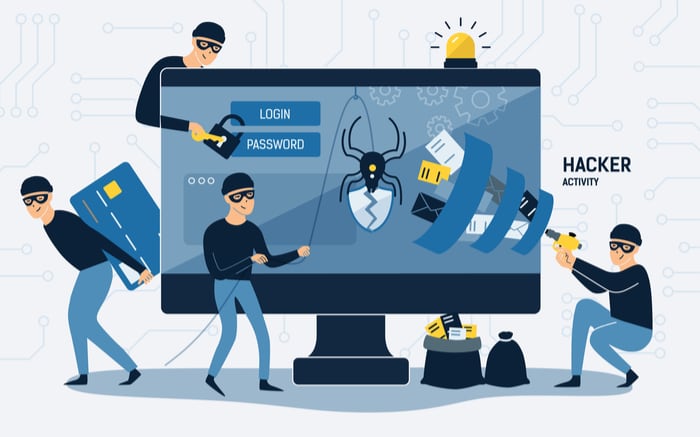
Hackers

Blockchains are powerful platforms. But if we’ve learned anything from looking at high profile breaches, it’s that all technology has weak points.

For some reason, many people have gotten the idea that blockchains were an impenetrable force. Password protectors, VPNs, and even blockchains are not entirely hack-proof.

They’re leaps and bounds ahead of using the web unprotected — but you still need to be careful.

Are blockchain hacks actually on the rise?

There’s been a near-constant stream of attacks going back for at least five years. The most notable example is Mt. Gox, where nearly half a billion dollars in bitcoin was stolen from users and the company.

This year, there’s been the Cryptopia breach, a January attack that wiped out approximately 94% of the company’s holdings. The total amount is unknown, but data analysts estimate the stolen coins could be worth about $16 million total.

There’s also this attack that hit the Ethereum Classic blockchain where hackers made off with $1.1 million.

In the ERC case, Coinbase detected suspicious activity in the form of a 51% attack, a type of attack once thought to be hypothetical. This occurs when a group of miners with more than 50% control blocks new transactions to maintain the majority.

By controlling the computing power, the attacker(s) can monopolize the mining of new blocks. Then, they can prevent other miners from completing blocks while siphoning off their rewards.

Are blockchains safer than actual banks?

Online BankingForbes wrote critically about blockchain in January. The article says that people keep backing blockchain because there’s a case of industry anxiety.

It goes on to say there’s never been anything on this scale in the traditional banking world — a $2 million Bank of America robbery from 20 years ago is the biggest heist listed on Wikipedia. That number pales in comparison to the amounts stolen via hacking.

The point isn’t necessarily that the technology is bad news, but that people should be wary of keeping large sums in blockchain-powered accounts.

How to stay safe on ride-sharing apps

Find out how to arrive safely to your destination with these helpful tips.

Using UberWhen it comes to ride-sharing service, safety is no laughing matter.

Recently, a college student was murdered when she got into a vehicle she thought was her Uber. Ride-sharing apps do offer protection for both driver and passenger, but there are still some things you can do to make sure you arrive safe and sound.

If you don’t feel safe, cancel the ride

Sometimes when accepting a ride, or picking up a passenger the situation doesn’t feel right. It could be that the vehicle reeks of alcohol, or that the passenger does not look like their picture. If this happens, you can cancel the ride, and then report the problematic individual in the app.

Sometimes you will be charged a cancellation fee, but you can contest it when filing a report.

Share the ride with someone

For both drivers and passengers, you have the ability to share your location on the app with a friend or relative. This is meant to offer peace of mind so that somebody knows where you are, and can alert the authorities if need be.

Waze is a popular GPS service that updates constantly to show traffic, accidents, potholes, and even nearby police activity. One of the app’s features is the ability to share a ride with somebody so they can see where you are in relation to your destination.

Check the license plate before getting inside

Apps like Uber and Lyft show you the model and color of the vehicle on its way to get you. The apps also tell you the license plate number of the vehicle picking you up, so you know for certain that you are getting in the right vehicle.

For drivers and passengers, the app has your back

Ride-sharing apps take information from both the rider and passenger for each ride. If something were to happen on the ride, the apps know the parties involved, their information, and where they are on the map.

For drivers, every ride is insured and a fee will be charged to the passenger if they make a mess in your vehicle.

Drivers and passengers also have a 24/7 incident report system as well as a button for emergency assistance in the app.

Report problematic riders, drivers

Drunk drivingRide-sharing apps screen both drivers and their vehicles before hiring anybody. Unfortunately, some problematic individual can slip through the cracks.

If you are having an issue with a passenger or a driver, you can report the person. The app will take your report into consideration, and remove problematic people from the service. Click below to read about how Uber especially has been cracking down on drivers.

Reporting problems helps to make the app safer for users on both ends of the spectrum.

Don’t ride/let people ride shotgun

At the end of the day, you are sharing a ride with a stranger. There is nothing wrong with having a conversation between rider and passenger. However, the two do not need to sit right next to each other.

Having the passenger sit in the back seat means that they can leave the vehicle quicker. It also means that they are further away from the steering wheel and gear-shift, ensuring that the driver is the only one in control. 

By following these tips, we hope all your rides go smoothly. And remember, if you ever feel unsafe, trust your gut and find another way to your destination.

Facebook considers revamping how it shares news stories

Facebook’s decision will have a monster impact on what news you see.

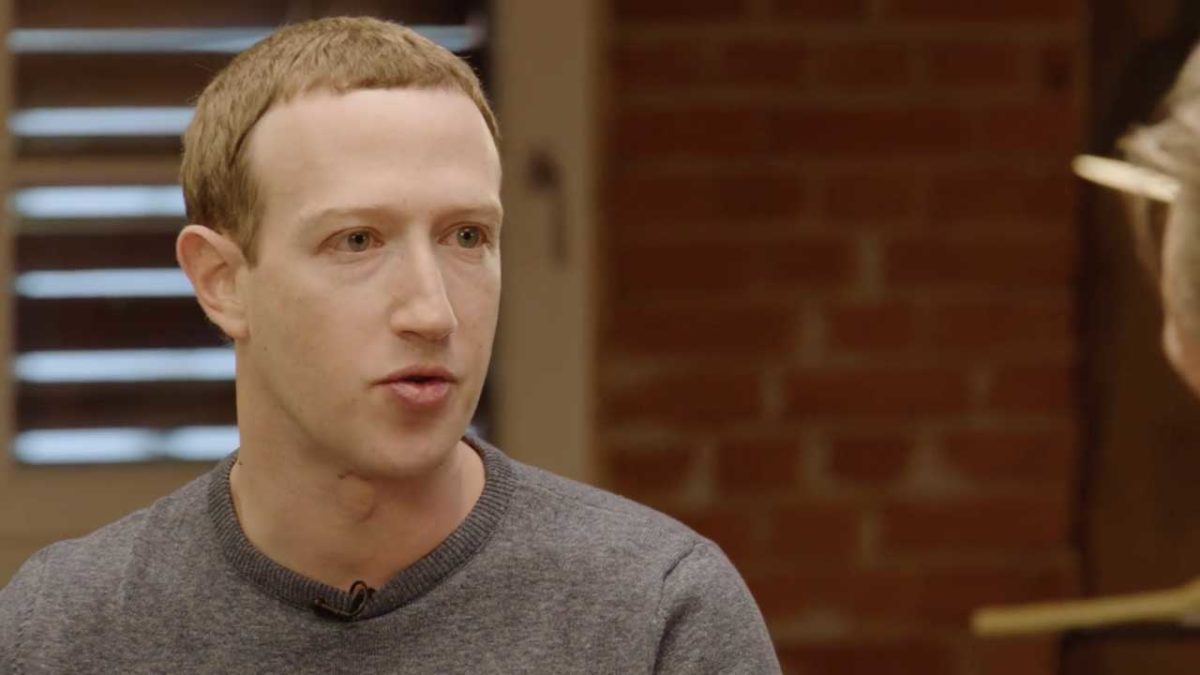
Mark Zuckerberg

Facebook is once again turning its attention to news. Users crave it, but the social media platform is destroying the ability for publishers to monetize their content. The potential solution? A new Facebook news tab.

What will that look like? The company has been aggressive in segmenting actual news away from users’ news feeds. In a video discussion shared on Facebook, Zuckerberg sounded like he didn’t have any plans to reintegrate news into the primary product.

“If you look at the ways that people are interacting now online, that are growing the fastest, it’s messages, it’s small groups, and it’s ephemeral stories. And these all have the property that they’re more private than these digital town square-type equivalents,” Zuckerberg said. “I think it’s clear that this is the next big thing that people want to get built.”

You can watch Zuckerberg’s discussion with Axel Springer CEO Mathias Döpfner here:

For most of human history, writers had to clear a high bar to be published. You’d need access to a printing press or the ability to impress an editor before seeing your thoughts hit the page. The internet changed all that. Now, anyone can publish anything and share it with the entire world. The algorithms behind Facebook and Google have directed audiences away from many legitimate publications. Fringe bloggers can have just as much sway as established media organizations with fact-checkers and institutional safeguards.

In 2019, free information is everywhere…

But free content isn’t always the most valuable. Investigative journalism, for example, requires a lot of time, effort, and resources. It’s not a place where a hobbyist can succeed. Some free content may simply be opinion, fabricated information, or an item created with an agenda – to sell you a product or an idea. As the standards of publishing erode, that hasn’t curbed our appetites. American adults spend an average of 10.5 hours consuming media every day. That hunger, combined with dwindling media company resources, is creating a major challenge for Facebook.

Just this week, a 177-year-old newspaper saw its staff fall below the bare minimum of people needed to field an NFL team.

Throughout Zuckerberg’s video conversation, the issue of a fair monetization system was a recurring theme. We need to pay for journalism somehow. As the advertising model continues evolving, that’s a serious problem. Digital ads pay nothing close to print ads. Ad-blocking software starves publishers even further. Perhaps something like Brave’s Basic Attention Token is the answer. Or maybe Facebook can find a way to bankroll media organizations, perhaps becoming a publisher in its own right.

One fear about a new news tab is that such a feature would actually shove news to an area where Facebook users wouldn’t even see it. Remember, Facebook’s primary goal is to keep you on Facebook, engaged with the platform. If you click away to read a story from the Cleveland Plain Dealer, the social network can’t monetize you anymore.

But until we solve the monetization problem, journalism organizations will continue to crumble, Facebook will have less content, and the threat to our democracy will grow.

Captain America, Iron Man reunite in final Endgame trailer

The remaining Avengers gear-up for a final showdown with Thanos with the fate of the galaxy in the balance.

Captain America and Iron Man“Do you trust me?”

These words from Tony Stark are the first we have heard him say to Captain America since “Captain America: Civil War.” It perfectly sets the chilling tone for the final trailer for “Avengers: Endgame.”

The trailer ends on a more chilling tone when it says, “Tickets on sale now,” as fans everywhere scrambled to grab their credit cards and jump on Fandango.

The trailer shows the surviving heroes as they plan to save their friends and ultimately defeat Thanos. 

Iron Man and Captain America aren’t the only ones to reunite in this trailer as we also get to see Tony Stark and Pepper Potts embrace each other. Marvel confirmed recently that Pepper survived the events of “Avengers: Infinity War.”

Iron Man hugs Pepper

Led by Captain Marvel, the remaining Avengers head off to lay a beatdown on the Mad Titan. The team flies aboard Star-Lord’s ship, The Milano. Despite being the newest entry to the Marvel Cinematic Universe, Captain Marvel appears to be taking a leadership role on the team. 

Unlike other trailers for Endgame, this one shows more of Rocket Raccoon than we’ve seen before. One shot of a hopeful-looking Rocket looks like it may take place when he sees the Milano land on Earth. The shot is followed later with another of Nebula comforting a very distraught raccoon. 

Toward the end, the trailer focuses on the OG Avengers. Captain America and Iron Man shake hands, saying that they trust each other, hopefully ending their feud. The trailer ends with Iron Man, Captain America, and Thor as they slowly walk toward a barely visible Thanos in the background.

Captain America, Thor, Iron Man walk towards ThanosWe are officially less than a month away from seeing this story finally come to a close after more than a decade of setup. As theaters across the world sell out for what will truly be a record-breaking event, we have to ask if you will be there to avenge the fallen.


Star Wars Episode IX leaked poster: real or fake?

We need to talk about that poster.

It’s been a pretty crazy week for Star Wars fans, since we got what might be our first look at the poster for Episode 9. As you’d expect, fans have been picking apart every single detail of the image, analyzing what it means for the film, for the series, for the fandom, but most importantly for its credibility. The image was allegedly removed from Twitter, but Reddit grabbed it and re-posted what (at first glance) seems pretty legit:

Star Wars Episode 9 leaked posterIf you’re not caught up with the latest Star Wars movies, check them out here!

A closer look at that ‘leaked’ Episode IX poster

Is it real?

We like objective journalism at Softonic, so let’s not go crazy and assume this is the real deal. Instead, we’ll go over what we’re seeing (and what we’re not seeing) that could clue us in to the reality. You can decide for yourself whether this will be hanging in cinemas soon. Let’s take a look at what this has going for it:

1. Credible source?

One of the original reporters of the poster was IndieRevolver, who we have to admit has been correct in past tweets. Take this one, for example, when he accurately revealed costume information over a year before “The Force Awakens”:

2. It has Naomi Ackie

In the top right corner, we can see Naomi Ackie behind Chewbacca. The actress has been confirmed for the title as the character Jannah, and the film does appear on her IMDB page. As for her costume, it does look pretty believable, though her appearance and relation to characters in the film remain unconfirmed.

Naomi Ackie
Naomi Ackie has been confirmed for Episode 9.

3. The Knights of Ren

The Knights of Ren appear on the poster (on Kylo’s left) and we’ve long expected the infamous group to make an appearance in the new trilogy. We first saw them in the trippy flashback sequence in “The Force Awakens,” and it makes sense that they’d show up in full force in the upcoming film. Maybe they’ll be posing as Kylo Ren’s elite guard, or maybe they’ll be sent out as a strike force to harass the crippled Resistance. Their presence in Episode IX isn’t confirmed, but it’s not a stretch, either.

Knights of Ren
Still waiting for a showdown with these dudes.

4. New red First Order troopers

Another costume design that could easily be fan-made, the bottom of the poster is lined with new cool-looking stormtroopers donning crimson armor. Of course, there’s no factor weighing into the legitimacy of the design (other than Kylo’s insistent moodiness and angsty attitude), but the Clone Troopers of the prequel trilogy had a variety of new outfits, like the infamous 501st Legion that marched on the Jedi temple in “Revenge of the Sith.” IT wouldn’t be too unbelievable for Kylo to have his own regiment that he calls upon when he wants direct intervention.

Kylo Ren The Force Awakens
We imagine Kylo will be a pretty hands-on Supreme Leader

Is it fake?

1. Missing someone important?

While the poster prominently features key characters like Rey, Finn, Poe, and Kylo Ren, it is missing some pretty big names, notably Leia, R2-D2, and Rose. Moreover, Luke is not on the poster either, despite confirmation that he’ll be appearing in the film. Mark Hamill himself isn’t buying the poster, citing it as “just the (wonderful) work of a passionate fan.” His favorite part was Threepio holding a crossbow:

2. Kylo has a helmet again

While that’s a really cool image of Kylo in front (though he’s never held his lightsaber like that), that helmet got smashed to pieces. Unless he decided to build a new one, this detail implies a time paradox.

Kylo Ren broken helmet
Do they have crazy glue in space?

3. Rey has the Skywalker saber again

Like Kylo’s helmet, Rey’s also got her old lightsaber back. Like the helmet, the saber was also destroyed (man, everything Kylo touches just splinters into pieces, doesn’t it?) during their fight over it in Snoke’s throne room. It’s possible that Rey could have scrambled around trying to get all the pieces, and reassemble it between films, but that seems a little silly. We’d be more prone to believe she’ll be sporting a new weapon in Episode IX, just like Luke, who built a new one for “Return of the Jedi.”

Rey Skywalker saber The Force Awakens ending
Did Rey rebuild the lightsaber?

4. The poster has no title

Probably the biggest reason this poster doesn’t seem legit is that it’s completely missing a title. It doesn’t even say “Episode IX” on it, just “Star Wars” at the bottom. There’s no way this poster wouldn’t have an official-looking font spelling out the title, plain as day. Sometimes the official posters even confirm the film’s release date, like the one for “The Force Awakens.”

Star Wars episode 9 leaked poster no title

So is the poster real? Looking at the alien behind Finn … we hope not. Regardless, with May the Fourth not far off, and a Star Wars Celebration coming even sooner, we’re bound to be getting some official movie news soon. Tune in to Softonic for details as they come, and let us know in the comments below whether you think this leak is a sacred Jedi text, or if it just gives you a bad feeling about this.

7 apps for DIY-ing GIFs and animations

Want to create your own GIFs? Try these tools to do it easily.

GIF

GIFs are a whole lot of fun. They add humor and emotion to text conversations, social media posts, and the comments section of your favorite blog. And while you can easily pull up a GIF for every occasion, you might not have realized just how easy it is to create your own.

Below, we’ll look at some of our favorite apps out there for creating GIFs from your smartphone or computer. 

Best apps for creating GIFs

1. Giphy’s GIF Maker

GIF Maker app mobile web

Giphy is something of the default source of GIFs — they have an endless library of choices that allow you to apply a premade GIF perfect for any situation. 

Giphy also offers a platform so you can create and share your own GIF creations, the aptly named, GIF Maker. Start by sourcing clips from Giphy Links, YouTube, or Vimeo — then select the portion you’d like to transform into a GIF. Add captions, and you’re ready to go. From there, your GIFs are uploaded into the Giphy database, and you can share or download your little works of art. Available for Android, iOS, web.

2. GIF Me

GIF Me mobile

If you’re looking for something simple, GIF Me is a straightforward tool that lets you record a short video and share it with your network. GIF Me allows you to import photos and videos from your camera roll, add filters, frames, and text, and customize your content. Additional features include stop motion, time-lapse, and wiggle GIFs. Available for Android and iOS.

Gif Me Camera Download Free
7

3. GIFBrewery

GIF Brewery for Mac

GIFBrewery is a GIF-making app for Mac users. It’s $4.99 for a one-time download, and you can use it from your computer. Its main functionality is turning your videos into GIFs, then editing with texts and images. The tool makes it easy to edit GIFs — and it comes in handy for creating previews for longer videos you can promote on social media. Available for macOS.

GIF Brewery download free
7

4. Giphy Cam

Giphy Cam app

Another app from the Giphy search engine, Giphy Cam is the perfect outlet for making quirky, stylized GIFs. The free app allows users to record videos and add special effects. 

The app comes with a range of filters, stickers, and you can share your handiwork via text or social media. We should also mention, this is definitely the best place to create custom GIFs complete with your favorite bits of internet culture — from cats to pizza and really weird uses of photos. Available for Android and iOS.

GIPHY CAM. The GIF Camera download free
8

5. Gifnote

Gifnote web app

Gifnote’s whole angle is providing the musical recommendations that take your GIFs to the next level. 

It’s not necessarily a GIF maker, but it’s a nice add-on to existing GIFs or your homemade clips. How it works is, the app uses proprietary technology that allows people to pair short music clips with videos, GIFs, and photos. In all, it’s a cool extra touch for spicing up your social channels. Web app only.

6. Pixel Animator

Pixel Animation Android

Pixel Animator differs from the options we’ve included above, in that, most GIF making tools center around the idea of creating GIFs from existing video content.

This free Android app is a much more hands-on experience. You’ll have the option to design sprites from scratch — or make things easier on yourself by starting with an existing photo or drawing. Once you’re happy with your creation, you can export as a GIF and share away. 

It takes some time to learn the ins and outs of the tool — and admittedly, if you’re not great at drawing, your animations might look a bit clunky.

That said, Play store comments seem to be on the same page — most reviewers felt that the app was easy to use and fun. Available for Android.

Pixel Animator: GIF Maker download free
7

7. WhatFix

WhatFix is a free tool that is a bit more practical than something like Pixel Animator. This web-based app stands out as an easy way for content creators to make step-by-step instructions and quick flows that reinforce what you’re trying to say. 

Visit WhatFix’s website, and you’ll quickly see that the product aims to “accelerate product adoption.” 

You’ll type in each step in the process you’d like to explain, and the app records everything, turning into a neat widget that will really give your website a professional look. 

Additionally, the app creates YouTube video flows — so you can create your own tutorial videos in a short amount of time. Web app only.

Save a fortune on games with Humble Bundle

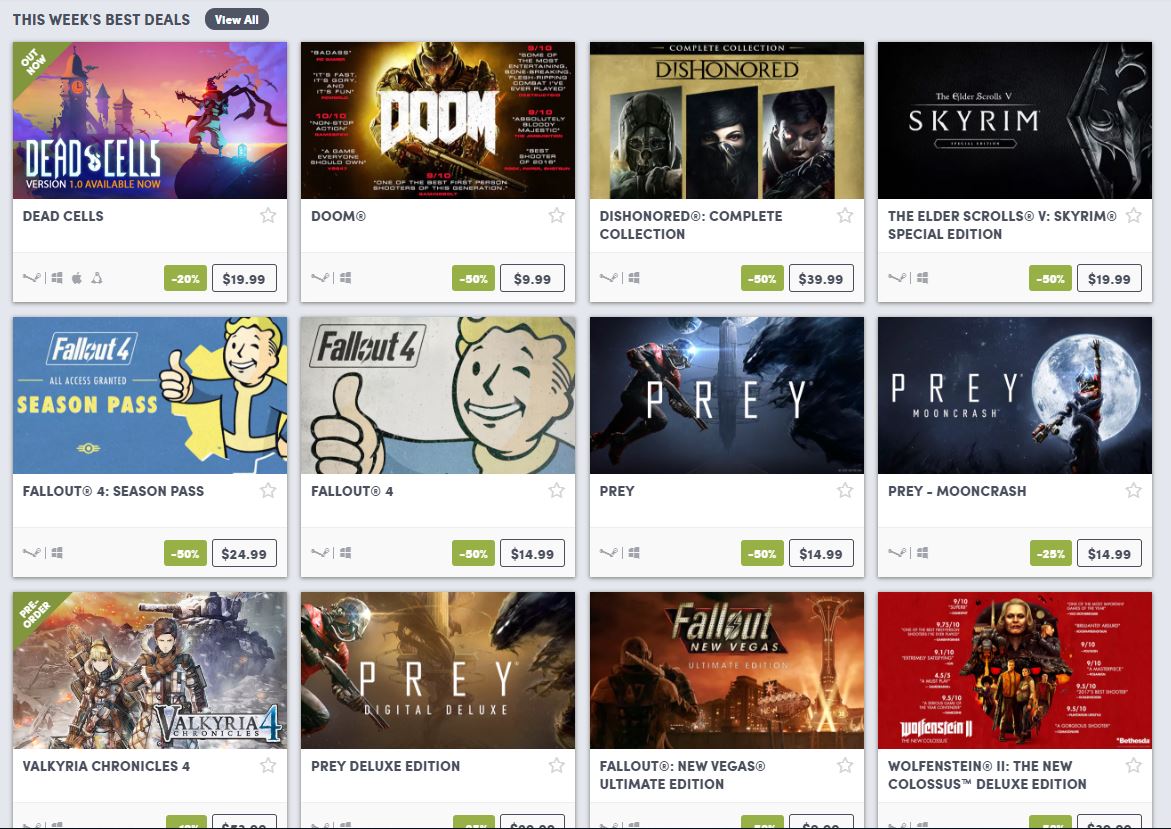
If you’re looking for a place to get a ton of games for the lowest prices, Humble Bundle is going to be your new favorite thing. It’s like Steam or GOG in the sense that you’re looking at a big library of games available for purchase, but Humble Bundle offers so much more with bundles, discounts, charity donations, and the pretty sweet Humble Monthly. New to it all? We’ll walk you through it.

What is Humble Bundle?

Founded in 2010, Humble Bundle is a distributing platform primarily for video games, but also for ebooks, software, and other digital content. The greatest thing about it from a consumer standpoint is the bundle system, which lumps a ton of games into one purchase at a semi-adjustable price.

Humble Bundle works in collaboration with big companies like 2K, Sega, Gearbox, Capcom, THQNordic, and Bandai Namco to reach a community of over 12 million customers, and has donated over 130 million dollars to various charities through end-user purchases, featuring a different charity every month.

What’s in a bundle?

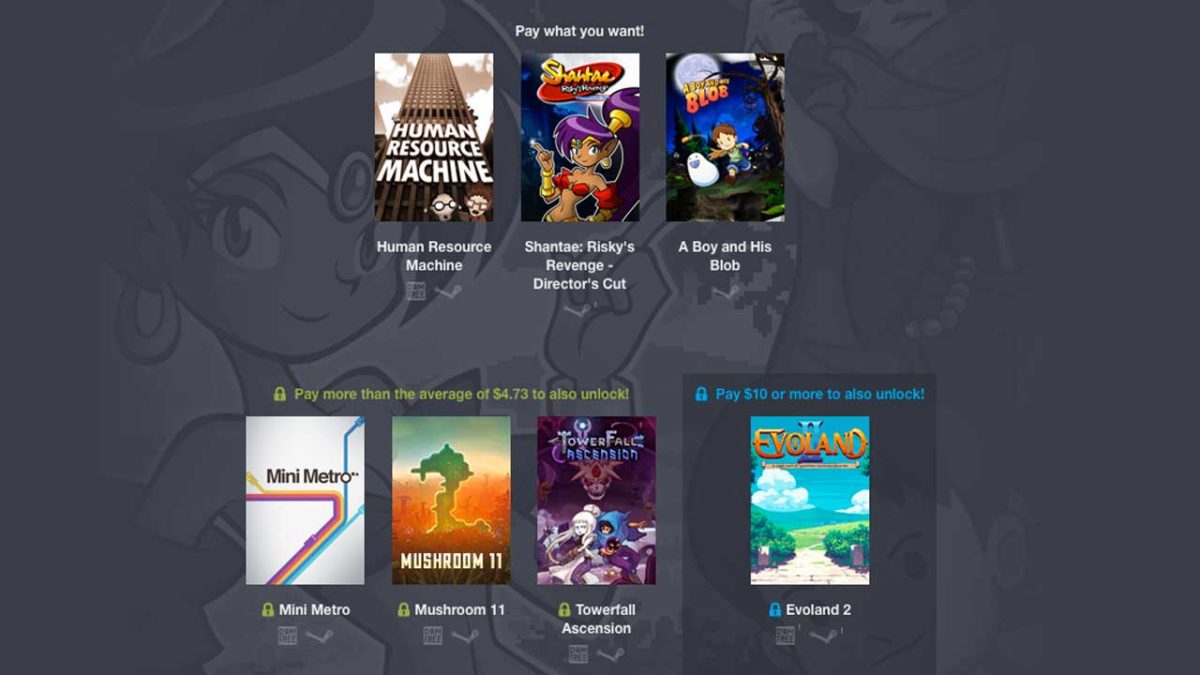
At Humble Bundle, you can purchase games like on any other distributing platform, but you can also wait for a bundle. Every month there’s a new one available for purchase, and any bundle can have as many as ten games included. In addition to monthly bundles, there are also a handful of other bundles being cycled through every few days or weeks.

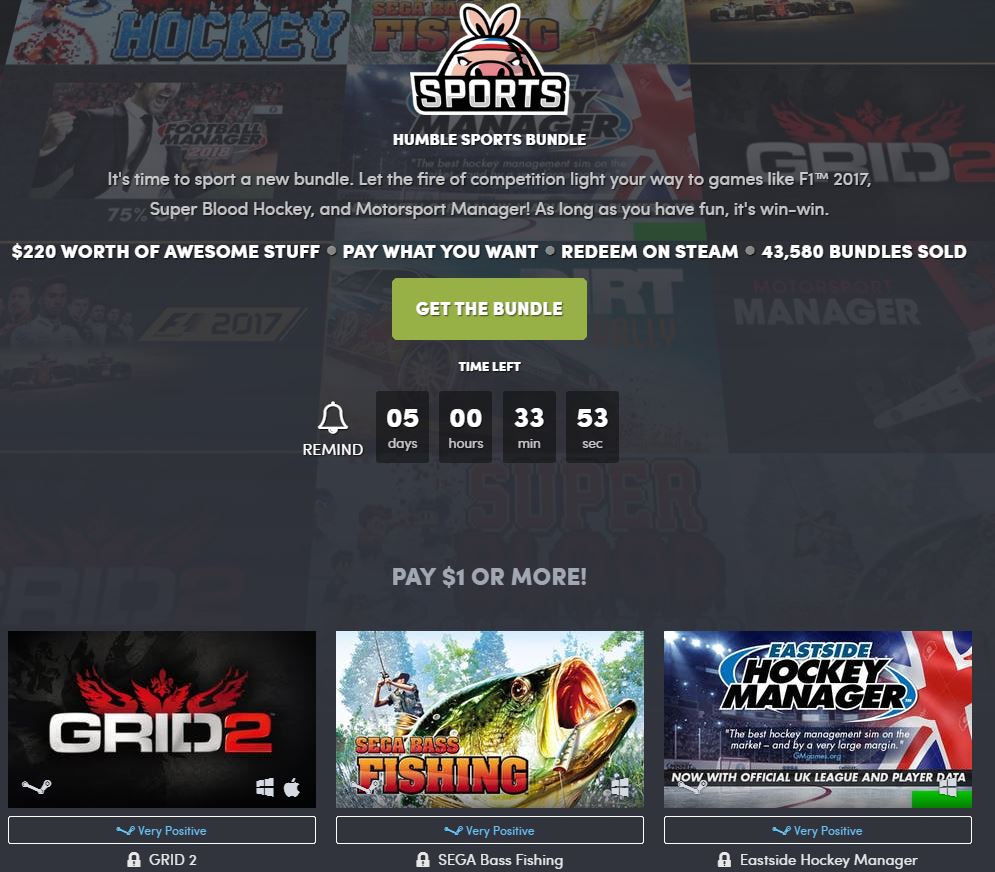
Examples include the above “sports bundle” that has games like Football Manager 2018, Dirt Rally, and Grid 2, or even a “books bundle” that gives you around 20 ebooks on gaming, like Allen Sherrod’s “iOS for Game Programmers” or James Parker’s “Python 3 Pocket Primer.”

How much would you save?

That depends on the bundle! Let’s take August 2018’s monthly bundle for example. The bundle included nine games: Forged Battalion, Escapists 2, The Surge, Woten, Sudden Strike 4, Pathologic, Conan Exiles, Kona, and A Hat in Time.

On Steam, Conan Exiles cost $39.99. On Humble Bundle, the August package that included Conan among eight other games cost $12. All the games together would have normally cost around $228. It’s a pretty sick steal.

What’s the purchase/download process?

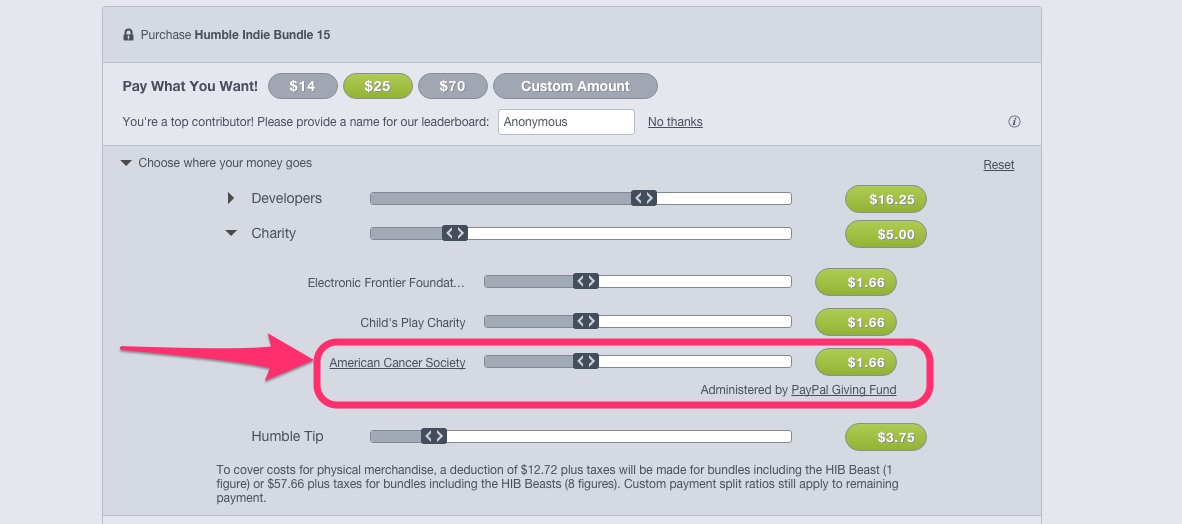
It’s pretty straightforward: You put the game or bundle in your cart. If it’s a bundle, then along the way you’ll get to decide whether you want to spend extra money to add more to your package. We found it’s usually worth it when you take into account how much they would otherwise cost. After you input how you’d like to pay, you’ll be presented with a number of sliders, which brings us to one of Humble Bundle’s coolest features:

Decide where your money goes.

Once you’ve decided how much you want to pay, you get to pick how it gets distributed. You’ll be picking between the developers, Humble Bundle as a distributor, and charity. With the charities, you can additionally adjust which ones you’ll be donating more to.

Where do I find my downloaded games?

If you have a Steam account any games you get through Humble Bundle will end up in your Steam Library. The process is simple:

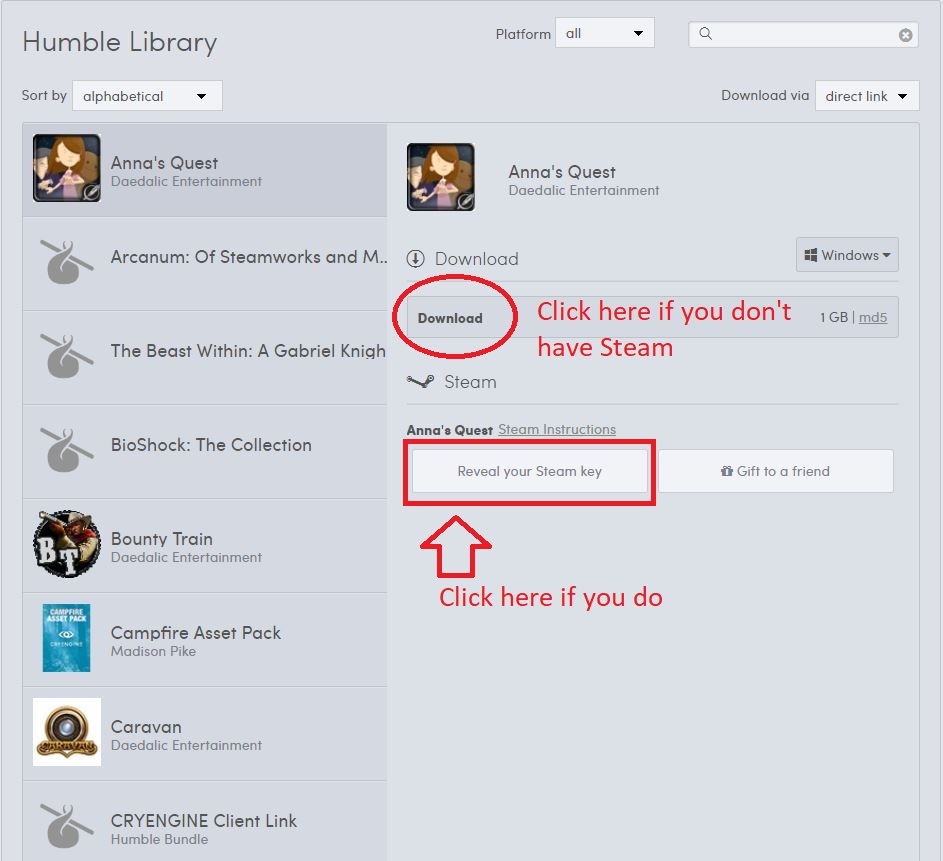
Go to your Humble Library (click on your profile name and it’s in the drop-down). Click on the game you want to install.

Choose what platform you have (Windows/Mac/Linux). If you don’t have Steam, click download and it’ll install to whatever folder you set it to. If you DO have Steam (which we recommend), click reveal your Steam key.

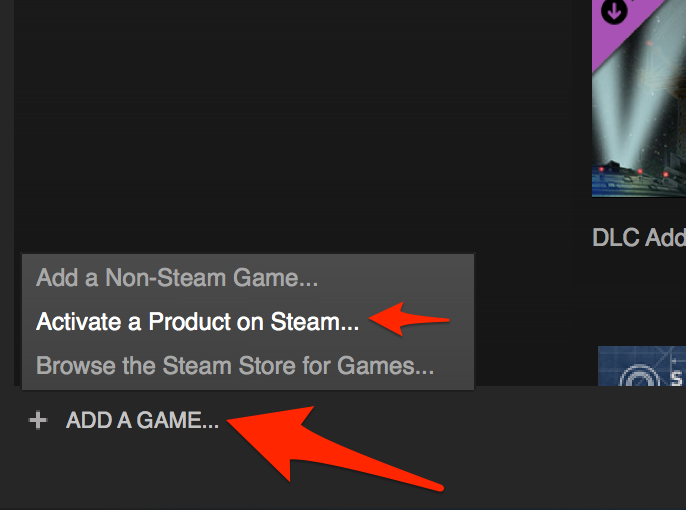
Then go to Steam and click add a game on the bottom left. Enter the code and a prompt comes up verifying your transaction. From there you can install on the spot, or whenever you choose.

What is Humble Monthly?

Humble Monthly is a pretty cool paid subscription service from Humble Bundle that guarantees you a complete bundle every month. The subscription is optional, and you won’t need it if you just want to grab bundles or games as you see ones you like, but the deals here are pretty crazy. That Conan one we mentioned earlier is a good example.

Bundles drop the first Friday of every month, and you’ll also get an additional 10% discount off any other purchases you make. You can pause or cancel your Humble Monthly subscription at any time. Lastly, you also get one “Humble original” game with every bundle, which are quirky little games only available through the subscription.

If you want to learn more about the advantages and perks of getting a Humble Monthly subscription, you can go to their page or check out this video:

Go ahead and sign up with Humble Bundle and you’ll be up to your eyeballs with new games to play!

How to make money selling your personal data

If other companies are making money off your personal data, why can’t you?

Facial recognitionForget the Facebook scandal; consumers are catching onto the fact that countless companies have long been taking their data in exchange for access to a free app. It’s a bum deal.

If you’ve been following any news related to the blockchain space, you’ve maybe come across this concept of selling your personal information to companies, rather than giving it away for free.

When you consider the money made by advertisers and platform companies like Facebook and Amazon, it’s understandable that there has been a recent influx of new apps that aim to put control back in the hands of the people.

The question is, however, is there money to be made by selling personal data? Or will big companies simply say, “Why buy what we can get for free?”

Are there places you can sell data?

Yes, there are a few options out there.

Is it side gig money? Not exactly. We came across a few solutions that allow users to connect various accounts and earn money passively, but it generally amounts to a few cents here and a dollar there.

Digi.me

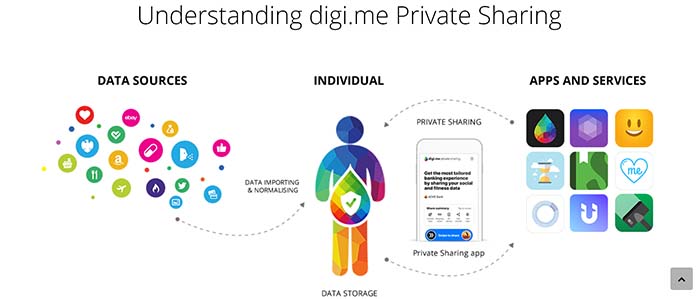
Digi.me appDigi.me is an app that collects your personal data from a cloud-based folder, then organizes your digital footprint in one central hub. This app isn’t actually a means of monetizing your data, but it does help users control who sees what, as well as understand what information is already available.

The site makes it clear that they operate in compliance with GDPR privacy rules, and that the app’s architecture prevents the company from viewing or storing your personal data.

You can watch a video below showing how you can use Digi.me.

10

Datacoup

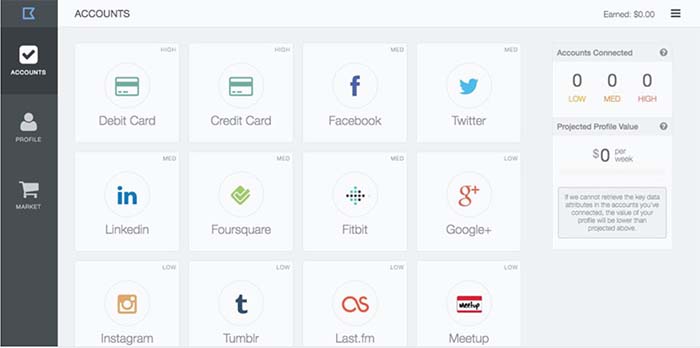
Datacoup siteDatacoup almost reminds us of an app like Acorns or your bank’s “save the change” app. We’ll explain: Datacoup acts as a data broker that allows account holders to control and sell data to companies interested in learning more about your habits.

This subscription-based service allows you to connect your accounts — from debit and credit cards to your LinkedIn page or Meetup account.

Once you’ve connected these accounts, you can view them in your data profile — a dashboard that shows how much money you’ve earned by essentially doing nothing. It’s a few bucks here and there — but it’s very set-it-and-forget-it. Over time, you might amass a little extra cash.

Killi

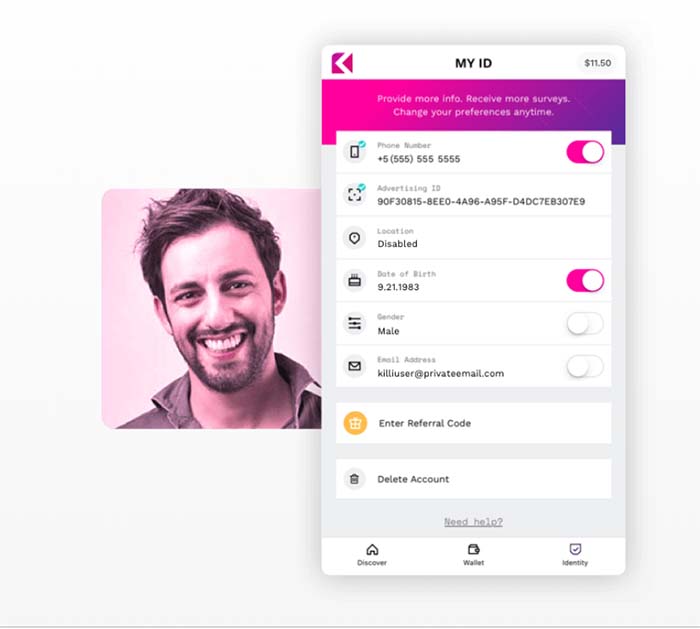
KilliAn app developed by Freckle IoT, Killi is an app that claims to give users the chance to take back control over the use of their personal data.  The Killi site says they believe customer data is worth more than the $30 Facebook suggests.

You’ll create an account and make money based on opting in to share your info with specific brands. The bulk of the activity is answering surveys for between a few cents and a few bucks a pop. Their FAQ section acknowledges that this isn’t much, but points to the first wave of Uber drivers as an example of where things could go in the future.

Google Opinion Rewards

Google Opinion Awards

An app that prompts you to answer questions about businesses you’ve visited based on your location data and demographic information. Answer enough questions and Google will give you credits you can use in the Play store.

Google Opinion Rewards Download Now ►
9

What is your data worth, anyway?

Stacking coins

According to an article from the Financial Times, the average person’s data is worth less than a dollar. But values change based on a variety of factors:

  • You’re gearing up for a significant purchase — an international vacation, a new car, or a house
  • You have a major life event — you’re getting married, expecting a child, or getting a divorce
  • You’re a millionaire
  • You hold loyalty cards
  • You’re interested in fitness, weight loss, travel, finance, or political topics

The FT site offers a calculator, so you can get a sense of how much your data is actually worth.

We tested this with two different people and we were valued in the $1 ballpark on both attempts. It isn’t exactly the downpayment on a Lamborghini we were hoping for, but we’ll take it.

An article from Investopedia looked at how much Facebook stands to make from personal data. Interestingly, those with poor health have more valuable data than their healthy counterparts.

Same goes for the “recently divorced” who — on average, are 10-20% more valuable than those who are single or married.

It’s hard to pin down an accurate number. But Statista reports Facebook had 230 million U.S. users in 2018. Even if everyone has data worth 50 cents or so, that’s still a crazy amount of money.

Economies of scale limit the ability to profit from personal data

Ultimately, the reason our data is such big business for brands and not the other way around boils down to the economy of scale.

Think about it, billions of people use Facebook every day. So, if one person’s search history and online activity are worth a couple of cents, the platform still rakes in serious cash.

The motivation behind these startups is admirable. We should be able to control who has access to our data — and sell it as the valuable resource it is.

For change to happen, people will need to demand transparency in greater numbers. We’ve long taken free tools like Google and Facebook for granted, never second-guessing the permissions we allow them.

Opting out of these platforms means skipping out on convenience and social norms, too. Short of an all-out, global boycott of the big tech companies, it’s hard to envision what it will take for change to happen.