We know Keanu Reeves never ages, but what about the rest of the cast?
In 1999, “The Matrix” flipped the cinematic world on its ear. With its meta-paranoia, neo-goth look, and mind-blowing action, the film was hugely influential on movies to come. So 20 years later, how does the cast look?
One doctor is leading the charge against fake medical news on social media.
If you’re a frequent social media user, you’ve probably encountered posts spreading misinformation about medical topics like vaccinations. According to a study published in ScienceDirect, top posts on social media relating to common diseases contained misinformation 40% of the time.
It’s easy to see why people turn to fake medical news. These posts often promise cheap, powerful miracle cures to common ailments. Factual medical information, on the other hand, is significantly less flashy and optimistic, often only promising moderate success. It’s completely understandable that a person who has a disease that makes their life miserable would skip over all of the pessimistic posts regarding realistic treatment in favor of fantastical stories about miracle recoveries. However, this creates false hope and can discourage patients from seeking legitimate treatment.
No one knows the harm that fake medical news can cause more than Dr. Austin Chiang. An internet-savvy, Harvard-educated gastroenterologist, Dr. Chiang has over 20,000 followers on social media. Dr. Chiang uses his online platform to spread factual but digestible medical advice. Whereas most doctors on Instagram are hopelessly drab, Dr. Chiang presents himself as relatable yet knowledgeable.
While Dr. Chiang’s charming social media posts have gotten him a sizeable audience, his follower count pales in comparison to that of big anti-vax and alternative medicine accounts. He called this massive social media presence “the greatest health crisis of our time.” Realizing he can’t combat these campaigns on his own, Dr. Chiang set out to assemble a team of like-minded healthcare professionals to fight misinformation, forming the Association for Healthcare Social Media (AHSM)
Dr. Chiang is using his position as Chief Medical Social Media Officer of Jefferson Health to recruit other savvy professionals. Dr. Chiang and his team are well aware that the public does not salivate over professional medical journals and press releases, and his team is hard at work packaging medical information for the social media age. The AHSM knows that scare tactics and emotional manipulation are what spreads in the medical social media sphere, and they use the opposite approach of easily understandable language and concise information told in a non-condescending manner.
With platforms like Instagram and Facebook facing huge issues with anti-vax accounts and other fake medical news spam, doctors taking to social media is the antidote we need moving forward. By combining legit medical knowledge with the hugely popular inspirational lifestyle aesthetic, medical professionals can build up huge followings to fight harmful medical advice.
238 apps with over 440 million downloads between them have shipped with an aggressive form of adware.
Malware found in Google Play Store app stories are becoming so regular you could set your watch by them. There have been a lot in recent memory, but the biggest by far has been the bulk action Google was forced to take against Chinese app developer DO Global. With apps totaling over half a billion downloads, DO Global’s ban, for a number of reasons including sharing user data with the Chinese government, sent shockwaves through the app world.
It now looks, however, like Google’s problems with apps from China are far from over as a new security report has shed light on some worrying findings. According to the report, Google has a serious problem with the Chinese-based firm Cootek, due to unauthorized adware that can render victims’ mobile phones almost completely unusable.
How to detect fake apps in the Google Play Store in just 3 steps
238 apps with over 440 million downloads between them have shipped with an aggressive form of adware
Security research firm Lookout has released details of a new study its team has performed looking into apps on the Google Play Store. The study’s findings show that a particularly nasty piece of adware called BeiTAd has been found in 238 apps on Google’s app store. 237 of the apps were published by the aforementioned Cootek.
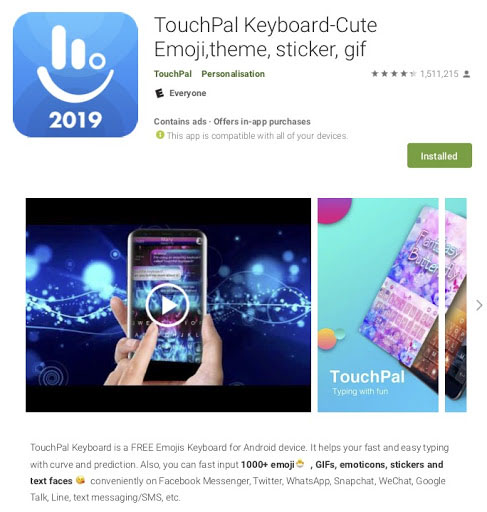
One of the more popular infected apps
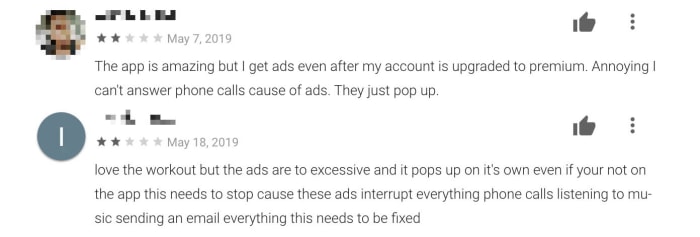
BeiTAd is a rather invasive piece of adware as it propagates “out of app” ads. After the infected apps are downloaded, the plug-in lies dormant for up to a couple of weeks but then wakes to cause havoc on the victim’s device. Basically, out-of-app ads start popping up all over the device, not just in the infected app, including places like the lock screen. Even worse, the plugin could trigger video ads to play while the phone is in sleep mode.
In the report, Lookout researcher Kristina Balaam points out just how bad this adware is, “While out-of-app ads are not particularly novel, those served by this plugin render the phones nearly unusable. Users have reported being unable to answer calls or interact with other apps, due to the persistent and pervasive nature of the ads displayed.” In many cases, the onset of ads has been so bad that they’ve interrupted regular use of the device.
The list goes on. Click here for full list of infected apps.
The good news is that Lookout has shared its findings with Google and the internet giant has already taken action. All of the affected apps have either been removed, or updated to new versions that don’t include the BeiTAd plugin. This means if you suspect you might have downloaded a Cootek plugin or you’ve been experiencing problems like those described above, you should update your apps immediately.
Unfortunately, due to the large number of affected apps we can’t list them all here. If, however, you want to check your apps against the list, you’ll find it here.
New Spotify “Social Listening” feature allows friends to control the Now Playing playlist together.
Our music collections have come a long way recently. We’ve come all the way from vinyl records and 8-tracks to constant access to almost limitless collections of music from around the world. We can now hear a song on the radio, internet, or wherever else we discover new tracks and then listen to them whenever and wherever we want via online streaming platforms like Spotify, Apple Music, and Deezer.
It’s not just us though, is it? We’re not the only ones listening to the music we love. No, we’ve all got at least one of those friends who always has a tune they want you to hear. Music is a very personal thing, but it is also very much a social experience you share with your friends and family. In recognition of music’s social side, Spotify is working on a great new feature that will put everybody in charge of the party.
New Spotify ‘Social Listening’ feature allows friends to control the Now Playing playlist together
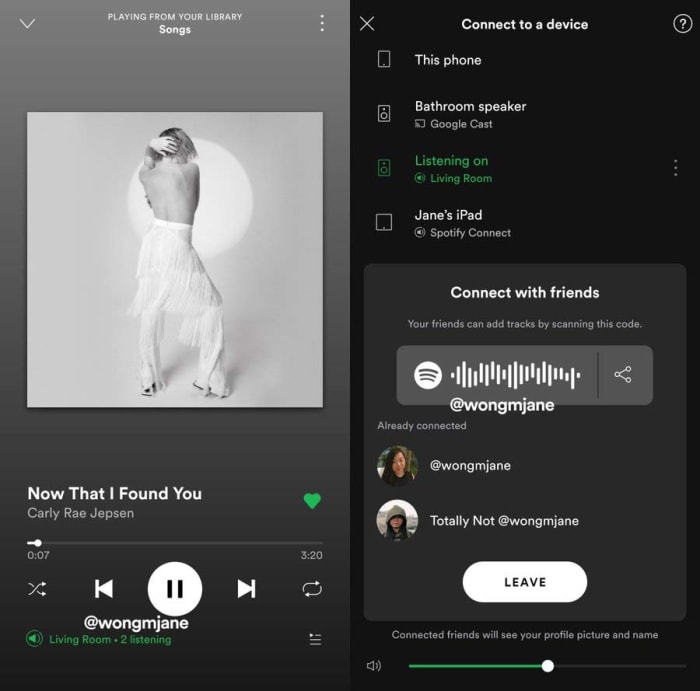
Thanks to top tech tipster Jane Manchun Wong, we’re able to bring you news of a new exclusive Spotify feature the streaming service is currently testing on its employees. On a recent dive into the code of Spotify’s Android app, Manchun Wong has found a new feature that gives friends real-time control over the Now Playing playlist. This is similar to the collaborative playlist feature, but all additions will play out as they happen, rather than being stored in a playlist for later use.
Spotify is working on Social Listening, letting friends to control music together with their own devices
For now, the feature is only available for Spotify employees, but we can give you a little rundown on what it’ll look like and how it’ll work once it lands on your version of the app.
When the feature is live, you’ll be able to find a “Connect with friends” option when you go to the connected devices screen. Selecting this option will reveal a QR code or a link. Your friends and family can then scan the QR code or you can send them the link to join both your Spotify apps. Once done, the Now Listening playlist will be linked and anybody who is connected will be able to add or remove songs to the list.
There are two major caveats, however, to this leaked Spotify feature. The first is that there is no official word on when the feature will receive a general roll-out. As this is an internal test, the feature might not ever make it to the general public. The second is that, as Manchun Wong isn’t an employee of Spotify, she wasn’t able to test the feature after she discovered it. This means we don’t know how smoothly it works or if the music streaming service still has a few bugs to iron out of the code.
For anybody, who has ever been to a party and been stuck for what song to put on next, however, this feature will be good news. Let’s hope we hear more from Spotify soon.
All Visa applicants to the U.S. will have to hand over all of their social media and email details from the last five years.
We’ve written a lot in the past about China’s scary use of modern technology. In particular, we’ve been frightened by the authoritarian social credit score it gives all Chinese citizens and the limits it places on those with low scores. It is easy to think, because China is so far away, that it isn’t really something we should worry about at home. But what makes China’s actions so scary is that they could easily be taken up in other countries by other governments. First, they came for the Chinese…
Well, now it seems that these draconian types of laws have just taken a huge step closer to home as the U.S. State Department has just made a rather chilling announcement.
All Visa applicants to the US will have to hand over all of their social media and email details from the last five years
Anybody planning to visit or migrate to the U.S. on any kind of visa now has to give the State Department all of their social media usernames, previous email addresses, and phone numbers from the previous five years. According to the Associated Press, the move was first proposed in March 2018, but has only just taken effect after the new forms, including the new “social media identifiers” requests, were approved.
The new move marks a huge expansion of the Trump administration’s screening procedures for anybody coming to the U.S. Until this recent move, these types of requests were only made to people who’d been flagged as needing extra attention. These flags could come from a number of reasons including traveling to areas controlled by terrorist organizations. The AP reports that around 65,000 applicants fell into this category each year, but that now almost 15 million visa applicants, mostly for non-immigrant visas, will be required to hand over their social media details.
Protect your privacy, choose this search engine over Google
The new visa forms will list the most prominent social networks, but applicants will also be prompted to include the details for any other networks that aren’t explicitly mentioned. As yet, there are no details on how the State Department will ensure details of all accounts have been included in applications but speaking to The Hill, a State Department spokesperson warned of “serious immigration consequences” for those caught not complying. These consequences could potentially include visa withdrawal and refused entry.
You now have to show much more than your passport, if you want to enter the US
As well as the scary implications that come from the U.S. government doing its best China impression, there is also the huge potential risk that comes from compiling such huge amounts of personal data in one place. We’ve seen time and time again, huge data breaches that have put user privacy and security at risk and as ZDNet points out, U.S. Customs doesn’t exactly have a flawless record when it comes to data protection. A report in December showed that border agents hadn’t been deleting the data they’d collected from personal electronic device searches.
We’re not just walking down a scary path with this one, it also seems like a disaster waiting to happen at any moment.
With nearly 1.5 million signatures, it has gotten quite a bit of attention. However, these signatures will more than likely prove fruitless as HBO has shown zero-interest in reshooting the final season. Even the actors and actresses have spoken about how ridiculous they found the petition.
Recently, fans of the MCU have created a petition to change the fate of Tony Stark from “Avengers: Endgame.”With only about 40,000 signatures, and the vast majority of fans enjoying the film, fans can’t expect this petition to make a difference either.
Since even petitions that get loads of signatures don’t go anywhere, why do fans think they’ll make a difference? Well, it turns out that sometimes they work.
How Hey Arnold! got a new movie
Arnold, you’re a bold kid
Around 2009, fans of the Nickelodeon series “Hey Arnold!” started to petition to end the series how the creators intended.
Initially, “Hey Arnold!” was supposed to end with a movie about Arnold and his friends journeying to the jungle to uncover the truth about Arnold’s lost parents. Though production started, the project was scrapped, never to be heard from again.
However, fans created a petition that generated about 15,000 signatures for the writers to make “Hey Arnold: The Jungle Movie.” In response to the desire to bring back the show, Nickelodeon brought back the creator, Craig Bartlett, and made the movie.
So why did Arnold get a second chance while Daenerys is still cold and dead in the ashes of the city she incinerated? The answer to that might lie in the cost.
For the eighth season, each episode of “Game of Thrones” cost about $15 million. “Hey Arnold: The Jungle Movie” was not released in theaters. Also, since it was animated, it cost a lot less to make.
Another thing to point out is that “Hey Arnold!” was always meant to end with this movie. The only reason it didn’t happen was because it was canceled. The ending fans got from “Game of Thrones” was the ending the writers wanted to give. Clearly, there’s a big difference.
However, there might be more to the story.
Star Trek was saved by a letter-writing campaign
“I’ll never let go, Jack”
After an abysmal second season on NBC, it looked like “Star Trek” would not be returning. However, fans of the series started a letter-writing campaign to get a third season. After literally thousands of letters for fans were sent to NBC, the network realized the Nielsen ratings they were abiding by were not as reliable as they had hoped. As a result, NBC brought back “Trek” for a third season.
After more bad ratings in the third season, the series was canceled. However, since there were now enough episodes, the series entered syndication, where it became a pop culture phenomenon.
So why did “Star Trek” get another season, but “Game of Thrones” didn’t? In this particular instance, “Star Trek” had not been officially canceled, according to an article from StarTrek.com. “Game of Thrones” is officially over. Secondly, Trekkies were able to prove that the Nielsen Ratings were wrong. In fact, according to the same article, the ratings were faulty and doctored by employees at NBC to get the show canceled.
Sure there are loads of fans of “Game of Thrones” who have been bugging the creators of the show to redo the final season, saying that the writers were “incompetent.” However, they can’t prove that anything egregious went into the making of the final season. If they could, they MIGHT have a case.
Firefly: You might not get what you want, but you might get something
In 2002, Fox released “Firefly,” a sci-fi series that was canned after a single season in which a handful of episodes aired out of order. After it was canceled, fans of the series went ballistic. The show left a lasting impact, and fans still want to see it return.
To urge the production of more adventures, so-called Browncoats bought the series on DVD and shared the episodes with friends. The continued DVD sales and word-of-mouth campaign were better marketing than Fox ever managed. Remember, this was before Netflix pioneered the video streaming we take for granted today.
Thanks to the ongoing fanbase engagement, Fox continued the adventures with the 2005 feature film, “Serenity.”
Although we still don’t have a second season of “Firefly,” the love of the fans was what led to us getting the movie. Although fans might not get to bring Tony Stark back to life, or give Daenerys and Jon Snow the ending they deserve, a little persistence might result in something.
If a fanbase is really motivated, there’s also the Kickstarter route. In 2013, fans of “Veronica Mars” shattered records by contributing $2 million in 11 hours to bankroll a feature film. The movie ended up losing money, so maybe the network had the right idea in the first place.
Throwing the Hail Mary
In some cases, fans resorted to more creative methods of getting their favorite shows back. In some cases, fans mailed items related to the show to the studios. When “Jericho” was canceled, fans mailed peanuts. When “Roswell” was facing cancelation, fans mailed Tabasco sauce. After “Friday Night Lights” played its final game, the studio was sent lightbulbs and eye drops.
In each of these cases, the show was kept on the air. Whether or not the weirdest mail call ever was the reason why these shows stayed on the air, we don’t know. However, the studios very well might have kept the shows on just to keep the rest of their mail from getting saucy.
Just like “Game of Thrones,” fans didn’t get their reshoot. Also just like “Game of Thrones,” “How I Met Your Mother” ended on its own volition. The hit show received the ending that writers had wanted for better or worse.
So what can we learn from “How I Met Your Mother?”
As the Rolling Stones have said, you can’t always get what you want.
However, as they later clarified, if you try sometimes, you just might find you get what you need.
“How I Met Your Mother” did not give us the ending we wanted, but it did give us the ending the writers wanted.
The same goes for “Game of Thrones.” To be completely fair, although there might be endings that more people would like, there is no ending that EVERYONE would like.
Although many fans still dislike the finale of “How I Met Your Mother,” fans have grown to despise it less over the years.
Sure, a bad finale can sting. However, as the years go by, you might appreciate the finale for what it was.
Wrapping up
A petition and persistence can sometimes make all the difference. However, sometimes they’re a fool’s errand, and sometimes you need to think outside the box.
Maybe writing a petition is too bland. Maybe, if you really want HBO to remake the final season of “Game of Thrones,” you should mail them plastic dragons and bottles of wine.
Here’s why Thor is the heart and soul of “Avengers: Endgame.”
* SPOILERS BELOW *
People deal with grief in different ways, and many of them are not healthy. Marvel’s “Avengers: Endgame” starts Thor off in a bad mental place, where he is stewing in his failure to properly behead the mad Titan. He’s off in the corner of the room, not saying a word, and when it comes time to face Thanos again he decapitates him before the rest of the team is ready. He flies off and that’s the last we see of the thunder god until five years later – five years that were less than kind to him.
The ending of “Avengers: Infinity War” is the biggest tragedy in the history of the universe. Billions of organisms (remember, it’s all life; not just people) are turned to dust. The Avengers failed to save the day. The bad guy succeeded in his plan, and then he got away. They didn’t even get to ‘avenge’ the fallen properly. It’s a crippling blow for our heroes’ morale, and for Thor, it was even worse since, at least in his mind, he’s the only one who might have been able to stop Thanos (“should’ve gone for the head”). It was a particularly bad time for the Asgardian to fail once again. We’re shown a candid perspective of Thor’s mental place before he forges Stormbreaker during a conversation with Rocket. Even as far back as then, the poor guy really needed some therapy:
Tasteless jokes?
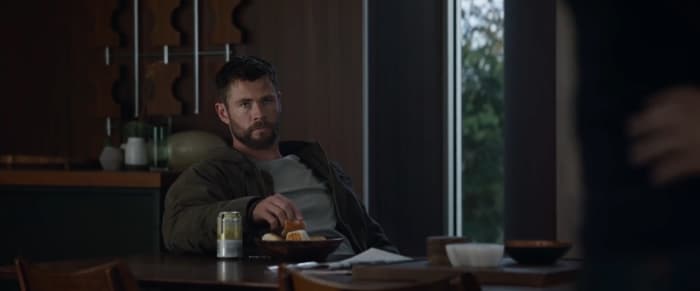
We go from Thor in the above scene to the aforementioned dark and brooding Thor at “Endgame’s” start. Then we shift to five years later when he’s put on some pounds, let his hair grow unkempt down to his shoulders, and, as War Machine puts it, “has Cheez Whiz running through his veins.”
After the emotional turmoil of “Infinity War” this is how we approach Thor? Jabs at his weight and insensitive remarks? It wasn’t the decision to make Thor fat that caused such a backlash from fans; it was the constant jokes made at his expense. Was fat Thor a weak attempt to inject some humor into an otherwise dark story?
Thor drowning his sorrows in what looks like some delicious guacamole.
Thor is depressed. Not only that, it’s a welcome example of depression being portrayed in a realistic way: Thor isn’t sitting in the dark alone and crying. He’s with his friends; he’s laughing, he’s partying. But when it comes time step up and face the trauma that’s digging at him, he is stubborn and afraid.
On the character’s evolution, director Anthony Russo voiced that Thor’s arc in “Endgame” is one of his favorites. “It’s so devious and subversive,” he said proudly, “when comedy is coming from a place of complete commitment and emotional complexity.” It’s an unexpected turn for the normally godlike character, and it shows one of the angles that Stan Lee was most keen to convey: It’s not your powers or prowess that make you a superhero; it’s who you are as a person.
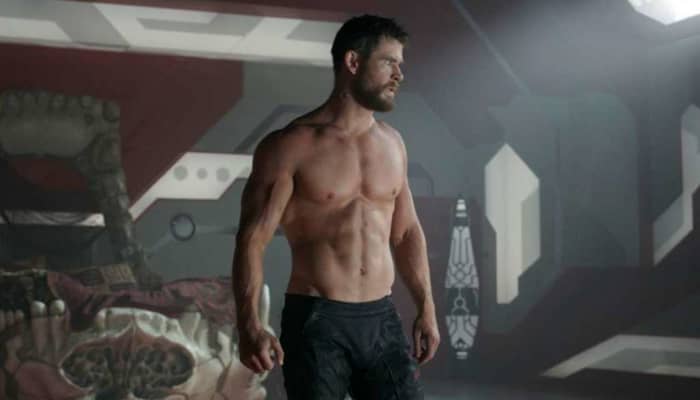
This shirtless scene in “Thor: Ragnarok” was played for a much different effect.
The main villain of “Iron Man 2” wasn’t Whiplash or Justin Hammer. It was Tony Stark and his own personal issues. Thanos is still a huge threat in “Endgame,” but the first two acts of the film are more about showing how our heroes deal with failure. Thor is an excellent example of this deeper, internal conflict, and Chris Hemsworth was not afraid to play it to its limit. “I like that anything goes. You’re not locked into expectations,” he said. “I enjoyed that version of Thor. It was so different than any other way I played the character. And then it took on a life of its own.”
Originally, the intent was that Thor would regain his godlike physique before the final showdown with Thanos. However, Hemsworth stressed that he would instead like the character to remain overweight, a sentiment that a more lazy actor would never have voiced; putting on that fat prosthetic was no cakewalk (pun slightly intended). “It was certainly exhausting,” said the actor. “I had weights on my hands and ankles just to have my arms and legs swing differently when I shuffled along through the set. Physically, it was a good three hours in hair and makeup. Then the prosthetic suit, particularly for the shirt-off scene, that was a big silicone that weighed about 90 pounds.” The decision to keep “fat Thor” throughout the movie is one of the defining reasons we think the choice was made for more than just cheap comedy.
Why it’s so important
There isn’t one right way to be hero, and everyone deals with depression differently. Thor’s at his lowest point – where can he go from there? “Endgame” screenwriter Christopher Markusreflected that “we wondered ‘okay, well, what if he does become a sort of depressive alcoholic?’ And the weight gain was just part and parcel of that state of mind. We didn’t go, like, ‘let’s chunk him up; it’ll be hilarious.’ I think he is the ideal Thor at the end of the movie, and he’s carrying some weight.”
Thor’s alcoholism didn’t come from nowhere. It makes sense that depression would ramp it up.
Thor’s got a problem for sure, but it’s his mental state. It isn’t his weight. For all the snipes and jokes made at the expense of his bloated figure, the action on-screen never presents Thor’s bulging stomach as an actual problem. It’s merely a symptom of the mental illness he’s struggling to live with. To emphasize that point, Thor is still able to summon Mjolnir during the scene with his mother, Frigga. “I’m still worthy!” he cries out in surprise.
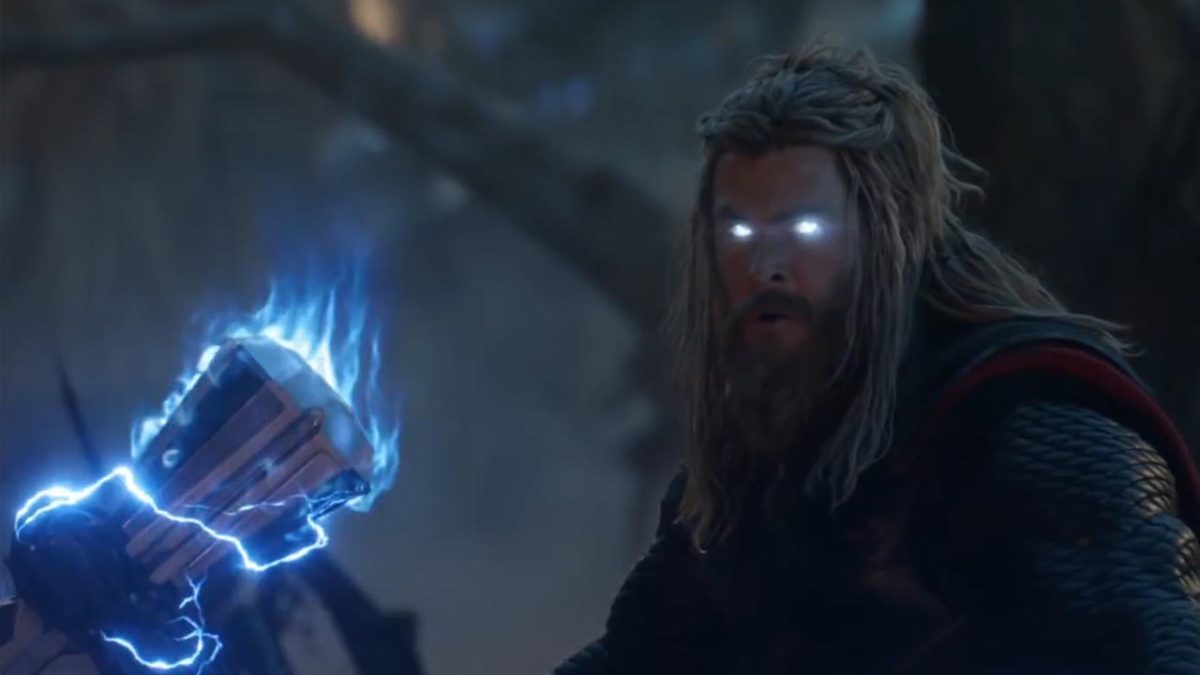
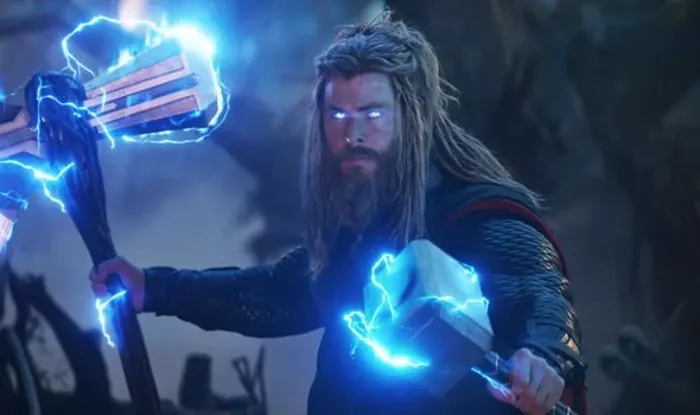
When Thor comes out to face Thanos during the final fight, he’s not magically thin. He’s got his beard in a neat braid, he’s got lighting coursing through his body, and he’s as strong as ever. He needed to get back in the fight mentally. He needed to face his demons firsthand. He didn’t need a treadmill and a stalk of celery. The fact that there intentionally is not a physical transformation for Thor speaks volumes about the Directors’ decision: Depression and apathy don’t have anything to do with body weight, and neither does curing it.
Thor’s character arc has taken him to a new, unexpected place of power and self-confidence. As per his mother’s advice, he’s stopped trying to be the person he’s supposed to be, and started becoming who he is.
As for what’s next for the thunder god, Hemsworth excitedly stated “I’d still love to do more, to be honest. And I don’t know what the plan is. I feel like we’ve opened up such a different character. I feel more energized for the possibility of where it could go.”
Thor is stronger now than ever before. Ever ‘BeThor?’
Does this mean he’ll be keeping the weight in what the character endearingly called the “Asgardians of the Galaxy?”
Let us know in the comments below if you’d like to see more “fat Thor” in future films in the Marvel Cinematic Universe, and we’ll see you in theaters for “Spider-Man: Far From Home!”
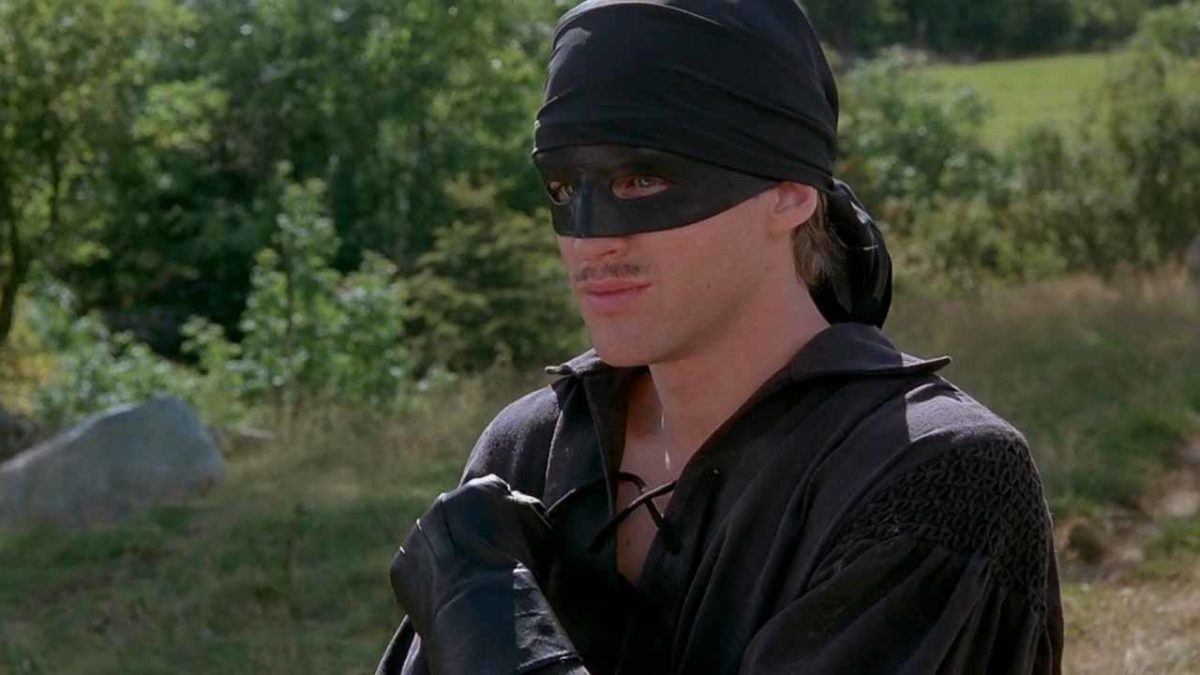
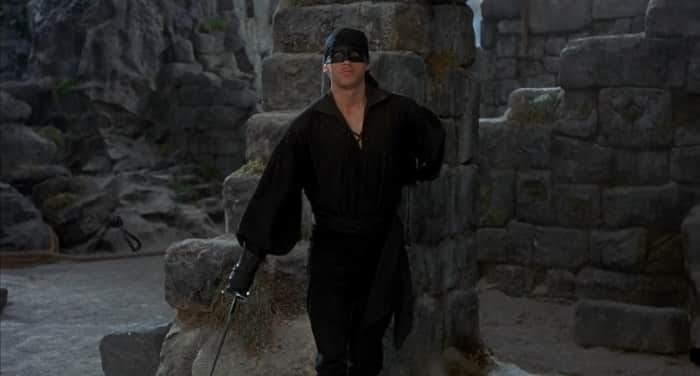
Take our quiz to see which Princess Bride character you’d be!
“Fencing, fighting, torture, revenge, giants, monsters, chases, escapes, true love, miracles” – William Goldman’s “The Princess Bride” (directed by Rob Reiner) has it all. From pirates to princesses, swordsmen to six-fingered men, there’s someone out there for everyone. Which character are you most like? Take our quiz and find out:
This new feature from iOS brings the PlayStation to your mobile device!
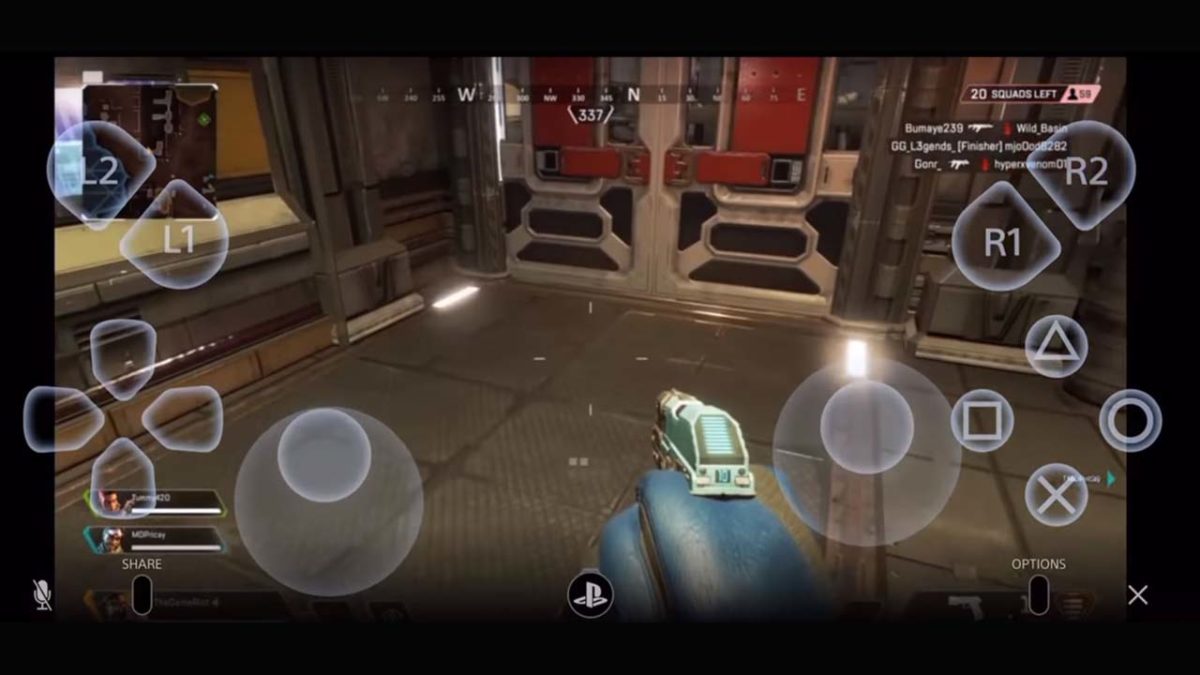
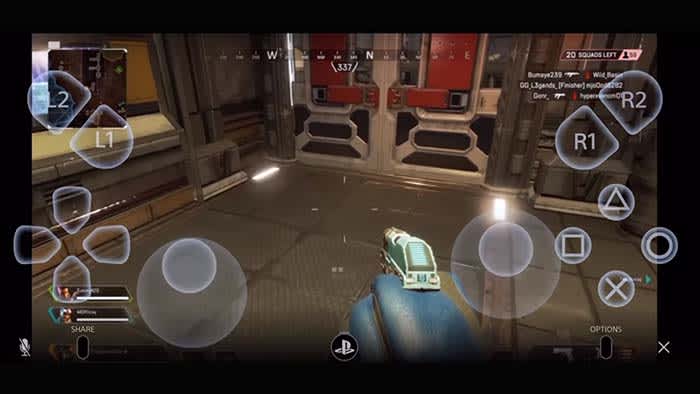
Soon, you will be able to play your favorite PlayStation 4 games from your iPhone just like you do on your console!
Earlier this week, Appleannounced at WWDC that the new iOS13 and iPadOS will support Xbox One and PlayStation 4 controllers. If you pair that with Sony’s app PS4 Direct Play, you can use the iPhone or iPad as a monitor, while the PS4 controller gives you full control of the game. The feature will be available later this year.
Basically, if you have an iPad or iPhone, you also have a portable PS4. Next time your flight gets delayed and you have a few hours to kill at the airport, you can bust out Overwatch.
As it currently sits, you can’t play every game to its full capabilities on Remote Play. For example, you can’t use either of the thumbstick controls. As these are typically used to sprint or crouch in most games, you’re out of luck if they’re necessary to the game.
Luckily, the addition of the controller means that you can play each game as it was intended.
This can really be a game-changer. From now on, if you have a long train ride to work, or if you have downtime after class, you can get playing!
The downsides
Remote Play still requires a console. You could technically connect it to your friend’s PS4 at their house, but you would be playing their save files. We imagine they’d be a bit upset if you deleted their God of War save file to start your own.
If you can charge your iPhone or iPad while playing, you don’t need to worry about depleting your battery. If you can’t, streaming your games from the PS Network on top of actually playing them will surely drain your battery.
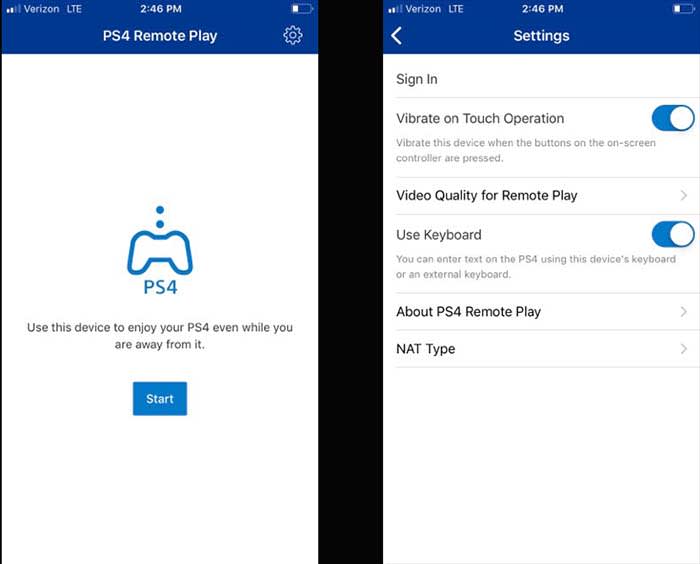
How to set up PS4 Remote Play
After downloading the app and turning on your PS4, log into your account on your PS4
Log your PS4 and iPhone onto the same Wi-Fi network
Open the app
Open Settings and log in to your PlayStation Network account
Click the big, blue start button. This will make the app search for your PS4
There’s a chance that it will fail. If it does, do NOT panic
A prompt will pop up asking for a code so you can manually connect the device
On the PS4, go to your Settings, and choose “Remote Play Connection Settings”
From there, choose “Add Devices” where you will see the code
Type the eight-digit code on your app.
Once you’re done, click “Register”
You’re all set!
Wrapping up
One of the worst parts about getting a new game is having to leave it behind while you’re in the middle of something. When Insomniac’s Spider-Mancame out last year, we highly debated going on hiatus at work so we could play it. This new feature from iOS means that the game is no longer confined to our living rooms.
We’re psyched to be able to play on the go. We just hope we don’t become video game addicts while we’re at it.
The year’s biggest gaming event is coming next week. Here’s what to expect.
The biggest event in gaming is here. E3 is about to arrive, and with it a whole host of news and announcements about the hottest new games. Every year, the biggest names in gaming gather at the massive expo to showcase what’s on the horizon, and the sheer quantity of games and news can get overwhelming. If you aren’t sure where to start, fear not. Here’s what to keep an eye on when the event kicks off on June 11.
What to expect at E3 2019
Call of Duty: Modern Warfare
Image courtesy Activision
If you think you’re experiencing deja vu, think again. Though it may share the same name as the classic Call of Duty title, this iteration of Modern Warfare is a totally new experience. Though familiar characters like the iconic Captain Price are returning, developer Infinity Ward is touting the new game as a franchise “reboot.” While it isn’t exactly clear yet what that entails, what’s been revealed about the game so far paints a pretty enticing picture. Modern Warfare has a dark, gritty tone that lines up with Infinity Ward’s goal of shining a light on some of the moral grey areas of modern conflict. The game is slated for an October 25 release, so there’s no doubt we’ll be seeing quite a lot of this title at E3.
Borderlands 3
Image courtesy Gearbox Software
First announced earlier this year at PAX East, Borderlands 3 has been turning heads ever since. Already the subject of controversy, Borderlands 3 promises to be the same over-the-top, cartoony action shooter fans have come to expect. We’ve got some tantalizing details already, not the least of which is a series first ability to explore multiple planets in the Borderlands galaxy. We have a pretty good idea already of what to expect, but we’re looking forward to seeing what other new features Borderlands 3 will be bringing to the table.
The Avengers Game
Image courtesy Marvel Studios
Rumored to be in the works for some time, most sources point to “The Avengers” game to finally put in an appearance at E3. Details on the game are sparse: so far, the most that anybody seems to know is that the game is going to be helmed by industry giant Square Enix. It’s also not Marvel’s first foray into the gaming world. If the 2018 Spider-Man game is any indicator, The Avengers game is going to be mind-blowing.
Final Fantasy VII Remake
Yet another much-anticipated remake, the “Final Fantasy VII” reboot has been in the works since way back in 2015. After dropping off the radar for a bit, it burst back onto the scene earlier this spring with a jaw-dropping new trailer, surprising many fans. Square Enix promised more details about the upcoming title in June, so all eyes will be on the developer for more about this long-awaited game.
Google Stadia
Image courtesy Google
Google Stadia turned a lot of heads when it was revealed earlier this year. Since that first press conference, however, not much else has been said about Google’s ambitious new gaming initiative. There are still quite a few details to be hashed out, such as how the system will actually work… and, of course, what it will cost. With Google trying hard to gain a foothold in the gaming world, we’d expect to see Stadia making an E3 appearance in some form or another.
Star Wars Jedi: Fallen Order
Star Wars hype is at an all-time high, and not just because of the upcoming movie. There’s a new game on the horizon as well: “Jedi: Fallen Order.” The game’s story focuses on the period between the fall of The Republic and the rise of the Empire. Players will take on the role of a survivor of the Jedi Purge on the run from Imperial forces, with a focus on force powers and lightsaber combat. What we’ve seen so far looks pretty sweet… and to top it off, the game is being developed by Titanfall and Apex Legends creators Respawn Entertainment.
The Legend of Zelda: Link’s Awakening
Yet another remake, this latest entry in the Zelda franchise promises to be a lot of good old-fashioned fun. First released for the GameBoy, Link’s Awakening is a graphical upgrade of the series classic for the Nintendo Switch. It promises to be a nostalgic trip down memory lane that’s sure to put a smile on any gamer’s face.
If you’re looking for more E3 news and announcements, be sure to check back with Softonic. We’ll be on the ground at E3 to keep you updated with all the latest from the show floor.