
This new Twitter filter could block out spam and abuse

 Twitter is preparing to test a new Direct Message inbox filter that will cut out spam and abuse

twitter on a tablet

Twitter certainly has its uses, but it isn’t exactly the most wholesome place. Many users have to deal with constant abuse and if a user has their Direct Messaging inbox set to open, anybody is free to send them whatever they want. It shouldn’t fall to individual users to close off their inboxes to protect themselves from abuse and spam. It now looks like Twitter is moving to protect this notion with the introduction of a new filter.

Twitter is preparing to test a new Direct Message inbox filter that will cut out spam and abuse

For too long, Twitter has thrown all inbound direct messages into a single inbox. This means that whether you’ve received messages from a friend, somebody you follow, or a stranger, somebody you don’t, they’ve all shown up together. When you think about how big the internet is, this concept alone is almost ridiculous. Add to this the fact that trolls exist, and the internet is full of not very nice people, and this clearly becomes a recipe for disaster.

Now, following a tweet from twitter, this situation finally looks set to change. Twitter is adding a new button to your Direct Message inbox called Message Requests. This is where you’ll find all the messages you receive from people who you don’t follow.

Furthermore, the new Message Requests section of your inbox also comes bundled in with new filters. These filters should catch all unwanted material and hide it behind a new Show button. This means that whenever you read a message from somebody you don’t know, that has been caught up in the filters, you won’t have to view the message unless you tell Twitter you want to see it. It gets better because if Twitter thinks the message has potentially harmful content, it won’t show any preview of the message. You’ll be able to delete any messages you receive from people you’re not sure about, without even having to read the first few words.

Twitter message inbox

This move from Twitter mirrors how Facebook Messenger handles inbound messages from strangers. They’re hidden away and need to be sought out, before they can be viewed. Personally, this means that I’ve stumbled across messages I received years ago, that I never even knew about.

All in all, though, this is a very positive move from Twitter and one that should be applauded. It is an unfortunate truth that many people have to close their Twitter Direct Message inboxes because of the abuse they receive. This move potentially makes Direct Messages a much more useful tool. More of us will set our inboxes to open, if we can be certain that having open Direct Message inboxes isn’t going to leave us vulnerable to torrents of abuse. Quite frankly, it is about time Twitter did this.
Facebook bulks up group privacy settings

Facebook Group privacy settings are now much clearer and easier to control

Facebook group settings

Facebook and privacy aren’t exactly synonymous with each other. When Mark Zuckerberg first burst onto the scene out of his Harvard dorm room he quickly declared personal privacy to be dead. Since then he’s waged a long, slow, and hard war on the things we hold dearly and, more importantly, privately to ourselves. He knows everything about us, and even knows plenty about people who don’t even use Facebook.

This has worked out well for the Zuck and his company as they’ve been raking in the cash at an incredible rate. At the same time though, Facebook and Zuckerberg are steeped in controversy and the social media giant seems to be stumbling from one privacy-related crisis to another. We don’t need to get into Cambridge Analytica when a record $5 billion fine is so fresh in everybody’s minds.

It could be that these seemingly never-ending scandals are behind Facebook’s latest moves to beef up the privacy settings for Facebook groups. Let’s take a look.

Facebook Group privacy settings are now much clearer and easier to control

A recent Facebook blog post announced some changes to Group Privacy settings. The idea behind the changes is to make it much easier to control who sees what is going on in the groups you’re an admin of. You could see this a tacit admission that the old system was deliberately designed to be too complicated, but let’s not go there.

Image via: FB Newsroom

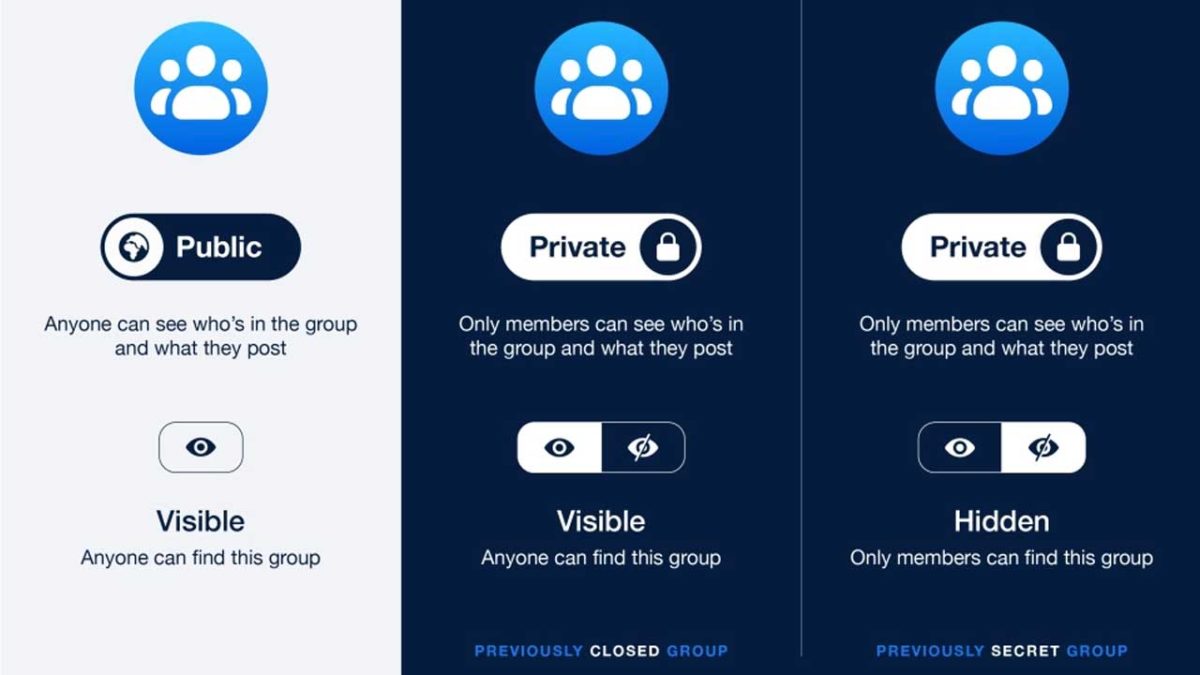
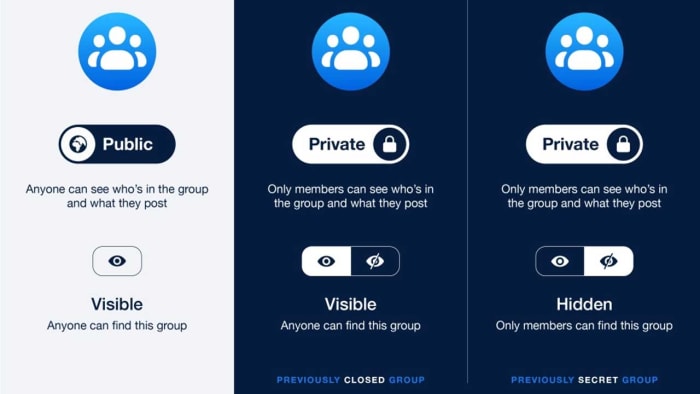
The post reads, “With two clear options, this new privacy model is much more intuitive. Public groups allow anyone to see who’s in the group and everything that’s shared there. With private groups, only members can see who else is in the group and what they’ve posted.” This means that if you post anything in a private group, only the registered members of the group will be able to see it. There is another setting, however, that Facebook has added.

7

Not all Private groups want to be hidden. Sure, the content of the group might contain sensitive information but that doesn’t mean that the group doesn’t want to be discoverable to new members. For these types of groups, admins will be able to set their private groups to “Visible”, if they so wish. This will make the group discoverable by anyone, while the “Hidden” setting will make it only possible for members of the group to find it. Public groups will always remain visible to everybody.

This is only a simple change, but the new Facebook groups privacy model is much clearer. The new options are presented in clear panels with simple switches being used to toggle groups between being public and private, and then with a further switch toggling private groups between being visible and hidden. These new features should be live now. If only things had been so simple from the start.

8 million Android phones infected with adware

You might have downloaded an app infected with adware. Here’s how to fix it!

Android

More than 80 Android apps infected about 8 million Android users’ phones.

The apps in question were fakes impersonating photo editing tools and games.

All of the apps in question were removed from the Play Store, so you don’t need to worry about downloading them going forward.

What do adware apps do?

As the name suggests, adware apps deal with advertising. While you surf the internet on your phone, adware clicks on ads in the background, which generates money for advertisers. This might not sound bad, but you can be bombarded with ads as a result, and your phone will also waste battery and data in the process.

According to an article from TechCrunch, these apps were very sneaky and weren’t offering any clues that anything fishy was going on in the background. The ads were also notoriously hard to close. 

Yeah, this sounds scary, but iPhones aren’t faring much better in the news these days:

What should I do?

The best thing you can do is to download a trusted antivirus program like Avast. If you run Avast, you can delete all traces of the adware. Just make sure you restart your phone after you run it.

However, from now on when you download apps on from the Play Store, make sure that you know the app comes from a trusted publisher. If an app has thousands of downloads and positive reviews, you can probably assume that you’ll be safe. According to the TechCrunch article, pretty much all of the apps in question had awful reviews on the Play Store. However, weekly virus scans are a great way to make sure you are safe from adware and other viruses. 

Your phone number can leak personal data online

Your phone number contains more personal information about you than your name does!

Phone number

When you’re on an app like Tinder, you already know better than to just slide anyone your digits. The last thing you want is to be harassed by some crazy person with obnoxious texts and unsolicited pics.

With that same logic, you wouldn’t give your phone number to some random website that says they need it to create an account for you, right?

Well, that’s where a lot of people fall off.

What can someone possibly learn from me just by having my phone number?

To state the obvious, if someone has your phone number, they can harass you and bombard you with ads. To some degree, that has probably happened to you.

You’ll be lounging around your home when suddenly you get an unsolicited text telling you about a deal on clothes, shoes, or food. 

However, your phone number can also give a hacker a ridiculous amount of personal information about you. In a recent article in the New York Times, a writer found the following personal knowledge about himself could be attained with his phone number. 

  • Full name
  • Birthday
  • Home address
  • Size of home in feet
  • Cost of property and other taxes
  • Full names of family members
  • Past phone numbers including ones associated with parents
  • Info on other owned property
  • Criminal record or lack thereof

The writer discovered that a hacker could find out more information about him with his phone number that with his full name. 

With this information, the writer discovered that someone with malicious intent could now attempt to answer his security questions. He and his family members could also be targeted with phishing ads. A hijacker could even trick his phone carrier into getting a new SIM card with his number. This means the hijacker would have access to the writer’s phone number and do with it as he pleases.

To make matters worse, this information wasn’t very hard to find at all. By using Whitepages Premium, a totally legal online tool, most of this information was uncovered from public records. Although using this information for nefarious deeds is illegal, obtaining it is not.

Why do so many websites ask for our phone numbers?

Phone number

In a lot of cases, giving a website your phone number makes perfect sense. For example, food delivery apps like Grubhub or the Papa John’s app and website ask for your phone number. They need it in case they show up to your residence to deliver your food and nobody is answering the door. 

At this point, you might be thinking, “Instagram and Twitter don’t deliver me food, so why do they need my number?” 

Well, they use it for a legitimate reason as well. For one, it makes logging in a whole lot easier. Be honest, are you more likely to remember your own cellphone number or the random username you created for a website? Also, many websites and apps require a cellphone number to make sure that you’re an actual person and not a bot. 

What should I do?

You don’t need to get a new phone number or throw your SIM card into a blender. However, you should start thinking twice before you give a person, app, or a website your cellphone number.

You should also consider upping your game when it comes to your online security. Make better passwords, and use two-factor verification whenever possible. 

Start treating websites and apps like they’re a potential new match from Tinder. Genuinely ask yourself whether you can trust this site (or person) enough to give them access to personal information about yourself. If the answer is “no,” do the smart thing and swipe left.

Chrome’s new and improved Incognito mode is not as good as Google is making out

Researchers have discovered two tricks that make it possible for websites to detect when users are visiting in Incognito mode

With recent stories rolling out about the amount of tracking cookies Chrome has hunting you down and the move to block ad-blockers unless you pay Google, Chrome’s reputation has taken a bit of a beating recently. It has also been a somewhat badly kept secret for years now that Google Chrome’s Incognito mode is not as private as you would think it is.

Last month, Google moved to address this final point in what must have seemed like a desperate attempt to restore Chrome’s beleaguered reputation. The internet giant moved to close off a loophole that allowed web developers and sites to detect users who were visiting their pages while in Incognito mode.

The move was met with plaudits too, as it appeared to work. Unfortunately for Google, that apparent truth has evaporated as researchers claim to have discovered a way around it.

Researchers have discovered two tricks that make it possible for websites to detect when users are visiting in Incognito mode

Incognito chrome

A successful Incognito mode can be bad for websites in a number of ways. The clearest one relates to ad revenue. When websites can track your online activity, they can serve you up more personalized ads, which in turn generate more revenue.

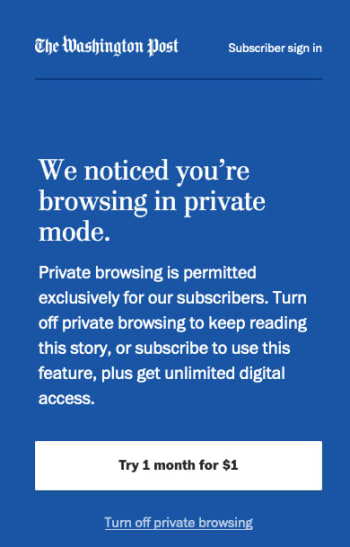
The other big one though, relates to media outlets offering a certain number of free page views before you have to pay. If you’ve ever seen a banner ad saying you’ve only three free articles left this month, then you’ve come up against this. A genuinely “incognito” mode stops these sites from knowing how many of your free articles you’ve read.

This all means that there is a real financial incentive to breaking through an Incognito Mode and it looks like it hasn’t taken long for researchers to bust through Google’s new and improved Incognito mode. Google announced that it had closed the previous loophole on July 18 and since then two security researchers have published ways for websites to detect somebody in Incognito mode.

wapo incognito mode screenshot

The first researcher, Vikas Mishra, noticed a painfully simple way to bypass the new and improved Incognito mode. He realized that Chrome caps incognito windows memory usage at 120mb while normal windows running normal web pages use a lot more memory than this. This means that any window that has a 120mb memory limit is likely to be in Incognito mode. Mishra even wrote a script that exploits this vulnerability.

The second researcher, Jesse Li, used a slightly more complicated measure. Li measured the different speeds of writing data to memory rather than disk using the two different browser modes and discovered a discrepancy that gives the game away.

When it comes down to it, Mishra’s breach is easily fixed by tweaking the amount of memory Incognito pages have access to and Li’s isn’t the easiest to implement. Whereas both researchers will likely be working at Google themselves sooner rather than later as a result of their discoveries they may not actually change too much stuff in the short to medium-term.

Google is already working on a fix to the problem, although, it has already noted that The New York Times is already exploiting one of the bugs, to detect people reading its articles in Incognito mode.

The problem in all of this, however, is that financial incentive we mentioned earlier. As long as invading your privacy will make companies money, they’ll keep trying to do it. In the long term this is a problem that isn’t going to go away until that fundamental issue is addressed.

iPhones can be hacked just by receiving a text

This bug can allow hackers access to all of your personal data just by receiving an iMessage!

iPhone

We’ve all had close calls when it comes to getting our phones hacked.

Sometimes we click on a malicious link while browsing the internet. Sometimes we download a shady app that is sending data in the background. All of these things typically boil down to our own human error whether it be from lack of knowledge, or taking a chance on a shady app. However, it was recently discovered that an iPhone can be hacked simply by receiving an iMessage. This has brought more attention to a  relatively new type of hacking tool known as “interaction-less” bugs.

Should I be worried?

At the Black Hat Security Conference this week, a Google Project Zero researcher showed that there are “interaction-less” bugs in iMessage that hackers can exploit to gain control. Once hackers gain control, they will be able to access your personal data on your phone.

You can click here to see the researcher’s full slideshow presentation. 

The bugs were found by looking for flaws while reverse engineering iMessage. The researcher, Natalie Silvanovich, did not find any similar bugs in Android phones. However, throughout the years, she and her team have found similar bugs in apps like WhatsApp and FaceTime. 

What should I do?

The best thing you can do is to make sure you are updating your phone whenever you can. According to Silvanovich, Apple has already patched six of these bugs in updates. 

You should also run regular virus scans on your phone to make sure that you are virus-free. We highly recommend using Malwarebytes since it is both free and efficient.

Malwarebytes Download now ►
8

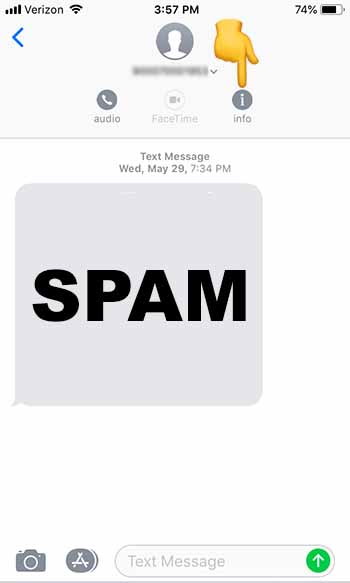
You can also block texts from unknown numbers so that you won’t hear from them again. To do this, follow these steps:

1. Go to the Messages app

2. Tap on the spam message you received to open it

3. Tap at the top of your phone until the “Info” button appears.” Tap “Info”

Click info

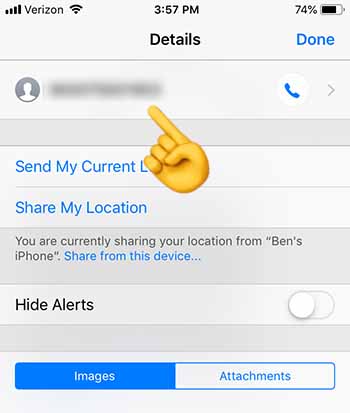
4. Tap on the number at the top of the screen

Click number

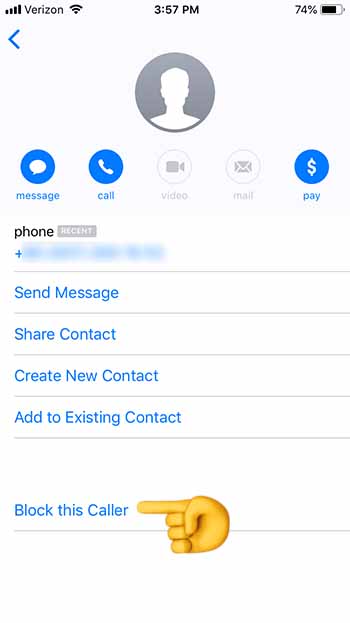
5. Scroll down to the bottom, and tap “Block this Caller”

Block this Caller

6. You should stop receiving texts from this number altogether

If you do receive a shady text from an unknown number, you should block the caller, and then run Malwarebytes. Once you’re done, check and make sure that your phone is up to date.

Wrapping up

Although there is virtually no chance that your up-to-date iPhone will be hacked through this method, the question now remains: “How did Apple leave this vulnerability in the first place?” If you’re spending hundreds of dollars on an iPhone, you should rest assured that it won’t be easy for a hacker to access your personal data. Just recognize that your security depends on your vigilence.

Skype contractors have been listening to some of your calls

Contractors working for Microsoft are allowed to listen to some Skype calls that use Skype’s translation feature

skype on a mobile connected to headphones

Privacy! What ever happened to that age old tradition of being able to reasonably expect all of your personal affairs to stay private? Ever since that first birthday reminder Facebook sent you, you’ve been fighting a losing battle to keep yourself to yourself. As well as social media, website cookies, app permissions, and small print that would literally take weeks to read, we’ve recently found out that human beings working at companies like Google, Amazon, and Apple have been listening to recordings we previously thought were only being analyzed by machines.

Yep, three out of the big four tech companies have been lying to us about who listens to the voice recordings we share with them. As is always the case, however, with privacy invasion stories in the modern ad-tech era, it gets worse. Humans at Microsoft, the fourth of the big four tech companies have also been playing our private conversations.

Contractors working for Microsoft are allowed to listen to some Skype calls that use Skype’s translation feature

A report by Motherboard claims that contractors working on Skype’s translation service have had access to personal conversations taking place across the app. Citing a “cache of internal documents, screenshots, and audio recordings,” the report says that the contractors had access to intimate conversations between lovers, fraught conversations discussing relationship issues and problems, and recordings of people talking about sensitive and personal issues like weight loss.

Voice commands given to Microsoft’s virtual assistant, Cortana were also accessible to the contractors according to the report, though these won’t have included such intimate information like that being shared in Skype conversations.

Skype speaking different languages

It has to be said that Skype’s translation service, which the Microsoft-owned company launched in 2015 is impressive. It offers almost real-time translation on voice and video calls, as well as text conversations, between a number of different languages. The service is supposed to be run using AI and machine learning algorithms, but according to Motherboard’s insider much of the leg work is also being done by human contractors. These human contractors carry out the same job as the AI to help the machine learn how to do the job better itself.

This is how a lot of AI systems work. Humans teach algorithms to do a job until the algorithm can do it well enough itself and then even go on to teach itself how to improve efficiency. Not all AI training needs access to sensitive private information, however, like with the Skype translation service.

Whereas it could be expected that a translation algorithm would need human training, Microsoft hasn’t been very clear in making it clear to Skype users. Skype’s website does mention that audio clips taken from Skype calls will be analyzed but doesn’t say that some of the analysis will be done by humans. This is likely because, people would be a lot less likely to use a communications service, if they believed people were listening in.

The only good news to come out of this is that the contractors don’t have access to identifiable information about the user’s involved in the conversations they’re analyzing. In the grand scheme of things, however, that is a very small mercy. They might not know who you are, but they are still able to listen in on your most intimate conversations were you’re detailing some of your most private insecurities. Pretty creepy stuff.

India’s government wants to read your WhatsApp messages

The Indian government wants WhatsApp messages to be linked to users.

whatsapp

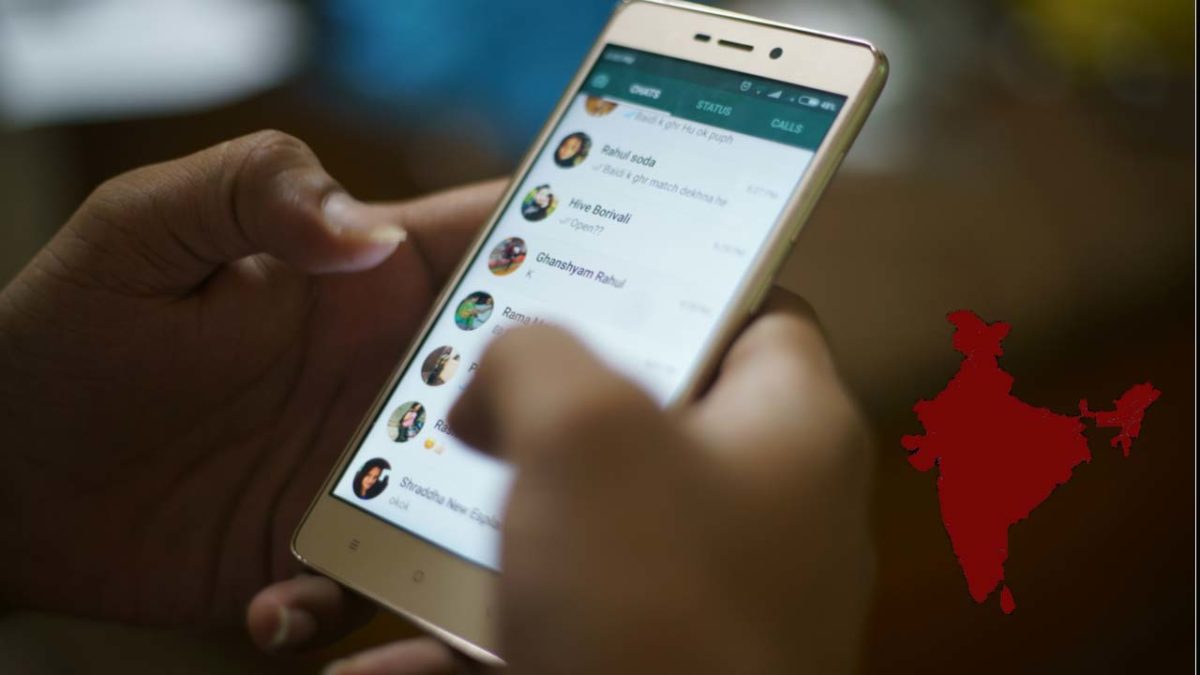
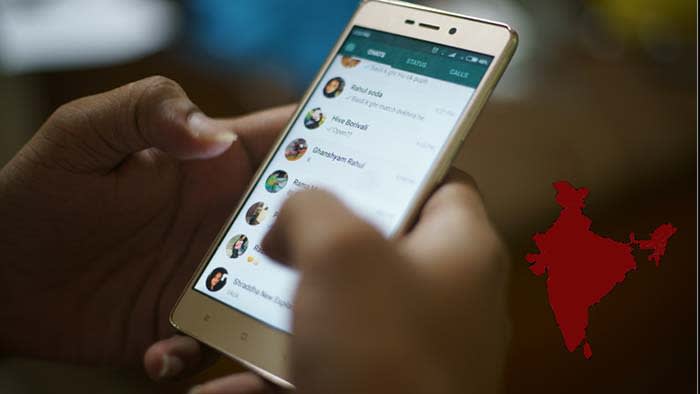
If you’re a WhatsApp user in India, your messages might be compromised.

Two petitioners have requested India’s high court to link WhatsApp users’ accounts with their Aadhaar. Aadhaar is a 12-digit unique biometric identity number that everyone in India has to identify them. Aadhaar is pretty controversial in India as some believe it allows the government to track their every move. 

WhatsApp Messenger Download Now ►
8

Why should I care?

government surveillance

The petitioners want WhatsApp users linked to their Aadhaar so that users who cyberbully or defame other users can be held accountable. Linking users to their Aadhaar would significantly weaken WhatsApp’s encryption. 

Users are worried that weakening WhatsApp’s encryption would cause a domino effect that would extend to other apps as well. The mindset is if this can happen to WhatsApp, one of the most popular apps in the country, it can happen to any app.

WhatsApp is supposed to be a place for private conversations, but adding this link would mean that every message has a record associated with you and your phone number. 

Why is this happening and what is WhatsApp doing?

Fake news

The problem is that the petitioners aren’t the only ones fighting for this change in WhatsApp, the government of India is trying to weaken its encryption as well. 

India’s IT minister Ravi Shankar Prasad said that traceability will be WhatsApp’s job. The government has tried to get WhatsApp to allow messages to get traced back to users, but has been denied each time. With the support of the petitioners, this time the Indian government might be too loud for WhatsApp to ignore. 

Much of this was sparked by an event last year when a hoax was spread through WhatsApp about child abductors running rampant in India. This lead to several people being lynched in the chaos. People who helped spread the hoax could have potentially been tracked down and prosecuted if they were linked to their Aadhaar.  

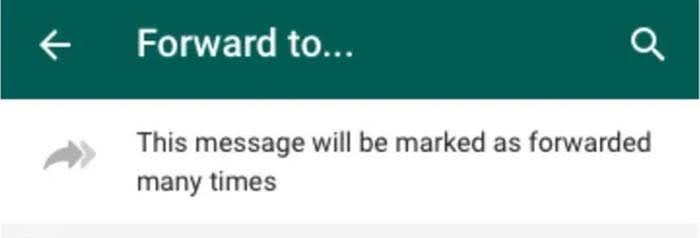
WhatsApp has responded to the issue and is working to fight misinformation from spreading throughout the app. Recently, they unveiled a feature that would tell users if a message was forwarded more than five times. The idea is that if a message was forwarded more than five times, it is probably being sent on a massive scale, and maybe with malicious intent.

What’s going to happen?

First off, it is important to note that this is not necessarily an India-only issue. Weakening WhatsApp’s encryption could potentially have consequences for users in other countries.

WhatsApp has to take every user in every country into consideration before making this decision. They also have to consider the users in India that don’t want them to make this change. Whether WhatsApp and the Indian government reach a compromise is something we will have to wait to see. Until then, if you’re a WhatsApp user, continue to report users that spread misinformation on the app.

Utopia: Chat privately with your peers

Try out the beta version of Utopia, the latest P2P technology to chat with your peers with full privacy and much more. Download it now.

If the recent Netflix documentary “The Great Hack” proves anything, it’s that your online life is most definitely being tracked. Every purchase, every “like,” every ad you click on, and every survey you complete are all being compiled to create a profile of you that can at best be used to deliver relevant ads and content to you and at worst, can trick you into taking actions based on false information. As part of a growing movement to help you keep your online life safe from prying eyes, comes a new platform called Utopia.

Dedicated to restoring a sense of privacy and anonymity to surfing and communicating online, Utopia offers an all-in-one encrypted decentralized platform, providing an anonymous browser called Idyll, a secure instant messenger, secure email called uMail, and even its own cryptocurrency known as Crypton (CRP).

Napster-era tech brought into the new millennium

The Utopia platform handles its operations through a peer-to-peer network (P2P), which means that the entire system is spread out amongst all of the users’ computers, in the same way that music-sharing program Napster once worked in the late ’90s. Login credentials are further stored on your own computer, rather than in a centralized system. This lack of a unified database makes surveillance practically impossible, as there is no main server to hack or monitor.

Tab-based simplicity

Utopia platformAfter installing the software, all activities on the Utopia network are handled through a simple tab-based dashboard. The main screen opens to uMail, which operates as a fairly traditional web-based email client. All messages sent through uMail are automatically encrypted and are not stored on a central server so the possibility of having your email communications hacked or seized is virtually non-existent.

Chat rooms

Utopia platformAnother tab opens the channel manager, which allows you to join a series of pre-existing discussion groups like the chat rooms that used to dominate the internet in its early days, or you can start your own channel. Clicking on the name of a channel participant in the left column allows you to start a secure private chat. Images, voice messages, and other attachments in any format without size limits can be securely passed back and forth, forwarded via uMail or instant messaging, or downloaded to your computer.

Utopia platformA new Tor

The Idyll browser will allow users to access sites created on the Utopia network. “Utopia Network includes a safe alternative to traditional Domain Name System (DNS) called Utopia Name System (UNS),” says the company. “This is a decentralized registry of names that are impossible to expropriate, freeze, intercept, or corrupt by any 3rd-party. Once registered it is your property for a lifetime.”

All that and coin too

Utopia platformFinally, Utopia plans to offer Crypton, its own cryptocurrency with a very smart approach to liquidity support and minimization of volatility. While the goal is that users will be able to further anonymize their online activities by making purchases using Crypton, the use of a reward system also keeps users online, which means the P2P network has maximum computing power. Users of the Utopia platform earn Crypton simply for using the software – and additional Crypton can be mined using bots which enlists users’ computers into the blockchain computational process.

Utopia platformSummary

Utopia is setting out to provide a revolutionary approach in how people can securely communicate, access information, and make financial transactions that takes things much further than simple VPNs, private browsing tabs or regular cryptocurrencies. If you’re concerned about freedom of speech and the way in which your every movement is tracked online, it would certainly be worth taking it for a spin.

The Utopia platform will be in beta test until October 3 and is already available for Windows, MacOS and Linux.

New WhatsApp feature will fight misinformation

This new feature will tell you if a message was forwarded more than five times.

WhatsApp

WhatsApp is introducing a new feature in their ever-growing fight against misinformation.

If a message is forwarded more than five times, the message will come with a double arrow next to it. 

WhatsApp Messenger Download Now ►
8

WhatsApp

WhatsApp announced the new feature in a recent blog post. The new feature will be available on the app on both iOS and Android.

Basically, if you see a message that says it was forwarded multiple times, there’s a chance that it’s a spam message, and you should report the user. Obviously, if a trusted friend sent you an invitation and you see the double arrow, it can probably be trusted. Then again, that person might as well make a group message or a Facebook event.

Last year, WhatsApp fell into some hot water after people fell for a rumor they heard on WhatsApp, and lynched people they thought were child abductors. 

Since then, WhatsApp developers have promised to do more to stop the spread of misinformation on the app. This new feature is definitely a step in the right direction. Although it still falls on the user to determine whether or not a message is malicious, the double arrow will be a nice warning sign.