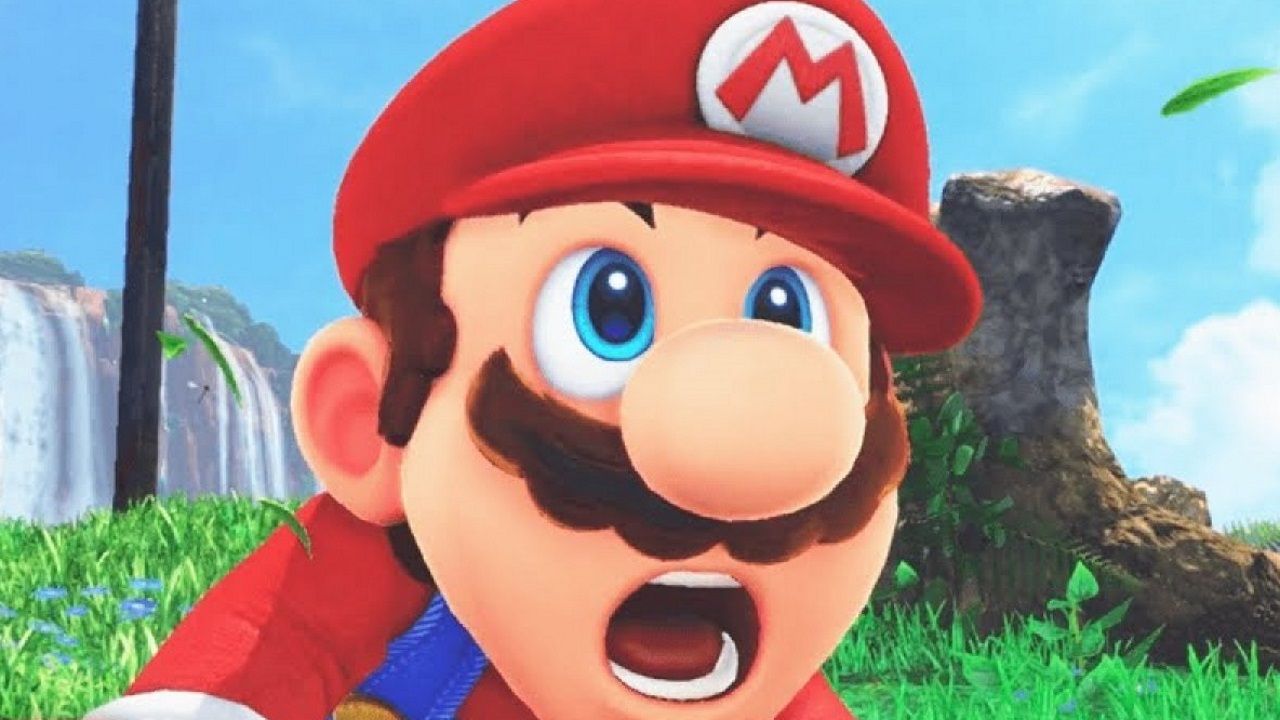
The film adaptation of one of Nintendo’s most iconic video games, The Legend of Zelda, has taken shape with a confirmed release date for theaters: May 7, 2026. Fans of the saga have been waiting for this announcement for years, and it is now confirmed that Nintendo is leading the project in terms of production and creativity, working in collaboration with Sony Pictures, which will be responsible for global financing and distribution. On the way to Hyrule Recently, it has been made public that Netflix has negotiated the streaming rights for the movie as part of […]
The film adaptation of one of Nintendo’s most iconic video games, The Legend of Zelda, has taken shape with a confirmed release date for theaters: May 7, 2026. Fans of the saga have been waiting for this announcement for years, and it is now confirmed that Nintendo is leading the project in terms of production and creativity, working in collaboration with Sony Pictures, which will be responsible for global financing and distribution.
Path to Hyrule
Recently, it has been made public that Netflix has negotiated the streaming rights for the movie as part of a global Pay-1 deal with Sony Pictures for a significant amount of $7 billion. This means that after its exclusivity in theaters and subsequently in sales and rental formats, the movie will be available on Netflix, attracting a wider audience worldwide. Full global availability is expected by early 2029, thus providing a reasonable time for those who prefer not to attend theaters to enjoy the movie from the comfort of their homes.
The project is directed by Wes Ball, known for his work on the Maze Runner trilogy, while Shigeru Miyamoto, the legendary creator of Mario and Zelda, serves as the creative producer, ensuring that the adaptation remains true to the essence of the franchise. Avi Arad, known for his work in superhero films, is also overseeing this ambitious project.
As the production dates approach, additional details about the film remain scarce. However, the film could share narrative lines and themes with other Sony productions, such as Spider-Man: Beyond the Spider-Verse, which could further integrate the animated and live-action cinematic universe.
The video game industry is undergoing a considerable transformation thanks to the implementation of Artificial Intelligence in various aspects of game development. Companies like Square Enix and Krafton are heavily investing in the use of this technology in their production processes, seeking to improve both the quality of their titles and the player experience. The ghost player that helps you when you get stuck One of the most intriguing developments comes from Sony, which has registered a patent for an innovative system that offers assistance to players through an AI-controlled avatar. This system, called […]
The video game industry is undergoing a considerable transformation thanks to the implementation of Artificial Intelligence in various aspects of game development. Companies like Square Enix and Krafton are heavily investing in the use of this technology in their production processes, seeking to improve both the quality of their titles and the player experience.
The ghost player that helps you when you get stuck
One of the most intriguing developments comes from Sony, which has registered a patent for an innovative system that offers assistance to players through an AI-controlled avatar. This system, called AI-generated Ghost Player, allows users to choose between two operating modes: Guide Mode, which provides solutions to game challenges, and Complete Mode, where the AI takes full control of the character to overcome obstacles, preventing players from getting stuck in the gameplay.
It is important to note that although this patent has been filed, it does not guarantee the implementation of the technology in future games, and Sony has not yet revealed concrete plans to allow AI to play for users. The gaming community may see this as an optional tool designed to enhance the gaming experience, but it also raises debates about the impact it would have on game design and player satisfaction.
In addition, Sony has filed another patent that would allow real-time modification of video game or movie content, which has raised concerns about the possibility of AI-managed censorship. This aspect has been viewed critically, raising questions about the ethics of these technological implementations in digital entertainment.
Sony has started 2025 with an innovative patent for a “ghost player” system generated by artificial intelligence, designed to help gamers overcome obstacles in their video games. This technology, proposed in a document that Sony filed in 2023 and which has taken time to be approved, incorporates an in-game interface that allows players to make natural language queries about the parts of the game where they feel stuck. The AI can provide guidance or even take control of the game to help navigate those tricky obstacles. A ghost player that learns from […]
Sony has started 2025 with an innovative patent for a “ghost player” system generated by artificial intelligence, designed to help gamers overcome obstacles in their video games. This technology, proposed in a document that Sony filed in 2023 and which has taken time to be approved, incorporates an in-game interface that allows players to make natural language queries about the parts of the game where they feel stuck. The AI can provide guidance or even take control of the game to help navigate those tricky obstacles.
A ghost player who learns from other players
The “ghost player” will operate using material from other players, presumably collected from platforms like YouTube, to provide this personalized assistance and enhance the user experience. This patent complements an already existing feature on the PlayStation 5, which shows relevant videos when players are stuck, but promises a less intrusive and smoother integration.
Despite the potential advantages, there has been strong opposition among gamers, who feel that this technology could undermine the inherent challenge of video games. Many long for the challenge of classic games, contrasting with the desire for contemporary solutions that facilitate gameplay. Criticism focuses on the fact that the video game experience is being undermined by allowing AI to take on parts of the game that traditionally required skill and personal effort.
However, some argue that the incorporation of AI for assistance in video games does not devalue the connection between artists and the audience, as it does not replace human work in content creation. Some fans believe that if this can make the game more accessible by allowing players to overcome difficult sections, it could be welcomed. In this delicate balance between nostalgia for the difficulty of the past and the pursuit of innovation, the future of video games seems to lie at the intersection of the classic and the contemporary.
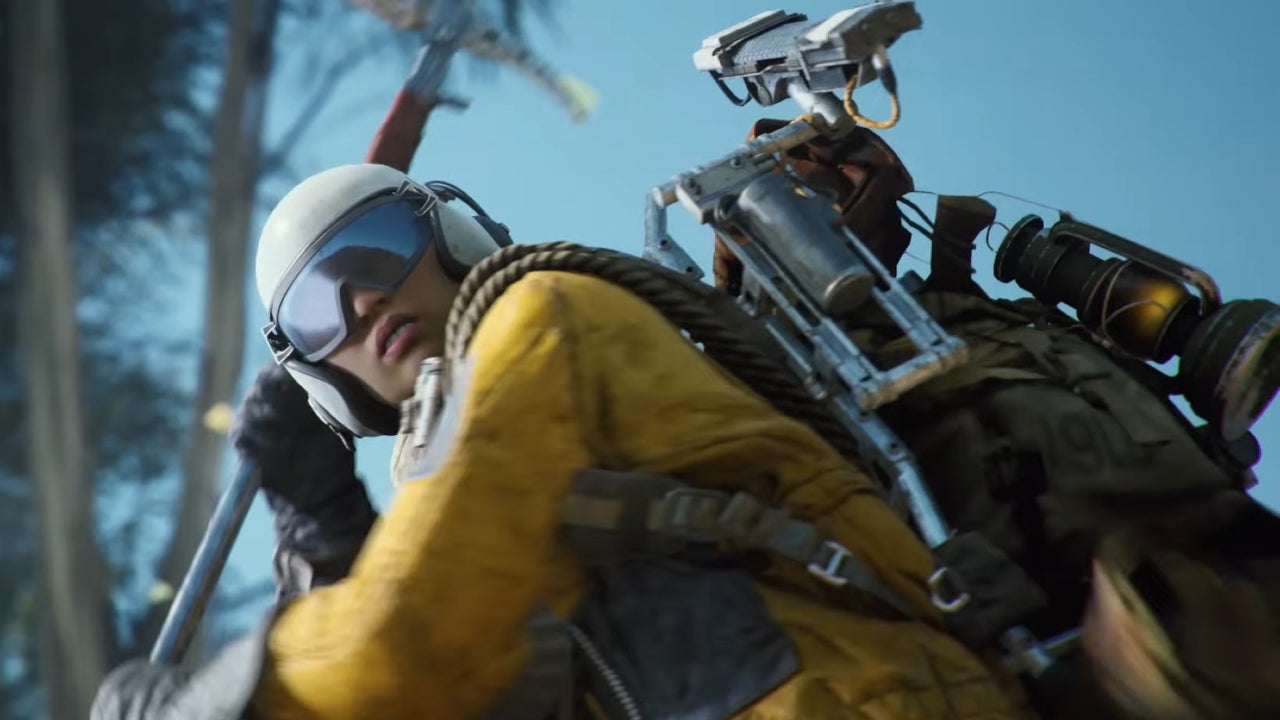
The video game industry is experiencing a notable shift in the way titles are launched and monetized, particularly in the realm of multiplayer shooters. The trend of free-to-play games has lost its luster, and developers are increasingly leaning towards pay models, a phenomenon largely driven by the success of Arc Raiders. Helldivers 2 paved the way for the rest Originally conceived as a free game, Arc Raiders shifted its focus to a pay model in 2024, a decision that was favored by the exceptional performance of […]
The video game industry is experiencing a notable shift in the way titles are launched and monetized, particularly in the realm of multiplayer shooters. The trend of free-to-play games has lost its luster, and developers are increasingly leaning towards paid models, a phenomenon largely driven by the success of Arc Raiders.
Helldivers 2 paved the way for the rest
Originally conceived as a free-to-play game, Arc Raiders shifted its focus to a paid model in 2024, a decision that was favored by the exceptional performance of other premium games like Helldivers 2. Patrick Söderlund, founder of Embark, commented that they opted for an affordable price of 40 dollars to attract players, considering that many recent titles exceed 70 dollars.
The reception has been overwhelmingly positive; Arc Raiders has sold millions of copies and maintained a strong audience during the holiday period, underscoring the success of this transition to a paid model. Söderlund emphasized that, although they did not have a campaign mode to justify the price, they wanted to ensure that players felt they were receiving a product of value.
Despite this paid strategy, the game has not escaped the typical controversies of the industry. Like other titles such as Battlefield and Call of Duty, Arc Raiders includes microtransactions that have sparked debates about the real value players get in return for their investment. This approach has led to an increasing discussion about transparency and monetization practices in video games.
With the change in market dynamics, it seems that the pre-sale model is regaining prominence, but it remains to be seen whether this trend will last and how developers will manage the delicate balance between price and additional content.
Shawn Layden, the former president of Sony Interactive Entertainment, has defended the importance of exclusive games in a context where they are becoming increasingly rare. In a recent appearance on the podcast Pause for Thought, Layden pointed out that while not all games need to be exclusive to a console, the existence of unique titles adds significant value to the platform brands, such as PlayStation and Nintendo. VIG: Very Important Games Layden emphasized that multiplatform games are often “programmed for the lowest common denominator,” which can negatively impact the quality of the […]
Shawn Layden, the former president of Sony Interactive Entertainment, has defended the importance of exclusive games in a context where they are becoming increasingly rare. In a recent appearance on the podcast Pause for Thought, Layden noted that while not all games need to be exclusive to a console, the existence of unique titles adds significant value to the platform brands, such as PlayStation and Nintendo.
VIG: Very Important Games
Layden emphasized that cross-platform games are often “programmed for the lowest common denominator”, which can negatively impact the quality of the final product. According to him, exclusive games allow developers to “maximize quality” by fully leveraging the technical capabilities of a console. However, he also acknowledged that the future may see the coexistence of exclusive titles and massive multiplayer games, which will likely be cross-platform to attract a wider audience.
Currently, Xbox has begun porting almost all of its exclusives to other consoles, while PlayStation has started sharing some of its games, such as Helldivers 2 and Lego Horizon Adventures, with Microsoft and Nintendo. Despite this trend, Layden pointed out that Nintendo has shown no interest in opening its intellectual property to other platforms, which contrasts with the recent policies of PlayStation and Xbox.
Layden concluded that although the trend of exclusive titles seems to be diminishing, there will still be space for some unique games in the future, especially those looking to make the most of the player experience. His analysis resonates at a time when the industry is reevaluating how games can be distributed and played across multiple platforms.
Sony has presented a patent that could transform the way digital content is consumed, titled “automatic and personalized editing of video content using artificial intelligence.” This technology allows for real-time modification of offensive content in video games and movies, using methods such as deepfake, blurring, or removal of sections. Users will be able to create custom filters to censor what they consider inappropriate. Censorship or adaptation? Among the possible uses of this innovation is parental control. For example, if there is offensive language in a video game, parents could activate this system to silence it or […]
Sony has presented a patent that could transform the way digital content is consumed, titled “automatic and personalized editing of video content using artificial intelligence.” This technology allows for real-time modification of offensive content in video games and movies, using methods such as deepfake, blurring, or removal of sections. Users will be able to create custom filters to censor what they consider inappropriate.
Censorship or adaptation?
Among the possible uses of this innovation is parental control. For example, if a video game contains offensive language, parents could activate this system to mute or alter it, thus ensuring a more appropriate experience for minors. However, this type of technology would not be exclusive to parents, but would also allow any user to adapt the content to their own preferences, from avoiding situations that they find uncomfortable to omitting elements they consider offensive.
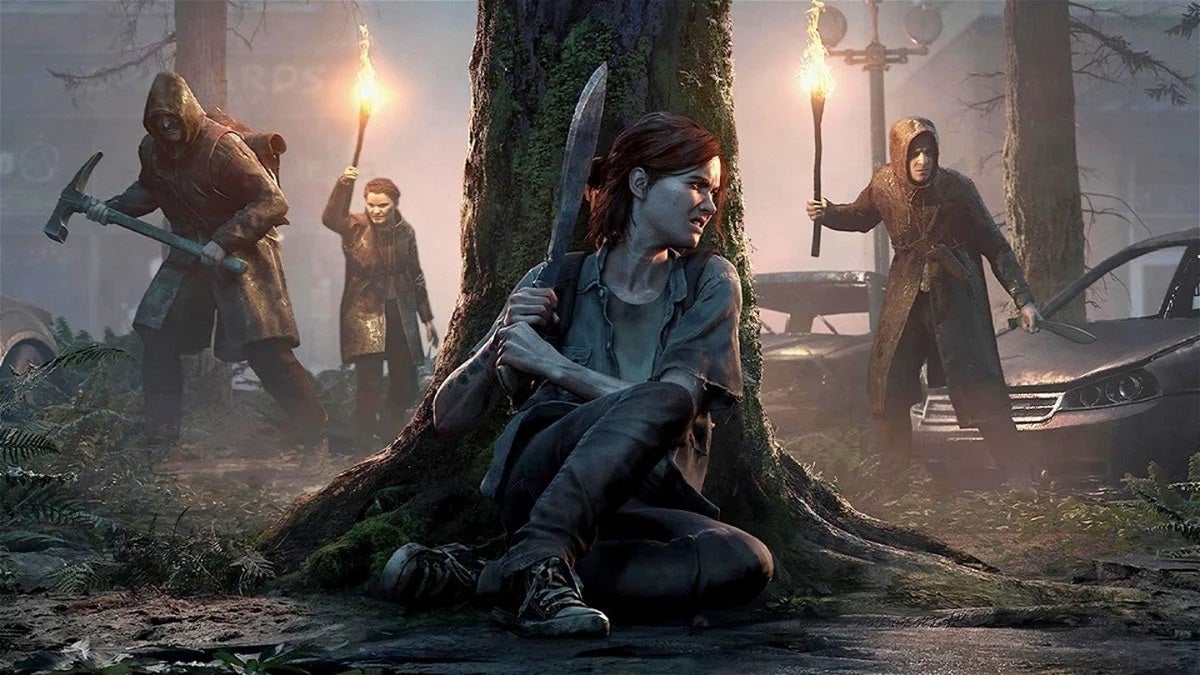
The introduction of an automated censorship system has raised concerns about its impact on the artistic experience of video games. Many experts argue that, in titles like The Last of Us Part 2, censorship could alter the original message of the game, as certain moments of violence are essential for understanding its narrative. The possibility of suppressing content could lead to significantly different and less impactful gaming experiences.
Despite the patent presentation, it is important to highlight that this does not guarantee its immediate implementation in future Sony products. Historically, the company has registered innovations that never made it to market, suggesting that this patent could simply be a way to protect exploitation rights without clear intentions for upcoming development.
In an unexpected turn in the world of video games, Microsoft has begun bringing Xbox titles to PlayStation consoles, including popular games like Sea of Thieves and Forza Horizon 5. This move has been largely driven by the initiative of Jorg Neumann, head of the Microsoft Flight Simulator 2024 project, who initially proposed the idea of launching this flight simulator on PS5. The planes sell The development of Flight Simulator 2024 has posed a significant challenge for the team, especially regarding the size of the game. Initially, the title took up 120 GB […]
In an unexpected turn in the world of video games, Microsoft has begun bringing Xbox titles to PlayStation consoles, including popular games like Sea of Thieves and Forza Horizon 5. This move has been largely driven by the initiative of Jorg Neumann, head of the Microsoft Flight Simulator 2024 project, who initially proposed the idea of launching this flight simulator on PS5.
The planes sell
The development of Flight Simulator 2024 has posed a significant challenge for the team, especially regarding the size of the game. Initially, the title occupied 120 GB at its launch and, by 2023, it had reached 300 GB. To facilitate its arrival on other platforms, an innovative solution was chosen by storing a large part of the game in the cloud, managing to reduce its size to just 8 GB.
Neumann shared in a recent interview that it was his suggestion to take on the challenge of bringing Flight Simulator to Sony’s platform. Although the initial response was negative, interest from Sony emerged later, leading to a collaboration that would ultimately contribute to a series of important releases for the competing console.
The arrival of Microsoft Flight Simulator 2024 on PS5 has opened the door to a continuous flow of Xbox titles in the PlayStation ecosystem. Neumann believes that the success of the simulator was a trigger for this avalanche of releases, catalyzing a significant shift in Microsoft’s strategy in the gaming sector, where exclusivity is beginning to be re-evaluated.
This movement not only represents an evolution in the relationship between both companies, but also anticipates an era where players from different platforms can enjoy titles that were previously exclusive, significantly expanding the options available in the market.
Sony is increasingly betting on synergies. It’s no secret. Its two main battlefields right now are anime and video games, and its idea is to exploit them as intimately as possible, especially after seeing how well its major video game IPs can perform when brought to the big screen. Something it has only done so far with live-action movies. Because all of Sony’s big video game movies have been successful. Perhaps not among critics and certainly not among fans of these IPs, but they have managed to work in what […]
Sony is increasingly betting on synergies. It’s no secret. Its two major battlefields right now are anime and video games, and its idea is to exploit them as closely as possible, especially after seeing how well its major video game IPs can perform when brought to the big screen. Something it has only done so far with live-action films.
Because all the movies based on Sony’s major video games have been successful. Perhaps not among critics and certainly not among fans of these IPs, but they have managed to perform in what matters most to executives: making good box office numbers. This is also true for their latest approach, which, while not the best movie of 2025, is quite better than its also recent remake. We are talking about the film adaptation of Until Dawn.
A movie that has successfully adapted the video game
Adapting the 2015 video game by Supermassive Games, the original already had everything to be a movie. After all, Until Dawn put us in the shoes of eight young adults who went on vacation to the Blackwood Mountains where, due to various circumstances, they found themselves being pursued by a serial killer. Closely following the premises of slasher horror films, the game made us make decisions that ultimately led to the survival or death of our characters, in a butterfly effect that changed the game based on what we decided to do at any given moment.
While its non-linear format and the possibility that several, all, or none of the characters survive do not fit well with cinema, the fact that it is heavily inspired by horror films from the 70s and 80s does. This is something that can be seen in the movie.
Directed by David F. Sandberg, the director of the two Shazam movies and Annabelle: Creation, the film starts from the same premise as the original video game, with a twist to justify everything that happens in it. We won’t reveal it here, as we want to avoid spoilers, but it is a very clever way to justify the constant loops of the original game and explains everything that happens up to this point in the movie, giving it a very unique style and a somewhat different feel compared to other contemporary horror films.
Costing only 15 million dollars, the movie was a fairly modest success. Grossing 54 million at the box office, the film performed especially well in the United States and Canada, demonstrating that it remains the main territory for this type of films.
Unfortunately for Sony, the movie was a bit of a disaster in terms of critical reception and public opinion. With a 52% on Rotten Tomatoes and a 47 on Metacritic, the movie is rated worse than well. And considering it received a C+ on CinemaScore on a scale from A+ to F and a 63% positive rating on PostTrak from the audience, it doesn’t seem like a movie that will receive approval for a sequel. Even if, for a part of the audience that includes us, it is an enjoyable movie under the right conditions: a silly afternoon with plenty of popcorn and a good soda.
Moreover, it’s easy for you to get it. Now more than ever. The movie is now available to watch on Movistar Plus+ and to rent on AppleTV, making it easier than ever to watch it on a lazy afternoon. And if you do it knowing what you’re in for, it could very well be a good afternoon.
Although the MCU is currently struggling and Sony hasn’t always known what to do with its Marvel properties, that doesn’t mean they aren’t still making movies. Some of them are fascinating. And in recent years, there has been a movie that has caught everyone’s attention for being a strange combination of a little-known character, a lot of problems surrounding the film, and a failure that has actually been more of a small bluff without much more significance. Because Madame Web is less than what people say. Madame Web is the […]
Although the MCU is currently struggling and Sony hasn’t always known what to do with its Marvel properties, that doesn’t mean they aren’t still making movies. Some of them are fascinating. And in recent years, there has been a movie that has caught everyone’s attention for being a strange combination of a little-known character, a lot of problems surrounding the film, and a failure that actually has been more of a small bluff without much more significance. Because Madame Web is less than what people say.
Madame Web is the fourth film in Sony’s Spider-Man Cinematic Universe, which includes Venom, Morbius, and Kraven the Hunter. Being the fourth film produced for it, but unable to use Spider-Man, they continued with the idea they started with when producing these films: to capitalize on the large number of iconic characters surrounding Spider-Man to produce movies
Madame Web, one of the most unique characters in Spider-Man
But who is Madame Web, anyway? For many people, she is not even a well-known character within the Spider-Man mythology, and we can’t blame them. Madame Web is a mutant, like the X-Men, who has the ability to see the future. Working as a medium and living connected to a life support system in the form of a web, hence her name, her connection to Spider-Man comes from helping him in moments when he has been lost and hasn’t known how to move forward through normal means, needing the help of someone capable of seeing beyond what anyone else can.
In the movie, as expected, we have an origin story that tells us not only how she becomes Madame Web, but also how she saved three young girls who will become Spider-Women in the future, unless they die before she can save them.
With a luxury casting, with Dakota Johnson as Cassandra Webb and Celeste O’Connor, Isabela Merced, and Sydney Sweeney before deciding that she valued her career as a fascist muse more than as an actress like the three future Spider-Women, the movie is based on that premise. Dakota Johnson trying to come to terms with her body slowly failing her, her ability to see the future and the fact that these three girls will be crucial for the future of humanity, and that’s why she can’t leave them behind.
With a very interesting premise and a capable team, the movie falls short of being what it aims to be. With a disjointed script and direction lacking in personality, the potential of the film is evident, but it lacks a bit to be what it promises. This is also reflected in its box office performance. Costing 100 million dollars, it barely managed to gross a little over that same 100 million, making it a small failure.
The biggest failure was the reception from critics and the public. The critics destroyed it, reaching a 10% on Rotten Tomatoes and a 26 on Metacritic. On social media, it became a meme for weeks. It received awards, yes, but exactly the ones you don’t want to receive. It won the award for worst movie, worst actress, and worst screenplay at the Golden Raspberry Awards and was nominated for the most campy movie at the Dorian Awards. This demonstrates that there is little future for Madame Web in Sony’s plans.
But the movie is not, by any means, the terrible disaster that critics and the public claim. It is a movie that could have been much better, but it is not an absolute disaster either. And you can check it out by watching it on Disney+, now that they finally dare to bring it to the streaming platform for everyone to see.
In the last year, Chinese and South Korean RPGs have begun to thrive in international markets, capturing the attention of major publishers like Sony and Xbox. One of the titles that has stood out in this new wave is Where Winds Meet, a free open-world game that reached the impressive figure of 15 million players in China since its launch in December of last year. Its arrival in Europe, specifically in Spain, is scheduled for November 14. A game, apparently, infinite The phenomenon has been such that one player has dedicated more than 900 hours […]
In the last year, Chinese and South Korean RPGs have begun to thrive in international markets, capturing the attention of major publishers like Sony and Xbox. One of the titles that has stood out in this new wave is Where Winds Meet, a free open-world game that reached the impressive figure of 15 million players in China since its launch in December of last year. Its arrival in Europe, specifically in Spain, is scheduled for November 14.
An apparently infinite game
The phenomenon has been such that a player has dedicated over 900 hours to Where Winds Meet without having completed all its content, meticulously exploring the four regions of the game and participating in various PvE activities. This user, known as Rexlent, has shared his experience on social media, where he details that he has managed to complete the vast majority of the available activities, although he still has PvP content and other missions to discover. This high level of commitment highlights the depth and variety of content that the title offers, which combines a campaign mode, cooperative play, and an optional online mode.
Despite being a free game, Where Winds Meet stands out for its ambition and the variety of activities it offers. From main missions to board games and dungeons, players have many options to make the most of their playtime. This wide range of modes has become a significant attraction that explains the high time investment users are making.
With its imminent global launch, Where Winds Meet will be available for PC, PS5, and mobile devices. However, at the moment, there is no release date for Xbox Series consoles, as it will arrive as a timed exclusive within the PlayStation ecosystem. This development could open new opportunities in the video game market, further expanding the diversity in the offering of international RPGs.