Trump Media & Technology Group said in its latest quarterly filing that it brought in about $3 million in revenue for Q3 2026, up 205% from the same quarter a year earlier.
Most of that jump came from the Truth API. The premium feed sells faster access to Truth Social posts for roughly $60,000 to $100,000 a month, and it generated about $1.3 million. Subscriptions brought in about $1.8 million. Taken together, those figures point to fewer than two dozen high-paying customers, including reported users such as Susquehanna, Jump Trading, and Bloomberg, rather than anything close to broad consumer traction.
That growth is also drawing a lot of scrutiny. Critics and watchdog groups say that selling priority access to posts tied to President Donald Trump looks a lot like pay-to-play, especially when those messages could move stocks, crypto, or expectations around policy. Lawsuits alleging ethics-law violations are already out there.
Net income reached about $409.7 million, according to Trump Media & Technology Group’s latest quarterly filing, but most of that came from digital asset gains, including Bitcoin-related holdings. Truth+ added about $523,000. Nearly two-thirds of revenue came from media offerings. Core operations still weren’t profitable. Active users were about 6.3 million, daily traffic was slipping, shares fell below $4 and were down about 69% for the year, and the planned TAE Technologies merger suggests the company may be looking beyond social media.
If you follow the business closely, this report is worth reading. You can find it in Trump Media & Technology Group’s latest quarterly filing.
The European Commission rolled out the Digital Fairness Act on November 11, 2026, and called it the biggest update to EU digital consumer protection in 20 years.
If it passes, the law would crack down on dark patterns such as fake scarcity claims and countdown timers. It would also give you the option to turn off autoplay, infinite scroll, push notifications, and streak features, the same kind of engagement hooks used by apps like Duolingo and Strava. The Commission says the idea is to update consumer rules for a digital world where services are built to shape behavior, a point Commissioner Michael McGrath stressed when presenting it.
The proposal also says influencers would have to clearly disclose paid posts. Ads or pricing aimed at minors, or based on sensitive data, would be banned. Ticketing sites would have to show how many tickets are actually left, when prices are changing live, and the maximum amount you could end up paying. Companies would have to make canceling as easy as signing up, and users would get the right to talk to a human.
The Commission says the Digital Fairness Act is meant to close gaps alongside the Digital Services Act, the Digital Markets Act, and the General Data Protection Regulation, especially after recent DSA findings against TikTok and Meta. The European Parliament and the Council of the European Union still have to negotiate the text, so nothing is final yet. Still, enforcement across all 27 EU states, plus fines of up to 6%, of global annual turnover, would be enough to get tech companies’ attention, even if implementation probably wouldn’t happen before 2028 to 2030.
If you use marketplaces, ticketing services, subscriptions, or social apps in Europe, keep an eye on this.
You can read the Digital Fairness Act on the European Commission website.
Netflix Games for TV picks up two more party titles on November 17, 2026: Scrabble Shake-Up and Scattergories Party. Both add to Netflix’s growing lineup of games made for the TV.
They’re included with a Netflix subscription, so there’s no extra charge. Both are ad-free, there are no in-app purchases, and you use your phone as the controller by scanning a QR code on the TV.
Scrabble Shake-Up turns classic Scrabble into a quicker, simultaneous party game, with changing twists mixed in. Scattergories Party keeps the familiar category-and-letter scramble, then expands it with competitive play and team modes. It also goes further than the 120-second daily Scattergories-style puzzle Netflix added to Netflix Puzzled in April 2026.
If you want easy family or group games for the biggest screen in the house, these two look like solid picks. They also fit with Netflix’s larger living-room push, which started in November 2025 with LEGO Party!, Boggle Party, Pictionary: Game Night, Tetris Time Warp, Party Crashers: Fool Your Friends, Overcooked! All You Can Eat, The Jackbox Party Essentials, Netflix is a Joke Presents…GIFTED, and Codenames Party, even if discoverability and long-term engagement still look like open questions.
You can get Scrabble Shake-Up and Scattergories Party through Netflix Games for TV in markets that include the US, Canada, the UK, Australia, and much of Europe.
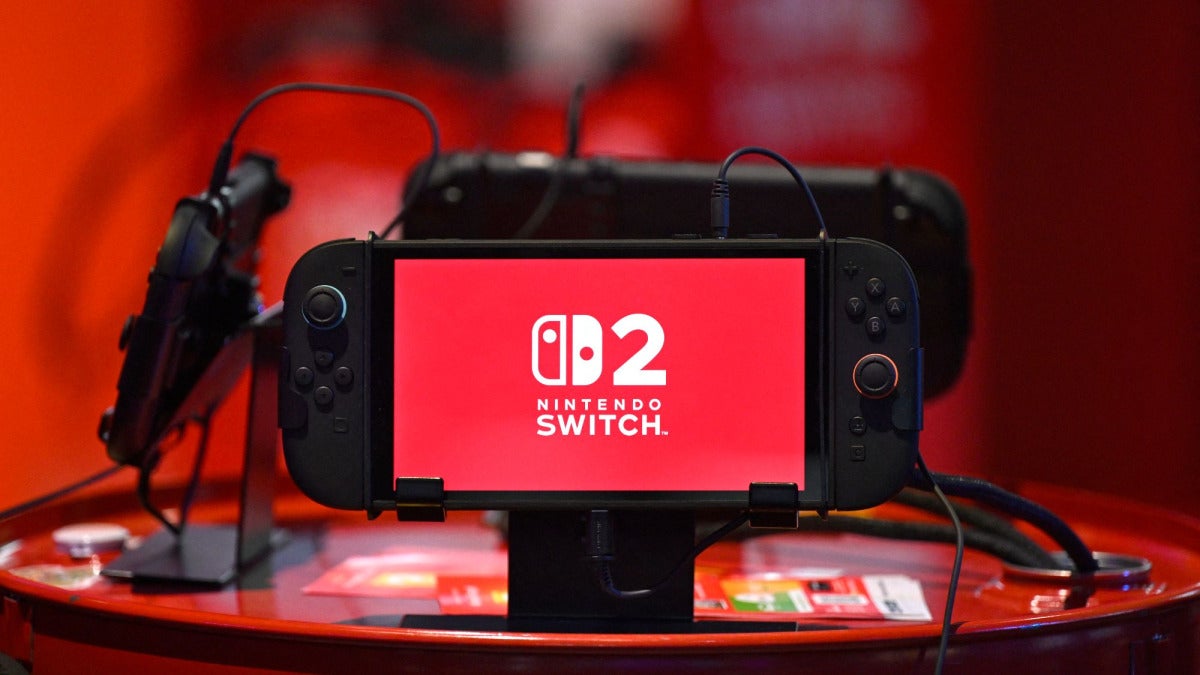
Nintendo sent GitHub a DMCA takedown notice on November 6, 2026, and GitHub responded by disabling 144 repositories connected to open-source Nintendo Switch modchip firmware.
In that November 6 notice, Nintendo said firmware tied to projects like Picofly, HWFLY, SX Core, and SX Lite gets around the Switch’s protection measures by bypassing secure boot, which lets unauthorized code run. Nintendo’s position is that the DMCA bars distribution of circumvention tools even when the code itself is open source.
This hits harder on newer patched Switch models, including the Nintendo Switch Lite and Nintendo Switch OLED. Older units had a hardware flaw that couldn’t be patched. Newer ones usually need a physical modchip plus voltage-glitching firmware if you want to run homebrew, install Linux, use custom themes, mod games, emulate, or overclock.
For people who follow Switch modding, the bigger story is where Nintendo is aiming here. It’s not just going after hardware sellers anymore. It’s also targeting the code underneath, after earlier wins connected to Team-Xecuter, a $2 million judgment against Modded Hardware, and the $2.4 million Yuzu settlement.
You’ll probably notice the immediate effect more if you’re trying to set up a new install or grab firmware updates than if you already have a working setup. Some related repositories also seemed to remain online at first, so counter-notices could still shift the situation. The affected firmware repositories were hosted on GitHub.
That shift is what makes the earlier GitHub takedowns worth keeping in view: the new notice goes after firmware tied to the modchip ecosystem, not just the sellers around it. GitHub has already disabled 144 repositories, and the spread of projects named in the notice shows how broad Nintendo’s anti-circumvention push has become. The pattern is clear enough that even repositories that stayed up at first may not be safe for long.
Until now, when we looked for a store or compared products, we used to turn to Google or social media. ChatGPT Search started to change this habit and now that we ask ChatGPT many of our questions, OpenAI wants to go a step further. The company is introducing Businesses in ChatGPT so that businesses can appear when we search for products and services using OpenAI’s AI.
Business Hub lets companies claim their profile, verify it, and update their information, prices, and availability, according to OpenAI. This move undoubtedly fits especially well with ChatGPT’s push into e-commerce and for users, it means that we’ll be able to get much more accurate information while we compare different purchase options.
For companies, it means they’ll be able to know how many times they’re mentioned, how many clicks their websites receive from ChatGPT, and which topics generate the greatest interest. All of this through aggregated statistics with minimum activity thresholds to protect privacy.
A direct conversation with each business
The other big new feature OpenAI has announced is Business Agents. When we find a business in ChatGPT, we’ll be able to open its profile and, if it has an agent, ask it directly about its products. A feature that closely resembles Shopify’s automated commerce.
For now, these agents are available only for certain online retailers and services in the United States, but it’s likely that they’ll gradually expand. While OpenAI continues rolling out ChatGPT ads, this marks a fairly significant shift for OpenAI’s chatbot. We’ll see how this evolves.
Local artificial intelligence is gaining ground fast and the Mac is becoming one of its strongholds. Apple is well aware that Apple silicon chips are especially appealing for running language models, they want to take another step in this field. Its subsidiary Claris is testing Harbor, an application that, as MacRumors reports, turns our computers into private AI servers. A proposal that combines the ease of use Apple is known for with the power of its silicon and the privacy of its platform. A proposal that competes directly with LM Studio.
A local AI that we can get up and running in minutes and that we can expand using a single cable
Harbor lets us search for, download, and run open-weight models directly from its interface or from Safari. All the information stays on our machine, which is key when we work with sensitive data, and automatic setup makes getting started much easier.
The most interesting part of Harbor is what happens when we connect several Macs through Thunderbolt 5. The application automatically recognizes the machines and combines their unified memory into a single pool to run much larger models. This is especially appealing with the new Mac mini and Mac Studio, where buying more than one machine can be much more convenient when it comes to expanding the setup than getting a very powerful machine from day one.
For now, Harbor is in early access and its focus seems geared toward businesses, given Claris’s track record with FileMaker. Its general availability and its price, if it gets one at all, have yet to be confirmed, but in any case, Apple is clearly focused on running artificial intelligence as close to our data as possible. We’ve already seen this with its push for on-device processing in Apple Intelligence, but now for all kinds of models.
Since 1998, thousands of us have turned to Apple’s forums to get answers and find guidance for our devices. Now, the company has announced that Apple Support Community will close permanently in just 9 days, on November 20, 2026. A decision that puts an end to 28 years of conversations, solutions, and help among Apple enthusiasts, but that also marks the beginning of a new era.
From Apple Tech Exchange to Apple Support Community
What we now call Apple Support Community began in 1998 as Apple Tech Exchange. In 2000 it was renamed Apple Discussions, in 2011 it changed its name to Apple Support Communities, and in 2022 it swapped the plural for the singular to become what we know today. Four names for the same place where answers could be found from other users’ experience.
According to MacRumors, the forums are already in read-only mode right now, so we can view the existing conversations, but not add new comments or open new threads. In the closure announcement, the company thanked “those who gave their time and expertise to help others with Apple products”.
New ways to get answers to our questions
Apple support has evolved. Today we have a documentation hub for our devices, the company is testing Ask for AppleCare advisors, and in-person support at the Apple Store Genius Bar remains an option for the most complex situations.
There are also initiatives like Self Service Repair, with manuals and original parts, and Siri itself, which can explain better than ever how to use our devices. And so a historic chapter in Apple support that spanned several generations of devices comes to a close. A corner of the internet that, for almost three decades, was a go-to resource in the Apple world.
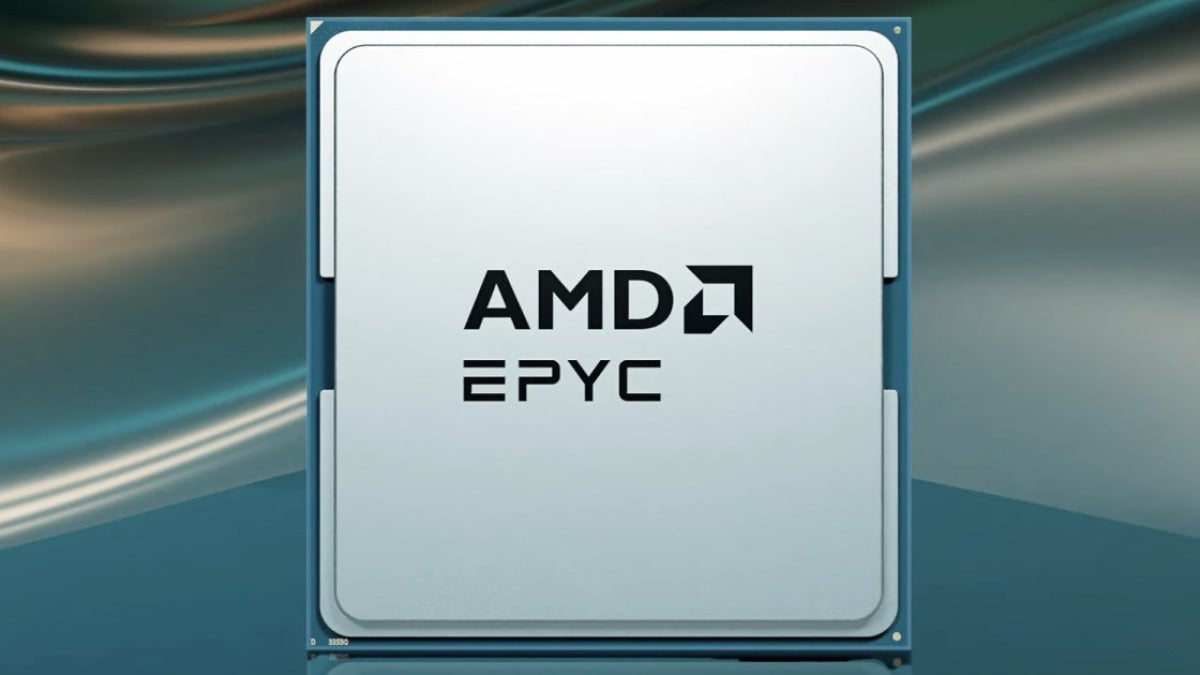
AMD unveiled today, November 10, 2026, Zen 6, and the first batch is headed straight for the server market with the AMD EPYC 9006 “Venice”. On paper, at least from what the company has shown, the jump comes from packing more cores into each chiplet, increasing cache, and tweaking internal parts of the architecture to push IPC. What that will mean for future desktop AMD Ryzen remains, for now, more an expectation than a measured reality.
The figure that’s going to generate the most headlines is IPC. AMD speaks of an average improvement of 27% in Zen 6c over Zen 5, but here you have to look closely at how that number was obtained: AMD itself explains that it comes from a selection of server workloads, comparing 16 active Zen 6c cores inside a single chiplet with 16 Zen 5 cores spread across two chiplets and running at the same frequency. In enterprise and cloud scenarios, the gains AMD reports sit around 20%.
One clear change is in density per chiplet. Zen 6 goes from 8 to 12 cores per CCD, 50% more, while Zen 6c doubles that number and goes from 16 to 32 cores per chiplet. For AMD EPYC Venice, which can fit up to 8 chiplets, that opens the door to configurations of up to 96 Zen 6 cores or 256 Zen 6c cores.
L3 cache also takes a major leap. Again based on the data shared by AMD, a 12-core Zen 6 chiplet integrates 48 MB, compared with the 32 MB of the previous generation, and a 32-core Zen 6c chiplet goes up to 128 MB from the previous 32 MB. In practice, both designs land at 4 MB of L3 per core, and in Zen 6c’s case that means doubling the cache available per core compared with Zen 5c.
AMD maintains that Zen 6 isn’t just about higher core counts. The architecture, the company says, brings a wider execution window, improved branch prediction, and changes in the integer scheduler. It also adds full support for AVX-512 FP16, new Bit Matrix Multiply instructions, and four VNNI-INT8 pipelines instead of two. Both Zen 6 and Zen 6c keep SMT at 2 threads per core and the same base instruction set, at least based on the official information provided so far.
The AMD EPYC 9006 “Venice” platform also adds support for PCIe 6.0 and DDR5 MRDIMM memory of up to 12,800 MT/s. There will also be high-frequency models capable of reaching 5.3 GHz. In a data center, where memory and I/O bandwidth really matter, they’re improvements with a lot more runway than a spec table might suggest.
For PC, the most striking thing may not even be the IPC. AMD still hasn’t gone into detail with Zen 6 for Ryzen, but the move to a 12-core CCD could end up mattering more on desktop than the announcement suggests. A future 12-core Ryzen inside a single chiplet would avoid the inter-chiplet latency that current multi-CCD designs have, and that matters especially in latency-sensitive tasks, including games.
AMD hasn’t confirmed specifications, performance, prices, or a release date for those Ryzen chips. In the industry it’s more or less taken for granted that they’ll arrive later within the Ryzen 10000 family and under the codename “Olympic Ridge”, but that remains outside the scope of the official announcement, focused entirely on servers. Without concrete gaming tests or clear consumer details, that big IPC leap AMD is touting still needs quite a bit of context before it’s sold as an indisputable victory outside the data center.
So far, it’s not known when Zen 6-based Ryzen chips will reach the consumer market.
AMD has managed to pack 50% more cores into each Zen 6 chiplet, but even more impressive is the IPC improvement over Zen 5, the current generation.
According to VideoCardz, AMD has shared technical details about Zen 6 and Zen 6c, the two architectures that make up its sixth-generation EPYC 9006 “Venice” server processors.
AMD claims there has been an average 27% increase in the number of instructions per clock cycle (IPC) compared with Zen 5 in certain server workloads.
AMD compared 16 active Zen 6c cores in a single chiplet with 16 Zen 5 cores spread across two chiplets, both at the same clock speed. In enterprise and cloud workloads, the company reports an improvement of around 20%, which is still a good result.
AMD’s next-gen server CPUs are here, and they’re bringing a huge performance boost.
The new EPYC 9006 Venice processors use AMD’s Zen 6 architecture and promise up to 27% better performance per clock than Zen 5.
Up to 256 cores in a single CPU.
Up to 27% higher IPC in AI…
— Pirat_Nation 🔴 (@Pirat_Nation) November 10, 2026
From 8 cores to 12, this is Zen 6
A standard Zen 6 chiplet now has 12 cores instead of eight, and its shared L3 cache has gone from 32 MB to 48 MB. Zen 6c chiplets go from 16 to 32 cores, while the L3 cache increases from 32 MB to 128 MB. This gives each core in both versions 4 MB of L3 cache.
AMD has also enabled the cores to keep more instructions in flight and has revised branch prediction and integer scheduling. Both versions keep two threads per core and execute the same instruction set. Zen 6 is optimized for higher clock speeds, and Zen 6c is optimized to fit more cores into the same space.
EPYC Venice supports up to eight chiplets, for up to 96 Zen 6 cores or 256 Zen 6c cores. High-frequency models can reach 5.3 GHz, and the platform supports PCIe 6.0 and DDR5 MRDIMM memory at speeds of up to 12,800 MT/s.
For anyone planning to build a desktop computer, we have bad news. Since AMD hasn’t confirmed how Zen 6 will be used in its consumer processors, and there is still no launch date or desktop performance data for Ryzen chips with Zen 6. In other words, 2027 at the earliest.
If the war in Ukraine has made one thing clear to us in the tech sector, it’s that drones are the future and that they can do practically anything, and if not, ask the Texas startup Skyways.
It says that its new Skyreach drone can make that flight on its own and cover 2,092 km from start to finish without stopping.
The Skyreach is a hybrid VTOL equipped with eight electric motors that lift it off the ground like a multicopter and a heavy-fuel two-stroke engine that takes over during cruise flight, using the same aviation fuel used at airports and by the armed forces. A generator keeps the batteries charged during flight, so there’s no need to plug them in or swap them between missions.
It has a wingspan of almost 7 meters and a 198-liter cargo space that loads from the top and opens from the bottom, so the drone can drop a package from the air or lower it on a rope without needing to land. Skyways says it can withstand strong winds and temperatures ranging from -21 to 49 °C. And with the lightest payload, it can stay in the air for more than 18 hours.
And of course, the military is its potential customer. Skyreach is the production version of the aircraft covered by a 37-million-dollar contract with the United States Air Force, awarded through AFWERX in June 2025 to reach full-rate production. The company says the V2 has carried out missions for the Marine Corps, the Navy, and the Air Force.
The company doesn’t disclose the price, however, its CEO told Tectonic that operating the Skyreach currently costs about $300 per hour and that Skyways wants to bring that figure down to $100 thanks to greater autonomy. Will we soon see this drone doing jobs that, until now, only helicopters could do?