Facebook crushed with $5 billion fine for privacy issues

Facebook has to pay the largest fine ever imposed by the FTC due to their privacy issues.

ZuckerbergFacebook privacy scandals are a dime a dozen. However, it looks like those dimes have added up to a $5 billion fine from the Federal Trade Commission. 

The fine was part of a settlement agreement between the FTC and Facebook, and it is the largest fine the FTC has ever slapped on a tech company.

What’s the full story?

In 2018, millions of Facebook users’ data landed in the hands of politically motivated actors in what has come to be known as the Cambridge Analytica Scandal. The data was used for politcal advertising purposes. This fine is largely in response to that scandal.

However, this also leads back to a promise Facebook made in 2011 and has since failed to keep.

In 2011, Facebook admitted to having deceived users about the privacy of their data. Facebook reached a settlement with the FTC and agree to be transparent about what was happening to their data, ask for consent before sharing their data, and give prominent notice before it was shared. 

If you’ve been paying attention to the news, you’d know that Facebook fails to keep this promise all of the time. 

What’s $5 billion to Facebook?

Yes, $5 billion is an insane amount of money. The fact that it is the largest fine ever imposed by the FTC to a tech company is also pretty crazy. The runner-up isn’t even in the same ballpark: Google had to pay $22.5 million in 2012. However, $5 billion is a drop in the bucket for Facebook as a whole. 

Mark Zuckerberg is worth more than $70 billion himself, and Facebook as a whole is worth more than $100 billion. Heck, Facebook made about $55 billion in 2018 alone. 

That’s right. Facebook is worth more than a ransom from Dr. Evil.

Let’s take a look at the numbers:

Facebook compromised data from 87 million of its users. That means that the company is paying about $57 for every user’s privacy they failed to protect.

Don’t you think your privacy is worth more than that?

(function(d,s,id){var js,fjs=d.getElementsByTagName(s)[0];if(d.getElementById(id))return;js=d.createElement(s);js.id=id;js.src=’https://embed.playbuzz.com/sdk.js’;fjs.parentNode.insertBefore(js,fjs);}(document,’script’,’playbuzz-sdk’));

Facebook’s other issues

The FTC has been probing Facebook for more than a year after the Cambridge Analytica scandal. In that time, government agencies have unearthed even more concerning details about the social media giant.

It almost seems like every week there is a new story that pops up about Facebook being involved in another scandal concerning privacy. Heck, we’ve covered so many that it’s kinda crazy:

Wrapping up

This is a step in the right direction, but Facebook still has a boatload of other privacy issues that they need to rectify. With nearly a third of the world’s population on Facebook, they need to be held to a higher standard to keep the privacy of their users safe. 

Google Assistant: Humans are listening to your recordings

Who’s really listening to you?

Google Assistant

Just when you thought owning a Google Assistant was less risky than owning Alexa, this happens.

A third-party language expert hired by Google leaked audio data recorded with the Google Assistant. 

How did this happen?

Google uses hundreds of human private contractors to review some recorded conversations from Google Assistant.

In this particular case, the issue is the Dutch language. Google may not care what you say, but they do care how you say it. To teach the Assistant to function better, Google may need to rely on humans to convey the nuances of a particular syntax. An algorithm for English may need to behave differently from a Dutch algorithm. Bring in a human to “translate” to the machine, and the results should become better over time.

languages

One of these contractors leaked more than a thousand Google Assistant audio recordings to a Dutch publication.

Why? It involves your privacy.

Your Google Assistant activates when you use the wake word (“OK, Google” and “Hey, Google.”) Conversations with your Google Assistant are supposed to be recorded only after you use the wake word.

However, Google Assistant has been known to mishear things and activate without its wake word being said. When this happens, the conversation is still recorded. Of more than a thousand recordings, the Dutch publication noted that 153 should not have been recorded – the wake words were never spoken. Do the math and that’s a 15% error rate. Not good.

Google Assistant Download now ►
8

This leak, of course, violates Google’s data and security policies. But the whistleblower was drawing attention to an important issue. The problem isn’t that the Assistant was recording the audio – that’s stated in the terms and conditions. The problem is that you cannot completely control when the Assistant records something… and you can’t control if a human will hear it.

VRT NWS says the recordings have included:

  • Bedroom conversations
  • Chats between parents and children
  • Professional phone calls with lots of private information
  • Medical questions
  • Pornographic searches
  • A woman facing physical violence

You can actually hear some of these recordings in the video at the bottom of their article. In some cases, the reporter finds the person who was speaking and plays their recording back to them.

The moral implications are enormous. And security experts say these recordings could be used anywhere. A recording of your own voice could possibly be used against you in court. And if Google or its contractors overhears domestic abuse, should they report it to the police or let the incident go?

This is a modern day “trolley problem.” If Google does nothing, they could be allowing crimes to continue unabated. If Google intervenes, owning an Assistant would be like inviting a police officer to be your roommate. And if Google intervenes selectively, what are its boundaries? And who decides them?

How is Google responding?

Today, Google posted: “Our Security and Privacy Response teams have been activated on this issue, are investigating, and we will take action. We are conducting a full review of our safeguards in this space to prevent misconduct like this from happening again.”

What protection do you have?

As Google points out, “You can turn off storing audio data to your Google account completely, or choose to auto-delete data after every 3 months or 18 months.”

If you’re worried about privacy, it might be best to hold off on buying an Assistant until this issue is solved. (Though it may never be truly safe.)

Not an isolated problem

If you have an Amazon Alexa, this issue is nothing new. Human employees have shared recordings from that device as well.

Remember that any device with a camera or microphone could be exploited to record you. And anything you type into a keyboard could be logged as well. It’s best to use a browser and a search engine that defends your privacy, use a VPN, and think twice before allowing permissions to any app you download.

Google and Facebook make their money by marketing your data, so you may want to consider alternatives whenever possible. But we get it, the convenience is a big draw. Stay safe out there, internet friends.

Instagram’s bot problem is getting worse

Instagram bots aren’t only annoying, but they also represent a much bigger problem.

Instagram robot

Late last fall, Instagram announced a crackdown on the fakers, frauds, and robots ruining the space for everyone else.

It seems that Instagram’s harassment problems are on the rise, despite the fact that the social media platform has made a concerted effort to fight back. However, the automated apps people use to increase likes, comments, and follows still have the upper hand.

Facebook has also sued a New Zealand company for selling fake engagement metrics on Instagram after issuing repeated warnings and suspensions on the associated accounts.

Despite their efforts, it seems that 2019 is a great year for bots. Here’s a quick look at what’s going on.

Instagram Download Now ►
7

NSFW bots

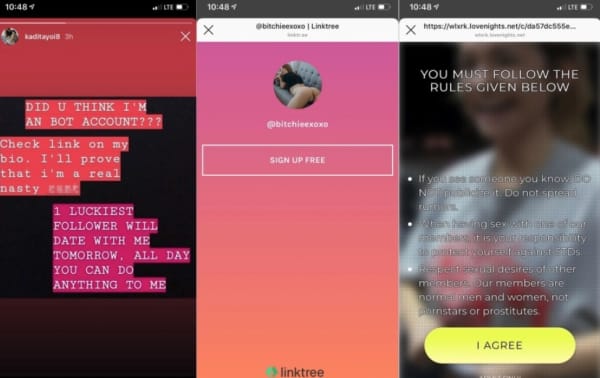
Sure, Instagram has a pretty firm no-nudity stance. Unfortunately, that hasn’t stopped an influx of bots using explicit content to deceive users.

According to Engadget, there’s been a rise in these spammy profiles containing videos of naked or semi-naked women. These profiles are designed to get users to look at their accounts, then sign-up for pornographic subscriptions.

spam bots

Somehow, when these bots comment, they get a ton of likes, which makes them show up in a more prominent location on others’ profiles. These porn-promoter types are more embarrassing than anything, unless you click on them, that is.

Vice wrote a whole piece that dove into the world of NSFW bots and found that many of them are part of these affiliate schemes that rely on intermediary landing pages to collect leads.

It’s the same technique shady marketers have long been using to sell male enhancement products and face creams on Facebook, only to loop them into a monthly subscription scam.

There’s a whole section dedicated to using these fake accounts to generate clicks on Black Hat World. Black Hat World is an SEO forum where people share tips for “cheating” the system.

Black hat forum instagram spam

We’ve all seen these bots, as well as other fake followers. And while most of us simply block them and move on, fake accounts can undermine your security. Bots may be friending you so that they can hit you with a phishing attack via DM.

Follower fakery

Follower counts on Instagram have become a measure of success, a badge signifying popularity, that even those with as few as 1,000 followers have the potential to monetize.

Because brands are capitalizing on the power of leveled-up word-of-mouth, many users have turned toward automation apps. These apps like InstarocketProX and Boostio to help increase follower counts.

These apps often require the user to hand over their account credentials, a monthly fee, and in exchange, they’ll like, comment, and follow on your behalf.

Instagram has started cracking down on this activity. Popular apps like Intagress and Hashtagpirate have been shut down.

Commenting bots deliver embarrassing or inappropriate messages more often than not. An influx of inauthentic likes or follows water down the platform’s value — if you never know if anything is real, what’s the point, right?

Toxic content and misinformation

Woman surprised by phone

Toxic content problems exists on Instagram, too. Instagram may well be the new breeding ground for the spread of misinformation, especially for our youngest conspiracy theorists.

The above article looks at the recent influx in far-right influencer content like the American Identity Movement. They are a white supremacist movement that posts “relatable content” on Instagram through the same tactics as your typical fashion and beauty influencers use to connect with fans.

While the posters behind these accounts are not bots themselves, bots are doing a lot of the heavy lifting when it comes to spreading false information.

What’s Instagram doing about this?

Instagram

Between the NSFW spammers and the AI-driven “talent scouts,” Instagram has a few problems to work out. While they might not be on the scale of say, Facebook or YouTube’s, something still needs to be done.

While the platform has done a better job than Facebook, cracking down on harmful content, wrangling all the spammers, trolls, and other bad actors are no small feat.

Instagram’s new policy explicitly bans inauthentic content. This means that they’ll strip accounts with fake followers, likes, and comments using AI-backed moderation tools (bots against bots).

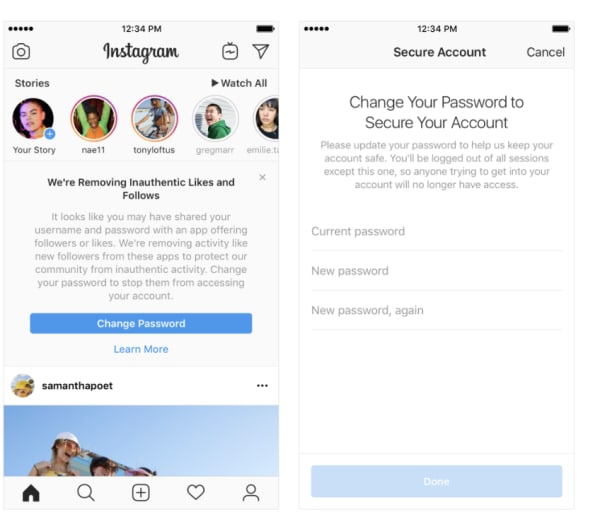
Any accounts found to be using third-party apps to fudge their engagement numbers will see fake likes and followers removed and be prompted to reset their password. Third-party apps often hold the profile owner’s credentials.

Because Instagram has become a major source of income for brands and influencers alike, more accounts will inevitably turn to third-party apps to artificially boost the popularity of posts.

Inauthentic activity warning on Instagram

How to get rid of bot problems on your own

If you use your Instagram account for marketing purposes or you have a sizable following, bots can do some harm to your reputation. On a broader scale, they can inflate marketing costs.

First, check the followers to posts ratio. Accounts with thousands of followers but no content likely aren’t real.

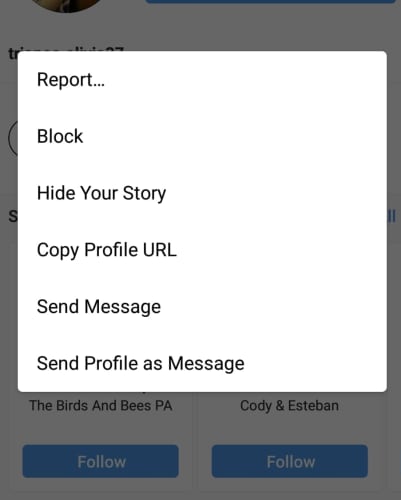
You can block bot accounts by clicking on the profile, then selecting “block from the three-dot drop-down in the right corner of the screen.

how to block instagram botIf the bot is of the malicious or pornographic variety, then you may want to report the account to Instagram for further investigation. If they find that the bot that violates its community guidelines, they’ll let you know.

In the meantime, whatever you do, don’t give your credit card information to those porn bots.

Ransomware scams hold cities hostage

Two cities in Florida have been forced to pay a small fortune to regain access to their files!

a hacker for bitcoin

Ransomware stole all the headlines in 2016 as the particularly nasty malware variant began rearing its ugly head around the world. As if viruses and malware weren’t already bad enough, ransomware added to the misery by holding all the data stored on a particular device hostage. Later, hackers then demanded ransom for its safe return. Yep, 2016 was the year we all had to start worrying about being blackmailed whenever we were on the internet.

Things seemed to quiet down after the original big scores had come and gone, but the threat has always lingered. It was big organizations that were always the most vulnerable. Think hospitals and schools and you’ll have a good idea about what the early victims were like. Unfortunately, ransomware is back in the headlines as it seems another type of major organization is susceptible to ransomware attack: cities.

Florida cities held hostage

It is easy to think of ransomware being some Hollywood type event from something like Netflix’s “Black Mirror.” We do something embarrassing online (or in the episode “Shut Up and Dance,” illegal and morally deplorable) and then the hacker uses that against us to force us to pay money or do something else illegal.

In reality, ransomware is much more benign. There is little worth in targeting individuals with ransomware as A) we don’t have much money and B) most of us don’t have much on our hard drive we’d pay to get back.

Black Mirror ransomware attack
In Black Mirror an individual was targeted by ransomware. This does happen in real life, but it is more usual for large organizations to fall victim to ransomware attacks.

This is why larger systems like schools, hospitals, or now even cities make better targets for ransomware hackers. By blocking access to data on large systems immediately, the hackers put immense pressure on the organization. If a hospital can’t access its admin system, people could die. A school can’t run properly when its systems are down. A city won’t know who is who until it can check its databases.

This final reason is why officials in Lake City, Fla. have just joined officials from Riviera Beach, Florida in handing over a small fortune in Bitcoin to an unknown hacker or group of hackers. They paid $500,000 and $600,000 respectively. The Lake City computer systems were down for two weeks before the officials buckled. While they were down, citizens were unable to make municipal payments online and city employees couldn’t access their email accounts.

If Bitcoin ransoms don’t sound like something taxpayer money should pay for, fear not. According to the Lake City mayor, the city is covered by insurance, which will pay all but $10,000 of the $500,000 ransom.  If you don’t think the city should bow to the will of criminals, you should spare a second to think about Baltimore. Recently, the mayor of Baltimore refused to pay a ransom of around $76,000 and estimates suggest the stance cost the taxpayer around $18 million.

Wrapping up

Ransomware is here now and the cities we live in all have a target on their backs. Welcome to 2019, people. This just got real.

Amazon Alexa keeps conversations forever and shares them

Alexa transcripts with customers are being stored despite users requesting that they be deleted.

Alexa

“Alexa, erode my privacy.”

Recently, Senator Chris Coons (D-Delaware) sent a letter to  Amazon with privacy concerns about the Alexa. Specifically, Coons asked about how long Alexa keeps user data, and how they use it. 

Amazon responded by saying that Amazon kept transcripts of interactions with Alexa, and, in some cases, kept them even after customers “deleted them.” As Coons later tweeted, Amazon was not clear about what is done with these transcripts and who they are being sent to:

Here’s Amazon’s response.

Why does Alexa record conversations in the first place?

Alexa listening

As Amazon said in its letter to Coons, Alexa is constantly evolving and getting smarter. In order to do this, it needs to learn more about human language to better understand us.

As Vice President of Public Policy for Amazon, Brian Huseman wrote to Coons, “Training Alexa with voice recordings and transcripts from a diverse range of customers helps ensure Alexa works well for everyone.”

However, there is already evidence of our conversations being used for malicious purposes. It was recently revealed that Amazon employees are listening in on us through Alexa, and are sharing conversations they find interesting with other employees. 

The idea that Amazon employees could possibly be hearing intimate moments in our homes, and are sharing them is disconcerting.

How do I delete the conversations that Alexa recorded?

Alexa

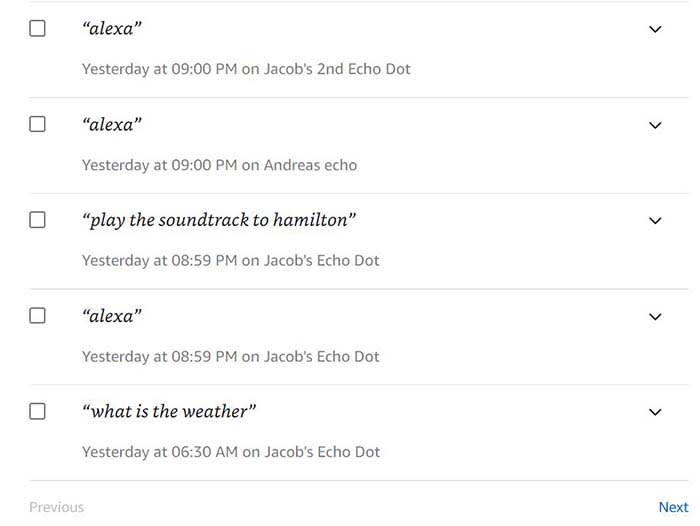
If you want to see what conversations Alexa has recorded, you can either access the Alexa Privacy Settings on your Alexa app or click here to view them on your browser. 

Amazon Alexa Download Free ►
9

From here, you can listen to the recordings, and delete whichever ones you’d like. However, according to the letter from Amazon, not all transcripts will be deleted. For example, the letter said that transcripts that deal with transactions and routines often won’t be deleted even if you manually delete them.  According to the letter, deleting those completely could stop routines from occurring and are required for transactions. As these were just examples, what now begs to be seen is what other conversations is Alexa keeping, and who is she sending them to.

What should you do?

Some of you might be about to use Alexa as a hockey puck and slapshot it as far away from you as possible.

The problem is that Amazon is far from the only company that has serious privacy concerns. Apple products have been known to record us, and don’t even get us started on Facebook.

If these privacy issues concern you, it might be time to ditch Alexa. However, please realize that there are plenty of other things in your life serving as microphones to the outside world.

Google Chrome has 11,000 cookies skimming your data

Chrome is sending your personal data to businesses and advertisers.

Stealing data

Switching browsers has never sounded better.

According to the Washington Post, more than 11,000 tracker cookies were found in Google Chrome. These tracker cookies were making profiles for companies and marketers to help advertise products to you. Interestingly enough, the writer discovered that all of them were blocked when he browsed with Firefox. 

How does Google track my data?

If you’re logged into Chrome, these tracker cookies are stealing and sending your personal data. However, even if you aren’t logged in, Google is still working to take your info. 

If you have an Android, Google is sending your location data whenever you make a search. Even if you have your location settings turned off, Google will send coordinates instead.

If you are logged into Gmail, Google will track your data just the same as if you’re logged into Chrome.

7
Chrome is a young, fast browser that can browse any web page. It supports all major technologies and standards such as HTML5 and Flash.

How to block and kill tracker-cookies on Chrome

Chrome tracking

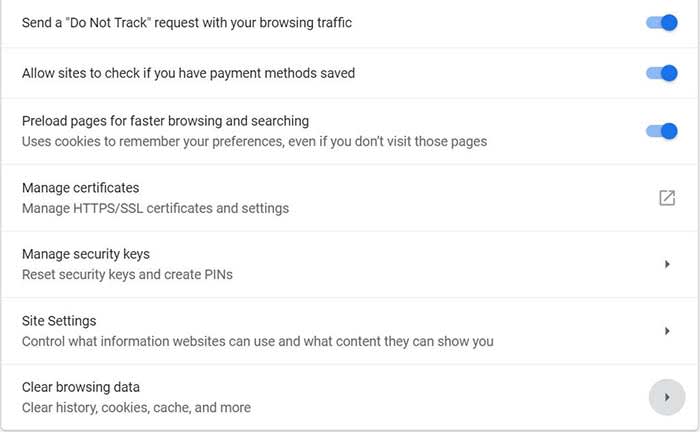
If you are looking to clear out the tracker cookies Google has on you while you’re browsing the internet and block sites from tracking you, there is a way. However, please note that this will sign you out of most websites, so make sure that you remember your passwords!

On your desktop browser

  1. Open Chrome
  2. Click on the three vertical dots in the top right
  3. Go to Settings
  4. Click Advanced to reveal Privacy and Security
  5. Enable the option to send a “Do to track” request with your browsing traffic
  6. Scroll down further to the option to clear browsing data
  7. Choose how long you want to clear cookie data
  8. Select the option to clear cookies and other site data
  9. That’s it, you’re all done

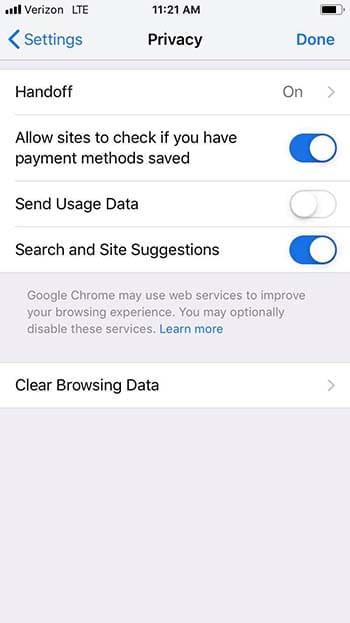
On mobile

Chrome mobile

  1. Open the Chrome app
  2. Click the three horizontal dots at the bottom right corner
  3. Click settings
  4. Click privacy
  5. Select the option to not send usage data
  6. Go to Clear Browsing Data
  7. Make sure Cookies, Site Data is selected
  8. Click Clear Browsing Data
  9. You’re all set

Please note that not all websites will stop collecting data on you despite you requesting that they do not track your data. 

“Many websites will still collect and use your browsing data – for example, to improve security, to provide content, services, ads, and recommendations on their websites, and to generate reporting statistics,” according to Google.

What should I do?

Chrome comic

This isn’t the first piece of despairing new info about Chrome to come out lately. Google recently announced that ad blockers essentially won’t work on Chrome unless you pay. 

That said, we strongly recommend choosing another browser if you want to keep your personal data safe.

The Brave browser has built-in ad blocking. You can also use your favorite Chrome extensions.

Enjoy private, secure and fast browsing with Brave.

Firefox has a whole host of tools that help keep you safe on the internet. From blocking cryptomining attacks to stopping invasive ads, there is no better time to start browsing with Firefox.

Chrome may have the largest market share, but they’re starting to flex that power in scary ways. It’s best to get familiar with a new browser now before something drastic happens that makes you regret hanging on too long.

WhatsApp Privacy: India wants fingerprint ID on every message

The Indian government is pressuring WhatsApp to fingerprint all messages so they can be more easily tracked

End-to-end encryption is a double-edged sword. There is no doubt we all love the fact that we can talk away to our friends and family safe in the knowledge our messages really are private. In a modern world that has seemingly declared war on personal privacy, it really is something to be valued. The flip of that, however, is that some people hide behind that privacy and use the cover to cause problems.

These problems could be the planning of illegal activities or the whipping up of hatred by sending false infromation across the network. One country facing problems due to WhatsApp and its rigorous anonymity has been India, where lies spread across the network have caused lynchings, beatings, and even interfered in the democratic process.

The Indian government is now pushing WhatsApp to make changes so that it can better track who has been sending messages on WhatsApp in India. It is a little worrying, however, to see exactly what the Indian government wants WhatsApp to do.

The Indian government is pressuring WhatsApp to fingerprint all messages so they can be more easily tracked

a fingerprint on the WhatsApp logo

The Economic Times in India is reporting that two officials from Narendra Modi’s right-wing Hindu nationalist BJP government have said that they’re pressuring WhatsApp to add fingerprints to all messages sent, so it’ll be easier to track who has sent what.

The government has been pushing WhatsApp to add more traceability measures to messages ever since the first fake stories of child kidnappings in 2018 led to lynchings. One of the government officials is quoted as saying, “Fingerprinting WhatsApp messages will help find the originator of the message. That is all we want… We don’t want to read the messages but when we see a problematic message, we should be able to go to WhatsApp to help us trace the sender.” The official added that the government believes what it is asking is “technically possible.”

The official also went on to clarify that it will only request the data in limited circumstances, but the worry is that once the technology exists to do so, it could easily be abused.

WhatsApp has not commented on the government’s request, but industry insiders have said that should it go along with the request the messaging app will have to redesign its entire architecture. At the moment, WhatsApp doesn’t store this kind of data, so it’d be a major change if it were to suddenly start harvesting it. Such a change would then most likely affect WhatsApp all over the globe and not just in India.

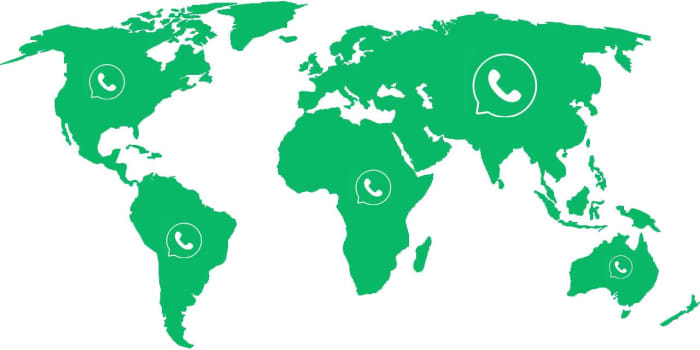
WhatsApp is everywhere
WhatsApp will likely have to make the change everywhere and not just in India

If you’re a privacy advocate, this is something that should be grabbing your attention. The change could have massive privacy implications all around the world. This means we’re at a dangerous juncture here, but that global public opposition to the move could be the biggest thing standing in the way of the Indian government getting what it wants.

The question remains then, how do you feel about your fingerprint being added to every message you send?

The Best 5 (Free) VPNs You Should Use in 2019

Which free VPNs are the best answer for your privacy needs? Let’s find out!

Our team is always looking for things we think our readers will value. If we make a content partnership like the one featured in this article, then we may receive compensation for publishing.

In January 2019, it was reported that as much as 1,769,185,063 records were leaked across multiple data breaches globally. Wouldn’t it be nice to know that you’re protected? Luckily, a VPN can help!

A VPN provides an encrypted connection between your computer and your Internet Service Provider (ISP) by serving as a proxy. The VPN service can also make it difficult for hackers to intercept your internet activity and steal your data.

In addition, a VPN can help you access geo-restricted content as well as blocked websites. For instance, the kind of content that you’ll find on Netflix when you access it from the U.S. is different from the content that you’ll find when accessed from some places in Asia or Africa.

You should check with Netflix’s terms of use before you try this though.

However, many people often have a hard time knowing which one to choose out of the many free VPN services available. In this review, we will provide insights on top 5 free VPNs we think you should try in 2019 in the order of their value propositions.

The Best 5 (Free) VPNs You Should Use in 2019

1. UrbanVPN

Urban VPN

Urban VPN brands itself as the only 100% free, 100% fast, and 100% anonymous VPN service in the world. Founded by Urban Cyber Security in 2018, the Urban VPN team is made up of more than 30 experts with backgrounds that run across cybersecurity, ethical hacking, and network systems.

Many people tend to be skeptical about free VPN services because you may never know what you are unwittingly losing in exchange for the free service. Urban VPN, however, can provide a sustainably free VPN service by setting up its service as a P2P powered VPN in which all users help to unblock the internet by sharing their network resources.

Urban VPN

Despite being a P2P VPN server, Urban VPN protects its users’ identity and data with encryption and DNS/IPv6 leak protection technology. The best part is that Urban VPN doesn’t have a cap on accessible data bandwidth, unlike some other VPNs that can only allow you to browse the web without support for streaming or torrenting.

Many VPN services tend to sacrifice speed on the altar of anonymous encryption. However, Urban VPN is optimized to deliver a fast connection through a large network of fast VPN servers in 81 locations. It is also compatible with Windows, Mac, iOS, and Android operating systems.

Cons: The fact that Urban VPN is based in the U.S. suggests that it might keep user logs. However, the company is upfront about the data logging in its privacy policy.

2. Windscribe

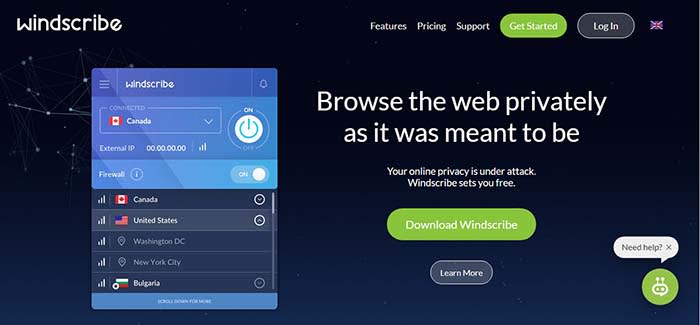
Windscribe offers both free and premium VPN services but its free service seems to be the most generous among other competitors with freemium models. Windscribe provides users with a free VPN service that covers 10 GB of data every month and users can get an extra five GB if they tweet about the service. In addition, to the VPN service, Windscribe also has an inbuilt ad and malware blocker called R.O.B.E.R.T for blocking trackers, malware, clickbait, and specific content types.
Windscribe

Windscribe’s VPN service is available on Windows, MacOS, Linux iOS, and Android. It also has browser extensions for use on Chrome, Opera, and Firefox. We also love the fact that you can set up Windshield on your router and some other devices such as Amazon FireTV and Kodi. Windscribe can also be used on whatever software or devices that can run OpenVPN or IKEv2 protocols

Cons: The 10 GB data cap doesn’t provide much room to stream content. Users of the free version are restricted to only 10 servers out of 50 servers. The VPN also stores some user information while in use.

3. Hide.me

Hide.me offers a decent free VPN service that is not particularly impressive or dismissible. Hide.me also has a freemium model – free users get strong encryption, zero-user logs, and ad-free browsing. Hide.me has a strong 256-bit AES encryption and it goes beyond encrypting your internet traffic data to also providing encryption on your personal files, passwords, and financial information. It features an in-built kill switch that ends your session if you suddenly lose the VPN connection. This way your computer doesn’t automatically reconnect to the internet without the VPN.

Hide.METhe service is available on virtually all operating systems including Linux, Windows. MacOS, iOS, and Android. Hide.me can be used in-browser with Chrome, Firefox, and on hardware such as Amazon FireTV and routers. It is strong enough to support five simultaneous connections, however, the usage is capped at two GB of data per month.

Cons: The biggest con is the low cap on data use. It will serve the purpose for light browsing, but you won’t be able to do much on YouTube. Furthermore, there’s obviously no Netflix for you. In addition, free users can only access five servers and only one of those servers is in Europe.

4. Proton VPN
ProtonVPN

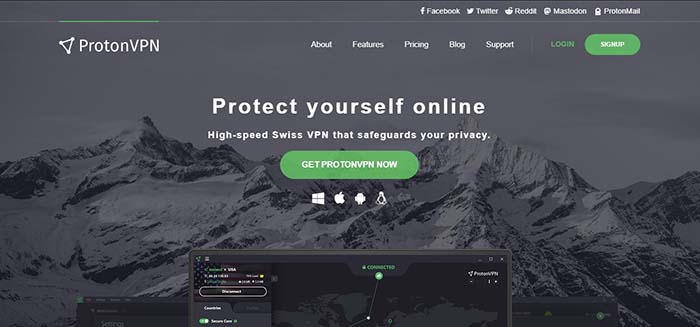
ProtonVPN provides free and paid users a strong encryption service that will obscure your browsing activity and protect your personal data. ProtonVPN has a proven policy of not keeping user logs and it is compliant with Swiss privacy laws. It also offers unlimited browsing, but it doesn’t support streaming or torrenting.

One key differentiating factor with ProtonVPN is the quality of its customer service. ProtonVPN has a team committed to customer support. ProtonVPN is founded by the team that delivered ProtonMail, the world’s largest encrypted email network.

Cons: Free users can only access server networks in three countries. It doesn’t have a data cap but it seems to suffer from slow connection speeds that can be frustrating. The lack of streaming and torrenting support also makes it unusable to access entertainment content.

5. TunnelBear
Tunnelbear

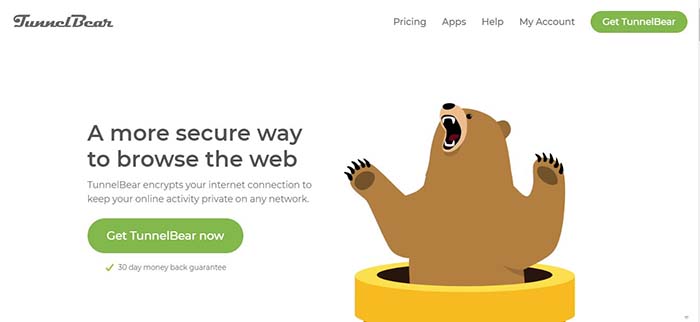
TunnelBear offers a VPN service with a user-friendly UI/UX and it delivers decent connection speeds to servers in about 22 countries. It delivers a reliable encryption service with AES 256-bit encryption that works on macOS, Windows, iOS, Android, Chrome, and Firefox. Tunnelbear doesn’t keep user data logs and it is committed to independent audits as proof that your data and identity will always be kept private.

TunnelBear has been operational since 2011 after being founded by Ryan Dochuk and Daniel Kaldor. The fact that it is still alive suggests that the team is doing something right.

Tunnel also offers an incredible VPN footprint with more than 350 VPN servers spread out in 22 countries. However, it only provides free users with 500 MB of data per month and it seems that the free plan is designed to be a teaser that encourages you to sign up for one of its Pro plans.

Cons: There’s not much anyone can do with 500 MB of data every month. In addition, TunnelBear doesn’t support streaming and services such as Netflix are also unavailable.

Conclusion

VPNs have become an important element of the modern internet experience because of the security and privacy that they provide. A Gallup study conducted in November 2018 revealed that Americans are more worried about cybercrimes than violent crimes. For instance, 71% of Americans polled were worried that their personal or financial information might be hacked and 67% of the people polled were worried about identity theft. In contrast, only 24% of respondents were worried about being a victim of terrorist attacks.

Safe VPN

In this review, we have established that you can put security and privacy fears to rest by using a free VPN Service.

In our opinion, Urban VPN clearly stands heads and shoulder above the other free VPN services profiled in this review. The fact that it doesn’t have a Pro version eliminates the need to place restrictions on the quality of the free service. Hence it is not surprising that urban VPN doesn’t have bandwidth data caps.

In addition, it doesn’t slow down your network or ruin your browsing experience with ads. Instead, it has an extensive spread with 81 server locations across North America, South America, Asia, Middle East, Europe, Africa, and Oceania.


How the newest Firefox keeps you safe

Firefox is more than just a browser. Here’s what it does to keep you safe!

If you’re looking for a browser to keep you safe, the latest version of Mozilla Firefox is here to watch your back. From password management to security alerts and beyond, Firefox makes safety and privacy their top priorities.

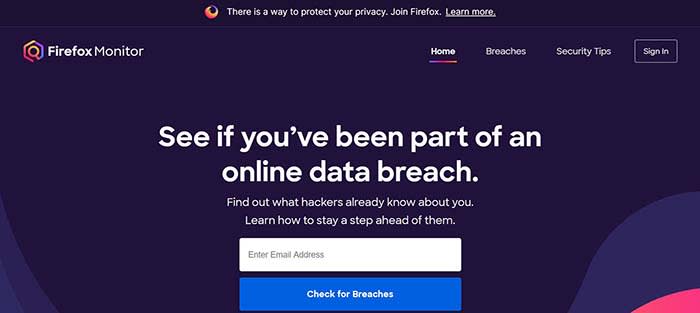
Firefox Monitor alerts you to data breaches

Firefox Monitor

It seems like there’s a new data breach every other day. Have you ever been concerned that you were involved in one, and that your data has been compromised? Firefox Monitor can help you find out!

Simply enter your email address, and Firefox Monitor will tell you if that email address was ever involved in a data breach. Also, when you join Firefox, you can save all of your email addresses in their system, and receive a notification if one is ever involved.

Firefox Lockwise safely saves and syncs your passwords across devices

Many of us have a system for keeping track of our passwords that’s probably less than ideal. Maybe we have a sticky note in the corner of our monitor with a list of them. Maybe we threw them into the notepad on our phone or computer. It could be we just think we have a good enough memory to remember them all. Either way, none of these methods are optimal.

That’s where Firefox Lockwise comes in handy. It keeps all of your passwords safely behind a firewall and autofills them in the login page when you give the okay. The best part? Lockwise can carry those passwords across devices so you’re never locked out or trying to find that Post-It note with the password you created for that site you haven’t visited in three years.

Send big files with Firefox Send

Firefox send

It’s happened to all of us: we have a large file we need to send, but we don’t have a flash drive nearby, and it’s too big to send via email. That’s where Firefox Send comes in handy. Firefox Send allows you to send a file up to 2.5 gigabytes in size just by joining Firefox.

Sync to your Android or iPhone

Maybe you have 12 tabs open on your desktop, but when you jump on your mobile device, you have to remember what those tabs were. Firefox solves that problem by syncing your sessions between desktop and mobile devices.

When you sign in on Firefox on any of your devices, your browser will be personalized the same way thanks to Firefox’s syncing feature. Even better: your sessions are protected by end-to-end encryption.

The newest Firefox is the best version of a trusted browser from a team that puts your privacy first. Give it a spin and see why these features are so groundbreaking!

Softonic is proud to partner with Mozilla. When you download from us, we may earn a commission.

Zuckerberg knew about Facebook’s privacy issues and did nothing to stop them

In 2012, Facebook knew about an app that could steal millions of users’ data and did nothing to fix the problem.

Mark Zuck

Emails show that Facebook CEO Mark Zuckerberg had prior knowledge of Facebook’s privacy issues, according to a report from the Wall Street Journal.

One of the emails from April 2012 is deeply concerning. It shows Zuckerberg and Facebook insiders learning about a third-party app that took data from tens of millions of Facebook users while ignoring Facebook privacy policies.

The app was eventually suspended, but sources told the WSJ that this did not cause Facebook to look into their privacy issues.

Keep in mind that this was six years before millions of users had their data compromised in the Cambridge Analytica Scandal. It was also long before we knew about other apps that were stealing our data without our knowledge. 

To clarify, none of the emails appear to show Zuckerberg deliberately disobeying Facebook policy. However, they do show a huge lack of responsibility and respect for Facebook users. 

The emails were discovered by a probe from the Federal Trade Commission and were later reported by the WSJ.

Our take

Recently, Zuckerberg has been pushing privacy for Facebook. He wants to add more tools so users can be protected on Facebook, Messenger, WhatsApp, and Instagram.

Although some were inclined to believe him, this news suggests that Zuckerberg is only doing so because Facebook was caught with its pants down.

Your privacy and personal data should be your top concern when you’re on social media, and Facebook’s users deserve to be on a platform where the company has the same concern.